2024-11-27 10:07
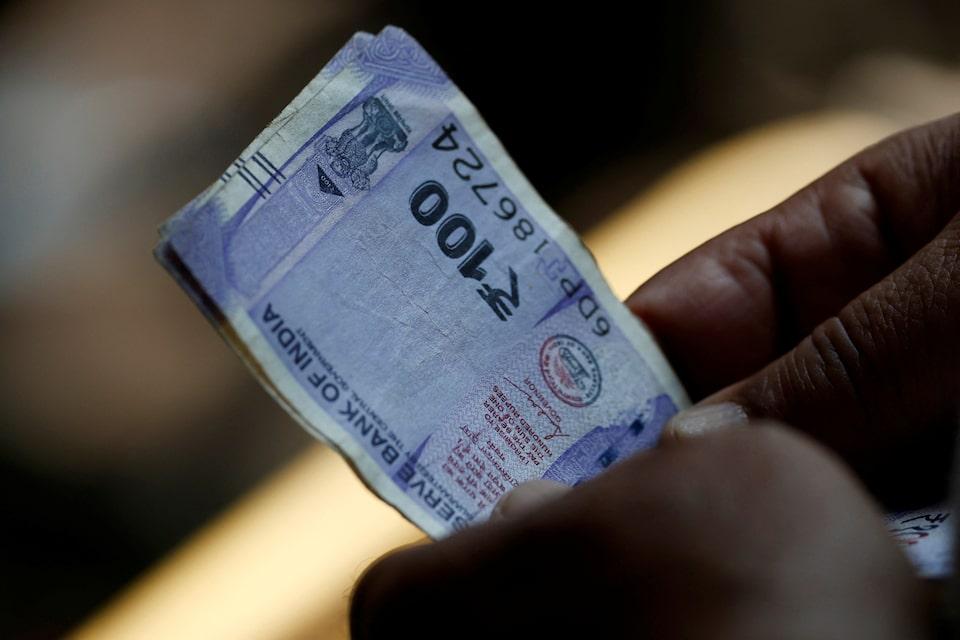
MUMBAI, Nov 27 (Reuters) - The Indian rupee declined on Wednesday, pressured by strong dollar demand related to the expiry of the November monthly futures contract and month-end payments by importers. The rupee closed at 84.4525 against the U.S. dollar, down by 0.1% from its previous close at 84.3275. The currency declined to a low to 84.4750 during the session but avoided deeper losses on likely dollar-selling intervention by the Reserve Bank of India. Softness in the dollar index in the latter half of the session helped the rupee claw back some losses as demand related to the futures expiry also faded. Asian currencies took a breather, led by the Thai baht, after declining in the previous session in light of U.S. President-elect Donald Trump's pledge of higher tariffs on China, Canada and Mexico. U.S. personal consumption expenditure (PCE) inflation data will be in focus later in the day for cues on the future path of the Federal Reserve's policy rates. Month-on-month core PCE inflation is expected to have held steady at 0.3% in October, according to economists polled by Reuters. "Even though the market has largely moved on from the U.S. inflation story, a sticky reading will add to doubts that the Fed needs to cut in December after all," ING Bank said in a note. The odds of a 25-basis point rate reduction at the Fed's December meeting at currently at 66%, up from 52% day earlier, according to CME's FedWatch tool. Meanwhile, dollar-rupee forward premiums rose, supported by a dip in near-maturity U.S. bond yields and the dollar-rupee overnight swap rate, which was lifted by inflows into local stocks and bonds this week. The dollar-rupee 1-year implied yield touched a near three-week high of 2.23%. Sign up here. https://www.reuters.com/markets/currencies/rupee-ends-lower-dollar-bids-spurred-by-currency-futures-expiry-weigh-2024-11-27/
2024-11-27 10:06
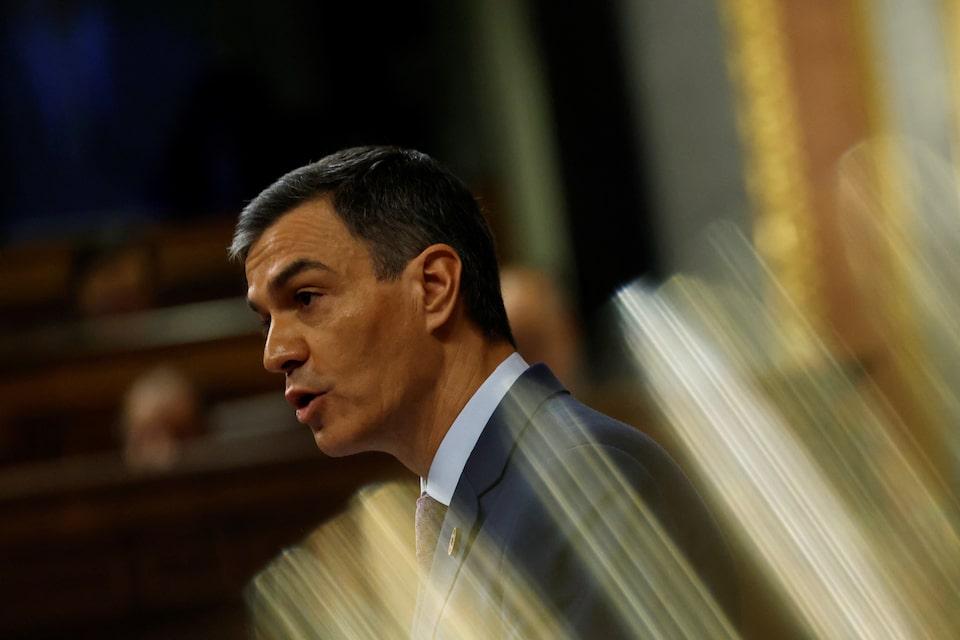
MADRID, Nov 27 (Reuters) - Spanish Prime Minister Pedro Sanchez on Wednesday announced 2.3 billion euros ($2.42 billion) in additional aid to reconstruct areas of the Valencia region hit by the deadliest flash floods in Spain's modern history. The government has so far pledged a total of 16.6 billion euros in aid, and Sanchez told parliament it will keep helping as long as needed. More than 220 people died and five are still listed as missing after torrential rains on Oct. 29 triggered floods that swept through the suburbs south of the regional capital Valencia. Sanchez defended the way his government handled the extreme weather event, which it said was caused by climate change. The central government has also blamed the regional administration, led by Carlos Mazon of the main opposition People's Party, for a tardy response in alerting citizens and telling them to stay at home after warnings issued by the state weather service and hydrography experts. Regions are in charge of disaster management in Spain, but the chain of events has given rise to a blame game between the minority leftist government and the conservative opposition. "Climate change kills. There is something much more dangerous than the climate emergency and it is the negationist governments that, by action or omission, deny the devastating effects of climate change," Sanchez told lawmakers in a critique of Mazon. Scientists say extreme weather events are becoming more frequent due to climate change. Meteorologists believe the warming of the Mediterranean, which increases water evaporation, plays a key role in making torrential rains more severe. ($1 = 0.9500 euros) Sign up here. https://www.reuters.com/world/europe/spain-announces-23-bln-euros-new-aid-valencia-after-floods-2024-11-27/
2024-11-27 09:58
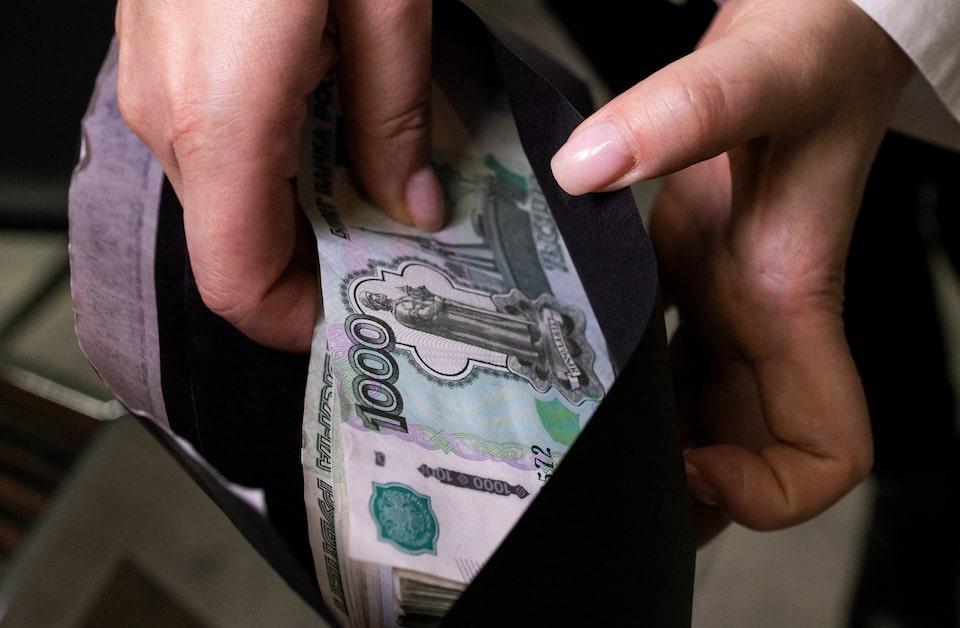
Bank executive says U.S. sanctions behind rouble's fall Rouble lost one-third of value vs dollar since early August New data shows economy overheated Weak rouble, down a third in four months, fuels inflation MOSCOW, Nov 27 (Reuters) - Russia's central bank said on Wednesday it would stop foreign currency purchases in order to ease pressure on the financial markets after the rouble weakened beyond 110 to the U.S. dollar, down by one-third since early August. The central bank said it had decided not to buy foreign currency on the domestic market from Nov. 28 until the end of the year, but to defer these purchases until 2025. "The decision was made to reduce the volatility of financial markets," the regulator said in a statement. Since Russia was blocked from using the dollar and euro, it has made foreign exchange interventions using Chinese yuan. Russia published new economic data on Wednesday highlighting the latest signs of overheating in an economy retooled for the purpose of fighting the war in Ukraine, which has sucked workers out of the labour force. Real wages were up 8.4% in September in year-on-year terms, unemployment hit a record low 2.3% in October, and weekly inflation stands at almost 0.4%, all despite a benchmark interest rate of 21%. By 1600 GMT, the rouble was down 7.25% since the start of Wednesday's trade at 113.15 to the dollar, according to LSEG data - further fuelling inflation, which is running at around 8% a year. It fell beyond 15 to the yuan, also the lowest level since March 2022, just after Russia's invasion of Ukraine. Under Russia's budget rule, the finance ministry sells foreign currency from its rainy-day National Wealth Fund to make up for any shortfall in revenue from oil and gas exports, or makes purchases in the event of a surplus. The ministry's forex transactions are carried out by the central bank, which also conducts its own interventions. The central bank said it would continue conducting its own yuan sales at the equivalent of 8.4 billion roubles a day, thereby increasing the Russian state's net daily sales of foreign currency to the equivalent of 8.4 billion roubles from around 4.2 billion roubles. Dmitry Pyanov, deputy CEO of Russia's second largest lender VTB, said sanctions imposed by the United States on Russia's third-largest lender, Gazprombank, which handles the energy trade, were behind the rouble's sharp fall. "My assumption is that the sanctions against Gazprombank have had a significant impact, as it has ceased to be a channel for delivering foreign currency to the Moscow Exchange," Pyanov said. He said the central bank should focus on stabilising the currency market, which was not functioning properly now, within the next few days. PSB Bank analysts said the decision would "moderately support the rouble, but it will not be enough to return the exchange rate to last week's levels", predicting that the market would stay volatile. ROUBLE AND SHARE PRICES BOTH FALLING STEEPLY The rouble's fall has been compounded by a fall of more than 20% in the stock market so far this year as investors shift their savings from stocks to deposits, which offer interest above the benchmark rate of 21%. Economy Minister Maxim Reshetnikov said the rouble's volatility was due to global dollar strength and market concerns following the latest sanctions, not the result of fundamental factors, predicting that it would soon stabilise. He said 82% of Russia's exports and 78% of its imports were paid for in roubles and "friendly", non-Western countries' currencies. Analysts said another measure that the government could use is forcing exporting companies to sell more foreign currency by raising mandatory sale requirements, though not all were convinced this would work. "If exporters are unable to make transactions [due to sanctions], the requirement from the government for them to do so will not help the situation in any way," economist Evgeny Kogan said. The rouble's fall is fuelling inflation, which is set to exceed the central bank's estimate for this year, working counter to the regulator's painful monetary tightening, with the benchmark interest rate at its highest level since 2003. The central bank estimates that a 10% fall in the value of the rouble adds 0.5 percentage points to inflation, implying that the fall of the last four months may be adding 1.5 percentage points to inflation. All trade in dollars and euros moved to the over-the-counter market after Western sanctions were imposed on the Moscow Exchange (MOEX). As a result, the trade has become volatile and opaque, with most banks disclosing data only to the regulators. Sign up here. https://www.reuters.com/markets/currencies/russian-rouble-down-by-one-quarter-since-early-august-2024-11-27/
2024-11-27 08:59
KAMPALA, Nov 27 (Reuters) - The Ugandan shilling was little-changed against the dollar on Wednesday, and was expected to gain some ground, helped by inflows from remittances, traders said. At 0841 GMT, commercial banks quoted the shilling at 3,690/3,700, compared with Tuesday's closing rate of 3,695/3,705. Sign up here. https://www.reuters.com/markets/currencies/ugandan-shilling-little-changed-gain-due-remittances-2024-11-27/

2024-11-27 07:22
Nov 27 (Reuters) - Portuguese energy company Galp (GALP.LS) , opens new tab said late on Tuesday it has dropped its plan to build the Aurora lithium refinery after it failed to find a new partner to replace Northvolt, a Swedish maker of batteries for electric vehicles. Galp was left alone in early 2024, when Northvolt said it would not invest in the50-50 joint venture , opens new tab set up in November 2021 to build a lithium processing plant in Setubal, on Portugal's coast. The project's investment was estimated at more than 1 billion euros ($1.05 billion). The refinery, which was scheduled to start commercial operations in early 2026, was facing delays due to the complexity of the project and uncertainty about funding. Low lithium prices following oversupply from China also made the project less attractive. Northvolt, Europe's biggest hope for an electric vehicle battery champion, last week filed for U.S. Chapter 11 bankruptcy protection after talks with investors and creditors including Volkswagen and Goldman Sachs (GS.N) , opens new tab for funding failed. ($1 = 0.9544 euros) Sign up here. https://www.reuters.com/markets/commodities/galp-drops-plans-build-aurora-lithium-refinery-portugal-2024-11-27/

2024-11-27 07:21
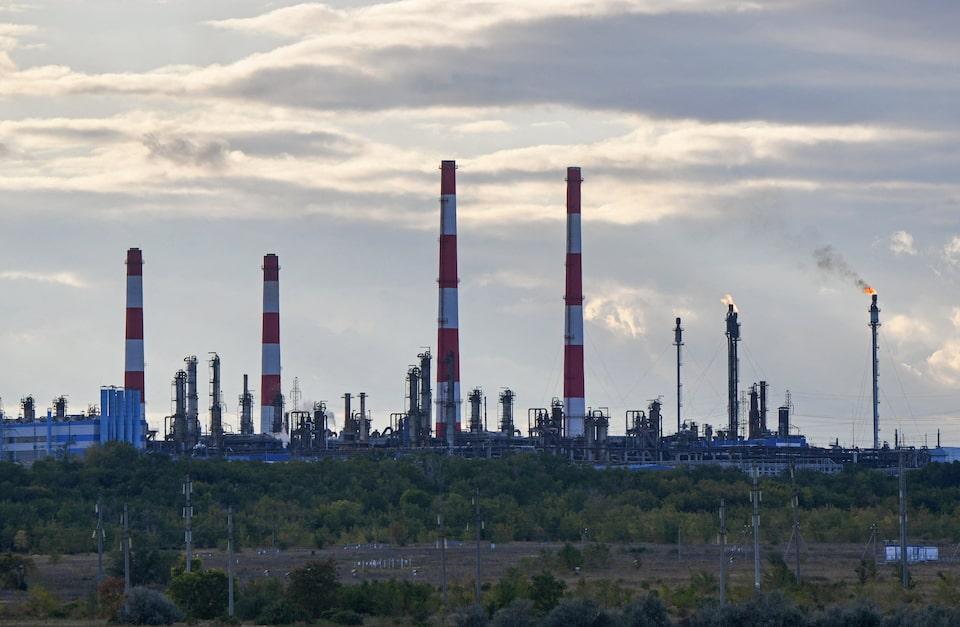
Nominations to Austria from Slovakia stable Gazprom halted flow to Austria's OMV in mid-November Gazprom assumes no gas exports via Ukraine in 2025, source says MOSCOW, Nov 27 (Reuters) - Russian gas exports via Ukraine to Europe as well as nominations, or requests, for supply to Austria from Slovakia were stable on Wednesday, data from Gazprom and transmission system operator Eustream showed. Russian gas flows through Ukraine to Europe have been generally stable for the past year, while the route is expected to be closed off before the transit deal with Moscow and Kyiv ends on Dec. 31. A person familiar with the plans said Russian energy giant Gazprom (GAZP.MM) , opens new tab was making the assumption that no more gas will flow to Europe via Ukraine after the last day of the year in its internal planning for 2025, as the military conflict rages on. Gazprom said that it would send 42.4 million cubic metres (mcm) of gas to Europe via Ukraine on Wednesday, a volume in line with recent days. Nominations for flows to Austria from Slovakia were also stable versus Tuesday, and nominations to the Czech Republic from Slovakia were in line with levels registered at different times during November, data from transmission system operator Eustream showed. Nominations for natural gas flows into Slovakia from Ukraine were little changed on Wednesday, while nominations for flows leaving Slovakia were also in line with previous levels. Nominations to Austria still remained below levels seen before Gazprom halted exports to Vienna-based OMV . Those supplies were halted in mid-November in a dispute over payments and supply while flows to Europe via Ukraine remained steady as other buyers asked for more gas. Sign up here. https://www.reuters.com/business/energy/russian-gas-supply-eu-via-ukraine-austria-nominations-stable-2024-11-27/