2024-11-26 22:55
MELBOURNE, Nov 26 (Reuters) - Australia-listed Vulcan Energy (VUL.AX) , opens new tab is in talks with lithium companies to licence its filtration technology, tapping a new revenue source as the firm commercialises its renewable-energy project in Germany, the CEO said on Tuesday. Vulcan began producing lithium hydroxide earlier this month from its Rhine Valley operations using adsorption direct lithium extraction (A-DLE) - harnessing geothermal heat to extract lithium from brine deposits. DLE is expected to reshape the lithium market by speeding the production process of the metal used in EV batteries and electronics to hours or days, compared with months or longer. Vulcan has joined the ranks of companies like Eramet (ERMT.PA) , opens new tab, and Exxon Mobil (XOM.N) , opens new tab aiming to make the technology commonplace. "We are talking to all sorts, including developers and producers. If you have a four-to-five-year window to get into production, you need to act now," CEO Cris Moreno told Reuters. "There's also producers out there that are trying to get an extra 1-2% of efficiency." Moreno said such efficiency gains represent a lot of money for large producers. Vulcan is in the final stage of finalising a 1.4 billion euro ($1.47 billion) funding package to build a commercial facility in Landau that is set to start production in 2027. Its lithium hydroxide is going to customers like Stellantis (STLAM.MI) , opens new tab for quality testing in the meantime. The lithium and energy producer expects to finalise commitment letters on the 60% debt portion of its funding by Christmas and secure strategic equity by the first quarter of next year. It was awarded 100 million euros in funding from Germany this month for the project, whose geothermal heat will help decarbonise the Landau district. ($1 = 0.9554 euros) (This story has been corrected to fix the debt funding figure to 60%, from 40%, in paragraph 9) Sign up here. https://www.reuters.com/business/energy/vulcan-talks-with-producers-licence-lithium-technology-2024-11-26/

2024-11-26 21:56
Nov 26 (Reuters) - Chevron (CVX.N) , opens new tab said on Tuesday that California's recently enacted legislation on oil refineries needing to maintain minimum fuel stocks was "flawed," according to a letter sent by the company to state Congress members. California, the most populous U.S. state, consistently experiences some of the nation's highest average gas prices, leading to an often tense relationship between the state and oil companies. It is geographically isolated from the U.S. Gulf Coast and Midwest refining centers, and must produce all its own motor fuels or import them from Asia. In the letter from Andy Walz , opens new tab, president of Chevron's Downstream, Midstream and Chemicals business, he said increasing regulation on the justification of "price spikes are profit spikes" was "misleading." On Oct. 14, California Governor Gavin Newsom signed into effect ABX2-1, a bill designed to prevent fuel supply shortages in the state and gives regulators at the California Energy Commission (CEC) greater control over oil refineries operating in the state. It allows for the CEC to enforce refiners to maintain minimum levels of fuel inventories, and manage necessary refinery turnarounds and maintenance in consultation with labor and industry stakeholders, so as to minimize the impacts of maintenance-related production losses on fuel prices. If refineries fail to comply with the requirements, they could be fined a minimum of $100,000 per day for each day that the noncompliance occurs. "We contend that enforcing a mandatory minimum inventory requirement will likely result in two negative outcomes: an increased frequency and duration of supply shortages, and a permanent rise in gasoline prices for consumers," Chevron's Walz said in the letter. "Both risks extend beyond California, which should create the need for the legislature to proceed with caution, as policies that raise prices for the state could also affect neighbors in Arizona and Nevada." Governor Newsom's office did not immediately respond to a request for comment. Sign up here. https://www.reuters.com/business/energy/chevron-sees-californias-fuel-inventory-law-raising-prices-customers-2024-11-26/

2024-11-26 21:53
Nov 27 (Reuters) - A look at the day ahead in Asian markets. Donald Trump's vow of hefty tariffs threatened to continue to cloud Asian trading on Wednesday after the U.S. president-elect's surprise announcements roiled currency markets. Officials from Mexico, Canada and China warned of broad negative economic consequences after Trump called for a 25% tariff on imports from Canada and Mexico and an additional 10% levy on Chinese goods, until the countries clamped down on illicit drugs and migrants crossing the border. The reaction in these countries' currencies against the dollar was swift: China's yuan fell to its weakest in nearly four months, Canada's currency hit its lowest in more than four years against the U.S. greenback, while the Mexican peso sank over 2%. Some of the reaction moderated toward the end of the U.S. session, as investors considered Trump's salvo potentially part of a negotiating tactic that they were more prepared for after experiencing his first term as U.S. president. The reaction was also felt in equities, albeit more modestly. China's blue-chip CSI300 index (.CSI300) , opens new tab edged down 0.2%. European indexes also declined, with Europe's STOXX 600 (.STOXX) , opens new tab off 0.6%, while the U.S. benchmark S&P 500 (.SPX) , opens new tab ended with a 0.6% gain. Some pockets were hit harder, including auto stocks amid fears the tariffs would rattle supply chains. In Europe, Stellantis (STLAM.MI) , opens new tab shares sank nearly 5%, while Volkswagen dropped more than 2%. In the U.S., General Motors (GM.N) , opens new tab fell 9%. The day's action served as a reminder of the volatility Trump could bring to markets, especially with his desire to implement tariffs, a day after his choice of prominent investor Scott Bessent to lead the Treasury Department appeared to calm concerns in the bond market. Elsewhere, markets will be following the fallout for Adani Group. Two more credit rating agencies cut their outlook for the Indian conglomerate, whose billionaire founder Gautam Adani has been charged by U.S. authorities over an alleged bribery scheme. Inflation will also be in focus on Wednesday, with the release of the key U.S. personal consumption expenditures price index, a measure followed closely by the Federal Reserve. Minutes released on Tuesday covering the latest Fed meeting showed central bank officials appeared divided over how much farther they may need to cut interest rates. In other central bank developments, the Reserve Bank of New Zealand was set to give its latest monetary policy decision, with expectations it will lower interest rates by 50 basis points. Here are key developments that could provide more direction to markets on Wednesday: - Reserve Bank of New Zealand monetary policy meeting - Australia CPI (Oct) - US PCE inflation data (Oct) Sign up here. https://www.reuters.com/markets/asia/global-markets-view-asia-pix-graphic-2024-11-26/
2024-11-26 21:27
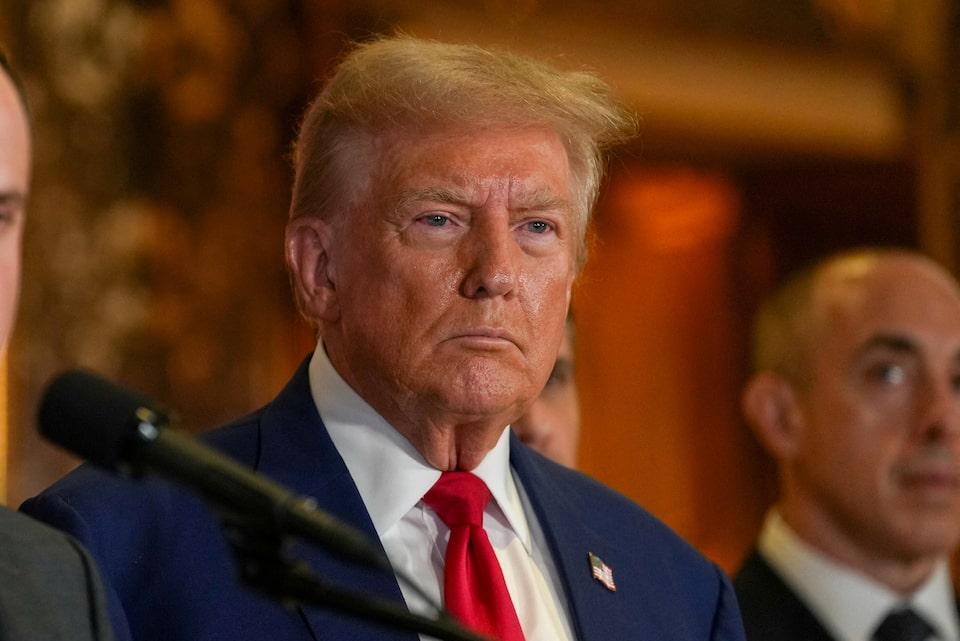
TSX ends down 0.02% at 25,405.14 Energy falls 2.3%; oil settles 0.2% lower Bombardier shares lose 9.3% Technology advances 1.1% Nov 26 (Reuters) - Canada's stock market inched lower on Tuesday, weighed by declines for energy, railroad and auto parts manufacturing shares, after U.S. President-elect Donald Trump vowed to impose big tariffs on top trading partners, including Canada. The S&P/TSX composite index (.GSPTSE) , opens new tab ended down 5.21 points, or 0.02%, at 25,405.14, its second straight day of modest declines after posting a record closing high on Friday. Trump on Monday pledged big tariffs on the United States' three largest trading partners - Canada, Mexico and China - in a move that helped push the Canadian dollar to a 4-1/2-year low against its U.S. counterpart. "Tariffs dump sand in the gears of the global economy and markets hate them," Colin Cieszynski, chief market strategist at SIA Wealth Management, said in a note. Officials from Mexico, Canada and China warned that Trump's tariff threat would harm the economies of all involved. "These types of threats are mostly designed to extract concessions," said Angelo Kourkafas, investment strategist at Edward Jones Investments, adding they are, however, "impacting sentiment in the short term." Canada sends about 75% of its exports to the United States, including oil. Trump's plan does not exempt crude oil from trade penalties, two sources familiar with the plan told Reuters. U.S. crude futures settled 0.25% lower at $68.77 a barrel after Israel agreed to a ceasefire deal with Lebanon, while the Toronto market's energy sector was down 2.3%. Industrials fell 1%, weighed by declines for railroad shares. Automotive suppliers also lost ground, with Magna International Inc (MG.TO) , opens new tab falling 4.7%. Business jet manufacturer Bombardier Inc (BBDb.TO) , opens new tab lost 9.3%. The TSX is set to rise in 2025 but returns could slow after investors potentially front-loaded much of the positive news, a Reuters poll found. Helping to limit the decline on Tuesday, technology rose 1.1% and financials added 0.5%. Sign up here. https://www.reuters.com/markets/tsx-futures-fall-worries-over-trumps-tariff-pledges-2024-11-26/
2024-11-26 21:00
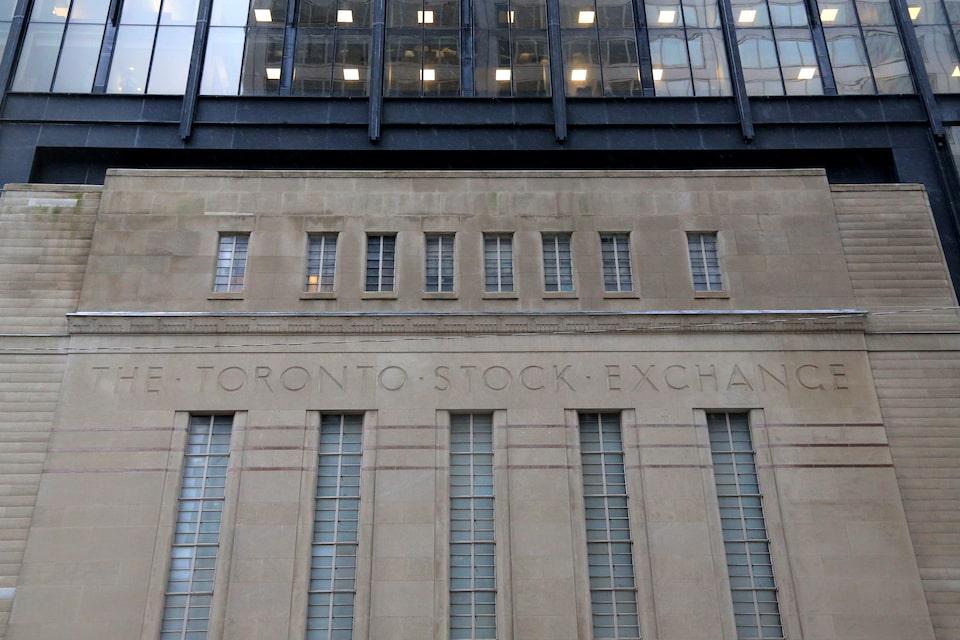
Mexico president plans letter to Trump, will seek a call Bank of Canada sees clear impact on both economies Tariff threat knocks Mexico peso, Canadian dollar US and European automaker shares drop Oil industry not exempt as executives hoped, sources say Nov 26 (Reuters) - Officials from Mexico, Canada and China and major industry groups warned that U.S. President-elect Donald Trump's threat of hefty tariffs on goods would harm the economies of all involved, cause inflation to spike and damage job markets. Trump's pledge announced on Monday roiled currency, bond and equity markets on Tuesday, as the three countries are the United States' largest trading partners. Mexico and Canada are particularly intertwined in U.S. auto production and energy output thanks to decades of trade agreements between the North American neighbors. Trump's plan to impose a 25% tariff on Canadian and Mexican imports on his first day in office does not exempt crude oil as industry executives had hoped, two sources familiar with the plan told Reuters on Tuesday. Leaders and other top officials warned a trade war could erupt and economies be damaged, and sought talks with Trump after the surprise announcement, which includes an extra 10% levy on Chinese goods - until the three countries clamp down on the flow of illicit drugs and migrant border crossings. "To one tariff will follow another in response and so on, until we put our common businesses at risk," Mexican President Claudia Sheinbaum said during a regular press conference. Sheinbaum said she planned to send a letter to Trump and would seek a call with him to discuss the issue. A Bank of Canada official said any move by Trump to deliver on the threat would reverberate on both sides of the U.S. northern border. "What happens in the U.S. has a big impact on us, and something like this would clearly have an impact on both economies," Deputy Governor Rhys Mendes told audience members at an event in Charlottetown, Prince Edward Island. Earlier, a spokesperson for China's embassy in Washington said: "No one will win a trade war or a tariff war." The three countries shipped a total of more than $1 trillion of goods to the United States in the first nine months of the year, led by Mexico and followed by China and then Canada, according to U.S. Commerce Department data , opens new tab as of September. Tariffs are paid by the companies that import goods and often passed to consumers, even though Trump frequently erroneously states that tariffs would be imposed on the foreign nations in question. "The folly here is that such tariffs will, in the end, boomerang back to the U.S. in the form of higher inflation and rising interest rates," said Bernard Baumohl, chief global economist for the Economic Outlook Group. Trump "will undo the singular pledge he gave to Americans during the campaign, which is to bring the cost of living down." If Trump follows through on the tariff plans, consumers may face higher prices for avocados, strawberries and other fresh produce, as well as meat, agricultural economists and industry executives said. Mexico and Canada are by far the top two suppliers of farm products to the United States, with imports of agricultural goods valued at nearly $86 billion last year, according to U.S. Department of Agriculture and U.S. Customs data. RENEGOTIATING USMCA? The threatened levies would appear to violate the terms of the U.S.-Mexico-Canada Agreement (USMCA) on trade. The deal, which Trump signed into law, took effect in 2020 and continued the largely duty-free trade between the three North American countries; the deal sunsets in 2026. Warren Maruyama, former general counsel for the U.S. Trade Representative under President George H.W. Bush, said Trump could declare a national emergency, which would unlock the International Emergency Economic Powers Act and allow him to impose the tariffs with relative ease. "If precedent is any indication, it's a serious uphill fight" to challenge actions taken under that umbrella, he said. The tariffs could also prompt an early renegotiation of the USMCA, ahead of the planned 2026 review, trade experts said. 'DISASTER FOR THE U.S. AUTO INDUSTRY' Trump's broadside sent the Mexican and Canadian currencies tumbling, and shares of U.S. and European automakers dropped on the increased uncertainty. "If implemented, this would spell disaster for the U.S. auto industry and Detroit Three manufacturers, all of whom import significant numbers of vehicles from Canada and Mexico, as well as Volkswagen and other European OEMs," Bernstein analyst Daniel Roeska said in a note. Ford (F.N) , opens new tab and General Motors (GM.N) , opens new tab were among automakers whose shares fell sharply. Energy shares were mixed. Drilling and refining industry lobbying groups warned of big effects, including higher import prices and less available supplies of oil feedstocks and products, as well as potential retaliation that could hurt consumers. The United States needs to import crude oil to meet its daily consumption needs, and Canada is its biggest foreign supplier, sending more than 4 million barrels daily, largely by pipeline. "Maintaining the free flow of energy products across our borders is critical for North American energy security and U.S. consumers," said Scott Lauermann, spokesperson for API, a trade group representing the U.S. natural gas and oil industry. Deutsche Bank analysts on Tuesday estimated the proposed tariffs on Mexico and Canada would increase U.S. inflation temporarily, and they raised their 2025 core personal consumption expenditure price index inflation forecast from 2.6% to 3.7%. It was at 2.7% in September. FOCUS ON FENTANYL Trump had pledged throughout his presidential campaign to levy tariffs of varying degrees on U.S. trading partners, part of his promise to "put America first." Imposing import duties was a major policy plank during his first four-year term, and like now, he has also threatened them for non-economic reasons. In 2019, he threatened 5% tariffs on Mexico over the influx of migrants over the southern U.S. border, but called then off after Mexico agreed to take steps to tighten border controls. In the current case, the flow into the U.S. of illicit drugs, particularly fentanyl, was added to Trump's mix of grievances with the three countries. The number of U.S. deaths from fentanyl overdoses actually declined in 2023, according to the Centers for Disease Control and Prevention, although nearly 75,000 people still succumbed to the powerful opioid. Some said the tariffs could be an opening bid for negotiation. "It leaves the door open to Canada and Mexico coming up with a credible plan over the next two months to try and avoid those tariffs," said Thomas Ryan, North America economist at Capital Economics. Trump's plans regarding China were unclear since he previously pledged to impose tariffs of 60% or higher. On his social media site, he spoke only of "an additional 10% Tariff, above any additional Tariffs, on all of their many products coming into the United States of America." Sign up here. https://www.reuters.com/markets/us-trade-partners-warn-trump-tariffs-would-harm-all-involved-2024-11-26/
2024-11-26 20:32
Companies sceptical if hydrogen reliance is realistic Germany trying to integrate renewable energy into grid 60% of hydrogen network will utilize gas pipelines Big investment needed for retrofitting or building pipelines LONDON, Nov 26 (Reuters) - KfW (KFW.UL) will provide a 24 billion euro ($25 billion) loan to help develop a future hydrogen network in Germany, the state lender told Reuters, at a time when companies have warned that the technology will take longer than expected to take off. Germany is betting on hydrogen, which can be used in part to replace natural gas, as it seeks to decarbonise the economy and find ways to absorb intermittent renewable supplies into the power grid. A core 9,040-kilometer network for hydrogen, to be built by 2032, is an essential part of the planned shift to the fuel. While existing natural gas pipelines will make up 60% of the network -- connecting ports, industry, storage facilities and power plants -- their operators and owners will still have to shoulder billions of euros in investments to either retrofit lines for hydrogen or build new ones. In order to keep user fees for the network at an acceptable level, KfW will compensate operators via a so-called amortisation account, with plans to have the costs paid back by 2055, KfW said. As revenue from network fees increase in the future, surplus income will be redirected to the amortization account, facilitating gradual repayment of the loan, KfW added. If the amortization account is not balanced by the planned end of the hydrogen ramp-up in 2055, the federal government will assume 76% of the risk with the remaining 24% to be borne by the core network operators. KfW's announcement comes amid growing scepticism among German companies about whether Berlin's plans to rely more heavily on hydrogen to cut emissions are realistic and affordable. In September, Norway's Equinor (EQNR.OL) , opens new tab scrapped plans to export hydrogen to Germany, citing high costs and insufficient demand. Earlier this month, German state-owned utility Uniper (UN0k.DE) , opens new tab warned it was likely to slow down a planned 8 billion-euro investment in cleaner fuels amid slower than expected demand for hydrogen from industry. ($1 = 0.9514 euros) Sign up here. https://www.reuters.com/business/energy/germanys-kfw-provide-25-bln-loan-hydrogen-network-2024-11-26/