2024-11-26 20:29
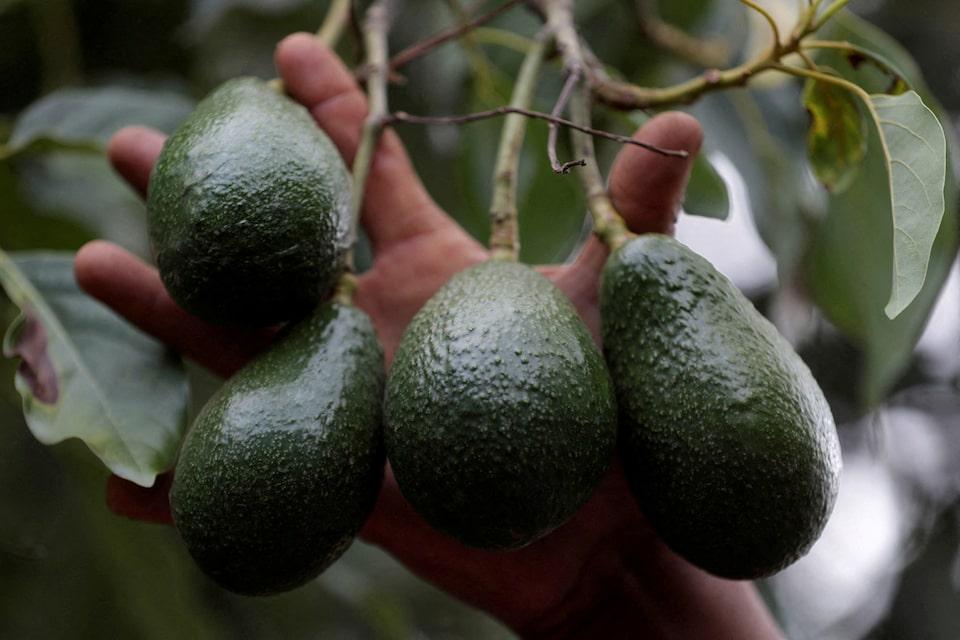
Tariffs could lead to produce shortages as well as price hikes, experts warn Mexico and Canada are top suppliers of US agricultural imports Tariffs may disrupt cattle and pork trade between US, Mexico, and Canada WASHINGTON/REGINA, Saskatchewan, Nov 26 (Reuters) - U.S. prices may rise next year for avocados, strawberries and other fresh produce, and consumers could face shortages, if President-elect Donald Trump follows through on plans to slap tariffs on goods from Mexico and Canada, agricultural economists and industry executives said. Mexico and Canada are by far the top two suppliers of farm products to the United States, with imports of agricultural goods valued at nearly $86 billion last year, according to U.S. Department of Agriculture and U.S. Customs data. Duties on their food shipments could cause jarring financial and operational ripple effects on U.S. supplies and highlight how reliant the nation has become on its neighbors for feeding its population, economists said. Trump said Monday he would sign an executive order on his first day in office in January that would impose a 25% tariff on all products coming into the United States from Canada and Mexico to curb the flow of illegal drugs and migrants into the U.S. U.S. consumers would feel impacts at grocery stores and restaurants, with items being out of stock, Lance Jungmeyer, president of the Fresh Produce Association of the Americas, said on Tuesday. "We would see fewer items in general in the produce section," Jungmeyer said. "Restaurants would have to reconfigure their menus, maybe putting in less fruits and vegetables or decreasing portions." About two-thirds of all U.S. vegetable imports and half of fruit and nut imports come from Mexico, according to the USDA: nearly 90% of its avocados, as much as 35% of its orange juice, and 20% of its strawberries. Avocado exports to the United States have soared 48% since 2019, according to U.S. trade data, as consumers have increasingly put them in salads and on sandwiches. The U.S. market accounts for about 80% of Mexico's total avocado exports, data by the USDA shows, a trade worth $3 billion last year. "It would generate an inflationary spiral," said Alfredo Ramírez, governor of Michoacan, Mexico's main avocado producing state. "Demand would not fall," he said. "What would increase are costs and prices. This would bring us an increase in inflation and direct repercussions for consumers." Margarita supplies could be hit, too. Imports of beer and tequila together make up nearly a quarter of Mexican imports of agricultural goods into the U.S. last year. U.S. imports of Mexican tequila and mezcal - both used for making cocktails, such as margaritas - totaled $4.66 billion in 2023, up 160% since 2019, according to data from the Distilled Spirits Council of the United States. "Tariffs on spirits products from our neighbors to the north and south are going to hurt U.S. consumers and lead to job losses across the U.S. hospitality industry just as these businesses continue their long recovery from the pandemic," the group said. The tariffs could also push prices higher for fertilizer imported from Canada at a time when farmers are paying nearly 50% more for fertilizer than in 2020, said Sam Kieffer, vice president of public policy for the American Farm Bureau Federation, a farmer trade group. "Now is not the time to send shock waves through the agricultural economy," Kieffer said. PIGS, CATTLE MIGRATION Trump's plan could also slow the migration of more than 1 million cows exported by Mexico across the border each year, to become part of the U.S. beef supply. U.S. producers have slashed their cattle herds in recent years, pushing up beef prices. They could benefit if tariffs lead to fewer cattle and beef imports, said Bill Bullard, chief executive officer of the Ranchers Cattlemen Action Legal Fund United Stockgrowers of America. Tariffs could also further increase meat prices for U.S. consumers, though Bullard said importers and meat processors may be able to absorb some extra costs. "We look forward to tariffs," he said. "It will help to level the playing field for our domestic producers." To the north, tariffs also could disrupt shipments of beef and dairy cattle and hogs between the U.S. and Canada, and potentially affect producers in both countries. Manitoba alone sends about 3 million piglets each year to producers in Iowa, Minnesota, South Dakota and Nebraska, where feed corn can be sourced more cheaply, according to the Canada Pork Council and Manitoba Pork Council Midwestern farmers then raise and fatten up the animals in their feeder barns, before sending them to slaughter - and the pork flows both to buyers in the U.S. and Canada after processing. TRUMP TRADE WARS 2.0 The latest USDA projections show that the U.S. in 2025 will likely run a deficit in agricultural trade of more than $42 billion, driven in part by consumer interest in off-season produce and imported alcohol from Mexico. The threat of tariffs could be a way of attaining leverage over Mexico and Canada in the lead-up to renegotiation of the USMCA trade deal, set to be reviewed in 2026, said Peter Tabor, an attorney and senior policy advisor at Holland & Knight and a former USDA trade official. But implementation of steep tariffs over time could mean the U.S. may be seen as an unreliable trading partner and that importers of U.S. goods would look elsewhere to fill the void, Tabor said. Sign up here. https://www.reuters.com/markets/commodities/trump-tariffs-could-raise-grocery-liquor-bills-beef-pork-avocados-tequila-2024-11-26/
2024-11-26 20:09
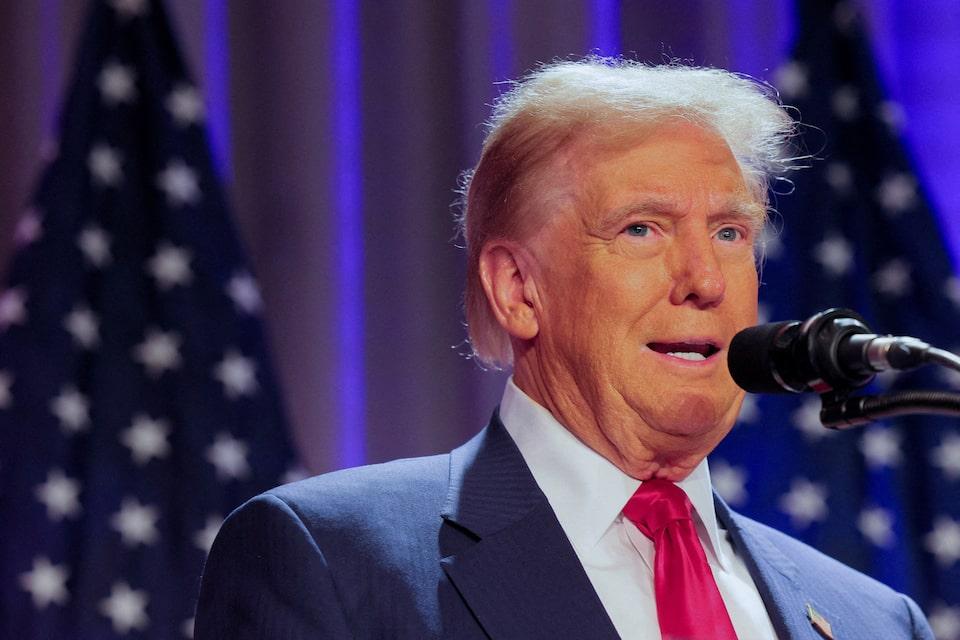
Trump plans tariffs on crude imports from top suppliers Canada, Mexico Top US oil trade groups say oil tariffs would be a mistake Oil analysts and traders warn the move would raise oil prices US Midwest, most dependent on Canadian crude, would see pump prices spike Nov 26 (Reuters) - U.S. President-elect Donald Trump does not intend to spare crude oil from his planned 25% import tariffs on Canada and Mexico, sources told Reuters on Tuesday, as the oil industry warned the policy could hurt consumers, industry and national security. Canada and Mexico are the top sources of U.S. crude oil imports, together accounting for around a quarter of the oil U.S. refiners process into fuels like gasoline and heating oil, according to the U.S. Department of Energy. The U.S. and Canadian oil industries had been optimistic that Trump's broad plans for protectionist trade measures would spare oil imports because many U.S. refineries rely on the two countries and have equipment designed to process their oil types. Two sources familiar with Trump’s plans said that oil would not be exempted from the plan. They asked not to be named due to the sensitivity of the issue. America’s top oil trade groups, meanwhile, said imposing the tariffs would be a mistake - exposing a rare moment of discord between the industry and Trump. "Across-the-board trade policies that could inflate the cost of imports, reduce accessible supplies of oil feedstocks and products, or provoke retaliatory tariffs have potential to impact consumers and undercut our advantage as the world’s leading maker of liquid fuels," said a spokesperson for the American Fuel and Petrochemical Manufacturers group, which represents oil refiners. The AFPM said its industries would "continue urging officials to veer clear of any policies that could disrupt America's energy advantage." The American Petroleum Institute, meanwhile, said in response to a question about the threatened tariffs that keeping up the trade of energy across borders is important. "Canada and Mexico are our top energy trading partners, and maintaining the free flow of energy products across our borders is critical for North American energy security and U.S. consumers," said API spokesperson Scott Lauermann. Oil industry analysts and traders also warned the move would likely raise oil prices for U.S. refiners, squeezing margins and driving up the cost of fuel. The U.S. imported about 5.2 million barrels of crude and petroleum products per day (bpd) from Canada and Mexico in 2024, with more than 4 million of that from Canada, data from U.S. government's statistical arm showed. The biggest impact would come from the levies on Canadian crude oil, which is an important source of supply to refineries in the U.S. Midwest. "The Midwest will have to deal with higher gasoline prices as it will be difficult to replace the Canadian crude that they are using currently," ship tracking firm Vortexa analyst Rohit Rathod said. "Applying tariffs on over 4 million barrels per day of crude from your leading supplier seems self-destructive," said Matt Smith, an analyst at ship tracking service Kpler. U.S. refiners have a capacity to process more than 18 million bpd of crude oil in total, but often run at lower rates due to maintenance and other issues. While the U.S. is the world's top oil producer, with output at a record 13.5 million bpd of crude, much of it is light in density and not compatible with domestic refineries that are largely configured to refine heavy crude like Canadian and Mexican oil. Converting units to run lighter crudes economically would require investing in new equipment. Asked about the inclusion of oil imports, the Trump transition team noted that tariffs against China created jobs, spurred investment and resulted in no inflation. "President Trump will work quickly to fix and restore an economy that puts American workers first by re-shoring American jobs, lowering inflation, raising real wages, lowering taxes, cutting regulations, and unshackling American energy," said Trump transition spokeswoman Karoline Leavitt. Sign up here. https://www.reuters.com/business/energy/trump-would-impose-25-tariffs-oil-mexico-canada-under-trade-plan-sources-say-2024-11-26/
2024-11-26 19:49
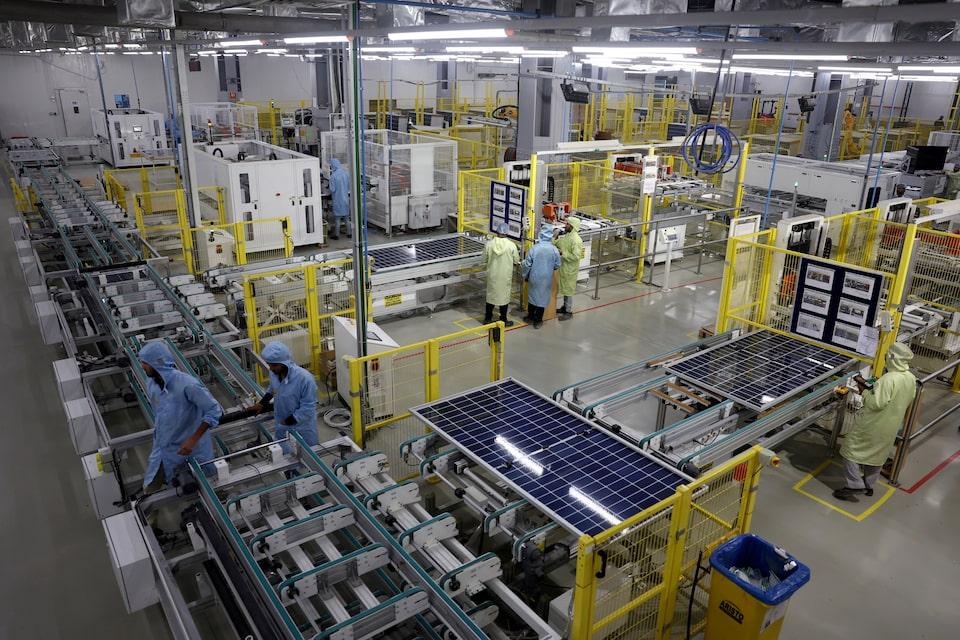
LONDON, Nov 26 - TotalEnergies (TTEF.PA) , opens new tab will pause investment in its Adani Green energy project until there is further clarity on a U.S. bribery case against Indian billionaire Gautam Adani, the French group's CEO, Patrick Pouyanne, said on Tuesday. The French company, which holds close to a 19.8% stake in Adani Green, has other options in its portfolio to meet its renewable energy growth targets, Pouyanne told Reuters on the sidelines of the Energy Intelligence Forum. Pouyanne emphasised that his company was not quitting the project, but that it will not be providing financing for any new scheme. TotalEnergies said on Monday that it had not been informed about a U.S. investigation into possible bribery and corruption at Adani Green Energy Limited, adding that it will stop financial contributions to its Adani Group investments after last week's indictment. Sign up here. https://www.reuters.com/business/energy/totalenergies-pauses-us-offshore-wind-project-after-trump-victory-ceo-says-2024-11-26/
2024-11-26 19:31
Carrefour rows back after CEO criticises Mercosur meat Carrefour has huge business in top meat producer Brazil Beef suppliers cut deliveries to Carrefour Brasil Carrefour Brasil flags shortage of meat cuts in stores PARIS/SAO PAULO, Nov 26 (Reuters) - Carrefour (CARR.PA) , opens new tab apologised on Tuesday after its CEO Alexandre Bompard's criticism of South American meat last week angered Brazilian companies ad caused suppliers to cut beef deliveries to the food retailer's Brazilian subsidiary. The Brazilian unit, which operates Carrefour, Atacadao and Sam's Club stores, said beef deliveries had not been occurring as scheduled since last Thursday, causing temporary shortages of some cuts. Its shares (CRFB3.SA) , opens new tab rose almost 6% in late afternoon trading. "The delivery schedule of beef products has resumed and the company expects the normalisation of resupply of such products during the coming days," the unit of the French supermarket said in a securities filing. Bompard said last week that the trade deal being discussed between the European Union and South America's Mercosur trade bloc presented the "risk of meat production spilling over into the French market (and) failing to meet its requirements and standards". His remarks, made in a letter to leaders of France's farm lobbies and posted on social media, were blasted by Brazil's government and agribusiness groups as "protectionist". On Tuesday, Carrefour headquarters said it regretted that the remarks had been "perceived as a questioning of our partnership with Brazilian agriculture or as criticism of it". "We never set French agriculture against Brazilian agriculture, as our two beloved countries share a deep love for the land, its cultivation and quality food," it added. Abiec and ABPA, two lobby groups representing large processors including JBS (JBSS3.SA) , opens new tab, Marfrig (MRFG3.SA) , opens new tab and Minerva (BEEF3.SA) , opens new tab and BRF SA (BRFS3.SA) , opens new tab, welcomed the apology. In a statement, Abiec said it hoped "operations of the French retailer could be resumed," in a sign that suppliers would imminently restart deliveries to Carrefour's stores in Brazil. ABPA said its member companies considered Bompard's apology "an end to the case." "Based on the positive stock reaction, it seems that the market may be pricing a fast resolution," Citi analysts said in a note to clients. They noted that although beef represents a small percentage of sales, meats in general help to drive customer traffic in stores. Brazil's agriculture ministry also said it had received a letter from Bompard apologising for his remarks. Carrefour said it sources meat sold in France almost exclusively from France and meat sold in Brazil exclusively from Brazil, adding it would continue to do so. Bompard's remarks came amid protests by French farmers against a potential EU free trade agreement with the Mercosur bloc formed by Brazil, Argentina, Uruguay and Paraguay. Sign up here. https://www.reuters.com/markets/commodities/carrefour-seeks-ease-brazil-tensions-after-ceos-meat-snub-2024-11-26/
2024-11-26 19:21
NEW YORK, Nov 26 (Reuters) - Investors in the world's largest cryptocurrency are anticipating a significant downward move after bitcoin failed to hit an all-time peak of $100,000, according to a crypto trading platform citing recent options activity. Bitcoin hit a record high of $99,830 on Nov. 22, but it has since fallen more than 8% to a one-week low of 91,377.32 on Tuesday. The best-known cryptocurrency has soared 120% so far this year and about 34% this month with the election of Donald Trump as U.S. president and a slew of pro-crypto lawmakers in Congress. Trump embraced digital assets during his campaign, promising to make the United States the "crypto capital of the planet," and accumulate a national stockpile of bitcoin. Nick Forster, founder of onchain options decentralized protocol Derive with total trade volume of $7.1 billion, said in emailed comments on Tuesday that the so-called call-put skew index for the upcoming Dec. 27 bitcoin expiry showed a significant 30% drop in the last 24 hours, as market participants shifted toward more protective strategies. The call-put skew, which reflects market sentiment, refers to the difference in implied volatility between calls (options to buy) and puts (options to sell). This skew still shows a preponderance of calls over puts, although it has since declined. "It suggests traders are hedging against potential downside risks," Forster said, likely in response to BTC falling sharply. "However, pullbacks like these are not uncommon in bull markets." Investors are looking to Dec. 27, when $11.8 billion in bitcoin options expire that could trigger major moves in either direction. According to Foster, there is a 68% chance of bitcoin moving 16.03% lower to $81,493 or 19.9% higher to $115,579 by December 27. There is, however, a smaller probability of about 5% of bitcoin making bigger moves -- a 29.49% fall to $68,429 or a 41.83% surge to $137,645 by the same date. Derive data also showed higher odds of 45% of bitcoin hitting $100,000, from last week's 34%, with a new 4% probability of surpassing $150,000. Forster also noted stability in bitcoin's volatility in the last seven days, with the seven-day at the money implied volatility at 63% and the 30-day level at 55%. "This close alignment suggests the market anticipates significant movements soon." Bitcoin has come off its high perch for now, and one of reasons cited by market participants for the decline was good old profit-taking. Anthony Pompliano, founder and chief executive officer at Professional Capital Management, in his letter to clients on Tuesday, cited _checkonchain.com analysis, which noted that long-term holders have distributed $60 billion worth of supply in the last 30-days. Of long-term holders' supply moved since the bitcoin's bottom of $15,479 hit during the FTX collapse two years ago, 21% of it has happened in November, which is the "heaviest profit-taking we have seen so far this cycle," according to a post of _checkonchain.com on X. Sign up here. https://www.reuters.com/technology/bitcoin-options-trade-shows-more-bets-retreat-after-failing-breach-100000-2024-11-26/

2024-11-26 17:56
Companies may increase foreign-exchange hedging amid currency volatility Trump's tariffs weigh on Mexican peso, Canadian dollar and euro 94% of finance leaders adjust hedging strategies post-election, survey says NEW YORK, Nov 26 (Reuters) - Multinational companies are beefing up their foreign exchange hedging strategies to guard their overseas earnings from larger currency swings that could come from a second Donald Trump presidency. Since the U.S. election three weeks ago, strategists and bankers said they are seeing more interest in options and cross-currency swaps as companies, including those in healthcare and industrial sectors, focus on how volatile currencies may be under Trump. "The election is a big catalyst for hedgers to think about currency risk," said Karl Schamotta, chief market strategist at payments company Corpay in Toronto. "Businesses that for a long time were relatively comfortable with the direction and the scale of exchange-rate moves are being shocked out of that complacency." Trump's election is introducing volatility into foreign-exchange markets as his victory clears the way for tariffs and protectionist trade policies that were the hallmark of his first term. Trump said on Monday he would impose a 25% tariff on all products from Mexico and Canada, and an additional 10% tariff on Chinese goods, on his first day in office, citing concerns over illegal immigration and illicit drugs. The news prompted the peso to drop as much as 2% while the Canadian dollar fell as much as 1.4%. The U.S. dollar index (.DXY) , opens new tab, which measures the U.S. currency's strength against six peers, has risen 3.5% since the Nov. 5 election, broadly on expectations Trump's policies on trade and tariffs will be dollar-supportive. Scott Bessent, Trump's U.S. Treasury secretary pick, has favored a strong dollar and supported tariffs. Adding to the uncertainty is the 2026 review of the United States-Mexico-Canada trade agreement that outlined tariff provisions and was implemented during Trump's first term. Trump has said he intends to make the agreement "a much better deal," although details of changes are unclear. Trump's first term, which was marked by big swings in trade-sensitive currencies, highlighted the need for more hedging, analysts said. At the same time, global central banks are trying to normalize interest-rate policy while balancing growth and inflation concerns, another potential source of volatility in the coming months. About 94% of senior finance decision-makers at UK and U.S. companies in a Nov. 7-18 MillTechFX survey said the U.S. election outcome was prompting them to change their foreign-exchange hedging strategies. Some are seeking to extend the duration of hedges, while others look to bump up their hedge ratios - the proportion of their overall foreign-exchange exposure that is protected. LOWER FOREIGN REVENUE Among currencies that companies are looking to hedge are the Mexican peso and the euro. A stronger dollar means U.S. companies' foreign revenue is worth less when converted to dollars, which erodes profits. The S&P 500 generates 41% of revenues outside the U.S., according to John Butters, senior earnings analyst at FactSet. The Mexican peso, which has fallen 2% since the election and nearly 17% year-to-date as of Monday's close, is particularly in Trump's crosshairs. The close U.S. trading partner is vulnerable to tariffs, which could disrupt corporate supply chains. Although the interest-rate differential between the U.S. and Mexico has tightened since the election, the cost of hedging long peso positions has increased because of the peso's slide, said Paula Comings, head of foreign-exchange sales at US Bank (USB.N) , opens new tab. "Those selling MXN and buying dollars may be reluctant right now to add to forward hedging volumes, but are looking at options as a possible alternative," Comings said. Businesses are also faced with tighter credit criteria from lenders and rising hedging costs, said Tom Hoyle, business development director at MillTechFX, a currency trading platform, which has increased FX option use. "Ultimately, if businesses want to protect themselves longer-term, they will either have to absorb higher costs or look for alternatives," he added. Many companies expect trade uncertainty to weigh heavily on East Asia and Europe as well, according to the survey. Comings said the impact on the euro, down some 4% against the dollar since the election, was not priced in ahead of the election as much as in Mexico's and China's currencies. It is now being pressured by tariff talks, an ailing German economy and weakness in manufacturing across parts of Europe. Comings is seeing some U.S. healthcare and industrial companies express interest in using euro cross-currency swaps to manage currency risks and lower their interest payments. Yearly return on these euro/dollar contracts has risen since the election to as much as 2% on contracts two years or longer, underlining the allure of these contracts. "The election results have exacerbated the need to understand at what rates some firms may not be able to afford doing international business if added tariffs and/or regulations are something that will also need to be accounted for," said Juan Perez, director of trading at Monex USA. Sign up here. https://www.reuters.com/markets/currencies/companies-bolster-currency-hedges-after-trump-win-tariffs-loom-2024-11-26/