2024-11-26 06:25
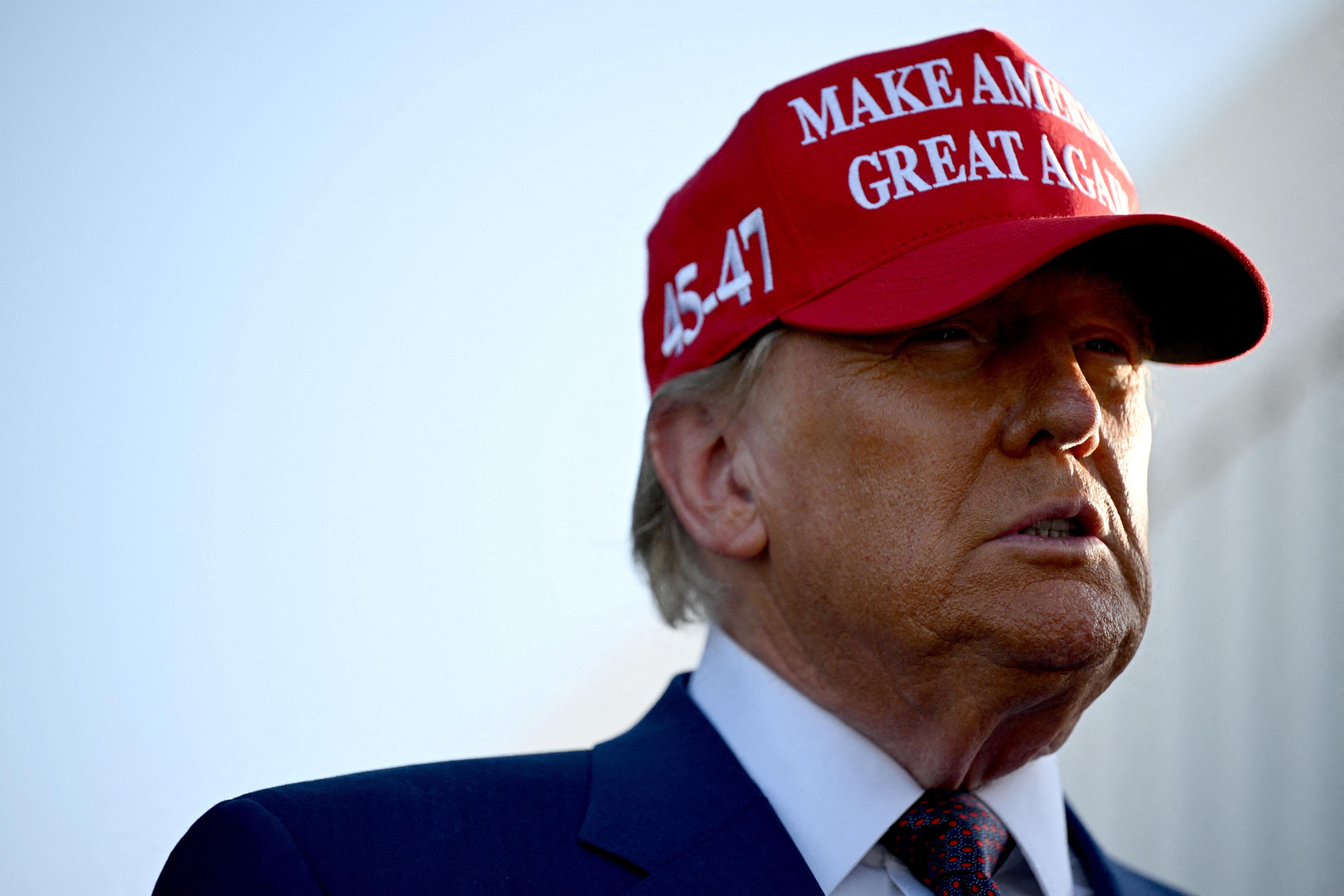
NEW YORK, Nov 26 (Reuters) - A pledge by President-elect Donald Trump to impose tariffs on products from Canada, Mexico and China sent their currencies lower against the dollar on Tuesday, renewing the specter of trade wars and fanning uncertainty in other currency pairs. Trump said late Monday that on his first day in office he would impose a 25% tariff on all products from Mexico and Canada. On China, he said Beijing was not taking strong enough action to curb the export of ingredients used in illicit drugs, floating "an additional 10% tariff, above any additional tariffs, on all of their many products coming into the United States of America." Trading was thin ahead of Thursday's U.S. Thanksgiving holiday, which spills into Friday when many traders take another day off. The dollar jumped more than 2.5% against the peso to its highest since July 2022 in New York afternoon trade. It eclipsed its peak from Nov. 6 after Trump - a longtime tariff proponent who renegotiated the North American Free Trade Agreement with Canada and Mexico during his first term in office - won the Nov. 5 election. It was last at 20.685 pesos. "Because we are in the week that we're in, the statements have not, I don't think, caused all of the damage that we are yet to see. But, of course, the peso is vulnerable to falling into those multi-year lows against the U.S. dollar," said Juan Perez, director of trading at Monex USA, in Washington. Mexican President Claudia Sheinbaum on Tuesday warned of dire economic consequences for both countries from tariffs and suggested possible retaliation. The dollar hit a 4-1/2-year high against its Canadian counterpart , rising more than 1.5%, and was last up 0.61% at C$1.41. "The Canadian Dollar has actually managed to stabilize to some extent here. The biggest loser still the peso. So we went down about 2% in terms of the peso against the U.S. dollar," said Shaun Osborne, chief foreign exchange strategist at Scotiabank in Toronto. The U.S. currency also rose to its highest since July 30 against China's yuan and was trading at 7.2631 yuan. "I think we had a perfect example last night of why volatility is more likely under Trump," said Jane Foley, head of FX strategy at Rabobank. "He can just put out a comment like that outside of usual U.S. market hours that takes people by surprise. It leaves investors, everybody scrambling to work out what this really means." Otherwise, the dollar was mixed a day after falling on the back of Trump's late Friday naming of hedge fund manager Scott Bessent to become U.S. Treasury secretary, which buoyed government bonds and sent yields lower. It was trading 0.57% lower at 153.33 yen while the euro , having been steady in the morning, was 0.33% easier at $1.0459. Both pairs trimmed losses a bit after the Federal Reserve released the minutes of its November meeting where it lowered the policy rate another 25 basis points to 4.50% to 4.75%, showing many policymakers in agreement that it was appropriate to reduce policy restraint gradually. "Participants noted that monetary policy decisions were not on a preset course and were conditional on the evolution of the economy and the implications for the economic outlook. ... They stressed that it would be important for the (Federal Open Market) Committee to make this clear as it adjusted its policy stance," the minutes read. The main scheduled news release left this week is on Wednesday with the October Personal Consumption Expenditures price index. The dollar index measuring the greenback against six rival currencies, including the euro and the yen, was at 107.15, up versus 106.86 late Monday. "I don't think that fact that Japan and the euro zone weren't necessarily included in these comments on tariffs overnight excludes them from any sort of near-term risk of being singled out for tariff action as well," Osborne said. "We know that Trump is not particularly happy with Europe and its trade relationship with the U.S." Perez said the tariff news helps the yen as a safe haven. "Any type of turbulence and turmoil that may be thrown in the way of China, it's not necessarily always going to be a benefit for Japan, but it opens room for Japan to negotiate more of a place of leadership once again in Asia." The Australian dollar sank to a more than three-month low of $0.6434 in early Asian trading and was last down 0.83% at $0.6448. The Aussie is often sold as a liquid proxy for the yuan given China is Australia's biggest trading partner. In cryptocurrencies, bitcoin was trading at $91,738, well below the record high of $99,830 it touched last week. Bitcoin met profit-taking ahead of the symbolic $100,000 barrier, having climbed more than 40% since the U.S. election on expectations Trump will loosen the regulatory environment for cryptocurrencies. Sign up here. https://www.reuters.com/markets/currencies/dollar-gains-after-trump-vows-tariffs-against-mexico-canada-2024-11-26/
2024-11-26 06:17
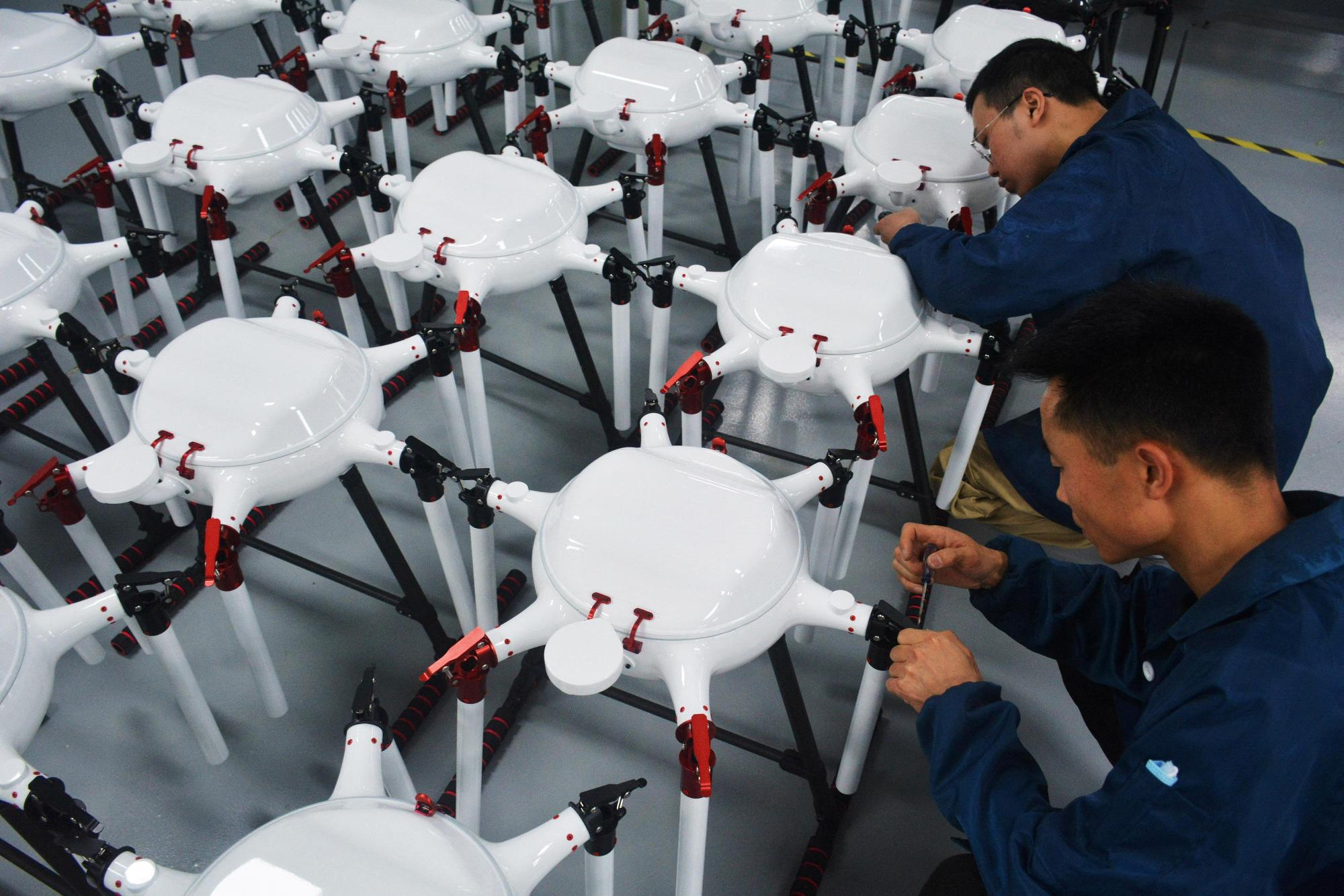
LONDON, Nov 26 (Reuters) - A global resurgence in industrial policies that aim to boost or protect domestic interests threatens international cooperation and could hurt poorer countries in particular, the European Bank for Reconstruction and Development said in an annual report. The annual transitions report, which this year examined data impacting trade for 140 countries, found a "remarkable global resurgence" in strategic interventions designed to shape countries' economies. "Industrial policy is back with a vengeance," Beata Javorcik, EBRD Chief Economist said in an interview. "It is back in rich countries as well as in emerging markets." Such policies often include state-backed grants or loans or subsidies for local industry; 90% of those in advanced economies and EBRD regions discriminate against foreign interests in favour of domestic ones. The report found that such policies have increased rapidly since 2019 due to factors including boosting the green transition, following the lead of major economies such as China or the United States, and because citizens increasingly back a greater state role in the economy. The report found that while such policies can be effective, when they are not carefully managed they risk undermining the level playing field. "This means that industrial policy can become a force that will push the world towards fragmentation," Javorcik said. The report, from the EBRD's office of the chief economist, was the first compiled by it with the use of Artificial Intelligence, which researchers used to crunch data from the Global Trade Alert database. Javorcik said the economic upheaval in recent years - due to globalisation, automation, the green transition and now AI - had amplified support for greater state involvement - particularly among those born before 1975. The increasing use of such policies in lower-income countries that have limited administrative capabilities is particularly concerning, Javorcik said, as they tend to opt for the "most distortive", such as import or export bans or export licensing, which bring risk of corruption. Sign up here. https://www.reuters.com/business/global-resurgence-protective-industrial-policies-ebrd-says-2024-11-26/
2024-11-26 06:11
LITTLETON, Colorado, Nov 26 (Reuters) - Austrian power generators are well positioned to withstand the loss of pipeline gas supplies from Russia thanks to record wind power output alongside the highest hydro generation total in over a decade. A contract dispute between Russian energy giant Gazprom and Austrian gas importer OMV (OMVV.VI) , opens new tab resulted in Gazprom cutting off 50 years of gas flows to OMV earlier this month. But utilities in Austria are in a strong position to make do with only minimal gas supplies over the next several months, thanks to the ongoing reconfiguring of the Austrian power system away from fossil fuels. If Austria manages to shrug off its loss of gas supplies right before winter - when gas use is typically highest - it could be a fresh blow to Russian exporters who are already reeling from sharply lower sales to northern European markets. A successful Austrian pivot away from gas could also act as a template for neighbouring nations, which could feasibly also cut their collective gas use and offset power losses with increased imports through their already interconnected grids. HEFTY HYDRO Austria's network of more than 3,000 hydroelectric power plants is one the largest in Europe, and forms the backbone of Austria's power system by supplying more than two-thirds of the country's electricity. Hydro electricity output over the first 10 months of 2024 is up 17% from the same months in 2023 and the highest in at least a decade, according to energy think tank Ember. High precipitation in late 2023 and early 2024 helped lift Austria's reservoir levels to multi-year highs from the start of the year. Heavy rains in September, which caused localized flooding, then recharged the country's pumped storage system ahead of winter. Electricity production from hydro dams was 4.15 terawatt hours (TWh) in October, according to Ember, up 65% from the same month in 2023. High hydro storage levels combined with continuing strong run-of-river hydro production means power firms will be able to deploy high levels of hydro electricity production in November as well. And as winter is the peak period of Austrian electricity and power use due to higher heating demand, these topped-up hydro resources will allow Austrian power firms to cut back on the use of natural gas over the near to medium term. That will eat into overall gas use by the country, as gas-fired generation typically peaks during winter when power firms use gas-fired generation to plug any hydro power shortfalls during the coldest months of the year. WIND POWER Higher wind power generation is also eating into gas demand in Austria. Over the first 10 months of 2024, wind electricity output in Austria was 7.7 TWh, which was 18% more than over the same period in 2023. That total was also 2.5 times greater than gas-fired electricity output over the same period, cementing wind farms as the second largest source of Austrian electricity behind hydro dams. The timing of Austrian wind power production peaks is also working against gas use potential in the country, as wind speeds in central and southern Europe tend to peak during the winter when gas consumption has historically been highest. If wind speeds follow that seasonal trend again in 2024-25, wind generation should remain higher than gas generation throughout the coming winter, which would dent overall gas use in Austria at a critical time for the country. In all, if Austria can successfully shrug off the loss of gas flows right before winter it would be a bitter blow to Russian gas exporters, as it would demonstrate a further weakening in gas reliance at the heart of Central Europe. The combination of high hydro and wind production could also act as a template for surrounding countries, who are in the midst of charting their own energy transition roadmaps and are also keen to cut reliance on energy imports. Neighbouring countries Czech Republic, Hungary, Switzerland, Italy, Slovenia and Slovakia all have extensive interconnected grids with Austria, and so could feasibly also make cuts to their collective gas consumption and offset any power losses with increased local imports. The opinions expressed here are those of the author, a market analyst for Reuters. Sign up here. https://www.reuters.com/business/energy/hydro-wind-double-act-help-shield-austria-russian-gas-loss-maguire-2024-11-26/

2024-11-26 05:31
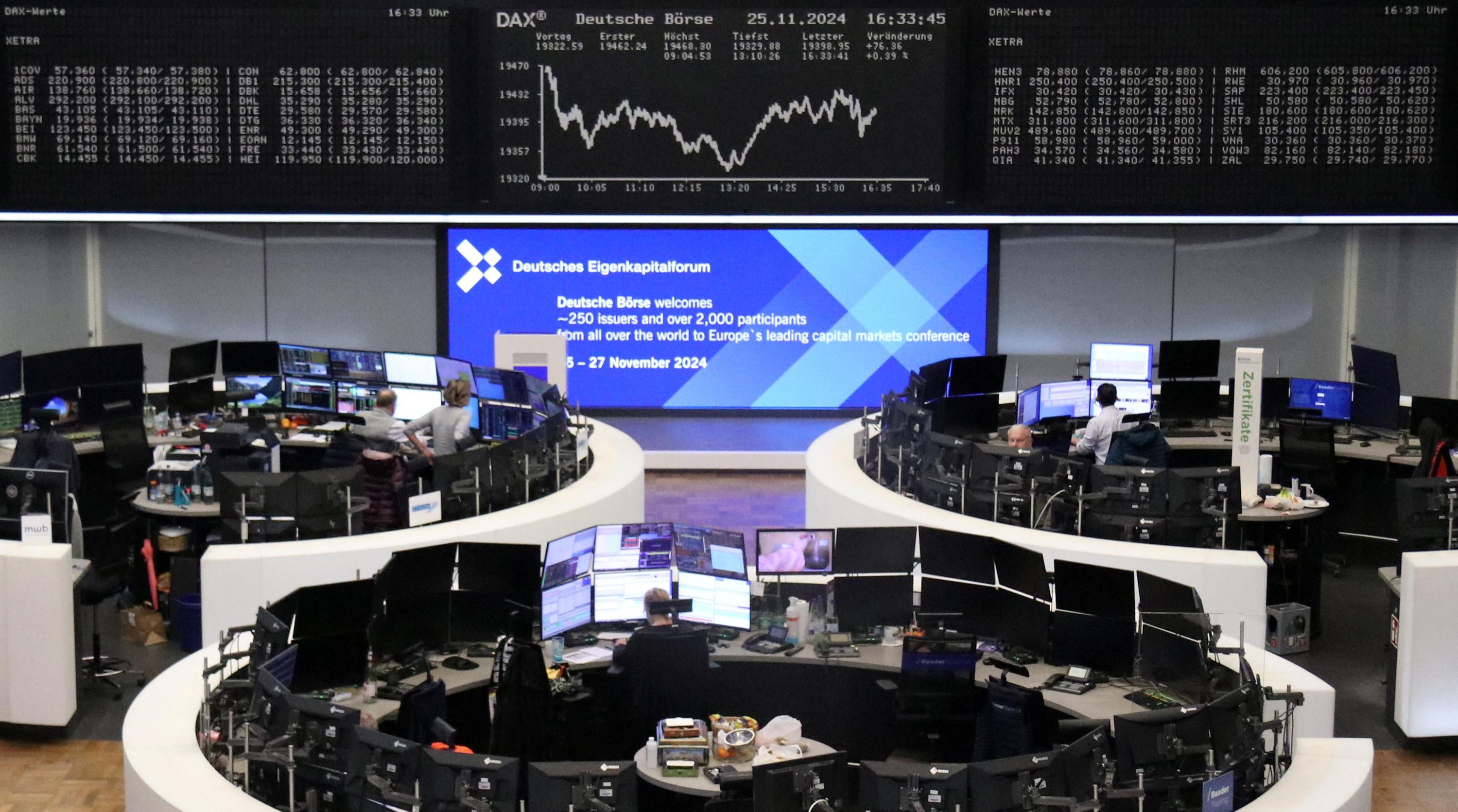
A look at the day ahead in European and global markets from Kevin Buckland And so it begins. Trump took to his platform Truth Social late on Monday to threaten 25% tariffs on Mexico and Canada if they don't better control their borders, and additional tariffs on China. Asian investors still sipping their morning coffees were suddenly racing to hit the sell button, sending the Mexican peso down more than 2% on the dollar at one point and Japan's Nikkei (.225) , opens new tab almost 2% lower. Automakers were standout losers. Toyota (7203.T) , opens new tab tumbled close to 3% and Nissan (7201.T) , opens new tab nearly 5%. Most markets regained some composure by midday in Asia but pan-European STOXX 50 futures are still pointing down by about 1%, with traders wary that Europe will soon be in Trump's cross-hairs. The episode conjures uncomfortable memories for markets that have got used to reacting to scheduled events such as Fed policy announcements and monthly payrolls reports during Joe Biden's tenure as president. Now, investors must brace for market-moving Trump posts at any hour, like during his first term in office. One analyst quipped that it was time to consider downloading Trump's Truth Social app since X, formerly known as Twitter, is no longer the incoming President's platform of choice. But going by Trump's first term, social media posts and reality haven't always matched up. There's still some way to go before Trump takes the oath again in January, meaning sentiment towards Mexico, Canada and other tariff targets could change. Ultimately, Trump has said many times, he's all about making deals. There's little on the calendar in Europe to distract from Trump's post, barring some central bank speakers from around the region. Bank of England chief economist Huw Pill is due at the House of Lords to take questions on Britain's economic health, or lack of it. ECB board member Elizabeth McCaul speaks in Frankfurt and peer Mario Centeno presents the Bank of Portugal's financial stability report. Riksbank Deputy Governor Anna Seim joins a seminar in Stockholm and Bank of Finland Governor Olli Rehn answers questions in parliament. Later in the day, the Fed releases minutes of its early November meeting when it cut rates by a quarter point, following the first, super-sized half-point cut of the current easing campaign in September. Key developments that could influence markets on Tuesday: - BoE's Pill in upper house - ECB's McCaul and Centeno speak at separate events - Riksbank's Seim speaks - Bank of Finland's Rehn in parliament - Fed minutes Sign up here. https://www.reuters.com/markets/europe/global-markets-view-europe-2024-11-26/
2024-11-26 05:26
LIMA, Nov 25 (Reuters) - Thousands of small-scale miners in Peru blocked roads and camped outside Congress on Monday to demand extension of a program that allows them to operate temporarily, but which authorities say has expanded illegal mining. A government bill sent to Congress last week gave small-scale miners a six-month period to formalize their activities after the current program expires on Dec. 31, but miners say that is not enough time. "We are asking for at least a two-year extension and for a new law that will allow us to complete our formalization," said the president of the National Confederation of Small and Artisanal Mining (Confemin), Maximo Becquer. Hundreds have set up tents near Congress since last week and thousands of miners in uniforms and plastic helmets have blocked the main coastal highway in the southern regions of Ica and Arequipa, leaving hundreds of freight and passenger vehicles stuck for up to five kilometers. The program, known as REINFO, started in 2012 and gave workers a temporary permit while they waited to be formalized. REINFO has been extended several times and currently has 85,000 registered artisanal miners, only about 20% of which have been formalized. Many workers have used the temporary permit to mine in prohibited areas or third-party property without having to comply with labor or environmental regulations, according to authorities and private mining companies. Attacks on formal mines have left at least 30 dead in the past two years. Peru produced 99.7 million grams of gold in 2023, a 2.8% year-on-year rise. According to the government, small artisanal mines extract around 40% of that, but small-scale mining groups put the figure at 50%. "We are here sleeping in the open air and the government is not paying attention to us," said Nelson Calderón, a 45-year-old miner from the Andean region of Ayacucho who came to Lima to protest. "On December 31, REINFO will be canceled and where are we going to end up?" Pedro Yaranga, an analyst specializing in social conflicts in Peru, said that there are strong competing interests between Congress and small-scale miners that could escalate. "If this isn't resolved, it's going to be a timebomb," Yaranga said. Sign up here. https://www.reuters.com/world/americas/perus-small-miners-block-highways-camp-outside-congress-demanding-registry-2024-11-26/

2024-11-26 04:25
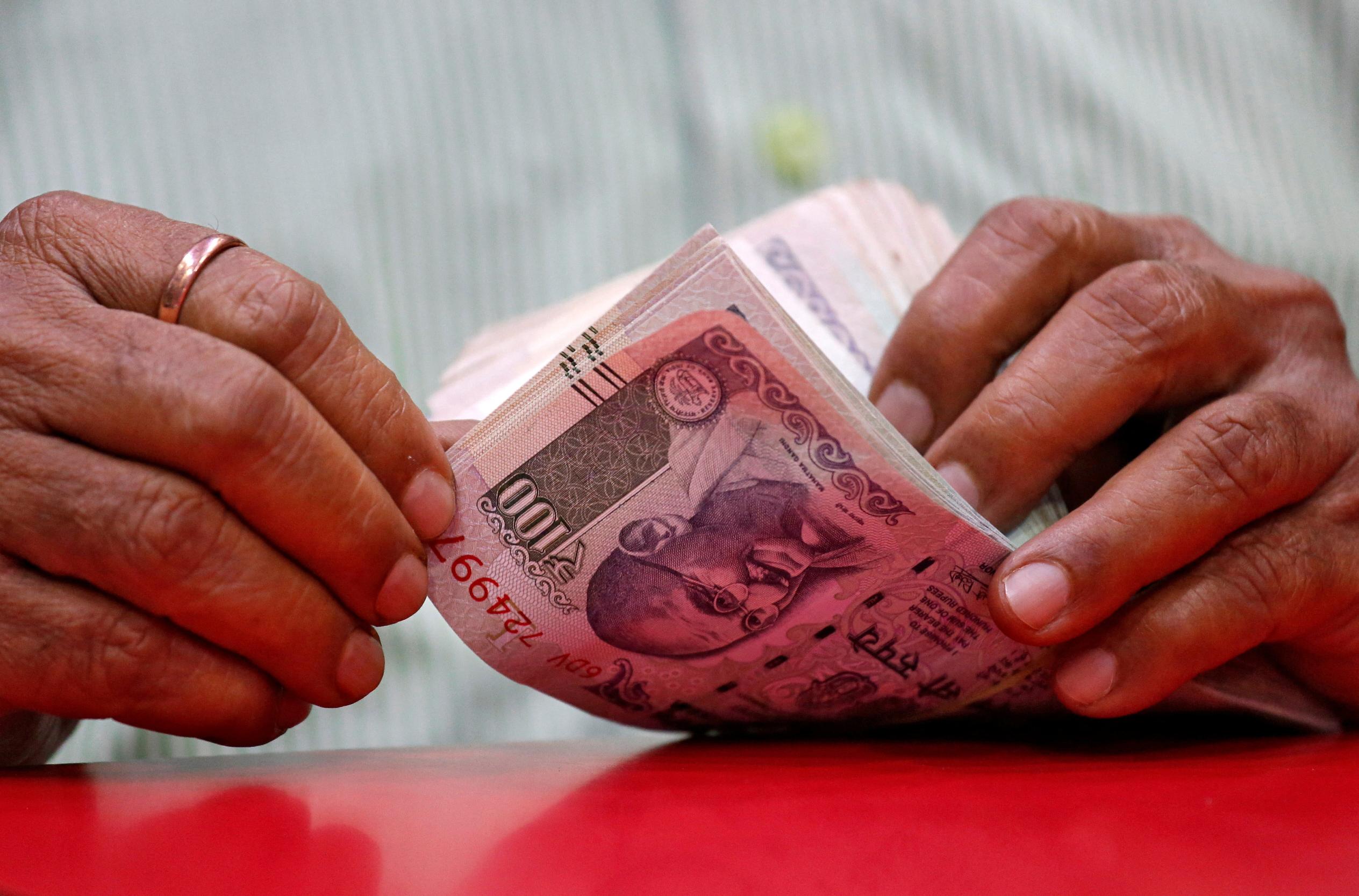
MUMBAI, Nov 26 (Reuters) - The Indian rupee rose in early trading on Tuesday, boosted by residual dollar inflows related to the rejig of MSCI's global equity indexes, which helped it sidestep weakness in regional peers after U.S. President-elect Donald Trump's tariff threat rattled markets. The rupee was at 84.23 against the U.S. dollar as of 09:40 a.m. IST, its highest level in nearly three weeks, following its previous close of 84.2875. The dollar pared early gains made in Asia trading after Trump said he would impose a 25% tariff on all products from Mexico and Canada, and an additional 10% tariff on goods from China. The dollar index was last quoted up 0.1% at 107 after touching a peak of 107.5. Asian currencies were mostly weaker, tracking a decline in the offshore Chinese yuan which was down 0.2% at 7.25. The Mexican person declined 1.2%, while the Candian dollar weakened by 0.8%. The rupee, however, fared better on account of residual dollar inflows related to the rebalancing of MSCI's global equity indexes, which became effective after market close on Monday, two traders said. Foreign investors net bought over $1 billion of local stocks on Monday, helping the currency recover after declining to its all-time low of 84.5075 in the previous week. The Reserve Bank of India's "vigilant stance will be critical in managing volatility, with interventions likely at key levels," said Amit Pabari, managing director at FX advisory firm CR Forex. The RBI had intervened on Friday to cap weakness in the rupee and also instructed banks to trim speculative positions against the currency, Reuters reported. Investors now await the minutes of the Federal Reserve's November policy meeting due later in the day for cues on policymakers' thinking about the future path of policy rates. Sign up here. https://www.reuters.com/markets/currencies/rupee-rises-residual-equity-index-rejig-inflows-sidesteps-weak-asia-fx-2024-11-26/