2024-11-25 10:06
MUMBAI, Nov 25 (Reuters) - The Indian rupee logged its strongest one-day gain since June on Monday, aided by dollar inflows related to the rebalancing of MSCI's global equity indexes, alongside softness in the dollar and lower U.S. bond yields. The rupee closed at 84.2875 against the U.S. dollar, up 0.2% from its previous close, its biggest single-day gain since June 3. The currency rose to 84.2550 during the session, its highest since Nov 7. The dollar index and Treasury yields kicked off Asia trading on the backfoot as markets reacted to U.S. President-elect Donald Trump's nomination of investor Scott Bessent for the post of Treasury secretary. Bessent, who has spent his career in finance, is seen as a comforting choice for markets and expected to keep a steady hand on government finances. The dollar index was last quoted at 106.8, down 0.5% from its closing level on Friday. U.S. Treasury yields were lower with the 10-year yield down 7 basis points at 4.34%. "It looks like geopolitics and the diverging US-eurozone macro story will keep the dollar bid into year-end after all," ING Bank said in a note, pegging the dollar index in a 106.5-107.5 range for the week. The rupee was also helped by dollar inflows likely related to the rebalancing of MSCI's global equity indexes, which will be effective after markets close on Monday. While dollar sales were dominated by foreign banks early in the session, it was pretty broad based in the latter half, a trader at a private bank said. Benchmark Indian equity indexes BSE Sensex (.BSESN) , opens new tab and Nifty 50 (.NSEI) , opens new tab ended higher by more than 1% each. Investors now await the minutes of the Federal Reserve's November meeting and core U.S. PCE inflation figures, both due on Wednesday. Sign up here. https://www.reuters.com/markets/currencies/rupee-posts-best-day-over-five-months-boosted-by-inflows-softer-dollar-2024-11-25/

2024-11-25 10:01
Index at 85.7 vs 86.0 forecast Decline affects all sectors except trade Analyst says Trump win, German election will still leave mark BERLIN, Nov 25 (Reuters) - German business morale fell more than expected in November in further bad news for a country set to be the worst performer among the Group of Seven (G7) rich democracies this year. The Ifo institute said its business climate index decreased to 85.7 in November from 86.5 in the previous month, a survey showed on Monday. Analysts polled by Reuters had forecast a reading of 86.0. "The German economy is lacking strength," Ifo president Clemens Fuest said. The decline in business morale was mainly due to the poorer assessment of the current situation, with a decline to 84.3 in November from 85.7 in October. Expectations also fell, but only slightly to 87.2 in November from 87.3 in the previous month, Ifo said. Robin Winkler, chief economist for Germany at Deutsche Bank Research found it remarkable that expectations remained stable given the political events of the past three weeks. "Either German companies are not yet overly concerned about US trade policy or these concerns are being offset by the prospect of new elections in Germany," Winkler said. The decline affected all sectors with the exception of trade, as retail and wholesale companies have a better assessment of the current situation and are less pessimistic than in previous months, according to Ifo. The increase in trade is interesting given that Germany would be the big loser if the Trump presidency sparked a trade war between the United States and Europe, with Germany's previously much-envied industrial strength potentially becoming an acute vulnerability. Even more important is the impact that tax cuts and deregulation in the United States, combined with already low energy prices, would have on German competitiveness, "which is definitely a negative one," said Carsten Brzeski, global head of macro at ING. The Ifo index tends to capture short-term events with a certain delay, Brzeski said. "In this regard, the risk is high that the results of the US elections and the collapse of the German government will still leave their marks on sentiment over the next few months." IN THE DOLDRUMS "The reading confirms that the German economy remains in the doldrums," said Franziska Palmas, senior Europe economist at Capital Economics, in reference to the business sentiment figure. Germany's economic downturn accelerated in November as business activity fell for a fifth month running and at the quickest rate since February, the HCOB German flash composite Purchasing Managers' Index(PMI) showed on Friday. Both the Ifo index and the PMI suggest that, after expanding by 0.1% in the third quarter, German gross domestic product may contract again in the last quarter of the year, according to Palmas. "The outlook for 2025 is also poor as a loss of competitiveness in industry and adverse demographics are likely to offset any boost from a recovery in real household incomes and monetary easing," Palmas said. Sign up here. https://www.reuters.com/markets/europe/german-business-sentiment-falls-november-2024-11-25/

2024-11-25 08:20
KAMPALA, Nov 25 (Reuters) - The Ugandan shilling was stable on Monday, with dollar inflows from non-governmental organisations and remittances lending some support, traders said. At 0755 GMT, commercial banks quoted the shilling at 3,700/3,710, same level as Friday's close. Sign up here. https://www.reuters.com/markets/currencies/ugandan-shilling-stable-charity-remittance-inflows-help-2024-11-25/

2024-11-25 07:49
At least 23 people injured in Kharkiv Drones target power and industrial infrastructure Zelenskiy calls for more sanctions, arms KYIV, Nov 25 (Reuters) - Russian missiles damaged residential buildings in Ukraine's eastern city of Kharkiv and Odesa in the south, and a blizzard of drones caused temporary power cuts in Mykolaiv region and targeted the capital Kyiv, Ukrainian officials said on Monday. Russia, which is making territorial gains in Ukraine's east, is conducting nightly attacks on faraway cities using missiles as well as cheaply produced "suicide" drones and low-cost "decoy" drones, which tie up Ukrainian air defences. Of 145 drones used overnight, Ukraine shot down 71 and lost track of 71 more, likely due to electronic warfare measures used against them, the air force said. Residents of the capital could hear the buzzing engines of attack drones flying over the city for several hours overnight. The sound of automatic gunfire erupted occasionally as air defences tried to shoot them down. President Volodymyr Zelenskiy called on Kyiv's Western allies to step up pressure on Russia to prevent the components needed for the weapons systems reaching it. "These Russian attacks on Ukrainian life can be stopped," he said. "With pressure, sanctions, blocking the occupiers' access to the components they use to create the tools of this terror, arms packages for Ukraine, and a resolve that must be unwavering." A Russian missile attack on the northeastern city of Kharkiv injured at least 23 people and damaged over 40 buildings on Monday morning, the regional governor and national police said. Another missile attack on the southern city of Odesa also damaged residential buildings and injured 10 people, Ukraine's interior ministry said. The overnight drone attack targeted energy infrastructure in southern region of Mykolaiv, causing power cuts while industrial facilities in the southeastern Zaporizhzhia region were also struck, their authorities said on Monday. Russia has continuously pummelled Ukraine's power grid and infrastructure since launching its full-scale invasion in February 2022. Moscow says it does not target civilians but the U.N. has verified the deaths of almost 12,000 Ukrainian civilians and officials in Kyiv say the total is likely much higher. The latest Russian onslaught on energy infrastructure renewed Ukrainians' fears of long winter blackouts, although there were no casualties or significant damage reported in either Kyiv or the surrounding region. Sign up here. https://www.reuters.com/world/europe/russia-attacks-energy-infrastructure-ukraines-mykolaiv-region-governor-says-2024-11-25/

2024-11-25 07:35
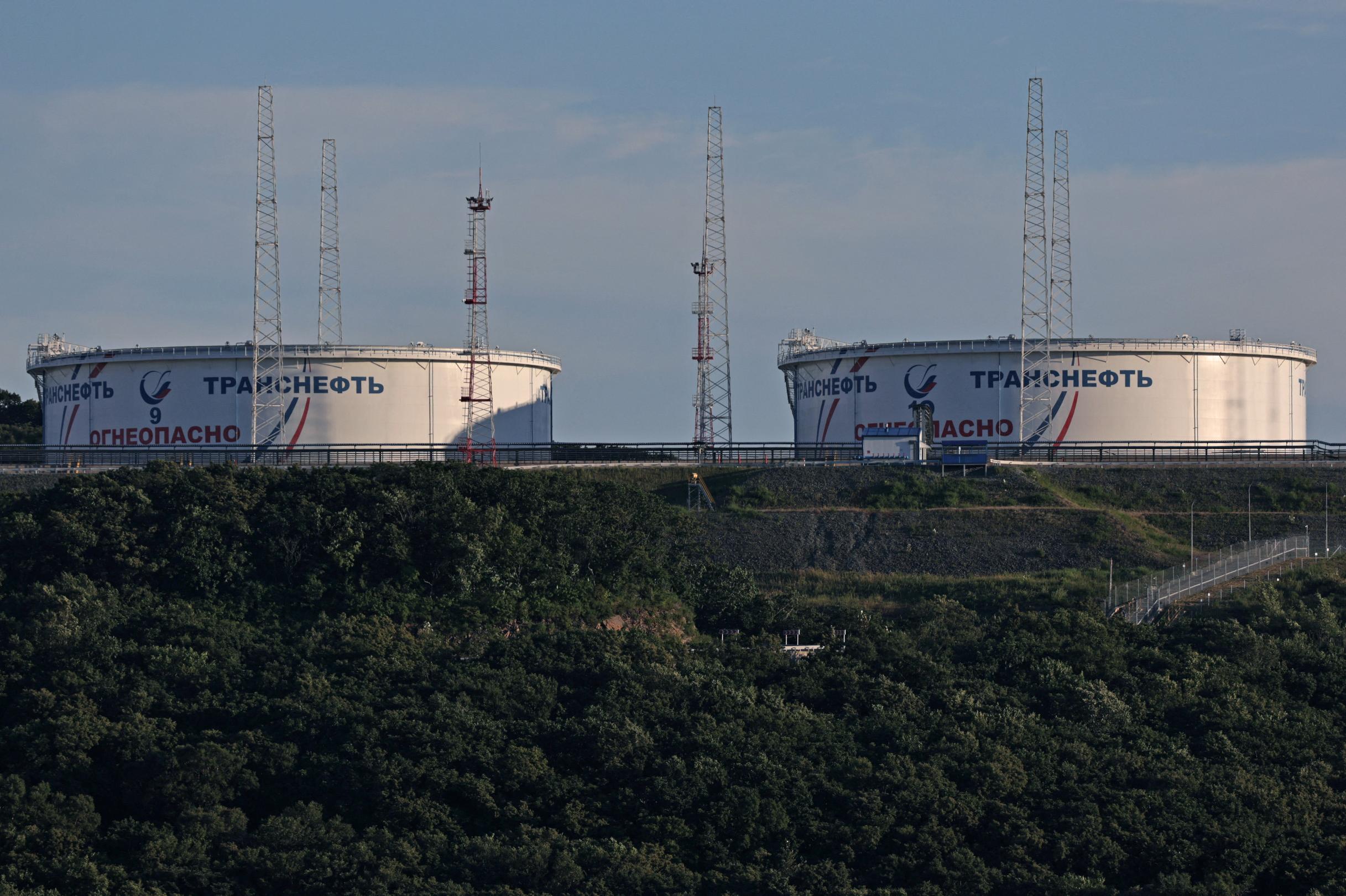
ALMATY, Nov 25 (Reuters) - Kazakhstan is considering shipping a significant part of its oil exports via the Baku-Tbilisi-Ceyhan (BTC) pipeline in the medium term, Energy Minister Almasadam Satkaliyev said on Monday. Such a move would make Astana less dependent on Russia which currently tranships the lion's share of Kazakh exports. Satkaliyev said the Central Asian nation could increase BTC shipments to as much as 20 million metric tons a year from the current 1.5 million tons as it increases crude output, but provided no exact time frame. "There is interest in developing and gradually increasing the volume of Kazakh oil shipments in this direction both on our side and from the Azerbaijani partners," he told parliament. Kazakhstan will produce 88.4 million metric tons of oil this year, Satkaliyev said, a reduction from an original plan to produce more than 90 million tons, which reflects maintenance breaks at large oilfields and Kazakhstan's OPEC+ commitments. Kazakhstan will export 68.8 million tons of oil this year, he said, including 55.4 million tons via the Caspian Pipeline Consortium, 8.6 million tons via the Atyrau-Samara Pipeline, 3.6 million tons via the Caspian Sea and 1.1 million tons via a pipeline to China. Starting from 2026, Kazakhstan expects to produce more than 100 million tons of oil per year. Sign up here. https://www.reuters.com/business/energy/kazakhstan-produce-884-mln-tons-oil-this-year-2024-11-25/

2024-11-25 07:31
Reports suggest Israel-Lebanon ceasefire could be reached Brent and WTI futures fall more than 2% OPEC+ to mull keeping cuts in place, Azerbaijan official says HOUSTON, Nov 25 (Reuters) - Oil prices fell more than $2 a barrel on Monday after multiple reports that Israel and Lebanon had agreed to the terms of a deal to end the Israel-Hezbollah conflict, citing unnamed senior U.S. officials. Brent crude futures settled at $73.01 a barrel, down $2.16, or 2.87%. U.S. West Texas Intermediate crude futures finished at $68.94 a barrel, down $2.30 or 3.23%. Israel said on Monday it is moving toward a ceasefire in the war with Hezbollah but there are still issues to address, while Lebanese officials voiced guarded optimism but said Israeli Prime Minister Benjamin Netanyahu was not to be trusted. "It seems the news of a ceasefire between Israel and Lebanon is behind the price drop, though no supply has been disrupted due to the conflict between the two countries and the risk premium in oil has been low already before the latest price decline," said Giovanni Staunovo of UBS. Oil markets are being pushed up and down on rising or falling supply disruption fears, Phil Flynn, senior analyst at Price Futures Group, said in a Monday note. "A report that Israel’s Prime Minister Netanyahu approves Lebanon ceasefire deal in principle could be a bearish catalyst, yet we must see more details as they become available. Last week the world was stunned as Russia launched supersonic missiles" at Ukraine, Flynn wrote in his energy report. Both Brent and US WTI contracts last week notched their biggest weekly gains since late September to reach their highest settlement levels since Nov. 7 after Russia fired a hypersonic missile at Ukraine in a warning to the United States and the UK following strikes by Ukraine on Russia using U.S. and British weapons. OPEC+, at its next meeting on Sunday, may consider leaving its current oil output cuts in place from Jan. 1, Azerbaijan's Energy Minister Parviz Shahbazov told Reuters. The group, which includes the Organization of Petroleum Exporting Countries plus allies like Russia, has postponed hikes this year amid demand worries. Azerbaijan is a member of OPEC+, which will meet online on Dec. 1. Sign up here. https://www.reuters.com/business/energy/oil-holds-2-week-high-russia-iran-tensions-support-prices-2024-11-25/