2024-11-25 05:36
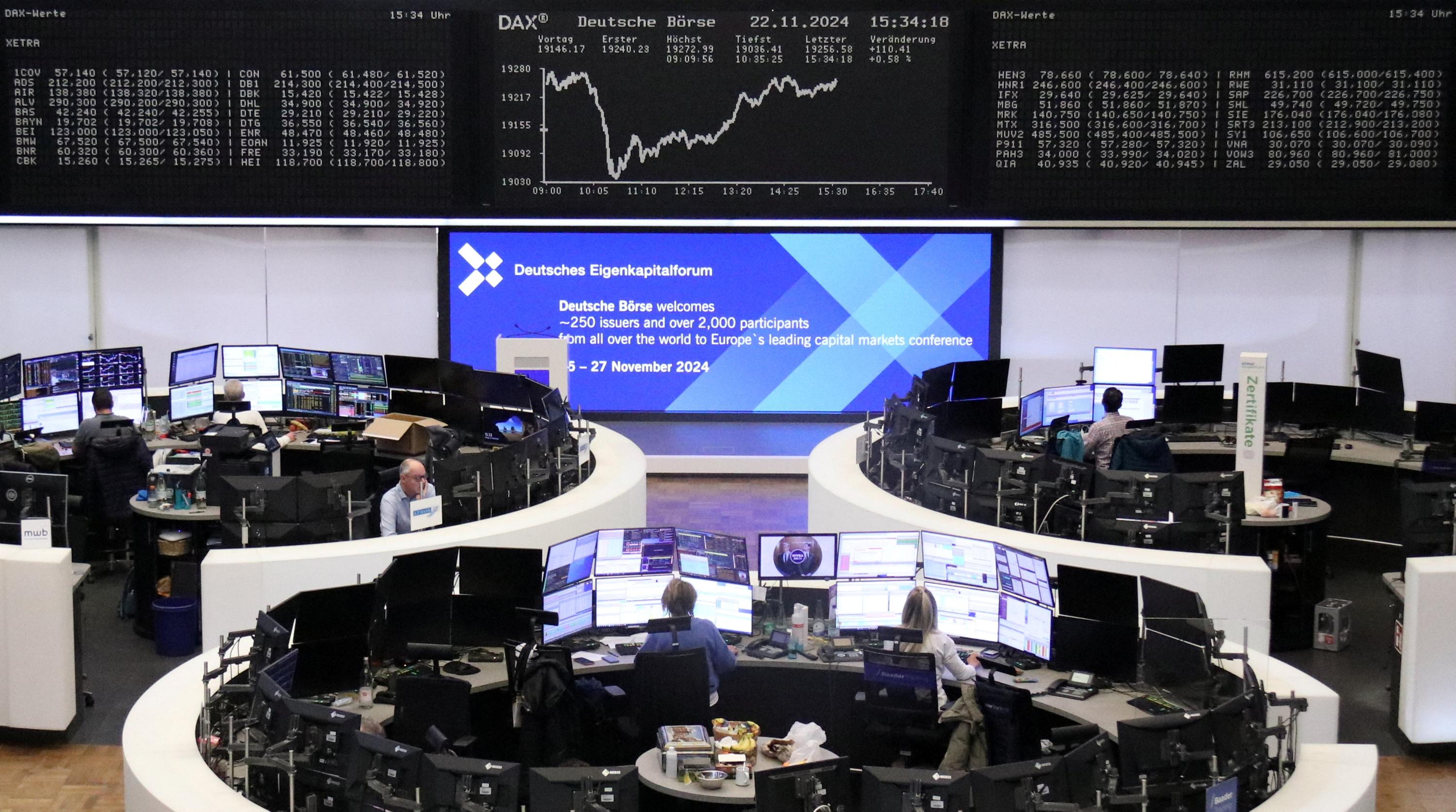
A look at the day ahead in European and global markets from Wayne Cole Asia has been dominated by the market reaction to the choice of fund manager Scott Bessent as incoming U.S. Treasury Secretary, with the main feeling one of relief that he's a mainstream candidate rather than an unknown. The fact that Bessent talks like a fiscal hawk was enough to push 10-year Treasury yields down by 6 basis points, though whether he will be able to trim deficits while rolling over due-to-expire tax cuts remains to be seen. In various media appearances he has talked of cutting the budget deficit to 3% of GDP and dealing with the mountain of U.S. debt, apparently by slashing spending and lifting economic growth. Sceptics would note the U.S. has had strong growth for some time and the deficit has only got larger, while the amount of discretionary spending there is to cut is trivial compared with the essential stuff such as Medicare and defence. Bessent has spoken in favour of tariffs, suggesting they should be objectives "layered in gradually", while the levels of tariffs being mentioned, such as 60% on Chinese goods, were "maximalist" positions that might be watered down. He has also voiced support for a strong dollar, seemingly leaning against President-elect Donald Trump's previous dalliance with devaluation as a way to curb trade deficits. Thus, while the dollar has dipped today in line with bond yields, the longer-term bull argument appears intact. The dollar has been underpinned by the divergence in economic performance between the U.S. and Europe, a point driven home by last week's PMIs. Markets are fully priced for a quarter-point cut from the ECB next month, and imply almost a 58% chance it will ease by a full 50 basis points on Dec. 12. Wagers on the Fed have gone the other way, with the probability of a rate cut in December shrinking to 52%, from atop 70% a month ago. The market has only 65 bps points of Fed easing priced in by the end of 2025, compared with 154 bps for the ECB. The odds will be further refined this week by the tone of the minutes of the Fed's last meeting, along with October inflation figures from the United States and Europe. U.S. core PCE inflation is seen rising a tick to 2.8%, though in part due to higher costs for financial management that reflect the surge on Wall Street, rather than demand in the economy. EU inflation is also expected to nudge higher on base effects as a fall in the CPI from last year drops out of the calculation. Note there are no Fed speakers scheduled this week, presumably because of the U.S. Thanksgiving holiday, but plenty of ECB and BoE officials are on the menu. Key developments that could influence markets on Monday: - Germany IFO November Business Climate Survey - Chicago and Dallas Fed surveys - Speeches from ECB Chief Economist Philip Lane and ECB member Gabriel Makhlouf - Appearances by Bank of England Deputy Governor Clare Lombardelli and Monetary Policy Committee member Swati Dhingra Sign up here. https://www.reuters.com/markets/europe/global-markets-view-europe-2024-11-25/
2024-11-25 05:12
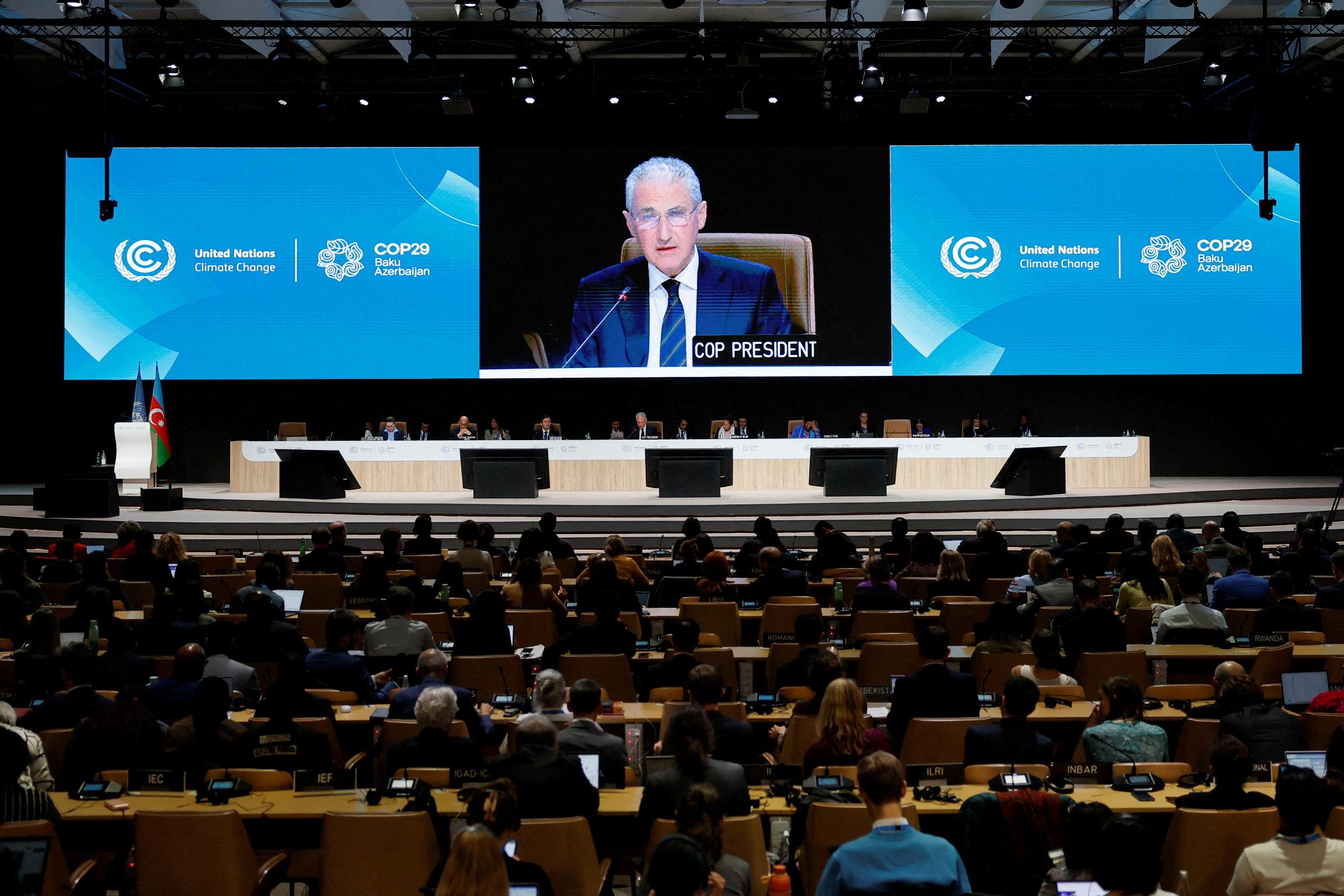
Babayev secures $300 billion climate finance plan Trump's election, geopolitical issues overshadow talks Developing world wanted rich nations to commit more funding BAKU, Nov 25 (Reuters) - When COP29 President Mukhtar Babayev stepped to the podium at the closing meeting of the Baku climate summit on Sunday morning, hoping to clinch a hard-fought agreement on global climate finance, he carried with him two speeches. One was crafted around a hoped-for deal being struck, while the other for the possibility of a summit-collapsing impasse, according to two sources familiar with the matter who spoke to Reuters on condition of anonymity. One of the sources - a person in the COP29 presidency - told Reuters that they worked through challenging negotiations until the last minute to ensure what it called the Baku Breakthrough, but still prepared different versions of the final speech for different possible outcomes. In the end, Babayev managed to gavel through the $300 billion finance plan to help developing nations cope with the soaring costs of global warming over the next decade before critics had time to object, allowing him to read the more positive speech. He praised the agreement as a breakthrough and shamed the deal's doubters as "wrong", even as many of the climate deal's intended recipients slammed it as woefully inadequate. Babayev's preparation for different outcomes at the divisive summit in the Caspian Sea nation of Azerbaijan reflected what many in the audience had already known before it began: the Baku climate talks were never going to go smoothly. Expectations for a deal were depressed by worries of a looming U.S. withdrawal from global climate cooperation, geopolitical turmoil, and a rise of isolationist politics that had shunted climate change off much of the world's top priorities list. Those obstacles loomed large in Baku and will continue to overshadow global climate efforts in the months ahead as Brazil prepares for next year's much broader conference in the Amazon rainforest city of Belem - where the world will plot a years-long course for steeper emission cuts and building resilience in the fight against climate change. "Multilateralism as a whole is under threat," said Eliot Whittington, chief systems change officer at the Cambridge Institute for Sustainability Leadership. "Indeed, the UNFCCC is probably the bright spot – proving that even in the face of incredibly hostile geopolitics and on fundamentally difficult questions, a deal can be made," he said, referring to the U.N. body sponsoring the annual climate summit. But the slow pace of progress, with global emissions still rising, has raised tensions and calls for reform. "This is something that needs to be looked at, when just a handful of countries, based on their own economic interests, can almost wreck the entire process," Sierra Leone Environment Minister Jiwoh Abdulai told Reuters. TRUMP EFFECT Among the biggest factors clouding the negotiations in Baku was the looming return of climate skeptic Donald Trump as president of the United States, the world's biggest economy, largest historical emitter of greenhouse gases, and top producer of oil and gas. Trump, who takes office in January, has pledged to withdraw the United States from the global Paris Agreement on climate change, as he did during his first 2017-2021 term in the White House, and has called climate change a hoax. Negotiators at the Baku conference said that while the U.S. delegation had helped in coming up with the climate finance deal, the country was unable to take a high-profile leadership role like it has in past climate summits, and it could not provide assurances the next administration would honor its pledges. "With the United States, well, the voters have voted and that's the way it is. What they're going to do, we do not know," South African Environment Minister Dion George said. U.S. officials at the COP29 conference sought to reassure global partners that market forces, existing federal subsidies, and state mandates would ensure continued renewable energy deployment even if Trump disengages from the global process. The war in Ukraine and rising conflict in the Middle East, meanwhile, have diverted global attention to security and energy availability, and led many governments to tighten their purse strings, experts said. That made getting a bigger climate finance number hard, observers to the talks said. "Even maintaining climate finance at current levels in the current political environment is a huge fight," said Joe Thwaites, senior advocate on international climate finance at the Natural Resources Defense Council, an environmental group. The agreement to provide $300 billion annually by 2035 would theoretically triple rich countries' previous commitments to provide $100 billion by 2020. That earlier goal was reached in full only in 2022, and expires in 2025. The unwillingness of wealthy countries to offer more money and the pressure to conclude even a weak deal ahead of more political turbulence became a major source of frustration for the least developed countries and small island states, who told the Baku conference they felt sidelined in the negotiations. At one point in the summit's final stretch, negotiating blocs representing both groups walked out of talks in protest, delaying a deal by hours. "We came in good faith, with the safety of our communities and the well-being of the world at heart," Tina Stege, the climate envoy for the Marshall Islands, said at the closing plenary. "Yet, we have seen the very worst of political opportunism here at this COP, playing games with the lives of the world's most vulnerable people." India's envoy, Chandni Raina, used her time to roundly reject the climate finance deal gaveled through by Babayev. "We are disappointed in the outcome which clearly brings out the unwillingness of the developed country parties to fulfil their responsibilities," she told the summit. Climate advocates said that, while the deal is better than an outright impasse, the rifts exposed by the conference as well as the loss of trust in the process among poorer countries will pose a problem for Brazil as it prepares for COP30. "I think this is a toxic chalice for Belem, and it's going to be up to Brazil how they're going to restore the trust," said Oscar Sorria, director of the Common Initiative, a think tank focused on global financial reform. Sign up here. https://www.reuters.com/business/environment/contentious-cop29-deal-shows-climate-cooperation-fraying-edges-2024-11-25/
2024-11-25 05:11
Carbon deal set to boost market for credits Finance tensions likely to accelerate new taxes BAKU, Nov 25 (Reuters) - COP29 deals on finance and carbon markets could lead to billions more dollars flowing around the business world if countries next year can deliver climate plans with clear policies for markets and investment. Those plans, which are due to the climate body of the United Nations before the next U.N. climate summit in Brazil, need to describe steps for making projects realistic - and less risky. Yet questions remain on the pace of transition after some countries sought to slow down the world's shift from fossil fuels, giving boards already wrestling with the implications of Donald Trump returning to the U.S. presidency even more tough questions to ponder. Two weeks of acrimonious negotiations in Azerbaijan's capital Baku resulted in a deal for $300 billion in annual climate finance by 2035. Many developing countries said the pledge would not be enough to help them deliver robust national climate plans. While private sector investment was teased throughout the summit - including in a multilateral development bank pledge to mobilise $65 billion of it each year - the devil will be in the details. Some of those details could come up in discussions between countries in the run-up to next year's COP30 summit, where they will be mapping out their next set of emissions-cutting plans. Countries are meant to submit their national climate plans in February, but many have said they will miss the deadline. Businesses have called for those plans to include projects and efforts that are "investment ready" - and with as much specificity as possible - to help investors gauge their long-term commitments and risks. Money will start flowing only after the shared goals agreed at events like COP29 are translated into "regulation, legislation and other policy measures", said Thomas Tayler, head of climate finance at asset manager Aviva Investors. Equally important will be showing commitment to implementing these policies and rules and reporting on their progress, Tayler said. MIXED ENERGY MESSAGES While climate negotiations are hard going even at the best of times, the latest round began in Baku only a week after Trump, a climate denier, won the Nov. 5 U.S. presidential election. Few expect Trump to deliver climate finance from the world's biggest economy or to protect U.S. policies friendly for climate investment. While countries at COP29 set the new $300 billion climate finance target, they guaranteed the sum only by 2035, though they pledged to prioritize the most vulnerable nations for those funds. They also have begun discussing new potential revenue streams such as global taxes - on polluting industries such as aviation and cargo shipping, on oil and gas trades, on financial transactions and on super-wealthy people. While these efforts could help to make infrastructure projects more appealing in riskier parts of the world, the work of attracting profit-focused investors is still in progress. The world's green energy transition has already been slowed by war in Ukraine and a resulting energy crisis, with governments slowing green reforms and companies like BP and Unilever rowing back on their efforts. On that point, COP29 did not help. Amid lobbying by countries including Saudi Arabia, according to several country sources at COP29, the summit failed to offer any steps for furthering last year's COP28 pledges to shift away from fossil fuels and to triple their renewable capacity by 2030. "The influence of fossil fuel lobbies remains a significant obstacle that must be addressed ahead of COP30 if it is to deliver meaningful progress," said David King, chair of the Climate Crisis Advisory Group. CARBON BOON For companies involved in carbon removal projects, COP29 offered a rosier outlook by delivering a long-fought agreement to resolve rules for trading national carbon offsets, including establishing a central registry that can also issue those credits and track their sales. The hope is that clarity around the market structure will encourage countries and companies to invest while also addressing their worries about reputational risk. The deal, however, made clear that the U.N. registry's involvement did not amount to an automatic seal of approval for the quality of credits. "There's a lot more financing to be done on the basis of this agreement," said Eliot Whittington, chief systems change officer at Cambridge Institute for Sustainability Leadership. Sign up here. https://www.reuters.com/business/business-seeks-details-face-mixed-cop29-climate-messages-2024-11-25/
2024-11-25 00:11
Investors welcome Bessent as US Treasury secretary pick Wall Street indexes up: S&P 500, Dow hit records Dollar, US Treasury yields, oil prices all fall NEW YORK/LONDON, Nov 25 (Reuters) - MSCI's global equities gauge rose and U.S. government bonds rallied while the dollar fell on Monday as investors welcomed the incoming U.S. president's selection of fund manager Scott Bessent as the next U.S. Treasury secretary. Wall Street indexes closed higher with the S&P 500 and the Dow touching intraday records as investors approved ofDonald Trump's choice. Investors said they were hoping for tax cuts as well as fiscal caution from Bessent. U.S. Treasury yields fell sharply as bond investors bet on a more moderate than feared U.S. fiscal trajectory. In an interview published on Sunday, Bessent told the Wall Street Journal that both tax and spending cuts were priorities. And Bessent told CNBC earlier in November, before his selection as Treasury secretary, that he would recommend "tariffs be layered in gradually." "Bessent understands a lot of different asset classes and is going to help Trump stay very sensitive to market reactions," said Carol Schleif, chief investment officer, BMO family office noting that investors worried that other candidates for the job would take a hard stance on tariffs and spending and think less about the potential market reaction. "Markets are pretty self-centered. They want to make sure people are paying attention to them or they throw a tantrum." The Dow Jones Industrial Average (.DJI) , opens new tab rose 440.06 points, or 0.99%, to 44,736.57,which was a record closing high. The S&P 500 (.SPX) , opens new tab rose 18.03 points, or 0.30%, to 5,987.37 and the Nasdaq Composite (.IXIC) , opens new tab rose 51.18 points, or 0.27%, to 19,054.84. MSCI's gauge of stocks across the globe (.MIWD00000PUS) , opens new tab rose 3.84 points, or 0.45%, to 857.97 while Europe's STOXX 600 (.STOXX) , opens new tab index had closed up 0.06% earlier. The European index hit a two-week high during its trading session, boosted by the Bessent nomination and comments from the European Central Bank chief economist on monetary policy easing. In a trading week shortened by Thursday's U.S. Thanksgiving holiday, key events will include the release of October Personal Consumption Expenditures, the latest GDP estimate and U.S. Federal Reserve minutes from its last meeting. Traders are hoping for a Fed rate cut next month , opens new tab, though bets have been dialled back in recent weeks. In Treasuries, the yield on benchmark U.S. 10-year notes fell 14.1 basis points to 4.269%, from 4.41% late on Friday while the 30-year bond yield fell 13.9 basis points to 4.4562%. The two-year note yield, which typically moves in step with interest rate expectations, fell 10.5 basis points to 4.264%, from 4.369% late on Friday. "He's a Wall Street guy, he's very good at what he does. He's not an extremist to the left or right. He's a sensible, smart businessman, and I think the market likes that, and he's anti-deficit," said Tony Farren, managing director at Mischler Financial Group, referring to Bessent. In currencies, the dollar index , which measures the greenback against a basket of currencies including the yen and the euro, fell 0.56% to 106.89. The euro was up 0.74% against the dollar at $1.0494 while against the Japanese yen , the dollar weakened 0.37% to 154.16. The euro had fallen sharply this month on worries over Trump tariffs, deteriorating economic conditions and signs of an escalation in Russia/Ukraine war. Oil prices fell more than $2 per barrel after reports that Israel and Lebanon had agreed to the a deal to end the Israel-Hezbollah conflict, citing officials from Israel, Lebanon, the U.S. and France. U.S. crude futures settled down 3.23% or $2.30 at $68.94 per barrel and Brent finished at $73.01 per barrel, down 2.87% or $2.16 on the day. Bitcoin fell more than 2% to $94,811.03 after hitting a record of $99,830 on Friday as investors bet on a friendly regulatory environment for cryptocurrencies under Trump. Gold prices fell sharply, breaking a five-session rally, as reports of Israel nearing a ceasefire with Hezbollah, coupled with Trump’s Treasury secretary pick, tarnished demand for the safe-haven precious metal. Spot gold fell 3.14% to $2,627.27 an ounce. U.S. gold futures fell 2.56% to $2,640.40 an ounce. Sign up here. https://www.reuters.com/markets/global-markets-wrapup-1-2024-11-25/
2024-11-25 00:00
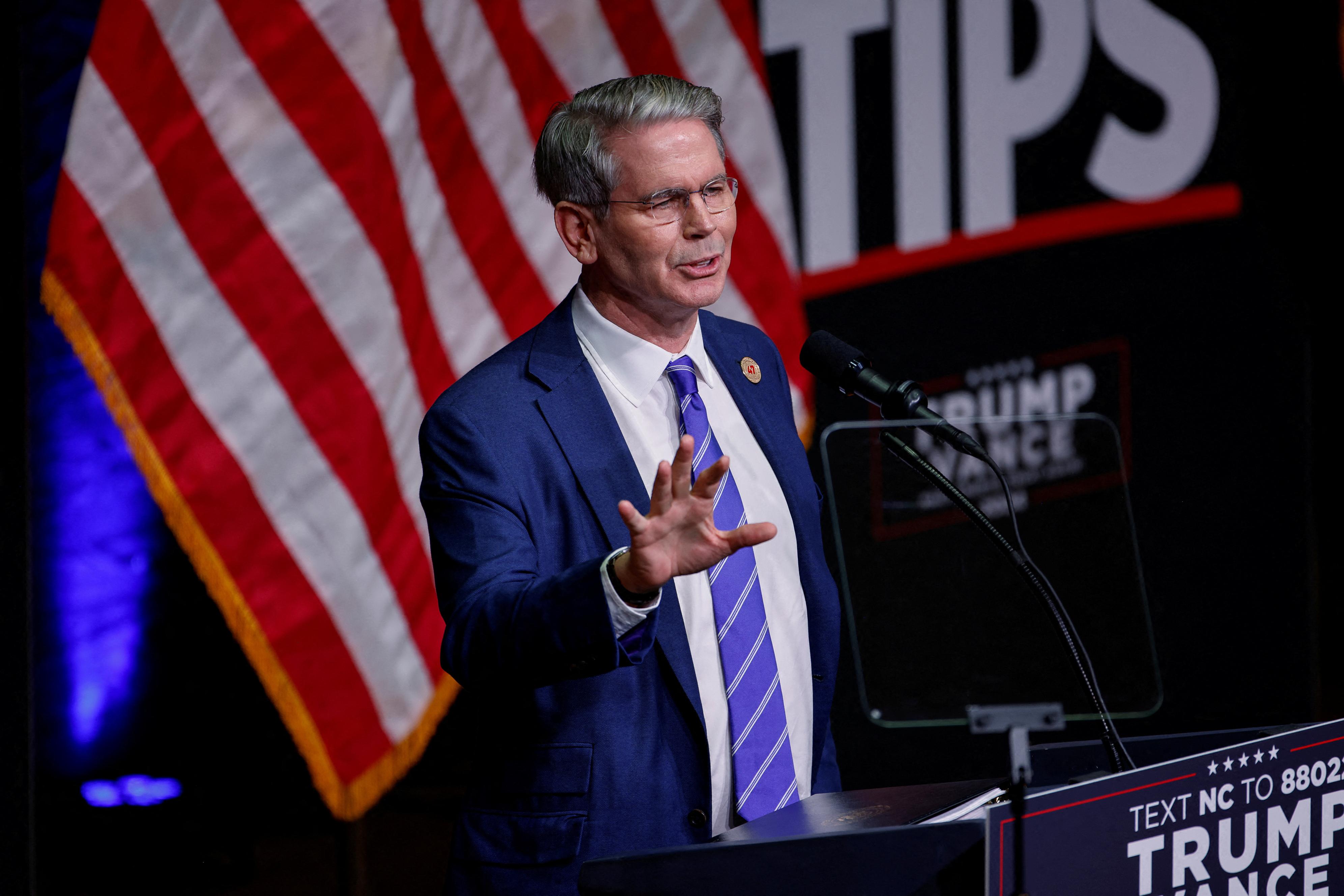
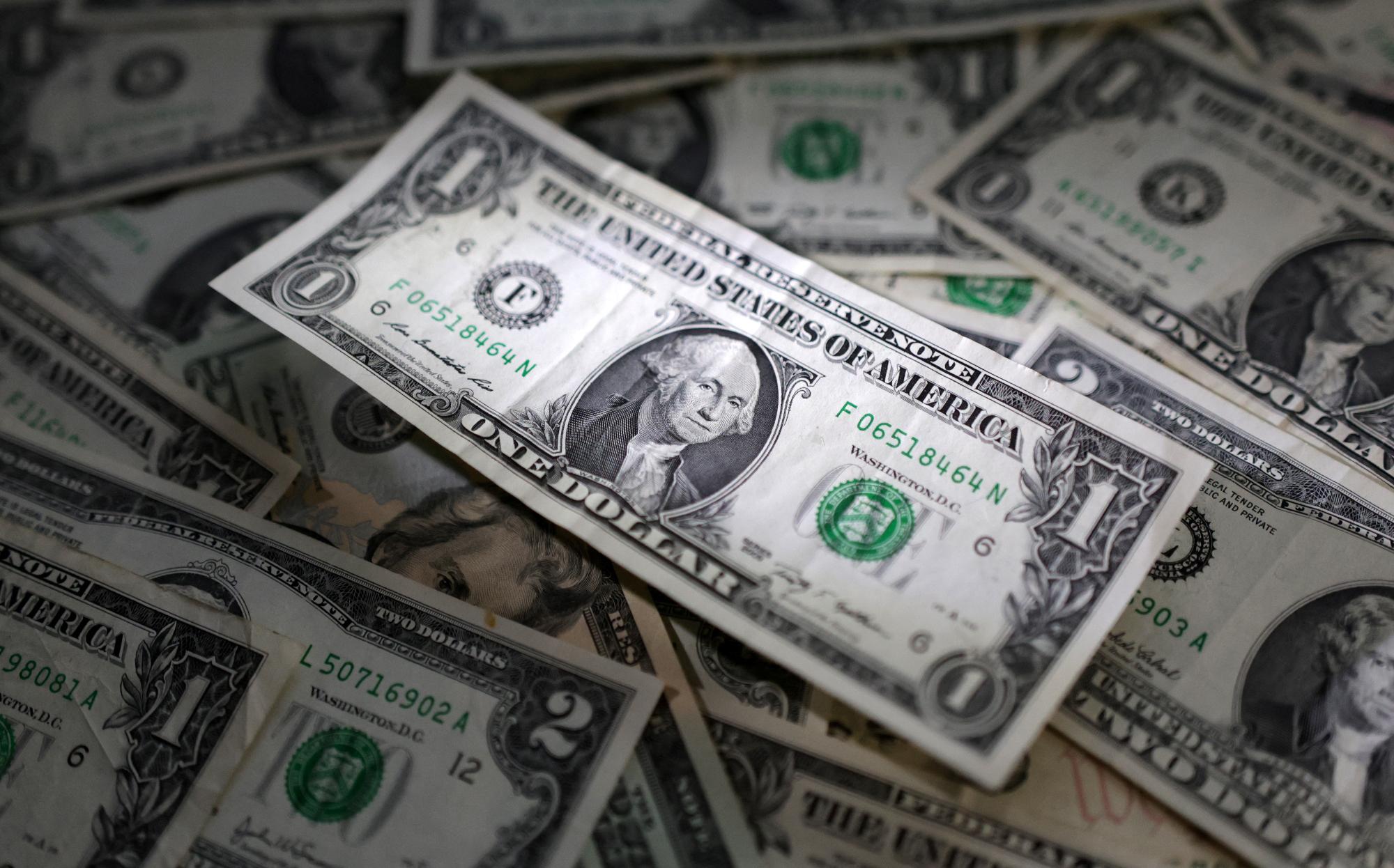
Treasuries rally as investors see Bessent as fiscal hawk Dollar eases from two-year high, due some consolidation Market sees more policy easing from ECB, less from Fed SYDNEY, Nov 25 (Reuters) - The dollar surrendered a little of its recent gains on Monday as investors assumed the pick for U.S. Treasury secretary would reassure the bond market and pulled yields lower, shaving some of the dollar's rate advantage. Yields on 10-year Treasuries slipped to 4.351%, from 4.412% late Friday, as President-elect Donald Trump's choice of fund manager Scott Bessent was welcomed by the bond market as an old Wall Street hand and a fiscal conservative. However, Bessent has also been openly in favour of a strong dollar and has supported tariffs, suggesting any pullback in the currency might be fleeting. "Bessent has publicly lauded dollar strength following news of Trump's election win, so I admit to being somewhat perplexed by the suggestion that the weakening in the dollar is because of his appointment," said Ray Attrill, head of FX research at NAB. "He is an avowed fiscal hawk, so perhaps that has something to do with it, but seeing is going to be believing in this regard." The dollar was likely due some consolidation having risen for eight weeks in a row for only the third time this century and many technical indicators were flashing overbought. The index was last down 0.5% at 106.950, having hit a two-year peak of 108.090 on Friday. The dollar dipped 0.4% on the Japanese yen to 154.18 , and further away from its recent peak of 156.76. The euro edged up 0.7% to $1.0496 and away from Friday's two-year trough of $1.0332. Resistance is up at $1.0555 and $1.0610, with support around $1.0195 and the major $1.0000 level. The single currency had taken a hit on Friday as European manufacturing surveys (PMI) showed broad weakness, while the U.S. surveys surprised on the high side. The contrast saw European bond yields fall sharply, widening the gap with Treasury yields to the benefit of the dollar. Markets also priced in more aggressive easing from the European Central Bank, with the probability of a half-point rate cut in December rising to 59%. At the same time, futures scaled back the chance of a quarter-point rate cut from the Federal Reserve in December to 52%, compared to 72% a month ago. Markets now imply 154 basis points of ECB easing by the end of next year, compared to just 65 basis points from the Fed. Data on UK retail sales also disappointed, leading the market to price in more chance of a rate cut from the Bank of England, albeit in February rather than December. That saw the pound touch a six-week low on Friday at $1.2484 . Early Monday, sterling had bounced 0.4% to $1.2591, but remained well short of last week's top of $1.2714. In the crypto world, Bitcoin eased 1.2% to $98,208 after running into profit-taking ahead of the symbolic $100,000 barrier. Bitcoin has climbed more than 40% since the U.S. election on expectations Trump will loosen the regulatory environment for cryptocurrencies. Sign up here. https://www.reuters.com/markets/currencies/dollar-dips-with-treasury-yields-after-bessent-pick-2024-11-25/
2024-11-24 22:34
Talks meant to be final round for agreeing treaty Petrochemical producers oppose any cap on output US position may be in doubt once Trump takes office BUSAN/BAKU, Nov 25 (Reuters) - As delegates from 175 countries gathered in Busan, South Korea on Monday for the fifth round of talks aimed at securing an international treaty to curb plastic pollution, lingering divisions cast doubts on whether a final agreement was in sight. South Korea is hosting the fifth and ostensibly final U.N. Intergovernmental Negotiating Committee (INC-5) meeting this week, after the previous round of talks in Ottawa in April ended without a path forward on capping plastic production. Instead, talks will be focused on chemicals of concern and other measures after petrochemical-producing nations such as Saudi Arabia and China strongly opposed efforts to target plastic production, over the protests of countries that bear the brunt of plastic pollution. The divisions plaguing the plastics treaty talks echo conflicts that have long stalled U.N. efforts to curb global warming, with the most recent climate summit, COP29, having just ended with an agreement poorer nations assailed as inadequate. INC Chair Luis Vayas Valdivieso told reporters on Monday he was confident this week's negotiations would yield a treaty or a text leading to a treaty. "Without significant intervention the amount of plastic entering the environment annually by 2040 is expected to nearly double compared to 2022," Valdivieso said at the opening session in Busan on Monday. "It is about humanity rising to meet an existential challenge," he said, noting that microplastics have been found in human organs. The United States raised eyebrows in August when it said it would back plastic production caps in the treaty, putting it in alignment with the EU, Kenya, Peru and other countries in the High Ambition Coalition. The election of Donald Trump as president, however, has raised questions about that position, as during his first presidency he shunned multilateral agreements and any commitments to slow or stop U.S. oil and petrochemical production. The U.S. delegation did not answer questions on whether it would reverse its new position to support plastic production caps. But it "supports ensuring that the global instrument addresses plastic products, chemicals used in plastic products, and the supply of primary plastic polymers," according to a spokesperson for the White House Council on Environmental Quality. Inger Andersen, executive director of the U.N. Environment Programme, on Monday urged delegates divided over curbing plastic products and chemicals and a financing mechanism to deal with plastic waste to remember that the 2022 U.N. Environment Assembly resolution called for "sustainable production and consumption of plastics taking a lifecycle approach". IMPACT ON HEALTH For a Pacific island country like Fiji, a global plastics treaty is crucial to protect its fragile ecosystem and public health, said Sivendra Michael, Fiji's climate minister and chief climate and plastics negotiator. He told Reuters on the sidelines of the 29th U.N. Climate Change Conference this month that despite not producing any plastic, Fiji is bearing the brunt of its downstream pollution. "Where do these plastics end up? It ends up in our oceans, in our landfill, in our backyards. And the impact of the plastics breaking down into little substances has detrimental effects, not only on the environment, but on us as individuals, on our health," he said, noting studies that showed most of the fish consumed in the country was polluted with microplastics. While supporting an international treaty, the petrochemical industry has been vocal in urging governments to avoid setting mandatory plastic production caps, and focus on solutions to reduce plastic waste, like recycling. "We would see a treaty successful if it would really put ... emphasis on ending plastic pollution. Nothing else should be the focus," said Martin Jung, president for performance materials at chemical producer BASF. Previous talks have also discussed searching for forms of funding to help developing countries implement the treaty. At COP29, France, Kenya and Barbados floated setting up a series of global levies on certain sectors that could help ramp up the amount of money that could be made available to developing countries seeking support to aid their clean energy transition and cope with the increasingly severe impacts of climate change. The proposal included a fee of $60-$70/ton on primary polymer production, which is on average around 5-7% of the polymer price, seen potentially raising an estimated $25-$35 billion per year. Industry groups have rejected the idea, saying it will raise consumer prices. Sign up here. https://www.reuters.com/business/environment/countries-remain-divided-fifth-un-plastics-treaty-talks-begin-2024-11-24/