2024-11-22 12:32
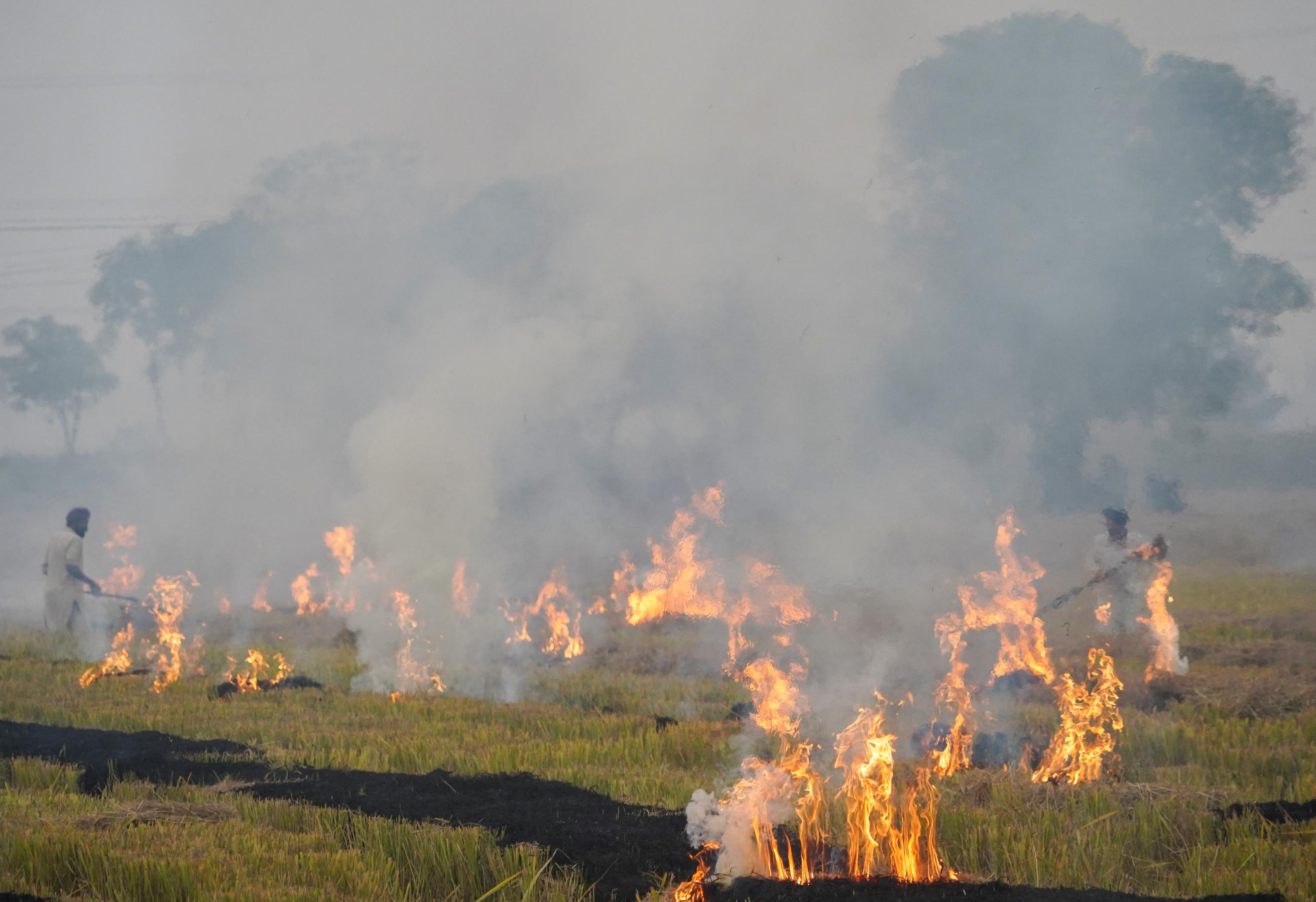
NEW DELHI, Nov 22 (Reuters) - India plans to count toxic farm fires by monitoring the burnt area they leave rather than the current method of using orbiting satellites to measure live fires. Here is a look at how India counts farm fires - a major contributor to severe pollution in the north - and why its method is being questioned. WHY ARE FARM FIRES LIT? Farmers in India light fires, in violation of laws that bar the practice, to quickly clear crop waste or stubble left behind after paddy is harvested so that they can plant wheat. Although the government offers subsidies on harvesting machines that can replace this method, demand has been low due to their high price or long wait for those looking to rent them. HOW DOES INDIA MONITOR FARM FIRES? Officials say satellites are the only way to monitor farm fires since they capture a much larger area. India's space agency procures data from two orbiting NASA satellites that pass over the northern breadbasket states of Punjab and Haryana, among others, twice a day - around 10.30 am (0500 GMT) and 1.30 pm (0800 GMT). This is then shared with the government to count farm fires. IS THIS METHOD FOOLPROOF? NASA satellites only capture instances of farm fires during the limited period when they are passing over the region, which takes them 90 seconds. They therefore only capture any blaze visible at that time or lit in the previous half hour. Experts suspect that farmers have, over time, become aware of this surveillance period and shifted the time of burning their crop waste to evade the NASA satellites. WHY IS IT BEING QUESTIONED NOW? An adviser to the Supreme Court, which is monitoring pollution management by authorities in the national capital region, this week said there was a discrepancy in the farm fire data obtained from orbiting and stationary satellites. Citing information given by a senior scientist at NASA Goddard Space Flight Center, she said that a South Korean stationary satellite had captured farm fires at 4.20 pm (1050 GMT), well after the NASA satellites had moved on. WHAT IS THE ALTERNATIVE? The court had directed the federal government to procure data of farm fires from stationary satellites as an alternative but the government said this data is "sub-optimal". Instead, India's space agency is working on a system to count farm fires by studying the burnt area they leave behind. Sign up here. https://www.reuters.com/world/india/why-indias-toxic-farm-fire-counting-method-is-disputed-2024-11-22/
2024-11-22 12:09
Flash PMI slides to 49.9 in Nov from 51.8 in Oct First contraction in 13 months Sterling falls, bets grow on BoE rate cuts Other data has also pointed to a weakening economy LONDON, Nov 22 (Reuters) - The new British government's plan to increase taxes on businesses contributed to the first contraction in private sector activity in over a year, a survey showed, after signs the economy was losing momentum even before last month's budget. The preliminary S&P Global Flash Composite Purchasing Managers' Index, published on Friday, fell to 49.9 in November from 51.8 in October. "The first survey on the health of the economy after the budget makes for gloomy reading," Chris Williamson, Chief Business Economist at S&P Global Market Intelligence, said. It is the first time the index has been below the 50.0 no-change level in 13 months. Williamson said the survey suggested the economy was contracting at a quarterly 0.1% pace, but the hit to confidence hinted at worse to come, including further job losses. Sterling fell to stand half a cent lower against the U.S. dollar on the day, with investors almost fully pricing in the Bank of England cutting interest rates to 4% by the end of 2025 from 4.75% now. "For policymakers, the key question now will be to assess whether the potential inflationary hit from higher taxes offsets the potential demand hit from weaker private demand," Sanjay Raja, Deutsche Bank's chief UK economist, said. Some manufacturers worried about renewed trade tensions once Donald Trump becomes the next U.S president. Others hoped clarity after the vote would unblock investment decisions. The PMI also showed employers cut staffing levels for a second month in a row while the measure of overall new business was the weakest in a year. A weaker outlook for the global economy weighed on companies with the automotive sector in a slump. But the first moves of Britain's Labour government were also a cause for concern. "Companies are giving a clear 'thumbs down' to the policies announced in the budget, especially the planned increase in employers' National Insurance Contributions," Williamson said. WEAKENING MOMENTUM Finance minister Rachel Reeves increased the annual burden of social security payments for employers by around 25 billion pounds ($31 billion) a year. Many businesses have said her Oct. 30 budget flies in the face of the government's pledge to turn Britain into the fastest-growing Group of Seven economy. Momentum was already weak with Britain's gross domestic product edging up by only 0.1% in the three months to the end of September, according to official data last week, and retail sales fell sharply in October as shoppers worried about the budget. Figures on Thursday showed government borrowing shot past private-sector economists' forecasts last month, underscoring how reliant Reeves is likely to be on stronger economic growth to fund more spending on public services. However, a measure of consumer confidence published on Friday suggested individuals turned a bit more optimistic this month after they avoided the brunt of the tax increases. Friday's PMI survey found firms were not replacing departing staff as they braced for April's rise in payroll costs. Selling prices rose at the slowest rate since the coronavirus pandemic but high rates of growth in input prices and costs related to wages were hurting the service sector. That could worry some interest rate-setters at the Bank of England which is watching prices in the service sector closely. ($1 = 0.7987 pounds) Sign up here. https://www.reuters.com/world/uk/uk-firms-report-first-contraction-output-since-2023-pmi-shows-2024-11-22/

2024-11-22 12:06
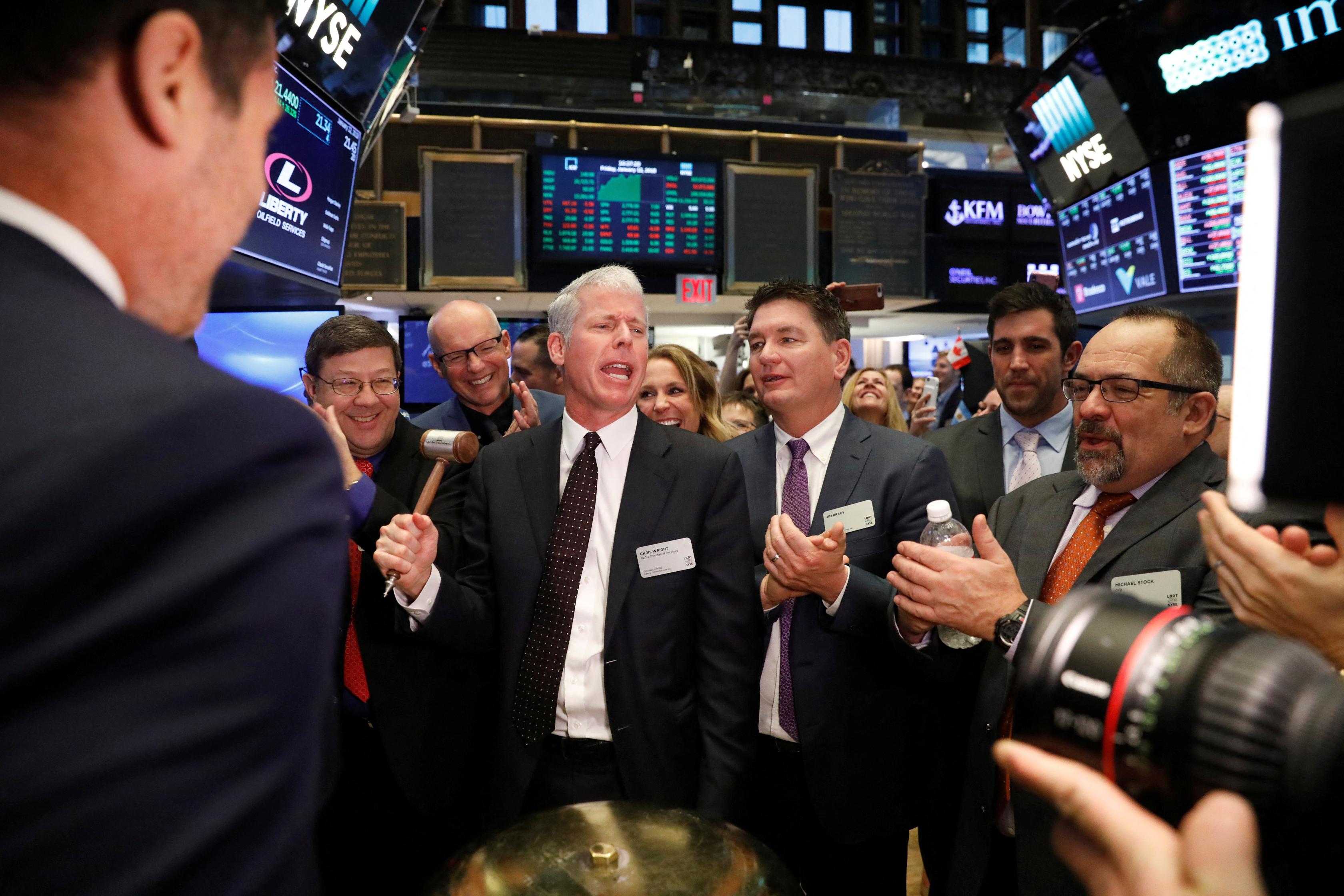
Wright says fossil fuel extraction can end poverty Trump's DOE pick seen pursuing 'energy dominance' agenda Wright does not view carbon emissions as pollution WASHINGTON/LOS ANGELES Nov 22 (Reuters) - President-elect Donald Trump's pick to lead the energy department believes fossil fuels are the key to ending world poverty which, he says, is a greater problem than climate change's "distant" threat, according to a report he penned as CEO of oilfield services company Liberty Energy (LBRT.N) , opens new tab. In a corporate report released in February called 'Bettering Human Lives,' Chris Wright said that the energy transition has not begun and that climate change, while a challenge, is not the greatest threat to humans. Poverty is a bigger threat that can be alleviated with access to hydrocarbons, said Wright, who started a foundation aimed at expanding propane cook stoves in developing countries. Mainstream science conflicts with many opinions of the incoming top U.S. energy official, who will likely be zealous to carry out Trump's agenda, maximizing already record-high domestic oil and gas production and withdrawing from international cooperation to avoid catastrophic climate change. "The vibes will be better for the oil and gas industry," Morgan Bazilian, director of the Payne Institute at the Colorado School of Mines, said in an interview, adding the industry felt attacked by President Joe Biden's climate policies. Bazilian called Wright "a perfect example of this. He's been outspoken on how the oil and gas industry has brought security and power and development to the United States, which is true. The other thing that's true is that global emissions aren't going down." Scientists say emissions from burning fossil fuels are a major cause of climate change which is unfolding faster than expected. Wright pushes back on the treatment of carbon dioxide as a pollutant, saying carbon is essential for life. Peter Reich, a climate scientist at the University of Michigan, called Wright's logic "terrifyingly absurd." "People and their pets and crops also need water," Reich said. "That doesn’t mean that if your house is flooded up to the second floor or your soybean field is under water, that water cannot be a problem." A spokesperson for the Trump transition team said: "As a leading innovator and entrepreneur, Chris Wright is a bold advocate for President Trump's pledge to bring down the price of energy and secure energy independence." Wright's spokesperson at Liberty did not immediately respond to a request for comment. Wright wrote "the wealthy world has gone beyond over-optimism surrounding the breadth and scalability of a narrow slice of alternative energy and, unfortunately, has rushed head-long into outright obstruction of hydrocarbon infrastructure and production." The report says the number of polar bears is rising, without evidence. Charlotte Lindqvist, an expert at the University of Buffalo, said polar bear populations are not increasing and the species is losing its sea ice habitats. Wright does support some petroleum alternatives, such as small modular nuclear, which is not commercial yet and geothermal, while criticizing solar and wind as insufficient. Bazilian said that view is outdated, noting that the cost of carbon-free solar and wind has fallen dramatically and those sources can also address energy poverty. Wright also wrote that deaths from extreme weather have declined for a century thanks to increased wealth and access to energy. Drew Shindell, a climate scientist at Duke University, said Wright's point follows a common tactic of "stating things that are correct but irrelevant or tangential at best to the actual questions at hand." "It would be a great rebuttal to the argument that to mitigate climate change we should phase out fossil fuels and instead sit in the dark and reverse modernity. No one is arguing that, however," Shindell said. Michael Mann, a climate scientist at the University of Pennsylvania, pointed to the more than 200 people who died due to October's Hurricane Helene, which scientists say was worsened by climate change. Liberty has published the report since 2021 as an environmental, social, and governance (ESG) publication. Liberty says its mission to provide affordable energy sources is aligned with ESG investing principles. Sign up here. https://www.reuters.com/world/us/trump-energy-pick-wrote-esg-report-hailing-oil-gas-downplaying-climate-worry-2024-11-22/
2024-11-22 11:59
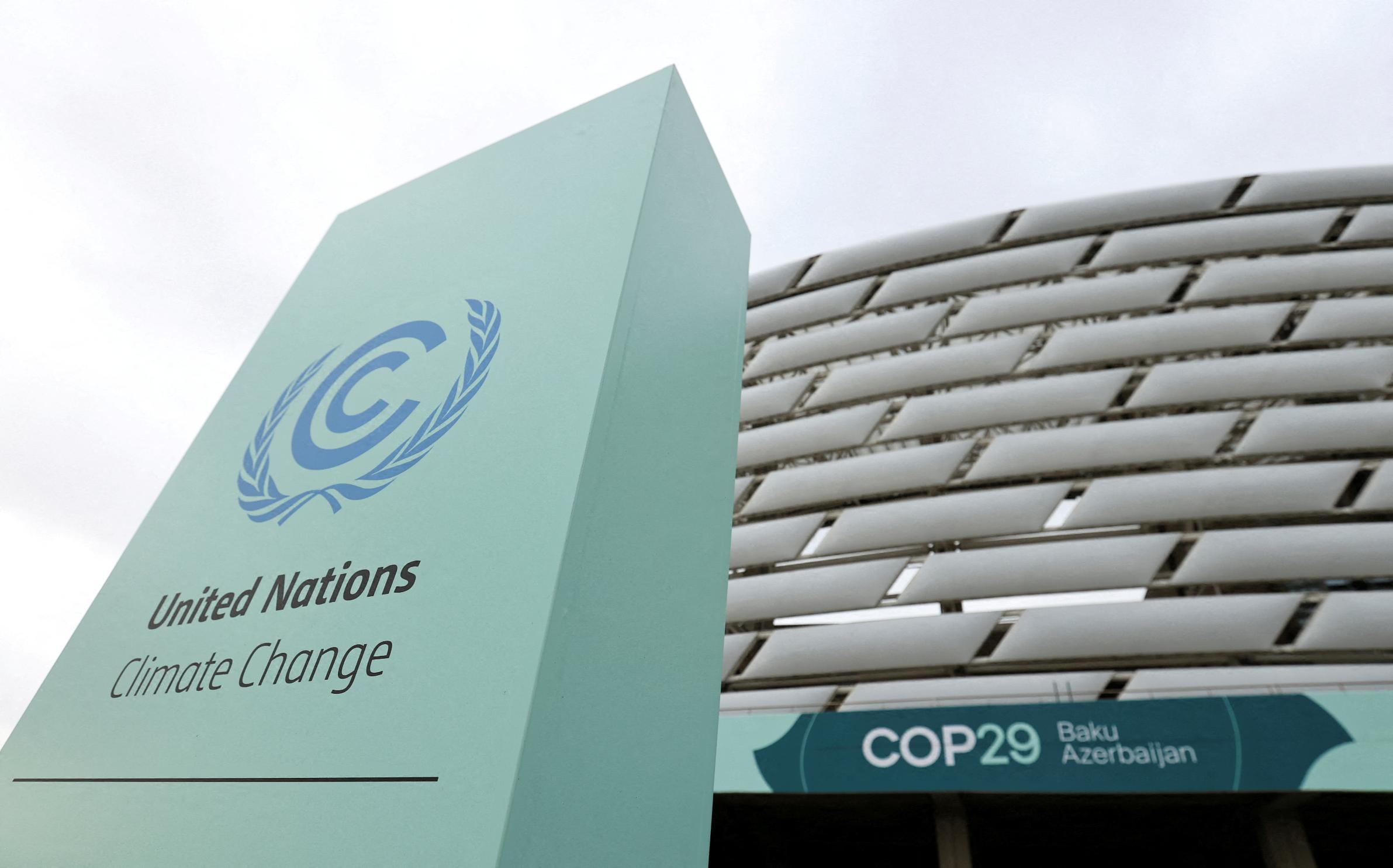
Summit in Baku runs past scheduled close Draft finance deal criticised by both developed and developing nations Broader goal to raise $1.3 trillion annual climate finance by 2035 BAKU, Nov 22 (Reuters) - The COP29 climate summit ran into overtime on Friday, after a draft deal that proposed developed nations take the lead in providing $250 billion in annual climate finance by 2035 drew criticism from all sides. Showing some progress late on Friday, the COP29 presidency released what it hopes will be a final deal for resolving rules around carbon markets. But world governments at the U.N. climate summit were still working into the night on the contours of a sweeping funding plan to tackle climate change. The two-week talks, being held in the Azerbaijan capital Baku, have been marked by division between wealthy governments resisting a costly outcome and developing nations pushing for more. Many expected late Friday that the proposal for a $250 billion target could still rise. "I'm so mad. It's ridiculous. Just ridiculous," said Panama's climate envoy Juan Carlos Monterrey Gomez, criticizing the proposed target as too low. "It feels that the developed world wants the planet to burn." On the other side, a European negotiator told Reuters that the same proposal was uncomfortably high and did not do enough to expand the number of countries contributing to the funding. "No one is comfortable with the number, because it's high and (there is) next to nothing on increasing contributor base," the negotiator said. Analysts say that, for the EU and other contributors, the $250 billion target would require only a modest increase from what they are already spending on climate finance. The final target would include $120 billion pledged by multilateral development banks, along with $65 billion in private investment that the banks projected would be brought in. "Without much of a lift, developed countries should be able to meet that amount by 2030," said David Waskow, director of the international climate initiative at the World Resources Institute. Beyond the EU, those contributing countries would include Australia, the United States, Britain, Japan, Norway, Canada, New Zealand and Switzerland. The draft invited developing countries to contribute voluntarily and emphasised that it would not affect their status as "developing" nations at the U.N. - a red line for countries including China and Brazil. "This is not at a landing ground yet, but at least we're not up in the air without a map," said Germany's special climate envoy Jennifer Morgan. 'FIRST REFLECTION' Late on Friday, the COP29 presidency published a hoped-for agreement for carbon markets, which could be approved on Saturday along with a final COP29 deal on climate finance. Negotiations in Baku have been clouded by uncertainty over the future role of the United States, after the climate sceptic Donald Trump won the Nov. 5 presidential election. Trump, who takes office in January, has promised to withdraw the world's top historic greenhouse gas emitter from global climate efforts. The Azerbaijani COP29 presidency expressed hope that negotiators would find agreement soon on the climate finance target. The draft "doesn't correspond to our fair and ambitious goal, but we will continue to engage with the parties," said Azerbaijan's lead negotiator, Yalchin Rafiyev. The draft also set a broader goal of raising $1.3 trillion overall for annual climate finance by 2035 through both public finance and the private investment it can help unlock. Economists have estimated that developing countries will need access to at least $1 trillion annually by the end of the decade. But filling the gap between government pledges and private ones could be tricky, negotiators warned. "This goal will need to be supported by ambitious bilateral action, MDB contributions and efforts to better mobilise private finance, among other critical factors," a senior U.S. official said, referring to multilateral development banks. The current climate finance commitment, $100 billion per year, ends in 2025. Without a new collective target agreed through the U.N. process, some of those poorer countries most vulnerable to climate impacts would have little assurance of the money they need. That means such countries have an incentive to negotiate hard, but even those most unhappy have a reason not to walk away or block a deal. "We are far away from the $1.3 trillion," said M. Riaz Hamidullah, a Bangladesh foreign ministry official who described the final negotiations as a "game between maximalists and minimalists." "It's a bit like haggling in the fish market, which we do often in our part of the world." Many previous COPs have often run over time. HOTTEST ON RECORD The showdown over financing for developing countries comes in a year that scientists say is destined to be the hottest on record. Climate woes are stacking up in the wake of such extreme heat, adding volume to the calls for more funding to cope. Widespread flooding has killed thousands across Africa this year, while deadly landslides have buried villages in Asia. Drought in South America has shrunk rivers - vital transport corridors - and livelihoods. Developed countries have not been spared. Torrential rain last month in Valencia, Spain, triggered floods in which more than 200 people died and the United States has so far registered 24 billion-dollar disasters - just four fewer than last year. Daniel Lund, negotiator for Fiji, told Reuters there was a long way to go to reach a finance deal that matched the scale of planetary warming. "It is a very low number in relation to the available evidence on the scale of the need that exists and understanding of how those needs will evolve," he said. Sign up here. https://www.reuters.com/business/environment/cop29-host-urges-collaboration-deal-negotiations-enter-final-stage-2024-11-22/
2024-11-22 11:59
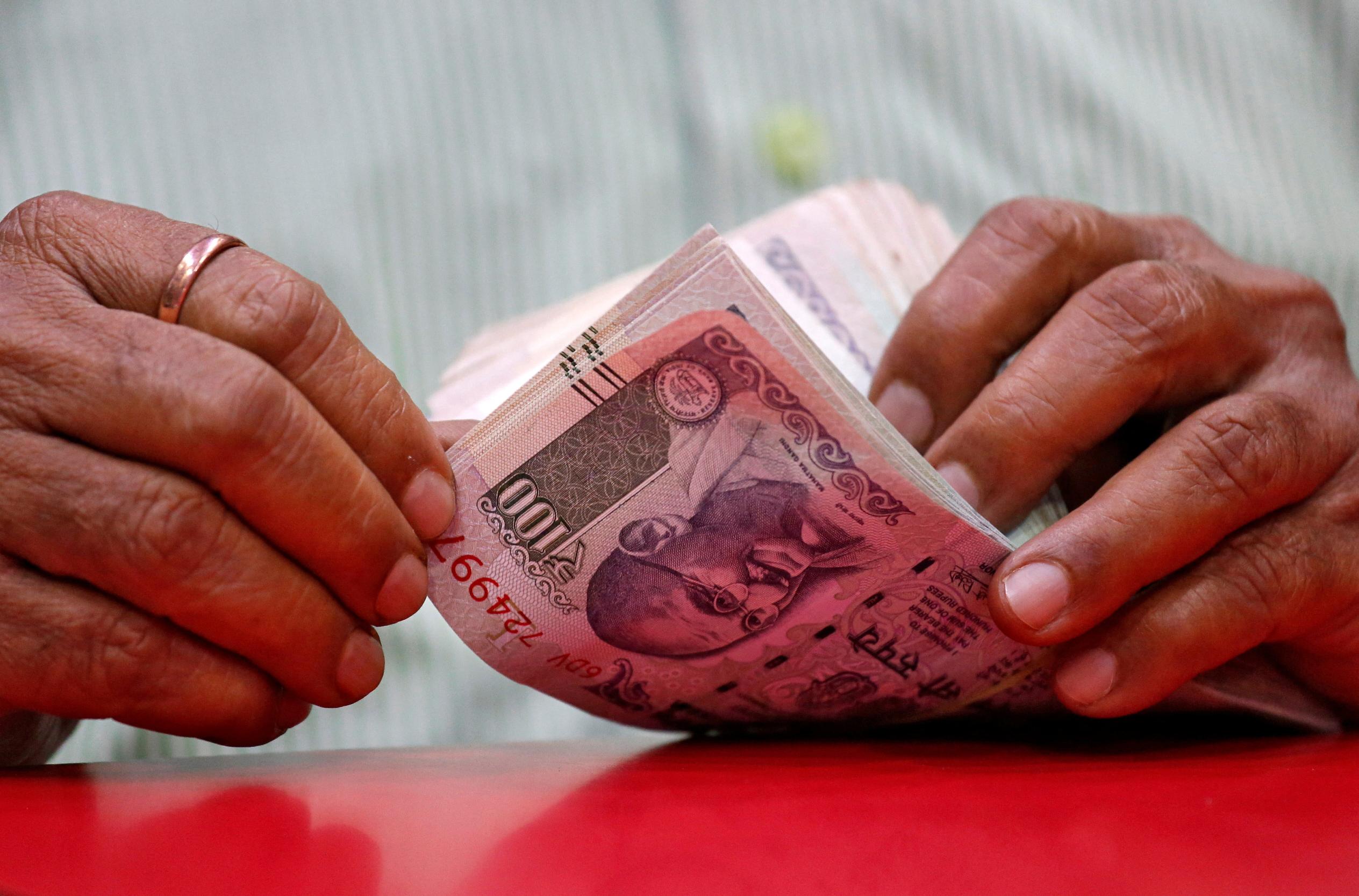
MUMBAI, Nov 22 (Reuters) - India's foreign exchange reserves (INFXR=ECI) , opens new tab logged their sharpest weekly fall on record to a more-than-four-month low last week, as the dollar strengthened following the U.S. election verdict, and the central bank sold from its reserves to limit the rupee's decline. The reserves fell by $17.8 billion in the week of Nov. 15 - the most since available data starting 1998 - to $657.89 billion, data from the Reserve Bank of India (RBI) showed on Friday. Forex reserves have fallen by a total of nearly $30 billion in the last six weeks and are down by $47 billion from the record high of $704.89 billion hit in late September. Changes in foreign currency assets are caused by the central bank's intervention in the forex market as well as the appreciation or depreciation of foreign assets held in the reserves. The outcome of the U.S. elections boosted the dollar and U.S. bond yields, leading to revaluation losses. Revaluation loss for the reporting week is estimated at $10.4 billion, while the RBI may have net sold dollars worth $7.2 billion in the week of Nov. 15, said Gaura Sen Gupta, India economist at IDFC FIRST Bank. The rupee fell to its then-record low of 84.4125 last week against the dollar. The currency settled at 84.4450 on Friday, after hitting an all-time low of 84.5075 earlier in the session. Persistent outflows from Indian equities have also kept the rupee under pressure. Foreign investors have net sold local stocks and bonds worth more than $4 billion in November so far, after withdrawing $11.7 billion in October. The central bank's repeated intervention in the forex market limited a knee-jerk reaction in the local currency market, traders said. "Despite the recent decline, we believe that India's forex reserves remain robust in terms of all external adequacy requirements with the import cover comfortably placed at over 11-months," said Aditi Gupta, economist at Bank of Baroda. Gupta expects forex reserves to rise to about $675-685 billion by March amid a revival in foreign inflows and a manageable current account deficit. Sign up here. https://www.reuters.com/world/india/indias-forex-reserves-see-sharpest-weekly-drop-record-hit-over-four-month-low-2024-11-22/
2024-11-22 11:54
A look at the day ahead in U.S. and global markets from Mike Dolan Darkening skies over Europe's economy, trade and politics sent the euro plummeting to its lowest in two years - just 3% from dollar parity - as post-election U.S. crypto optimism sees Bitcoin flirt with $100,000 for the first time. Round figures often act like magnets for financial markets. But what appears like a perfect storm over the euro zone - and its biggest economy Germany in particular - has seen the sharpest monthly move in the world's pivotal Transatlantic exchange rate in two years. Facing potential trade wars with both the United States and China, a ratcheting up of geopolitical tensions to its East, creeping energy prices and a German election early next year, the euro's 4% fall so far in November is its biggest monthly loss since April 2022 - the month after Russia invaded Ukraine. With another set of dire business surveys showing German and euro zone activity contracting this month, the euro plunged to two-year lows of $1.033 on Friday. And pressure is mounting on the European Central Bank to accelerate its easing just as the Federal Reserve hesitates with further rate cuts stateside. Money markets are now leaning towards a fourth ECB rate cut of the year next month of as much as 50 basis points to 2.75%, while futures still see little more than a 50% chance the Fed will move at all next month. At just shy of 230 basis points, the two-year U.S.-German bond yield gap is at its widest since 2022 as well. Alongside the latest gloomy business surveys, Russia's increasingly pointed nuclear threats and extraordinary missile strikes on Ukraine this week have jarred the continent anew as Moscow eyes the isolationist stance of Donald Trump's incoming U.S. administration as an opportunity to bolster its position. And European wholesale gas prices hovered near annual highs after fresh U.S. sanctions on Russia's Gazprombank raised fears over what remains of gas supplies from Russia, just as cold temperatures led to drawdowns in Europe's gas stores. But the prospect of Trump catalyzing global trade wars in which Europe would be left most exposed was perhaps the biggest economic cloud gathering. In the starkest warning so far from the ECB about the consequences of a trade war, the central bank's chief economist Philip Lane said on Thursday that global economic output would suffer a "sizeable" loss, while any immediate boost to inflation would fade over a few years. The euro's losses, meantime, have catapulted the dollar (.DXY) , opens new tab higher across the planet - with the dollar index also hitting its best levels since 2022 and now up more than 6% for the year to date. China's yuan briefly hit its weakest since July. With another set of hot U.S. labor market readings from the weekly jobless claims series on Thursday, Treasury yields held firm about 4.4%. But with still no sign of Trump's pick for Treasury Secretary, the rising dollar presents something of a headache for a protectionist new administration. The latest reports suggest former Fed governor Kevin Warsh is still favorite to get the nod - until the Fed Chair Jerome Powell's position becomes vacant at least. Bitcoin touched a fresh record high of $99,380 on Friday, with its sights set firmly on the $100,000 barrier, amid hopes of a more friendly regulatory environment under Trump. Trump embraced digital assets during his campaign, promising to make the United States the "crypto capital of the planet" and to accumulate a national stockpile of bitcoin. And crypto investors see an end to increased scrutiny under U.S. Securities and Exchange Commission Chair Gary Gensler, who said on Thursday he would step down in January when Trump takes office. Overseas stock markets were mostly in the red on Friday, with European stocks down and China's (.CSI300) , opens new tab underperforming with losses of more than 3%. Elsewhere, Gautam Adani's Indian conglomerate could face a funding squeeze after a U.S. arrest warrant for its billionaire founder over an alleged $265 million bribery scheme, credit analysts said, with some banks considering halting fresh credit to the group. Back on Wall Street, stocks bounced back on Thursday after Nvidia's brief wobble when another set of stellar results initially saw some profit-taking on its record gains. Key developments that should provide more direction to U.S. markets later on Friday: * US flash business surveys for November from S&P Global and final November household sentiment survey from University of Michigan * Federal Reserve Board Governor Michelle Bowman speaks; European Central Bank board member Isabel Schnabel speaks; Swiss National Bank Chair Martin Schlegel speaks * US corporate earnings: Intuit Sign up here. https://www.reuters.com/markets/us/global-markets-view-usa-2024-11-22/