2024-11-22 07:21
LONDON, Nov 22 (Reuters) - The pound tumbled on Friday after data showed British business output in November shrank for the first time in more than a year, and retail sales also fell by much more than expected in October. Sterling hit its lowest on the dollar since May, and was last down 0.56% at $1.2517. If future data continues to show economic weakness, the Bank of England may be forced to cut rates more dramatically than markets currently expect. Britain's preliminary S&P Global Flash Composite Purchasing Managers' Index, published on Friday, fell to 49.9 in November - below the 50.0 no-change level for the first time in 13 months - from 51.8 in October. "Today's PMI data were the first real test of the chancellor's budget – alongside businesses reaction to unfolding geopolitical events," said Sanjay Raja, chief UK economist at Deutsche bank. British finance minister Rachel Reeves announced a budget in late October, which raised taxes on business and the wealthy. "Underneath the hood, we are seeing stress on hiring plans. Both the manufacturing and services sectors reported falls in hiring plans. And (input) prices – particularly for services – have started to firm as businesses digest the budget tax implications. "For policymakers, the key question now will be to assess whether the potential inflationary hit from higher taxes offsets the potential demand hit from weaker private demand." Gilt yields fell, while markets sightly upped their expectations of Bank of England easing. Separate data also from Friday showed retail sales volumes dropped by 0.7% in October from September, more than expected and the sharpest drop since June. While the pound fell against most other currencies, such as the Japanese yen and Swiss franc , , it was little changed on the euro, which took a tumble on weak euro zone PMI data. The euro was last flat on the day at 83.24 pence. Sign up here. https://www.reuters.com/markets/currencies/sterling-falls-6-month-low-after-weak-uk-retail-sales-2024-11-22/

2024-11-22 07:13
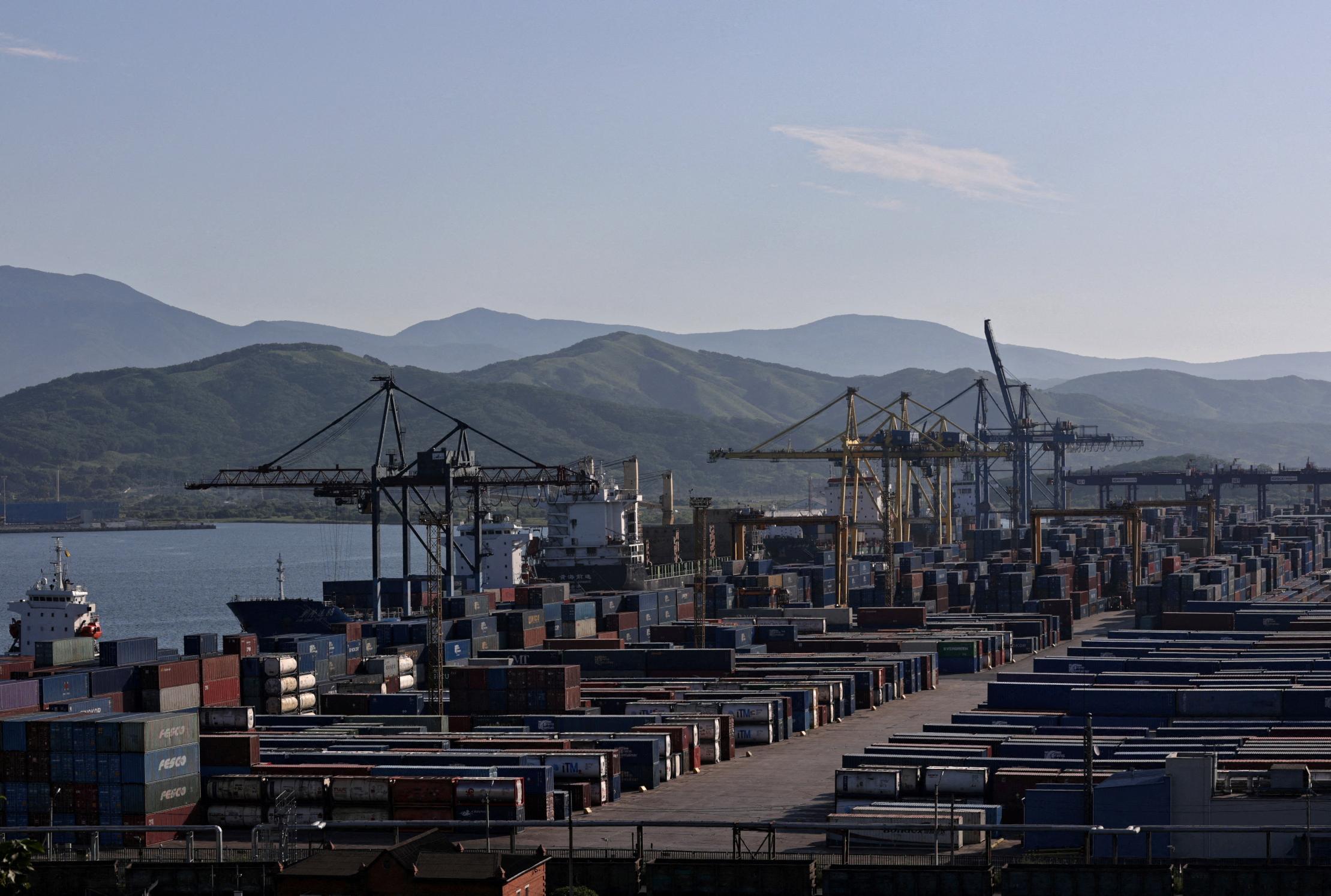
SEOUL, Nov 22 (Reuters) - North Korea has likely received more than 1 million barrels of oil from Russia over an eight-month period this year in breach of U.N. sanctions, according to an analysis , opens new tab of satellite imagery published on Friday by UK-based Open Source Centre and the BBC. North Korean oil tankers have made more than 40 visits to Russia's Far Eastern port of Vostochny since March, the report on the research group Open Source Centre's website said. "Dozens of high-resolution satellite images, AIS (Automatic Identification System) data and imagery released by maritime patrol missions tasked with monitoring North Korea’s U.N.-sanctions busting activities show North Korean tankers repeatedly loading at an oil terminal at the Russian port of Vostochny," the report said, adding that Russia’s foreign ministry did not respond to a request for comment. North Korea has continued to illicitly import refined petroleum products in violation of U.N. Security Council resolutions, according to the UNSC. Earlier this year, the United States and South Korea launched a new task force aimed at preventing North Korea from procuring illicit oil as a deadlock at the UNSC cast doubts over the future of international sanctions. Under UNSC restrictions imposed over North Korea's nuclear weapons and missile development, Pyongyang is limited to importing 500,000 barrels of refined products a year. Pyongyang and Moscow have ramped up diplomatic and economic ties in recent years, culminating in Russian President Vladimir Putin's visit to North Korea in June when the countries' leaders agreed a mutual defence pact. The military cooperation between the two countries has been met by international alarm, with Washington, Kyiv and Seoul condemning the North for sending military equipment and more than 10,000 troops to Russia to support its war against Ukraine. Russia's envoy to the United Nations Vassily Nebenzia said last month Russia's military interaction with North Korea did not violate international law. North Korea has not acknowledged the deployment of troops to Russia, but said any such move would be in compliance with international law. Sign up here. https://www.reuters.com/business/energy/satellite-imagery-indicates-north-korea-oil-imports-russia-top-un-limits-report-2024-11-22/
2024-11-22 07:08
LONDON, Nov 22 (Reuters) - It's hard to imagine the gloom surrounding Europe's biggest economy deepening much further than it already has, but Germany's outlook for 2025 just keeps getting bleaker. Germany's economy flatlined in 2024, and it now faces potential trade wars with both the United States and China - compounding pressure on its dominant and already ailing auto sector. Geopolitical worries in Ukraine are ratcheting higher, energy prices are starting to creep back up and the country's fiscal future is obscured by the fog of February's election. Germany is not the euro zone, of course, and the rest of the region is doing notably better. But the world's third-biggest economy still represents more than 30% of the bloc's gross domestic product and further damage to the zone's traditional powerhouse could force the European Central Bank to ease far further than its recent statements on gradualism suggest. Even in a season for central banks' financial stability reviews - and their required scary lists of outsize risks - the Bundesbank's version stood out this week. Germany's central bank stressed that the country's corporate sector is still dogged by "profound structural challenges" that have caused aggregate earnings to decline almost every quarter for two years. And it pointedly spotlighted the damage still-high interest rates could yet wreak to darken the mood. "A significant number of corporate insolvencies are likely next year," the Bundesbank said. "Default risk for non-financial corporations is likely to remain elevated in 2025 ... given ongoing structural change and the continued economic weakness." Although insolvencies through the first half of 2024 remain below the peaks of the global banking crash and euro crisis over a decade ago, the report showed that they had risen 25% over the previous year. WEATHERING A WORSENING STORM The Bundesbank , opens new tab laced the gloom with some confidence, noting that the economy was still weathering the huge shocks of the past two years. It pointed out that fixed-rate loans taken out before 2022's interest rate shock remained relatively cheap with a median rate of 2.6%. But it also noted that almost 10% of outstanding loans that need to be refinanced by the end of 2025 with new 3-5 year tenors would likely see borrowing costs jump to 4%. "Sound fundamentals mean that the vast majority of enterprises should be able to cope with these burdens," it said. "If, on the other hand, developments in the macro-financial environment are noticeably weaker than forecast, higher default risks are to be expected." None of this will be news to the ECB, which has already cut its main policy interest rates three times since mid-year from 4% to 3.25% and is widely expected to move again next month. Like all other central banks - it can only surmise the effects of a global trade war and needs to wait until late January at least to find out if President-elect Donald Trump actually follows through on his long-threatened tariff plans. And yet senior ECB figures already seem to see a trade war as more worrisome for growth than inflation. ECB chief economist Philip Lane said on Thursday that global economic output would suffer a "sizeable" loss if trade became more fragmented while an initial boost to inflation would "subside gradually". For Germany's export engine, trade fears could be amplified threefold - by the direct impact of universal U.S. tariffs, any hit to overall Chinese demand for its goods due to more severe U.S. barriers on China, and also the implications of the ongoing row between the European Union and China over autos. AGGRESSIVE TARIFFS Given all that, the big investment houses remain remarkably sanguine about the broader outlook for Europe next year. Annual investor forecasts have been streaming in over the last week, and they mostly call for some cyclical rebound in Europe, helped by falling interest rates, a weaker euro and resilient households. What's more, there's some hope for more clarity on fiscal policy after the German election. Germany's blue-chip stock index (.GDAXI) , opens new tab hit another record high last month, notching a 15% gain so far this year, and it's only slipped about 3% from that peak since. The problem for policymakers and investors alike is that visibility is incredibly low and may remain so for months. Salman Ahmed, Fidelity International's Global Head of Macro and Strategic Asset Allocation, reckons U.S. tariff risks could reduce euro zone growth by half a percentage point next year and Germany could be hit additionally by its own election anxieties. Given that the International Monetary Fund already forecasts 2025 German growth to be the weakest among the G7 countries next year at just 0.8%, a jolt of that scale would mean the country could be flirting with recession for another year. Ahmed's baseline view is the ECB will cut rates quickly to 2%, followed by a more gradual move to 1.5% by the end of next year. But even that hinges on a scenario where U.S. tariff hikes end up being less than Trump's pre-election pledges. "More aggressive tariffs risk provoking additional and accelerated easing," he said, adding the ECB would then need to keep a close eye on the extent of the ensuing weakness. German economic gloom may be nothing new - there's every reason to think it could get even worse before it lifts. The opinions expressed here are those of the author, a columnist for Reuters Sign up here. https://www.reuters.com/markets/europe/vulnerable-germany-heaps-pressure-ecb-mike-dolan-2024-11-22/
2024-11-22 07:00
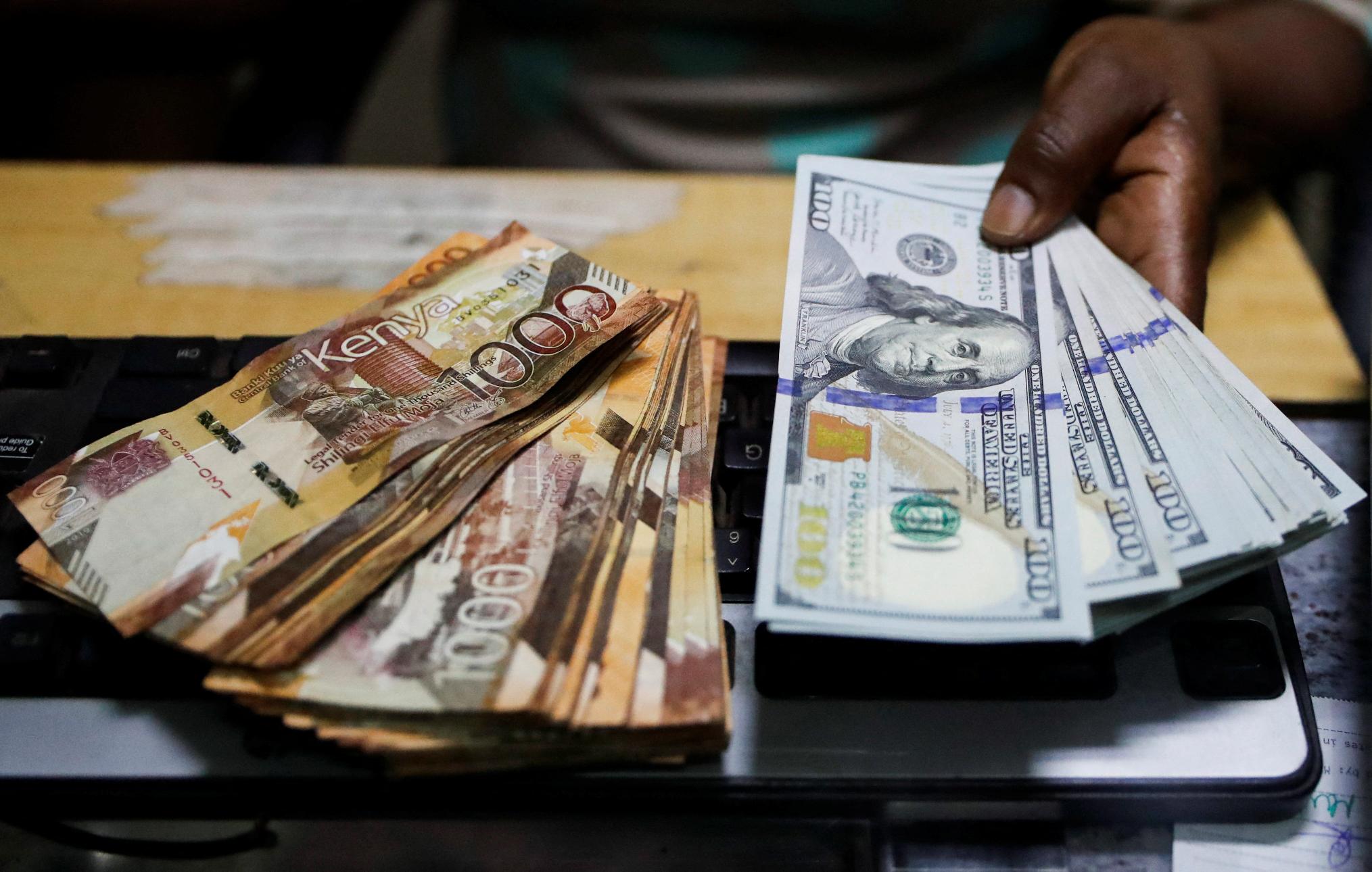
NAIROBI, Nov 22 (Reuters) - The Kenyan shilling was stable on Friday, and traders said that central bank selling dollars earlier this week to match importer demand helped it. The shilling traded at 129.00/130.00 at 0650 GMT, according to LSEG data, the same as Thursday's closing rate. "We've seen the regulator coming to intervene in the market, and that has cured all the demand that was pending," one trader said. The central bank says it has no preferred level for the shilling and only intervenes to smooth out volatility in either direction for the local currency. Sign up here. https://www.reuters.com/markets/currencies/kenyan-shilling-stable-central-bank-dollar-sale-helps-2024-11-22/
2024-11-22 06:57
Nov 22 (Reuters) - NTPC Green Energy's $1.2 billion initial public offering, India's third-largest in 2024, was fully subscribed on the share sale's final day on Friday, as investors bet on the country's growing clean energy needs. About three-quarters of the 593.2 million shares offered were set aside for institutional investors, and were 96% subscribed. Bidding will end at 5 p.m. IST on the day. The portion reserved for retail investors was oversubscribed by 2.81 times as of 12:23 a.m. IST, after being fully subscribed on the first day of bidding on Tuesday. India has been scrambling to meet its clean energy targets and has ramped up investments in renewable energy and expanded capacity. As per Moody's Ratings, it has to spend $385 billion by 2030 to meet its targets after it fell short in 2022. Investors are also positive on the sector and are betting on its IPO due to hefty long-term demand and support from its stronger parent, state-owned power producer NTPC (NTPC.NS) , opens new tab, said Prashanth Tapse, Senior Vice President of Research at Mehta Equities. The company plans to sell all the shares in the IPO, with existing shareholders not diluting their stake, draft papers showed. It set a price band of 102-108 rupees per share, with the total size of the IPO trailing only Hyundai Motor India (HYUN.NS) , opens new tab and Swiggy (SWIG.NS) , opens new tab this year. However, the IPO comes at a time when Indian markets have cooled off from their earlier frenzy due to underwhelming corporate earnings and an exodus of foreign funds. Still, more than 290 companies have raised more than $15 billion so far this year, roughly twice the amount raised in all of 2023, LSEG data showed. Trading is expected to begin on Nov. 27 but is yet to be confirmed. Sign up here. https://www.reuters.com/business/energy/indias-ntpc-greens-12-bln-ipo-fully-subscribed-renewable-energy-bets-2024-11-22/
2024-11-22 06:39
Euro zone services activity contracted in November British PMI data also weak Euro falls below $1.04 Bitcoin hits fresh record, not far off $100,000 NEW YORK, Nov 22 (Reuters) - The euro slumped to a two-year low while the dollar gained on Friday after gauges of business activity were released in each region, while bitcoin again hit a record high as it continued its march toward the $100,000 mark. HCOB's preliminary composite euro zone Purchasing Managers' Index, compiled by S&P Global, sank to a 10-month low of 48.1 in November, below the 50 level that marks expansion from contraction, and the 50.0 estimate. In addition, Britain's PMI fell to 49.9 in November, from 51.8 in October. The government's plan to increase taxes on businesses contributed to the first contraction in private sector activity in over a year, adding to recent indications the economy was losing steam. But in contrast, S&P Global said its flash U.S. Composite PMI Output Index, which tracks the manufacturing and services sectors, increased to 55.3 this month, the highest level since April 2022, after a 54.1 reading in October, with the services sector proving the bulk of the increase. "It highlights the two-track world. It’s U.S. versus the rest, but even within the U.S. it’s services versus manufacturing," said Brian Jacobsen, chief economist at Annex Wealth Management in Menomonee Falls, Wisconsin. "How long can U.S. services make up for the drag from everything else?" The dollar index , which measures the greenback against a basket of currencies, rose 0.41% to 107.50, with the euro down 0.54% at $1.0416 after falling to $1.0333, its lowest since Nov. 30, 2022. The greenback was on track for its third straight weekly advance. Bitcoin continued its recent rally toward the $100,000 mark that has seen the cryptocurrency surge more than 40% since the U.S. election on expectations President-elect Donald Trump will loosen the regulatory environment for cryptocurrencies. Bitcoin was last up 1.44% at $98,496 after hitting a record $99,697.17. Investors have scaled back expectations for the path of interest rate cuts from the Federal Reserve recently, currently pricing in a 52.7% chance of a 25 basis point cut at the Fed's December meeting, down from 69.5% a month ago, according to CME's FedWatch Tool , opens new tab, as they assess the impact of legislative policies by the Trump administration, such as tariffs, on the economy. Other central banks such as the European Central Bank and the Bank of England are seen as likely to become more aggressive in cutting interest rates to buttress their economies. Sterling weakened 0.49% to $1.2528 and was on track for its second straight weekly decline. Some of the European Central Bank's most influential policymakers urged the European Union to bring back long-stalled economic integration to protect its model of prosperity from a looming trade war with the United States. Investors are waiting for Trump to name a Treasury secretary. The Wall Street Journal reported on Thursday that Trump floated the idea of appointing Kevin Warsh, a former member of the Fed's board of governors, to the post, with the understanding that he could later become Fed chair. Against the Japanese yen , the dollar strengthened 0.12% to 154.69. The yen had fallen below 156 per dollar last week for the first time since July, sparking the possibility that Japanese authorities may again take steps to shore it up. Japan's annual core inflation was 2.3% in October, keeping pressure on the central bank to raise its still-low interest rates. Just over half of economists in a Reuters poll believe the Bank of Japan would hike in December, in part because of concerns about the depreciating yen in the midst of an improving economy. Sign up here. https://www.reuters.com/markets/currencies/dollar-hugs-13-month-peak-market-awaits-next-fed-cue-2024-11-22/