2024-11-22 06:37
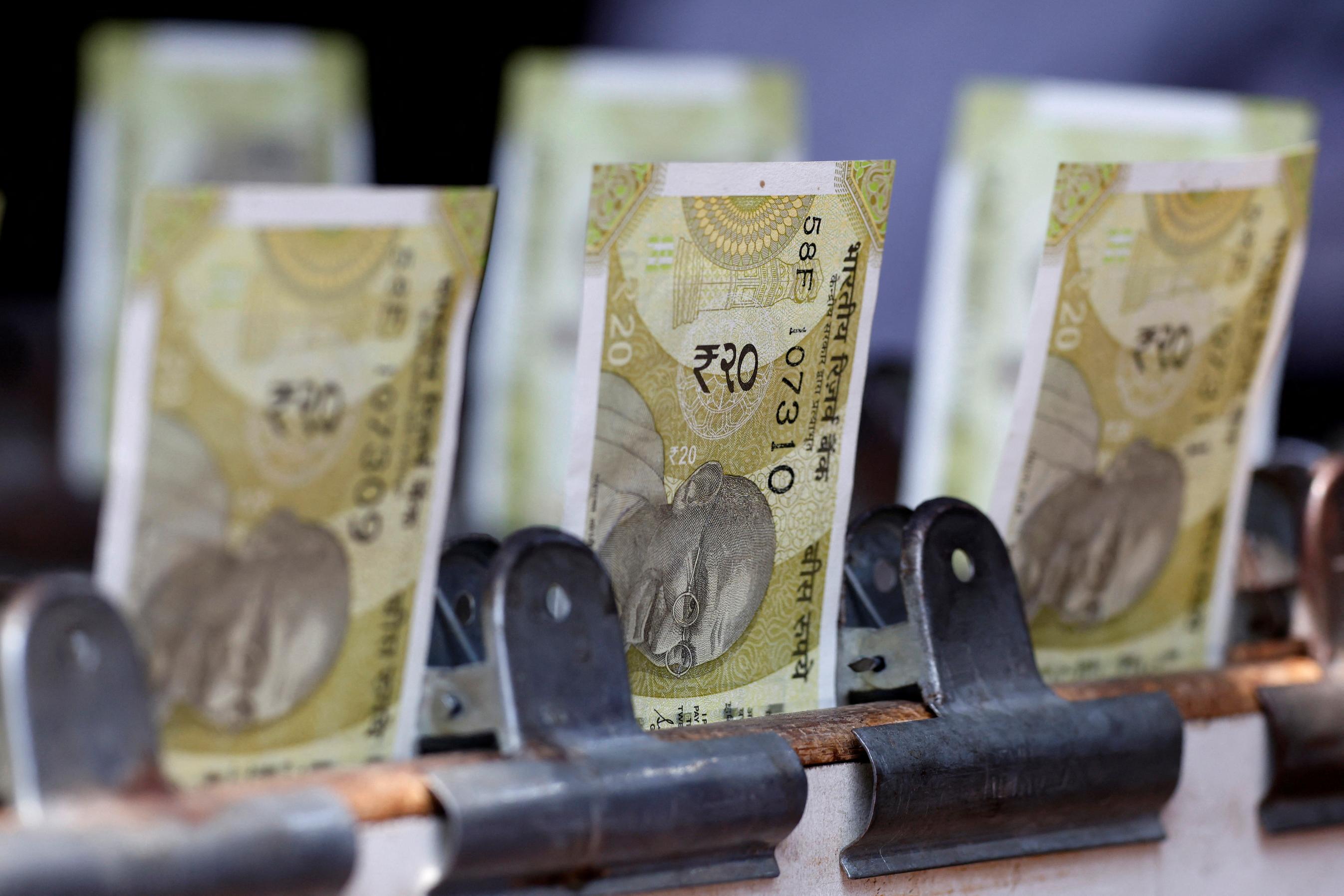
MUMBAI, Nov 22 (Reuters) - The rupee weakened below the psychologically important 84.50-per-dollar level to hit an all-time low on Friday as the greenback's post-U.S. election rally revived and as foreign investors continued to pull out of domestic equities and bonds. The rupee weakened to 84.5025, eclipsing the all-time low of 84.4925 hit on Thursday. It was at 84.4925 at 11:50 a.m. IST, little changed on the day. The greenback's strength after Donald Trump's U.S. election victory and overseas investors pulling out over $4 billion from local equities and debt have hurt the rupee this month. The dollar index rose to a peak of 107.18, its highest in over a year, and has rallied more than 3% since Trump's victory on Nov. 5 on bets that the President-elect's policies could reignite inflation and temper the future U.S. rate cuts. The gains paused earlier in the week but restarted on Wednesday due to heightened geopolitical risks and after the Federal Reserve officials signalled caution on rate cuts. The rupee, meanwhile, has weakened nearly 0.5% so far in November, although the Reserve Bank of India's routine interventions, including on Friday, have limited the decline. Its Asian peers have lost between 0.9% to 2.2% this month. "A strong dollar continues to create a depreciating bias for currencies globally ... However, interventions by the RBI, supported by India's healthy foreign exchange reserves, should help keep rupee volatility in check," said Rajani Sinha, chief economist at CareEdge Ratings. State-run banks were spotted offering dollars, on behalf of the RBI, with traders pointing "especially strong" offers near the 84.50 level. At this point, "there is limited interest from interbank traders in selling dollars and very muted inflows, so the central bank will likely stay active to smoothen sharp moves," a senior trader at a state-run bank said. While the RBI has said it aims to ensure the market is "liquid and deep and functioning in an orderly manner," the interventions have led to the rupee's overvaluation against the currencies of India's major trading partners. Its 40-currency real effective exchange rate (REER), a measure of its competitiveness, shows the currency was overvalued by 7.21% at the end of October, RBI data showed. Sign up here. https://www.reuters.com/markets/currencies/indian-rupee-weakens-record-low-hurt-by-persistent-outflows-stronger-dollar-2024-11-22/
2024-11-22 06:20
SINGAPORE, Nov 22 (Reuters) - Swiss-based power producer and trader Axpo is eyeing opportunities in electricity and liquefied natural gas (LNG) trading in Japan as changes in the country's power sector create demand for hedging and spot LNG supply, a senior executive said. Japan has set a target for renewables to account for 36% to 38% of its electricity mix by 2030 and fully liberalised its power market in 2016, leading to the creation of an increasingly liquid electricity futures exchange. "Japan is a very interesting market because it has nine price zones and fundamentally you have renewables more in the east and nuclear more in the west so you have some spreads between the price zones," Marco Saalfrank, a member of Axpo's management board, told Reuters. "This is very interesting to trade," he added. Like Europe, Japan's gas demand is set to decline as the share of renewables and nuclear in its power mix grows, making it hard for utilities to commit to long-term LNG supply. Buyers will be seeking flexibility to divert cargoes to different locations, said Saalfrank. "For this reason, we see more liquidity, more need for risk management in the market," he said, adding that Axpo may offer structured LNG products. Axpo's Asia staff footprint currently includes 12 Singapore-based staff trading power, LNG, gas and liquefied petroleum gas (LPG) in the city state and Australia. Besides Japan, Saalfrank said Axpo is also looking for opportunities to trade in New Zealand's power markets. In Europe, more natural gas is expected to be drawn from storage this winter than in previous years as the weather is set to be colder, said Saalfrank. In light of the contractual dispute between Gazprom and Austrian gas importer OMV, he said central eastern European countries would be most affected if Russian gas supply was halted. "The West is well supplied by LNG, and (if) central eastern Europe sees a lack of gas, we will have a difference in (price) spread between western Europe and eastern Europe, and this will attract gas toward the countries which will need the gas," said Saalfrank, who is also the head of continental Europe merchant trading for Axpo. Sign up here. https://www.reuters.com/business/energy/switzerlands-axpo-eyes-prospects-japan-power-lng-trading-2024-11-22/

2024-11-22 06:06
Market sees 53% chance of 25 bps US rate cut in Dec - CME Bullion is up over 5% for the week so far Silver, platinum, and palladium on track for weekly gains Nov 22 (Reuters) - Gold prices breached the $2,700 threshold for the first time in over two weeks on Friday, on track for their biggest weekly gain in nearly two years, as safe-haven demand outweighed dollar strength and lower expectations of a U.S. rate cut next month. Spot gold surged 1.5% at $2,709.24 per ounce by 01:51 p.m. ET (1851 GMT), marking its highest since Nov.6. U.S. gold futures settled 1.4% higher at $2,712.20. "The escalation in the Russia-Ukraine conflict seems like it's expanding to a Russia-U.S. war, and that's definitely boosting short-term safe haven appeal," said Alex Ebkarian, chief operating officer at Allegiance Gold. Bullion has gained over 5.7% this week, poised for its best weekly performance since March 2023, when a wave of banking crises roiled global markets and boosted demand for safer assets. Gold's surge this week has been propelled by the intensifying Russia-Ukraine crisis, lifting prices more than $170 from last Thursday's two-month low of $2536.71. Bullion tends to shine during periods of geopolitical tension, economic risks, and in a low interest rate environment. Gold’s rise continued on Friday even as the U.S. dollar (.DXY) , opens new tab hit a two-year high and bitcoin reached an all-time peak. Expectations for a December rate cut from the U.S. Federal Reserve have diminished, with the likelihood now at 53%, a sharp drop from 82.5% just a week earlier. Some Fed policymakers this week expressed concern that inflation progress may have stalled, advocating for caution, while others emphasized the need for continued rate cuts. With ongoing policy shifts, and inflation risks from U.S. President-elect Donald Trump's proposed trade tariffs, gold’s outlook stays strong, with a test of $2,750 expected by mid-December, Ebkarian said. Spot silver rose 1.5% to $31.24 per ounce, palladium fell 1.4% to $1,015.00, while platinum gained 0.6% to $964.36. All three metals were on track for a weekly rise. "In our view, the price of platinum in particular should rise significantly, as the market is likely to be in deficit for the third year in a row in 2025," Commerzbank analysts noted. Sign up here. https://www.reuters.com/markets/commodities/gold-marches-towards-best-week-year-amid-escalating-russia-ukraine-conflict-2024-11-22/

2024-11-22 06:04
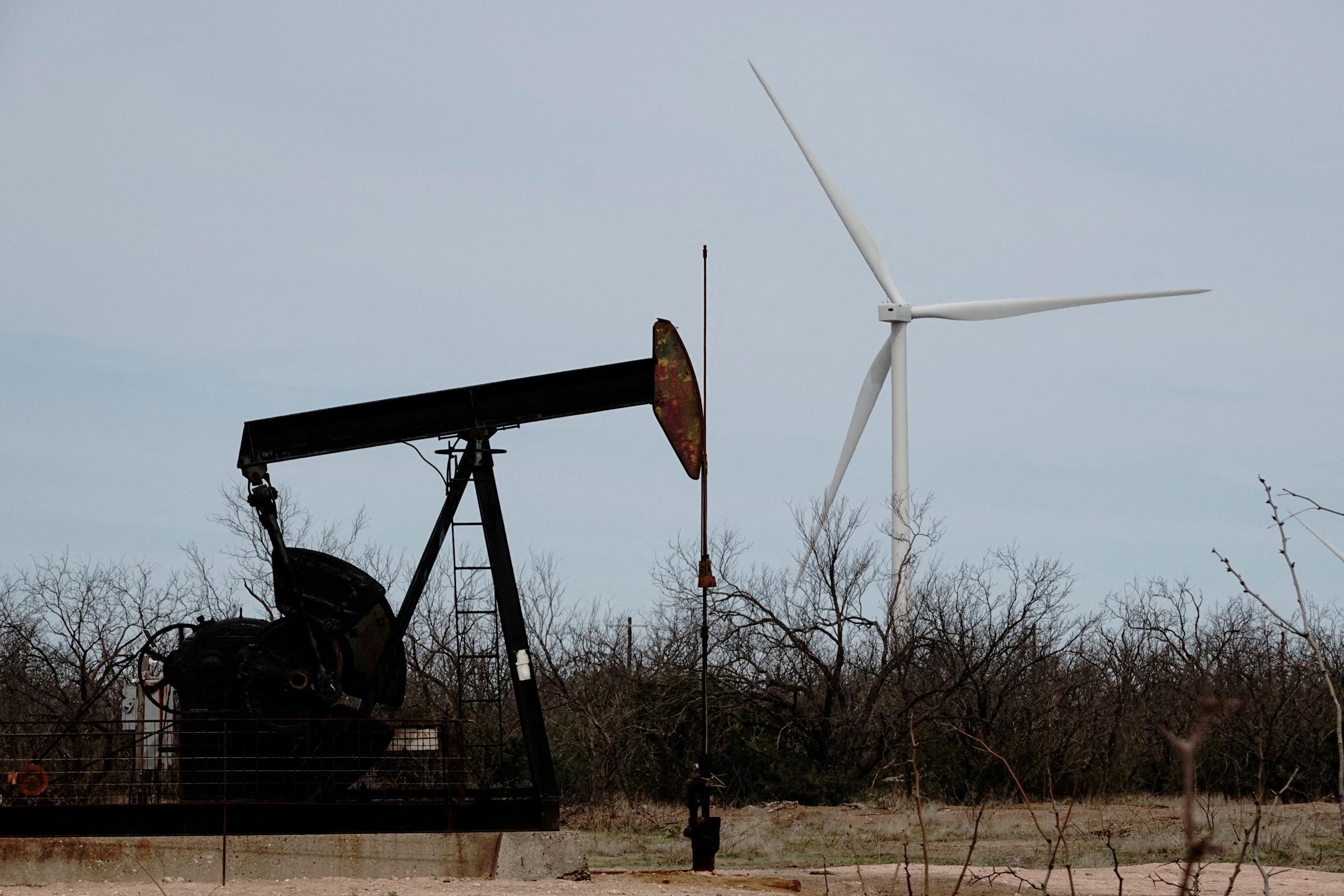
LITTLETON, Colorado, Nov 22 (Reuters) - President-elect Donald Trump's support for the fossil fuel sector and climate scepticism have sparked dismay throughout the global climate tracking community, and fears that his policies may reverse global energy transition momentum. His campaign speeches included pledges to boost domestic oil and natural gas output and to remove mandates on electric vehicle production, but he has yet to publish many specific new energy policies. This lack of clarity has spurred despair among the climate community as it braces for the worst. But a look back at the trends across the U.S. energy landscape during Trump's first term suggests there could be some bright spots. Below are some key data and observations that can help shed light on how President Trump's first term impacted the U.S. energy space, and what we might expect this time around. FOSSIL FUELLED The first Trump administration made a big deal out of supporting homegrown energy, especially output of crude oil and natural gas which both scaled record highs during Trump's first term. However, U.S. oil and gas production had also scaled record highs during President Barack Obama's terms, and have climbed even higher under Joe Biden. The fact that oil and natural gas output trended higher before and after Trump suggests that technological and operational prowess plays a bigger role than the White House occupant in driving U.S. energy production. That said, the first Trump administration did make a major impact on the international trade of U.S. oil and gas, by streamlining export permitting and promoting U.S. product exports. U.S. LNG exports in particular soared once Trump took office, jumping from under 200 billion cubic feet in 2016 - President Obama's last year in office - to over 700 billion cubic feet during Trump's first year, according to the U.S. Energy Information Administration. Then exports of so-called U.S. Freedom Gas really took off, hitting 1 trillion cubic feet in 2018, 1.8 trillion cubic feet in 2019, and 2.4 trillion cubic feet in 2020. U.S. crude oil exports also shot higher under the first Trump spell, jumping from just under 600,000 barrels a day in 2016 to 1.1 million barrels in 2017, 2 million in 2018, 3 million in 2019 and 3.2 million in 2020. Given the change to the more environment-friendly Biden administration from 2021, climate trackers had expected reduced production and exports of U.S. oil and gas. But the opposite has been the case, with output and exports hitting new highs in each year since Biden took office. With Trump back in power from next year, a continuation of those output and export trends looks likely. But the extent of both will likely be as much driven by the economics of extraction and shipment as it will be by any Trump policy tweaks. COAL COMFORT The coal market underscores the importance of market dynamics on fossil fuels. Under Trump's watch, U.S. coal production managed only modest growth during his first year and then sank to all-time lows during his final year. Coal output has actually rebounded slightly during the Biden administration, but remains at roughly half the levels seen from 1990 through 2010 due to reduced coal use at home and abroad. This underscores the fact that U.S. fossil fuel production and exports are driven more by global demand and market economics than by domestic policy. CLEAN POWER MOMENTUM IS HARD TO STOP The generation mix within the domestic power sector can be more easily influenced by policy, as subsidies, tax breaks and other incentives can drive investment at the utility level over the course of an administration. However, the years-long power project development times means that any fuel mix changes can span presidential administrations, and are often driven more by utility needs than presidential decrees. That said, the Biden administration's Inflation Reduction Act - which included measures to accelerate green energy adoption and production across the U.S. - has left an enduring imprint on the U.S. power industry. Climate advocates are concerned that Trump's pro-fossil fuel stance and disdain for regulations mandating clean energy use may reverse some of that momentum. But power and electricity generation data during Trump's first term indicates that clean power progress is hard to stop, even by big supporters of oil and gas. During Trump's first term, U.S. electricity production from clean sources increased by 7%, fossil-fired generation dropped by 4%, and total emissions from power generation declined by 12%, according to energy think tank Ember. Granted, clean power growth was higher under both Obama and Biden, expanding by 21% under Obama's tenure and 13% under Biden. Yet power emissions have declined by only 6% under Biden, which illustrates that some trends are beyond the reach of bureaucrats. And there are some trends that no administration will want to stop, such as the lowering of generation costs from new production capacity, be it renewable or fossil-based. Trump has pledged to lower the cost of living and spur business growth during his next term, and his administration will know that cheap and abundant power will be needed to make that happen. That means that every terawatt produced from renewables and other clean power sources will be needed, and that more will be built even if output from fossil fuels also keeps climbing. The opinions expressed here are those of the author, a market analyst for Reuters. Sign up here. https://www.reuters.com/business/energy/gauging-likely-trump-effect-us-energy-power-sectors-maguire-2024-11-22/
2024-11-22 05:53
TOKYO, Nov 22 (Reuters) - Osaka Gas' (9532.T) , opens new tab settlement process for procuring liquefied natural gas (LNG) from the Sakhalin 2 project in Russia will not be impacted by the new U.S. sanctions on Russia's Gazprombank, the Japanese city gas provider's president said. The United States imposed new sanctions on Russia's Gazprombank on Thursday, the Treasury Department said, as President Joe Biden steps up actions to punish Moscow for its invasion of Ukraine before he leaves office in January. Osaka Gas, which buys the super-chilled fuel from the Sakhalin 2 LNG project under a long-term contract, does not expect the U.S. sanctions to affect its transactions, President Masataka Fujiwara told reporters on Friday, noting the utility does not use Gazprombank for settlement. Sign up here. https://www.reuters.com/business/energy/osaka-gas-says-us-sanctions-gazprombank-will-not-impact-its-russian-lng-purchase-2024-11-22/

2024-11-22 05:44
A look at the day ahead in European and global markets from Ankur Banerjee A series of manufacturing data will likely dominate markets' attention on Friday, with the euro rooted near its lowest in more than 13 months, while bitcoin edged towards $100,000 on expectations of friendlier regulations in the United States. India-listed shares of Adani Group firms slid and their dollar bonds remained under pressure for a second day following billionaire founder Gautam Adani's indictment for fraud by U.S. prosecutors. Monthly PMIs will be released around the world over the course of the day, helping investors to chart out how the various economies are doing and where global rates are headed, as well as how much further the dollar's recent uptrend may have to run. Adani's company denied the accusations in Thursday's indictment, which comes less than two years after U.S. short-seller Hindenburg Research accused the Adani group of improper use of tax havens and involvement in stock manipulation, which the conglomerate also denied. Where that leaves market sentiment on Indian equities is anyone's guess. When Hindenburg's report came out in January 2023, India's broader stock markets felt the heat for a few weeks before rebounding and racing on to a bull run. The BSE Sensex (.BSESN) , opens new tab has been sliding since it touched a record high in late September, as investors wary of rich valuations flee the market. The Adani news has caught the markets at a vulnerable moment. As for bitcoin, there's little else to say except that the markets and crypto enthusiasts everywhere are waiting with bated breath for the world's biggest cryptocurrency to hit $100,000 for the first time, a landmark moment for the sector. Anything remotely related to crypto has been on a tear since the U.S. election as investors bet that President-elect Donald Trump and his administration will bring in friendlier regulations. And finally, investors have been taking a closer look at Nvidia's (NVDA.O) , opens new tab results and are feeling a bit better about them. Investors' sky-high expectations may not have been met but, under the hood, everything looks good with demand holding strong for the firm's AI chips. That has stocks in Asia surging while futures indicate European shares are set for a higher open. Key developments that could influence markets on Friday: UK retail sales for October Flash PMI Nov data for France, Germany, euro zone and UK Sign up here. https://www.reuters.com/markets/europe/global-markets-view-europe-2024-11-22/