2024-11-22 05:35
SINGAPORE, Nov 22 (Reuters) - Several ships in Singapore and Rotterdam reported operational problems in recent months after using marine fuel blended with cashew nutshell liquid biofuel, fuel testing agency CTI-Maritec said in an advisory on Thursday. Singapore-based CTI-Maritec said it tested samples from the affected ships and found the marine fuel was blended with cashew nutshell liquid that came from undeclared source materials or production processes. The ships had reported operational problems including fuel sludging, injector failure, filter clogging, system deposits and corrosion of turbocharger nozzle rings, the agency said. CTI-Maritec did not name the vessels or shipping lines involved, and it was not immediately clear how many ships were affected. The Maritime and Port Authority of Singapore and the Port of Rotterdam did not immediately respond to a request for comment. CTI-Maritec advised ship-owners not to use 100% cashew nut liquid as a marine fuel or as a blending component, or unestablished bio-products in marine diesel engines. It said their use would contravene guidance from the International Maritime Organisation on the supply of fuel oil to ships. Cashew nut liquid is a non-FAME (fatty acid methyl ester) biofuel, which is a byproduct of the cashew nut industry. While it has been touted as an alternative renewable fuel, it also has high acid values and is corrosive. Ship-owners have been exploring various marine biofuel blends as an alternative to dirtier bunker fuels in order to cut emissions. The latest version of the ISO 8217 marine fuel specification specifies the use of accepted biofuels including FAME-based biofuels and hydrotreated vegetable oil. There is no marine fuel specification available for cashew nut liquid from any authorised body, CTI-Maritec said. Sign up here. https://www.reuters.com/sustainability/cashew-nutshell-marine-biofuel-causes-problems-some-ships-says-testing-agency-2024-11-22/

2024-11-22 05:18
Russia will keep testing hypersonic missile in combat US imposes new sanctions on Moscow China crude oil imports set to rebound in November Nov 22 (Reuters) - Oil prices climbed about 1% on Friday, settling at a two-week high, as the intensifying war in Ukraine this week boosted the market's geopolitical risk premium. Brent futures rose 94 cents, or 1.3%, to settle at $75.17 a barrel. U.S. West Texas Intermediate (WTI) crude rose $1.14, or 1.6%, to settle at $71.24. Both crude benchmarks were up about 6% for the week, their highest settlements since Nov. 7 as Moscow stepped up its Ukraine offensive after Britain and the U.S. allowed Kyiv to strike deeper into Russia with their missiles. "The Russia-Ukraine escalation has raised geopolitical tensions beyond levels seen during the year-long conflict between Israel and Iran-backed militants," said Saxo Bank analyst Ole Hansen. President Vladimir Putin said Russia would keep testing its new Oreshnik hypersonic missile in combat and had a stock ready for use. Russia fired the missile into Ukraine, prompted by Ukraine's use of U.S. ballistic missiles and British cruise missiles to hit Russia. "What the market fears is accidental destruction in any part of oil, gas and refining that not only causes long-term damage but accelerates a war spiral," said PVM analyst John Evans. The U.S., meanwhile, imposed new sanctions on Russia's Gazprombank as President Joe Bidenstepped up actions to punish Moscow for its invasion of Ukraine before he leaves office on Jan. 20. The Kremlin said the new U.S. sanctions were an attempt by Washington to hinder the export of Russian gas, but noted that a solution would be found. The U.S. also banned food, metals and other imports from about 30 more Chinese companies over alleged forced labor involving the Uyghurs. China, the world's biggest oil importer, announced policy measures this week to boost trade, including support for energy product imports, amid worries over U.S. President-elect Donald Trump's threats to impose tariffs. China's crude oil imports were set to rebound in November, according to analysts, traders and ship tracking data. Oil imports also increased in India, the world's third biggest oil importer, as domestic consumption increased, according to government data. CAPPING PRICE GAINS Pressuring prices on Friday, euro zone business activity took a surprisingly sharp turn for the worse this month as the bloc's dominant services industry contracted and manufacturing sank deeper into recession. In contrast, S&P Global said its flash U.S. Composite PMI Output Index, which tracks the manufacturing and services sectors, increased to the highest level since April 2022, with the services sector providing the bulk of the increase. But with those business activity gauges moving in opposite directions in the U.S. and Europe, the U.S. dollar (.DXY) , opens new tab jumped to a two-year high versus a basket of other currencies. A stronger greenback makes oil more expensive in other countries, which can reduce demand. In Germany, the biggest economy in Europe, the economy grew less than previously estimated in the third quarter, the statistics office reported on Friday. Sign up here. https://www.reuters.com/business/energy/oil-rises-intensifying-ukraine-war-increases-supply-risk-2024-11-22/

2024-11-22 05:05
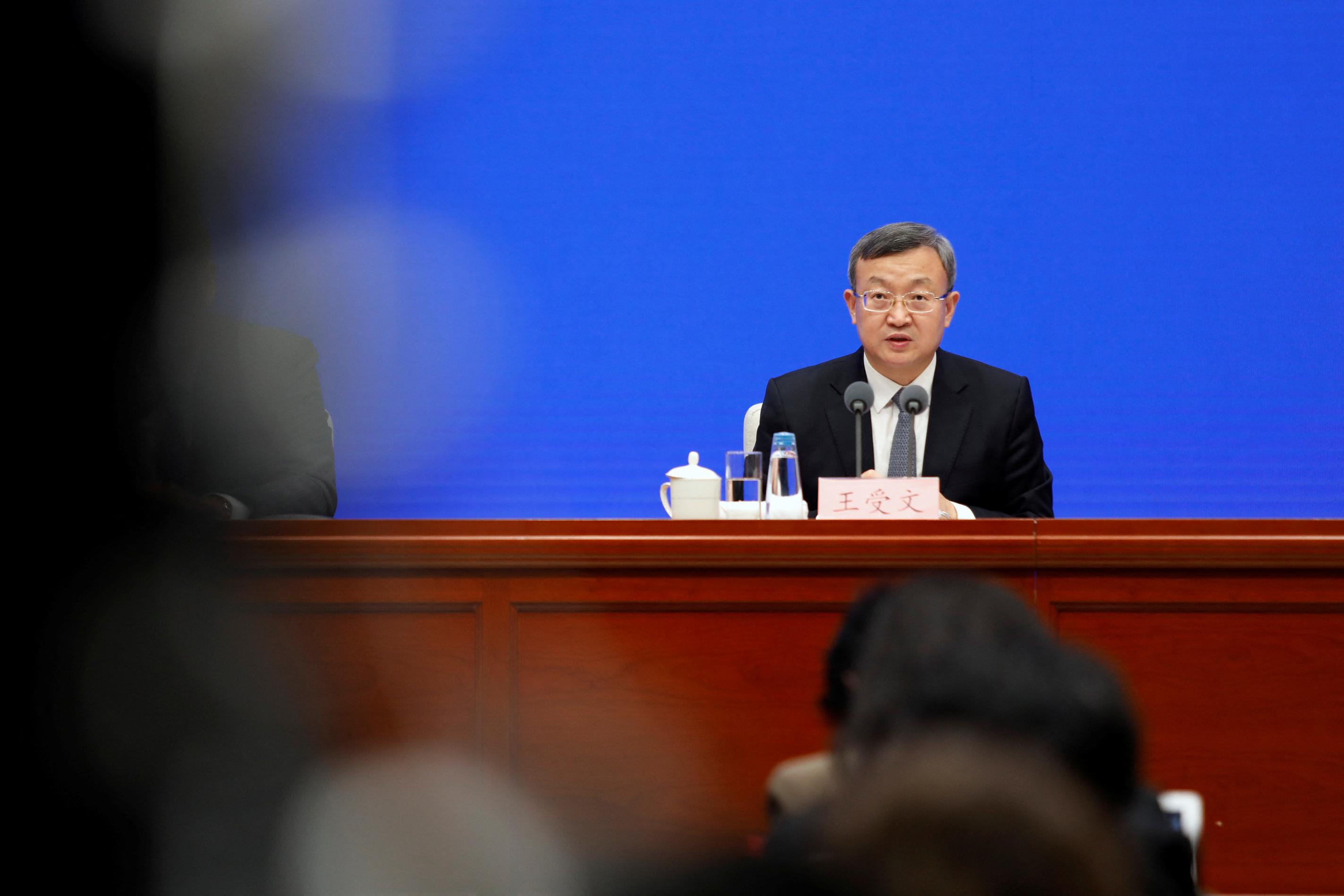
BEIJING, Nov 22 (Reuters) - China is willing to conduct active dialogue with the United States based on the principles of mutual respect and promote the development of bilateral economic and trade relations, vice commerce minister Wang Shouwen said on Friday. Wang, also China's International Trade Representative, said China would be able to "resolve and resist" the impact of external shocks, responding to a question about the impact of potential tariffs from U.S. President-elect Donald Trump. "We believe that China and the U.S. can maintain a stable, healthy, and sustainable development trend in economic and trade relations," Wang said at a press conference in Beijing. China is also willing to "expand areas of cooperation and manage differences" with the U.S., Wang said. With Trump's threat to impose tariffs in excess of 60% on all Chinese goods, which has rattled Chinese manufacturers and accelerated factory relocation to Southeast Asia and other regions, Chinese exporters are bracing for any trade disruptions. Economists polled by Reuters believe the United States could impose nearly 40% tariffs on imports from China early next year, potentially slicing growth in the world's second-biggest economy by up to 1 percentage point. Chinese authorities on Thursday announced a series of policy measures aimed at boosting foreign trade, including pledging to strengthen financing support to firms and expand exports of agricultural products. The trade turmoil of Trump's first presidency will also bring impacts on the Chinese yuan. The yuan rallied 10% through the first 18 months before sliding about 12% through his imposition of tariffs and the pandemic. "Our basic judgment is that the yuan exchange rate will remain basically stable at a reasonable and balanced level," said Liu Ye, an official from China's central bank said at the same press conference. The central bank will "maintain the flexibility of yuan while strengthening guidance on expectations to prevent the market from forming one-sided views expectations," she added. The bank will also resolutely guard against the risk of exchange rate overshooting and keep yuan stable at a reasonable and balanced level, according to Liu. Chinese firms are squirreling away even more dollars, pricing contracts in yuan and opening import lines to mitigate currency risks, Reuters reported on Friday. Sign up here. https://www.reuters.com/world/china-says-stable-trade-business-development-with-us-will-benefit-both-nations-2024-11-22/
2024-11-22 04:28
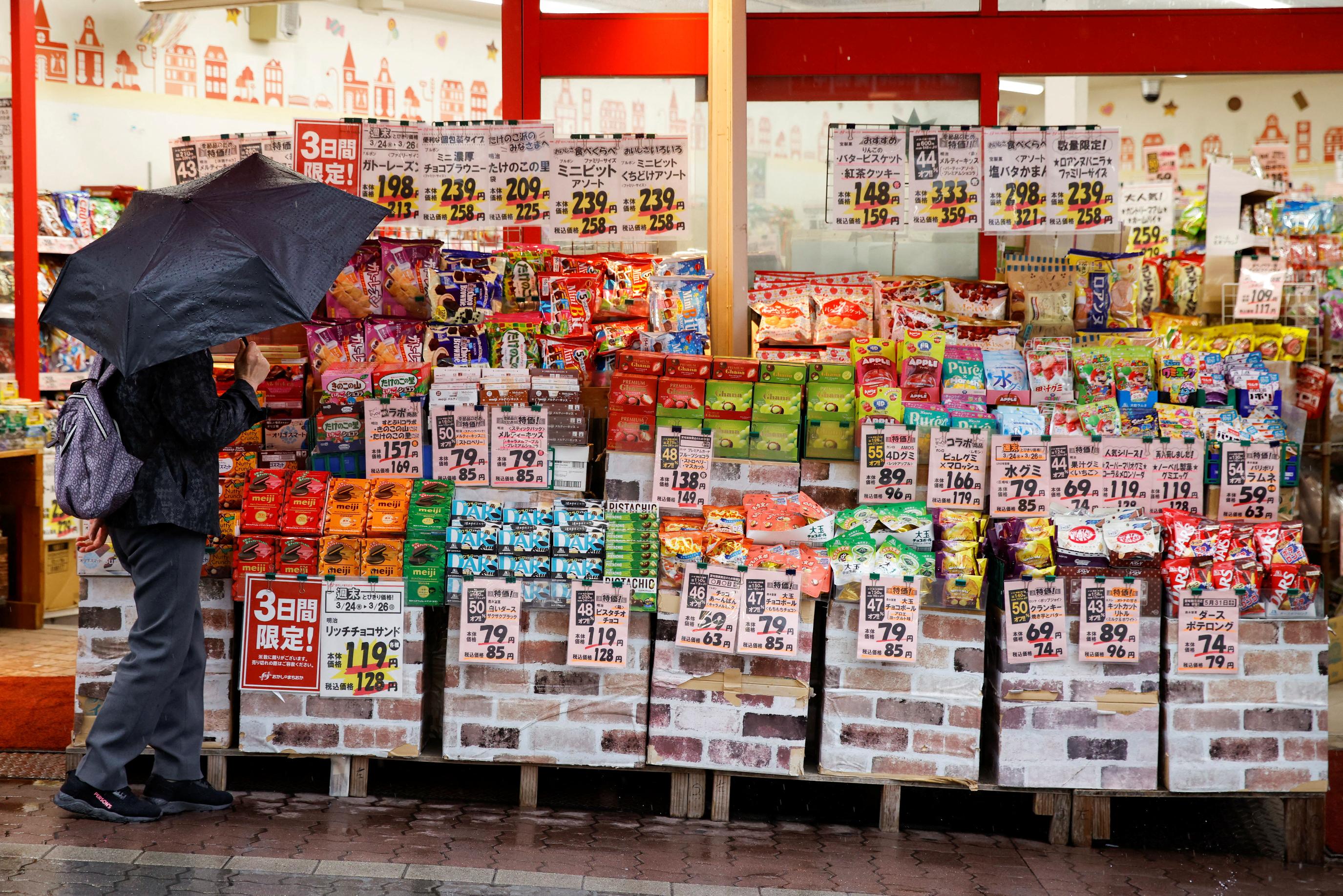
October core CPI rises 2.3% yr/yr vs forecast +2.2% Index excluding fuel rises 2.3% yr/yr vs +2.1 in September Services inflation perk up, signal pressure from rising wages Data among factors BOJ will scrutinise at Dec. 18-19 meeting Majority of economists expect BOJ to hike rates in December TOKYO, Nov 22 (Reuters) - Japan's core inflation in October held above the central bank's 2% target and a key index stripping away the effect of fuel accelerated, data showed on Friday, keeping pressure on the central bank to raise its still-low interest rates. The data also showed continued gains in service prices, which are closely watched by the Bank of Japan (BOJ) for clues on whether firms were passing on rising labour costs, suggesting conditions for further rate hikes were falling into place. The readings will be among factors the BOJ will discuss at its next policy meeting on Dec. 18-19, when some analysts expect a hike in short-term rates to 0.5% from 0.25% as the central bank unwinds years of ultra-low rates. The yen's renewed weakness, which heightens inflationary pressure by pushing up the cost of imports, has also led some market players to bet on a December rate hike. "Although evidence of demand-driven price pressure remains scarce, the renewed yen depreciation over the past two months means upward pressure on prices will persist," said Stefan Angrick, senior economist at Moody's Analytics, who expects the BOJ to hike rates in December rather than wait until January. A Reuters poll taken on Nov. 13-21 showed 56% of economists expect the BOJ to raise rates again in December, up from 49% in last month's survey. The nationwide core consumer price index, which includes oil products but excludes fresh food prices, rose 2.3% in October from a year earlier, government data showed, slightly exceeding a median market forecast for a 2.2% gain. It slowed from a 2.4% increase in September, mostly due to the base effect of last year's government decision to halve fuel subsidies that bumped up prices from October 2023. A separate index that strips away the effect of volatile fresh food and fuel, scrutinised by the BOJ as a better gauge of demand-driven inflation, rose 2.3% in October from a year earlier, accelerating from a 2.1% gain in September. Services inflation also perked up to 1.5% in October from 1.3% in the previous month, suggesting rising wages were prodding more firms to hike prices. "All told though, the renewed strengthening of underlying inflation coupled with the recent rebound in consumer spending and the renewed weakening of the yen strengthen the case for another BOJ rate hike next month," said Marcel Thieliant, head of Asia-Pacific at Capital Economics. The CPI data has drawn strong attention as many Japanese firms typically charge prices for services biannually in April, which is the start of the fiscal year, and October. The yen and bond yields jumped on Thursday on expectations the BOJ could hike rates in December, after Governor Kazuo Ueda said the bank would examine a "vast amount of data and information" before the meeting. Key data before the BOJ's December rate hike includes the Nov. 29 release of November figures for Tokyo CPI, seen as a leading indicator of nationwide trends, and the central bank's "tankan" quarterly business sentiment survey due on Dec. 13. Analysts polled by Reuters expect Tokyo core consumer inflation to hit 2.1% in November, accelerating from 1.8% in October. While data so far has mostly backed up the BOJ's case for further rate hikes, various risks loom. A record 58.9% jump in the price of rice pushed up the cost of food and dine-outs in October, clouding the outlook for consumption. There is also uncertainty on how soft Chinese growth and threats of higher tariffs by U.S. president-elect Donald Trump could affect the export-reliant economy. A survey released on Friday showed Japan's factory activity contracted for the fifth straight month in November in a sign companies were feeling the pinch from sluggish Chinese demand. The BOJ ended negative interest rates in March and raised its short-term policy rate to 0.25% in July on the view Japan was on the cusp of durably achieving its 2% inflation target. Ueda has stressed the BOJ's readiness to raise rates again if Japan continues to make progress in durably achieving its price target backed by domestic demand and sustained wage gains. Sign up here. https://www.reuters.com/world/japan/japans-core-inflation-slows-october-stays-above-boj-target-2024-11-21/
2024-11-22 04:16
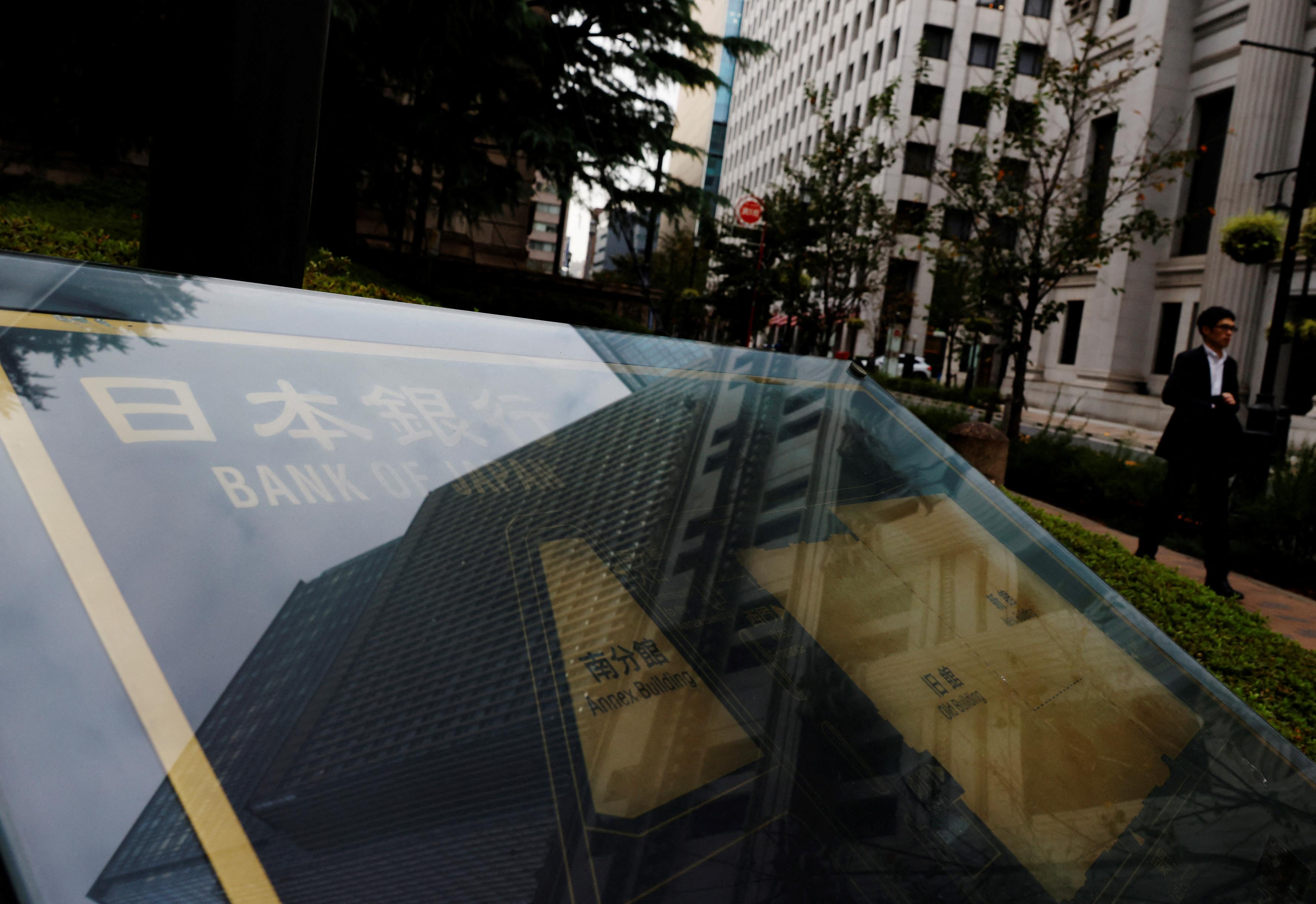
TOKYO, Nov 22 (Reuters) - The Bank of Japan will raise interest rates again at its December meeting as a strengthening economy and concerns over the depreciating yen prompt policymakers to act, according to just over half of economists in a Reuters poll. The BOJ is also likely to keep pushing interest rates higher in the wake of Donald Trump's Nov. 5 election victory, most economists said, as markets brace for a slew of inflationary policies under the new administration. In the Nov. 13-21 poll released on Friday, 56% of economists, 29 of 52, said the BOJ would raise borrowing costs again by end-year, compared with 49% in a poll last month. The median prediction for the end-year rate was 25 basis points higher at 0.50%. Analysts said the economy and prices moving on track with the BOJ's outlook, the receding downside global economic risks and the yen's depreciation would prod the Japanese central bank to tweak rates. "If the BOJ does not act in December, there is a risk the yen will weaken further by the end of January when the next meeting is scheduled, and that the bank will fall behind in its response," said Kazutaka Maeda, an economist at Meiji Yasuda Research Institute. The weak yen - which had pushed up import costs and inflation - was among the factors that led to the BOJ's decision to raise interest rates in July. BOJ Governor Kazuo Ueda said this week the economy was progressing towards sustained wage-driven inflation and warned against keeping borrowing costs too low. He said the BOJ will "seriously" take into account the impact yen moves could have on the economic and price outlook. About 90% of economists, or 44 of 49, forecast the BOJ would have lifted rates to 0.50% by end-March. Two who had predicted a hike to 0.50% by end-year expected the rate to be 0.75% by the end of the first quarter. Among a smaller sample of 20 who provided monthly forecasts and anticipated either a rate hike next year or no further increase at all, 90%, or 18, chose January. That was up from almost three-quarters in October's poll and September's 60%. Additionally, 96% of economists, or 24 of 25, expected Trump's return to the White House would encourage the BOJ to raise interest rates, the poll found. Respondents said the president-elect's economic policy, including tax cuts and tariffs, would reignite inflation in the U.S. which would also stoke inflationary pressure in Japan. "In reality, the BOJ would like to proceed with raising interest rates carefully, taking into account the impact on the economy and other factors," said Mitsuo Fujiyama, senior economist at the Japan Research Institute. "But with import inflation causing prices to rise again, it feels like they have no choice but to raise interest rates." The median of 26 economists who offered their view on what the BOJ's terminal rate should be was 1.00%, with a range of 0.50% and 2.50%. The BOJ ended negative interest rates in March and raised its short-term policy rate to 0.25% in July on the view Japan was on the cusp of durably achieving its 2% inflation target. Japan's economy expanded an annualised 0.9% last quarter, slowing from the previous three months on tepid capital spending though an unexpected pickup in consumption was a bright spot. (Other stories from the Reuters global economic poll) Sign up here. https://www.reuters.com/markets/asia/boj-hike-rates-dec-yen-weakens-trump-returns-majority-analysts-say-2024-11-22/
2024-11-22 03:46
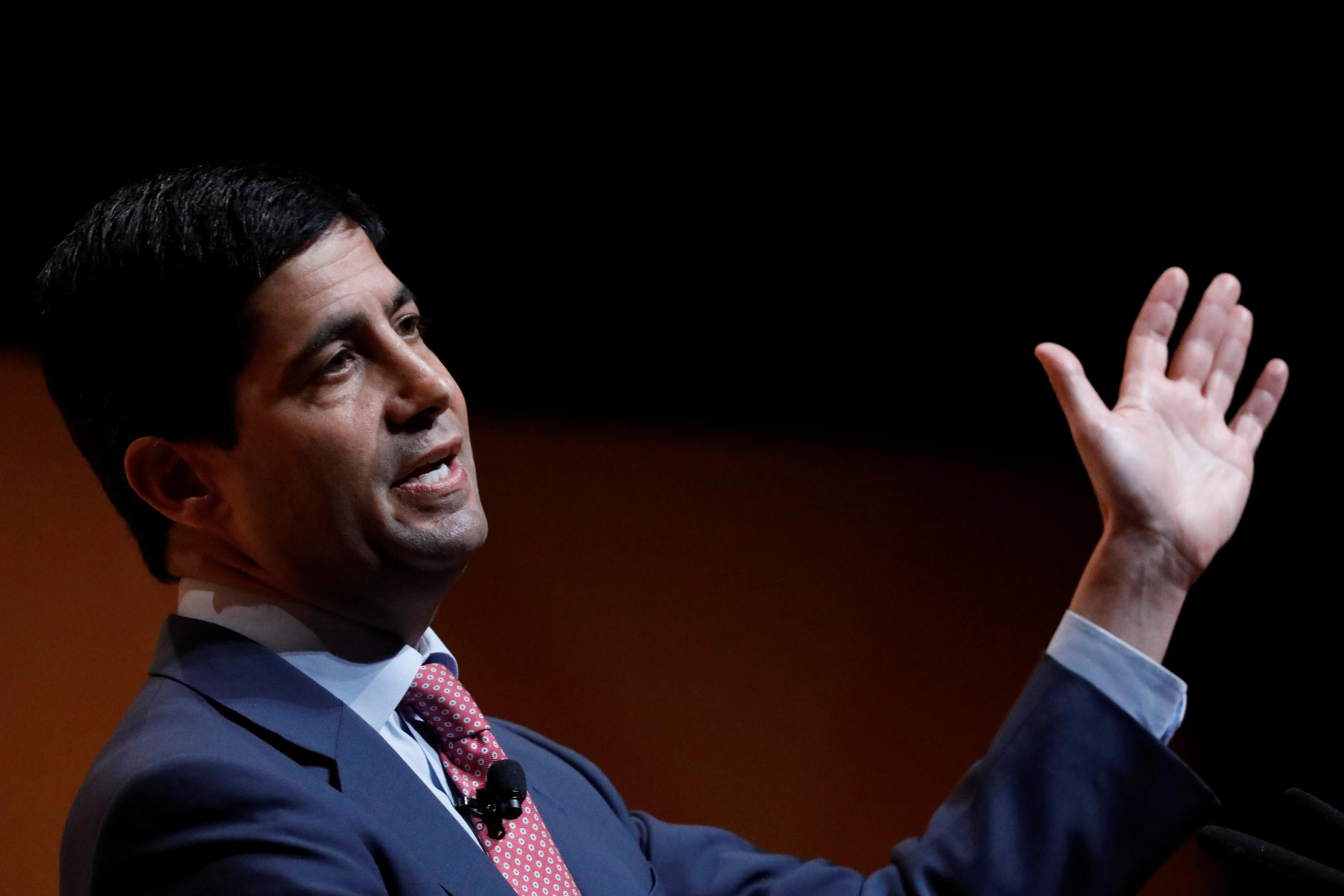
Trump still weighing approach to next Fed chief Warsh has been tariff critic, Fed independence promoter Powell's term expires in May 2026 Nov 21 (Reuters) - U.S. President-elect Donald Trump floated the idea of appointing Kevin Warsh as Treasury Secretary on the understanding that he could later be Federal Reserve chair, the Wall Street Journal reported on Thursday, citing people familiar with the matter. The potential arrangement was discussed between Trump and Warsh, a former investment banker who served on the Federal Reserve Board, at Trump's Mar-a-Lago retreat on Wednesday, the report added. Trump is also thinking about appointing Scott Bessent, a longtime hedge fund investor who taught at Yale University for several years, to lead the White House National Economic Council before he could be nominated to replace Warsh at the Treasury, the report added. No announcement has been made by Trump. The Wall Street Journal cautioned that Trump could still pick someone else for the role. Marc Rowan, who co-founded Apollo Global Management (APO.N) , opens new tab, U.S. Senator Bill Hagerty of Tennessee and Robert Lighthizer, who served as Trump's U.S. trade representative for essentially the then-president's entire term, are also considered to be in the running for the Treasury role. Trump was still weighing how he would approach filling the Fed leadership role, the Journal said, and he would likely not make a decision until closer to the end of current Chair Jerome Powell's four-year term in May 2026. Warsh could be seen as an unusual choice for Trump, who wants to impose steep tariffs to curb imports and who has said presidents ought to have some say in Fed policymaking. Warsh in the past has been openly critical of tariffs and has also been a staunch advocate of the Fed's independence. In a 2010 speech , opens new tab delivered while he was a Fed governor, Warsh said the Fed's greatest asset was its "hard-earned credibility," which required "fierce independence from the whims of Washington and the wants of Wall Street." "This fierce independence is needed, perhaps now more than ever," he said at the time. Bessent, for one, has floated the notion of appointing a successor to Powell well before his term as chair expires, allowing that individual to act as a sort of "shadow chair" who would supersede Powell's authority. He has since distanced himself from that idea, but the subject of Fed independence during Trump's coming term remains a point of high interest among economists and investors. While Powell's term as chair expires in May 2026, his seat on the Fed board extends until January 2028. However, no Fed leader in more than 70 years has remained at the central bank after their term at the helm expired. The last to do so was Marriner Eccles, who stayed on for about three years after stepping down as chair in 1948. Barring any resignations among the current seven board members, the first vacancy at the Fed that will be available for Trump to fill will occur when Governor Adriana Kugler's term expires in January 2026. Sign up here. https://www.reuters.com/world/us/trump-considers-warsh-serving-treasury-secretary-then-fed-chair-wsj-reports-2024-11-22/