2024-11-21 02:43
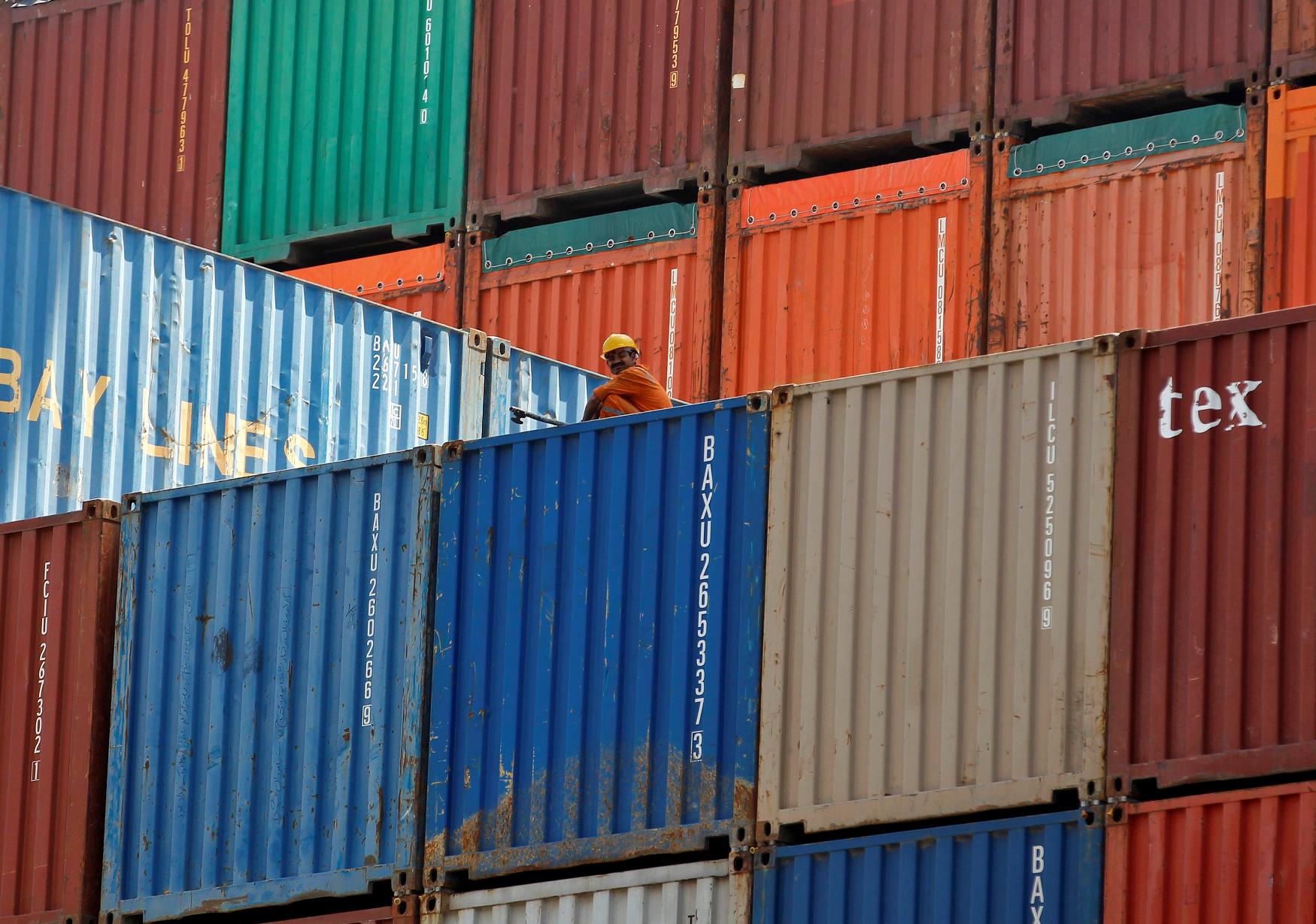
MUMBAI, Nov 20 (Reuters) - The Reserve Bank of India's approach to managing the rupee's exchange rate has not had an adverse impact on the global competitiveness of the country's exports, the central bank said in its monthly bulletin released late on Wednesday. The Indian central bank routinely intervenes in currency markets to quell volatility but its exchange rate management has also led to periods of the rupee being overvalued against the currencies of its major trading partners. The rupee's 40-currency real effective exchange rate (REER) - a measure of its competitiveness - shows the currency was overvalued by 7.21% at the end of October, close to its highest level in nearly six years, according to RBI data. Overvaluation of India's currency, relative to those of its trading partners, can adversely impact the country's exports by making them more expensive. But "the sensitivity of India's merchandise exports to real exchange rate changes seems to have come down over the years," the RBI said in its monthly bulletin. India’s efforts to grow exports are focused towards gaining market share on the basis of better quality and technological improvements without "the need for artificial props such as from an undervalued exchange rate," the article said. India's merchandise exports grew by a compounded annual growth rate of 5.8% since April 2018, faster than world's average of 4%, the bulletin said. The RBI has frequently stepped in to defend the rupee over the last few weeks, as a jump in portfolio outflows and U.S. dollar strength following Donald Trump's election victory weighed on the currency. Sign up here. https://www.reuters.com/markets/asia/indian-exports-not-adversely-impacted-by-rupee-exchange-rate-policy-cenbank-says-2024-11-21/
2024-11-21 00:34
LAUNCESTON, Australia, Nov 21 (Reuters) - China's crude imports are on track to rebound in November to the highest in three months, but the increasing appetite of the world's largest oil importer is more about price than rising demand. Crude oil arrivals may reach around 11.4 million barrels per day (bpd) this month, the most since August and the third-highest month so far in 2024, according to vessel-tracking and port data compiled by commodity analysts Kpler and LSEG Oil Research. If the final outcome for November is in line with the forecasts, it will be the highest monthly imports since August's official figure of 11.56 million bpd, and the third-strongest month so far this year. However, assuming the increase in crude imports is because of a recovery in demand may be optimistic, given China's refinery throughput remains weak and economic indicators continue to show the world's second-biggest economy is struggling for growth momentum. More likely the increase in November imports is down to price, with refiners taking advantage of the weakening prices at a time when cargoes arriving this month would have been arranged. Global benchmark Brent crude futures dropped to their lowest level for 33 months in early September, trading as low as $68.68 a barrel on Sept. 10. The price had been trending lower since early July, when it reached as high as $87.95 a barrel amid rising tensions in the Middle East and the decision by the OPEC+ group of exporters to defer a planned increase in production. The lag between when cargoes are bought and physically delivered to China ranges from about six weeks to three months, depending on where the oil is sourced from. This means that crude arriving in November was secured at a time when oil prices were hitting the lowest levels in almost three years. China's refiners have in the past shown that they will buy more crude than they need when they deem prices to be low, and cut back on imports when they view prices as having risen too high, or gained too rapidly. This dynamic has been apparent in China's imports of crude oil so far in 2024, with arrivals declining by 420,000 bpd in the first 10 months of the year, with much of the weakness coming after crude prices rallied strongly in the second quarter. Since the September low crude prices have recovered somewhat, reaching above $80 a barrel in early October before settling into a range largely between $70 and $75, ending at $73.10 on Wednesday. The steady prices may suggest that Chinese refiners will be happy to buy crude volumes sufficient to meet their needs, rather than purchase surplus oil to store for later processing. However, the election of Donald Trump to a second term as U.S. president may alter the calculations of Chinese buyers, especially those who purchase Iranian crude. IRAN CONCERNS Trump and members of his incoming administration have made it clear that they intend to return to his hardline policy of enforcing sanctions against Iran because of Tehran's nuclear programme and its support of militants groups fighting Israel. Traders report that this is already leading to some Chinese refiners, particularly independent processors, pulling back from buying Iranian crude. While overall crude supply is sufficient to comfortably handle any loss of Iranian barrels from the market, it is likely to impact regional pricing. If Chinese refiners turn to other Middle Eastern grades, it's likely that prices in the region will rise relative to other crudes. Already there is some evidence to suggest this is happening, with the Brent-Dubai exchange for swaps , which tracks the premium of Brent crude over regional Middle East marker Dubai, declining in recent weeks. The premium for Brent over Dubai was $1.44 a barrel on Wednesday, down from the 2024 high of $2.98 on Aug. 30. The views expressed here are those of the author, a columnist for Reuters. Sign up here. https://www.reuters.com/markets/commodities/china-crude-oil-imports-set-november-rebound-its-price-not-demand-russell-2024-11-21/

2024-11-21 00:20
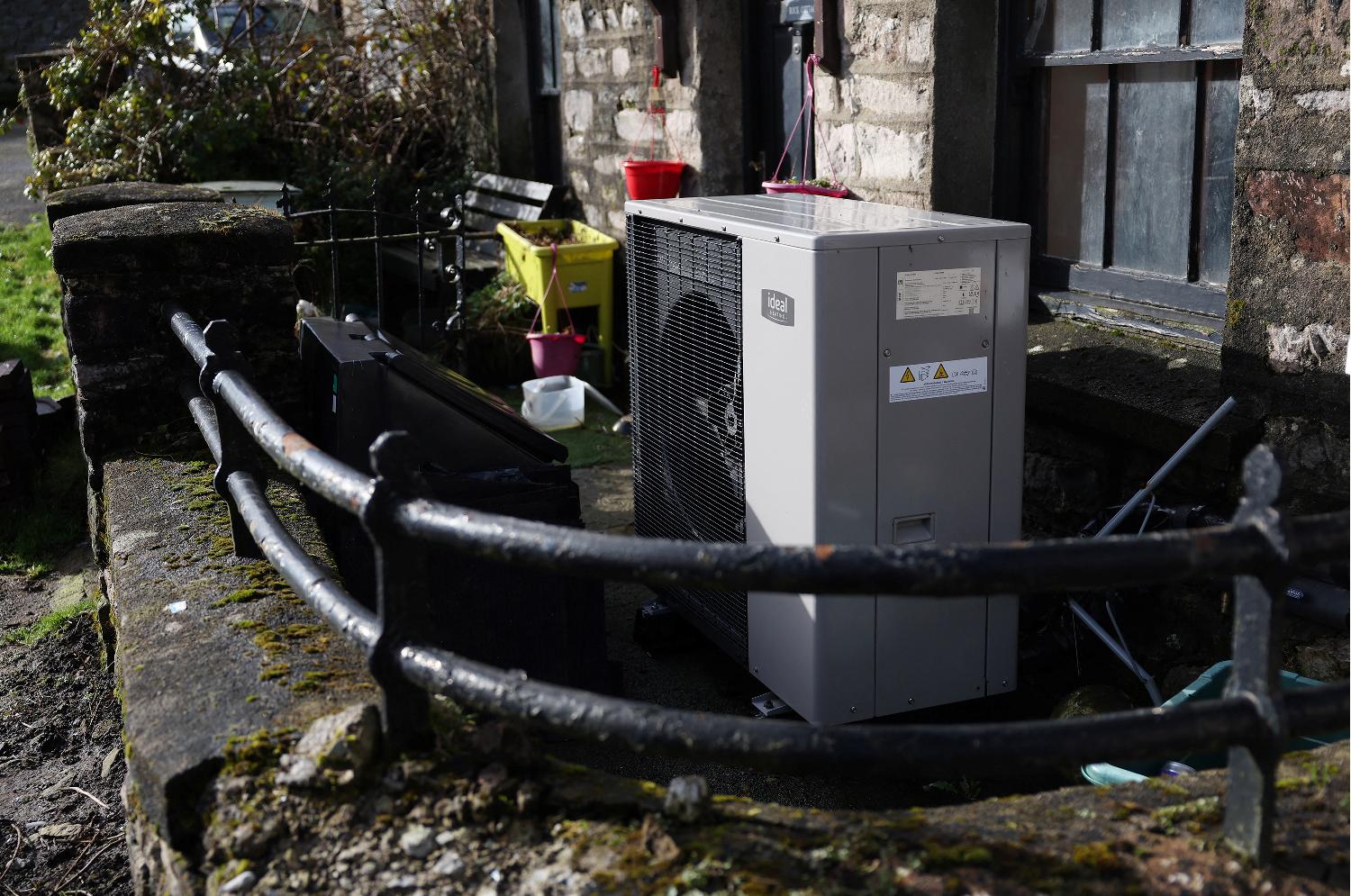
LONDON, Nov 21 (Reuters) - Britain announced on Thursday a doubling of funds available to help people switch to environmentally friendly heat pumps to keep their homes warm as well as a relaxation of planning rules to make installing the units easier. The Labour government last week committed the country to an ambitious climate goal at the United Nations COP29 climate summit of cutting its greenhouse gas emissions by 81% by 2035 compared with 1990 levels. Most of Britain’s homes are heated by gas and the home heating sector accounts for around 18% of the country’s overall emissions. The government hopes replacing gas boilers with electricity-driven heat pumps will play a role in helping to meet the climate target. Funding available under the boiler upgrade scheme, which was launched by the previous Conservative government in 2022, will be increased by 30 million pounds ($37.90 million) this financial year and double to 295 million pounds for 2025/26 to enable more people to take part, the Department for Energy Security and Net Zero said in a statement. Under the scheme people can apply for grants for 7,500 pounds to pay for a new heat pump, to make them more competitive with new gas boilers which can typically cost around 3,000 pounds. The government will also remove a rule which had meant heat pumps, which are installed outside, would need to be at least 1 metre away from a property boundary. "More than a third of customers who order a heat pump drop out because of planning issues... Removing outdated and unnecessary red tape is an urgent priority to grow this sector,” Greg Jackson, CEO of Octopus Energy, said in the government statement. ($1 = 0.7916 pounds) Sign up here. https://www.reuters.com/sustainability/climate-energy/britain-announces-plan-boost-heat-pump-uptake-2024-11-21/
2024-11-21 00:06
PetroPeru may offer minority stake to private investors in 2025 PetroPeru seeks new financing sources, avoids more state aid Chairman sees profit in 2025 of $200-$250 mln To hold talks with Colombia and Ecuador to buy crude SANTIAGO, Nov 20 (Reuters) - Peru's indebted state-run oil firm PetroPeru(PETROBC1.LM) , opens new tab could consider offering a minority stake to private investors in the second half of 2025, when the company hopes to emerge from a crisis and post profits, Chairman Alejandro Narvaez told Reuters on Wednesday. At an interview in his office in Lima, Narvaez said the offering would only start when the company returns to profit, which he forecast to happen next year, in the range of $200 million to $250 million. "Nobody buys shares in a company that has huge losses," he said. "We could think about starting to offer those shares that are actually registered on the stock exchange in the second half of next year," he said. "The offering would be gradual, I'd be lying if I said I know if it's going to be 10% or 20%, we'll see how things develop," he added. PetroPeru's losses are expected to grow to $960 million by the end of the year, but the chairman, who was appointed earlier this month, says he aims to reduce that number to $860 million. On Monday, he announced PetroPeru will look to its creditors for new sources of financing to ease its debt burden and said he would launch a series of actions intended to reduce the firm's losses, including hiring an international management company very soon. Narvaez was named chairman, alongside six other board members, after the entire board tendered their resignations in September citing the company's financial issues. PetroPeru had previously said it needs $2.5 billion to continue operating, and in September, the government approved around $1.75 billion in financing to keep the country's main fuel supplier afloat, something Narvaez said he would not do. "The worry (bondholders and creditors) has is that we're going to keep asking for more state financing," Narvaez said, who held a conference call with bondholders earlier on Wednesday. "As long as I'm here, I'll make dauntless efforts so that doesn't happen so that money can go to social programs." PetroPeru lost its investment grade from rating agencies in 2022 due to a crisis following an investment of $6.5 billion to modernize its Talara refinery. The company issued bonds in 2017 and 2021 worth about $3 billion to finance the refinery. It also has a debt with a group of foreign banks for $1.3 billion, guaranteed by the Spanish agency CESCE. Narvaez said the company would not issue more bonds and instead look for creditors. PetroPeru, once a major crude producer, has seen production stall and is focusing its efforts on the Talara refinery. Narvaez said he hopes the refinery will be producing at its full 95,000 barrel-per-day capacity by the end of the year and regain market share. The plan is to have a 38% market share by 2025, compared with the 28% expected in 2024, he said. He said that he plans to hold talks with Colombia's Ecopetrol (ECO.CN) , opens new tab and Ecuador's Petroecuador to buy crude for the Talara refinery. Since a privatization wave in the 1990s, PetroPeru was only involved in refining and marketing fuels. However, it returned to producing crude after leases with private companies expired in 2023. Sign up here. https://www.reuters.com/markets/commodities/perus-state-oil-firm-could-open-private-investors-2025-chairman-says-2024-11-20/

2024-11-20 23:39
HOUSTON, Nov 20 (Reuters) - Koch Industries is cutting or facing departures of employees across its trading division, several sources familiar with the matter said on Wednesday. The cuts are taking place in the company's Minerals and Trading unit (KM&T) and include staff in the United States, as well as other locations around the globe, the sources said, declining to be named because they were not authorized to speak on the record. Koch did not immediately respond to requests for comment. Among the departures are Brady Cook, who had handled oil for the company, one of the sources said, citing an email announcing the trader's retirement. "We will soon share more information about the KM&T organization moving forward," the email said, according to the source. In the U.S., other cuts included traders Clinton Geraci and Greg Smith, several sources said. Geraci had traded distillates at Vitol and Trafigura previously, and before joining Koch, he worked as a broker for TCT Oil Brokers, according to his LinkedIn profile. Smith handled distillates, according to his LinkedIn profile. Geraci did not respond to a request for comment, and Smith and Cook could not be reached for comment. Sign up here. https://www.reuters.com/markets/commodities/koch-sheds-jobs-across-its-oil-trading-business-sources-say-2024-11-20/

2024-11-20 22:39
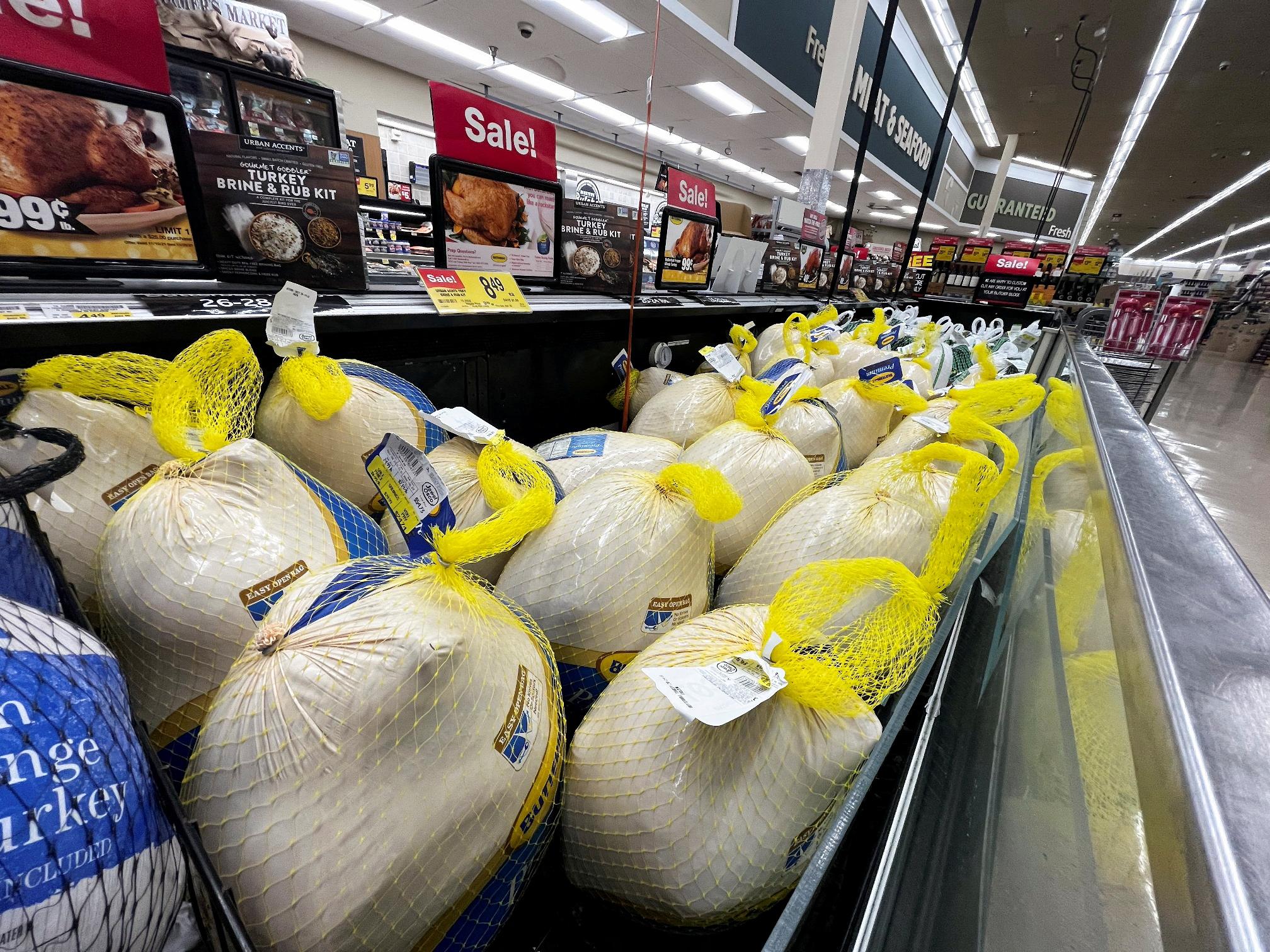
Turkey prices drop 6% due to cooling demand Thanksgiving meal costs 19% more than pre-pandemic Other ingredients' prices fall, processed items rise Nov 20 (Reuters) - Inflation-weary consumers should see the cost of their classic Thanksgiving dinner gobble less of their paychecks this year, largely because Americans are buying less of the meal's centerpiece dish, turkey. The price tag of the traditional holiday meal, which also includes cranberries, sweet potatoes and stuffing, has dropped for a second consecutive year, according to the American Farm Bureau Federation's annual survey released on Wednesday. Cooks can thank the bird. Turkey prices dropped 6% on cooling demand as some consumers opted to add beef and pork to the menu, the Farm Bureau and market analysts said. Still, the meal's price tag will cost families about 19% more than pre-pandemic times, the Farm Bureau said. Frustration over high prices was seen as a major factor in Donald Trump's presidential election victory over Kamala Harris, but the Farm Bureau data suggests some of the worst inflation has abated. "We are seeing modest improvements in the cost of a Thanksgiving dinner for a second year, but America's families, including farm families, are still being hurt by high inflation," said Farm Bureau President Zippy Duvall. CHEAPER MEAL The average cost for a 10-person meal came to $58.08, down from $61.17 last year and a record $64.05 in 2022, Farm Bureau data showed. The price of a turkey, which represents the bulk of the bill, fell even as supplies dropped 6% in 2024 partly because of a bird-flu outbreak. Turkey demand of 13.9 pounds per person in 2024 is down nearly a pound from 2023, according to the U.S. Agriculture Department. Like most grocery items, turkey prices rose alongside overall inflation in recent years, which may have spooked consumers in 2024, said Ashley Kohls, the Minnesota Turkey Growers Association's executive director. "We're working on bringing folks back to purchasing turkey after a number of years of having elevated prices at the grocery store," said Kohls. Indiana turkey farmer Greg Gunthorp said his customers appear to have plenty of supply to meet consumer demand this year. There have been far fewer frantic calls from buyers scrambling to restock, he said. "We've had those outlier years when there just aren't enough turkeys to go around and our phones are just ringing off the hook. This is definitely not one of those years," Gunthorp said. "I think lots of people are adding items to the menu in addition to the turkey, things like brisket and ham." The Farm Bureau survey found that the price of other ingredients in the Thanksgiving meal also fell, including the cost of fresh vegetables and whole milk, although the price of processed ingredients, such as dinner rolls and cubed stuffing, increased. Sign up here. https://www.reuters.com/world/us/lower-turkey-costs-set-table-cheaper-us-thanksgiving-feast-this-year-2024-11-20/