2026-02-09 09:49
UK markets under pressure as political uncertainty returns Sterling tumbles against euro But markets recover some ground in late trade LONDON, Feb 9 (Reuters) - British stocks, bonds and the pound came under pressure on Monday as Prime Minister Keir Starmer faced calls to quit from his party's leader in Scotland after two key aides resigned in as many days. UK markets found some late support after former deputy prime minister Angela Rayner backed Starmer, while health minister Wes Streeting said he did need not to go. Both are seen as possible successors. Sign up here. Even so, UK assets underperformed. Britain's 10-year gilt yield was last up around 2 basis points at around 4.53%, after touching 4.6% earlier, while 30-year gilt yields briefly hit their highest since November . When a bond yield rises, its price falls. Gilts still underperformed U.S., French and German counterparts. Sterling stayed lower against the euro but trimmed losses, last down roughly 0.3% at 87.10 pence. London's FTSE 100 (.FTSE) , opens new tab stock index erased earlier falls and edged into positive territory. Starmer, whose Labour party won a landslide in July 2024, has struggled in the polls as his government falls short on tackling the cost-of-living crisis and reviving the economy. He has recently faced heavy criticism after his choice for U.S. ambassador, Peter Mandelson, was forced to resign over links to the late U.S. sex offender Jeffrey Epstein. Finance minister Rachel Reeves is also under pressure to stick to her fiscal rules to keep public finances on track. "I'm not really sure if you change the skipper on the Titanic, the outcome's going to change too much. They're all (UK leaders) dealt the same fiscal hand and budget constraints and the reality of what the UK economy is like," said Nick Kennedy, FX strategist at Lloyds. "So, changing the leadership might seem to be a reset, but it's probably not going to change too much in reality." UNCERTAIN TIMES Some Labour lawmakers have openly criticised Starmer's judgment and investors are bracing for a possible challenge to his leadership. He will meet Labour lawmakers later on Monday. "The decision by his most senior adviser to fall on his sword may buy Starmer some time, but signs of widespread discontent on the backbench, compounded by diabolically bad poll results, are creating the impression that his days are numbered," said Benjamin Picton, senior market strategist at Rabobank, referring to aide Morgan McSweeney's resignation on Sunday. Prediction site Polymarket last put the odds of Starmer stepping down by month-end at about 30%. On February 5, during an earlier flare-up of concern over Starmer's future, 10-year gilt yields jumped to their highest since November 20 at 4.605% before retreating sharply after the Bank of England came closer than expected to cutting rates. https://www.reuters.com/world/uk/uk-borrowing-costs-rise-investors-weigh-pm-starmers-future-2026-02-09/
2026-02-09 09:09
Danish central banker downplays economic impact of Greenland row Argues 6-year low in Danish crown was not linked to tensions Central bank has not changed approach to US assets in reserves Nødgaard pushing for data vault to protect from cyber attacks COVENTRY, England, Feb 9 (Reuters) - The transatlantic crisis over Greenland and latest stock market rout of weight-loss drug giant Novo Nordisk are not expected to seriously dent Denmark's economy, one of its central bank governors has said. The tightly managed Danish crown fell to a 6-year low against the euro last month when U.S. President Donald Trump threatened to seize Greenland, while fears about increasingly fierce competition in the obesity drug sector saw Denmark's biggest company (NOVOb.CO) , opens new tab lose a fifth of its value last week. Sign up here. Denmark has been one of Europe's strongest economies over the last two years, in part driven by Novo Nordisk, but Danish central banker Ulrik Nødgaard said neither its turbulent start to the year nor the Greenland row was likely to have seriously hit growth. "The Danish economy has been quite resilient," Nødgaard said in a weekend interview at the Warwick Economic Summit in Coventry, England. "In our last forecast from September, we envisioned something like 2% growth this year. That can certainly change, but it's not like we have a completely different outlook." EUROPEAN AUTONOMY 'FOR THE LONG HAUL' Nødgaard would not comment on how the central bank had approached the Greenland crisis, whether there had been any contact with the U.S. Federal Reserve, or even Greenland's longer-term economic struggles. But he said there was little doubt that Europe must now strengthen its own hand. "There's a broader issue in these times of Europe having to think about standing on its own and looking at dependencies and reaching for strategic autonomy," Nødgaard said. "That's for the long haul. It's not something you change from day to day, but that's certainly on the agenda," pointing even to basic examples like payments systems. Nødgaard said there had been no change in the Danish central bank's approach to dollar assets in its reserves, while recent decisions by some Danish pension funds to divest some U.S. Treasuries were up to them. SELF-CORRECTING CROWN MARKETS Nødgaard was cagey about the crown's fall last month. The currency is pegged at a central rate of 7.46038 crowns per euro and only allowed to fluctuate by 2.25% either way. Last month's drop to 7.4729 though was close enough to its lower limit to trigger market speculation about possible intervention. "We have a policy of keeping the crown fixed. The financial markets know that," Nødgaard said. "And we also saw the market sort of correcting itself as the crown was approaching weaker levels." He said the bank didn't see the drop as connected to the Greenland tensions, but more due to other market flows and because Denmark's 1.6% interest rate is lower than the ECB's. However, FX analysts who do see a link point out that the rate gap has existed since 2023 and that Danish crown forwards - used by investors to hedge currency positions - saw their biggest spike as the Greenland crisis escalated since last year's global trade tariff concerns. Nødgaard, a former market regulator, also touched on the selloff in global tech stocks and whether it might turn serious. "I think the financial sector is pretty robust to deal with shocks of this size and magnitude," he said, adding that if there was a major market correction and associated rise in risk premia "of course it will have an impact on the economy". Nødgaard is also pushing for an emergency system to be built in case one or more of Denmark's banks is hit by a cyberattack. It would be an offline data vault that can be switched on if a bank is taken down so that people and firms can still do basic banking tasks, such as withdrawing money. "It will require legislation and all in all will probably take a couple of years," Nødgaard said. "We certainly hope it will succeed." https://www.reuters.com/business/finance/danish-central-banker-sees-economy-riding-out-turbulent-start-year-2026-02-09/
2026-02-09 08:48
LONDON, Feb 9 (Reuters) - The pound slumped against the euro and dipped versus the dollar on Monday as traders reacted to the crisis facing Prime Minister Sir Keir Starmer and as expectations of further interest rate cuts weighed on the currency. Morgan McSweeney, Starmer's chief of staff, quit on Sunday, saying he took responsibility for advising the Prime Minister to choose Peter Mandelson as ambassador to the U.S. despite his known links to Jeffrey Epstein. Sign up here. Yet Starmer remains under pressure, with the Epstein saga far from over and tough local elections looming. The euro was last up 0.49% against the pound at 87.22 pence. That was around a two-week high, though the euro remains flat against sterling this year. Against the dollar, the pound was a touch lower at $1.3607 after falling as much as 0.2% earlier in the session . POLITICS IN FOCUS FOR UK ASSETS British government bonds also slightly underperformed their European peers on Monday as markets focused on Starmer's situation, although the moves were muted . Many bond investors worry a new Labour prime minister would shift policies to the left and increase spending, while currency markets traditionally abhor political instability. The government now faces the potentially embarrassing release of almost all private communications between officials about Mandelson's appointment. An election for a parliamentary seat in Manchester later this month and local elections in May could deal another blow to Starmer's leadership. "Expect pressure to remain on both sterling and gilts as the market speculates over a change of personnel at numbers 10 and 11 Downing Street," said Chris Turner, head of global markets at lender ING, referring to the addresses of the prime minister and finance minister. "Combined with a dovish twist at last week's Bank of England meeting, sterling is under pressure." RATE CUT BETS DIVERGE The pound was also feeling the effects of a closer-than-expected Bank of England decision to hold interest rates last week, which caused traders to ramp up bets on further cuts this year. The European Central Bank meanwhile seems likely to keep rates steady for the foreseeable future, with the expectations of lower relative returns denting the appeal of the pound versus the euro. "The pound looks set to continue trending weaker across the board," said Neil Jones, managing director for FX sales and trading at TJM Europe. "Political uncertainty is on the increase." Three-month risk reversals , which show the difference between the cost of owning an option to buy the euro against the pound versus the cost of one to sell the euro against sterling, rose to 67 basis points, the highest since late November, from a low of 22 bps on Thursday. The higher the number, the more bullish sentiment is for the euro versus sterling and vice versa. The euro was also up around 0.4% against the dollar on Monday. Some analysts said a Bloomberg report that China has advised banks to limit their holdings of U.S. Treasuries was weighing on the dollar. https://www.reuters.com/world/uk/sterling-slides-starmer-crisis-rate-cut-bets-2026-02-09/
2026-02-09 08:08
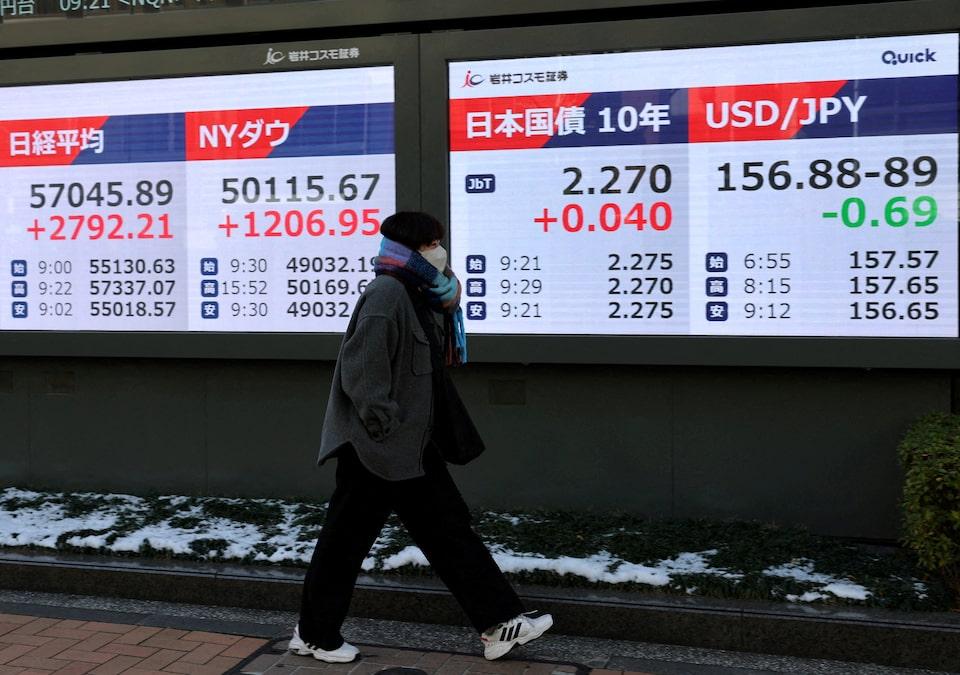
Stocks cheer LDP landslide, shoot to record highs Yen steadies with fiscal outlook in focus Risk of bond, FX selloff seen curtailing a spendthrift agenda TOKYO, Feb 9 (Reuters) - The biggest landslide win in postwar history has given Japan's Prime Minister Sanae Takaichi a huge mandate to revitalise the economy, but investors say she has little room to run up deficits or pressure will be quickly back on bonds and the yen. Takaichi's Liberal Democratic Party won more than two-thirds of seats in parliament's lower house on Sunday, giving her free rein to pass her agenda without negotiating with other parties or having to seek upper house approval. Sign up here. The prime minister, who drew praise from conservative ally U.S. President Donald Trump on her victory, has tapped into voter disenchantment over the high cost of living but has also rattled markets with her expansionary fiscal agenda. On Monday, though, Tokyo stocks surged to record highs in anticipation of stimulus flowing to consumers and Japan Inc. Bonds and the yen - sliding for months as investor concerns focused on spending plans - were steady and awaiting details of where Takaichi proposes to take the budget of a country already carrying the heaviest debt burden in the developed world. Where they move next matters for Japan, particularly as a weak currency has lifted living costs and inflation, and for the world since rising Japanese yields tend to drag down global bonds. "It's no longer about getting Japan back on its feet. It is arguably on its feet. This is (about) making it sustainable," said Fred Neumann, chief Asia economist at HSBC in Hong Kong, of Takaichi's policy challenge. "The market therefore will look very, very closely at any hints of fiscal slippage, any hints of kind of being more open to FX weakness, any hints that monetary policy might not react enough to any signs of inflation," he said. "The markets will set an important constraint here." On Monday the Nikkei (.N225) , opens new tab and broader Topix (.TOPX) , opens new tab had scaled all-time peaks, notching gains of 3.9% and 2.3% respectively. The yen , down 6% since Takaichi took charge of the LDP in October, was firmer at 156.35 to the dollar, while benchmark 10-year government bond yields rose 5.5 basis points to where they sat two weeks ago at 2.28%. "Market participants are focused less on the election result itself than on the substance, scale, funding, and consistency of the economic and fiscal policies," said Shoki Omori, chief desk strategist at Mizuho Securities in Tokyo. NARROW PATH TO A STRONGER YEN Part of the reason investors have not immediately taken so-called "Takaichi trades" further in the currency and debt markets is that some analysts expect the prime minister to use her strong mandate to become more responsive to markets as well as due to pressure from the U.S. to bolster the yen. Bets on near-term rate hikes even went up a little, reflecting political stability clearing the way for the Bank of Japan to move - a contrast to when Takaichi first took office with a reputation for pressuring the central bank to slow rate hikes. "In monetary policy, the Takaichi administration may, claiming public support based on the election results, temporarily increase pressure on the BOJ to maintain the status quo," said Naohiko Baba, chief Japan economist at Barclays in Tokyo. "However, signalling such a stance could easily trigger further JPY depreciation," he said. "Ultimately, public frustration with JPY‑driven cost‑push inflation, combined with pressure from the Trump administration, is expected to push the government back toward a stance of reluctantly allowing rate hikes to counter JPY weakness." The U.S. has asked Japan to quell tumult in the bond market and the apparent participation of the New York Federal Reserve in checking dollar/yen rates last month suggested the Trump administration would be a supporter of a stronger yen. To be sure, it won't take much for investors to return to selling yen or bonds. Momentum is a powerful force, and the direction of travel for bonds and the yen has been lower for years. "Both JGB yields and the yen have been consolidating over the past couple of weeks into the election, so the outcome should now allow markets to re-engage existing trends," said Rong Ren Goh, portfolio manager at Eastspring Investments. That means higher yields for long-dated bonds and a drift lower for the yen, he said. An early test will be how Takaichi handles a pledge to suspend Japan's 8% sales tax on food, how she will pay for it, and how she will explain it to markets that have been only too eager to challenge her agenda. Cutting the consumption tax will leave Tokyo with an estimated 5 trillion yen ($32 billion) annual revenue shortfall, causing a funding headache for Takaichi - and keeping markets nervous about the risk of fiscal slippage. "Her plans for the cut in the consumption tax leave open big question marks about funding and how she's going to go about making the arithmetic add up," said Chris Scicluna, head of research at Daiwa Capital Markets Europe in London. "And so I think uncertainty about fiscal policy is going to persist for some time to come." https://www.reuters.com/world/asia-pacific/japans-takaichi-creates-election-history-only-markets-stand-her-way-2026-02-09/
2026-02-09 07:26
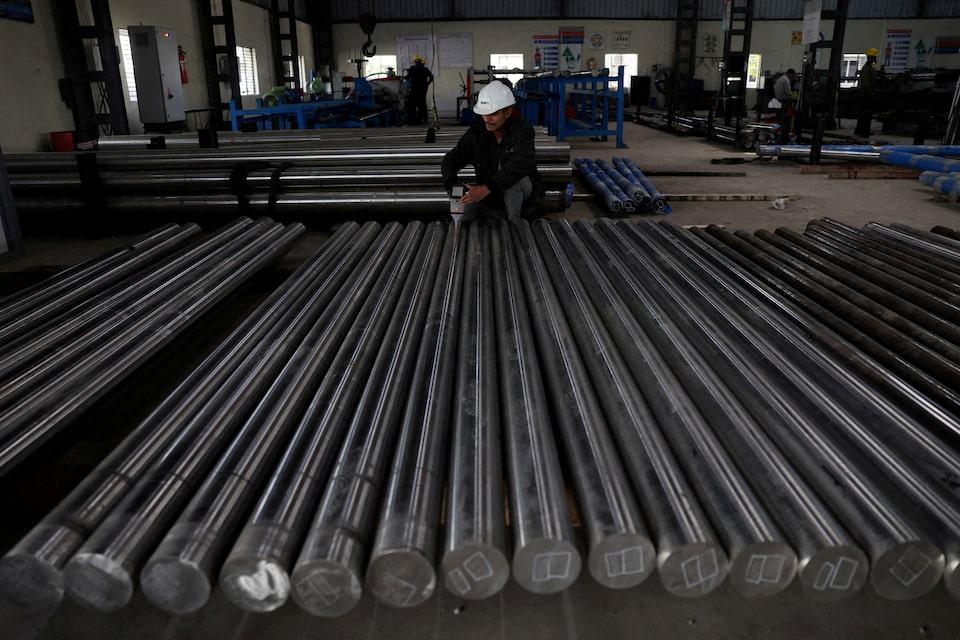
NEW DELHI, Feb 9 (Reuters) - India's steel exports will remain a challenge due to Europe's carbon tax and tariff quotas, and New Delhi will have to take action on it, Steel Secretary Sandeep Poundrik said on Monday. Sign up here. https://www.reuters.com/world/india/europes-carbon-tax-tariff-quotas-hinder-indias-steel-exports-steel-secy-says-2026-02-09/
2026-02-09 07:02
LONDON, Feb 9 (Reuters) - Global oil markets face increasingly sharp and frequent price shocks as geopolitical tensions, opaque stockpiling and tightening Western sanctions are leaving many traders in the dark. The growing influence of external, unpredictable forces on the world's largest and most liquid commodity market raises doubts about how accurately prices reflect physical fundamentals. Sign up here. Indeed, the global oil market appears to be struggling to get a handle on its basic supply and demand balance. The International Energy Agency expects oil production to exceed demand by 3.7 million barrels per day this year, more than 3% of global consumption. Yet prices tell a different story. While benchmark Brent crude prices have moved around in recent weeks, they remain firm at above $65 a barrel. What's more, the forward curve is in steep backwardation, a structure usually associated with tight supply. So what explains this? In the past few weeks, uncertainty about events in the Middle East has played a role. The risk of U.S. military strikes against Iran, with the possibility of the conflict spilling over across the region, has helped push up oil prices towards $70 a barrel. Amid the back-and-forth headlines, the CBOE crude oil volatility index has risen to its highest level since the 12-day Israel-Iran war last June. The U.S.-Iran tensions are ultimately a short-term factor, unless the conflict truly spirals, but other longer-term trends threaten to obscure the supply-demand picture for months. STOCKS ARE BUILDING One sign of an oversupplied market is typically an increase in storage, and stocks are building globally. But geopolitical fragmentation is creating regional divergences that complicate this simple equation. Morgan Stanley estimates global crude inventories rose by 520 million barrels, or around 7%, in 2025 and are on track to rise by another 730 million barrels this year. Most of the buildup took place in China, which placed roughly 800,000 bpd into storage over the past year, according to ROI estimates. That figure implies an increase of more than 300 million barrels in 2025, accounting for a large share of excess supply. But China's exact crude holdings and storage capacity remain murky. A large portion of its strategic reserves sits in underground sites beyond satellite monitoring, limiting visibility into both how much China has actually stored and how much more it can add. Uncertainty also surrounds China's buying strategy. Beijing tends to reduce purchases when prices rise, so it may have slowed stockpiling after prices recently rose toward $70 a barrel. But, again, the market does not know. This opacity has become a major blind spot for the oil market and has altered the way rising storage levels are interpreted. Historically, oil prices have closely tracked inventory changes in Organisation for Economic Co-operation and Development countries, particularly the U.S. and Europe, which long dominated global demand. An increase in storage was usually considered bearish. However, Chinese stock builds are currently perceived as bullish, an indication of strong demand that offsets the negative price signals coming from the builds in visible OECD inventories, according to Martijn Rats, an analyst at Morgan Stanley. This possibility can help explain why crude prices haven't slid as global inventories have risen. GEOPOLITICAL CONFUSION Western sanctions on several oil-producing nations are adding further complexity to this picture. China, India and Turkey have absorbed most sanctioned Russian, Iranian and Venezuelan crude in recent years, importing around 3.5 million bpd in 2025, according to Kpler. But this picture is shifting following a ban by the European Union on imports of fuels refined from Russian crude that took effect on January 21 and President Donald Trump's increased pressure on India to curb Russian oil purchases. India has already cut Russian crude imports to about 1 million bpd this year, down from 1.6 million bpd in 2025, and, according to Trump, promised to further reduce purchases. These shifts are forcing broader market adjustments. Western restrictions have boosted demand for non‑sanctioned barrels and for compliant tankers, driving up costs for refiners, especially in Asia, which relies heavily on seaborne crude due to limited local production. Asian refining margins have been slimmer than those in Europe since early January - with the former averaging around $6 a barrel so far this year compared to $9 for the latter. This difference is largely due to logistics costs. "Freight is a meaningful regional differentiator this year," said Keshav Lohiya, the CEO at HiLo Analytics. Freight rates for a very large crude carrier (VLCC) sailing from the Middle East or West Africa to Asia have jumped nearly 150% since the start of the year, according to LSEG data. Current shipping costs can now exceed $3 a barrel for Asian refiners, compared with closer to $2 for European plants. At the same time, the restrictions have led to an accumulation of sanctioned crude at sea as sellers struggle to find buyers. Russia, Iran and Venezuela account for about 30% of the 1.3 billion barrels of crude oil currently in transit - which is far higher than their share of exports - indicating slower discharge rates as traders struggle to place the barrels. The result is a market that looks both abundantly supplied and unusually tight. That tension reflects a market increasingly driven not by easily perceived fundamentals, but by geopolitics and the behaviour of opaque stockpilers. Until transparency improves or political risks ease, oil prices are likely to remain out of sync with measured supply. Enjoying this column? Check out Reuters Open Interest (ROI), , opens new tab your essential new source for global financial commentary. Follow ROI on LinkedIn, , opens new tab and X. , opens new tab And listen to the Morning Bid daily podcast on Apple , opens new tab, Spotify , opens new tab, or the Reuters app , opens new tab. Subscribe to hear Reuters journalists discuss the biggest news in markets and finance seven days a week. https://www.reuters.com/markets/commodities/what-do-oil-prices-tell-us-about-market-not-lot-2026-02-09/