2024-11-20 06:41
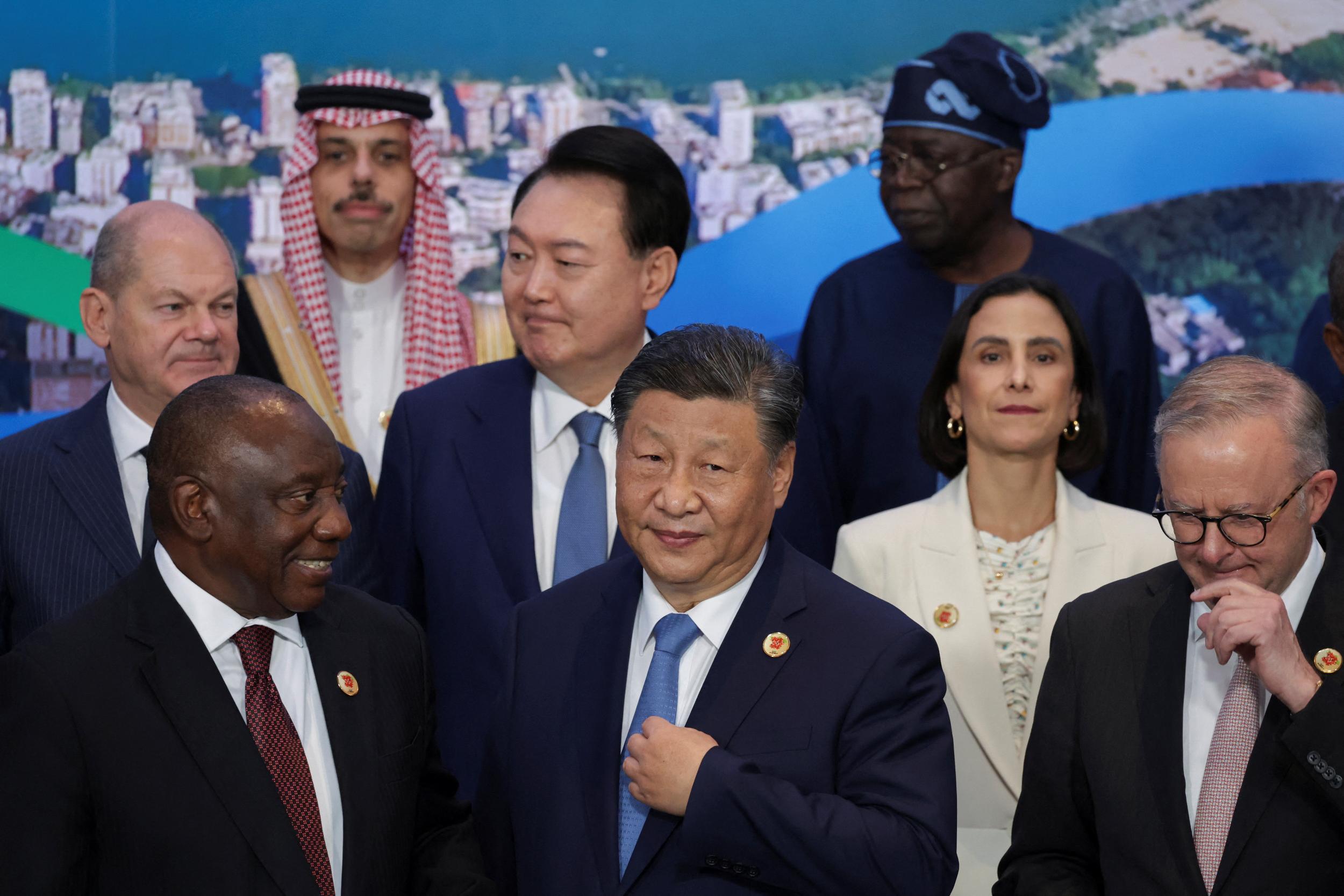
Leaders hail relations as 'Community with a Shared Future' Lula and Xi sign nearly 40 accords for economic cooperation Brasilia visit follows G20 and APEC summits in Rio and Lima Xi fills diplomatic vacuum between Biden and Trump presidencies BRASILIA, Nov 20 (Reuters) - China's President Xi Jinping and his Brazilian peer Luiz Inacio Lula da Silva on Wednesday upgraded the status of diplomatic relations and struck agreements on infrastructure, energy and agribusiness, tightening links between two of the world's largest developing economies. The state visit in Brasilia capped a regional tour by Xi that showcased Beijing's growing diplomatic clout during a tricky government transition in Washington. Xi and Lula both said the China-Brazil relationship had become a "Community with a Shared Future for a More Just World and Sustainable Planet," expanding a key slogan from the Chinese leader in their joint declaration at the presidential residence. They also agreed to find "synergies" between the Chinese Belt and Road Initiative and Brazilian development programs, after Lula declined last year to formally include Brazil in China's global infrastructure investment strategy. The countries struck nearly 40 cooperation agreements in economic sectors from farming and solar power to communications and nuclear energy, strengthening ties between the two nations with more than $150 billion of bilateral trade, Lula said. "China-Brazil relations are now at their best moment ever," said Xi, adding that China was ready to make the nations "golden partners." Xi has used the term "Community with a Shared Future" to formalize what Beijing sees as a positive and wide-ranging bilateral relationship with a country sharing geopolitical and economic interests, such as Vietnam. "This designation is reserved for partners China considers truly special and irreplaceable," said Sunny Cheung, associate fellow for China studies with the Jamestown Foundation. "For Beijing, it underscores Brazil's strategic importance, both as a leading voice in the Global South and as a critical partner in ensuring China's long-term economic and food security." Brazil's Agriculture Ministry cheered the potential for $450 million in new exports to China as new trade accords opened its market for Brazilian sorghum, fresh grapes, sesame and fishmeal. Brazilian meat packer BRF (BRFS3.SA) , opens new tab, the world's largest chicken exporter, in parallel announced a deal to acquire a processed foods factory in China's Henan province for $43 million, along with plans to invest $36 million in expanding the plant. Although Brazil-China trade relations have been growing for decades, their diplomatic relations faltered under Lula's right-wing predecessor, Jair Bolsonaro, who echoed anti-China rhetoric from former U.S. President Donald Trump, an ideological ally. During Lula and Xi's meeting on Wednesday, China's low Earth orbit satellite company SpaceSail, which aims to challenge Elon Musk's Starlink, signed an agreement with Brazil's state telecom Telebras (TELB4.SA) , opens new tab to enter the Brazilian market. Brazilian state bank BNDES said it had arranged for a 5 billion yuan ($690 million) loan from China Development Bank - the first such operation denominated in the Chinese currency. DIPLOMATIC TOUR The state visit in Brasilia came after twin summits for Xi in the past week: the Asia-Pacific Economic Cooperation forum in Lima and then the Group of 20 major economies in Rio de Janeiro. Xi played a central role at the summits, while U.S. President Joe Biden arrived as a lame duck with just two months left in the White House and little leverage as Trump vows a total foreign policy overhaul. A group portrait on the first day of the G20 summit captured the moment, with Xi front and center, next to the presidents of Brazil, India and South Africa - China's partners in the BRICS group of major developing nations and the three consecutive G20 hosts from 2023 to 2025. Biden missed that photo op for "logistical reasons," the White House said. With Biden diminished and Trump averse to multilateral forums, diplomats and foreign policy experts said Xi's charm offensive was filling a vacuum in an unsettled global order. China's side meetings with Western powers amid trade and geopolitical tensions, from the U.S. and Britain to France and Germany, showed a conciliatory turn from Beijing ahead of four more rocky years facing down Trump, said Li Xing, a professor at the Guangdong Institute for International Strategies "China's strategy is clear, the posture it is displaying is to let go of past resentment," said Li. "This is definitely an adjustment, and it's all because this year's G20 summit was in a transition period following the U.S. election." Behind the scenes, several diplomats who had been part of previous G20 summits noticed an evolving posture from the Chinese - less focused on their own narrow interests and more proactive about forging a wider consensus. "China is much more involved and much more constructive," said one Brazilian diplomat, requesting anonymity to discuss the negotiations. A European diplomat noted that Chinese peers helped to build consensus this year on several fronts, including topics such as women's rights where they had not been traditionally active. It looked like a conscious move to occupy a multilateral forum that Trump is likely to neglect, the diplomat added. "A place left unoccupied will be occupied by another," said the European diplomat. "Apparently China is interested in occupying more than it has to date." ($1 = 7.25 Chinese yuan renminbi) Sign up here. https://www.reuters.com/world/china/chinas-xi-visits-brasilia-cap-tour-flexing-diplomatic-clout-2024-11-20/
2024-11-20 06:34
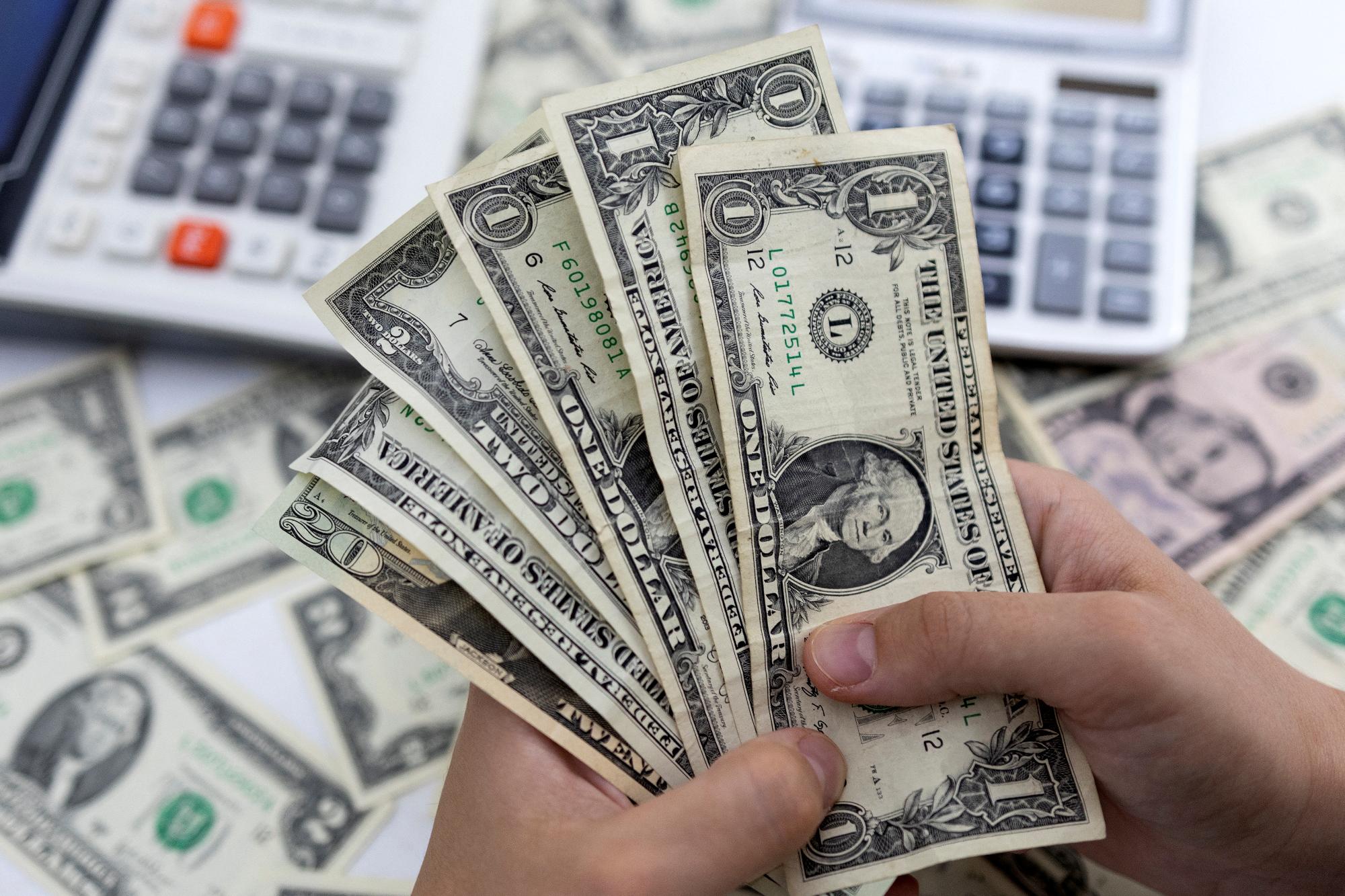
Sterling spikes briefly after strong inflation data Fed rate cut expectations scaled back amid inflation concerns Bitcoin tops $94,000 on hopes for favorable Trump policies NEW YORK, Nov 20 (Reuters) - The U.S. dollar rose on Wednesday, renewing its post-election rally after a three-session decline as investors looked for more insight on the Federal Reserve's interest rate plans and U.S. President-elect Donald Trump's proposed policies. Safe-haven currencies such as the Japanese yen, Swiss franc and the greenback saw a brief boost on Tuesday before fading. Russia's foreign minister Sergei Lavrov said that country would "do everything possible" to avoid nuclear war, hours after an announcement by Moscow to lower its threshold for a nuclear strike provided them with a bid. Even with the recent pause, the dollar index has rallied about 3% since the U.S. election on growing expectations the Fed may slow its path of interest-rate cuts on concerns Trump's policies could reignite inflation. "There's a lot of pessimism about Fed rate cuts that we think (is) misplaced," said Jay Hatfield, CEO at Infrastructure Capital Advisors in New York. "The rest of the world, except for Japan, has to cut because they have zero growth, basically, and without the U.S. they'd be in a recession. So then the big variable is the U.S. Everybody is super-bearish, in our opinion too bearish, about Fed cuts." The dollar index , which measures the greenback against a basket of currencies, rose 0.52% to 106.65, with the euro down 0.5% at $1.0542. Expectations for the path of rate cuts have been scaled back, while volatile, in recent weeks. Markets are pricing in a 52% chance of a 25-basis-point cut at the Fed's December meeting, down from 82.5% a week ago, according to CME's FedWatch Tool , opens new tab. A Reuters poll showed most economists expect the Fed to cut rates at its December meeting, with shallower cuts in 2025 than expected a month ago due to the risk of higher inflation from Trump's policies. from Fed officials, including Chair Jerome Powell, have pointed to the central bank being slow and measured in its rate-cut path. On Wednesday, Fed governors Michelle Bowman and Lisa Cook laid out competing visions of where U.S. monetary policy may be heading, with one citing ongoing concerns about inflation and another expressing confidence that price pressures will continue to ease. Against the Japanese yen , the dollar strengthened 0.43% to 155.31. The dollar had strengthened as much as 9% against the yen since the beginning of October to as much as 156.74, rising above the 156 mark last week for the first time since July and sparking the possibility Japanese authorities may again take steps to shore up the currency. Investors are waiting for Trump to name a Treasury secretary, one of the highest-profile cabinet posts overseeing the country's financial and economic policy. Some of Trump's other picks have generated questions about their qualifications and experience. The recent yen weakness to a three-month low has lifted expectations the Bank of Japan was likely to make a hawkish shift as the currency approaches levels that prompted an intervention in July. Comments this week from BoJ Governor Kazuo Ueda did not offer fresh signals on the central bank's leanings. Sterling weakened 0.27% to $1.248. The pound had initially moved higher as data showed British inflation jumped more than expected last month to rise back above the Bank of England's 2% target, and underlying price growth also gathered speed. The rise in inflation supported cautiousness by the BoE on interest-rate cuts. Traders see an 82.8% chance the central bank will hold rates steady at its policy meeting next month. In cryptocurrencies, bitcoin gained 1.81% to $93,912.00 as it broke through the $94,000 mark for the first time to a high of $94,982.37. Bitcoin was buoyed by hopes Trump will create a friendlier regulatory environment and a report the president-elect's social media company was in talks to buy crypto trading firm Bakkt (BKKT.N) , opens new tab. Sign up here. https://www.reuters.com/markets/currencies/dollar-sags-one-week-low-after-safety-bid-trump-trade-momentum-wanes-2024-11-20/
2024-11-20 06:10
Bullion hits its highest since Nov. 11 Putin issues warning to U.S. with new nuclear doctrine Fed's Schmid: Uncertain how far interest rates can fall Nov 20 (Reuters) - Gold prices rose to a one-week high on Wednesday, marking a third consecutive session of gains, driven by a softer dollar and escalating Russia-Ukraine tensions that raised the demand for safe-haven assets. Spot gold added 0.2% to $2,636.59 per ounce by 0538 GMT, its highest since Nov. 11. U.S. gold futures climbed 0.3% to $2,639.80. The U.S. dollar's rally paused after gains last week, making bullion more attractive to buyers holding other currencies. Russian President Vladimir Putin lowered the threshold for a nuclear strike in response to a broader range of conventional attacks, days after reports said Washington had allowed Ukraine to use U.S.-made weapons to strike deep into Russia. "The U.S. authorization and Russia's response, which could lead to use of a tactical nuclear weapon, is contributing to market uncertainty, boosting safe-haven assets like gold," said Ilya Spivak, head of global macro, Tastylive. Elsewhere, several Federal Reserve officials this week are expected to potentially shed light on the U.S. rate cut trajectory. Currently, traders see a 58.9% chance of a 25-basis-points cut in December. Recent strong data and U.S. President-elect Donald Trump's proposed tariffs have pointed to rates remaining higher for longer. The market is adjusting its expectations for the Fed's cuts next year as inflation is becoming a bigger concern, which could be negative for gold, Spivak added. Higher rates reduce the appeal of non-yielding gold. Meanwhile, Kansas City Fed President Jeffrey Schmid said that it remains uncertain how far rates can fall, though the initial reductions are a vote of confidence that inflation is returning to its 2% target. "I doubt gold will simply reach a new high and bears are lurking below $2,700 to short it down to $2,400," said Matt Simpson, senior analyst at City Index. Spot silver fell 0.2% to $31.14, platinum shed 0.3% to $971.54 and palladium edged 0.3% lower to $1,031.92. Sign up here. https://www.reuters.com/markets/commodities/gold-gains-softer-dollar-widening-russia-ukraine-tensions-2024-11-20/

2024-11-20 06:06
Zara owner's air shipments from India increase this year Greater use of air freight could drive emissions up Air freight rates jump Clothing imports by air into Spain up 28% MADRID/LONDON, Nov 20 (Reuters) - Zara owner Inditex (ITX.MC) , opens new tab has sharply increased its use of air freight to bring clothes from factories in India to its logistics hub in Spain to avoid shipping delays, according to trade data, industry experts, and investors. The shift raises questions about how the world's biggest listed fast-fashion retailer is progressing towards its target of slashing by half its "Scope 3", or indirect, emissions, as air transport produces significantly higher carbon emissions than shipping. Apparel retailers, and exporters in general, have increased their use of air freight since insecurity in the Red Sea disrupted global shipping routes. Unpublished data and analysis shared with Reuters on Inditex's shipments from India and Bangladesh, two of its major supplier countries, offer a close-up look at such a shift and its repercussions for the fashion industry's climate goals. Inditex sent 3,865 consignments by air from India in the 12 months to end-August this year, a 37% increase on the previous year, according to a Reuters analysis of shipment records from trade data provider Import Genius. Of that number, 3,352 were sent since January 1 – after attacks on container ships in the Red Sea ratcheted up. The share of air freight in Inditex's shipments from India increased to 70% in the first eight months of this year from 44% last year, according to an analysis of customs data which Swiss NGO Public Eye shared with Reuters. For Bangladesh, that share rose to 31% from 26%, its data shows. In response to Reuters' questions about the air freight data, Inditex said it uses sea freight for the "vast majority" of products from Asia, but in exceptional circumstances such as the Red Sea crisis, it can use other modes of transport. Inditex says that half of its suppliers are in countries close to its core European market such as Morocco, Portugal, Spain and Turkey. Its top 10 source countries also include Bangladesh, China, Pakistan and India. Most of Inditex's air consignments from India to Spain arrived in Zaragoza, a key logistics hub for Zara. The brand accounts for around two-thirds of the cargo activity at the local airport, according to a union source. Airport data showed cargo movements increased by 39% in January-September compared with the same period last year. Its operator does not disclose company-specific data. Signalling a broader trend, Spanish Trade Agency data showed the overall value of fashion goods brought to Spain by air increased by 28% in the year to September from the same period in 2023. EMISSIONS TARGET Increased use of air freight could drive up Inditex's transport emissions, which have jumped by 37% in the 12 months to Jan. 31 compared to 2022, according to Reuters calculations based on the group's annual reports. Transport accounted for 12.1% of its total emissions in 2023, up from 8.4% in 2022, though Inditex said changes in its reporting methodology made the 2023 figures not comparable with 2022. Inditex's target is to halve Scope 3 emissions - which includes transport - by 2030 compared with their 2018 level. Last year, however, such emissions totalled 16,418,450 metric tons of CO2 equivalent – a 0.2% increase on the 2018 figure. An Inditex spokesperson said the company is working hard to reduce emissions through measures like alternative fuels, optimising routes, and occupancy levels. Rising transport emissions would force Inditex to seek greater reductions in other parts of its supply chain, such as material production and processing, to meet its goal. At its annual shareholder meeting in July, a group of investors in the "Shareholders for Change" network called on the management to provide detailed figures on its air freight emissions and present strategies to cut them. But other investors told Reuters they supported Inditex's use of air freight to avoid shipping-related delays that could force it to resort to costly discounts to clear excess stocks. "In the short term, we would rather Inditex do what's necessary to continue to support the profitability of the business and their ability to continue to generate cash, as long as they're still able to bring down their overall greenhouse gas emissions," said Nick Clay, portfolio manager of the Redwheel Income Strategy in London, which owns Inditex shares. Sign up here. https://www.reuters.com/business/retail-consumer/inditex-boosts-fast-fashion-flights-india-avoid-shipping-delays-2024-11-20/

2024-11-20 06:02
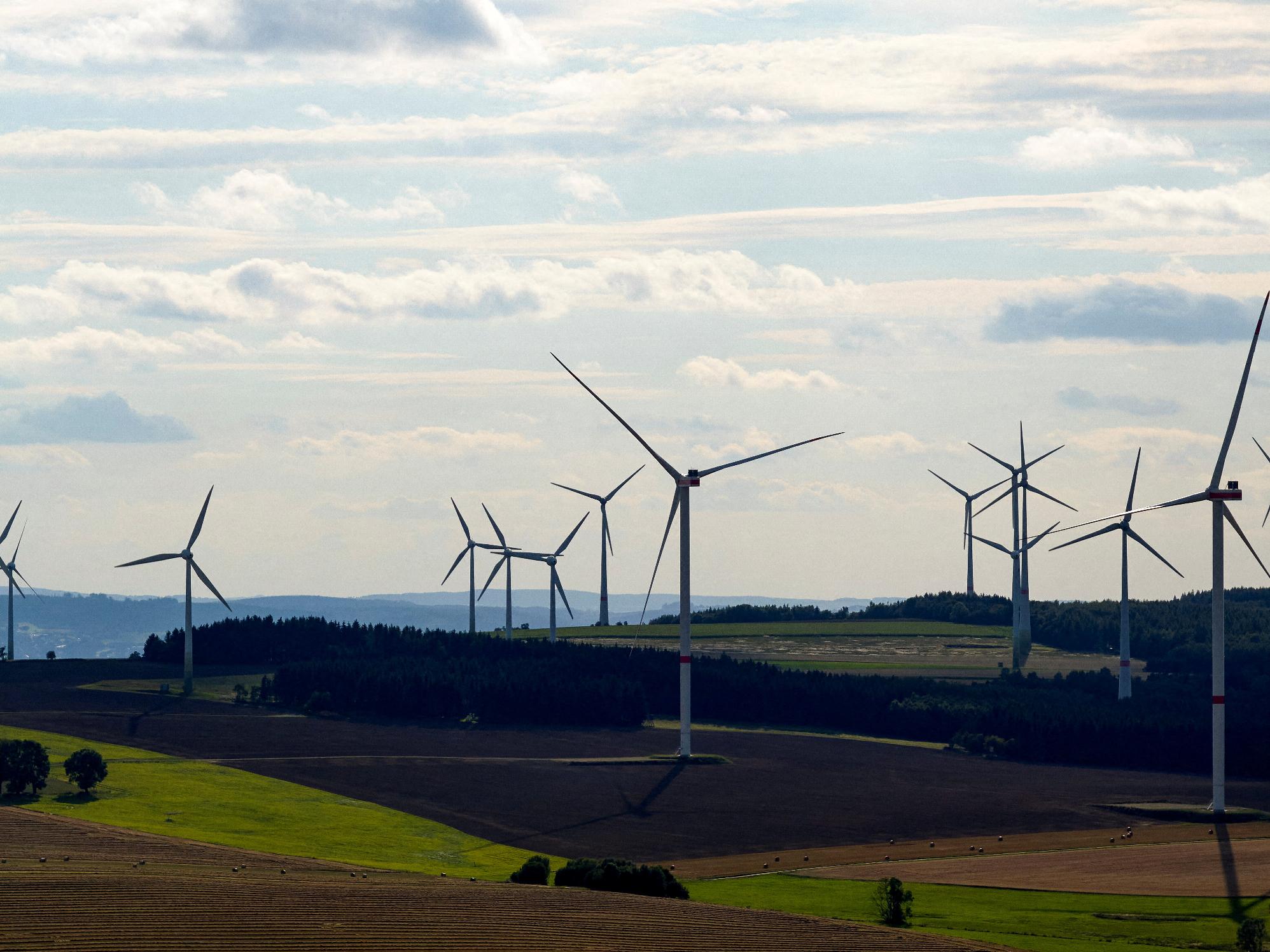
LITTLETON, Colorado, Nov 20 (Reuters) - Wholesale power prices across key economies in mainland Europe have climbed to their highest levels in over a year, dealing a fresh blow to the region's businesses that are already battling weak demand and fragile consumer sentiment. Average wholesale base power prices in Germany, France, the Netherlands, Spain and Poland have climbed to their highest levels in at least 20 months so far in November, according to power market data compiled by LSEG. Power prices in Italy have only climbed to four-month highs, but are already the highest among major continental European economies and so have helped lift the regional power price average to the highest since February 2023. With European energy use set to peak over the coming months due to higher heating demand during winter, power costs could climb further. That could create fresh headwinds for regional economies that have struggled to grow since Russia's invasion of Ukraine in 2022 upended regional power markets and lifted average energy costs throughout Europe. HIGH AND RISING The change in average European wholesale electricity prices since Russia invaded Ukraine in February 2022 underscores the scale of the energy cost rise seen in key countries. In Germany, Europe's largest economy and top manufacturer, wholesale electricity prices since March 2022 have averaged 138 euros per megawatt hour (MWh), according to data from Ember. That average is 280% more than the average from 2016 through 2019, and so means that German electricity consumers have paid nearly four times more for their electricity since Russia invaded Ukraine than during the 2016 to 2019 period. Such a dramatic jump in energy bills has impacted every energy consumer in the country, and forced all energy intensive businesses to throttle back on power use. France, Italy and The Netherlands have also recorded over 200% jumps in average electricity costs over the same time frame. Poland's electricity costs have jumped 180%, and Spain's 103%, Ember data shows. ECONOMIC HIT The downturn seen in the German economy's massive industrial base has captured the wider impact of higher power costs across Europe. Production of energy-intensive products such as steel, chemicals and fertilizers tumbled to record or multi-year lows in the aftermath of Russia's invasion of Ukraine, and has barely recovered since, according to LSEG data. Output of manufactured products has also been affected, with production of turbines and engines holding around 30% below the previous output peak. Even Germany's famed automobile sector - a major employer throughout Europe - has chopped new car production by over 30% from pre-COVID levels as high power costs plus stiff competition from China and other rivals battered producers. This collective industrial downturn has in turn taken a toll on national and regional economic growth. Germany's gross domestic product (GDP) has expanded by only 0.4% a year since 2022 compared to an average annual growth pace of nearly 2% from 2010 through 2019, according to the International Monetary Fund. Poland, The Netherlands and France are all also on course to report substantially lower growth in 2024 than the 2010-2019 average, IMF data shows. RENEWABLES RESET To try to offset the impact of reduced supplies of natural gas from Russia and higher overall power prices, countries across Europe deployed record volumes of clean power since 2022. Over the first 10 months of 2024, electricity generation from clean sources was up by 11.5% from the same months in 2022, to a record 2,450 terawatt hours (TWh), according to Ember. Generation from fossil fuels was down 16% since 2022 to 1,452 TWh, thanks to a 21% cut to coal-fired generation and a 14% drop in gas-fired output. However, total electricity generation remains below 2022 levels, as several countries have struggled to replace all the lost fossil fuel output with generation from clean power. Somewhat aiding the power sector has been the fact that the enduring downturn in industrial activity across Europe has meant that most power systems have not needed to generate as much power as was consumed in 2022. Going forward, however, many of Europe's major industrial segments are under pressure to ramp up activity, especially from local governments who are keen to avoid further job losses and to boost tax receipts. But in order to lift output companies must be able to afford the extra energy required, which is not guaranteed if power prices continue to press higher in the months ahead. Some of Europe's most profitable enterprises may be able to stomach rising energy bills as long as consumer demand remains firm. But for those cost-conscious sectors that remain under pressure from international rivals and still-weak consumer demand, higher power prices could force further cuts to output that could stall economic momentum. The opinions expressed here are those of the author, a columnist for Reuters. Sign up here. https://www.reuters.com/business/energy/europes-economic-woes-may-worsen-key-power-prices-rise-maguire-2024-11-20/
2024-11-20 05:52
Benchmark S&P 500 ends flat U.S. dollar rises Crude prices settle lower Bitcoin hits new record high NEW YORK/LONDON, Nov 20 (Reuters) - Global shares edged lower on Wednesday as markets weighed tensions between Russia and the West, while bitcoin hit a new record high and the dollar gained after three straight sessions of losses. Shares of Nvidia (NVDA.O) , opens new tab were down 0.4% in after-market trading after the artificial intelligence powerhouse forecast fourth-quarter revenue that was largely in line with analyst estimates. The stock of the world's most valuable company had closed down 0.8% in regular hours trading on Wednesday. Benchmark S&P 500 finished flat while the Dow gained and the Nasdaq ended lower. Healthcare, energy and materials stocks were the biggest gainers, while consumer discretionary, financials and technology equities were the biggest drag. The Dow Jones Industrial Average (.DJI) , opens new tab rose 0.32% to 43,408.47, the S&P 500 (.SPX) , opens new tab was flat at 5,917.11 and the Nasdaq Composite (.IXIC) , opens new tab fell 0.11% to 18,966.14. The MSCI All-World index (.MIWD00000PUS) , opens new tab was down 0.16% to 847.84. European shares (.STOXX) , opens new tab finished down 0.02%. "Nvidia is obviously a bellwether stock for the market and it seems to be down a little bit after market, but it wasn't a catastrophe by any stretch of the imagination," said James St. Aubin, chief investment officer at Ocean Park Asset Management in Santa Monica, California. "The bar keeps getting raised and raised and raised. But eventually it just becomes really difficult to exceed that bar. And I think that's kind of where we're at with Nvidia." Safe-haven assets such as gold and government bonds got a lift on Tuesday after news of Ukraine launching U.S.-made ATACMS missiles into Russia, and with Russia announcing it had lowered the threshold for nuclear action. Russian foreign minister Sergei Lavrov, however, later downplayed the nuclear threat, helping to calm markets. Gold prices climbed for a third consecutive session to mark a one-week high. Spot gold rose 0.69% to $2,649.89 an ounce. U.S. gold futures settled 0.8% higher at $2,651.70. Investors are also watching President-elect Donald Trump's pick for Treasury secretary, which may come as soon as Wednesday. Markets were realizing that some of Trump policies, including tariffs and deportations, could be inflationary, said Lukasz Tomicki, founding partner at LRT Capital in Austin, Texas. "There's been this belief that Trump's policies will be inflationary and we've seen the spike in yields since his election," Tomicki said. The dollar index rose 0.54% to 106.68 , snapping three consecutive sessions of losses but still below one-year highs. It has gained nearly 3% since the Nov. 5 U.S. general election. The dollar was last up 0.48% against the yen at 155.40. Against the Swiss franc , the dollar was up 0.2% at 0.88410. The Chinese yuan weakened against the greenback after the central bank held benchmark lending rates steady, as widely expected. In the offshore market, the yuan was down 0.22% against the dollar at 7.251. Bitcoin , which hit a fresh record high just shy of $95,000, was up 2.53% at $94,579.01. The price has risen by well over 30% since Trump's election, buoyed by expectations that he will create a more crypto-friendly regulatory environment. The gains in bitcoin have been aided by a Financial Times report that Trump Media and Technology Group (DJT.O) , opens new tab, which operates Truth Social and is majority-owned by Trump, is close to an all-stock acquisition of crypto trading firm Bakkt (BKKT.N) , opens new tab. Oil prices settled lower after U.S. crude and gasoline stocks rose by more than expected last week. Brent crude futures for January settled 0.68% at $72.81. U.S. West Texas Intermediate crude futures for December expired on Wednesday, and settled down 0.75% at $68.87, while the more active WTI contract for January settled down 0.71% at $68.75. Sign up here. https://www.reuters.com/markets/global-markets-wrapup-1-2024-11-20/