2024-11-19 12:16
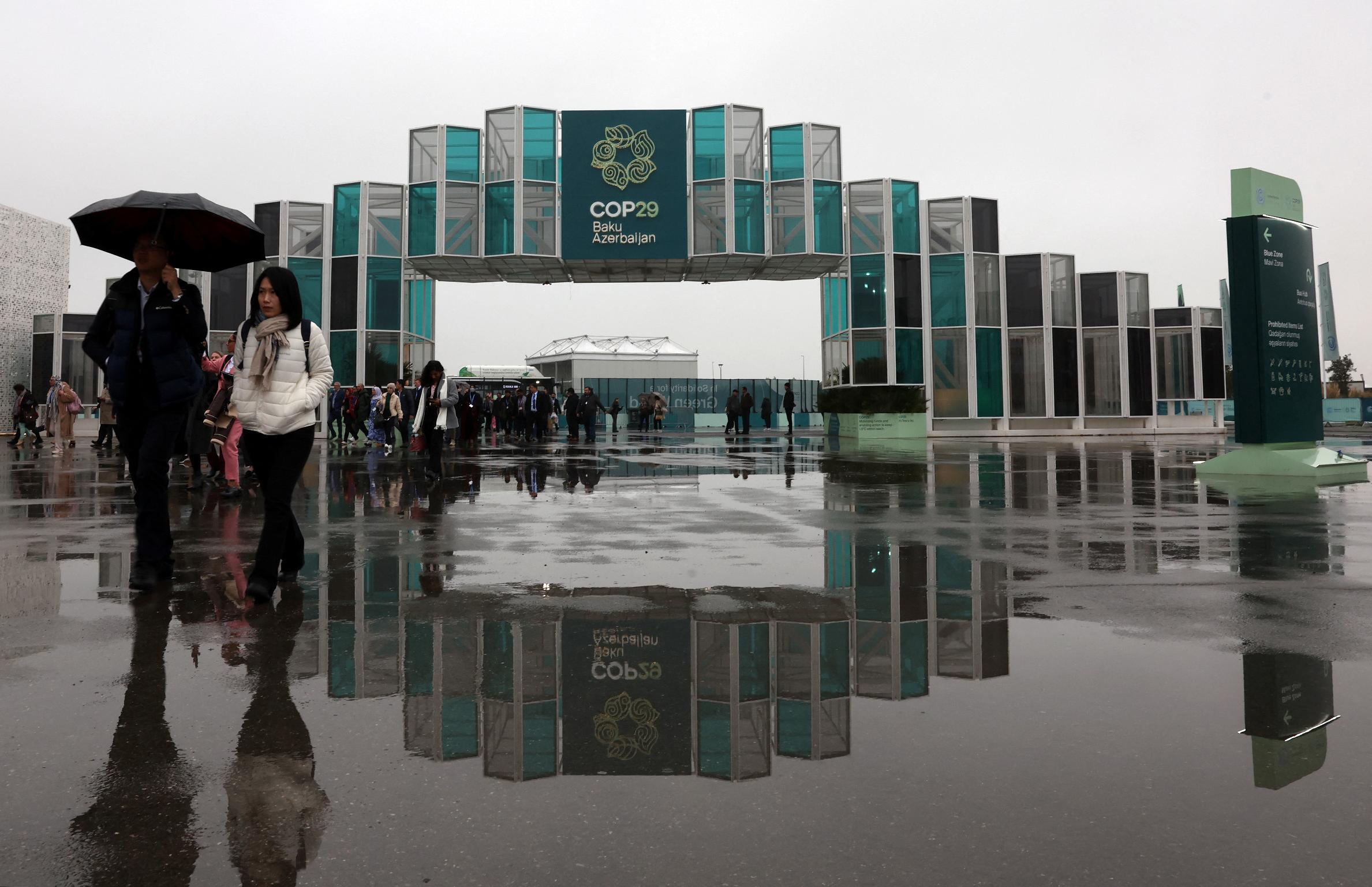
COP29 seeks to scale up finance to developing countries Richer countries want private investors to play leading role Opaque data, MDB culture, risk-shy investors hamper goal BAKU, Nov 19 (Reuters) - (This Nov. 19 story has been corrected to fix the description of ILX to 'development finance specialist,' not 'blended finance specialist,' in paragraph 22) As officials from around the world strive this week to reach a deal on funding for poorer countries to tackle climate change, investment manager Rob Drijkoningen is the sort of person they're hoping will help get them there. Drijkoningen is head of emerging market debt at U.S. asset manager Neuberger Berman, which holds $27 billion in sovereign and corporate debt from developing countries. He should be a natural partner for multilateral development banks (MDBs) looking to find private sector investors for projects to slow climate change or cope with its effects. Boosting private sector investment is, for rich nations, a crucial part of clinching a deal at the COP29 climate talks in Azerbaijan this week on a global commitment for annual funding to fight climate change - dubbed the New Collective Quantified Goal. Development banks committed to increase their lending to poorer countries to $120 billion a year by 2030. They also pledged to bring in an additional $65 billion annually in private sector cash to those nations. But Drijkoningen, after speaking with the European Investment Bank (EIB) and European Bank for Reconstruction and Development (EBRD) about potential deals this year, decided there were too many hurdles to investment. Development banks, he said, are not willing to open their books and share enough information about investments' risks. Nor do they allow private investors to pick and choose the projects that interest them. For asset managers already facing limited appetite from clients for long-term infrastructure assets in developing nations, those obstacles make investment unappealing. "We would need to get a true sense of a level playing field: of getting equal access to information so that we can appropriately assess the merits," Drijkoningen said. "That's a cultural issue that I doubt we have come close to changing." Cash-strapped Western governments are pinning their hopes on a massive increase in private sector investment to reach the $2 trillion-plus , opens new tab needed annually to help poorer countries move to greener energy and protect against the impacts of extreme weather. After a resounding win by climate denier Donald Trump in this month's U.S. presidential election, worries are rising that the financing gap will steadily widen if Washington - and its dollars - pulls out of the global climate fight. An ongoing, two-year reform of multilateral institutions like the World Bank - aimed at overhauling the way they lend to make more use of their money - helped drive a 41% increase in the mobilisation of private sector funds to low income countries in 2022 across 27 development banks, a report this year showed , opens new tab. The head of the EBRD, Odile Renaud-Basso, told Reuters the bank was working hard to provide more information to the private sector, but there were some limits to what could be made public. But a Reuters analysis of lending data and interviews with two dozen development banks, climate negotiators, private sector investors and non-profits showed that change at multilateral lenders needs to accelerate significantly if the private sector is to fulfil its hoped-for role. The analysis of total aggregate lending last year provided by 14 of the world's top development banks showed that for each dollar invested across all markets just 88 cents of private money was sucked in. And that fell to just 0.44 cents of private money to poorer countries. Here, the banks made climate finance commitments of $75 billion and mobilised $33 billion of private investment. A report by a group of independent experts , opens new tab for the G20 group of industrialised nations last year on how to strengthen multilateral development banks said the target that needed to be hit was $1.5 to $2 for every $1 of lending. SLOW PROGRESS Governments - which bankroll development banks - are pushing them to go reform faster. That should result in a more ambitious funding target in Baku - and help countries to skirt a politically contentious discussion on increasing the banks' capital. The EBRD now delivers $3.58 of private money for every $1 it invests across its portfolio, up from $2 dollars three years ago. IDB Invest - the private sector arm of the Inter-American Development Bank (IDB) - has also embarked on an overhaul of its business, helping to increase IDB Group's mobilised private capital fivefold from 2019 to 2023 to $4.4 billion. There are various ways for multilateral lenders to pull in private sector cash. The most established one is parceling up parts of their own loans and selling them to private investors, freeing up money to lend again. These so-called B-loans have been around for more than six decades. But Nazmeera Moola, chief sustainability officer at asset management firm Ninety One, said that a raft of issues - including long lead times and returns that were sometimes unattractive - had diminished the appeal of these assets. Meanwhile, many large institutional investors, such as pension funds or insurance companies, think of direct investing through corporate or project finance lending in emerging markets as "scary stuff", she added. Harmen van Wijnen, chair of the board of Dutch pension fund ABP, which has invested 1 billion euros in B-loan funds managed by development finance specialist ILX, said that taking the leap into unfamiliar risks - like project finance in emerging markets - would need to be mitigated by guarantees from multilateral lenders. Some MDBs are already providing guarantees or structures that help reduce the risks, for example by hedging the risk of a collapse in the local currency. At COP29, some banks have flagged new initiatives including a move by the United States to guarantee $1 billion of existing loans to governments by the Asian Development Bank so it can lend a further $4.5 billion to climate-friendly projects. The EBRD's Renaud-Basso told Reuters it was also looking to guarantee sovereign lending to free up more money, without providing further details. Guarantees aside, the reluctance of some development banks to play the junior partner in project lending, amid pressure to land big deals and maximise their own returns, was leaving them in competition with private sector investors, according to half a dozen sources in the industry. Gianpiero Nacci, EBRD Director for Sustainable Business and Infrastructure, said that while MDBs were starting to change their culture and structures to make them more focused on attracting private sector investment, it was a "work in progress". "We're increasingly incentivising our banking teams to focus on mobilization," he said, noting the EBRD is introducing internal targets beyond its own direct investment. Given the scale of the climate challenge, some development experts are choosing to go it alone, among them Hubert Danso, chief executive of Africa Investor, a platform that connects private investors with green infrastructure projects on the continent. "We have an MDB market failure which is incapable of crowding in the private capital required," he said. CULTURAL HURDLES In an August document, the Organisation for Economic Cooperation and Development (OECD), which tracks the climate finance efforts of multilateral institutions, found lack of data was a "major obstacle" to raising private investment to the required levels. The previously unpublished report, reviewed by Reuters, said a shortfall in transparent data was leading to private investors mispricing investment risk. "For efficiency of markets, data is critical," said Haje Schutte, a deputy director at the OECD. "There is an ethical and fairness dimension to that: these public sector institutions have a role to beyond their institutional self-interests." Some development banks are worried about sharing their proprietary information and require the OECD to sign non-disclosure agreements, Schutte said. Alert to the criticism and following an investor consultation, MDBs have increased the credit risk data shared in a database called GEMs, originally designed to be used for information exchange between the banks themselves. Since March, some data on recovery rates for public as well as private lending has been made available and, in October, more historic data was offered. But some investors are demanding more granular risk information. Erich Cripton, a director at Canadian pension fund CDPQ Global, which has over $300 billion in assets under management, said investors have been pushing for MDBS to publish more data in the GEMS database. He said the released data reflected the MDBs preferred creditor status meaning that for a private investor, the risk was higher. For Nadia Nikolova, lead portfolio manager at Allianz Global Investor, who has raised over $3.5 billion in development finance and impact credit strategies, the lack of information hampers her ability to raise and invest capital in developing economies. "Institutional investors have a fiduciary duty to invest money responsibly," she said. "If I don't have that information, I can't price the risk." Abdullahi Khalif, Somalia's chief climate negotiator, acknowledged on the sidelines of the COP29 talks that investing there was riskier than in industrialized economies, but added those who did so had opportunities for good returns in areas including renewable energy and irrigation. "The only private sector that can come is a private sector that is really looking forward to taking the risk." Sign up here. https://www.reuters.com/sustainability/sustainable-finance-reporting/beyond-b-loans-development-banks-seek-private-money-climate-change-fight-2024-11-19/
2024-11-19 12:10
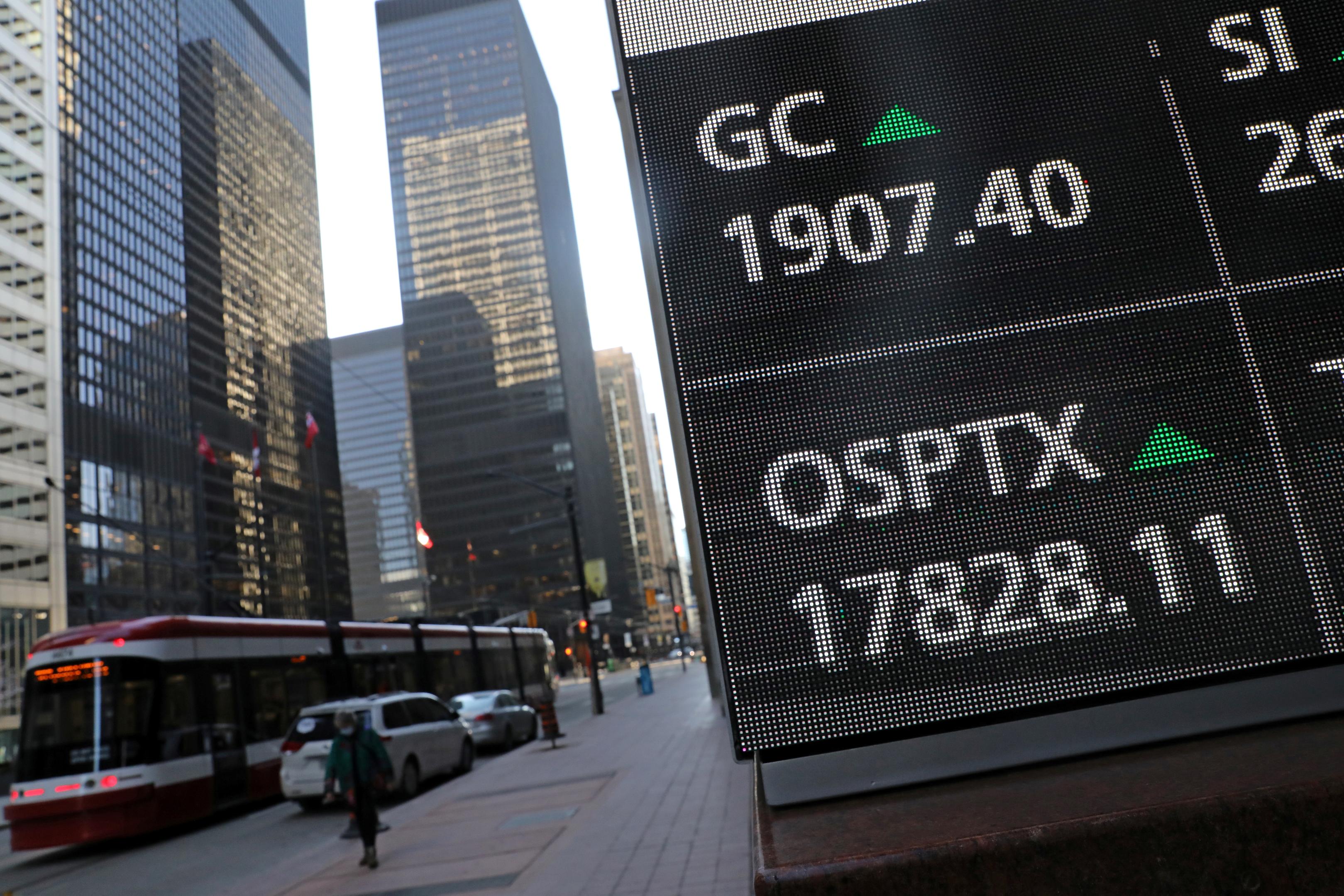
TSX ends up 0.1%, at 25,010.77 Materials group adds 1.7% as gold rallies Canada's annual inflation rate rises to 2% Financials end 0.2% higher Nov 19 (Reuters) - Canada's main stock index clawed back some earlier declines to end higher on Tuesday, led by financial and gold-mining shares, as investors weighed hotter-than-expected domestic inflation data as well as escalating tensions between Russia and Ukraine. The Toronto Stock Exchange's S&P/TSX composite index (.GSPTSE) , opens new tab ended up 33.83 points, or 0.1%, at 25,010.77, moving closer to the record closing high it notched last Thursday. "There are some positive narratives that are developing with the inflation print that we had and the fact that maybe there is no real need to have an accelerated rate cut cycle here as well," said Sid Mokhtari, chief market technician for CIBC Capital Markets. "That is buoying some of the financials which are a big part of the TSX index," Mokhtari said, adding that financials could benefit from a steeper yield curve and expected looser business regulations in the United States. Canada's annual inflation rate climbed to 2% in October, spurring investors to reduce bets on an outsized interest rate cut by the Bank of Canada next month. The financials sector, which accounts for 31% of the TSX's weighting, rose 0.2%, adding to its recent gains. The materials group, which includes fertilizer companies and metal mining shares, was up 1.7% as gold benefited from a safe-haven bid after Ukraine used U.S. ATACMS missiles to strike Russian territory. Oil also gained ground, settling 0.3% higher at $69.39 a barrel. But energy was down 0.3%, with TC Energy (TRP.TO) , opens new tab falling 0.5% as investors weighed the company's 2025 core profit forecast. Still, the sector has advanced about 11% since September. "If we can see the energy sector being able to rebuild itself ... that's going to keep the TSX better buoyed as we go into year-end," Mokhtari said. The consumer staples sector also ended lower on Tuesday, falling 1.1%. Sign up here. https://www.reuters.com/markets/tsx-futures-fall-russia-ukraine-tensions-rise-2024-11-19/
2024-11-19 11:40
FRANKFURT, Nov 19 (Reuters) - The German economy is likely to stagnate in the last three months of the year as the labour market continues to soften and possible new trade tariffs loom, the country's central bank said on Tuesday. Europe's largest economy unexpectedly grew, albeit only by 0.2%, in the three months to September but the Bundesbank said there was little to suggest this would continue as demand from abroad and investment both remained weak. "All of the key demand components therefore currently offer little reason for a noticeable short-term recovery in the German economy," the Bundesbank said in its monthly report. In addition, it warned "political demands for new tariff barriers pose considerable additional risks for international trade", a likely reference to the protectionist stance of U.S. President-Elect Donald Trump which could hit Germany's export-oriented economy hard. A bleak domestic picture helps explain a shift in the Bundesbank's stance inside the European Central Bank from a laser-focus on fighting inflation to a greater emphasis on stimulating growth via lower borrowing costs. High wage growth, until recently a source of worry about a potential new leg-up in inflation, had likely peaked in the third quarter at 8.8% for collective agreements and was now likely to be "noticeably lower", the Bundesbank said. "In view of the long-lasting economic weakness and significantly lower inflation rates, it is to be expected that the upcoming wage negotiations will result in noticeably lower agreements than in the past two years," it said. Sign up here. https://www.reuters.com/markets/europe/german-economy-stagnate-labour-market-cools-tariffs-loom-2024-11-19/

2024-11-19 11:36
Nov 19 (Reuters) - TC Energy (TRP.TO) , opens new tab said on Tuesday it expects 2025 core profit to be in the range of about C$10.7 billion ($7.63 billion) to C$10.9 billion ($7.78 billion), higher than its 2024 forecast, due to rising demand for natural gas and electrification. The U.S. Energy Information Administration, in its latest short-term energy outlook report, saw the country's gas consumption rising to a record 90 billion cubic feet per day (bcfd) in 2024. The consumption is expected to ease to 89.6 bcfd in 2025, which will still be higher than the previous record of 89.1 bcfd in 2023. For 2024, the Canadian pipeline operator expects core profit to be at the upper end of C$9.9 billion to C$10.1 billion, excluding its Liquid Pipelines segment. The company completed the spin-off of its Liquid Pipelines unit in October, as it looked to focus on natural gas and reduce debt. North America's rising natural gas demand was driven by higher LNG exports, retiring coal plants and growing consumption in data centers associated with artificial intelligence operations, TC Energy said in its third-quarter earnings call. The company sees data center opportunities of more than two bcfd in North America, according to its investor presentation slides. It also announced four new growth projects aligned with increasing demand for natural gas and nuclear power generation, which would total to nearly C$1.5 billion ($1.07 billion) in capital expenditure. One of the projects includes expanding power generation at its Ontario nuclear plant, Bruce Power, by adding 90 megawatts, largely due to rising power demand in the region. TC Energy also said nearly 97% of its outlook was underpinned by rate regulation, along with long-term take-or-pay contracts. The company's annual investor day call is scheduled to begin later on Tuesday. ($1 = 1.4021 Canadian dollars) Sign up here. https://www.reuters.com/business/energy/tc-energy-forecasts-higher-2025-core-profit-natgas-electricity-demand-2024-11-19/
2024-11-19 11:35
LONDON, Nov 19 (Reuters) - The Bank of England said on Tuesday it was launching a consultation on proposed, post-Brexit rules for clearing houses, payment system operators and other financial market infrastructure in order to improve transparency. The BoE said the consultation about its new Fundamental Rules represented its first use of new powers to make legally binding regulation for central counterparties and central securities depositories in Britain. The new rules - which Britain is now able to set for itself after leaving the European Union - will also apply to BoE-regulated UK payments systems and specified service providers. "Building on the strong foundations we already have, we're using this opportunity to be clear on what we expect from the firms we supervise," Sarah Breeden, the BoE's deputy governor for financial stability, said in a statement. "Together with our updated approach to supervision, it marks the next stage of the Bank designing a nimble, effective and forward-looking regulatory regime, with more to come in the near future." The consultation will run until Feb. 19, the BoE said. Sign up here. https://www.reuters.com/business/finance/bank-england-consults-post-brexit-market-infrastructure-rules-2024-11-19/
2024-11-19 11:19
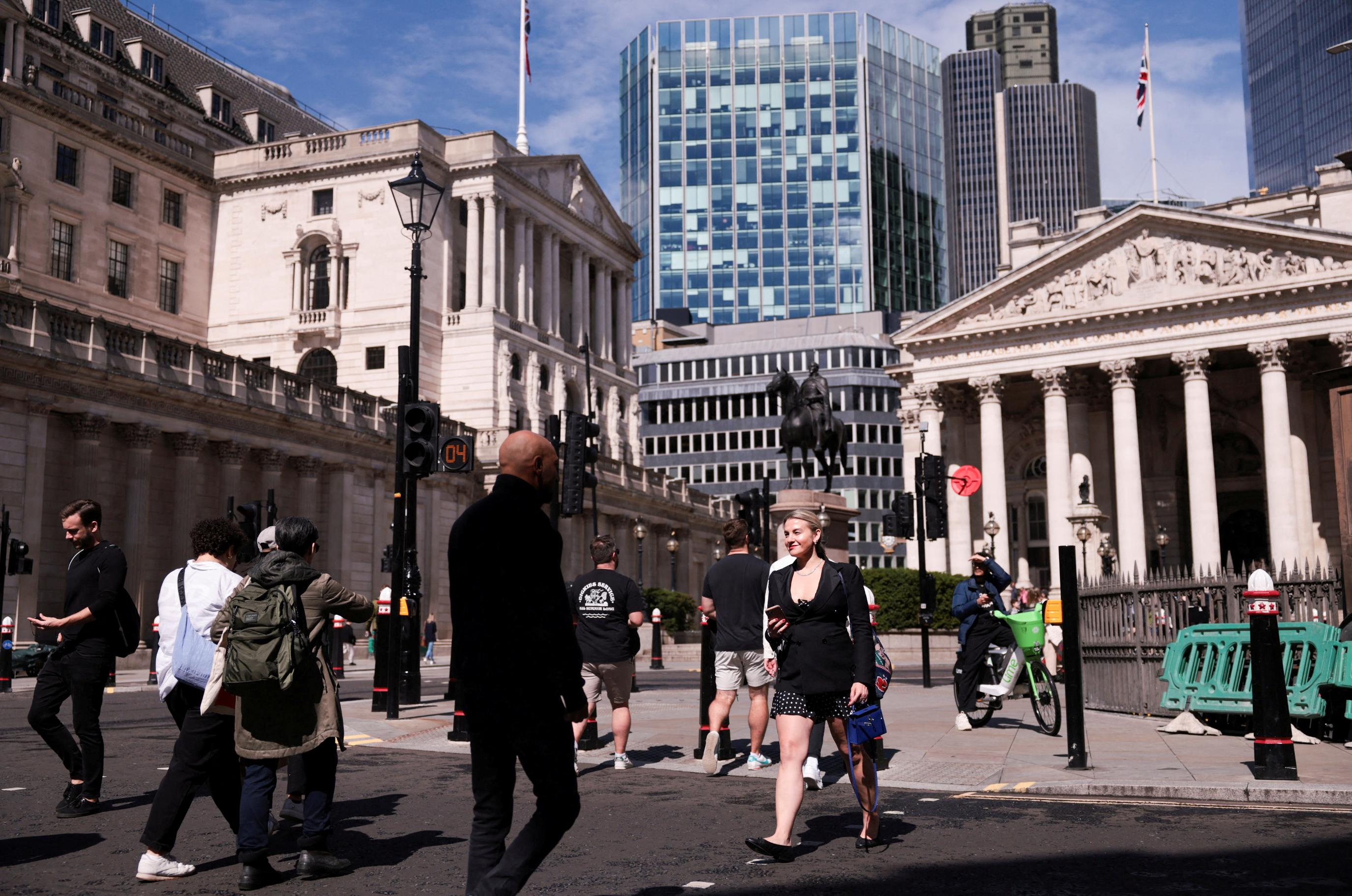
A look at the day ahead in U.S. and global markets from Mike Dolan U.S. Treasuries got a rare lift on Tuesday, with speculation about Donald Trump's pick for Treasury Secretary centering on a relatively familiar face of Kevin Warsh just as a geopolitical "safety bid" was stoked by nuclear sabre-rattling from Russia. Those safety trades emerged early in Europe on Tuesday after Moscow responded with nuclear threats to Washington's decision this week allowing Ukraine to use U.S.-supplied weapons to hit Russian territory. Sovereign debt , gold and Japan's yen all popped higher while European stocks (.STOXXE) , opens new tab and the euro fell back after reports Russian leader Vladimir Putin had updated Moscow's military policy and "nuclear doctrine". The revision said Moscow could respond with nuclear weapons if it was subject to a conventional missile attack that was supported by a nuclear power. Given the gravity of that threat, the moves have been relatively modest so far - largely because Putin has repeatedly threatened the use of nuclear weapons ever since Russia invaded neighbouring Ukraine a thousand days ago today. Yet, for markets, the sudden retreat in Treasury yields - pumped up recently by Trump's tax and tariff plans, sticky inflation readings and pared-back Federal Reserve easing bets - was perhaps the biggest whiplash. Two-year yields retreated to their lowest in 11 days while 10-year yields slipped back below 4.35%. And while that would typically knock the dollar (.DXY) , opens new tab back too, the safety bid - certainly against the euro - was enough to lift the dollar index more broadly. But before Putin's latest move, Treasuries had already been slipping back from recent highs - in part because Warsh, a former Fed governor, has suddenly emerged as clear favorite in betting markets to get nominated for the top job at the Treasury. The Polymarket online betting site put Warsh at 44% on Tuesday - almost 20 points clear of the second favorite, hedge fund manager Scott Bessent, and the third most-backed, Apollo Global Management chief executive Marc Rowan. Warsh, a Visiting Fellow at the Hoover Institution of Stanford University, has a track record of hawkish views on both inflation and deficits and was White House economic policy adviser from 2002 to 2006 before being appointed to the Fed. He left the central bank in 2011, a few months after joining his colleagues in unanimous support of expanding the Fed's bond-buying program - and then making public his reservations about expanding the Fed balance sheet. Given some of the other controversial appointments to the new Trump cabinet, however, many on Wall Street would see Warsh as a known quantity at least, someone across the big macro issues and likely sensitive to the Fed's independent role in steering monetary policy. Elsewhere on Tuesday, the generalised "risk off" tone seemed to dominate. Already subdued by the prospect of a looming global trade war, euro stocks (.STOXXE) , opens new tab fell more than 1% and the index is flirting again with its lowest levels in three months. Bank of Italy boss Fabio Panetta said the European Central Bank needs to "focus on the sluggishness of the real economy" and move official interest rates into "neutral, or even expansionary, territory". Earlier in Asia, similar trade worries weighed on China's markets initially and mainland benchmarks (.CSI300) , opens new tab hit two-week lows before rebounding to positive territory before the close. China's central bank is widely expected to leave its benchmark lending rates unchanged on Wednesday as rate cuts a month earlier squeeze banks' profitability and the yuan comes under fresh pressure due to Trump's tariff threats. Back on Wall Street, stock futures were down ahead of Tuesday's bell in sympathy with the downbeat global risk mood. Chip giant Nvidia's (NVDA.O) , opens new tab results on Wednesday dominate the week's events, but Walmart (WMT.N) , opens new tab will give a retail spin with its update later on Tuesday. Meantime, new year outlooks from the major investment banks are also starting to stream in. Goldman Sachs forecast the S&P 500 (.SPX) , opens new tab would rise another 10% to reach 6,500 by the end of 2025, in line with the view from its peer Morgan Stanley, on the back of continued growth in the U.S. economy and corporate earnings. Key developments that should provide more direction to U.S. markets later on Tuesday: * US October housing starts/permits; Canada Oct CPI inflation * G20 leaders summit in Rio de Janeiro * Kansas City Federal Reserve President Jeffrey Schmid speaks * US corporate earnings: Walmart, Medtronic, Keysight Technologies, Jacobs Solutions, Lowe's etc Sign up here. https://www.reuters.com/markets/us/global-markets-view-usa-pix-2024-11-19/