2024-11-19 07:00
Lex Oil owes over half of missing $1.1 bln, sources say Probe over remaining $500 mln continues, sources say Second major fraud to Trafigura alarms bankers, sources say LONDON, Nov 19 (Reuters) - Swiss trading house Trafigura is trying to track down $500 million in Mongolia following a year-long probe of staff and associates over a billion-dollar fraud scheme at its local fuel supply business, according to three trading sources familiar with the case. The Mongolia case, the second large-scale fraud Trafigura has uncovered in the past two years, has rattled bank trade financiers who are now questioning the strength of oversight at one of the world's biggest energy and commodity traders, two banking sources who work with Trafigura and lend money to the company said. Trafigura said last month it had made provisions of $1.1 billion after discovering what it described as "misconduct" at its Mongolian unit, including manipulation of data and concealment of overdue receivables. The company said its principal counterparty in Mongolia recognized it owed Trafigura "a substantial proportion" of the $1.1 billion but gave no further detail and did not name the counterparty. Lex Oil was Trafigura's main local counterparty, the three trading sources familiar with the case and Trafigura's Mongolia operations told Reuters. They spoke to Reuters on condition of anonymity because they were not authorised to speak publicly about the matter. Lex has acknowledged to Trafigura it owed the company over half of the $1.1 billion while the remaining $500 million is still unaccounted for, the three sources said. Trafigura has not accused any counterparty or individual of fraud as the investigation is still ongoing, the three sources said. Lex did not respond to a request for comment. Trafigura said the probe into the misconduct was still ongoing. Asked about risk oversight at Trafigura, a company spokesman said that since the Mongolia case had been discovered, Trafigura performed a risk review of its global network. The company identified higher-risk locations and the review of those places resulted in no significant findings, the spokesman said. The spokesman did not give details on which countries were considered higher risk locations. Trafigura has over $77 billion in open credit lines from around 150 banks that it uses for trade in oil, gas and metals, according to its annual report. The company said last month it would likely need to restate comparisons with previous years in its 2024 financial statements due to what it had uncovered in Mongolia. That came after Trafigura took a charge of nearly $600 million in early 2023 after discovering it had been the victim of a nickel supply fraud. The potential size of the Mongolian loss is large relative to the country's consumption of about $1 billion worth of fuel every year, according to U.S. government data. The government of Mongolia did not reply to a request for comment. The Mongolian fuel business has generated high margins for Trafigura, which blended various imported fuels and also made money on loans to the cash-strapped local coal and fuel distribution industries, according to the three trading sources. Trafigura began its internal probe in 2023, when it first discovered irregularities. The company later brought in an external auditor to complete the investigation, the three trading sources said. It did not disclose the name of the external auditor. Reuters was unable to ascertain the name of the external auditor. Trafigura said last month the misconduct occurred over five years and involved "manipulation of data and documents, resulting in inflated sums being paid by Trafigura, and deliberate concealment of overdue receivables". PARTNERSHIP Trafigura became Mongolia's key fuel supplier around 2014, according to the three trading sources. The government declined to comment. Trafigura says they were one of the top suppliers of Mongolia. The firm specialised in blending Russian diesel with supplies of jet kerosene from Singapore to produce winter diesel for Mongolia, where temperatures drop well below freezing in winter months. Mongolia's coal industry is the top consumer of the fuel, used in heavy machinery to produce coal for export to China. Trafigura and Lex established a partnership in 2019, the three trading sources said. Trafigura provided credit to Lex to supply local customers. Mongolian importers such as Lex were also involved in supplying Trafigura with Russian diesel, the three trading sources said. The Swiss trader then blended the Russian fuel with Singaporean jet and sold the blend back to the Mongolian companies such as Lex. Trafigura loaned them the money to finance the fuel purchases, according to two of the three trading sources. Trading houses like Trafigura provide trade finance in some countries where international banks would struggle to offer credit due to internal compliance rules around operations in higher risk countries. The scheme crumbled in 2020 when the COVID pandemic halted Mongolian coal exports to China, reducing the country's mining activity and fuel consumption, the three trading sources said. Lex Oil, however, continued to import and blend the fuel, building up debt to Trafigura while expanding its storage facilities and lending to local importers, according to the three trading sources. Lex did not respond to a request from Reuters for comment about how it accumulated its debts to Trafigura. As Mongolia's fuel consumption dropped, Lex Oil charged diesel consumers for storing unused fuel, which continued for over two years between 2020 and 2022. A number of Mongolian businesses defaulted on their debts to Lex Oil due to lack of income during the pandemic, the three trading sources said. Reuters was unable to identify the names of the companies which defaulted. Trafigura only discovered the debts and defaults in 2023 when it did additional reviews of its offices following the nickel fraud, one of the three trading sources said. Trafigura declined to comment on what triggered additional checks of the Mongolian offices. In 2023, Trafigura's executives travelled to Mongolia to meet local officials but were unable to get help to recover the debts, according to two of the three trading sources. Trafigura declined to comment on its contacts with Mongolian authorities. The government of Mongolia declined to comment. "What Trafigura thought they had in Mongolia somehow disappeared," one of the three trading sources said. Sign up here. https://www.reuters.com/business/energy/trafigura-hunts-missing-500-million-mongolian-fuel-fraud-trading-sources-say-2024-11-19/
2024-11-19 06:54
New company will be owned 50-50 by each company's shareholders Deal will simplify, consolidate footprint in Canada North American Lithium is loss-making at current prices MELBOURNE, Nov 19 (Reuters) - Australia's Sayona Mining (SYA.AX) , opens new tab will buy U.S.-based Piedmont Lithium (PLL.O) , opens new tab in an all-stock deal that will consolidate its Canadian operations and strengthen its exposure to the North American electric vehicle sector, the companies said on Tuesday. Under the deal, the two companies will merge to create a lithium business, with Sayona becoming the parent entity. Under the all-share transaction, Sayona is paying a 6% premium for Piedmont, based on their closing share prices on Monday. The deal marks the latest by lithium companies to cope with a market that is reeling from rapid supply growth that has outpaced strong demand projections, as the adoption of electric vehicles has been slower than expected. Following separate capital raisings by each company, the combined entity will have an estimated pro-forma market capitalisation of $623 million, with shareholders of the two companies owning it approximately evenly, the companies said. "We are excited about the opportunities this merger presents to accelerate our growth plans and enhance our strategic flexibility," Sayona CEO Lucas Dow said in a statement. Sayona will raise A$40 million ($26.04 million) through a capital raise and A$69 million through a conditional placement of shares to private equity firm Resource Capital Funds (RCF). Piedmont will issue shares worth $27 million. The companies have a joint venture in Quebec, North American Lithium (NAL), which finished ramping up in June and is targeting 226,000 metric tons a year of spodumene concentrate production, of which it will sell half to Piedmont. NAL operated at a loss in the September quarter, according to Sayona. The simplification of its structure in a merged entity would make it easier to accept government or customer support, if needed, a fund manager said. Piedmont's customers include South Korea's LG Chem (051910.KS) , opens new tab. Piedmont is also developing a project in North Carolina and is working on spodumene assets in Ghana with Australian-listed Atlantic Lithium (A11.AX) , opens new tab. Sayona also has lithium holdings in Western Australia. Expectations have grown for further consolidation in the beleaguered sector after Rio Tinto's $6.7 billion bid for Arcadium Lithium (ALTM.N) , opens new tab last month. ($1 = 1.5378 Australian dollars) Sign up here. https://www.reuters.com/markets/deals/australias-sayona-mining-buys-us-based-piedmont-lithium-2024-11-19/
2024-11-19 06:34
SINGAPORE, Nov 19 (Reuters) - Japan's Mitsui O.S.K. Lines (9104.T) , opens new tab and Kansai Electric Power Company (9503.T) , opens new tab have signed a memorandum of understanding (MoU) for the joint study of a liquefied hydrogen carrier, the companies said in a joint statement on Tuesday. This is the first agreement in Japan between a shipping company and a power generation company for marine transport of liquefied hydrogen, as they work towards establishing a hydrogen supply chain. The companies will study and review optimal vessels and operations in the liquefied hydrogen supply chain, the safety of such vessels, as well as international laws and regulations related to the marine transport of liquefied hydrogen. Sign up here. https://www.reuters.com/business/energy/japans-mol-kepco-ink-agreement-liquefied-hydrogen-carrier-study-2024-11-19/
2024-11-19 06:14
S&P 500, Nasdaq finish higher European stocks dip after Russia updates nuclear doctrine Benchmark 10-year yields fall Safe-haven gold hits one-week high NEW YORK/LONDON, Nov 19 (Reuters) - Global stocks rose in choppy trading on Tuesday as markets waited for President-elect Donald Trump to make more appointments to his incoming administration, while oil prices settled slightly higher as tensions mounted between Russia and the U.S. over Ukraine. Trump's pool for a Treasury secretary pick widened to include Apollo Global Management Chief Executive Marc Rowan and former Federal Reserve Governor Kevin Warsh. Trump said he will nominate Howard Lutnick, chief executive of Wall Street brokerage firm Cantor Fitzgerald, to lead his trade and tariff strategy as head of the Commerce Department. Markets are positioning for potential tariffs and tax cuts that could lead to higher inflation and fewer interest rate cuts by the Federal Reserve. "We've hit our targets in terms of the S&P 500 and Dow and I think the market is in a great discounting mechanism with rate cuts and Trump," said Bill Strazzullo, chief markets strategist at Bell Curve Trading in Boston. "The biggest constraint on Trump is going to be the bond market because all his policies, including tariffs, deportations or tax cuts, will be inflationary." Benchmark S&P 500 and the Nasdaq pared early losses and finished higher, as gains in technology and communication services stocks outweighed losses in materials, energy and financial equities. Artificial intelligence chipmaker Nvidia (NVDA.O) , opens new tab is scheduled to report earnings on Wednesday. The Dow Jones Industrial Average (.DJI) , opens new tab fell 0.28% to 43,268.94, the S&P 500 (.SPX) , opens new tab rose 0.40% to 5,916.98 and the Nasdaq Composite (.IXIC) , opens new tab rose 1.04% to 18,987.47. The yield on benchmark U.S. 10-year notes fell 2 basis points to 4.394%. "I think it's all the unknown; we've had the big unknown, which is how the election was going to go, now that's known. But the next set of questions is what's going to happen with Congress and with the White House," said George Young, portfolio manager at Villere & Co in New Orleans. "You can have less regulation and with it the possibility of more mergers and acquisition. The only thing that's kind of a fly in the ointment is the bond market." Russia's President Vladimir Putin lowered the threshold for a nuclear strike in response to a broader range of conventional attacks. He approved the change after two U.S. officials and a source familiar with the decision said President Joe Biden's administration allowed Ukraine to use U.S.-made weapons to strike deep into Russia. Europe's main stock index fell to a three-month low, as investors shifted from risky assets to safe havens following Russia's warning. The pan-European STOXX 600 (.STOXX) , opens new tab dropped to as low as 495.55, it lowest since early August. It finished down 0.45%. MSCI's gauge of stocks across the globe (.MIWD00000PUS) , opens new tab added 0.42% to 849.15. Oil prices rebounded from early session losses and settled slightly higher. Brent crude futures rose by a cent to settle at $73.31 per barrel, while U.S. West Texas Intermediate crude futures rose 0.3% to close at $69.39 a barrel. The Swiss franc rose around 0.03% against the euro , while the dollar index - which tracks the U.S. currency against six peers - was down 0.04% to 106.18 . Gold was last up 0.76% at $2,631.96 per ounce after hitting a one-week high. U.S. gold futures settled 0.6% higher at $2,631 per ounce. "The market's movement appears to be driven by this morning's news about changes to Russia’s nuclear doctrine," said Michael Weidner, co-head of global fixed income at Lazard Asset Management. Sign up here. https://www.reuters.com/markets/global-markets-wrapup-1-2024-11-19/
2024-11-19 06:12
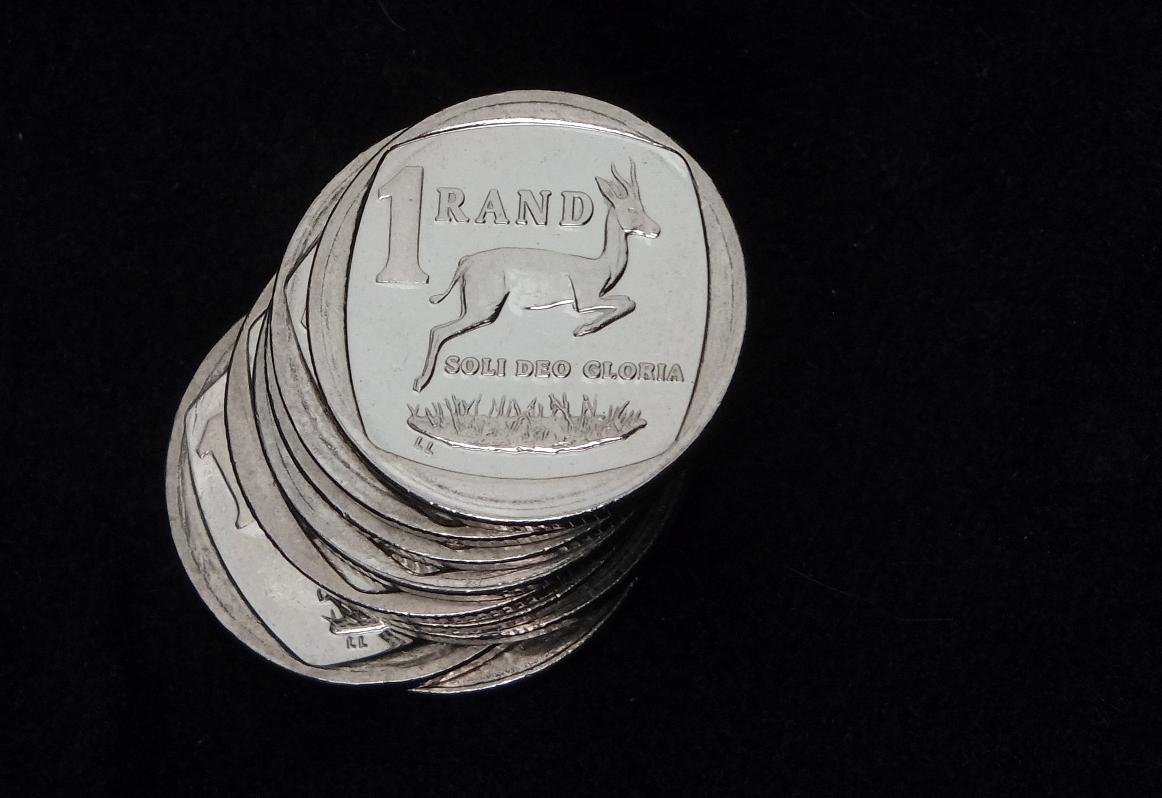
JOHANNESBURG, Nov 19 (Reuters) - The South African rand slightly weakened in early trade on Tuesday as investors awaited a local inflation report and upcoming monetary policy decision. At 0559 GMT, the rand traded at 17.9650 against the U.S. dollar , about 0.1% weaker than its previous close. "It is a quiet day on the data front," said Adam Phillips, treasury specialist at Umkhulu Treasury. "Technically, the ZAR could come back to 17.80, but I think the moves today should be more measured, with some consolidation taking place," Phillips said. South Africa-focussed investors will eye October's inflation print (ZACPIY=ECI) , opens new tab on Wednesday and the central bank's monetary policy decision (ZAREPO=ECI) , opens new tab on Thursday. The bank is expected to reduce the repo rate by 25 basis point, according to a Reuters poll of economists, after implementing a cut of the same magnitude at its September meeting. South Africa's benchmark 2030 government bond was flat in early deals, with the yield at 9.117%. Sign up here. https://www.reuters.com/markets/currencies/safrican-rand-softens-market-awaits-inflation-print-rate-decision-2024-11-19/
2024-11-19 06:06
Safe-haven currencies rise after Russia's nuclear doctrine update Lavrov's comments ease nuclear war fears, calming market sentiment Dollar index rises on Fed rate cut expectations and geopolitical risks NEW YORK, Nov 19 (Reuters) - The dollar index rose on Tuesday, after an initial boost to safe-haven currencies such as the greenback, Swiss franc and yen prompted by an announcement by Russia that it would lower its threshold for a nuclear strike faded following comments by Russian and U.S. officials. Ukraine used U.S. ATACMS missiles to strike Russian territory for the first time, Moscow said, in an attack regarded by Russia as a major increase in hostilities on the war's 1,000th day. Putin approved the change to Russia's nuclear doctrine days after two U.S. officials and a source familiar with the decision said on Sunday that U.S. President Joe Biden's administration would allow Ukraine to use U.S.-made weapons to strike deep into Russia. The dollar index , which measures the greenback against a basket of currencies, rose 0.03% to 106.25 after reaching a high of 106.63 in the session, with the euro down 0.12% at $1.0586. The initial reaction in markets faded somewhat after Russian Foreign Minister Sergei Lavrov said the country will "do everything possible" to avoid the onset of nuclear war, while showing approval for Germany's decision on Monday not to provide long-range missiles to Ukraine, calling it "a responsible position." In addition, the U.S. said it has not seen any reason to adjust its own nuclear posture in response. "We're seeing a reversal after Lavrov's comments, also the U.S. won't respond to this change in the Russian nuclear doctrine, that's played a role too in sentiment calming down here a bit," said Erik Bregar, director, FX & precious metals risk management, at Silver Gold Bull in Toronto. "A nice three-week flush of over-leveraged long positions and geopolitical risk hasn't gone away, it's still a crazy, dangerous world out there." The yen was unchanged to 154.68 per dollar after rising as much as 0.91% against the greenback. The Japanese currency was last up 0.11% to 163.74 against the euro after strengthening to a six-week high of 161.50. The dollar had strengthened as much as 9% against the yen since the beginning of October to as much as 156.74, rising above the 156 mark for the first time since July last week and sparking the possibility Japanese authorities may once again step in to shore up the currency. Against the Swiss franc , the dollar edged up 0.02% to 0.883 after earlier falling as much as 0.32% on the day. The Russian rouble weakened 0.83% against the greenback to 100.571 per dollar. The official exchange rate of the Russian rouble weakened past 100 to the U.S. dollar for the first time since October 2023. The dollar index has been rallying on growing expectations the Federal Reserve may slow its path of interest rate cuts and on concerns incoming U.S. President Donald Trump's policies could reignite inflation. Expectations for the path of rate cuts have been dialed back, while volatile, in recent weeks, with markets currently pricing in a 59.1% chance of a 25 basis point cut at the Fed's December meeting, down from 76.8% a month ago, according to CME's FedWatch Tool , opens new tab. Kansas City Fed President Jeffrey Schmid said it remains uncertain how far interest rates can fall, but the recent cuts by the central bank indicate confidence that inflation is heading towards its 2% target. The European Central Bank is also expected to continue cutting interest rates in an effort to stimulate growth in the region. In the latest comments from ECB policymakers, Fabio Panetta said the central bank should cut interest rates so they no longer curb economic growth, or even stimulate it, and give more guidance now that post-pandemic shocks are waning and inflation is normalizing. Panetta's comments came after two top ECB policymakers on Monday signaled they were more worried about the damage that expected new U.S. trade tariffs would do to growth than any impact on inflation. Sterling weakened 0.04% to $1.2671. Sign up here. https://www.reuters.com/markets/currencies/dollar-rally-stalls-giving-yen-respite-2024-11-19/