2024-11-18 12:00
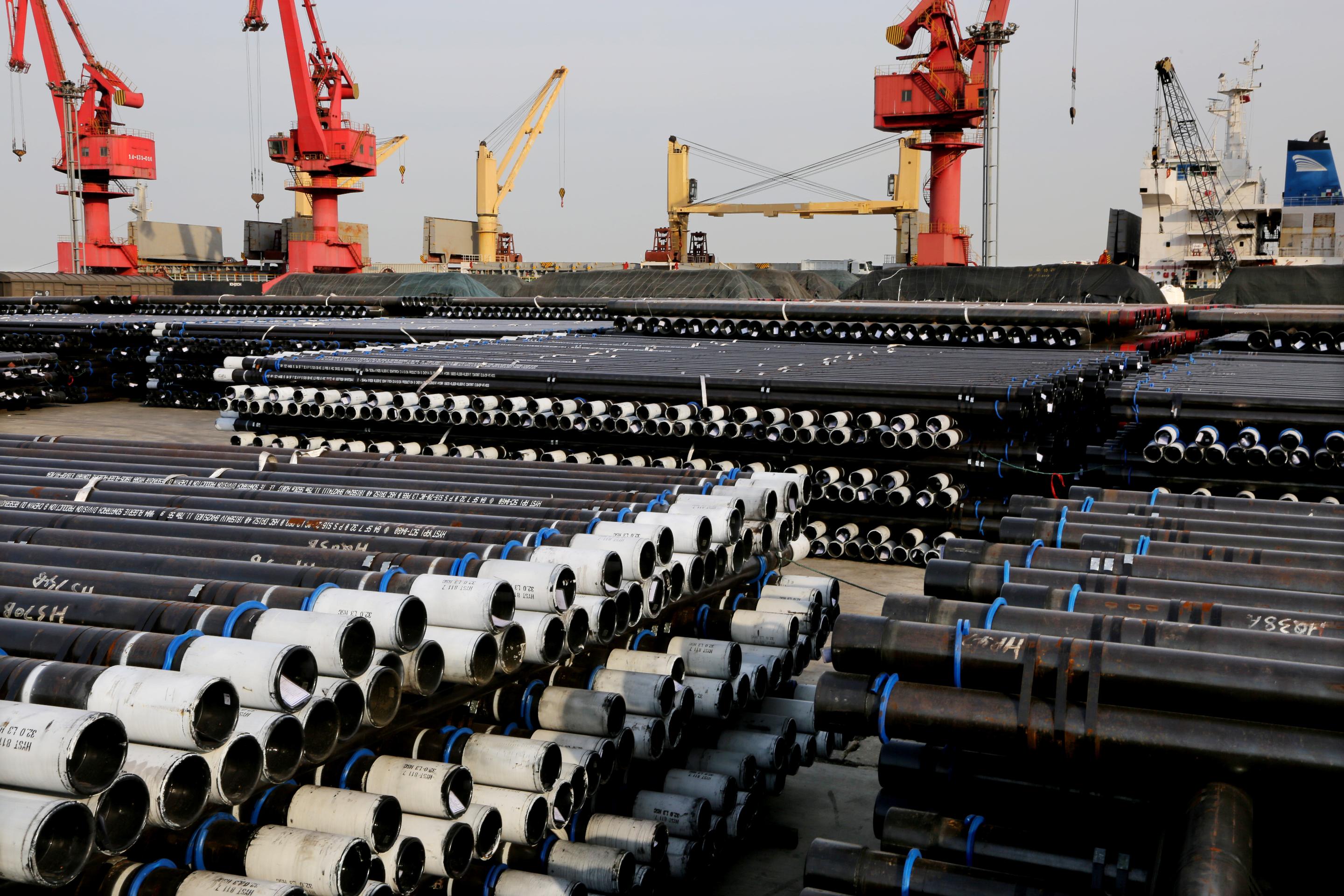
BEIJING, Nov 18 (Reuters) - Chinese exporters of a wide range of products from aluminium goods to used cooking oil and solar power gear will raise prices and renegotiate contracts to pass on the cost of Beijing's tax incentive cuts, traders and analysts said. The world's second largest economy said on Friday that, from Dec. 1, it will reduce the export tax rebate rate for some refined oil products, photovoltaics, batteries and certain non-metallic mineral products from 13% to 9%. It said it will also cancel the rebate for aluminium and copper products and for chemically modified animal, plant or microbial oils and fats, including used cooking oil (UCO). Metal exporters could rush through exports before the December deadline while UCO exporters may delay shipments to renegotiate contracts, analysts and company officials said. "For December-loading UCO, export shipments could be delayed or cancelled due to the policy change as parties will seek to renegotiate contracts," Ye Bin, chairman of Chinese UCO exporter Sichuan Jinshang, told Reuters. Beijing's announcement drove up aluminium prices on the London Metal Exchange and U.S. soyoil prices on Friday on concerns that it may curb Chinese shipments abroad, although prices have cooled off on Monday. China is the world's biggest aluminium producer and a major exporter of semi-finished aluminium used in everything from transportation to packaging. "The cancellation of tax rebate for aluminium products will lift costs of exporters, curbing their interest in shipping cargoes abroad," analysts at consultancy Shanghai Metals Market (SMM) said in a note on Saturday. Almost all the aluminium products exported by China will be affected by the tax change. From January to September this year, China exported 4.62 million metric tons of the kinds of aluminium products that will be affected, SMM said. Western countries have repeatedly accused China of unfairly subsidising its aluminium and steel sectors, saying the country's excess capacity is swamping global markets. However, a Singapore-based aluminium trader said the overseas market will still need Chinese cargoes, even at a higher cost, to fill a supply gap. "Domestic prices may fall another 2%-3% to offset the loss for aluminium exporters," added the trader who asked not to be named as they are not authorised to speak to the media. Citi analysts expect the tax change to have a smaller impact on copper products as export volumes are smaller, at about 800,000 metric tons a year, and some of the products are made under tolling services which would not be affected. Zhao Yongcheng, principal analyst at Benchmark Minerals Intelligence (BMI), said Beijing's move was partly to ensure sufficient domestic copper supply, and to encourage producers to use imported copper ore to make higher-value-added goods. The previous tax rebates had encouraged exports of low-value-added copper products, which was "equivalent to wasting valuable imported resources", Zhao said. China is a big importer of copper ore. "It will definitely accelerate the integration of copper fabricators, eliminating some out of the market," Zhao added. SOLAR AND FUEL The reduction of tax rebates for fuel exports comes as China grapples with excess refining capacity as well as lacklustre and volatile domestic demand. "This is going to hit (refined fuel) export margins," a state oil official said, estimating margins would fall by 200-300 yuan ($27.62-$41.43) per ton. Citi analyst Oscar Yee said in a note that the tax change will reduce revenues for state refiners Sinopec (600028.SS) , opens new tab and PetroChina, and should cap fuel exports from China which could support refiners' margins elsewhere in Asia. In October, China's refined products exports fell to their lowest levels in 18 months amid weak export margins. Bi Xinxin, a managing consultant at energy consultancy Wood Mackenzie, expects Chinese oil majors to continue exports if margins are healthy and if they have sufficient export quotas in the long run. For the solar sector, which is struggling with overcapacity, the downward tax adjustment could result in a 0.02-0.03 yuan-per-watt increase in solar module prices for overseas buyers, Citi analyst Pierre Lau said in a note. Chinese solar modules would remain competitive even with the price increase as the cost would be passed on to end-users overseas, Lau said. That will mean limited impact on the earnings of Chinese solar equipment exporters such as Longi Green Energy, he said. ($1 = 7.2413 Chinese yuan renminbi) Sign up here. https://www.reuters.com/world/china/chinese-exporters-hike-prices-renegotiate-contracts-after-tax-rebate-cuts-2024-11-18/
2024-11-18 11:54
Countries seek deal this week on U.N.-backed carbon market Carbon offset trading has been plagued by scandals Market size could hit $250 billion - industry group BAKU, Nov 18 (Reuters) - A deal at the COP29 climate talks on trading carbon credits could see billions of dollars move into emissions-reduction projects this decade but after a string of scandals, the market will first need to win over wary countries and communities. Carbon trading is seen as one way for richer countries to meet their emissions reduction targets at the same time as helping poorer countries move to greener energy and to improve their resilience against climate change. A U.N.-backed global market for creating and trading carbon credits has been discussed for at least 10 years. In its absence, a patchwork of voluntary standards has led to a number of situations where credits were found to not be delivering the climate benefits they claimed. While an early deal last week saw nations agree on some quality standards, points still to be hammered out include what a global registry to track trades and label carbon credits would look like, and what information projects will need to disclose. If a deal can be reached this week in Baku, Azerbaijan, "the main impact would be a confidence boost", said Andrea Bonzanni, international policy director at the International Emissions Trading Association (IETA). "It would provide both countries and the private sector with the signal that there is consensus on the rules of the game. And that would mean that companies would invest with more confidence," he added. IETA has said a U.N.-backed market could be worth $250 billion a year by 2030, and count towards offsetting an extra 5 billion metric tons of carbon emissions annually. Governments including Bolivia, Singapore and Switzerland have struck dozens of agreements already to do carbon credit trades under the impending U.N. rules, backing investments in clean cookstoves and solar power. Others are expected to join in as they face pressure to show progress towards their national emissions-cutting targets. Private sector buyers could include airlines, under a U.N.-backed plan to scale up their purchases launching in 2027, as well as companies looking to burnish their green credentials with customers and investors. The boss of carbon project backer Key Carbon, Luke Leslie, said his firm would look to expand its investments in countries that quickly get their local market up and running. CAUTION REMAINS While the prospect of selling credits could offer a boost to cash-strapped governments, some remain wary - or outright opposed. Environmental group Greenpeace has called offsets a "smokescreen" while the WWF opposes the use of most offsets. Some local communities are also against using them. Marty Spitzer, senior director for climate and renewable energy at WWF U.S., said companies could use credits and other market methods in a limited manner to directly reduce activities like deforestation or land degradation if they are directly linked to their businesses. "Offsets are only appropriate for the last mile of residual emissions," he said. Eriel Deranger, executive director of campaign group Indigenous Climate Action, and a member of the Athabasca Chipewyan First Nation in northern Alberta, Canada, said carbon credits distracted from calls for more public funds for climate action, and for companies to simply cut their own emissions. "It's going to do substantively nothing to actually reduce our emissions," she said. For those countries which do opt to sell credits, African Development Bank Chief Executive Akinwumi Adesina warned against doing so too quickly or too cheaply, to avoid being "short changed". Uganda's energy minister, Ruth Nankabirwa, said her country was seeking to attract investment in clean cookstove projects, but had yet to use credits. "It isn't clear how one can benefit, how the auditing is done of carbon credits," she said. Nkiruka Maduekwe, director general of Nigeria's national council on climate change, agreed, describing high integrity carbon credits as "the key". The rules of the registry being addressed at the COP talks this week will be central to answering those concerns, but governments are struggling to agree. The European Union - which has ruled out using credits to meet its domestic climate goals - wants a registry that can issue and manage credit trades, to help poorer countries access the market, people familiar with the negotiations told Reuters. The United States, however, is advocating for a registry that only tracks credit trading, arguing that empowering it to execute trades could risk giving a U.N. seal of approval to credits with weak environmental credentials, the sources said. Even if a deal is reached between countries, companies may still need government incentives to buy in, given their pledges so far have been voluntary and boards are concerned about reputational risk, said Sheri Hickok, chief executive at carbon project developer Climate Impact Partners. Flooring company Interface (TILE.O) , opens new tab and Australian telco Telstra Group (TLS.AX) , opens new tab, previously big buyers of credits, both told Reuters a U.N. deal would not change their decisions to exit the carbon markets, as they focus on cutting their emissions directly. Sign up here. https://www.reuters.com/sustainability/can-cop29-deal-clean-up-scandal-ridden-carbon-offsets-2024-11-18/

2024-11-18 11:44
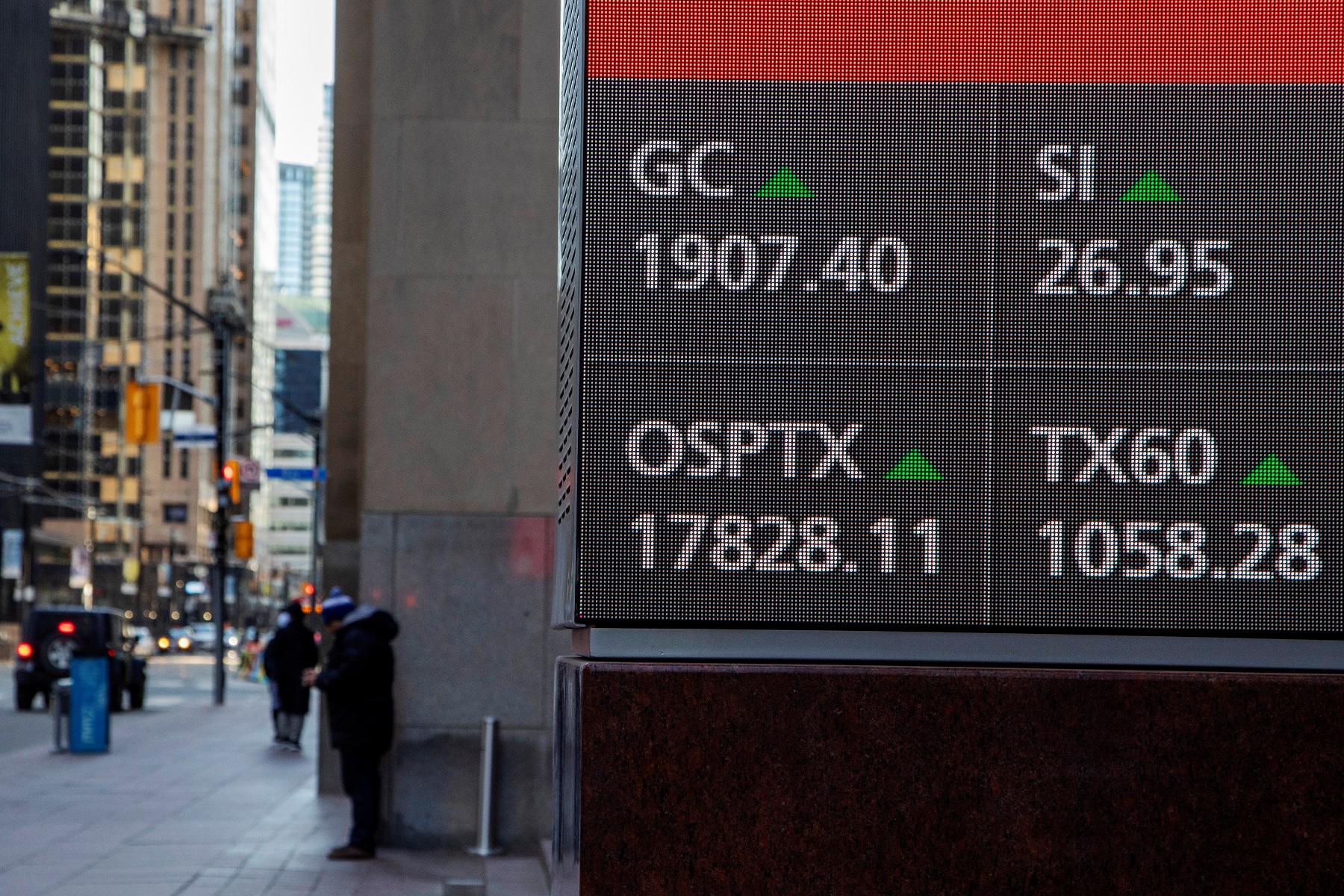
Nov 18 (Reuters) - Futures tied to Canada's main stock index rose on Monday, supported by metal prices, as investors looked forward to this week's domestic inflation data and AI darling Nvidia's quarterly earnings. December futures on the S&P/TSX index were up 0.27% at 6:04 a.m. ET (11:04 GMT). Canada's materials sector could benefit from gold prices that rebounded after posting losses in the previous six sessions, while copper prices also edged higher. The energy sector remained in focus as oil prices rose after the war between Russia and Ukraine intensified over the weekend, while concerns about fuel demand in China and forecasts of a global oil surplus weighed on markets. The composite index (.GSPTSE) , opens new tab ended lower on Friday as the prospect of a slower pace of Federal Reserve interest-rate cuts spurred investors to take some profits on gains made since the U.S. presidential election. Canadian investors were squarely focused on the consumer price index (CPI) data due this week, which could provide clues on the Bank of Canada's move at its December policy meeting. The BoC slashed interest rates by half a percentage point last month to boost the domestic economy. Traders see a 33.4% chance for another 50-basis-point rate cut next month. Canada's producer prices and retail sales data are also due this week. Nvidia's (NVDA.O) , opens new tab third-quarter results on Wednesday will take center stage as analysts estimate its sales to have jumped 82.8% to $33.13 billion, according to data compiled by LSEG. In corporate news, Canadian fund Brookfield (BN.TO) , opens new tab plans to offer about 7 billion euros ($7.4 billion) for Spanish drugmaker Grifols (GRLS.MC) , opens new tab after finishing due diligence, according to news website El Confidencial. COMMODITIES Gold : $2,592.27; +1.21% US crude : $67.5; +0.72% Brent crude : $71.62; +0.82% FOR CANADIAN MARKETS NEWS, CLICK ON CODES: TSX market report Canadian dollar and bonds report CA/ Reuters global stocks poll for Canada , Canadian markets directory ($1 = 1.4089 Canadian dollars) Sign up here. https://www.reuters.com/markets/tsx-futures-boosted-by-metal-cpi-data-us-earnings-focus-2024-11-18/
2024-11-18 11:34
DUBLIN, Nov 18 (Reuters) - European Central Bank policymaker Gabriel Makhlouf said it would be premature to start making decisions on what a new U.S. administration might do when asked if Donald Trump's election moves the dial on his thinking on inflation. "I do think it would be premature to come to conclusions as to exactly what it is that the new U.S. administration is going to do, and to start making decisions based on that assumption," Makhlouf told reporters on Monday. Makhlouf added that it would be going a bit far to say an ECB interest rate cut next month is "in the bag" and that the evidence would need to be "pretty overwhelming" to consider a 50-basis-point cut at the Dec. 12 meeting. Sign up here. https://www.reuters.com/markets/europe/ecbs-makhlouf-premature-make-decisions-based-new-us-administration-2024-11-18/
2024-11-18 11:33
COPENHAGEN, Nov 18 (Reuters) - Denmark will convert 15% of its farmland into forest and natural habitats in an effort to reduce fertilizer usage, which has resulted in severe oxygen depletion in Danish waters as well as the loss of marine life, lawmakers said on Monday. Denmark, among the most intensively cultivated countries in the world with almost two-thirds of its territory farmed, set aside 43 billion Danish crowns ($6.1 billion) to acquire land from farmers over the next two decades. Under the deal, which also makes Denmark the first country to impose a carbon tax on agriculture, the Nordic country plans to plant one billion trees on farmland over the following 20 years, according to the ministry for the Green Tripartite agreement. The ministry was created in August to implement a green deal reached in June between farmers, industry, labour unions and environmental groups. Reducing emissions from agriculture, Denmark's largest source of greenhouse gases, has been a major hurdle for lawmakers seeking to achieve a legally binding 2030 target of cutting greenhouse gas emissions by 70% from 1990 levels. Oxygen levels in Danish waters reached alarmingly low levels this year, due to the runoff of nutrients from fertilisers in lowlands. ($1 = 7.0606 Danish crowns) Sign up here. https://www.reuters.com/sustainability/land-use-biodiversity/denmark-convert-15-farmland-forest-cut-fertilizer-use-2024-11-18/

2024-11-18 11:29
A look at the day ahead in U.S. and global markets from Mike Dolan Wall Street feels a little bruised after its worst week in 10 spoiled the post-election party, with home truths on interest rates and earnings seeping back in along with all the uncertainty on what a new administration will actually do come January. Stocks were side-swiped on Friday after a week of irksome inflation readings, hot retail updates and Federal Reserve boss Jerome Powell's equivocation on future easing. There was also trepidation, however, ahead of chip giant Nvidia (NVDA.O) , opens new tab latest earnings report on Wednesday - as the world's biggest company by market value and artificial intelligence bellwether faces another test of the near 800% stock boom over the past year. The $3.5 trillion company is expected to post net income of $18.4 billion as revenue jumped over 80% to $33 billion, according to LSEG data. Nvidia's huge earnings beats over the past year, however, are inevitably becoming more modest. With reasonable concerns about the chances of a global trade war rumbling in the background, Nvidia's shares took a 2% hit early on Monday after weekend reports that its new Blackwell AI chips, which have already faced delays, encountered problems with accompanying servers which overheat. Yet, stock index futures put on a braver face ahead of today's open and tried to claw back some of last week's swoon - which chopped almost 50% off the S&P500's post-election rally. The broader earnings season has comfortably beaten estimates, with aggregate annual profit growth coming in close to 9% - compared to the 5.3% forecast at the start of October. Next year's growth estimates are being pared back, however, with full-year S&P500 profit growth forecasts dropping about one percentage point to 14% over the past two weeks. Beyond stocks, the restive Treasury market steadied first thing on Monday, with 10-year yields remaining below 4.5%. Futures pricing for another Fed rate cut next month shows about a 60% chance of further easing in December and 75 basis points of cuts are now priced to the end of next year. Despite controversial cabinet picks to date, President-elect Donald Trump still has not proposed names for the top economic posts at the Treasury or Commerce departments or the new Trade Representative. Trump added former Fed Governor Kevin Warsh and billionaire Marc Rowan to the list of candidates to become his Treasury secretary, the New York Times and Wall Street Journal reported on Sunday. A former investment banker, Warsh served on the Fed Board from 2006 to 2011 and was seen as both a fiscal hawk and a proponent of higher savings rates. Rowan co-founded investment manager Apollo Global Management and became its CEO in 2021. The reports threw doubts over what has been seen as a two-horse race between Howard Lutnick, the CEO of Cantor Fitzgerald, and hedge fund manager Scott Bessent. Geopolitical developments were also back in the frame as G20 leaders meet in Brazil - a summit likely to focus on possible breakthroughs in climate finance rather than even thornier issues of trade and tariffs. Tensions in Ukraine rose several notches too after the Russian bombardment of the country's energy infrastructure this weekend was followed by U.S. President Joe Biden's decision to allow Ukraine to use its weapons to strike into Russia. Crude oil prices were a touch higher first thing. The dollar (.DXY) , opens new tab was steady - close to recent highs - and Bitcoin retained the bulk of its post-election surge and hovered above $91,000. Key developments that should provide more direction to U.S. markets later on Monday: * US November NAHB housing market index, September TIC data on Treasury flows, New York Federal Reserve October service sector survey * G20 leaders summit in Rio de Janeiro * Chicago Federal Reserve President Austan Goolsbee speaks; European Central Bank President Christine Lagarde and ECB chief economist Philip Lane speak Sign up here. https://www.reuters.com/markets/us/global-markets-view-usa-2024-11-18/