2024-11-18 10:07
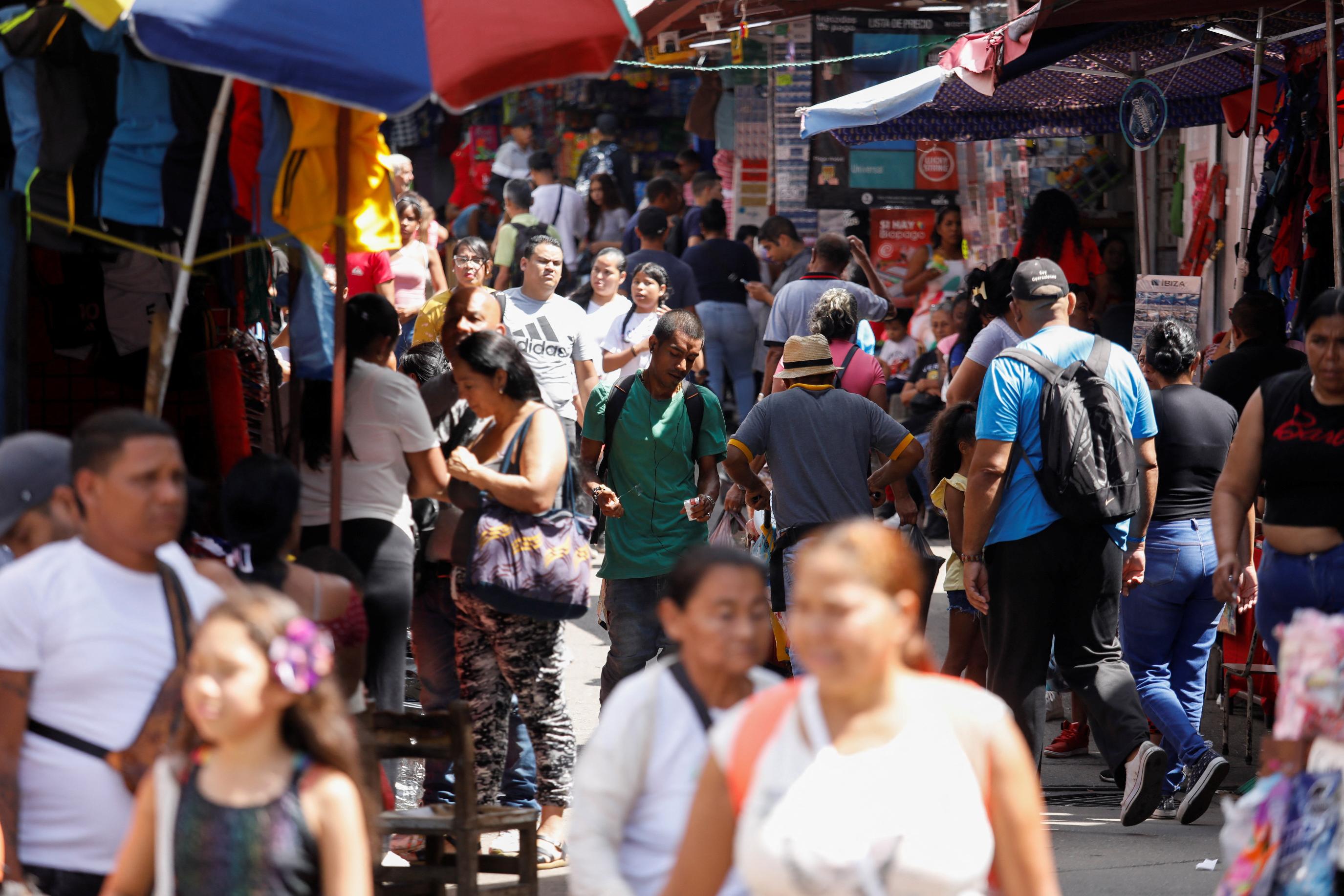
Government let bolivar currency float after nine months Analysts say inflation could climb to 40% this year Businesses struggling to access dollars for imports CARACAS, Nov 18 (Reuters) - Currency depreciation is set to reverse years of declining inflation in economically beleaguered Venezuela, public and private sector sources say, as foreign currency sales fall short of demand and the socialist government keeps tight-lipped about its strategy. After years of hyperinflation and amid broad U.S. sanctions, in 2022 the administration of President Nicolas Maduro began using orthodox policies including credit restrictions, lower public spending, a fixed dollar-bolivar rate and central bank sales of billions of dollars in foreign currency to tamp down consumer prices. Maduro, who will begin his third term in January after a disputed election that the opposition and international observers say he lost, has said his government defeated inflation of more than 100,000% and prices in 2024 are similar to those in 2014. But the administration's policy has now changed. After more than nine months of the exchange rate being held at 36.5 bolivars to the dollar, the government in mid-October allowed the currency to float, beginning a depreciation that has seen the bolivar slide to about 45 versus the dollar, according to central bank figures. Analysts say the over-valued currency made imports cheaper than locally-produced goods, impacting Venezuela's private sector and helping push prices up by 12% in nine months. The untethering of the exchange rate will also put upward pressure on prices in the final quarter of 2024, financial and business sources said, with analysts predicting in a LatinFocus survey the rate will end the year at 50 bolivars to the dollar. Year-on-year inflation was 25% through September. Official figures for October have not yet been released. "For nine months the depreciation of the currency was zero while inflation was rising, which exposed problems in the exchange scheme," said economics professor and consultant Daniel Cadenas, who added the market depends on oil income. "For the system to function, there needs to be a growing source of exchange and that's not possible." The government had predicted internally that inflation would close the year at 30%, two sources with knowledge of the projection said, but depreciation could increase the figure and local analysts have estimated inflation between 35% and 40%. "There has been a necessary adjustment in the exchange rate that will have an impact on inflation," said Asdrubal Oliveros, head of local think tank Ecoanalitica. "The government has understood it needs to devaluate." REDUCED CENTRAL BANK SALES Vice President Delcy Rodriguez, who until recently also served as finance minister, told an event with business people last month that there must be "reflection" about the use of foreign exchange. "We should all be concerned with how foreign exchange is used in imports. It is a subject the Finance Ministry is reviewing," she said. "We need to take care of foreign exchange because this is a blockaded country and there cannot be cheap exchange for hair dye." Rodriguez's comments are the only ones made on the subject by the government since devaluation began. Neither the central bank nor the communications or finance ministries responded to requests for comment. Private sector demand for cheap foreign exchange increased during the nine months the rate was held, even as the quantity of dollars being injected into the market by the central bank was reduced, sources said. In July the bank was offering some $800 million, but by October that figure had fallen to $400 million, according to calculations by local consultancy Sintesis Financiera. The central bank did not respond to a question about the reduction. "The strategy in exchange policy is not going ahead," a government source said, without giving further details. Food and medicine companies in Venezuela are allowed to pay for some of their goods with foreign currency, while other companies are given central bank promissory notes indexed to a specific exchange rate. Two private sector sources said many businesses are eating through their inventories in the face of import difficulties. Sign up here. https://www.reuters.com/markets/venezuela-depreciation-risks-reversing-years-inflation-gains-2024-11-18/
2024-11-18 10:06
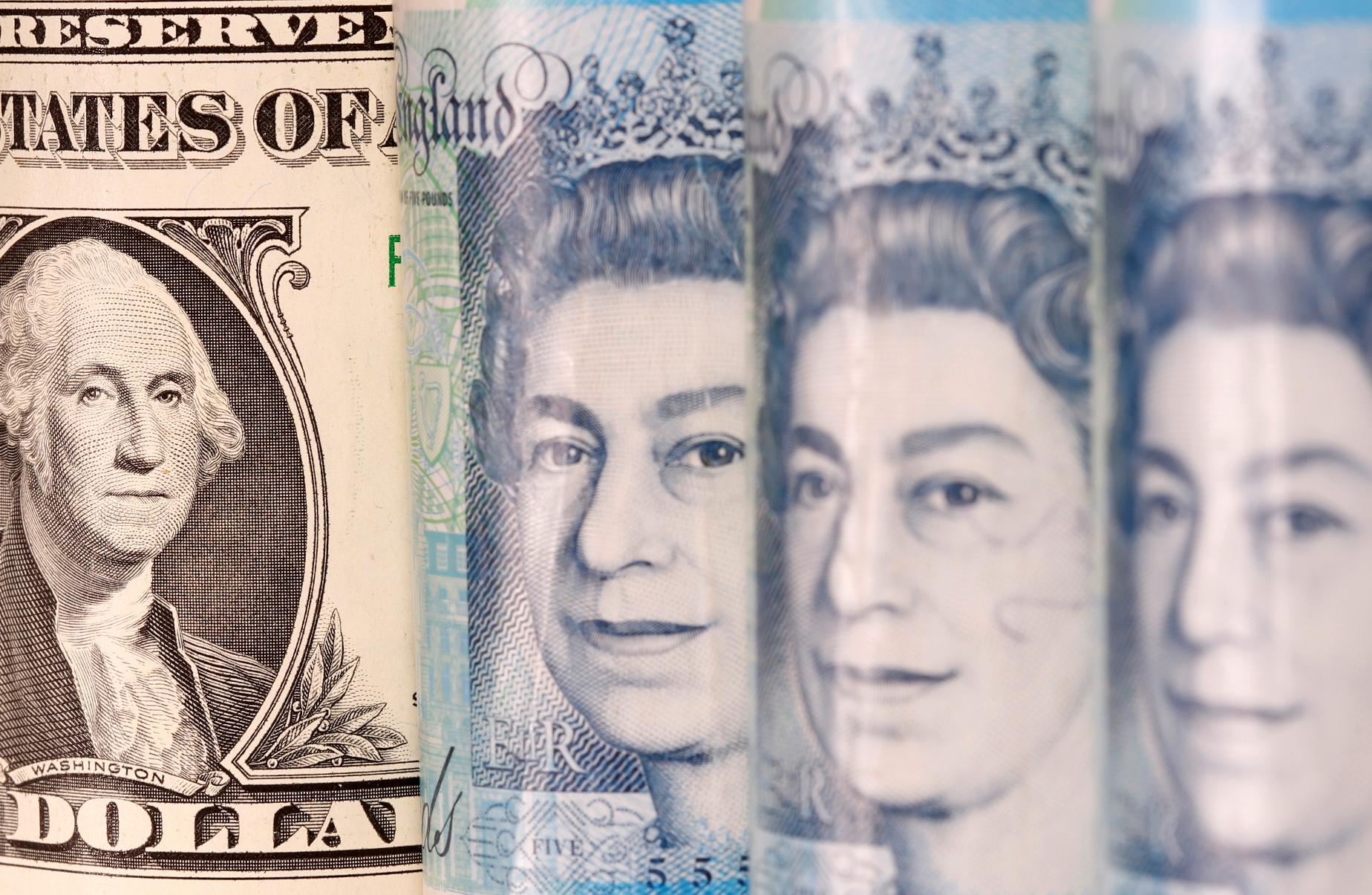
LONDON, Nov 18 (Reuters) - The pound held steady on Monday after falling to a six-month low the previous week as the dollar surged on the back of Donald Trump's victory in the U.S. presidential election. Sterling was last up 0.1% at $1.2627, from $1.2598 on Friday, its lowest since mid-May. Trump's Nov. 5 election win has caused the dollar index to surge around 3% as investors bet trade tariffs and lower taxes will boost growth and inflation, leading to fewer Federal Reserve interest rate cuts. Those expectations have caused Treasury yields to rise sharply , lifting the dollar as U.S. bonds become more attractive. Sterling has fallen around 2.7% since the election although it has fared better than the euro , which many traders think will bear the brunt of higher U.S. tariffs which are likely to focus on China, the European Union and Mexico. "Recent sterling weakness has principally been a story of U.S. dollar strength," said Matthew Amis, investment director at asset manager abrdn. "From the GBP (pound) perspective, we see little reason for the recent slide to recorrect," he said. "The Bank of England may well be continuing to signal gradual cuts, but the UK growth story will need to be more compelling for markets to shift." Data on Friday showed the UK economy contracted unexpectedly in September and growth slowed to just 0.1% over the third quarter, driving a sixth day of losses for the pound. Traders see a roughly 80% chance the Bank of England will cut rates again next month, and see rates falling by around 65 basis points to just above 4% by the end of next year. The BoE rate is currently 4.75%. The relatively slow pace of expected cuts has supported the pound this year, which is down 0.8% against the dollar in 2024, compared to a 4.3% drop in the euro . The euro fell to a 2-1/2 year low against the pound of 82.62 pence early last week as investors bet Trump's tariffs would be worse for the euro zone than Britain. It was last up 0.23% at 83.70 pence, after also rising on Friday in the wake of the weak British data. Sign up here. https://www.reuters.com/markets/currencies/sterling-finds-footing-after-hitting-six-month-low-trump-victory-2024-11-18/
2024-11-18 10:04
Investors confident in Milei's economic reforms Argentina's stocks and dollar bonds score significant returns Potential U.S. support could aid Argentina's IMF negotiations NEW YORK, Nov 18 (Reuters) - (This Nov. 18 story has been corrected to remove reference to increase in payments to the IMF next year in paragraph 25) Investors who have been rewarded for their bets on Argentine President Javier Milei are doubling down on the country's stocks and bonds even as they hit records, betting that an austerity crusade will pay further dividends. Milei won the presidential election a year ago with a mandate to reshape South America's second-largest economy, pledging to take a chainsaw to government spending and slam the brakes on printing more pesos. A renegade campaign endeared him to Argentines fed up with the establishment, and with just enough legislative support to withstand a veto override, Milei pushed through a key reform bill that included steep spending cuts. The government recently marked its tenth consecutive monthly primary fiscal surplus. A tax amnesty has brought some $18 billion to local banks. Milei's swift initial move to cut spending and stop printing cash was "one that investors can very easily buy into," said Graham Stock, emerging markets senior sovereign strategist at RBC Global Asset Management. What is surprising, he said, "is that the population has bought into it, and that has meant that his popularity has held up pretty well. Given the scale of the spending cuts, it's pretty remarkable that he remains as popular as he does." A survey , opens new tab closely watched by markets from the Torcuato Di Tella university showed confidence in government, a proxy for Milei's standing, rebounded in October after a September slip. Going back to 2003, only Peronist Nestor Kirchner and center-right Mauricio Macri scored better than Milei at this point of their term. Other surveys show Milei's popularity and disapproval ratings at around 50-50. Argentina is in the second year of a recession, with the International Monetary Fund estimating a 3.5% contraction in economic output this year. At the same time its dollar bonds (.JPMEGDARGR) , opens new tab have returned almost 90% this year, and the local stock market (.MERV) , opens new tab is up 125%. But inflation remains at triple digits and the peso has weakened 19% this year, even if supported by currency controls, so most workers still struggle with the cost of living. More than half of Argentina's 46 million people live in poverty. THIS TIME IS DIFFERENT Macri's presidency also attracted investors to Argentina's financial assets, with stocks hitting record highs starting in 2015 and buyers lining up for a 100-year bond issued in 2017. It ended in tears - and default - after the economy stalled and inflation surged, paving the way for the Peronists to return. But Argentina bulls insist history is not about to repeat itself. "I think there's a lot of confidence that if there is a path towards normality, this is probably the only administration that could do it," said Thomas Haugaard, portfolio manager of EM debt at Janus Henderson. "I'm not saying that they will be able to do it, but there is a shot at it, and they have proven it without too much unrest on the streets." There have been some street protests, especially over cuts to university budgets and when an increase in pension pay was blocked. But the government's focus on inflation has addressed a major popular concern. As monthly consumer prices decelerated in October, JPMorgan updated its end-2025 inflation target for Argentina at an annualized 29%, which would be the lowest since 2017. "I think it comes down to how fast Milei will be able to get the turnaround," said Gordian Kemen, head of EM sovereign strategy (West) at Standard Chartered Bank. "Will he be able to generate enough jobs, enough well-being for the electorate before it comes to the midterm election?" Argentina's October 2025 midterms, which will decide half of the seats of the lower legislative Chamber of Deputies and a third of the Senate, will provide a key barometer of his chances of not just enacting his economic plan but becoming an established political force. "I'm not saying that Milei has to be at peak popularity at all times. I'm just saying that you don't want to see him become unpopular for some reason," said Shamaila Khan, head of fixed income for Emerging Markets and Asia Pacific at UBS Asset Management. "What we're watching is that there is nothing that hinders or deviates from the policies that the country has been pursuing. The possibility that the country doesn't need another restructuring is slowly starting to get priced in." Some investors are hoping Argentina will get an additional market boost from the president's newfound alliance with U.S. President-elect Donald Trump, whom Milei met in Florida last week. He was the first foreign leader to meet the Republican since he won the election. "There should be close policy alignment between the U.S. and Argentina, and that should translate into the U.S. supporting Argentina for various issues, including IMF renegotiations," said Standard Chartered's Kemen. Argentina's payments to the IMF total just over $3 billion in 2025, and increase annually to near $9 billion in 2028. That should not be a problem for a $600 billion economy, but building up dollar reserves remains an issue. Yet investors take comfort from the approval of a $57 billion IMF program during the first Trump presidency. "They have huge financing needs coming up. They need more money from the IMF and at some point they need market access," said Janus Henderson's Haugaard. "In Argentina you're getting more comfortable with the management of the country, but it is not 'I buy Argentina, I put it in a drawer and I sleep'. This is, of course, something where dynamics can change quickly." Sign up here. https://www.reuters.com/world/americas/argentina-investors-bet-mileis-popularity-year-after-his-election-2024-11-18/

2024-11-18 09:41
KAMPALA, Nov 18 (Reuters) - The Ugandan shilling was little-changed on Monday, but was under a little pressure as energy importers sought hard currency, traders said. At 0912 GMT commercial banks quoted the shilling at 3,667/3,677, compared to Friday's close of 3,665/3,675. Sign up here. https://www.reuters.com/markets/currencies/ugandan-shilling-trades-little-changed-under-some-pressure-2024-11-18/

2024-11-18 09:37
Over 70%, 25 of 34 economists, expect rates to be on hold at 6.00% on Nov. 20 BENGALURU, Nov 18 (Reuters) - Bank Indonesia will leave interest rates unchanged on Wednesday, aiming to protect the rupiah from further depreciation amid concerns U.S. President-elect Donald Trump's policies could spur dollar strength, a Reuters poll of economists found. With inflation having stayed within BI's target range of 1.5-3.5% for over a year, the central bank can focus on the rupiah which despite regular interventions has dropped nearly 5% from a September peak, arguing for fewer rate cuts from the bank whose mandate is to maintain currency stability. Some economists in the latest survey revised their expectations from a rate cut in an October poll to a hold at the Nov. 20 meeting. Over 70% of respondents, 25 of 34 in the Nov. 11-18 Reuters poll, predicted the central bank would keep its benchmark seven-day reverse repurchase rate (IDCBRR=ECI) , opens new tab at 6.00% this week. Median forecasts showed BI cutting rates by 25 basis points to 5.75% in December, a quarter percentage point less than the previous poll predicted. "I think it's likely to be a close call. They're a little bit concerned about the currency. It has fallen back since the election in the U.S. so they'd like a bit more clarity on what the outlook is," said Gareth Leather, senior Asia economist at Capital Economics. "I suspect they'll keep rates on hold this month." Among those who expected BI to pause in November, two-thirds or 16 of 25 economists expected a 25 basis point cut to 5.75% in December. Median forecasts showed rates falling to 5.00% in the fourth quarter next year compared to the second quarter in the last two polls. The expected delay partly reflects diminishing bets on rate cuts from the U.S. Federal Reserve as Trump's policies - broad-based tariffs and tax cuts - are seen as inflationary, keeping the U.S. dollar stronger for longer. "BI will likely struggle to find more opportunities to keep easing monetary policy in a stronger U.S. dollar environment," said Brian Tan, senior regional economist at Barclays. "We believe the risks have tilted towards a delayed resumption of BI rate cuts, as well as a higher terminal rate than would otherwise have been the case." (Other stories from the Reuters global economic poll) Sign up here. https://www.reuters.com/markets/asia/bank-indonesia-keep-rates-steady-nov-20-stabilise-battered-rupiah-2024-11-18/

2024-11-18 09:32
FRANKFURT, Nov 18 (Reuters) - Two top European Central Bank policymakers signalled on Monday they were more worried about the damage that expected new U.S. trade tariffs would do to economic growth in the euro zone than any impact on inflation. Investors and policymakers around the world are awaiting the details of U.S. President-elect Donald Trump's new trade policy after he made protectionism a key element of his pitch to voters during the campaign. ECB Vice-President Luis de Guindos and Bundesbank President Joachim Nagel put the emphasis on the hit that new trade restrictions would have on output while they appeared more sanguine on the outlook for inflation. They were later echoed by the ECB's top banking supervisor, Claudia Buch. "The balance of macro-risks has shifted from concerns about high inflation to fears over economic growth," de Guindos told an event in Frankfurt. "The growth outlook is clouded by uncertainty about economic policies and the geopolitical landscape, both in the euro area and globally. Trade tensions could rise further, increasing the risk of tail events materialising." Some analysts fear Trump's second term could bring a much worse rerun of the Republican former president's 2018-2019 trade war with China, with ramifications for Europe and possible retaliation. Nagel, speaking in Tokyo, said the tariffs promised by Trump would upend international trade but he was "not overly" worried about their impact on inflation. "Global integration would have to decrease substantially to cause a noticeable rise in inflationary pressures," he said. "And, so far, we have not seen this." He said that if geoeconomic fragmentation did lead to greater inflationary pressure, the ECB and other central banks would keep it at bay via higher interest rates. The ECB has cut interest rates three times since June as inflation in the euro area nears its 2% target. But it has also downgraded its growth projections twice as a recovery in the 20 countries that share the euro proves elusive. Nagel argued that the ECB could not "completely neglect output" and would not overreact to moves in inflation. "We operationalise our mandate by aiming for inflation of 2% over the medium term," he said. "This allows us to respond flexibly and avoid overreactions that could lead to destabilisation." Similarly, de Guindos said he was confident inflation would stabilise at 2% next year and monetary policy would follow suit. The head of the ECB's supervisory arm, Claudia Buch, weighed in later on Monday, saying protectionism may disrupt Europe's growth potential. "Protectionist tendencies could disrupt the global supply chains that are essential to European industries, with a negative impact on firms’ growth potential, competitiveness and financial resilience," Buch told the European Parliament. Sign up here. https://www.reuters.com/markets/europe/ecb-policymakers-fear-trump-tariff-effect-growth-rather-than-inflation-2024-11-18/