2024-11-15 11:33
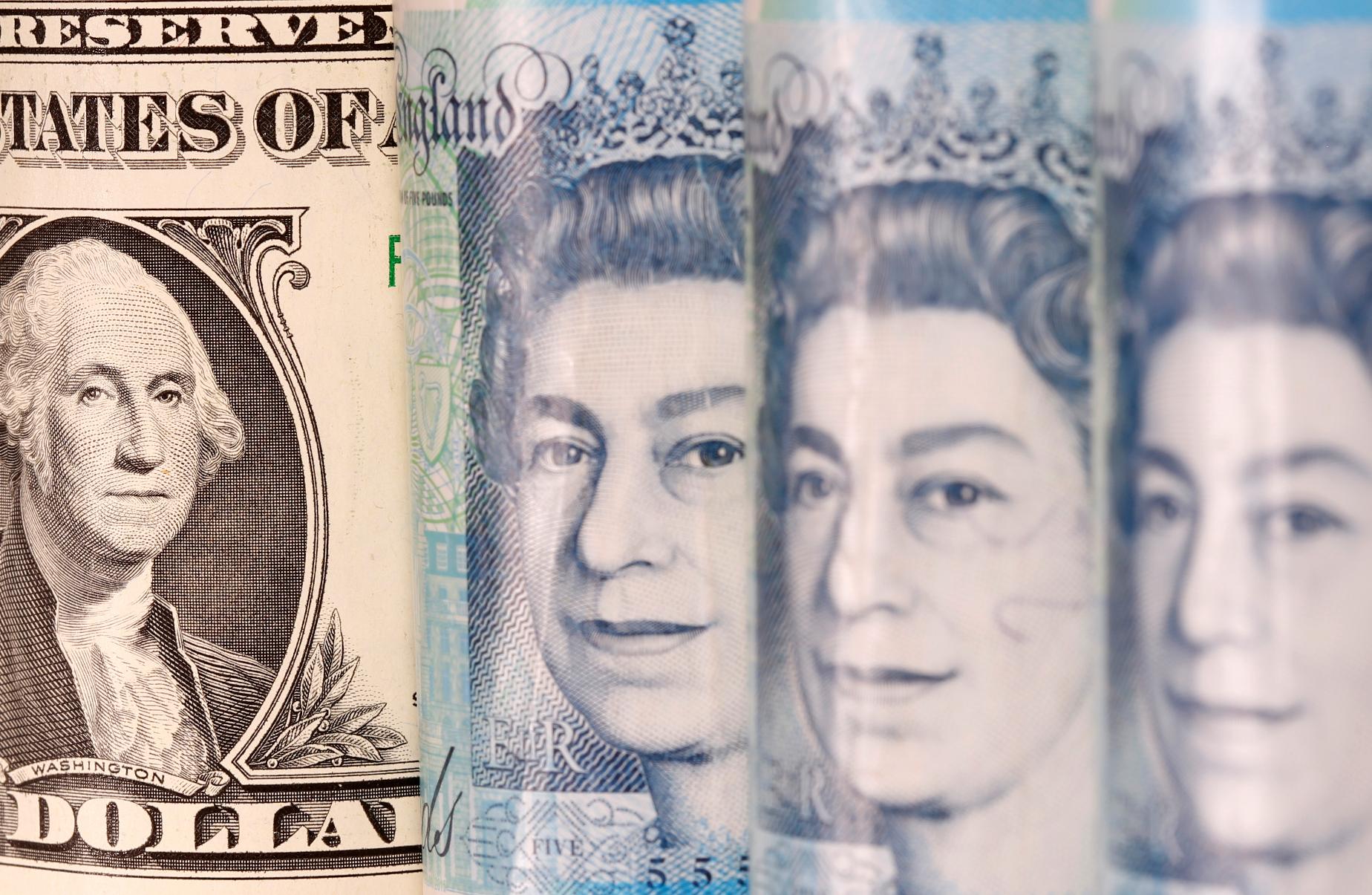
LONDON, Nov 15 (Reuters) - The pound headed for its biggest weekly loss since January on Friday, under pressure from weak UK economic data and a surging dollar that is getting a lift from investors' conviction that Donald Trump's policies will drive up U.S. growth and inflation. Britain's economy contracted unexpectedly in September and growth slowed to a crawl over the third quarter, data showed on Friday. Sterling was unchanged on the day at $1.26795, around its lowest since May and set for a 2% decline this week, its largest weekly loss since January. President-elect Trump has vowed to levy hefty tariffs on the imports of some of the United States' biggest trading partners, while at the same time cutting taxes at home and loosening a raft of regulations on anything from energy to cryptocurrencies. The likely impact is a rise in U.S. inflation and a possible boost to domestic growth, which has sent the dollar to its highest in around a year and eroded the pound's erstwhile strength against the U.S. currency. Sterling has turned negative on the year against the dollar for the first time since July, down 0.4%. For most of 2024, it's been the best-performing major currency, on the grounds that UK interest rates will take longer to fall meaningfully than U.S. ones. With the Federal Reserve looking increasingly likely to cut rates only gradually, given the outlook for a high-inflation, high-growth macro backdrop, the dollar could have more yield appeal than the pound. Money markets show traders think the Bank of England is expected to cut UK rates to around 2% by next December, compared with a projected 3.84% from the Fed. "We believe that if UK economic data continues to disappoint, the BoE may become more focused on reviving growth," BBVA strategist Roberto Cobo said. Sign up here. https://www.reuters.com/markets/currencies/sterling-heads-worst-weekly-performance-since-january-2024-11-15/
2024-11-15 11:16
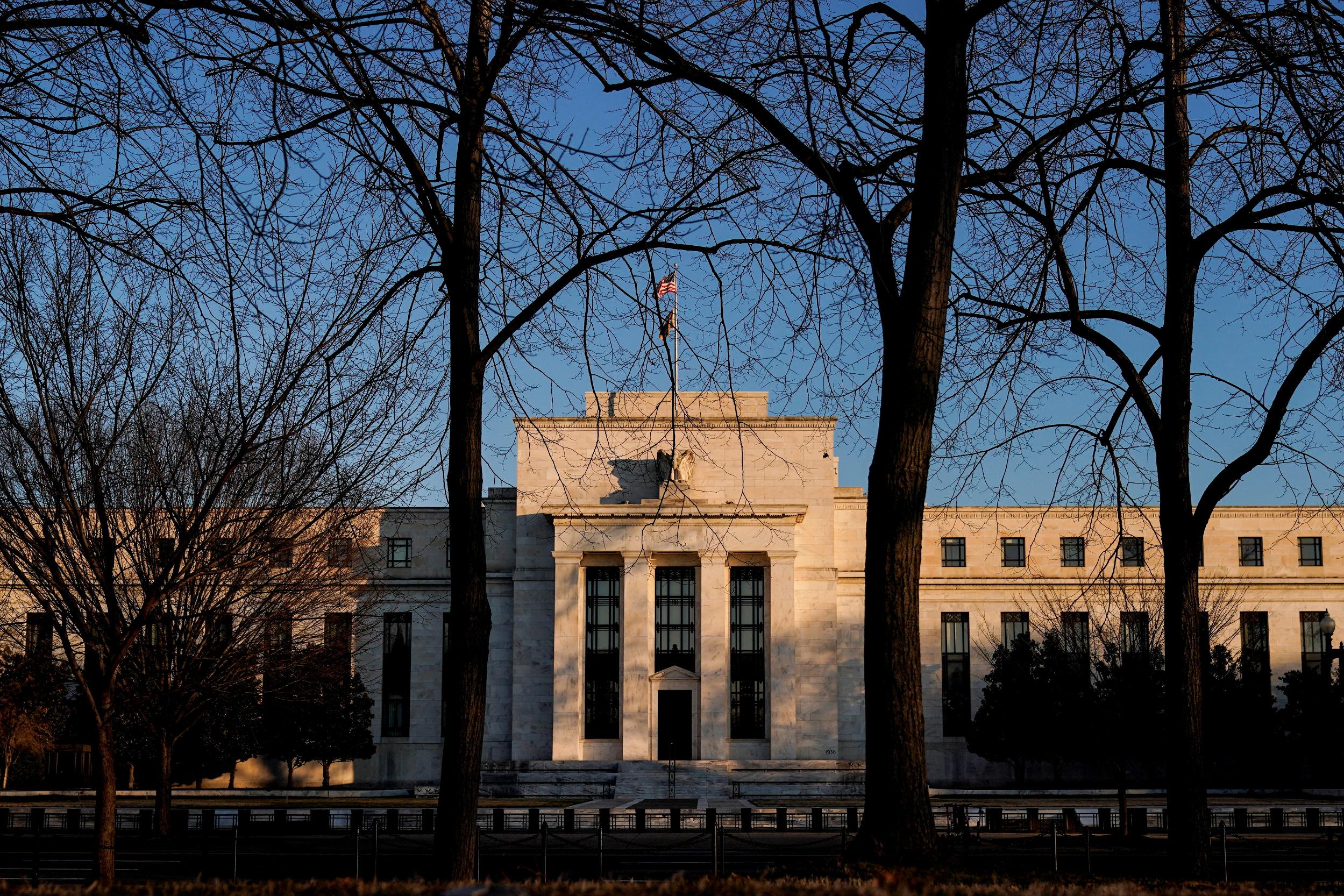
A look at the day ahead in U.S. and global markets from Mike Dolan Faced with another monthly round of stubborn inflation and uncertainty about fiscal, tariff and immigration policy ahead, the Federal Reserve is getting cagier about the extent of further policy easing. Fed boss Jerome Powell didn't give much away in a keenly-watched set-piece speech on Thursday, but made it clear that the central bank still sees a robust economy and has a lot of new information to take on board in deciding just how much further it should lower interest rates. "The economy is not sending any signals that we need to be in a hurry to lower rates," Powell said at a Dallas Fed event. With just 18 months to the end of his latest term at the helm of Fed, Powell seemed keen to sidestep questions on the policy decisions of Donald Trump's incoming administration - bolstered as it was on Thursday by confirmation of a Republican clean sweep of Congress. "We can do the arithmetic," Powell said when asked on possible tariff hikes on imports and curbs on immigration, adding "this is getting me into political issues that I really want to stay as far away from as I possibly can." But on top of a hotter-than-forecast producer price report for October and another drop in weekly jobless claims, the interest rate markets continued to pare back expectations for Fed easing ahead. Retail and industrial numbers for October top Friday's diary. Futures now see just a 60% chance the Fed will cut rates again next month - and fewer than three quarter-point cuts are now fully priced over the next year. Some economists are now thinking Fed rates may not get back below 4% in this cycle. Both the 12-month Treasury bill rate and the two-year note yield are now hovering just under 4.4%, with the 10-year benchmark just off five-month highs of about 4.45%. And two-year market inflation expectations , are settling in about 2.5% - well above the Fed's 2% target. And with cash rates remaining elevated, money market fund assets continue to swell - with assets under management jumping more than $100 billion over the past week to another record of $6.67 trillion. Wall Street stocks (.SPX) , opens new tab halted their immediate post-election surge this week and the dollar (.DXY) , opens new tab also saw its first daily retreat on Friday since the results unfolded over a week ago. Attention switched to the state of other major economies, with nerves jangling about the threat of global trade war. China's latest economic health check showed a mixed bag of soft industrial readings and upbeat retail growth for last month. But pervasive gloom about possible U.S. tariff hikes, disappointment at recent stimulus details and ongoing property sector worries saw Chinese stocks (.CSI300) , opens new tab drop again. Chinese annual house price deflation deepened in October to 5.9% - its biggest drop since 2015 - even though the monthly decline moderated slightly to a fall of 0.5%. Property investment in China also fell at a faster 10.3% in the first 10 months of 2024 compared with 10.1% over January to September. The CSI300 stock index lost almost 2% on Friday, completing its worst week since July - led by declines in the real estate sector. Hong Kong's Hang Seng (.HSI) , opens new tab was only marginally in the red, but clocked a sixth straight day of declines. The offshore yuan , however, perked up against a retreating dollar as the 10-year yield premium on U.S. Treasuries over Chinese equivalents steadied at the widest since May. The dollar also fell back against Japan's yen , with traders wary that excessive yen weakness may draw Bank of Japan intervention and the latest Japanese GDP readout above forecasts. With a key BoJ press conference due on Monday, Finance Minister Katsunobu Kato said the authorities would take appropriate action against sharp exchange-rate moves. The darker global demand outlook, however, has seen crude oil prices fall back again despite this week's drop in U.S. inventories. Britain added to that cloud, showing its economy contracted unexpectedly in September and growth slowed to a crawl over the third quarter - an early setback for finance minister Rachel Reeves' ambitions to kick-start growth. In the euro zone, Germany's economy continues to be the big worry. Even though the European Commission forecast a relatively brisk 0.8% expansion for the euro area this year, it cut its German estimate to show a 0.1% contraction. European Central Bank board member Isabel Schnabel said the ECB should continue to use interest rates as its primary policy tool and extraordinary measures such as bond buying or far-reaching 'forward guidance' should be used only sparingly. In company news, there was 6% rally in Walt Disney (DIS.N) , opens new tab after the entertainment giant reported a quarterly earnings beat and robust guidance. On the flipside, shares of automaker Tesla (TSLA.O) , opens new tab closed down 5.8% and Rivian Automotive (RIVN.O) , opens new tab dropped 14.3% on Thursday after Reuters reported that Trump's transition team is planning to kill the $7,500 consumer tax credit for electric-vehicle purchases as part of broader tax-reform legislation. In Europe on Friday, vaccine makers came under pressure after Trump said he had selected Robert F. Kennedy Jr., an environmental activist who has spread misinformation on vaccines, to lead the Department of Health and Human Services. Overall, Wall Street stock futures were in the red ahead of Friday's bell. Popular 'Trump trades', such as Bitcoin , were firmer again but well off this week's highs and the leading cryptocurrency was back below the $90,000 level on Friday Key developments that should provide more direction to U.S. markets later on Friday: * US October retail sales, industrial production, import/export prices, New York Federal Reserve's November manufacturing survey, September business/retail inventories * New York Fed President John Williams and Boston Fed chief Susan Collins speak; European Central Bank chief economist Philip Lane speaks * US corporate earnings: Sysco, Progressive Sign up here. https://www.reuters.com/markets/us/global-markets-view-usa-2024-11-15/
2024-11-15 11:07
PARIS, Nov 15 (Reuters) - French nuclear fuels company Orano warned on Friday of a "deteriorating financial situation" at its Somair uranium plant in Niger, as the West African nation increasingly looks to new partners such as Russia in its mining sector. Niger is one of the world's leading producers of uranium, the most widely used fuel for nuclear energy, with France's Orano a major player in the sector. However, the business climate for international companies in the country has become uncertain after a military coup last year. Orano said in October it had been forced to suspend production at the Somair mine in the north of Niger following last year's closure of the main export corridor. In its statement on Friday it said the Somair board had sought a temporary halt on mining and ore processing expenditures to preserve cash to pay salaries. Orano owns more than 60% of the Somair mine, while Niger's state-owned Sopamin holds the rest. "What is being announced is in no way a cessation of operations or closing of the site, but merely the decision to place a stop on all non-essential expenditure in the current configuration," said Orano. It added that recent comments made by Niger's mining minister were "damaging". Speaking to Russian media RIA on Wednesday, Niger's Minister of Mines Colonel Abarchi Ousmane questioned the future of French companies in the sector. "The French state, through its head of state, has declared that it does not recognise the current authorities in Niger. Does it seem possible to you that we, the state of Niger, would allow French companies to continue extracting our natural resources?" said Ousmane. The minister also told RT media in a separate interview earlier this week that Sopamin had not agreed with Orano's decision to suspend production, and that production at Somair was "ongoing". Ousmane added that the junta would like to see increased cooperation with Russia in the uranium sector. France's influence in the country is fading after Paris withdrew the last of its troops late last year. In June, Orano said Niger had removed a mining permit for its Imouraren project. Sign up here. https://www.reuters.com/business/energy/frances-orano-warns-financial-problems-niger-uranium-plant-somair-2024-11-15/

2024-11-15 10:53
Nov 15 (Reuters) - Federal Reserve Bank of Boston President Susan Collins said in an interview with the Wall Street Journal that another rate cut in December is on the table, but it is not a "done deal". "There’s more data that we will see between now and December, and we’ll have to continue to weigh what makes sense," Collins was quoted as saying in remarks made on Thursday. "I don’t see an argument for maintaining restrictive policy when there is not evidence of new price pressures, and the old dynamics are perhaps unevenly and gradually resolving over time." Sign up here. https://www.reuters.com/markets/us/boston-fed-president-says-december-rate-cut-not-done-deal-wsj-reports-2024-11-15/

2024-11-15 10:40
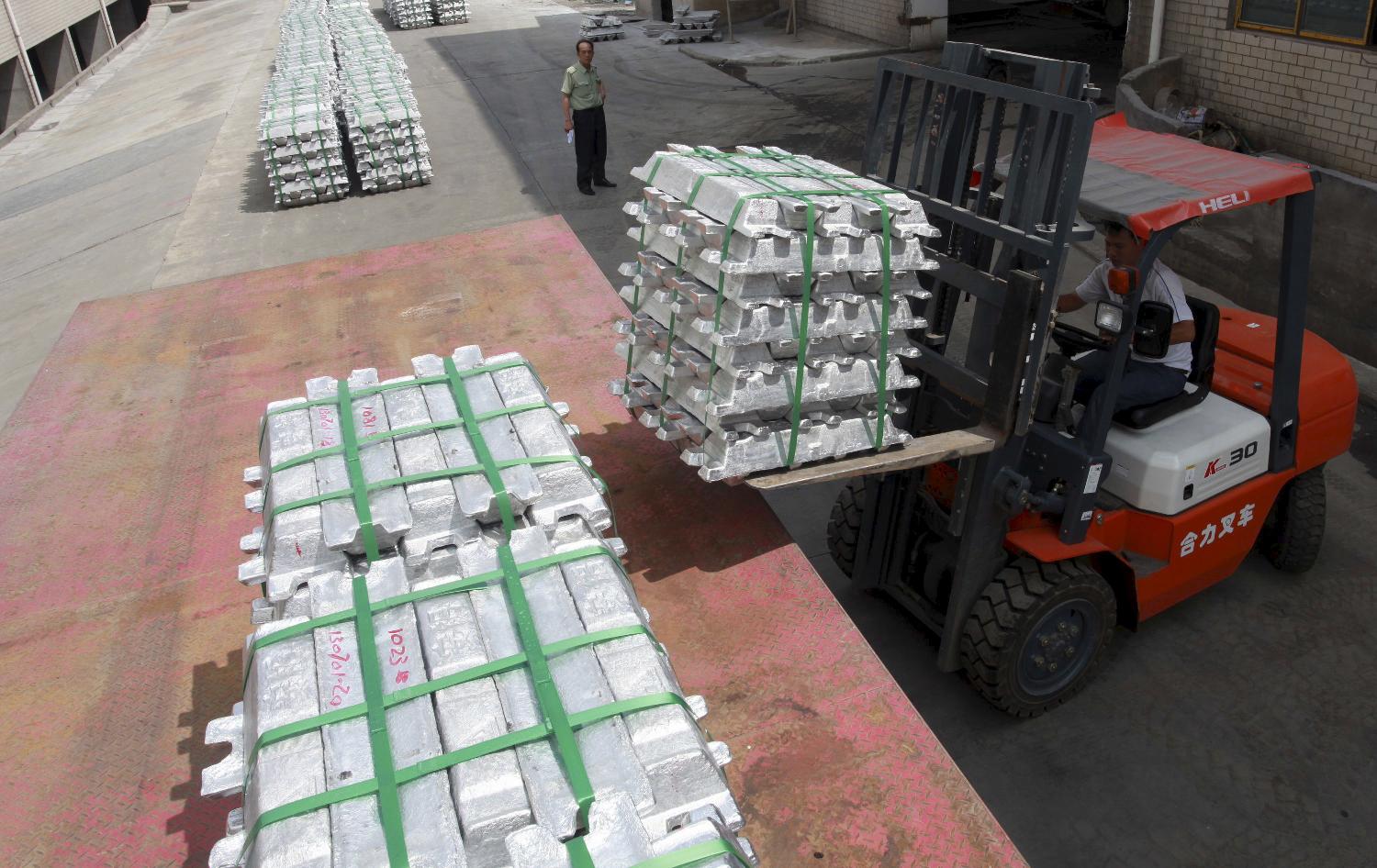
BEIJING, Nov 15 (Reuters) - China's finance ministry said on Friday it would reduce or cancel export tax rebates for a wide range of commodities and other products, effective Dec. 1. The country will reduce the export tax rebate rate for some refined oil products, photovoltaics, batteries, and certain non-metallic mineral products from 13% to 9%. It also will cancel the rebate for aluminum and copper products and chemically modified animal, plant, or microbial oils and fats. Sign up here. https://www.reuters.com/markets/commodities/china-cut-or-cancel-export-tax-rebates-products-including-aluminium-copper-2024-11-15/
2024-11-15 10:34
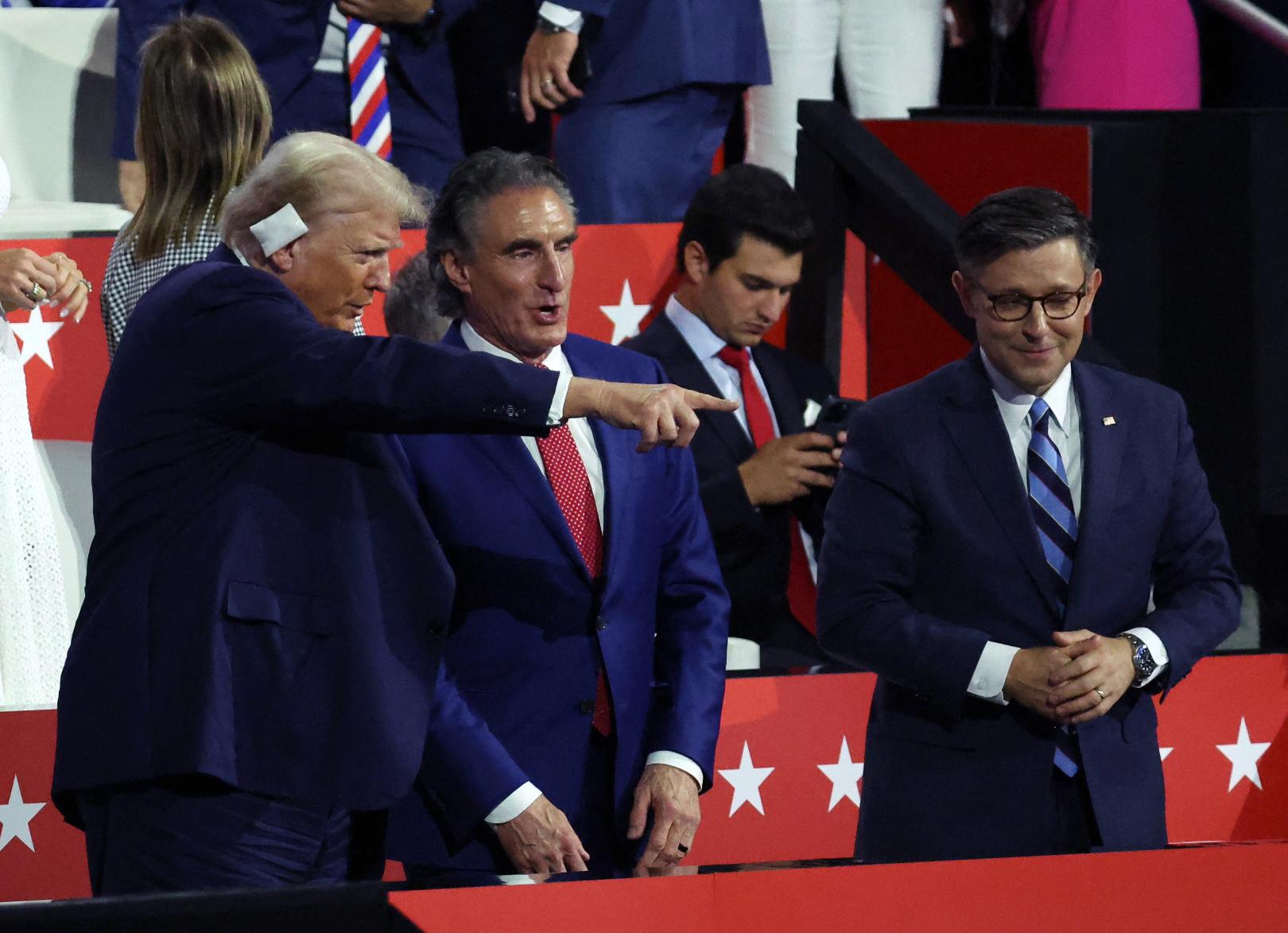
Burgum is a wealthy former software executive Became Trump loyal supporter after he gave up on presidential nomination Will oversee policies guiding the use of federal and tribal land Trump says of Musk: 'Can't get him out of here' PALM BEACH, Florida, Nov 14 (Reuters) - (This Nov.14 story has been refiled to add Biden's full name in paragraph 12) President-elect Donald Trump said on Thursday that North Dakota Governor Doug Burgum, a wealthy former software company executive, will be his pick for interior secretary. "He's going to head the Department of Interior, and it's going to be fantastic," a tuxedo-wearing Trump said at a gala at his Mar-a-Lago Florida retreat, adding that he would make an official announcement on Friday. Burgum, 68, has portrayed himself as a traditional, business-minded conservative. He ran against Trump for the Republican presidential nomination before quitting and becoming a loyal Trump supporter, appearing at fundraisers and advocating for Trump on television. At the gala, which featured tech billionaire Elon Musk, actor Sylvester Stallone and members of his incoming administration, Trump praised his latest cabinet picks and made some of his longest remarks since his presidential election victory speech. "Nobody knew we were going to win it the way we won it," Trump said. He teased Musk about his ongoing post-election stay at Mar-a-Lago. Musk is involved in some of Trump's meetings at the oceanfront property. "I can't get him out of here. He just loves this place. And I like having him here," said Trump. At the end of the event, Musk mounted the stage. "The public has given us a mandate that could not be more clear. The people have spoken, the people want change," he said. Since his victory, Trump has chosen several loyalists with little experience for key cabinet positions, stunning some allies and making clear that he is serious about reshaping - and in some cases testing - America's institutions. MORE OIL AND GAS PRODUCTION The Interior Secretary will oversee policies guiding the use of 500 million acres (202.3 million hectares) of federal and tribal land, a fifth of the nation's surface area. President Joe Biden made the agency central to his climate change agenda by boosting the permitting of offshore wind and solar energy projects and creating a program to lease lands for conservation in the same way they are for development. Burgum is expected to be tasked with increasing oil, gas and mineral production on federal lands and waters. That job would likely involve ratcheting up new leasing in the Gulf of Mexico and on federal lands in oil-producing states like Wyoming and New Mexico. Biden had pledged to stop new federal leasing for oil extraction but was prevented by the courts from doing so. Interior leadership under Trump could scrap Biden's five-year offshore drilling plan, which had a historically low number of auctions scheduled, and step up acreage offered at Congressionally-mandated onshore sales. Drilling activity on federal lands and waters accounts for about a quarter of U.S. oil production and 12% of gas production. The number of drilling permits approved on federal lands fell 16% between fiscal 2020, the last year of Trump's first administration, and fiscal 2023, according to data from the U.S. Bureau of Land Management. Acreage in new onshore leases slid 95%. Sign up here. https://www.reuters.com/world/us/trump-says-north-dakota-governor-burgum-be-interior-secretary-2024-11-15/