2024-11-14 07:44
Investor turn short on Singapore dollar first time in four months Bearish bets jump sharply across the board S.Korean won most shorted Nov 14 (Reuters) - Investors sharply ramped up their short bets on Asian currencies and turned bearish on the Singapore dollar for the first time since early July on rising concerns that the U.S. President-elect Donald Trump's policies would erode the attractiveness of risk-sensitive emerging market assets. Short bets emerged on the Singapore dollar for the first time in four months and were at their highest late June, while those on the South Korean won and the Taiwan dollar scaled six-month highs, a Reuters poll of 10 respondents showed on Thursday. Trump's resounding victory in the U.S. presidential elections last week sent shock waves across the emerging markets since his policies of imposing tariffs on Chinese imports are seen fanning inflation which could mean a shallower-than-expected easing cycle in the United States. The dollar , opens new tab has surged to a one-year high in a matter of days, pressuring the regional assets. Malaysian ringgit and the Thai baht have lost around 4% since the outcome of U.S. elections became clear last week. Their trade-reliant economies, particularly with China, make them vulnerable to tariff-related headwinds. "Despite robust domestic fundamentals in strong growth and falling inflation, Asia FX will have to navigate the dual challenge of higher U.S. interest rates and likely higher tariffs by the U.S. in 2025, resulting in a stronger USD," analysts at ING said. "Asian currencies with a higher sensitivity to CNY and larger trade surpluses with the U.S. would face the highest depreciation pressure." ING analysts said South Korean won stands out on both those counts, and forecast the unit remaining weak throughout next year. Respondents to the poll had the most unfavourable view of the won, with short bets soaring to their highest since early May. Bearish bets on the Chinese yuan were at their highest since late June, with analysts expecting Southeast Asia's largest trading partner to be impacted by sweeping U.S. tariffs. Chang Wei Liang, FX & credit strategist at DBS, struck a slightly optimistic tone, saying yuan might not emerge as the top loser if tariffs are implemented with the impact manageable at under 1% of its $18 trillion economy. Views on Singapore dollar turned over the fortnight as its trade-reliant economy faces uncertainty originating from potential global trade headwinds. "Should tariffs materialise, their impact on ultra-open Singapore is likely to be significant," Brian Tan, senior regional economist at Barclays, said. Tan expects the Monetary Authority of Singapore to ease its exchange rate-based monetary policy next year. Elsewhere, short bets ratcheted up on the Taiwan dollar , Indian rupee , Philippine peso , and the Indonesian rupiah . The Asian currency positioning poll is focused on what analysts and fund managers believe are the current market positions in nine Asian emerging market currencies: the Chinese yuan, South Korean won, Singapore dollar, Indonesian rupiah, Taiwan dollar, Indian rupee, Philippine peso, Malaysian ringgit and the Thai baht. The poll uses estimates of net long or short positions on a scale of minus 3 to plus 3. A score of plus 3 indicates the market is significantly long U.S. dollars. The figures include positions held through non-deliverable forwards (NDFs). The survey findings are provided below (positions in U.S. dollar versus each currency): Sign up here. https://www.reuters.com/markets/currencies/bears-pounce-asian-currencies-trump-tariff-concerns-2024-11-14/

2024-11-14 07:37
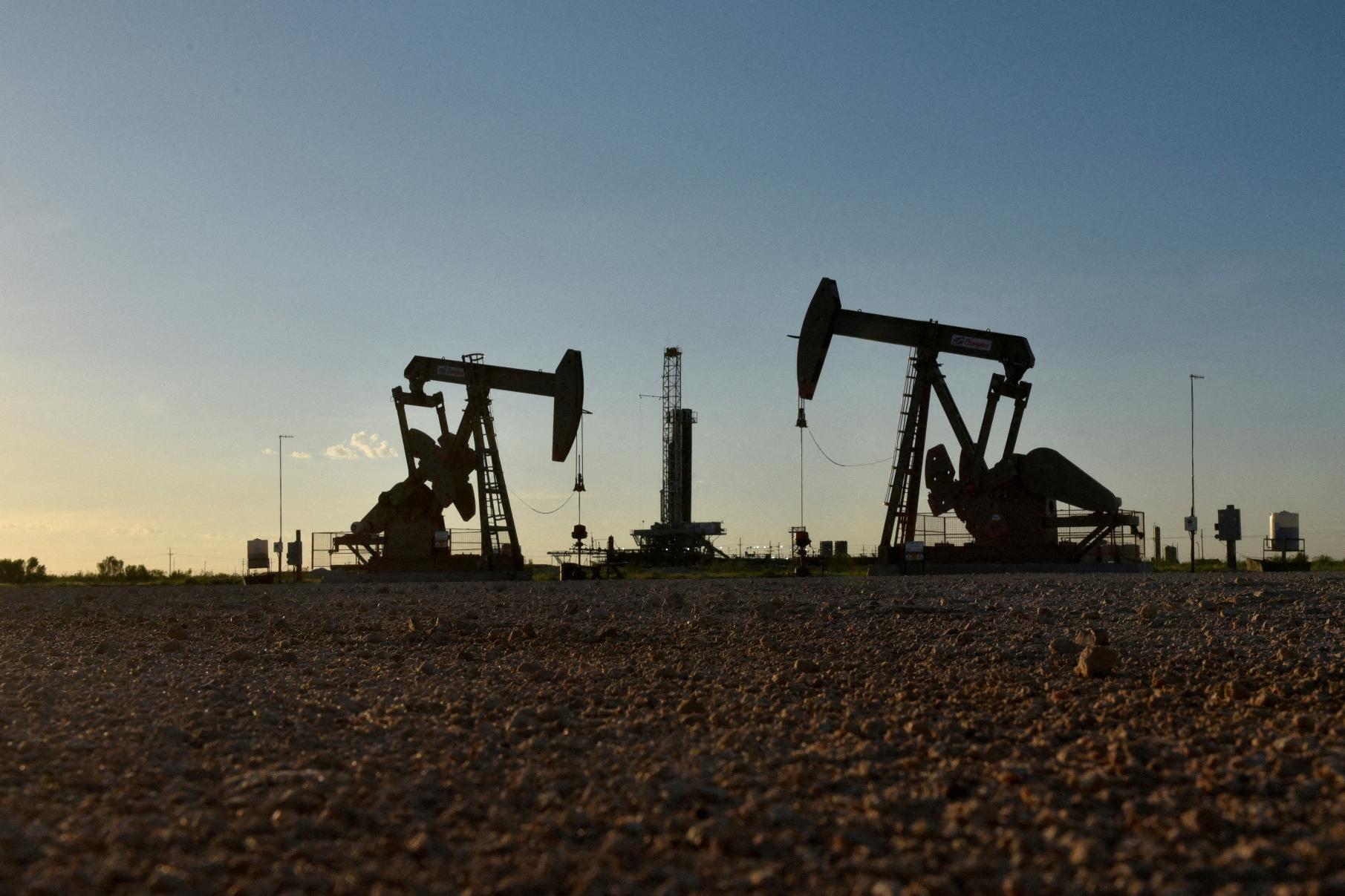
US crude stocks rise by 2.1 million barrels last week, EIA data shows US gasoline inventories hit a two-year low Global oil supply will exceed demand in 2025, IEA says Dollar climbs to one-year high HOUSTON, Nov 14 (Reuters) - Oil prices closed slightly higher in choppy trading on Thursday, as a steep draw in U.S. fuel stocks outweighed oversupply concerns and demand worries stemming from a stronger dollar. Brent crude futures settled 28 cents, or 0.4% higher at $72.56 a barrel, while U.S. West Texas Intermediate crude futures rose 27 cents, or 0.4% at $68.70. Both benchmarks had briefly dipped into negative territory during the trading session. Brent was on track to lose about 1.7% for the week, while WTI was set to end the week over 2% lower due to a stronger U.S. dollar and worries about rising supply amid slow demand growth. U.S. gasoline stocks fell by 4.4 million barrels last week, the Energy Information Administration said, compared with analysts' expectations in a Reuters poll for a 600,000-barrel build. The stockpile of 206.9 million barrels for the week ended Nov. 8 was the lowest since November 2022. Distillate stockpiles, which include diesel and heating oil, fell by 1.4 million barrels, versus expectations for a 200,000-barrel rise. U.S. gasoline futures settled 0.8% higher, while heating oil futures closed down about 0.3% after briefly spiking on the data. Capping oil-price gains, however, was a 2.1-million barrel rise in U.S. crude inventories last week, much more than analysts' expectations for a 750,000-barrel rise. Meanwhile, the International Energy Agency forecast global oil supply will exceed demand in 2025 even if cuts remain in place from OPEC+, which includes the Organization of the Petroleum Exporting Countries and allies such as Russia, as rising production from the U.S. and other outside producers outpaces sluggish demand. The Paris-based agency raised its 2024 demand growth forecast by 60,000 barrels per day to 920,000 bpd, and left its 2025 oil demand growth forecast little changed at 990,000 bpd. The premium of the front month WTI contract over the second month contract also narrowed this week to its smallest since June. The narrowing of the premium, or backwardation, indicates that a perception of tight supply for prompt delivery has eased. The dollar surged to a one-year high, and headed for a fifth-straight daily gain fuelled by higher yields and President-elect Donald Trump's election victory in the United States. A stronger greenback makes dollar-denominated oil more expensive for holders of other currencies, which can reduce demand. A rally in U.S. 10-year Treasury yields and a surge in the 10-year break-even inflation rate to 2.35% added to demand worries, said Kelvin Wong, senior market analyst at OANDA. "(This) increases the odds of a shallow Fed interest-rate-cut cycle heading into 2025 (and) overall, there is less liquidity to stoke an increase in demand for oil," he added. OPEC on Tuesday cut its forecast for global oil demand growth for this year and next, highlighting weakness in China, India and other regions, marking the producer group's fourth-consecutive downward revision in the 2024 outlook. "Crude futures are trying to establish an equilibrium pricing, as a rising U.S. dollar index is creating a further headwind, along with a Trump administration that will now have control of Congress, which is likely to roll back most of the Biden administration's energy policies," Dennis Kissler, senior vice president of trading at BOK Financial, said in a note. Brent crude is expected to average $80 across 2025, down from a forecast at the end of September for $85, UBS Switzerland AG's oil strategist Giovanni Staunovo wrote in a note, citing lowered demand growth estimates, particularly from China. "Overall, we see the oil market as balanced to marginally oversupplied next year," Staunovo said. Sign up here. https://www.reuters.com/business/energy/oil-prices-edge-down-forecasts-higher-oil-output-weak-demand-growth-weigh-2024-11-14/
2024-11-14 07:35
MADRID, Nov 14 (Reuters) - Spanish clean energy and water utility Cox set the final price for its initial public offering (IPO) at 10.23 euros a share, implying a market capitalisation of 805 million euros ($849.4 million). The price was set at the bottom of the announced range of between 10.23 euros and 11.38 euros, the company said late on Wednesday. The share pricing came after the company lowered the size of its IPO to about 175 million euros from around 200 million euros on Tuesday, according to filings sent to the Spanish stock market regulator. Assuming 10 million euros worth of shares granted to Santander (SAN.MC) , opens new tab, which acted as a "stabilising manager" for the offering, as over-allotment, the company is likely to raise a total of 185 million euros, it said. Cox had originally said it would price its new shares on Tuesday. The company had announced its IPO plans on Nov. 5, before shares in European clean energy groups fell following Donald Trump's election, as investors worried over a potential dismantling of U.S. support for renewables and climate policy. "Despite a tough IPO market, the investor demand reflected in our pricing is testament to the value that investors see in our strategy and track-record, as well as the growth prospects ahead of us in water and energy," Cox's executive chairman Enrique Riquelme said in a statement. Cox reduced the size of its IPO to adapt to the market's lower appetite, a source close to the process told Reuters. Riquelme controlled 77.85% of Cox before the IPO and said he intended to retain more than 60% following the offering. The company had said it would use the funds raised from the IPO to partly finance equity requirements for its energy projects and to invest in water concessions. ($1 = 0.9477 euros) Sign up here. https://www.reuters.com/markets/deals/spanish-utility-cox-prices-shares-1023-euros-ipo-implying-849-mln-market-cap-2024-11-14/

2024-11-14 07:27
MANILA, Nov 14 (Reuters) - Authorities in the Philippines on Thursday ordered evacuations in northeastern towns ahead of the arrival of Super Typhoon Usagi, as the storm-ravaged nation prepares for its fifth typhoon in a month and braces for a sixth later in the week. More than 24,000 people in the province of Cagayan have been evacuated, government data showed, including those forced to flee by earlier typhoons that inundated their towns. Evacuation efforts are ongoing. Usagi, known locally as Ofel, is forecast to make landfall in the province on Thursday afternoon. "We are expecting the Cagayan river to swell again because of rains brought by Usagi," said Rueli Rapsing, head of the Cagayan disaster relief office. He added that central and southern parts of Cagayan were experiencing moderate to heavy rains, while other parts of the province had gusty winds of up to 100 kph (62 mph). Essential supplies like generators are ready in anticipation of power and communications blackouts from Usagi. Another tropical storm, Man-yi, is approaching and forecast to hit the central Philippines on Saturday. All non-essential land travel in central provinces is discouraged, the transport ministry said in an advisory on Thursday. About 20 tropical storms strike the Philippines each year on average, bringing heavy rains, strong winds and deadly landslides. In October, Storm Trami and Kong-rey pounded the main island of Luzon, killing 159 people, with 22 still missing, data from the national disaster agency showed. Sign up here. https://www.reuters.com/business/environment/storm-plagued-philippines-evacuates-24000-ahead-super-typhoon-2024-11-14/

2024-11-14 07:18
OSLO, Nov 14 (Reuters) - Norwegian oil and gas investments remain on track for a record level in 2024 and companies have raised their forecasts for 2025 compared to predictions made three months ago, a national statistics office (SSB) survey showed on Thursday. The country's biggest business sector forecast all-time-high investment of 256.1 billion crowns ($22.9 billion) in 2024, broadly in line with its 257.0 billion estimate made in August and exceeding a record of 224 billion from 2014. Preliminary estimates for oil and gas investments in 2025 stood at 252.6 billion crowns, compared to a previous estimate of 240 billion in August. Forecasts will normally rise as companies firm up spending plans in the months leading up to a new year. ($1 = 11.1654 Norwegian crowns) Sign up here. https://www.reuters.com/business/energy/norway-maintains-record-oil-gas-investment-plans-2024-2024-11-14/

2024-11-14 07:13
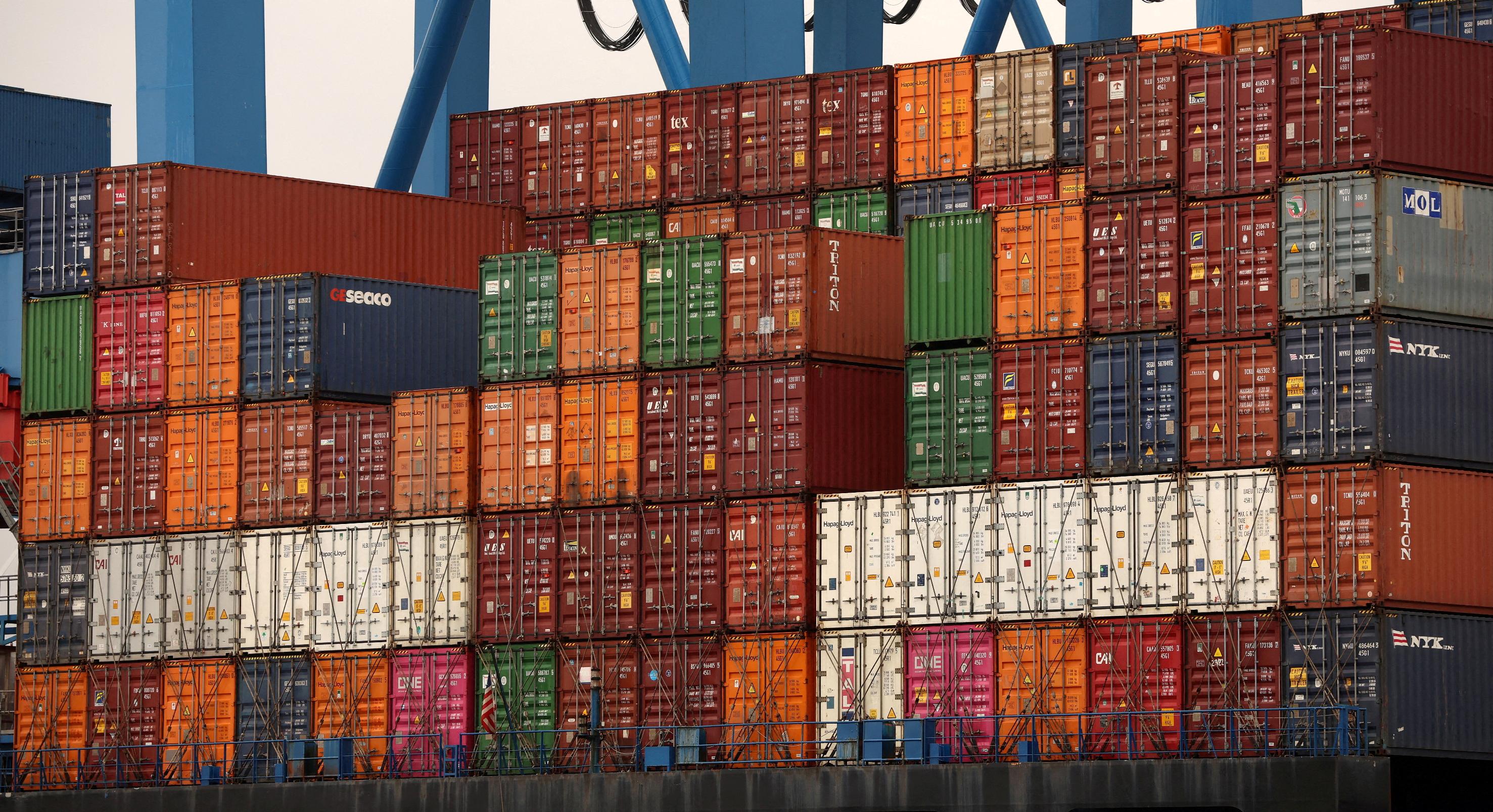
FRANKFURT, Nov 14 (Reuters) - German container firm Hapag-Lloyd (HLAG.DE) , opens new tab on Thursday posted a 47% drop in net profit for the first nine months of 2024 but retained its recently raised earnings outlook for the full year, citing higher transport volumes driven by demand. "We were able to further increase our transport volume compared to the previous year and can look back on a good result overall," said Chief Executive Rolf Habben Jansen. "Looking ahead, we will continue to vigorously implement our Strategy 2030 while focusing on our growth and quality targets," he added. Group net profit of 1.7 billion euros ($1.79 billion) in the nine months was down from 3.2 billion euros a year earlier, said Hapag-Lloyd, the world's fifth biggest container shipping liner. Attacks on international shipping in the Red Sea by Iran-aligned Houthi militants in Yemen since late last year have forced shipping companies to switch traffic away from the Suez Canal to the longer route around Africa. The longer journeys add to costs while transport expenses have risen, a trend that freight rate income has not been able to match. The company posted a 21% fall in earnings before interest, taxation, depreciation and amortisation (EBITDA) to 3.3 billion euros in the nine months, while earnings before interest and taxes (EBIT) were 36% down at 1.8 billion euros. It upheld its Oct. 24 forecast for full year EBITDA of 4.2-4.6 billion euros and EBIT of 2.2-2.6 billion euros, which could broadly match last year's performance. Transport volumes were up 5% year-on-year in the nine months at 9.3 million twenty-foot equivalent (TEU) standard container units. Hapag-Lloyd last week said it had ordered 24 new ships in China for delivery between 2027 and 2029. ($1 = 0.9479 euros) Sign up here. https://www.reuters.com/business/hapag-lloyd-keeps-recently-raised-outlook-despite-9-month-profit-drop-2024-11-14/