2024-11-14 06:31
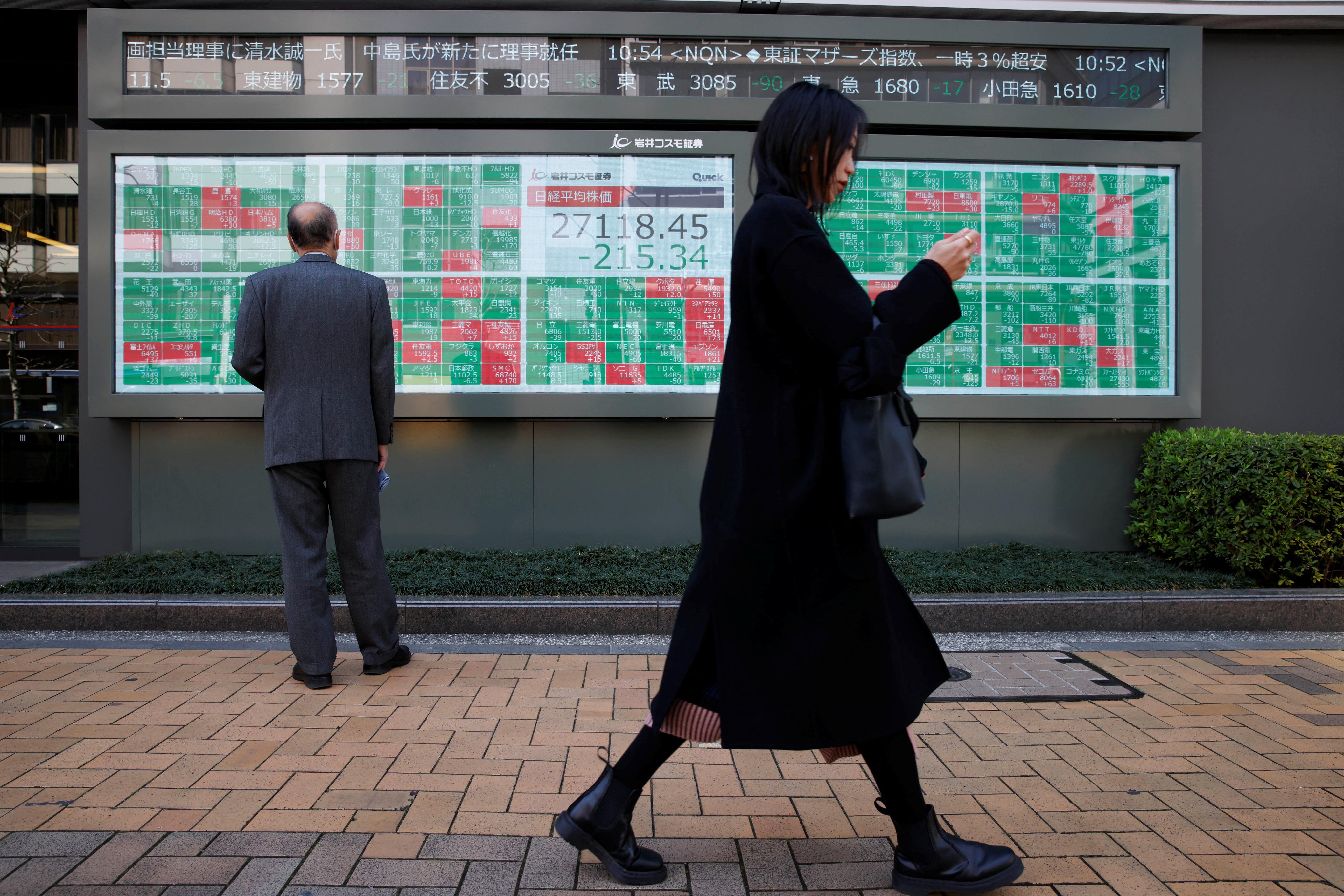
Veteran lawmaker calls for steady roll-back of stimulus Japan's low rates causing weak yen, keeping real wages low Remarks highlight political attention to weak-yen pain BOJ should ditch 2% inflation target, set looser goal TOKYO, Nov 14 (Reuters) - The Bank of Japan should raise interest rates at least to 1% to roll back an "abnormally" huge stimulus that is causing unwelcome falls in the yen, said Takeshi Shina, the shadow finance minister of the country's largest opposition party. The central bank should normalise monetary policy steadily and clarify its intention to do so as its short-term policy rate, currently at 0.25%, is well below levels deemed neutral to the economy, Shina told Reuters in an interview on Thursday. "The BOJ's mandate is to achieve price stability but that isn't being met, as the huge U.S.-Japan interest rate gap is causing yen falls that push up the cost of living," said Shina, known as a vocal critic of ultra-easy monetary policy. "The BOJ should keep raising rates to 1% in several stages to roll back an excessive degree of monetary stimulus," he said. As a member of the lower house's financial committee, Shina has frequently summoned BOJ governors, including incumbent Kazuo Ueda, to parliament for grilling on monetary policy. His remarks highlight how concern over the demerits of a weak yen will remain a key topic of debate among politicians, and complicate the timing of the BOJ's next interest rate hike. Japan's neutral rate of interest, or the level that neither stimulates nor cools growth, is at least 1%, Shina said. Pushing up rates up to that level won't be defined as monetary tightening as it merely pares back excessive stimulus, he said. Gradual hikes in Japanese rates will also help reverse yen declines that have inflated import prices, boosted the cost of living and kept real wage growth low, Shina said. "Except for a handful of big manufacturers, no one in Japan is happy about current yen levels," Shina said, adding that he will continue to urge the BOJ to steadily normalise policy. The dollar climbed above 156 yen on Thursday for the first time since July on expectations that U.S. president-elect Donald Trump's policies could fuel inflation, and slow the Federal Reserve's rate cutting cycle longer term. The yen is down about 30% against the dollar on a real, trade-weighed basis since 2020, according to BOJ data. Shina belongs to the Constitutional Democratic Party of Japan (CDPJ), the country's largest opposition that has seen its clout increase after a major victory in a general election held on Oct. 27 - though its seats remained well short of a majority. The CDPJ has criticised former BOJ Governor Haruhiko Kuroda's radical monetary stimulus, deployed in 2013, as hurting financial institutions' profits and distorting market function. Shina said the BOJ should replace its 2% inflation target with a looser goal that allows the central bank to shift policy more flexibly as long as price growth stays positive. The BOJ and government must then work together to achieve positive real wage growth, he added. "It's important for the BOJ to normalise monetary policy, and set a price goal that fits this objective," Shina said. The BOJ made a landmark exit from Kuroda's stimulus in March and raised short-term rates to 0.25% in July on the view Japan was on the cusp of sustainably hitting its 2% inflation target. Ueda cited rising inflationary risks from the weak yen as among factors that led to the BOJ's rate-hike decision in July. A Reuters poll conducted on Oct. 3-11 showed a very slim majority of economists projecting the BOJ to forgo raising rates again this year, although nearly 90% expect rates to rise by end-March. The BOJ next meets for a rate review on Dec. 18-19, followed by another one on Jan. 23-24. Sign up here. https://www.reuters.com/markets/rates-bonds/boj-should-raise-rates-1-reverse-weak-yen-says-opposition-lawmaker-2024-11-14/

2024-11-14 06:18
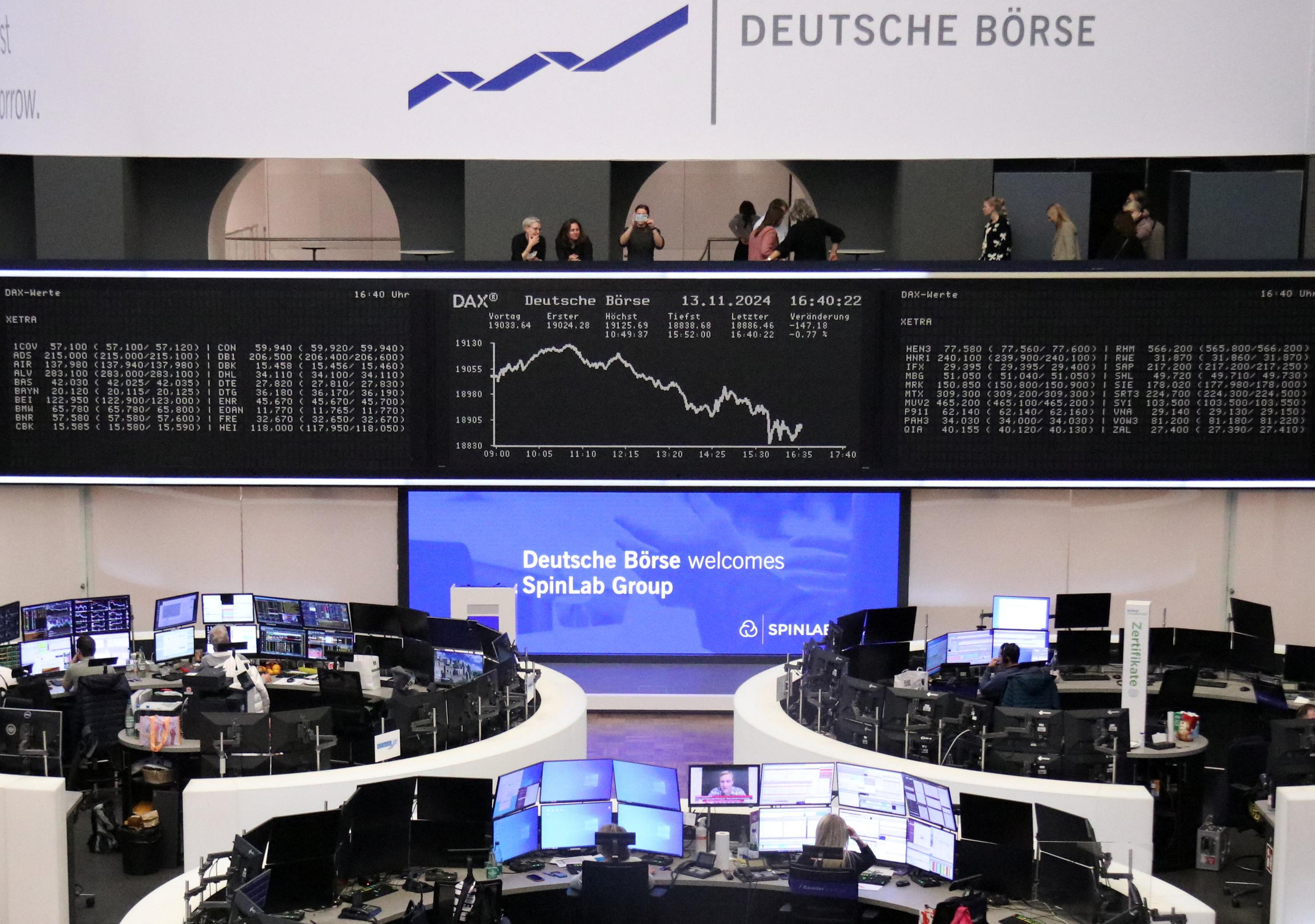
US bond yields pare declines after Powell comments US producer prices rise as expected Initial jobless claims slightly below expectations NEW YORK, Nov 14 (Reuters) - A gauge of global stocks fell for a third straight session on Thursday while the dollar advanced after U.S. data and comments from Federal Reserve Chair Jerome Powell pointed to a slower path of rate cuts from the central bank. The Labor Department said initial claims for state unemployment benefits dropped 4,000 to a seasonally adjusted 217,000 for the week, slightly below expectations for 223,000 by economists polled by Reuters, suggesting the weak October government payrolls report was an anomaly. In the latest inflation reading, the producer price index for final demand rose 0.2% last month, matching expectations, after an upwardly revised 0.1% gain in September. The data comes after Wednesday's consumer price index increased as expected in October amid higher costs for shelter such as rents. In the 12 months through October, the PPI increased 2.4% after advancing 1.9% in September. Powell said ongoing economic growth, a solid job market, and inflation that remains above the 2% target mean the U.S. central bank does not need to rush to lower interest rates and can deliberate carefully. "The comments from Powell put more cold water on what used to be a very optimistic outlook on the path for rate cuts," said Adam Hetts, global head of multi-asset at Janus Henderson Investors in Denver. "However, we can't take for granted that inflation and labor are in balance so this is an encouraging message on the economy." Stocks initially rallied in the wake of the U.S. presidential election. Each of Wall Street's major indexes closed at records on Monday, but have stalled in recent days as bond yields have moved to four-month highs. U.S. stocks closed lower on Thursday. The Dow Jones Industrial Average (.DJI) , opens new tab fell 207.33 points, or 0.47%, to 43,750.86, the S&P 500 (.SPX) , opens new tab fell 36.21 points, or 0.60%, to 5,949.17 and the Nasdaq Composite (.IXIC) , opens new tab fell 123.07 points, or 0.64%, to 19,107.65. Investors have gravitated toward assets expected to benefit from U.S. President-elect Donald Trump's policies in his second term after he pledged to impose high tariffs on imports from key trading partners, lower taxes and loosen government regulations. But bond yields and the dollar have also surged recently on concerns that while Trump's policies will spur growth, they may also rekindle inflation after a long battle against price pressures following the COVID-19 pandemic. In addition, tariffs could lead to increased government borrowing, further ballooning the fiscal deficit and cause the Fed to alter its course of monetary policy easing. MSCI's gauge of stocks across the globe (.MIWD00000PUS) , opens new tab fell 4.50 points, or 0.53%, to 850.35 and was poised for a third straight daily decline after five consecutive sessions of gains. European shares rebounded from three-month lows, led by energy and tech stocks after a round of largely positive corporate earnings. The STOXX 600 (.STOXX) , opens new tab index closed up 1.08%. The dollar index , which measures the greenback against a basket of currencies, rose 0.45% to 106.94, with the euro down 0.41% at $1.052. The greenback is on pace for its fifth straight session of gains. Against the Japanese yen , the dollar strengthened 0.57% to 156.34. Sterling weakened 0.38% to $1.2658. Expectations for more Fed rate cuts have been dialed back over the past few weeks, but have become more volatile recently. Expectations for a 25 basis point cut at the Fed's December meeting were at 58.7%, down from 82.5% in the prior session, according to CME's FedWatch Tool , opens new tab. The yield on benchmark U.S. 10-year notes rose 0.2 basis points to 4.453%, erasing declines after Powell's comments. Earlier in the day, Fed Governor Adriana Kugler said the central bank has made considerable progress toward achieving its job and inflation goals, while stopping short of offering firm guidance over what that means for the near-term monetary policy outlook. Richmond Federal Reserve President Tom Barkin said high union wage settlements and the possible tariff increases are among the uncertainties that could make Fed officials more cautious about thinking they have won their battle against high inflation. U.S. crude settled up 0.39% to $68.70 a barrel and Brent rose to settle at $72.56 per barrel, up 0.39% on the day, in part due to dollar strength and as rising U.S. crude inventories added to concerns of oversupply. Sign up here. https://www.reuters.com/markets/global-markets-wrapup-1-2024-11-14/
2024-11-14 06:16
FRANKFURT, Nov 14 (Reuters) - E.ON (EONGn.DE) , opens new tab, Europe's largest operator of energy grids, on Thursday stuck to its full-year targets after reporting a 14%drop in nine-month core earnings, citing one-offs in the year-earlier period that were not repeated. Investments in the period were up a fifth at more than 4.7 billion euros ($4.95 billion), the company said, adding adjusted core profit (EBITDA) was still seen at 8.8 billion to 9.0 billion euros in 2024. ($1 = 0.9489 euros) Sign up here. https://www.reuters.com/business/energy/eon-sticks-full-year-targets-raises-investments-by-fifth-2024-11-14/

2024-11-14 06:14
Tocantins aims to sell 50 million in carbon credits Deforestation reduction is key to the value and number of credits Mercuria coordinating sale, submission to be validated under ART-TREES standard SAO PAULO, Nov 14 (Reuters) - A Brazilian state that straddles the frontier of the Amazon jungle is pursuing the sale of more than 2.5 billion reais ($430.16 million) in carbon credits related to forest conservation through 2030, the state government said on Thursday. Companies typically buy such credits to offset a portion of their greenhouse gas emissions in pursuit of voluntary goals to curb global warming, essentially paying for projects that cut climate pollution. Tocantins state aims to sell some 50 million carbon credits, each amounting to one metric ton of carbon sequestered by forests and other native vegetation across the state through the end of the decade, the government said in a statement. The value and number of carbon credits is contingent on the state successfully reducing deforestation, it said. The state government exclusively shared details of its planned issuance of carbon credits with Reuters ahead of the official announcement. Scientists say protection of the Amazon rainforest is vital to curbing climate change because of the vast quantity of carbon dioxide its trees absorb. Brazil's federal government announced last week that deforestation in Brazil's Amazon in the 12 months through July had fallen to the lowest level since 2015. Tocantins will submit its paperwork on Thursday to validate the project under the ART-TREES carbon credit standard, officially presenting the project at the United Nations COP29 climate summit in Azerbaijan. Commodities trading firm Mercuria is coordinating the sale. The submission will look to certify 17 million to 18 million credits for carbon sequestered from 2020 to 2024, not including credits set aside in case of wildfires or for other contingencies, a person familiar with the deal told Reuters. Those could be worth at least 850 million reais, based on the government's overall valuation of the deal. The sale of that batch of credits will likely close in the second half of 2025, the person said on condition of anonymity, as those details are not public. The number of credits involved dwarfs deals this year by Microsoft , opens new tab(MSFT.O) , opens new tab, Google (GOOGL.O) , opens new tab and Meta (META.O) , opens new tab to buy forestry carbon credits in Brazil, and also surpasses the Para state government's agreement to sell credits to a group of companies including Amazon (AMZN.O) , opens new tab. ($1 = 5.8118 reais) Sign up here. https://www.reuters.com/markets/carbon/brazils-tocantins-state-offer-430-million-carbon-credits-2024-11-14/

2024-11-14 05:37
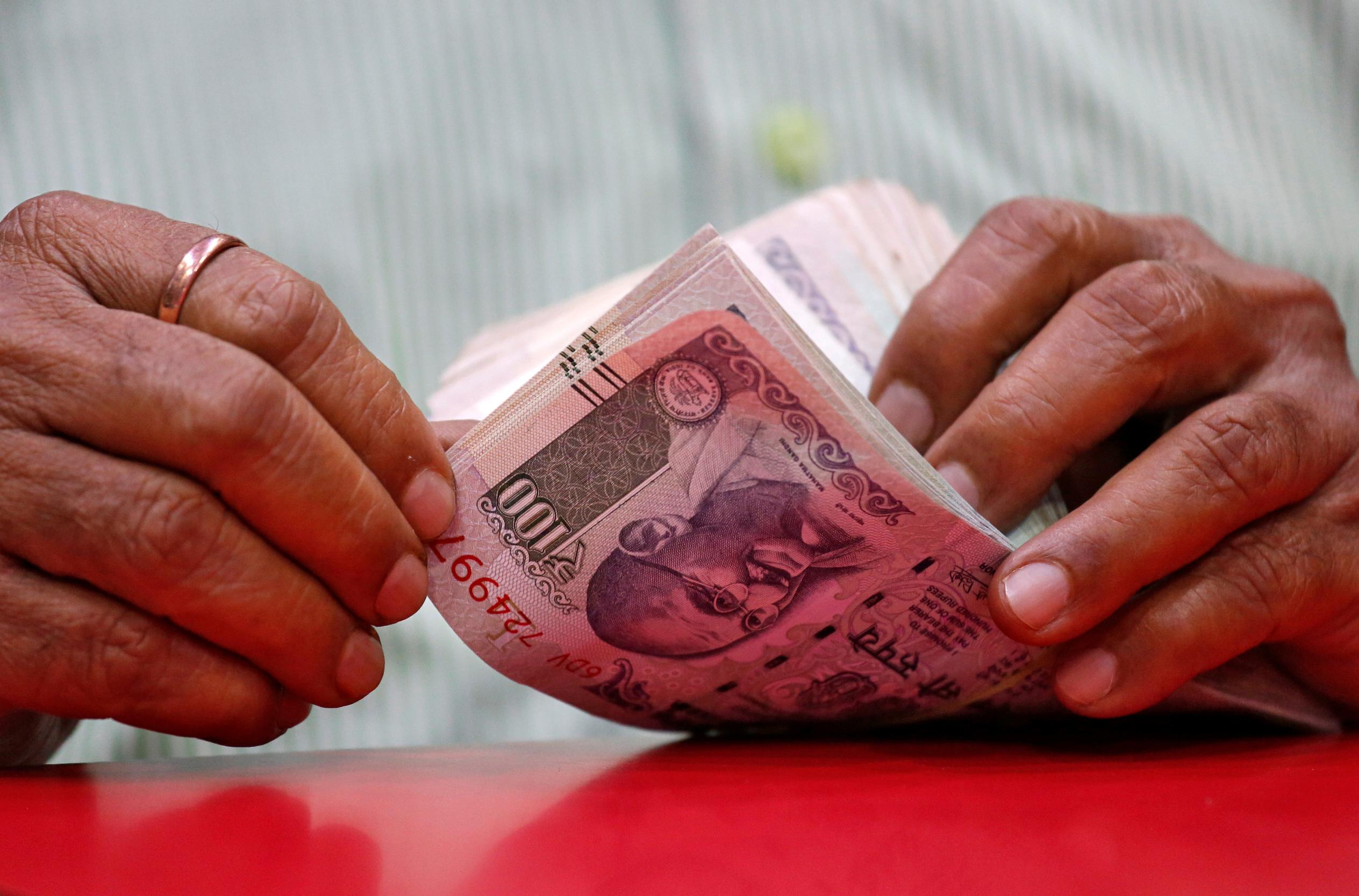
MUMBAI, Nov 14 (Reuters) - The Indian rupee was slightly weaker on Thursday, tracking a decline in Asian peers, as the dollar index climbed to its highest level in a year amid ongoing momentum following Donald Trump's victory in the U.S. elections. The rupee was at 84.4025 per U.S. dollar as of 11:00 a.m. IST, down from its close at 84.3775 in the previous session. Asian currencies were weaker by 0.1% to 0.9% while the dollar index was up 0.2% at 106.7, hovering close to its highest level in a year. The outcome of elections in the world's largest economy has boosted the dollar and U.S. bond yields, hurting emerging market currencies. The post-election market volatility in global markets has also prompted the Reserve Bank of India to keep a closer than usual eye on banks' speculative trading activity, six bankers told Reuters. The bankers requested anonymity as they are not authorised to speak to the media. "They (RBI officials) call more frequently.. enquire about all things.. the position, what client are you buying for, what are your expected flows," a senior treasury official at a large public sector bank said. The Indian central bank did not respond to a Reuters' email seeking comment. The central bank's routine interventions and market vigilance have helped the rupee fare better than its regional peers. In the past, when the rupee faced headwinds, the RBI responded by asking banks to avoid arbitrage activity and not make short speculative bets on the currency. The offshore Chinese yuan has slumped nearly 1.5% and Thai baht is down 2.7% in November so far, while the rupee is down only 0.4% in the same period. "We think Asian FX weakness still has legs, with tariff hikes likely to be in the pipeline," MUFG Bank said in a note, referring to the trade tariffs floated by Trump during his election campaign. Sign up here. https://www.reuters.com/markets/currencies/rupee-dips-cenbank-heightens-scrutiny-fx-trades-bankers-say-2024-11-14/
2024-11-14 05:33
A look at the day ahead in European and global markets from Rae Wee Market movement over the past week or so since Donald Trump won the U.S. presidential election have been characterised by a turbo-charged rally in bitcoin, higher Treasury yields and a relentless U.S. dollar. And Thursday was no different. Never mind that traders are now pricing in an over 80% chance of a Federal Reserve interest rate cut next month after Wednesday's inflation report. The prospect of a cut would usually send the dollar down but it rose to a one-year high anyway, riding a wave of bullish momentum from Trump's victory. The President-elect's promise of tax cuts could juice the economy, widen budget deficits and increase government borrowing - all of which have already pushed long-end Treasury yields higher. His plans for hefty import tariffs are also expected to stoke inflation and reduce the Fed's scope to ease policy. With projections the Republican Party is likely to control both houses of Congress when Trump takes office in January, he's set for sweeping power to push his agenda. In Europe, markets will wake up to the release of the euro zone's second estimate for gross domestic product growth and third-quarter flash employment data. Preliminary figures in October showed the bloc grew faster than market watchers expected in the third quarter from the previous three months, though stayed fragile as industry remained in recession and household consumption barely grew. Later in the day, Fed Chair Jerome Powell will speak in Dallas after having had time to digest the U.S. October producer prices report that will be released just beforehand. PPI figures feed more directly into the Fed's preferred inflation indicator, the personal consumption expenditures price index, which arrives later in the month. Still, there is only so much Powell can say for 2025 and beyond given much depends on what Trump does when he takes office. Trump has already made a flurry of picks for his cabinet and other high-ranking administration positions, spanning posts overseeing defence, intelligence, diplomacy, trade, immigration and economic policymaking. Sources told Reuters that billionaire banker Howard Lutnick has emerged as a contender alongside investor Scott Bessent for the top Treasury job. Key developments that could influence markets on Thursday: - Second estimate of Q3 euro zone GDP - Euro zone Q3 flash employment - U.S. weekly jobless claims - U.S. October PPI - Fed's Powell speaks Sign up here. https://www.reuters.com/markets/europe/global-markets-view-europe-2024-11-14/