2024-11-11 07:03
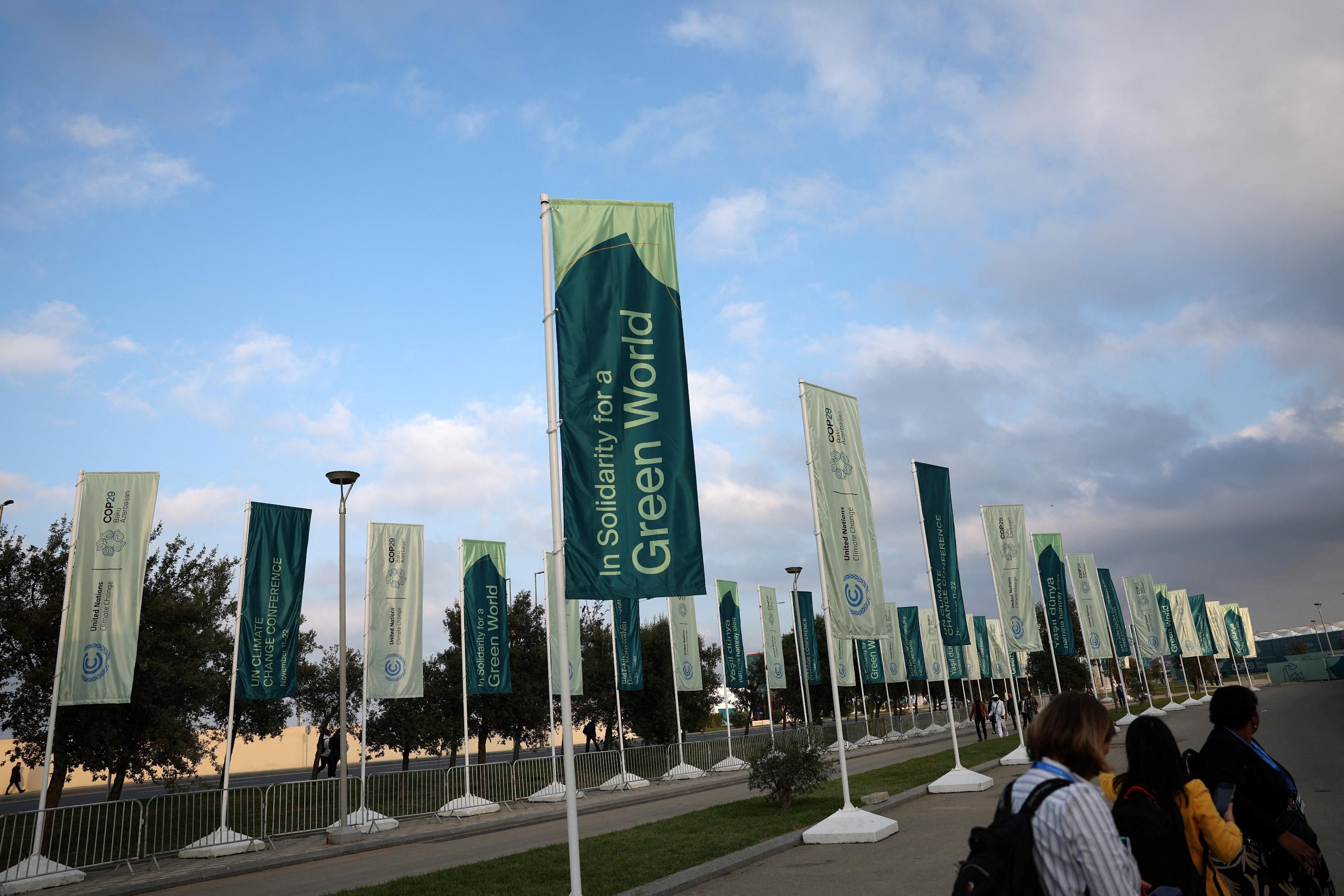
Two-week COP29 climate summit opens in Azerbaijan Delegates fret over US commitment after Trump elected Nations wrangling over agenda delays start of summit Biden, Chinese and European presidents set to stay away BAKU, Nov 11 (Reuters) - U.S. climate envoy John Podesta urged governments to keep faith in the country's promise to combat global warming, saying Donald Trump can slow, not stop, the transition from fossil fuels when he returns to office in January. The annual U.N. climate summit began on Monday in Baku, Azerbaijan, with many country delegations concerned Trump's victory in U.S. presidential elections on Nov. 5 would hinder progress to limit planetary warming. Trump has promised to again remove the United States, the world's biggest historic greenhouse gas emitter, from international climate cooperation and maximise the country's already record-high fossil fuel production. "For those of us dedicated to climate action, last week's outcome in the United States is obviously bitterly disappointing," Podesta said at the summit. "But what I want to tell you today is that while the United States federal government, under Donald Trump, may put climate action on the back burner, the work to contain climate change is going to continue in the United States." He said the Inflation Reduction Act , opens new tab (IRA), President Joe Biden's landmark climate legislation providing billions of dollars in subsidies for clean energy, would continue to drive investments in solar, wind and other technologies, and that U.S. state governments would also push emissions cuts through regulation. "I don't think that any of that is reversible. Can it be slowed down? Maybe. But the direction is clear," he said. Although Trump has promised to rescind the IRA, to do so would require an act of Congress - and that could be elusive due to support from some Republican lawmakers whose districts benefit from IRA-linked investments. AGENDA WRANGLING Apart from the election of Trump as president of the world's biggest economy, the talks in Baku are vying for attention with economic concerns and wars in Ukraine and Gaza. That complicates the summit's ambition to resolve the priority agenda item – a deal for up to $1 trillion in annual climate finance for developing countries, replacing a target of $100 billion. U.N. climate chief Simon Stiell sought to whip up momentum. "Let's dispense with the idea that climate finance is charity," he said at the Baku stadium. "An ambitious new climate finance goal is entirely in the self-interest of every nation, including the largest and wealthiest." This year is on track to be the hottest on record. Rich and poor countries alike have been challenged by extreme weather events, including flooding disasters in Africa, coastal Spain and the U.S. state of North Carolina, drought gripping South America, Mexico and the U.S. West. But even agreeing one of COP29's first tasks has proved a challenge: setting the the agenda for negotiations has been delayed for several hours. Three sources with knowledge of the closed-door discussions, asking to remain anonymous, said the European Union and small island counties were demanding nations follow up last year's deal - including how to take forward its agreement to transition away from coal, oil and gas. The Caspian Sea nation, which is home to the world's first oil wells, faces pressure to make progress on last year's COP28 pledge to transition away from fossil fuels. But fossil fuel-producing Gulf states want to limit discussions to the elements of last year's COP28 deal related to finance, the sources said. Countries were also at odds over a proposal from China to include trade on the COP29 agenda. Trade has gained importance as an issue for China, already facing European Union tariffs, because of Trump's campaign promise to impose 20% tariffs on all foreign goods, and 60% on Chinese goods. Many also worry U.S. disengagement could lead other countries to backpedal on existing climate pledges or scale back future ambitions. "People will be saying, well, the U.S. is the second biggest emitter. It's the biggest economy in the world ... If they don't set themselves an ambitious target, why would we?" Marc Vanheukelen, the EU's climate ambassador from 2019 to 2023, told Reuters. Talks host Azerbaijan has lobbied governments to accelerate their move to clean energy while touting gas as a transition fuel. Its oil and gas revenues accounted for 35% of its economy in 2023, down from 50% two years earlier. The government says these revenues will decline to 22% by 2028. President Ilham Aliyev has called Azerbaijan's fossil-fuel bounty "a gift of God," and Baku has proposed creating a Climate Finance Action Fund to collect voluntarily up to $1 billion from extractive companies across 10 countries including Azerbaijan. Sign up here. https://www.reuters.com/world/trump-trade-worries-cloud-cop29-climate-summit-baku-2024-11-11/
2024-11-11 07:03
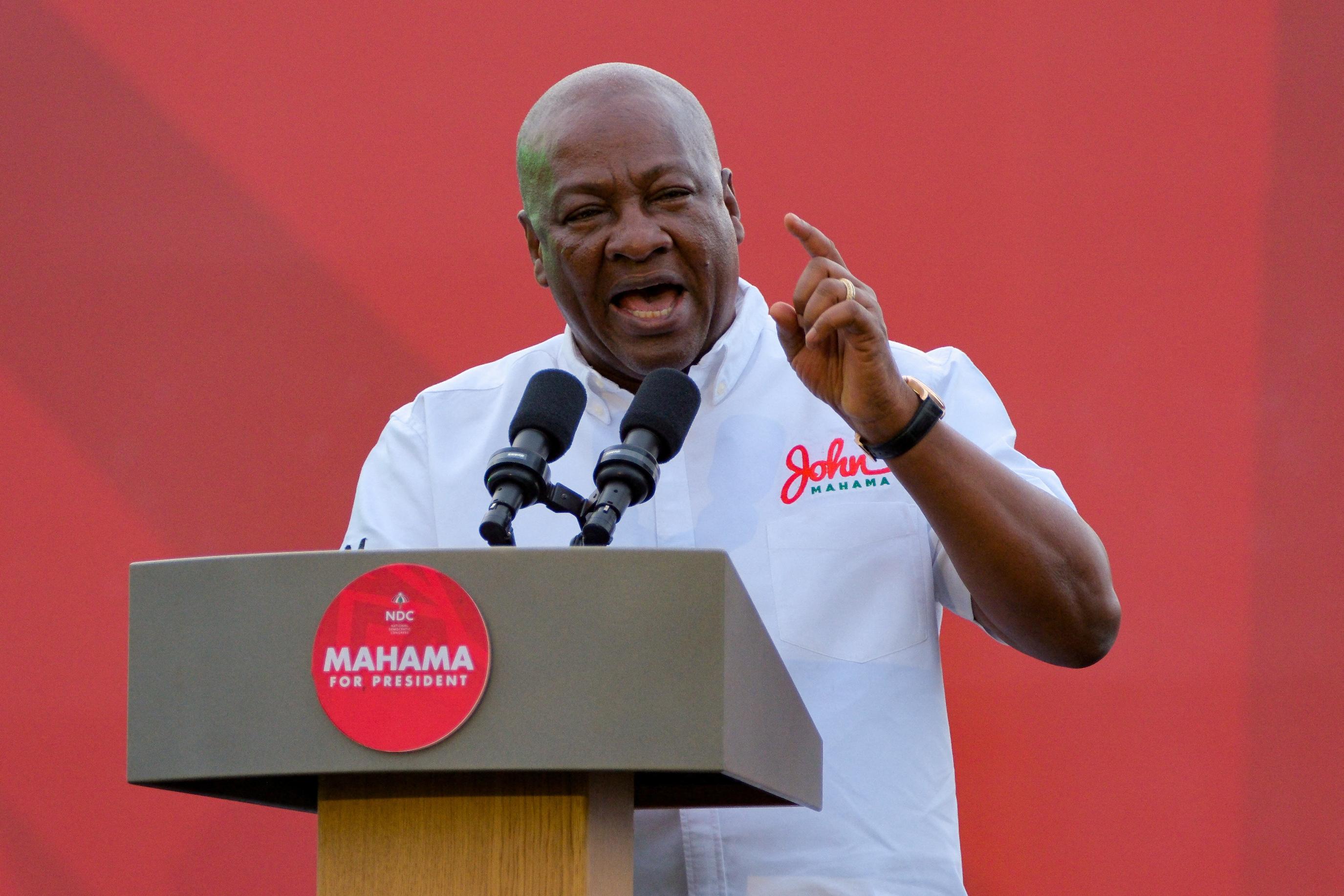
ACCRA, Nov 11 (Reuters) - Ghana's main opposition leader John Dramani Mahama looks set to win December's presidential election, an opinion poll showed on Monday, placing him ahead of his main challenger, ruling party candidate Muhamudu Bawumia. Former president Mahama, 65, and current Vice President Bawumia, 60, are the two main contenders for the Dec. 7 election to replace President Nana Akufo-Addo, who is stepping down in January after two terms as head of the gold- and cocoa-producing nation. Eleven other candidates are also running. Global InfoAnalytics, an Accra-based research group, released poll results on Monday that saw Mahama winning 52%, followed by 41.3% for Bawumia. The poll has a 1.9% error margin. It found that voters were mainly concerned about the economy, jobs, education and infrastructure. Mahama invested heavily in infrastructure during his 2012-17 presidency, when he faced criticism for power shortages and economic instability. His government was also embroiled in corruption allegations, although Mahama was never directly accused. He is running again as the candidate of the main opposition National Democratic Congress (NDC). Bawumia, an economist and former central banker, is running for the ruling New Patriotic Party (NPP), which grappled with Ghana's worst economic crisis in a generation. Both candidates have presented plans to boost the economy and improve livelihoods. Ghana, the world's second largest cocoa producer, defaulted on most of its $30 billion external debt in 2022 after years of overstretched borrowing. Akufo-Addo's government secured a 3-year, $3 billion bailout from the International Monetary Fund in 2023 and is now on the final lap of a painful process required for the money to be disbursed. The Economist Intelligence Unit predicted an NDC win in October due to the NPP's economic record. Fitch Solutions published a similar forecast that month. Both Mahama and Bawumia are from northern Ghana, a historic NDC stronghold where the NPP has been making inroads. Political analyst Alidu Seidu of the University of Ghana said the election would probably be a very close contest between the two. Results were difficult to predict and a run-off vote was likely, he said. No party has ever won more than two consecutive terms in Ghana's democratic history. Sign up here. https://www.reuters.com/world/africa/main-ghana-opposition-leader-tipped-win-presidential-vote-poll-shows-2024-11-11/
2024-11-11 07:02
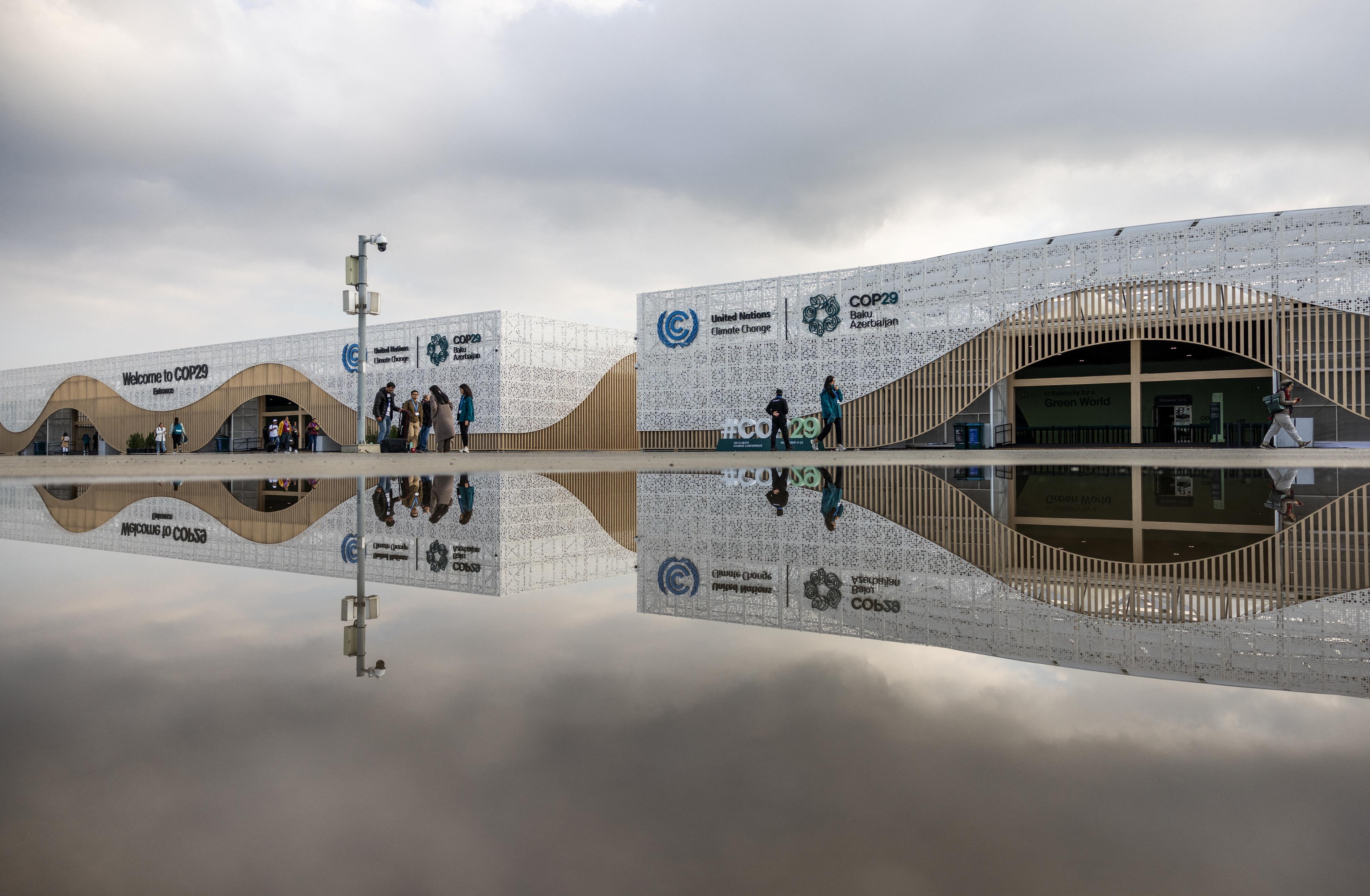
BAKU, Nov 11 (Reuters) - With U.N. climate talks tackling complex topics from energy policy to global financial aid, the annual summit has developed its own ever-growing lexicon. Here's a guide to some of the terms in play at this year's COP29 discussions. UNFCCC: This acronym stands for the United Nations Framework Convention on Climate Change, which is the name of both the 1992 treaty committing nearly 200 countries to fighting global warming and the secretariat set up to implement that treaty. COP: This acronym stands for Conference of Parties, and describes the annual summit of countries that have signed the UNFCCC treaty. This year's COP29 meeting in Baku marks the 29th such gathering since the UNFCCC took effect in 1994. NCQG: This relatively new acronym will be focal at COP29. It stands for the New Collective Quantified Goal on Climate Finance, an annual target for funding developing country climate efforts. NDC: Most often, these NDCs or Nationally Determined Contributions are referred to simply as "country pledges" and describe national action plans for reducing its emissions and adapting to climate impacts. The next round of NDCs are due in February, though some countries plan to submit new plans in Baku. GLOBAL WARMING: The term describes the gradual increase in the global average temperature. CLIMATE CHANGE: While this term is often used interchangeably with "global warming," it means something different. Climate change describes global warming as well as its consequences, such as extreme weather events. GREENHOUSE GASES: These gases, sometimes referred to simply as GHGs, are able to trap solar heat in the atmosphere and cause global warming. The most powerful GHGs are methane (CH4) and carbon dioxide (CO2), which are also referred to as "carbon emissions" because both molecules contain carbon. The world's excess carbon emissions come mostly from the burning of fossil fuels and other industrial activities. PARIS AGREEMENT: Under this 2015 treaty from the COP21 talks in Paris, countries agreed to try to limit global warming to "well below" 2 degrees Celsius (3.6F) above the pre-industrial average, with a goal of holding it to 1.5C (2.7F). The Paris pact also calls for national emissions-cutting pledges to be updated every five years. NET ZERO: This term does not mean releasing zero emissions, but rather releasing no more than the amount being recaptured by CO2 abatement technologies, tree planting, or other means. Reaching "net zero" would mean atmospheric GHG concentrations stop increasing. LOSS AND DAMAGE: Governments last year pledged $800 million toward a new 'loss and damage' fund to help poorer nations being hit by climate-fueled disasters. The fund, which now has a director and a host nation, will now be deciding how the funds should be dispersed and calling for more contributions at COP29. CARBON OFFSET: Also known as a "carbon credit," these instruments allow a country or company to compensate for some of their carbon emissions by investing in projects to bring emissions down elsewhere. ARTICLE 6: This term refers to a provision in the Paris Agreement on carbon offsets, and is used as shorthand for UNFCCC efforts to regulate international trading in carbon credits. Governments are hoping to resolve rules for trading carbon offsets at COP29 to allow for these markets to become operational. Sign up here. https://www.reuters.com/sustainability/guide-cop29-climate-jargon-2024-11-11/
2024-11-11 06:52
EIP signs up for capital increase Eni pursuing "satellite strategy" for specific businesses Deal seen as positive for Eni stock MILAN, Nov 11 (Reuters) - Swiss asset manager Energy Infrastructure Partners (EIP) will raise its stake in Eni's (ENI.MI) , opens new tab Plenitude unit to 10%, in a deal that values the group's retail and renewable business at more than 10 billion euros ($11 billion) including debt. The Italian energy group said in a statement on Monday that EIP had agreed to subscribe to a new share issue worth around 209 million euros. The deal is part of Eni's 'satellite' strategy, aimed at creating separate units capable of attracting investments to grow their businesses. Eni's Chief Transition and Financial Officer Francesco Gattei said the group believed this was the right approach to the energy transition. "We have embarked on a virtuous path of creating low and zero-carbon businesses that attract leading investors, grow organically, and become self-sustaining," Gattei said in the statement. Under the strategy, Eni last month partnered with U.S. investment firm KKR (KKR.N) , opens new tab which invested 2.94 billion euros in the group's biofuel unit Enilive to take a stake of 25%. The Italian group is also in talks with several potential investors, including Italian gas grid operator Snam (SRG.MI) , opens new tab, interested in becoming partners in its carbon capture and storage business (CCS). Analysts at Italian brokerage Equita said Monday's announcement had positive implications for the stock, adding the deal implied an enterprise value for Plenitude of around 10 times its core earnings, higher than a multiple of three for the whole energy group. Shares in Eni were up 1.4% at 1230 GMT, broadly in line with Milan's blue-chip index (.FTMIB) , opens new tab Switzerland's EIP first invested in Plenitude in March, buying a 7.6% stake for 588 million euros and saying it would consider later raising its holding. "Our decision to increase the size of our investment reconfirms our strong belief in the value of the business," EIP partner Tim Marahrens said. Rothschild advised EIP while Eni was advised by Mediobanca and Goldman Sachs. Plenitude generates power from renewable sources with an installed capacity of over 3 gigawatt (GW), it sells gas and electricity to 10 million customers, and has a network of 21,000 charging points for electric vehicles. By 2027, the company aims to reach over 11 million customers, have more than 8 GW of renewable capacity and 40,000 charging points installed in Italy and abroad. ($1 = 0.9332 euros) Sign up here. https://www.reuters.com/markets/deals/swiss-asset-manager-eip-increases-stake-enis-plenitude-10-2024-11-11/

2024-11-11 06:08
Nov 11 (Reuters) - South Africa's Omnia Holdings (OMNJ.J) , opens new tab reported a 2% increase in half-year profit on Monday, as growth in its mine blasting services segment helped offset the impact of a drought on its fertiliser business. Omnia reported headline earnings per share of 2.88 rand ($0.1636) in the six months to Sept. 30, up from 2.82 rand a year ago. Revenue from its mine supply segment grew 15% to 4.7 billion rand, helping group turnover rise 5% to 10.9 billion rand. Meanwhile, revenue from the agriculture segment declined 4% to 5 billion rand as a severe drought due to El Nino hurt demand in Omnia's African markets such as Zambia and Zimbabwe. The company said it is seeing growth in the mine blasting segment on the back of expansion in mining operations both in the African market and internationally. Omnia supplies fertilizer and mine blasting services in most sub-Saharan African countries and also has operations in Australia, Brazil, Canada, Indonesia and the United States. ($1 = 17.6023 rand) Sign up here. https://www.reuters.com/world/africa/safricas-omnia-profit-up-2-mining-offsets-impact-drought-2024-11-11/

2024-11-11 06:05
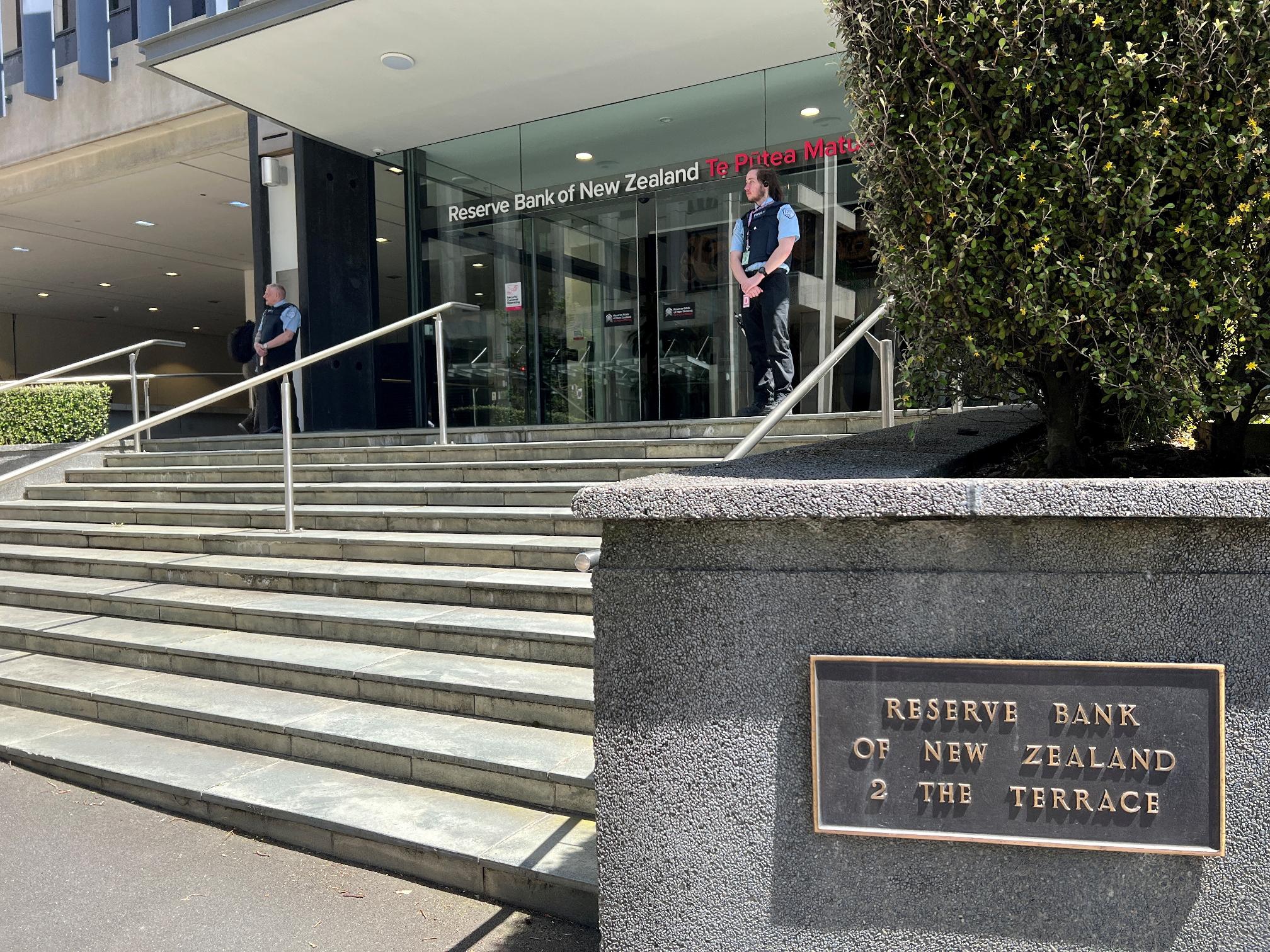
RBNZ faces pressure to ease policy aggressively due to long gap until next meeting Analysts expect a 50-basis-point cut, with a 75-basis-point cut also possible Economic downturn and rising unemployment add to the urgency for rate cuts Nov 11 (Reuters) - New Zealand's central bank will be under greater pressure to ease policy aggressively this month as its rate meeting calendar leaves an unusually long three-month gap until its next gathering, arguing for extra insurance against an economic slump. That is partly why markets and analysts have fully priced in another large 50-basis-point rate cut from the Reserve Bank of New Zealand at its last meeting for the year on November 27. Even a whopping 75 basis point cut is also considered a possibility. "I think front loading the rate cut has some optional values for the RBNZ. It means they can go into the Christmas break with a policy stance that's closer to neutral," said Faraz Syed, a senior economist at Citi Australia, which has called for 75 bp move in November. "That's what the economy requires." The RBNZ cut the number of its policy meetings to seven from eight in 2016, which has allowed policymakers to enjoy a nearly three-month year-end break. That is unusually long for a major central bank - most central banks break for a month or two. Michael Reddell, a former RBNZ official, said the RBNZ made the scheduling decision at a time when the cash rate was hardly being moved at all, which reduced the significance of the decision. "I wouldn't be surprised if they were doing things over again they went back to eight... If I was sitting on the monetary policy committee today, I’d be certainly advocating a shift to eight meetings a year." Just last week, the RBNZ sounded the alarm on further economic weakening even though rates have been chopped by 75 bps in just two meetings. Rising unemployment is likely to cause more borrowers to default on their mortgage payments over the next six months, it warned. Between 2021 and August, the RBNZ had raised interest rates by 525 basis points to a 16-year high of 5.5% to stamp out surging inflation. Headline inflation, which peaked at 7.3%, slowed to 2.2% in the September quarter, back in the target band of 1-3%. But that came with a hefty price. New Zealand's economy shrank from a year ago in the second quarter, with a gauge of living standards - gross domestic product per capita - falling for a seventh straight quarter. The central bank won't meet again until February 19, a month after the inauguration of Donald Trump as U.S. president, when the economic landscape could be drastically different. Even as the outlook for further U.S. rates has become more clouded, expectations that Trump's proposed policies including global tariffs will stoke inflation have seen borrowing costs surge globally. In New Zealand, a key short-term swap rate jumped 19 basis points last week, almost equal to a quarter-point hike in official rates. That tightening comes at exactly the wrong time for the economy and again argues for drastic easing by the RBNZ. "I think it does make it tricky that they have this long summer gap. It's basically 12 weeks between decisions and usually it's sort of six to seven," said Zoe Wallis, an investment strategist at Forsyth Barr. 50S AT LEAST The prolonged downturn in the economy saw the jobless rate hit a near four-year high of 4.8% in the September quarter as employment dropped by most in four years. Worryingly, there were clear signs young people were quitting the workforce, discouraged by a dearth of vacancies. Goldman Sachs said a 75 bp move can be justified given how far rates are above the neutral rate of 3%, the long lags of policy and the near three-month meeting gap, but it is sticking with a 50 bp move to be followed up by another 50 in February. That's partly due to comments from Governor Adrian Orr in late October that he was still a tad concerned about lingering inflation pressures. Rates on the way down probably will be more incremental than on the way up, Orr told an event in Washington. Jarrod Kerr, chief economist at Kiwibank, agrees. "Going 75 probably signals they’re a bit worried about things and that certainly wasn’t the sense we got from Adrian Orr... I think they will deliver 50 and then another one in February." Sign up here. https://www.reuters.com/markets/rates-bonds/rbnzs-unusually-long-summer-break-argues-extra-insurance-rates-2024-11-11/