2024-11-10 23:55
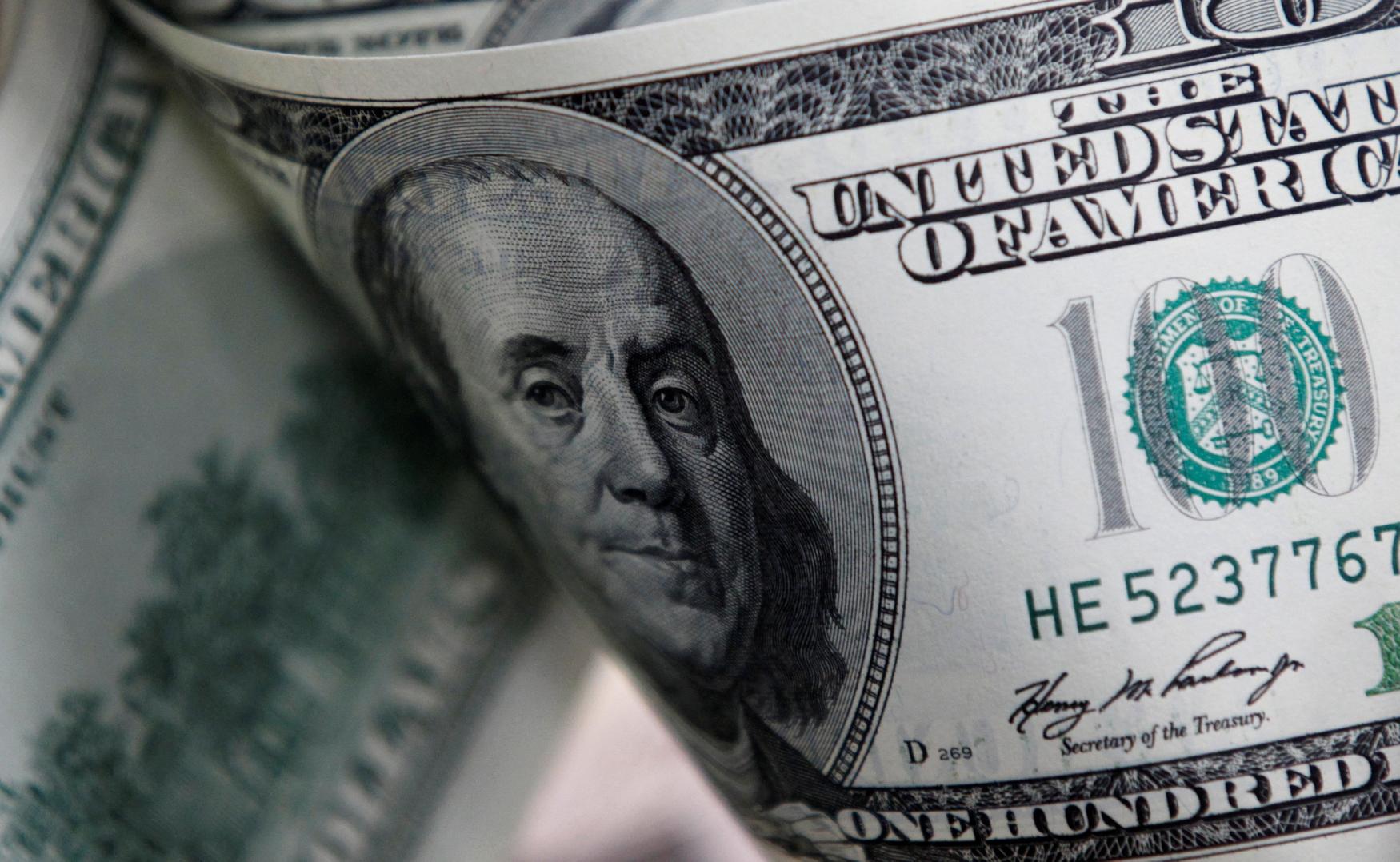
SYDNEY, Nov 11 (Reuters) - The dollar started in a cautious mood on Monday as markets braced for U.S. inflation data and a throng of Federal Reserve speakers this week, while the yuan nursed a hangover from Beijing's latest underwhelming stimulus package. Highlighting the weak background in China, data out over the weekend showed consumer prices rose at the slowest pace in four months in October while producer price deflation deepened. Reports on retail sales and industrial output due Friday should show whether Beijing's various attempts at stimulus are having any real effect on demand. Disappointment at the latest package had seen the Australian and New Zealand dollars slide on Friday as both countries are major exporters to China. The dollar stood at 7.1970 yuan , having jumped 0.7% on Friday, and looks set to again test the 7.2000 barrier. Moves were minor overall, with U.S. bond markets on holiday though stocks and futures are open. The dollar was up 0.1% on the yen at 152.90 , having been dragged off last week's top of 154.70 by the risk of Japanese intervention. The dollar index was a fraction firmer at 105.00, after gaining 0.6% last week mainly against the euro. The single currency was stuck at $1.0711 , having shed 1% last week to as low as $1.0683. Support now lies around $1.0667 and $1.0601. Political uncertainty remained a drag as German Chancellor Olaf Scholz said he would be willing to call a vote of confidence before Christmas, paving the way for snap elections following the collapse of his governing coalition. FED RESTRAINED The euro has been pressured by U.S. President-elect Donald Trump's proposals for tariffs on imports, which could hurt European exports and risk a global trade war. Analysts also assume Trump's policies would put upward pressure on U.S. inflation and bond yields, while limiting the Federal Reserve's scope to ease policy. "Given this, we still expect that the Fed will cut another 25bp at the December meeting, but thereafter will only cut once per quarter, in contrast to our previous forecast for a 25bp cut every meeting," said JPMorgan economist Michael Feroli. "In addition, we now look for the Fed to conclude once it reaches 3.5%, versus our earlier forecast for a 3.0% terminal rate." A host of Fed officials speak this week, including Chair Jerome Powell on Thursday, so there will be plenty of guidance on the outlook for rates. Data will also be influential as U.S. consumer prices are due Thursday and a core reading above the 0.3% forecasted would further reduce the chance of a December easing. All this was seen as bullish for the dollar over the long term, though it was yet to be seen what Trump's policies would actually be in practice. His support of cryptocurrencies has been enough to propel Bitcoin above $80,000 for the first time as investors wager on more favourable regulation. Sign up here. https://www.reuters.com/markets/currencies/dollar-braces-us-inflation-data-several-fed-speakers-2024-11-10/
2024-11-10 23:02
LAUNCESTON, Australia, Nov 11 (Reuters) - The scale of OPEC+'s China problem is evident in yet another month of weak crude oil arrivals, with the world's biggest importer recording a sixth consecutive decline in October. Customs data last week showed imports of 44.7 million metric tons in October, equivalent to 10.53 million barrels per day (bpd), down from 11.07 million bpd in September and 11.53 million bpd in October last year. For the first 10 months of the year China's imports were 10.94 million bpd, down 3.7% on a per day basis from the 11.36 million bpd for the same period in 2023. That decline of 420,000 bpd in China's imports is a massive headache for the Organization of the Petroleum Exporting Countries (OPEC) and their allies, including Russia, in the wider OPEC+ group. In OPEC's latest monthly report the group cut its forecast for China's oil demand growth to 580,000 bpd, down from a peak expectation of 760,000 bpd in the July report. But even the lowered forecast seems wildly out of whack with the reality of China's stumbling imports. Of course, there is a difference between imports and total demand, which also includes domestic crude output and changes in inventory levels. China's domestic production has grown slightly over 2024 so far, and while the country doesn't disclose inventory levels, it's certain that they have been building stockpiles given that the volume of crude refined is well short of the total available from imports and local output. It's also worth noting that it's the volume of imports from the seaborne market that will have the largest bearing on crude oil prices, and that feeds directly into OPEC+'s production policy. The eight members of OPEC+ said on Nov. 3 that they will push back their planned increase of 180,000 bpd in December by another month. The group had been due to raise output in December as part of a plan to gradually unwind a total of 2.2 million bpd of production cuts over 2025. OPEC+ has been consistent in signalling that it will only ease output curbs when the market demand is there, so delaying the December plan was expected. But the problem for the group is that it's hard to see China's crude demand recovering strongly while the world's second-biggest economy struggles for growth momentum and oil prices remain higher than the global economic conditions most likely warrant. Benchmark Brent futures have traded in recent weeks in a range between $70 and $80 a barrel, and have generally trended lower since the high so far in 2024 of $91.95 on April 15. But the price also remains well above where it would be if OPEC+ members weren't restricting output as much as they are. TRUMP IMPACT The geopolitical tensions in the Middle East as Israel battles against Iran and the militants it backs such as Hamas and Hezbollah are also adding a risk premium into the price of oil. The number of risks for the crude oil market have also been increased by the election of Donald Trump to a second term as U.S. President. There is considerable uncertainty as to how much of Trump's rhetoric on the campaign trail will translate into actual policies, and some of them may exert contradictory influences on oil supply and prices. Trump is in favour of loosening regulations on the oil sector and encouraging higher U.S. output, something that would be bearish for prices. But with U.S. crude production already around record levels, there are questions as to whether the industry can pump more, and even if they could, would they want to given that this would lower prices and profits for their shareholders. Trump also says he will bring peace to the Middle East, without presenting any details as yet. Assuming he can, this is also bearish for oil prices. But at the same time Trump also wants to go hard against Iran over its nuclear programme, and any effective tightening of sanctions and rising tensions would be bullish for prices. But the main risk of a Trump presidency is his stated intention of imposing tariffs of 10%-20% on all imports into the United States, and up to 60% on those from China. If this includes crude it will hurt the margins of U.S. refiners that process imported oil, but it will also potentially harm U.S. exports of crude and refined products if other nations retaliate with tariffs of their own. A new trade war with China would also likely hurt economic growth in China, delaying any recovery in crude oil demand. The opinions expressed here are those of the author, a columnist for Reuters. Sign up here. https://www.reuters.com/markets/commodities/chinas-weak-crude-imports-trump-risks-give-opec-headaches-russell-2024-11-10/

2024-11-10 21:48
Nov 11 (Reuters) - A look at the day ahead in Asian markets. Investors in Asia have their first chance on Monday to react to a batch of key economic indicators and news out of China, and should do so in a relatively bullish frame of mind after the record-setting rally on Wall Street on Friday. The S&P 500 rose above 6,000 points for the first time, continuing its powerful rally following Donald Trump's victory in the U.S. presidential election on Tuesday and the Federal Reserve's interest rate cut on Thursday. That sealed a weekly gain of almost 5%, the S&P 500's best week since September 2023. This helped lift the MSCI World equity index to a new high on Friday, too. It is worth recapping how monumental last week was for world markets - the U.S. election and Fed rate cut super-charged risk appetite and the dollar, while investors also navigated a UK rate cut and the collapse of the German government. The news flow from China was potentially no less significant for investors, although the outlook is not quite as uniformly bullish for local or risk assets. China unveiled a 10 trillion yuan ($1.4 trillion) debt package to ease local government financing strains and stabilize flagging economic growth. But this will disappoint investors, who had built up hopes for something special to pre-empt another round of fractious Sino-U.S. tensions and trade barriers. And on Saturday, official figures showed that inflation in China remains weak, an indication that the economy's revival and path to reflation will be slow and long. Producer prices in October slid 2.9% on the year - deeper than the 2.8% fall in September, below an expected 2.5% decline, and the biggest drop in 11 months. Annual consumer price inflation slowed to 0.3% from 0.4%, the slowest in four months. While investor sentiment globally looks strong, the optimism that exploded around China in the wake of Beijing's wave of stimulus measures in September is fading. Mainland China saw net outflows for the fourth consecutive week, according to Goldman Sachs. SocGen analysts advise caution on China, noting that the risk of higher U.S. tariffs on China and other parts of Asia is very real, implying lower growth in Asia and a stronger dollar against Asian currencies. They now expect USD/CNY to peak at 7.40 in the second quarter of next year, arguing that China's stimulus measures may not fully compensate for the increased tariff risk. The dollar is certainly on a tear. It clocked its sixth weekly gain in a row last week against a basket of major currencies, something not seen since August-September 2023. Here are key developments that could provide more direction to markets on Monday: - Japan trade and current account (September) - Japan money supply (October) - Japan corporate earnings Sign up here. https://www.reuters.com/markets/asia/global-markets-view-asia-pix-graphic-2024-11-10/

2024-11-10 21:48
HAVANA, Nov 10 (Reuters) - An earthquake rocked eastern Cuba on Sunday, shaking buildings in Santiago de Cuba, the island's second-largest city, and the surrounding countryside. The quake, which the U.S. Geological Survey listed as magnitude 6.8, struck Cuba's southeastern coast in Granma province near the municipality of Bartolome Maso, where former Cuban leader Fidel Castro had his headquarters during the Cuban Revolution. "There have been landslides, damage to homes and power lines," said Cuban president Miguel Diaz-Canel on X. "We have begun to assess damages...the first and essential thing is to save lives." Reuters spoke with several area residents who reported the quake felt as strong as any in their lifetimes. Homes and buildings shook violently, they said, and dishes, glasses and vases rattled off shelves. "We've felt earthquakes in the past, but nothing like this," said Santiago resident Griselda Fernandez by telephone. Many of the region's homes and buildings are older and vulnerable to quake damage. State-run media published images of terracota roofs and facades of concrete block homes that had collapsed with the shake. Many images showed structural damage to ceilings, walls, windows columns as well as to public infrastructure. The earthquake struck an island still struggling to recover from hurricanes. Much of Cuba's eastern end was still digging out from a direct hit by Hurricane Oscar in October. Last week, Cuba's national grid collapsed after Hurricane Rafael tore through the western end of the island, leaving 10 million without power. Rolling, hours-long blackouts have been the norm for months across much of eastern Cuba, slowing reports of damages and complicating communications. The 6.8 quake was at a depth of 14 km (8.7 miles), USGS said. About an hour earlier, an earthquake with a magnitude of 5.9 was measured nearby, according to the U.S. agency. Cuban authorities said more than 15 perceptible aftershocks followed the first two jolts and warned locals to be vigilant as further aftershocks were possible. The U.S. National Tsunami Warning Center said there was no tsunami threat expected. Most seismic activity in Cuba takes place in the region around Santiago. A fault line runs along the island's southeastern coast, marking the boundary between the North American plate and the Caribbean plate, according to Cuba's seismic service. The Cuban capital of Havana was not affected by the quake. Sign up here. https://www.reuters.com/world/americas/eastern-cuba-rocked-by-earthquake-magnitude-68-2024-11-10/

2024-11-10 20:30
HOUSTON, Nov 10 (Reuters) - More than a quarter of U.S. Gulf of Mexico oil and 16% of natural gas output remained offline in the aftermath of storm Rafael, the U.S. offshore energy regulator reported on Sunday. There were 482,790 barrels of oil and 310 million cubic feet of natural gas production shut-in on Sunday, offshore regulator Bureau of Safety and Environmental Enforcement (BSEE) reported. Oil and gas workers remained evacuated from 37 of the region's 371 manned production platforms, or about 10%, while two drilling vessels remained off their prior locations, BSEE said. Chevron (CVX.N) , opens new tab and Shell (SHEL.L) , opens new tab have begun returning workers to their offshore facilities, the two Gulf of Mexico producers said on Sunday. Shell also returned drill ships to prior locations after storm-related pauses, a spokesperson said. Production losses due to Rafael shut-ins to date have totaled 2.07 million barrels of oil and 1.12 billion cubic feet of natural gas, according to BSEE data. U.S. Gulf of Mexico federal offshore oil production accounts for about 15% of total U.S. crude oil production and 2% of dry natural gas production. The storm has been downgraded to a tropical storm after entering the Gulf on Wednesday as a major hurricane. It is expected to meander in the central Gulf of Mexico, then turn toward the south and southwest on Monday and Tuesday, the U.S. National Hurricane Center said. Sign up here. https://www.reuters.com/business/energy/more-than-quarter-us-gulf-mexico-oil-16-natural-gas-offline-2024-11-10/

2024-11-10 17:31
Nov 10 (Reuters) - Bitcoin was trading near record $80,000 on Sunday after hitting it earlier in the session, following Donald Trump's decisive victory in the U.S. presidential election earlier in the week. Bitcoin, the world's biggest and best-known cryptocurrency, is up 65.4% from the year's low of $38,505 it hit on Jan. 23. Trump has vowed to make the United States "the crypto capital of the planet". Sign up here. https://www.reuters.com/markets/currencies/bitcoin-rises-above-80000-first-time-2024-11-10/