2025-12-23 11:26
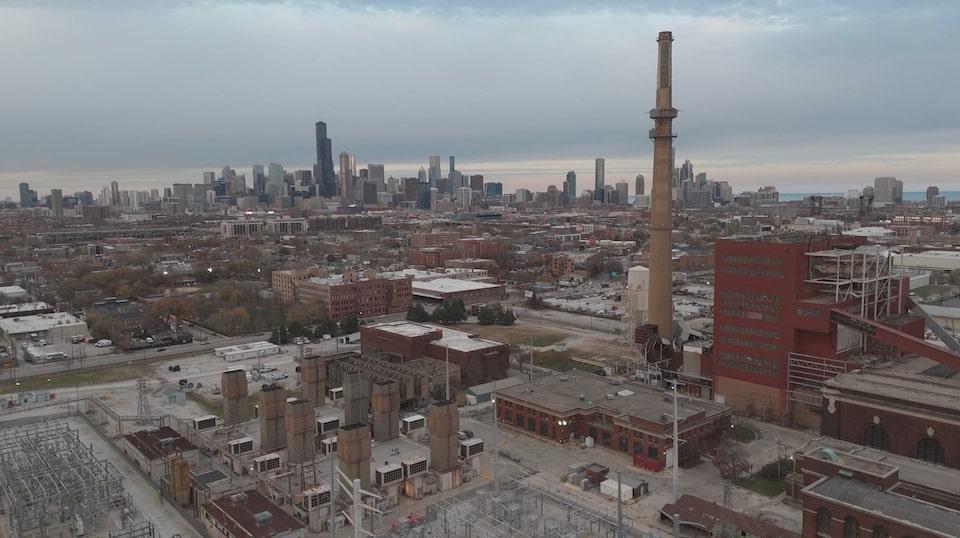
AI data center electricity demand revives peaker power plants Peakers emit more pollution when they run than typical power plants The power plants are often located in low-income, minority communities CHICAGO, Dec. 23 - In Chicago’s working-class Pilsen neighborhood, a 60s-era oil-fired power plant rises up from an industrial lot behind Dvorak Park, which in warmer weather is packed with children climbing on its colorful playground and zooming down slides. The rarely-used eight-unit Fisk power plant owned by Houston-based NRG Energy was scheduled to retire next year. But then came electricity demands from artificial intelligence. Sign up here. Prices shot up in the country’s biggest power market – PJM Interconnection – as electricity requests from data centers exceeded existing supplies, sounding the alarm over power shortfalls, and making Fisk and other plants like it suddenly profitable. "We believe there's an economic case to keep them around, so we withdrew the retirement notice,” said Matt Pistner, senior vice president of generation at NRG, of Fisk’s eight power-generating units. The Fisk power plant is among a growing number of so-called “peaker” electric generating units being pressed into duty across the U.S. as the nation’s electrical grids struggle to keep up with growing demand from data centers powering Big Tech’s investments in artificial intelligence. Peakers, which are meant to run only in short bursts during periods of spiking electricity demand, help stave off blackouts by supplying power on a moment’s notice. But there’s a trade-off: these often decades-old, fossil-fueled facilities emit more pollution when they are running and cost more to produce electricity than continuous power plants. A Reuters analysis of filings with the country’s biggest power grid shows that about 60% of oil, gas and coal power plants slated for retirement in PJM postponed or cancelled those plans this year. Most of the plants averting shutdowns are peaker units. The Fisk peakers were built on the site of a now-defunct coal-fired electricity generating station that operated for over a century. After years of fierce opposition by local residents, the coal plant shut more than a decade ago, but eight peaking units that run on petroleum oil continue to operate on the site. “When we found out that the coal plant was closing but there was still going to be power produced at the site, it was very disappointing,” said Jerry Mead-Lucero, a longtime advocate for the closure of the Fisk coal station who spent most of his adult life in Pilsen. Following the coal plant closure, pollution plummeted, but it didn’t vanish. Sulfur dioxide ranged from about 2 to as much as 25 tons per year from the site, according to the Environmental Protection Agency, as the eight-unit peaker plant occasionally lumbered to life to feed the grid. "That's not an insignificant amount considering the low chimneys and homes nearby," said Brian Urbaszewski, Director of Environmental Health Programs for Respiratory Health Association, an Illinois nonprofit that focuses on helping people with respiratory disease. DIRTY POWER Because they were built for speed instead of efficiency, peakers often do not have pollution controls like mercury scrubbers, which remove the toxic chemical from the power plants’ emissions, and filters for particulate matter, according to academic and federal government research. Some also have lower smokestacks, or chimneys, environmental advocates say, meaning pollution can be more concentrated locally. Keeping peakers running longer may accelerate under U.S. President Donald Trump’s administration, which said it was exploring ways to tap into existing power sources, including peaker plants and other emergency systems, to quickly meet the massive new electricity demand. “There are a ton of peaker plants that could operate more,” U.S. Energy Secretary Chris Wright told Reuters in an interview in September, adding that clean air regulations have kept more from running more frequently. “The biggest targets are spare capacity on the grid today.” While peaker plants contribute about 3% of the country’s power, they have the total capacity to produce 19%, according to a report by the U.S. Government Accountability Office. Tapping into that spare capacity, however, could mean more harmful emissions being spewed into neighborhoods that are often already overburdened with environmental hazards. The country's roughly 1,000 peaker plants are disproportionately located in low-income communities of color, according to academic and federal government research, meaning that extending the plants’ lives could leave vulnerable Americans to bear the brunt of more pollution. A 2022 study of formerly “redlined” U.S. communities, which were cut off from financial services like mortgages for being predominantly Black or immigrant, found that residents were 53% more likely to have had a peaker plant built nearby since the year 2000 than in non-redlined areas. “If you were a redlined neighborhood, you were more likely to have a fossil fuel power plant built nearby, and we saw that relationship was even stronger for peaker plants,” said UCLA professor of environmental health sciences Lara Cushing, who led the study. POWER DEMANDS STRAINING THE GRID Most of the country's peaker plants were built during two periods of growth in energy consumption: in the mid-20th century as electrical appliances became common household items, and at the turn of the millennium as the economy grew and computers gained popularity. Afterwards, as energy-sapping devices and infrastructure became more efficient, U.S. power demand waned and many fossil-fired power plants shut. Meanwhile, solar and wind farms, which only produce power when the sun is shining and the wind is blowing, began to supply more of the country’s energy. "We're kind of making the old system work harder and that's part of why we're seeing this increased use of plants operating as peakers," said Frank Rusco, a director with the Government Accountability Office, which was directed by U.S. Congress, at the urging of environmental justice groups, to study the use of peaker plants and how they intersect with American communities. The study found that natural gas peaker plants emit 1.6 times more sulfur dioxide for each unit of electricity produced on a median basis compared to non-peaker plants. Fisk is part of the nation’s largest electrical grid, PJM Interconnection, which stretches across 13 states and covers the world’s biggest concentration of data centers. Demand from AI data centers is threatening to engulf the grid’s power reserves, and it is already driving up prices. Prices paid to power suppliers in PJM to ensure plants run at times of spiking demand soared by more than 800% this summer, compared to a year earlier. That made owning peaker power plants much more lucrative. “It is clear today, nationally, that electricity demand is outstripping supply – the market reflects this, and generators are responding,” PJM spokesman Jeff Shields said. “We cannot afford to lose existing generation while we continue to bring on new generation to keep pace with the electricity needs of data centers and other large loads powering the country’s economy.” About 23 oil, gas and coal power plants in PJM territory were scheduled to retire starting in 2025 or shortly after, according to a Reuters analysis of letters sent to PJM Interconnection by power companies. Since January, U.S. power companies, the grid operator, and the federal government have delayed or cancelled the retirements of 13 of those power plants, the letters showed. Of those plants that averted closure, 11 were peakers. Among those delayed were the roughly 55-year-old units at the “Eddystone” plant outside of Philadelphia, owned by Constellation Energy, which were ordered to keep running by the Department of Energy. The Wagner peaker near Baltimore, meanwhile, was kept alive at the request of PJM while the grid operator coordinates on the transmission needed for the removal of the generator. Many of the retained power plants were built as peakers, while others were initially intended to be around-the-clock power, but later downgraded to run only during emergencies. ‘LAST LINE OF DEFENSE’ Fisk owner NRG Energy says peakers are essential safeguards for the grid that are being called on more often not just for data centers but for the electrification of manufacturing and transportation, and to avert blackouts caused by increasingly severe winter storms and summer heatwaves. Having the Fisk peakers in the city means that Chicago doesn’t need to import electricity in the case of an emergency when outside power sources go down. “They really are the last line of defense, and the shock absorber, for the system,” said Matt Pistner of NRG Energy. “When they’re needed, there is no other place to go.” While NRG has owned power generating sources from nuclear energy to wind and solar, oil-fired peakers add another layer of certainty by ensuring the power fuel source can be stored on site, Pistner said. “During its run times, the power plant consistently operates within federal and state environmental regulations — and we are proud of its record," an NRG spokesman told Reuters separately. Energy experts say there are alternatives to peakers. Investing in more robust transmission lines could transport electricity from parts of the country with oversupplies of power to those with shortfalls. "If we do that, the system would run more efficiently and you would probably have a reduction in the amount of reliance on peakers," said the GAO's Rusco. Batteries, which are undergoing technological improvements to store power for longer, could also replace many peaker units, according to clean energy advocates. In the meantime, as AI power demand rises, communities like Pilsen, which have successfully fought to close some pollution sources in recent history, may find peaker plants more difficult to fight. “It all adds up to significant cost increases for electricity consumers and significant increases in local pollution and will prevent new clean energy generation from connecting to the grid," said John Quigley, of the University of Pennsylvania’s Kleinman Center for Energy Policy. PJM said it would continue to connect carbon-free renewable power, nuclear and gas-fired energy to the grid regardless of whether peakers stay on longer. "We need every single megawatt of energy we can get right now," Shields said. Deactivating existing power plants, he added, "ignores reality." Northern Illinois is a budding data center market, with at least one data center already operating in Pilsen and multiple other energy-intensive projects planned for nearby areas, including a 20-building campus announced this year by T5 Data Centers. Mead-Lucero worries that the Fisk peaker units will continue the legacy of environmental hazards plaguing his hometown, which also sees emissions from industrial truck traffic, a metal scrapper and a major highway cutting through the neighborhood. “You add all of these compounding factors, and you end up with a real problem again.” https://www.reuters.com/business/energy/ai-data-centers-are-forcing-obsolete-peaker-power-plants-back-into-service-2025-12-23/
2025-12-23 11:24
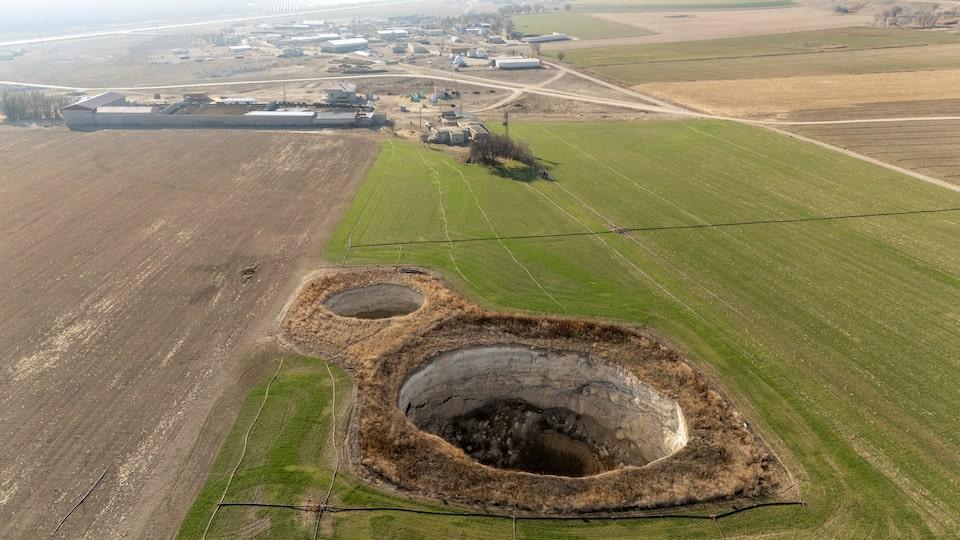
KONYA, Turkey, Dec 23 (Reuters) - Hundreds of sinkholes have emerged in Turkey's central agricultural region due to dwindling rainfall and receding groundwaters, causing concern among farmers and environmental experts who see it as a worrying sign of climate change. Gaping sinkholes pockmark farmland producing maize, wheat and sugar beet in Karapinar in Konya province, with more than 10 packed into a field in places. In mountainous areas, vast, ancient sinkholes previously filled with water have now mostly dried up. Sign up here. The pace at which sinkholes are forming in the Konya basin has accelerated in recent years, with the total now nearing 700, according to Fetullah Arik, a geology professor studying sinkholes at Konya Technical University. "The main reason for the increase in numbers is climate change and drought, which have affected the whole world since the 2000s," Arik said. "As a result of this drought, the groundwater level is dropping slightly every year." He said the pace of receding groundwater levels has reached 4 to 5 metres per year, compared to half a metre per year in the 2000s, adding to concerns in Turkey's major agricultural sector. Drought and receding groundwater lead local farmers to dig more wells, many unlicensed, further depleting the groundwater and exacerbating the problem. "There is also an extremely high demand for water in this (Konya) basin," Arik said, adding that there are around 120,000 unlicensed wells, compared to some 40,000 licensed ones. While the new sinkholes have not caused any casualties so far, their unpredictable nature risks the lives and belongings of locals, he said. Two sinkholes opened up in the farmland belonging to Mustafa Sik, a farmer in Karapinar, in the past two years. His brother was only a short distance away, working on the farm in August 2024 when the second sinkhole formed with an "extremely loud, terrifying rumbling sound," Sik said. A survey by geologists in Sik's land found two more areas where sinkholes could form – although it is not possible to predict when it will happen. "Are we worried? Of course, we are very worried," he said. https://www.reuters.com/sustainability/climate-energy/sinkholes-turkeys-agricultural-heartland-fuel-farmers-concerns-2025-12-23/
2025-12-23 11:14
MUMBAI, Dec 23 (Reuters) - Bankers are urging the Reserve Bank of India to intervene as a surge in dollar liquidity heading into year-end and pressure in the non-deliverable forward market have pushed rupee forward premiums to multi-year highs. Outsized moves in the forward market intensified over the last week as the dollar glut collided with regulatory and balance-sheet constraints, leading to a spike in premiums. Sign up here. Half a dozen bankers said central bank intervention will be necessary to ease the pressure. The one-month dollar/rupee forward premium rose to 55 paisa on Tuesday, its highest level in more than six years and over three times the level at which it was at the end of November. The rupee remains Asia's worst-performing currency this year, hit by weak investment flows, steep U.S. tariffs and the lack of a U.S. trade deal. Despite the RBI's efforts to stabilise the market, analysts believe the rupee faces considerable downside risks. A source familiar with the matter said the issue was informally raised with the RBI last week, while another source confirmed that the central bank is aware of the situation and is closely monitoring the markets. Both declined to be identified as they are not authorised to speak publicly. The RBI did not immediately respond to a request for comment. DOLLAR GLUT Banks can typically manage excess dollar liquidity by placing deposits with other lenders. However, regulatory constraints at quarter-ends, particularly at the calendar year-end, limit this option. This forces banks to turn to dollar-rupee sell/buy swaps, driving premiums higher, especially at shorter maturities. Tanay Dalal, senior vice president for business and economic research at Axis Bank, noted that widening premiums in the NDF market are compounding the pressure. Offshore pricing signals expectations of the rupee weakening back below 90 in a short time frame, Dalal said. The rupee hit a record low of 91.075 earlier this month but rebounded following aggressive RBI intervention. Bankers also pointed out that the RBI's recent spot market dollar sales have contributed to the liquidity surplus. Demand from importers and speculative participants has been concentrated in the forward market, while the RBI's dollar sales have been in the spot market, resulting in a demand and supply mismatch across durations. CALL FOR INTERVENTION Market participants said the central bank should adopt measures such as dollar liquidity draining via buy/sell swaps. "Continued auction of buy/sell swaps by the RBI can have the triple benefit of bringing premiums down, reducing pressure on MIFOR (a swap benchmark) and domestic swaps, and allowing (RBI's) forward short positions to be better staggered over time," Dalal said. Bankers and economists have warned that RBI intervention may be necessary to normalise dollar liquidity, highlighting the competing priorities of curbing rupee volatility and monetary policy transmission facing the central bank. "The broader point is that despite RBI intervention, the market is convinced the INR must weaken materially in the absence of a US trade deal," said Dhiraj Nim, economist and FX strategist at ANZ. (This story has been corrected to change the analyst designation to 'senior vice president, business and economic research at Axis Bank' from 'economist at Axis Bank' in paragraph 10) https://www.reuters.com/world/india/bankers-urge-rbi-action-dollar-glut-ndf-pressure-roil-indian-rupee-forwards-2025-12-23/
2025-12-23 10:29
Dec 23 (Reuters) - Gold broke above the $4,500-an-ounce mark on Wednesday, buoyed by expectations of looser U.S. monetary policy and lingering geopolitical tensions that have driven the price to a string of record highs. Bullion, a classic safe haven during periods of economic and political uncertainty, touched a record $4,525.19 earlier in the session. Sign up here. The price has vaulted more than 70% so far this year, its biggest annual rise since 1979, driven by a mix of safe-haven demand, bets on U.S. rate cuts, robust central-bank buying, de-dollarisation trends and ETF buying. Here are some ways to invest in gold: SPOT MARKET Large buyers and institutional investors usually buy gold from big banks. Prices in the spot market are determined by real-time supply and demand dynamics. London is the most influential hub for the spot gold market, largely because of the London Bullion Market Association. The association sets standards for gold trading and provides a framework for the over-the-counter market, facilitating trades among banks, dealers, and institutions. China, India, the Middle East and the United States are other major gold trading centres. FUTURES MARKET Investors can also get exposure to gold via futures exchanges, where people buy or sell a particular commodity at a fixed price on a particular date in the future. COMEX (Commodity Exchange Inc), part of the New York Mercantile Exchange, is the largest gold futures market in terms of trading volumes. The Shanghai Futures Exchange, China's leading commodities exchange, also offers gold futures contracts. The Tokyo Commodity Exchange, popularly known as TOCOM, is another big player in the Asian gold market. EXCHANGE-TRADED PRODUCTS Exchange-traded products or exchange-traded funds issue securities backed by physical metal and allow people to gain exposure to gold prices without taking delivery of the metal itself. Inflows into physically backed gold exchange-traded funds totalled $64 billion year-to-date as of October, according to World Gold Council data, with a record $17.3 billion added in September alone. BARS AND COINS Retail consumers can buy gold from metals traders selling bars and coins in a shop or online. Gold bars and coins are both effective means of investing in physical gold. WHAT DRIVES THE MARKET?: INVESTOR INTEREST AND MARKET SENTIMENT Rising interest from investment funds in recent years has been a major factor behind bullion's price moves. Sentiment driven by market trends, news and global events can fuel speculative buying or selling of gold. FOREIGN EXCHANGE RATES Gold is a popular hedge against currency market volatility. It has traditionally moved in the opposite direction to the U.S. dollar, since weakness in the U.S. currency makes dollar-priced gold cheaper for holders of other currencies and vice versa. MONETARY POLICY AND POLITICAL TENSIONS The precious metal is widely considered a safe haven during times of uncertainty. U.S. President Donald Trump's trade tariffs have sparked a global trade war, rattling currency markets. The policy decisions of global central banks also influence gold's trajectory. Lower interest rates reduce the opportunity cost of holding gold since it pays no interest. CENTRAL BANK GOLD RESERVES Central banks hold gold in their reserves. Central-bank demand has been robust in recent years because of macroeconomic and political uncertainty. More central banks plan to add to their gold reserves within a year despite high prices, the World Gold Council said in its annual survey in June. Global gold demand rose 3% year-on-year to 1,313 metric tons in the third quarter of 2025, the highest quarterly total on record, as investment demand surged, the World Gold Council said in late October. China kept adding gold to its reserves, with its holdings totalling 74.12 million fine troy ounces at the end of November from 74.09 million at the end of October, extending its buying spree for the 13th month in a row. https://www.reuters.com/business/how-investors-buy-gold-what-fuels-market-2025-12-23/

2025-12-23 07:48
MADRID, Dec 23 (Reuters) - Spain's competition watchdog has approved rules setting the financial return for power grid activities at 6.58% for the next six years, saying it sought to balance network investment needs with consumer protection. The massive blackout that hit Spain and Portugal on April 28 reignited debate about investment in the country's power networks and the return on such investments. Power companies invest in grids in exchange for a stable return, with consumers ultimately paying that guaranteed rate through their electricity bills. Sign up here. In a statement late on Monday, the CNMC watchdog said that the new financial remuneration rate for electricity transmission, system operation and distribution would rise by 100 basis points for 2026 to 2031 from 5.58% in the previous six-year period. The watchdog also introduced guidelines to calculate the remuneration for electricity distribution, aiming to improve network efficiency and quality, reduce losses and provide incentives for electrification. The distribution methodology aligns with government investment limits by remunerating audited investments up to 0.13% of gross domestic product, the CNMC said. The regulator said it followed a "guarantee-based and participatory" process in its decision, including seven public consultations and five public hearings, and sought the view of Spain's energy ministry on five occasions. Energy groups such as Iberdrola (IBE.MC) , opens new tab and Enel (ENEI.MI) , opens new tab have increased their focus on expanding and upgrading power grids in recent years while taking a more selective approach to renewable energy projects. https://www.reuters.com/business/energy/spanish-regulator-sets-658-return-power-grids-2026-2031-2025-12-23/
2025-12-23 07:31
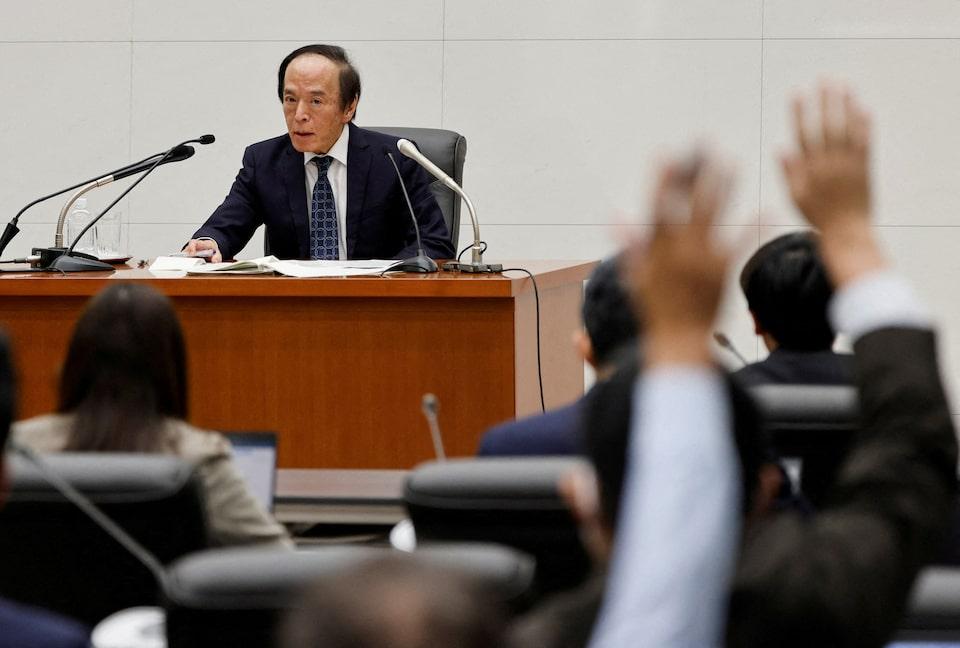
Ueda's ambiguity masks overall hawkish tone on rate outlook BOJ sheds focus on tariff risk, seen resuming rate-hike cycle BOJ seen eyeing another rate hike around July 2026 Weak yen likely to remain key to future rate-hike timing TOKYO, Dec 23 (Reuters) - The Bank of Japan chief's vague commentary on the timing of the next interest rate hike last week riled up the yen bears once again, but hidden in his caution were firm clues the bank could pull the trigger sooner than currency markets think. The BOJ lifted rates to their highest in 30 years on Friday and Governor Kazuo Ueda in his post-meeting press conference left no doubt there were more hikes to come. Sign up here. While that pushed bond yields to multi-decade highs, the yen's fortunes were dictated by what the perceived dithering on monetary policy would mean for the U.S. yield advantage over Japan, which is shrinking too slowly for some investors. However, analysts and sources familiar with the central bank's thinking say the BOJ's ambiguous communication is likely aimed at leaving flexibility on the exact rate-hike timing and belies the BOJ's resolve to keep pushing up borrowing costs. "The BOJ probably wants to resume rate hikes at a pace of about once every six months," said former central bank board member Makoto Sakurai, who projects three more hikes to 1.5% including one around June or July next year. "Recent surveys suggest inflation has become embedded in Japan's economy. The BOJ could raise rates earlier than expected if inflation accelerates," said Sakurai, who retains close contact with incumbent policymakers. Markets currently expect the next hike to come in the second half of next year, but others have more hawkish expectations. There is a slim chance the BOJ could hike rates again as soon as April, some of the sources say, though adding the timing is highly dependent on upcoming data. Analysts at JP Morgan also expect the first rate hike to come in April, followed by another in October next year. PLENTY OF HAWKISH CLUES The yen lost 1.4% to the dollar after Friday's meeting. The declines prompted the sternest warning yet from Japan's finance minister on Tuesday that Tokyo was ready to intervene in the market to arrest the currency's slide. For markets, Ueda's comments on Friday left them guessing how far the BOJ's policy rate could be from levels deemed neutral to the economy, which it currently estimates as in a wide range of 1.0% to 2.5%. But while he refrained from narrowing the estimated neutral rate range, Ueda said there was "some more distance" before the BOJ's policy rate approached the bottom of the range in a sign further rate hikes were on the table. There were other hawkish clues. For one, the BOJ revised up its view on overseas growth and said concerns over the hit from U.S. tariffs receded, declaring an end to a period when tariff risks dominated the policy debate and forced it to pause its rate-hike cycle. The central bank maintained a pledge to continue raising rates and projected firms to keep rising pay next year, underscoring its growing conviction that Japan was on course to durably hit its 2% inflation target. Ueda also said Japan's real interest rates remained "very low" with no sign past rate hikes led to a strong tightening in financial conditions, highlighting the economy's resilience to the impact of higher borrowing costs. YEN REMAINS KEY As with past policy shifts, a weak yen will likely factor heavily in the BOJ's decision on how soon to hike rates. The BOJ's exit last year from massive stimulus and a series of subsequent rate hikes coincided with yen falls that triggered warnings from the government worried about the hit to households from rising living costs. In a sign of the BOJ's alarm over the currency, Ueda said some board members told Friday's meeting that recent yen falls were pushing up prices via higher import costs and could affect underlying inflation. It is rare for the governor to reveal details of a policy meeting's deliberations before the minutes are disclosed. "If yen falls heighten inflationary pressure, that will be a factor justifying rate hikes," said one of the sources, a view echoed by two other sources. Former BOJ executive Akira Otani, who is currently managing director at Goldman Sachs Japan, expects another rate increase in July, but adds that yen moves could sway the timing. "Judging from the BOJ's concern over upside price risks on display at the news briefing, the next rate hike could be pushed forward if yen declines proceed," he said. Highlighting the board's growing awareness of mounting inflationary pressure, two board members dissented to the BOJ's price forecasts on the view underlying inflation has already hit 2%, or likely to meet the level sooner than expected. Aside from the weak yen, an intensifying labour shortage is likely to push up labour costs. The government's big spending package could add to inflationary pressure by stimulating demand, analysts say. Early signs on how the BOJ views such inflationary pressures will come at its next policy meeting on January 22-23, when the board produces fresh quarterly growth and price forecasts. While an upgrade to the board's price projections would firm the case for more hikes, it would also cast doubt on the BOJ's view it was not behind the curve in addressing the risk of too-high inflation, some analysts say. "When real interest rates are deeply negative, it's hard to expect the yen's downtrend to change despite verbal warnings from the government," Naoya Hasegawa, chief bond strategist at Okasan Securities. "Markets are losing sight of where the terminal rate could be on heightening concern the BOJ is being behind the curve." https://www.reuters.com/world/asia-pacific/bojs-hawkish-wink-suggests-next-hike-may-be-sooner-than-markets-think-2025-12-23/