2024-11-09 11:06
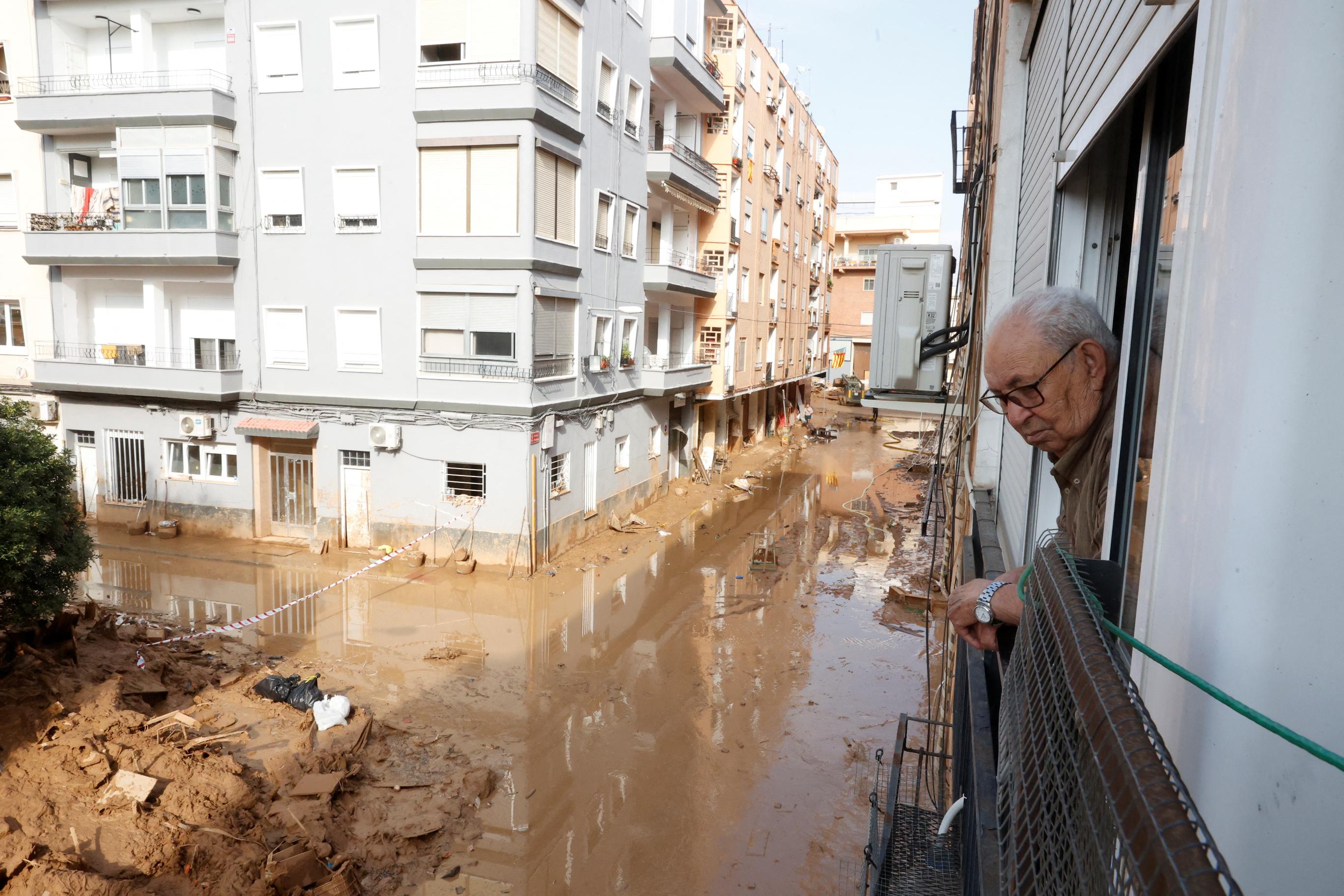
Mixed messages and confusion cost lives, experts say Poor coordination and lack of infrastructure worsened the disaster Judicial enquiries expected to examine decisions and attribute responsibility, central government source says PAIPORTA, Spain, Nov 9 (Reuters) - The water was already knee-high on the ground floor of the hotel where Aitana Puchal had taken refuge when she received a text alert from the regional government of Valencia at 8 pm on Oct. 29 warning people to shelter in place from severe flash floods. "We could have done with (the warning) about six hours earlier," said the 23-year-old, who had fled with other local residents and guests to the first floor of the hotel near the town of Paiporta. "We were all calming down a little from the panic and drying our feet." Others were not so fortunate. Carlos Martinez, another Paiporta resident, told local television the flood alert came when he was stranded in a tree "seeing bodies floating past." Dozens of inhabitants of flooded communities told Reuters that by the time they received the regional government's alert, muddy water was already surrounding their cars, submerging streets of their towns and pouring into their homes. After days of storm warnings from the national weather service since Oct 25, some municipalities and local institutions had raised the alarm much earlier. Valencia University had told its staff the day before not to come to work. Several town halls across the region of eastern Spain had suspended activities, shut down public facilities and told people to stay home. But the mixed messages and confusion cost lives, dozens of local residents and experts told Reuters. More than 220 people died and nearly 80 are still missing in what is the most deadly deluge in a single European country since 1967, when floods in Portugal killed around 500. The national weather service AEMET had raised its threat level for heavy rains to a red alert at 7.36am on Oct 29, following heavy rains in mountainous areas west of the city of Valencia from the early morning. In the 12 hours it took for the regional government's shelter-in-place order to come through, waters running through the usually dry Poyo ravine - the epicentre of the flooding - had surged to more than three times the flow of Spain's largest river, the Ebro. As climate change exacerbates weather patterns along Spain's Mediterranean coast, floods are becoming commonplace and some previous incidents have been deadly. But after at least five decades without a major catastrophe, many people in Valencia were unaware of the grave dangers posed by flash flooding or how to respond. Puchal, the 23-year old who sought refuge in the hotel, said she had never received much information about the risks of floods. "At school, they gave talks about fires," she said. "But not floods." That, combined with poor coordination among regional and national authorities as well as political decisions taken years ago not to invest in waterways infrastructure, worsened the calamitous loss of life, seven experts consulted by Reuters said. "It was foreseeable that we would have catastrophic flooding here," said Felix Frances, professor of hydraulic engineering and environment at Valencia Polytechnic University. Deaths were recorded in 14 of the 24 towns that had already been identified in environment ministry reports as at high risk of flooding, a Reuters review found. Experts including hydraulic and civil engineers, geologists, urban planners and disaster relief specialists said successive failures - to conduct flood mitigation work on nearby rivers, better protect houses built on flood plains, educate people and warn residents quickly - added to the fatalities. With better infrastructure, "those deaths would have been infinitely less," said Luis Bañon, an engineer and professor of Transportation Engineering and Infrastructure at the University of Alicante. One central government source said they expect multiple judicial enquiries to examine decisions made and to attribute responsibility for the high death toll. As more of the world's population settles on flood plains, climate events become more extreme and Europe warms faster than the global average, what happened in Valencia underscores the need for strategic, coordinated measures to protect people in European cities, said Sergio Palencia, professor of urbanization in Valencia Polytechnic University. Frances said he had helped draw up a plan 17 years ago to build flood works for the Poyo ravine at a cost then of 150 million euros ($162 million). On Nov. 5, a week after the floods, the national government earmarked 10.6 billion euros to help victims. The plan Frances worked on expired in 2017 because "no work had been initiated," Spain's State Secretary for the Environment Hugo Moran told Reuters. The government had to start from scratch and some works are underway, he said. Frances said some people were so unaware of the risk they didn't know, for example, that it would be unwise to go down to a basement "to save the car." MULTIPLE ALERTS AEMET had already warned , opens new tab of a storm known locally as DANA -- a high-altitude isolated depression -- on Oct. 25. In following days, its warnings became more specific until Oct. 29, when the alert was upgraded to red -- the highest level, meaning high risks for the population. At 8.45 am, the regional branch of AEMET posted footage on the social media platform X showing cars being swept down roads by a tide of brown water. Just after noon, the public body managing the region's river basins, the Júcar Hydrographic Confederation (CHJ) emailed regional authorities saying the flow of water through the Poyo ravine had reached 264 cubic meters per second. That's stronger than the average flow of the Guadalquivir river, one of Spain's largest. The CHJ said it can only feed the information to regional emergency services, which are responsible for issuing alerts to citizens. Three experts told Reuters that once water started rising, it would take less than nine hours to reach the towns. Over the next eight hours, officials from the regional and national governments, environmental authorities and emergency services exchanged phone calls, emails and held emergency meetings. For some time that afternoon, the data from the CHJ suggested the flow was declining. Carlos Mazon, the region's president and the main person responsible for issuing a shelter-in-place alert, has become a focus for anger over authorities' reaction to the storm. Despite signs of severe flooding, he did not change his schedule. At a news conference at lunchtime, he cited a national weather forecast saying the storm's intensity would decrease around 6pm, according to a tweet he later deleted. As the day went on Mazon, a member of the conservative People's Party that sits in opposition to the Socialist-run national government, appeared in photos tweeted by his staff receiving a sustainable tourism certification, and discussing budgetary matters. His office did not respond to requests for comment on his handling of the disaster. Mazon told reporters on Thursday that he had a "work lunch" on Oct 29 and was constantly in touch with his team handling the situation. At 5pm, as the authorities met again, the CHJ gave "verbal notification" of a generalised increase in water flows running through or near the towns, according to a statement. At 6.43pm, CHJ sent another email warning that the flow of water through the ravine had reached 1,686 cubic metres per second -- more than triple the pace of the Ebro, Spain's largest river by volume. Twelve minutes later, the CHJ said the Poyo flow had risen to 2,282 cubic meters per second before destroying the sensor that measured it. "That could fill an Olympic pool every second," said Nahum Mendez, a geologist at Valencia University. By 7pm, many towns were without power, making it difficult to send alerts immediately to phones or radio stations, officials said. Maria Isabel Albalat, the mayor of Paiporta, which lies in the outskirts of the city of Valencia, said she called the national government delegate in the region to tell her that "my town was flooding" and "people were already dying." Police drove through the town with sirens, lights and loudspeakers telling people to stay off the bridge and leave the streets. At 8 pm, Spain's environment secretary Moran, who was travelling in Colombia, called the regional official in charge of the emergency services Salomé Pradas to say there was a risk a dam would fail. Pradas told local television on Thursday that a technical advisor then suggested the services send a text alert. "How is it possible that with all the information that was available ... the agencies responsible for activating the alarms did nothing?" Moran said. Mazon, the regional head, later said the CHJ data showing water flows declining had added to the confusion and delays. Moran, whose department oversees the CHJ, told Reuters its task was just to provide real time information to emergency teams, not to make decisions on their response. Paiporta mayor Albalat said that by the time the alert came, "we had been up to our necks in water for more than an hour and a half." FLOOD PROTECTIONS Political decisions to not invest earlier in better flood defences to protect a wider area have multiplied the economic cost "by 200," said Bañon, the Alicante professor. "This type of works aren't sexy, don't give political profitability until something happens," he said. "Now they have no choice but to undertake the works." In other countries such as the United States and Japan, natural disasters are more commonplace so people have a better sense of how to respond, said María Jesus Romero, 50, Professor of Urban Planning Law at the Polytechnical University of Valencia. Some Valencia residents remembered past floods, including a major one in 1957. After that, the city of Valencia was protected by hydraulic works completed under dictator General Francisco Franco in 1973. Paiporta residents Rosario Masia, 84, and her husband Cristóbal Martínez, 87, said past floods were "nothing" compared with this one. "We had a hard time, but not like now," said Masia. "We are in pieces." Many properties hit by the floods were built before 2003 when revised guidance on building in flood zones was issued, experts said. The new guidance either bans construction or includes strict pre-requisites including that properties built in flood zones should not have basements. In the largely working-class suburbs of Valencia, the car is vital to get to work. Many of those interviewed by Reuters in the flood zone said their first move when it rains is to move their cars out of underground car parks of their apartment blocks so the engines aren't damaged by flooding. ($1 = 0.9267 euros) (This story has been refiled to fix a typo in paragraph 1) Sign up here. https://www.reuters.com/business/environment/spains-flood-disaster-was-its-worst-recent-history-heres-what-went-wrong-2024-11-09/
2024-11-09 09:09
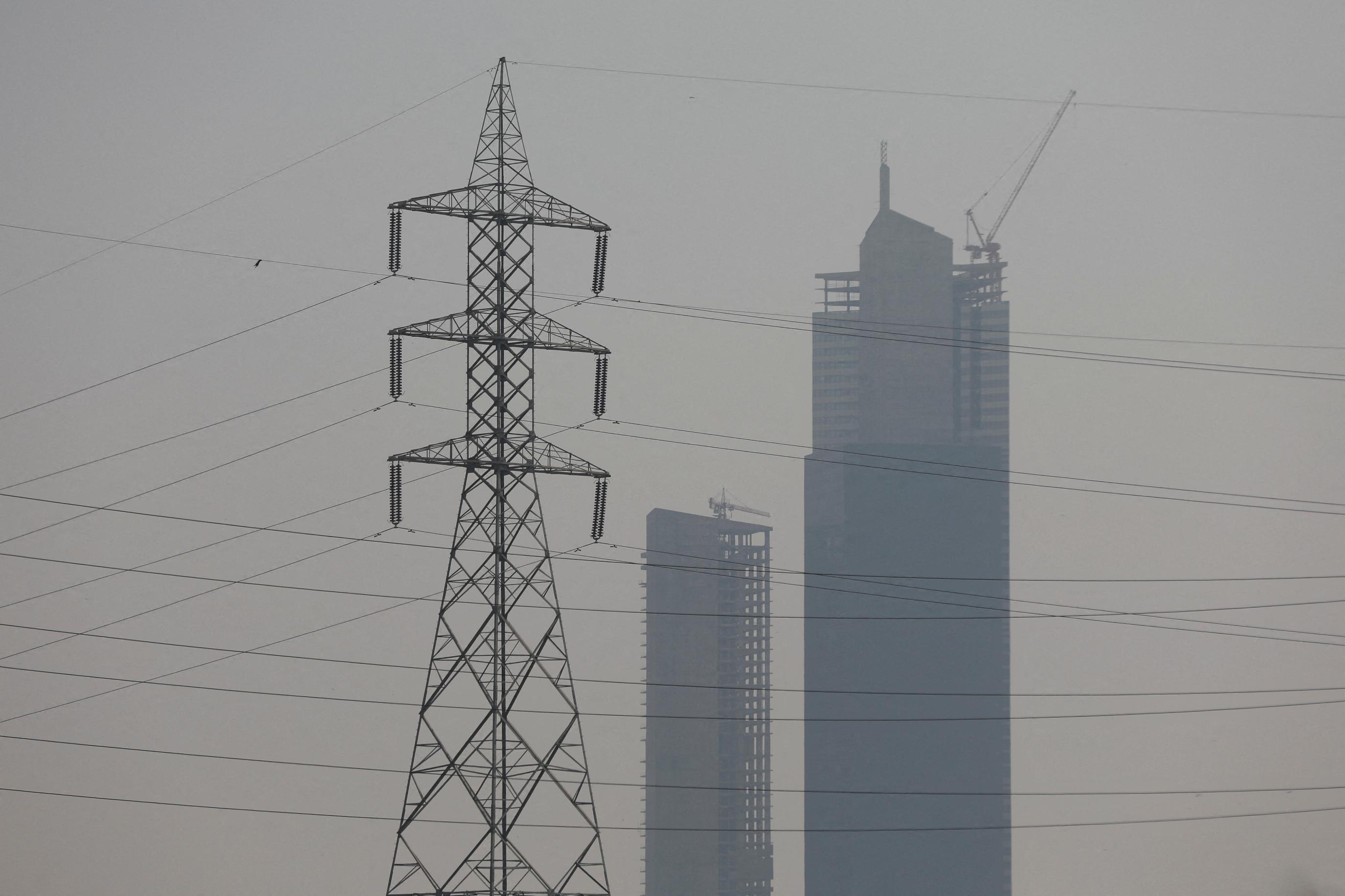
Pakistan to cut winter electricity tariffs to boost consumption, reduce gas use Tariff reduction expected to aid businesses, people Ministry expects slash in winter tariffs to reduce electricity costs by 7-8% Pakistan witnessed 8-10% YoY decrease in power consumption over the past three quarters KARACHI, Nov 9 (Reuters) - Pakistan will reduce electricity tariffs during winter in a bid to boost consumption and cut the use of natural gas for heating, its power minister told Reuters on Saturday. The move is expected to provide relief to businesses and citizens, who have suffered from steep and sudden increases in electricity tariffs following energy sector reforms suggested by the International Monetary Fund (IMF). Utilities in Pakistan, many of which have had to curtail or even completely cease operations in winter months due to demand dropping by up to 60% from peak summer levels, will also benefit from the move. "Reducing prices will increase demand, especially in winter when people use inefficient gas resources," Power Minister Awais Leghari told Reuters in a telephone interview. Pakistan will pilot the plan starting this winter, and the lower tariffs will apply between December 2024 to February 2025, he said. The IMF, which approved a $7 billion, 37-month loan for Pakistan in September, did not immediately respond to a request for comment. Pakistan relies heavily on expensive natural gas and burning wood for heating during winter. Power consumption in Pakistan has declined 8-10% year on year over the past three quarters, Leghari said. But he said he hopes that an economic recovery will cover up for lost ground and will help boost demand by a net average 2.8% annually over the next ten years. Leghari expects the move to slash winter tariffs to help industries reduce electricity costs by 7-8% at an optimal level, while stimulating industrial growth in the process. Leghari also said the government is working to rationalize power tariffs, re-profile power sector debt and adjust tax structures within electricity bills. "The government is in talks with development partners to reduce taxes to spur growth of electric vehicles and combating the emergent problem of air pollution, promoting a shift away from combustion-based transportation towards clean energy," he said. Sign up here. https://www.reuters.com/world/asia-pacific/pakistan-slash-winter-power-tariffs-spur-demand-cut-gas-use-2024-11-09/
2024-11-09 08:03
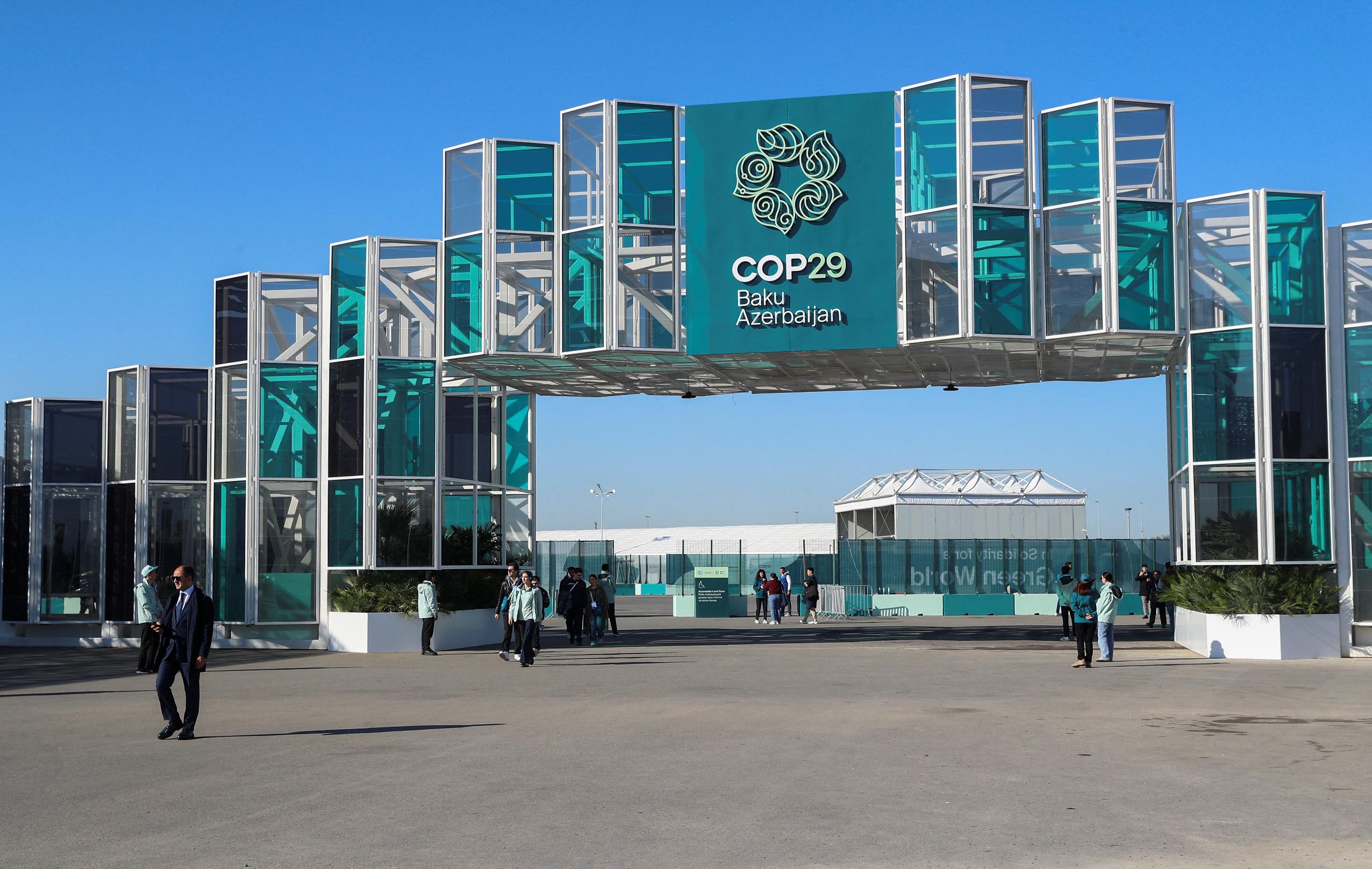
BAKU, Nov 9 (Reuters) - Countries at the U.N. COP29 climate summit in Azerbaijan will attempt to agree rules for a global system for trading carbon offset credits. Here's what you should know: WHAT ARE CARBON OFFSETS? Some governments and companies may struggle to reduce their planet-warming greenhouse gas emissions to meet their climate targets. Supporters of carbon offsets see them as a key means to help meet these goals. These offsets allow one nation or company to offset some of their emissions by paying for actions to cut emissions elsewhere. These actions might include rural solar panel installations or converting a fleet of petrol buses to electric. WHAT IS ARTICLE 6? Article 6 of the Paris Agreement helps countries work together to reduce their carbon emissions. It sets out two options for countries and companies to trade offsets, helping them meet the goals they set to reduce planetary-warming gases in their climate action plans, known as nationally determined contributions (NDCs). One allows two countries to set their own terms for a bilateral carbon trading agreement, this is known as Article 6.2. The second aims to create a central, UN-managed system for countries and companies to begin offsetting their carbon emissions and trading those offsets, known as Article 6.4. Article 6 is seen an important mechanism for delivering climate finance to developing countries, and a Paris Agreement carbon market, if launched, could continue operating even if the United States under Donald Trump withdraws support for the Paris Agreement. WHAT'S BEEN DECIDED SO FAR? At the COP26 climate summit in Glasgow, negotiators reached a breakthrough agreement that established a broad rulebook to regulate trading of carbon credits. But after two weeks of talks at COP28 in Dubai, countries failed to seal a deal on necessary details to operationalise a central carbon trading system or to clarify rules for nations wanting to make bilateral arrangements. Some countries like Japan and Indonesia have decided to press ahead with bilateral agreements without those clarifications and are already preparing to trade carbon credits, known as "internationally transferable mitigation outcomes" (ITMOs). The UN says 91 agreements had been made between 56 countries as of October this year. Thailand and Switzerland completed the first sale in January, and the market for bilateral trade agreements is still quite small. Some buyers are worried there are not adequate rules to stop countries changing the terms of the agreements, or revoking them, and that there is not a robust system to ensure that credits bought and sold are not being counted by both the buying and selling countries. WHAT WILL BE DECIDED AT COP29? Officials are keen to secure an early "win" on Article 6 at this year's climate conference. Market watchers are hopeful an agreement can be reached to set guardrails for the bilateral agreements and to operationalise the UN-backed centralised marketplace. Guardrails include checks and balances to provide assurance countries are buying and selling actual emissions reductions. Some countries for example want methods nations use to generate credits to be checked internationally. Countries will also negotiate whether the UN's central registry can itself house credits that can be transacted and retired or whether it should operate just for accounting purposes. An expert group elected under United Nations rules has already hammered out a framework for the multilateral trading system to ensure credits meet basic quality standards. But countries at COP29 can decide to either sign off on this standard, open up further discussions, or reject it. After COP29, the technical expert group will meet again to agree which methodologies for generating carbon credits through cookstoves projects or reforestation for example can issue credits into the new Paris Aligned system. If the key points are resolved this year, the system could launch as soon as 2025. WHAT DOES THIS MEAN FOR THE VOLUNTARY CARBON MARKET? Some companies that are under no legal obligation to cut their emissions have set voluntary targets, which they can meet partially through buying credits on a voluntary carbon market. In 2022, the voluntary market was valued at about $2 billion worldwide. But the market value plummeted to $723 million last year after being shaken by repeated scandals. Linking up carbon projects currently in the voluntary market with the Paris Agreement system could boost confidence. Developers of projects like mangrove restoration to regenerative agriculture can apply to have their credits sold under the UN system, meaning that if approved, they could sell in either that system or on the voluntary market. Experts expect UN-approved credits to carry a higher price tag. WHAT ARE CARBON OFFSETS? Some governments and companies may struggle to reduce their planet-warming greenhouse gas emissions to meet their climate targets. Supporters of carbon offsets see them as a key means to help meet these goals. These offsets allow one nation or company to offset some of their emissions by paying for actions to cut emissions elsewhere. These actions might include rural solar panel installations or converting a fleet of petrol buses to electric. WHAT IS ARTICLE 6? Article 6 of the Paris Agreement helps countries work together to reduce their carbon emissions. It sets out two options for countries and companies to trade offsets, helping them meet the goals they set to reduce planetary-warming gases in their climate action plans, known as nationally determined contributions (NDCs). One allows two countries to set their own terms for a bilateral carbon trading agreement, this is known as Article 6.2. The second aims to create a central, UN-managed system for countries and companies to begin offsetting their carbon emissions and trading those offsets, known as Article 6.4. Article 6 is seen an important mechanism for delivering climate finance to developing countries, and a Paris Agreement carbon market, if launched, could continue operating even if the United States under Donald Trump withdraws support for the Paris Agreement. WHAT'S BEEN DECIDED SO FAR? At the COP26 climate summit in Glasgow, negotiators reached a breakthrough agreement that established a broad rulebook to regulate trading of carbon credits. But after two weeks of talks at COP28 in Dubai, countries failed to seal a deal on necessary details to operationalise a central carbon trading system or to clarify rules for nations wanting to make bilateral arrangements. Some countries like Japan and Indonesia have decided to press ahead with bilateral agreements without those clarifications and are already preparing to trade carbon credits, known as "internationally transferable mitigation outcomes" (ITMOs). The UN says 91 agreements had been made between 56 countries as of October this year. Thailand and Switzerland completed the first sale in January, and the market for bilateral trade agreements is still quite small. Some buyers are worried there are not adequate rules to stop countries changing the terms of the agreements, or revoking them, and that there is not a robust system to ensure that credits bought and sold are not being counted by both the buying and selling countries. WHAT WILL BE DECIDED AT COP29? Officials are keen to secure an early "win" on Article 6 at this year's climate conference. Market watchers are hopeful an agreement can be reached to set guardrails for the bilateral agreements and to operationalise the UN-backed centralised marketplace. Guardrails include checks and balances to provide assurance countries are buying and selling actual emissions reductions. Some countries for example wants methods nations use to generate credits to be checked internationally. Countries will also negotiate whether the UN's central registry can itself house credits that can be transacted and retired or whether it should operate just for accounting purposes. An expert group elected under United Nations rules has already hammered out a framework for the multilateral trading system to ensure credits meet basic quality standards. But countries at COP29 can decide to either sign off on this standard, open up further discussions, or reject it. After COP29, the technical expert group will meet again to agree which methodologies for generating carbon credits through cookstoves projects or reforestation for example can issue credits into the new Paris Aligned system. If the key points are resolved this year, the system could launch as soon as 2025. WHAT DOES THIS MEAN FOR THE VOLUNTARY CARBON MARKET? Some companies that are under no legal obligation to cut their emissions have set voluntary targets, which they can meet partially through buying credits on a voluntary carbon market. In 2022, the voluntary market was valued at about $2 billion worldwide. But the market value plummeted to $723 million last year after being shaken by repeated scandals. Linking up carbon projects currently in the voluntary market with the Paris Agreement system could boost confidence. Developers of projects like mangrove restoration to regenerative agriculture can apply to have their credits sold under the UN system, meaning that if approved, they could sell in either that system or on the voluntary market. Experts expect UN-approved credits to carry a higher price tag. Sign up here. https://www.reuters.com/business/environment/cop29-what-is-carbon-credit-what-is-article-6-2024-11-09/
2024-11-09 07:04
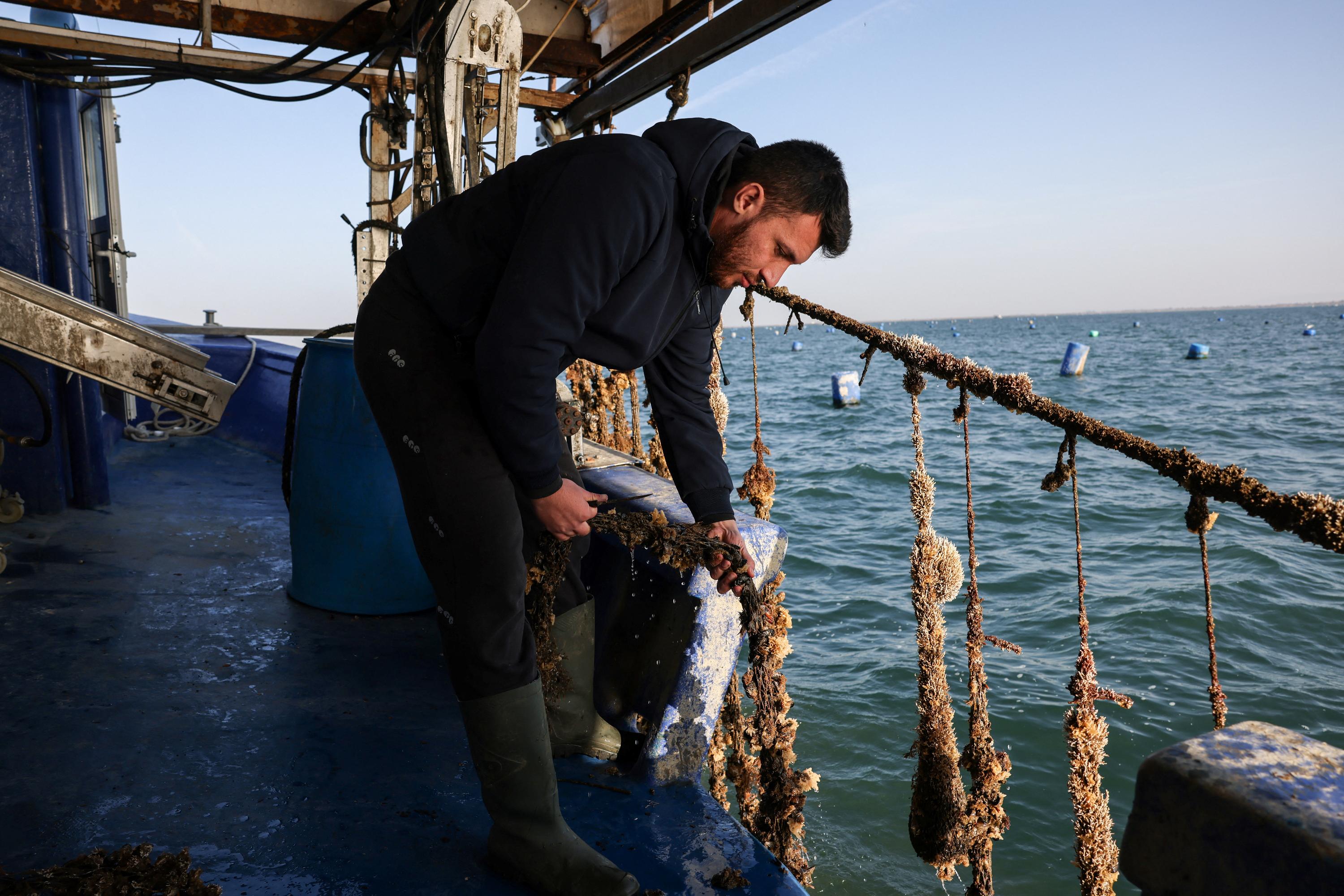
Record sea temperatures cause 90% drop in 2024 mussel harvest Scientists warn extreme weather linked to global warming threatens aquaculture Mussel farmers seek state compensation to cope with losses THERMAIC GULF, Greece, Nov 9 (Reuters) - When Anastasios Zakalkas pulled up the ropes of his mussel farm in the Aegean Sea last month, the devastation was clear: the lines were not heaving with molluscs as they should be at harvest time but were instead filled with cracked, empty shells. It is the second time in three years that record sea temperatures have hit the mussel harvest in northern Greece, where farmers said they saw a 90% drop in the 2024 catch. Next year will be a dud too, Zakalkas said, because all the seed for the coming season also perished. "The destruction we suffered (for next year) was 100%," 35-year-old Zakalkas said aboard his fishing boat on a balmy morning in late October. "We don't know how we'll make a living in the new year. Our main and only job is mussels," he said. Like other Mediterranean countries, Greece is particularly susceptible to climate change, which this year led to months of above-average temperatures, punishing drought and wildfires. Crops, including chestnuts, apples and cherries have been hit. Scientists say extreme weather linked to global warming could spell bad news for its aquaculture sector too. A series of heatwaves hit Greece in July, sending sea temperatures in the Thermaic Gulf, its main mussel producing area, above 30 degrees Celsius (86°F) for days - too hot for mussels to survive. Greece last saw mass mussel deaths in 2021 but scientists forecast that it would not be repeated for another 10 years, said Kostas Koukaras, a biologist who studies marine ecosystems. "This shows, even to those most sceptical, that the climate crisis is here," he said. As world leaders prepare to meet in Azerbaijan's capital Baku for this month's U.N. climate summit COP29 - dubbed the "climate finance COP" - Koukaras said governments should help producers deal with climate-related costs. "We're very close to the collapse of mussel farming in Greece, so the state needs to support these people," he said. Greece's aquaculture production was worth over 619 million euros in 2021, the third in Europe after France and Spain, according to the Hellenic Aquaculture Producers Organization (HAPO). It is among Europe's main producers of the Mediterranean mussel and exports nearly all of the 20,000 tonnes farmed annually by small family businesses. Spain has also seen mussel deaths, although Koukaras said Greece's sector was hit hardest because nearly all its farms are concentrated in the same region. For the 100 or so mussel farming families in Zakalkas' small town of Kymina, the future looks dim. They are seeking state compensation to pay off debts, while others are looking for work in factories, he said. "We're afraid," said Sotiris Tsaros, another mussel farmer. "If this happens again next year, we'll all leave and everything I've done as a farmer for the last 30 years will be gone." Sign up here. https://www.reuters.com/world/europe/greeces-mussel-harvest-wiped-out-by-warming-seas-2024-11-09/
2024-11-09 07:02
Nov 9 (Reuters) - Russia is working on a plan to merge state-backed Rosneft Oil (ROSN.MM) , opens new tab with Gazprom Neft (SIBN.MM) , opens new tab and Lukoil (LKOH.MM) , opens new tab, creating the world's second-biggest crude oil producer, the Wall Street Journal reported on Friday. Talks between executives and government officials took place over the past few months, and a deal may or may not happen, the newspaper said, citing people familiar with the matter whom it did not identify. A combination of Rosneft, Gazprom (GAZP.MM) , opens new tab subsidiary Gazprom Neft and Lukoil, would be second to Saudi Arabia's Aramco (2222.SE) , opens new tab and could pump almost three times U.S. oil producer Exxon's (XOM.N) , opens new tab output, the report added. There are some obstacles, including opposition from some Rosneft and Lukoil executives and the problem of collecting funds to pay Lukoil shareholders, the report said. Lukoil, Rosneft, Gazprom and the Kremlin did not immediately respond to Reuters requests for comment, while Gazprom Neft could not immediately be reached. The Journal quoted a Rosneft spokesperson as saying the report was incorrect but declining to answer questions, while a Lukoil spokesman told the paper that neither the company nor its shareholders were in merger negotiations “with any parties, as this would not be in the interest of the company". The newspaper quoted a Kremlin spokesperson as saying the administration had no knowledge of a deal. The Kremlin said last month it could not confirm a report that Russia's energy minister had put forward a proposal to nationalise the energy sector. A channel called EJ on the Telegram messaging app, citing unnamed sources, reported that Energy Minister Sergei Tsivilev had suggested to President Vladimir Putin at a meeting in the Kremlin that the energy sector - a key provider of cash for the state - be nationalised. (This story has been corrected to say merger of Rosneft Oil, Gazprom Neft and Lukoil, not Rosneft Oil and Gazprom Neft, in paragraph 1; and to clarify Gazprom Neft is a subsidiary of Gazprom, not of Gazprom and Lukoil, in paragraph 3) Sign up here. https://www.reuters.com/markets/deals/russia-explores-plan-merge-rosneft-with-gazprom-subsidiary-lukoil-wsj-reports-2024-11-09/
2024-11-09 06:07
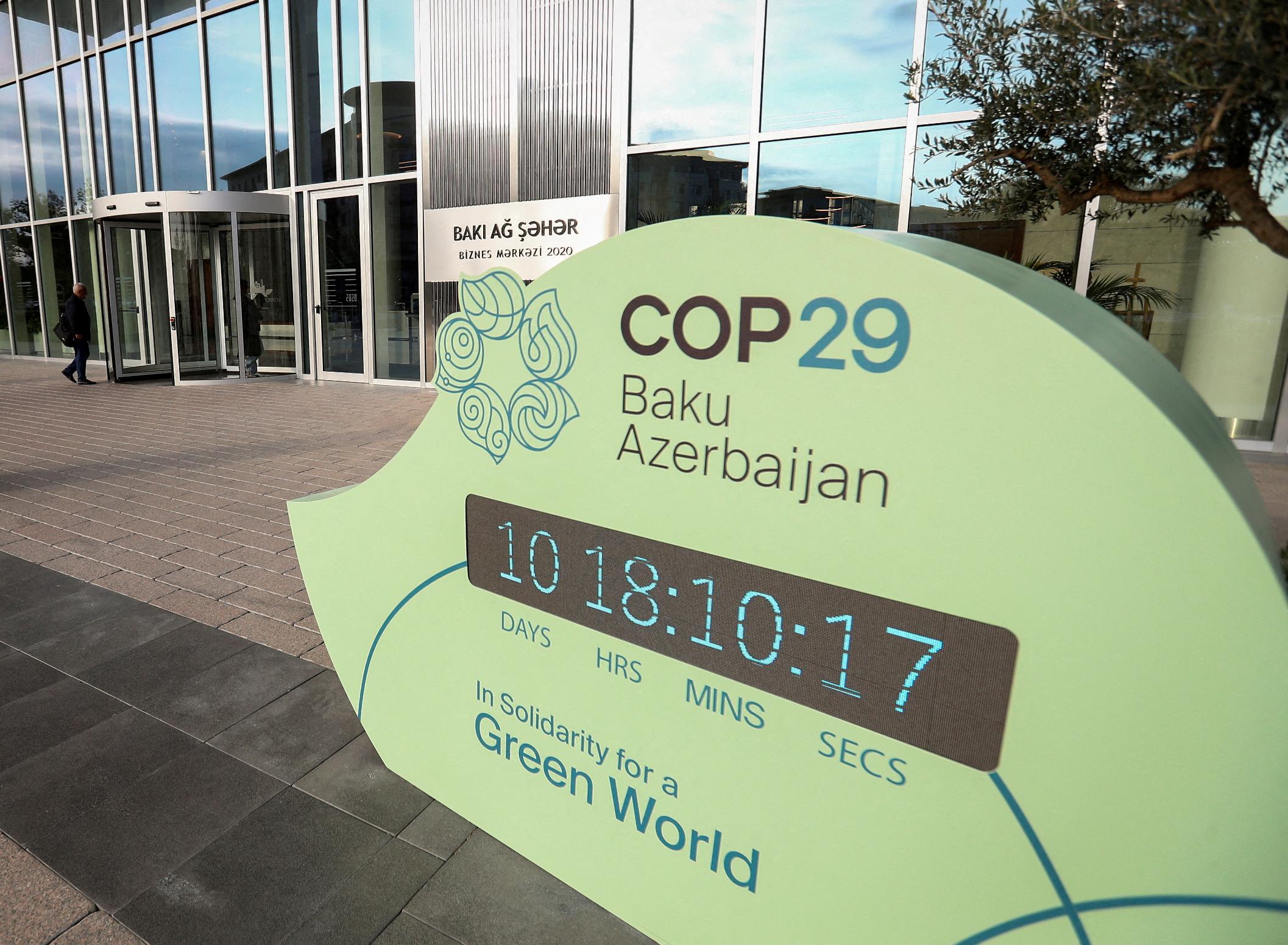
Nov 9 (Reuters) - (This Nov. 9 story has been corrected to say that Marshall Islands are the chair of the High Ambition Coalition for Climate, in paragraph 30) Nearly 200 countries will gather next week for the U.N. climate summit, COP29. Reaching a consensus for a deal among so many can be difficult. Here are some of the major players and negotiating blocs involved in the COP29 summit starting Nov. 11 in Baku, Azerbaijan. CHINA China produces the most energy from climate-warming fossil fuels and also from renewable energy sources. It accounts for about 30% of the world's annual carbon emissions, making China the biggest greenhouse gas polluter. However, the country's emissions may have peaked following recent expansions in renewable energy, according to the Helsinki-based Centre for Research on Energy and Clean Air. Although the world's second largest economy after the United States, China retains the developing country designation in U.N. climate negotiations that began in the 1990s. As such, it says the United States and other industrialised countries should move first and fastest with climate action. Beijing also rejects calls for it to contribute to climate finance for developing countries. China will send to COP29 a new diplomat for climate change as Liu Zhenmin, a former vice foreign minister has replaced long-time climate envoy Xie Zhenhua who retired. UNITED STATES The world's second largest emitter, and largest historic emitter, comes to COP29 following an election that will put Donald Trump back in power in 2025. U.S. negotiators from the outgoing Biden Administration, led by White House senior adviser John Podesta, will represent the country at COP29. But Trump's victory has reduced the chance of a strong deal on a new global finance target, or an agreement to increase the pool of countries that should contribute. President-Elect Trump has promised to again pull out of the 2015 Paris Agreement and has labelled efforts to boost green energy a "scam". Although the Biden Administration has provided hundreds of billions of dollars for climate change mitigation and adaptation through the Inflation Reduction Act, the U.S. has continued to break records as the world's biggest oil and gas producer during his presidency. EUROPEAN UNION The 27-country EU has not yet offered its position on some of the most divisive issues for COP29. It has yet to say how big the new climate finance target should be, or how much should come directly from national budgets as opposed to multilateral lending institutions or private investment. It has demanded, however, that China and other fast-developing economies contribute. The EU and its member states have contributed the most global climate finance to date, having more than doubled their offer over the last decade. In 2023, the EU and its member states contributed 28.6 billion euros ($30.8 billion USD) in climate finance from public sources. UNITED KINGDOM Britain's Labour Party government, elected in July, plans to emphasise its climate commitment at COP29, after Energy Minister Ed Miliband described Britain as being "back in the business of climate leadership". The country, which hosted the COP26 summit in Glasgow in 2021, has promised to submit its next set of emissions-cutting pledges for 2035 at the Baku summit, three months before it is due in February. Britain also has called for an ambitious finance goal, but it is unclear how much it could contribute from its debt-strained budget. THE TROIKA Calling themselves "the troika," the host countries of COP28, COP29 and COP30, last year said they were collaborating to ensure continuity in organising the annual U.N. climate talks. All three countries have economies that rely on fossil fuels. The COP28's United Arab Emirates and COP30's Brazil are among the world's 10 biggest oil producers and COP29's Azerbaijan is a proponent of its natural gas industry. 'BASIC' COUNTRIES As fast-developing and populous nations, Brazil, South Africa, India and China can have an outsized impact on the world's ability to tackle climate change. Each country has asked for more climate financing through the concept of "common but differentiated responsibilities" - meaning rich countries that emitted the most historically should do more to address the problem. OTHER NEGOTIATING BLOCS: G77 + CHINA - This alliance of 77 developing countries and China also says rich countries have a bigger responsibility to cut CO2 than poorer nations. AFRICAN GROUP OF NEGOTIATORS African countries will be pushing at COP29 for more climate finance and getting the Paris Agreement's Article 6 on carbon market rules into force by early next year. They remain concerned about the idling of the loss and damage fund following this year's flooding in East Africa and fatal heatwaves in the Sahel. African countries plan to challenge a decision , opens new tab to place the fund's technical assistance body in Geneva, objecting to the high-cost city being chosen over recommendations for Nairobi. The fund's headquarters will be in the Philippines, but the technical assistance body that provides support to countries faced with damages from climate-fuelled natural disasters will be in Switzerland. ALLIANCE OF SMALL ISLAND STATES A powerful group of countries disproportionately affected by climate impacts, notably sea level rise, the AOSIS bloc is focused on securing trillions of dollars in climate financing and advancing global efforts to phase out fossil fuel use. LEAST DEVELOPED COUNTRY GROUP This group's 45 nations are also highly vulnerable to climate change but have contributed little to it. They are asking for significant funding from developed countries, preferably in the form of grants. They also want more money to flow into the loss and damage fund. HIGH AMBITION COALITION Chaired by the Marshall Islands, this group pushes for more aggressive emissions-cutting targets and policies. Sign up here. https://www.reuters.com/business/environment/who-are-key-voices-cop29-climate-summit-baku-2024-11-09/