2024-11-08 10:08
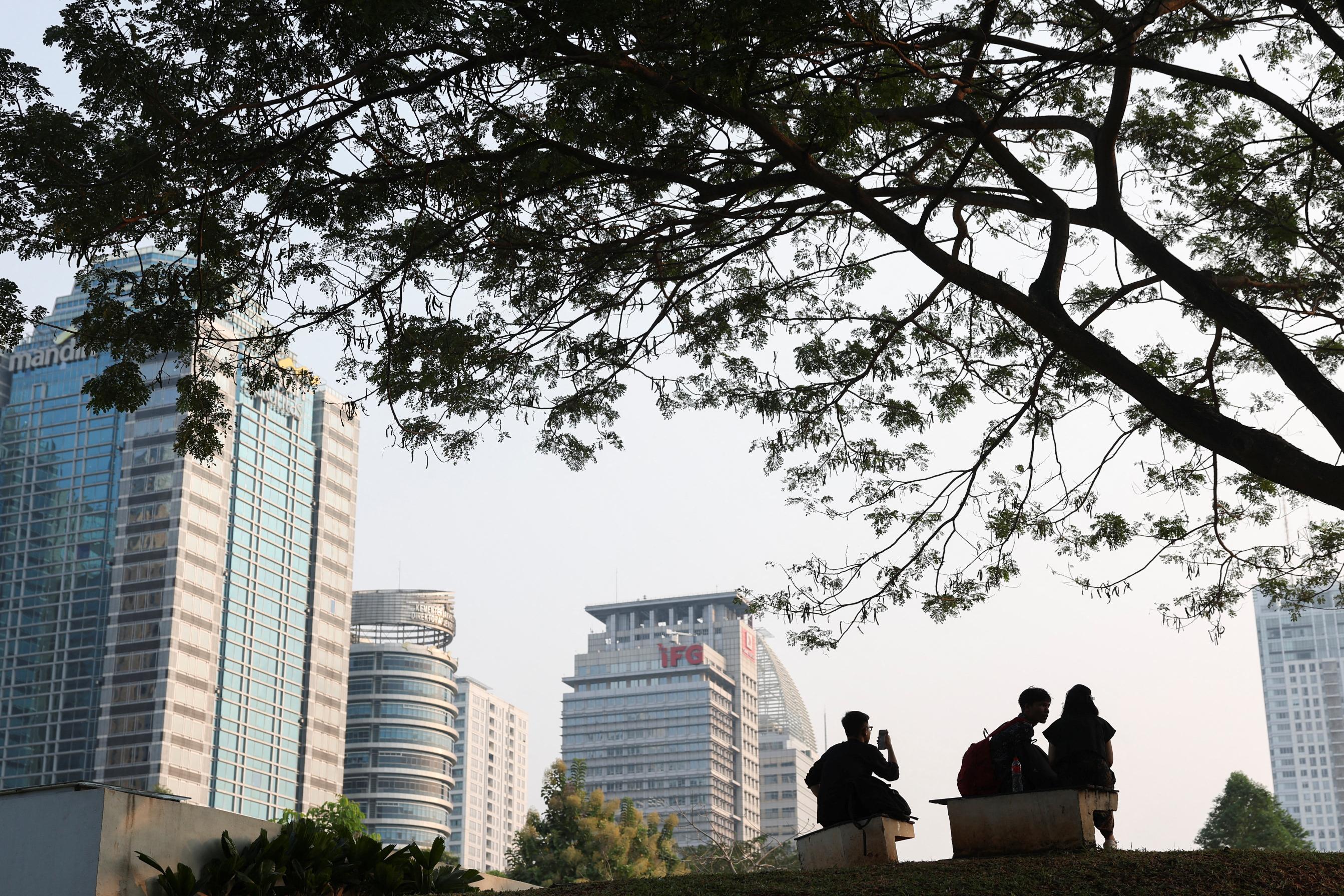
JAKARTA, Nov 8 (Reuters) - Indonesia has prepared scenarios to anticipate the impact of potential policies from U.S. president-elect Donald Trump, a finance ministry official said on Friday. The head of the ministry's fiscal policy agency, Febrio Kacaribu, said the scenarios were designed not only to mitigate negative impacts, but also to find opportunities under a Trump administration. He did not provide further details. Trump has proposed a 10% tariff on all U.S. imports and 60% on Chinese-made products, which if enacted would affect the whole economy by pushing consumer prices higher. Economists say that Trump's tariff plans, likely his most consequential economic policy, would push U.S. import duty rates back up to 1930s-era levels, stoke inflation, collapse U.S.-China trade, draw retaliation and drastically reorder supply chains. Indonesia's finance minister Sri Mulyani Indrawati said in the same press conference that the government would closely monitor the risk of trade wars as countries likely react by imposing higher import tariffs of their own. Economic indicators suggest Indonesia's economy remains resilient with strong household consumption and investment, she added. Sign up here. https://www.reuters.com/markets/asia/indonesia-preparing-scenarios-anticipate-trumps-policies-2024-11-08/
2024-11-08 09:57
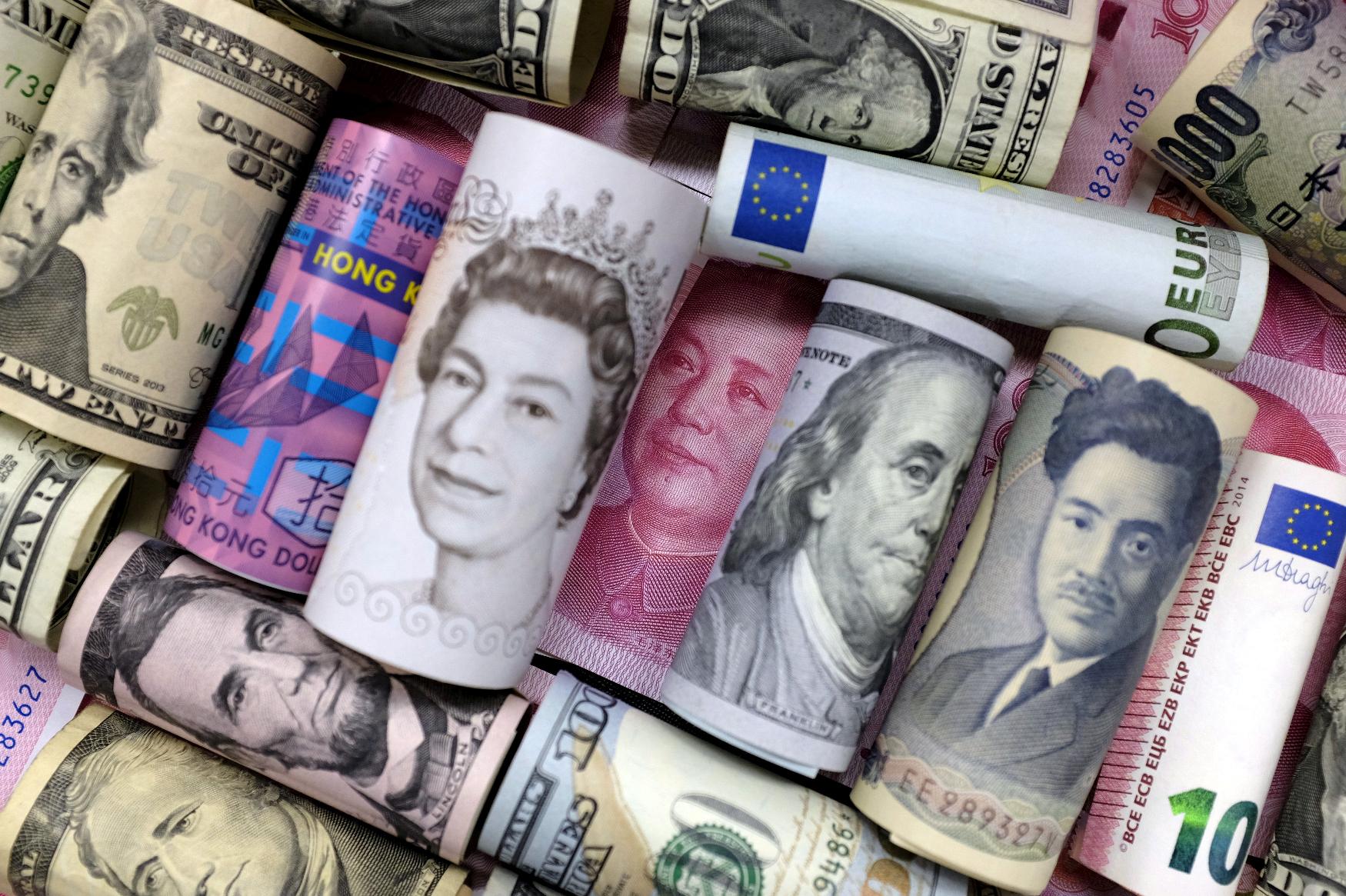
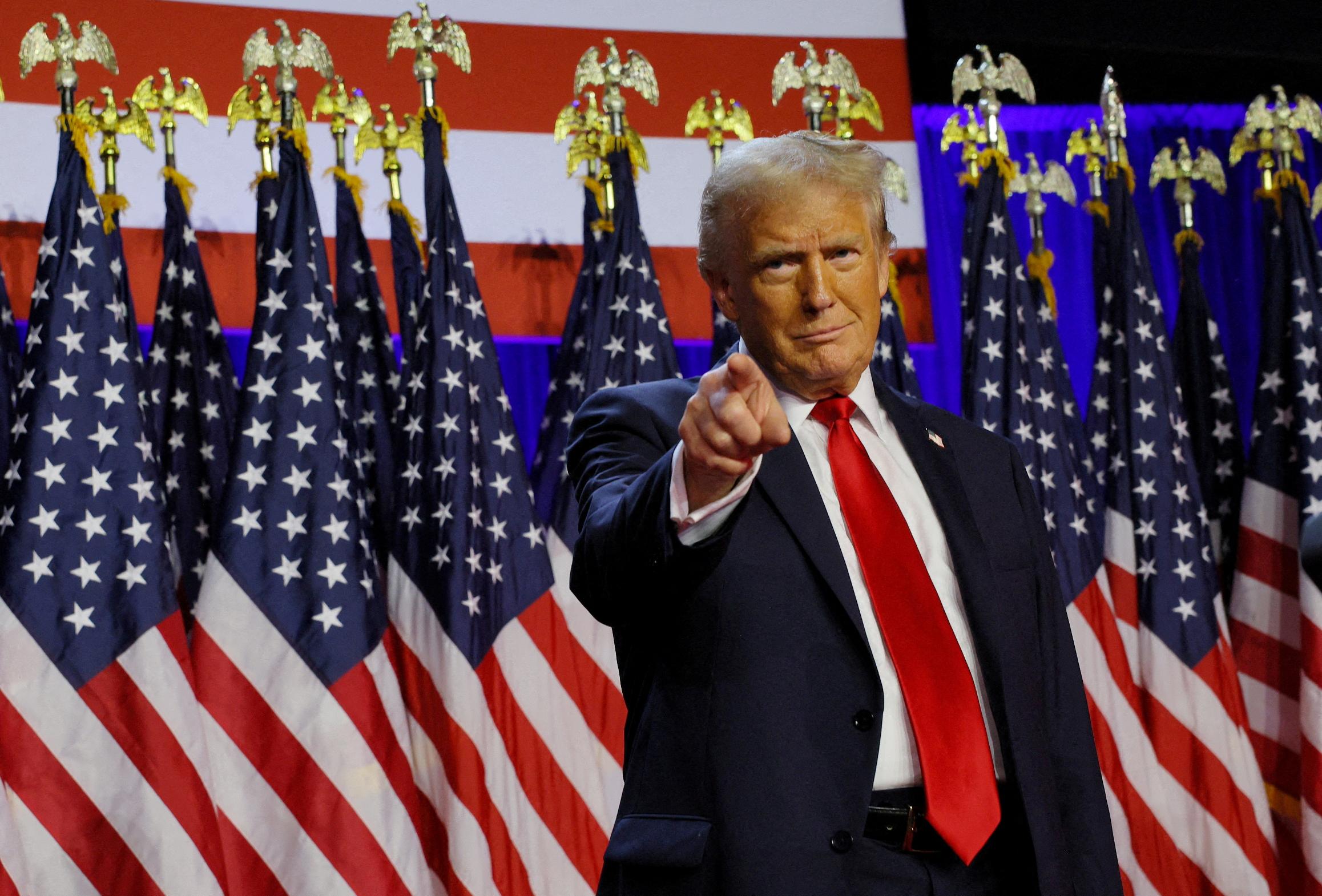
Nov 8 (Reuters) - Donald Trump's sweep to victory in the U.S. presidential election has ignited the so-called "Trump trade", with the dollar, crypto and U.S. stocks all surging, as investors assess the global implications of his return to power. Germany is grappling with a political crisis, Britain's finance minister delivers a key speech and policymakers head to Baku for a climate summit. Here's a look at the week-ahead for markets from Kevin Buckland in Tokyo, Lewis Krauskopf in New York, Sinead Cruise, Dhara Ranasinghe and Karin Strohecker in London. 1/ WATCHING THE USA Focus turns to U.S. inflation data on Nov. 13, as markets wait to see if President-elect Trump will push ahead with economic policies that could be inflationary. Economists expect the consumer price index to have climbed 0.2% for October. September's 2.4% annual increase was the smallest in more than 3-1/2 years, reinforcing Federal Reserve rate-cut bets. But the central bank may have been thrown a curveball with Trump's election, since the Republican's plans to raise tariffs could fuel price rises. Following the Fed's 25 bps rate cut on Thursday, Chair Jerome Powell gave little guidance on how fast and far rates will now fall. Markets are also watching whether "Trump trades" - including a stronger dollar and buying shares of banks and small-cap companies - will continue as investors assess the impact of the election result. 2/ OVER IN BEIJING A closely watched gathering of China's top legislative body wrapped up on Friday with the announcement of a 6 trillion yuan ($835 billion) spending package aimed at cleaning up off-the-book debt at local governments. For investors who had been hoping for extra spending to counter the potential impact of a Trump-led trade war, that was a massive let-down. Hong Kong-traded mainland property shares tumbled as much as 4.6% on Monday. The yuan fell, and commodities from crude to copper sold off. Some analysts had warned it would be too early for Beijing to formalise a strategy only days after Trump's election victory. Macquarie, for one, said the goal of the stimulus is achieving the around-5% growth target for 2024, and "not to reflate the economy in any meaningful way". With Trump's threatened 60% tariffs dwarfing those from eight years ago, meeting that growth target may be the least of Beijing concerns. 3/ POLITIK CHAOS A collapse in Germany's ruling coalition puts a crisis in Europe's biggest economy in the spotlight just after Trump's win. Chancellor Olaf Scholz's decision to fire his finance minister, from coalition partner the Free Democrats, points to a vote of no confidence in January and possible snap elections in March. Scholz's Social Democrats now rule with remaining coalition ally the Greens in a minority government but face pressure to hold a no-confidence vote sooner. A contentious draft budget also needs to be finalised. The timing is unfortunate. Germany has just dodged recession after a series of setbacks, while higher tariffs may loom under Trump. Uncertainty could hurt business investment and slow M&A. As an election-packed year globally winds down, Germany could be gearing up to hold a poll of its own. 4/ COP-ING MECHANISMS Policymakers and climate activists head to Azerbaijan's capital Baku from Nov. 11 for the 29th annual United Nations Climate Summit, known as COP29. The summit has been dubbed the "climate finance COP" for its central goal: to agree on how much money should go each year to helping developing countries cope with climate-related costs. Governments are also eager to resolve rules for trading carbon credits earned through the preservation of forests and other natural carbon sinks. But coming just days after the U.S. elections and amid rising geopolitical tensions, the meeting is expected to be a subdued affair. Trump, a climate denier, wants to ramp up fossil fuel production and pull out of the Paris Climate Accords, a framework for reducing global greenhouse gas emissions. 5/ PENSION POTS UK finance minister Rachel Reeves will serve up her latest plans to reinvigorate Britain's sluggish capital markets in her first Mansion House speech on Thursday, with a slew of pension fund reforms topping industry wish-lists. UK defined benefit retirement schemes, most of which are closed to new members, are collectively sitting on an estimated 300 billion pounds of cash that could be funnelled into housing, infrastructure, unlisted company investments and unloved stocks for the greater good of the UK economy, industry sources say. But while change is broadly welcome, the idea of mandating pension fund investment in so-called UK productive finance has been criticised because of the risk that good intentions may not always lead to good outcomes for retirement savers, particularly as UK equities continue to perform poorly against global peers. Sign up here. https://www.reuters.com/business/take-five/global-markets-themes-graphic-2024-11-08/
2024-11-08 08:21
LONDON, Nov 8 (Reuters) - The United States, Britain and Sweden all cut interest rates this week, even as Donald Trump's U.S. election win introduced a fresh element of uncertainty given the threat of higher tariffs. Seven of the 10 big developed-market central banks tracked by Reuters are in easing mode, two are keeping rates higher for longer and one, outlier Japan, is hiking. Here's where major rate-setters stand and what traders expect next. 1/ SWITZERLAND The Swiss National Bank has been at the forefront of rate cuts, lowering borrowing costs three times in 2024 to 1% since it kicked off easing in March. With inflation at its lowest level in more than three years, at just 0.6%, traders expect the Swiss National Bank to deliver another quarter point rate cut at its Dec. 12 meeting. Markets attach almost a 30% chance of a bigger half-point move. Policymakers have suggested the SNB could consider negative rates to make the safe haven Swiss franc, whose strength has hurt exporters, less attractive to investors. 2/ CANADA Canada is firmly in the dovish camp, having cut rates four times in a row since June. In October, the Bank of Canada cut rates by a bigger-than-expected 50 basis points (bps) to 3.75% as inflation eases below its 2% target and the economy weakens. The BOC is tipped to cut rates again in December, with traders attaching almost 50% chance of another half-point move. 3/ SWEDEN Sweden's Riksbank on Thursday cut its key rate by 50 bps to 2.75%, as anticipated, and flagged another reduction in December if the economic and inflation outlooks remain unchanged. Markets give a roughly 60% chance of a quarter point cut in December, with almost 100 bps of easing priced in by end-2025. 4/ NEW ZEALAND The Reserve Bank of New Zealand painted a bleak economic picture in Tuesday's Financial Stability Report, and with inflation within its 1-3% target range, is set to continue with rate cuts at a fairly aggressive pace. The RBNZ has cut rates by 75 bps so far this cycle. Markets are fully pricing a 50 bps easing at its November meeting and see a reasonable chance of another such move in February. 5/ EURO ZONE The ECB is firmly in easing mode, having cut rates for a third time this year in October. Although markets price in another 25 bps cut in December, expectations for a bigger move have been scaled back given stronger than expected data. Euro zone inflation, for instance, accelerated more than expected in October and could pick up further in the coming months. 6/ UNITED STATES The Federal Reserve cut interest rates by 25 bps on Thursday and Chair Jerome Powell said the U.S. presidential election result would have no "near-term" impact on monetary policy. The relationship between Powell and Donald Trump will be in focus as they clashed during the latter's first term. Powell said he would not resign if asked, and that he cannot be legally removed. 7/ BRITAIN The Bank of England cut interest rates by 25 bps for only the second time since 2020 on Thursday and said future reductions were likely to be gradual, predicting the new Labour government's budget would mean higher inflation and economic growth. The budget, with heavy borrowing and spending, prompted investors to dial back bets on the pace of further rate cuts to just two or three more 25 bp cuts across 2025. 8/ NORWAY Norway's central bank remains in the hawkish camp. It held its key policy rates at a 16-year high of 4.5% on Thursday and said they will be on hold for the rest of the year. Norges Bank only expects rates to start declining in the first quarter -- a view traders share, pricing in a quarter point rate cut then. 9/ AUSTRALIA Also hawkish is the Reserve Bank of Australia, which held rates steady at a 12-year high of 4.35% on Tuesday and said policy would need to stay restrictive for some time. The RBA does not see underlying inflation returning to its 2-3% target range until 2026, and markets only see a two-in-three chance of a rate cut by April 2025. 10/ JAPAN Rising inflation prompted longtime outlier the Bank of Japan to nudge borrowing costs up to 0.25% in July, a move that wreaked havoc on global trades that were underpinned by its ultra-loose monetary policies. The BOJ has left rates steady since, and political turmoil after Japan's ruling coalition lost its majority in October's snap election further complicates the picture. Markets see a 25 bps rate hike as more likely than not by January. Sign up here. https://www.reuters.com/markets/rates-bonds/global-markets-central-banks-graphic-2024-11-08/
2024-11-08 08:00
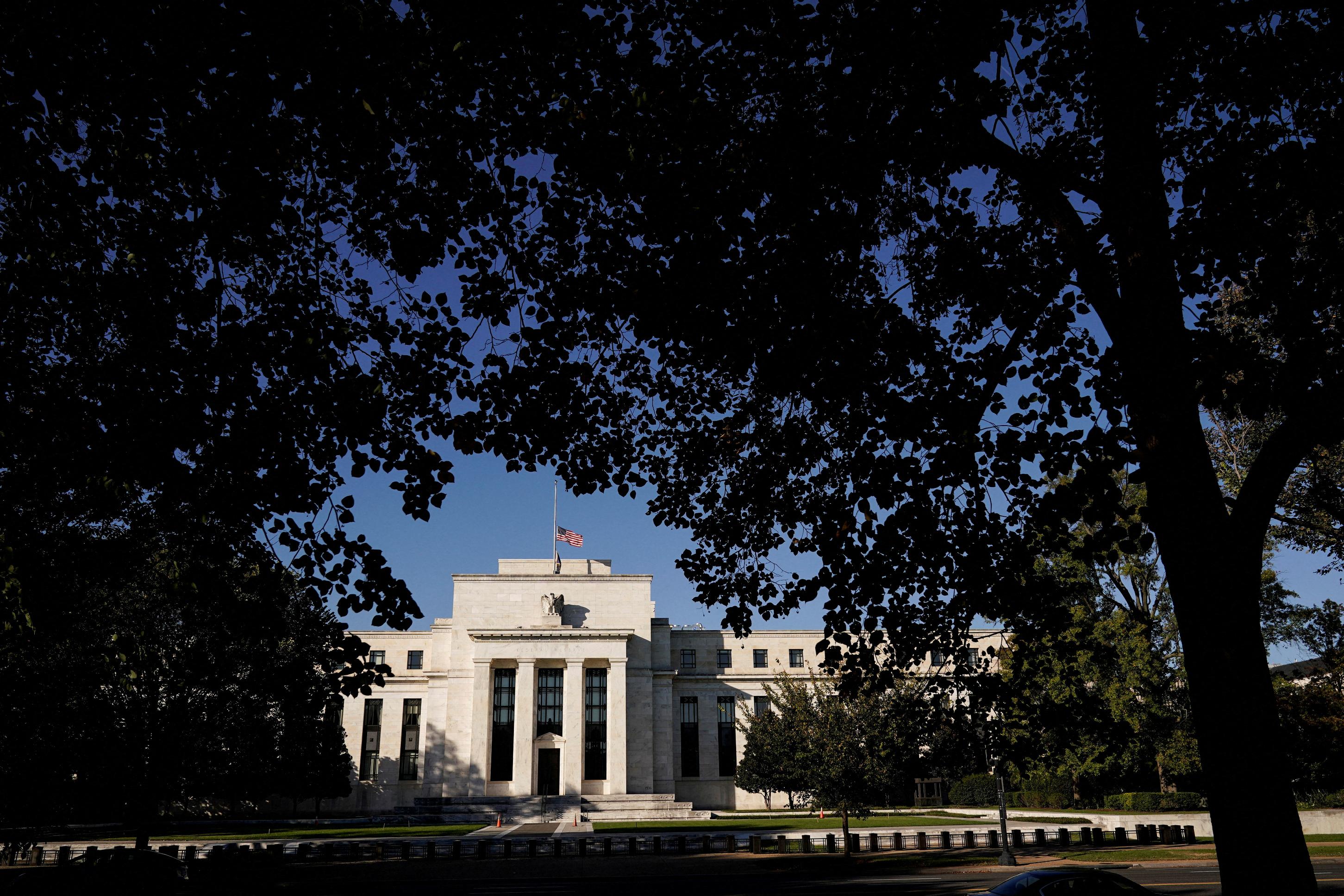
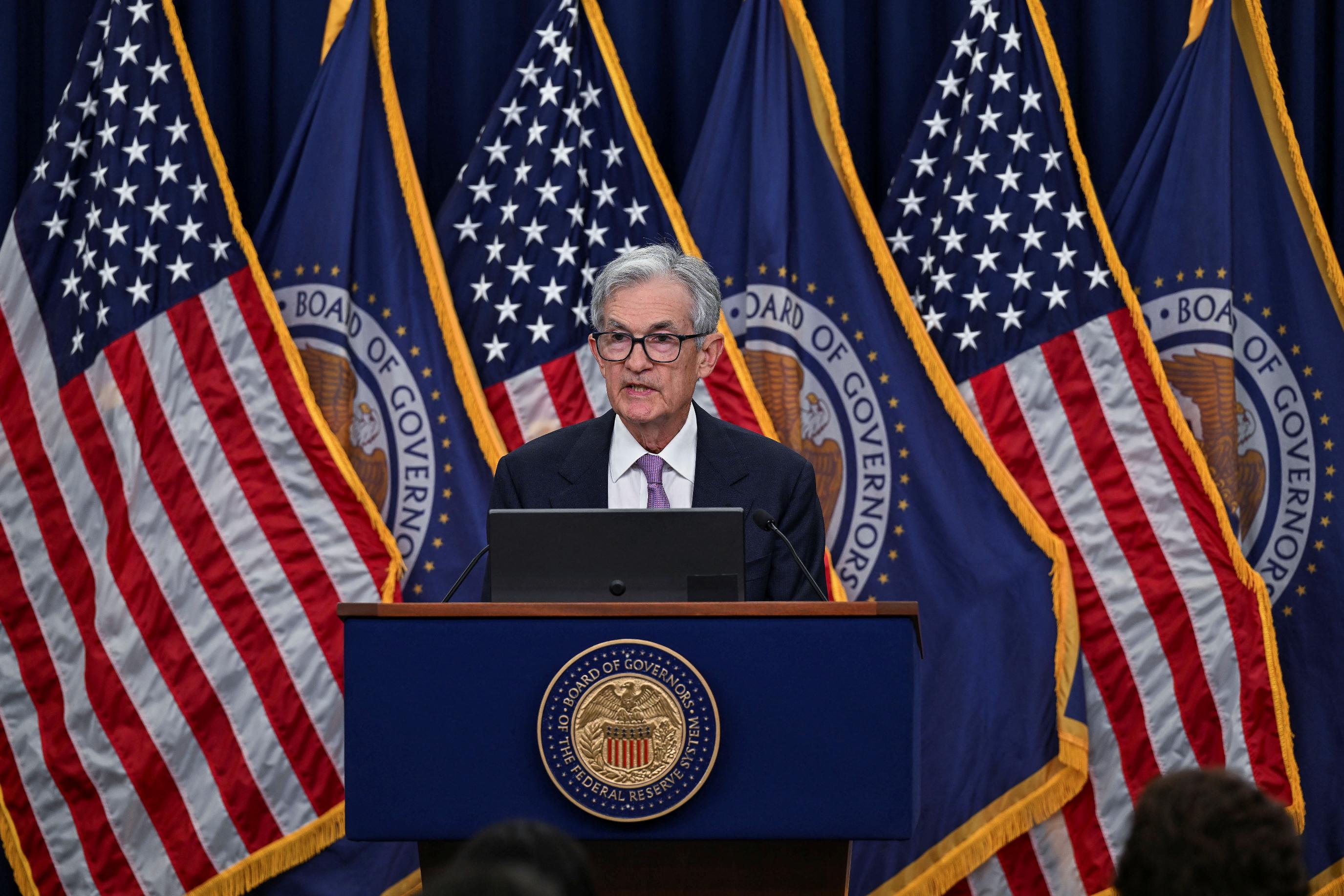
Central bank lowers policy rate to 4.50%-4.75% range Trump's election victory clouds Fed's outlook Financial markets still expect year-end rate cut WASHINGTON, Nov 7 (Reuters) - The Federal Reserve cut interest rates by a quarter of a percentage point on Thursday as its policymakers began taking stock of what could become a more complex economic landscape when President-elect Donald Trump takes office next year. Fed Chair Jerome Powell said the results of Tuesday's presidential election, which paved the way for a U.S. chief executive who has pledged widespread deportation of immigrants, broad-based tariffs, and tax cuts, would have no "near-term" impact on U.S. monetary policy. Powell said the Fed will continue assessing data to determine the "pace and destination" of interest rates as officials reset currently tight monetary policy to account for inflation that has slowed markedly in the past year and is nearing the U.S. central bank's 2% target. But as the new administration's proposals take shape, the Fed chief said the central bank would begin estimating the impact on its twin goals of stable inflation and maximum employment. "It's a process that takes some time," said Powell, who spoke in a press conference following the Fed's decision to reduce its benchmark overnight interest rate to the 4.50%-4.75% range. "It's all of the policy changes that are happening. What's the net effect? The overall effect on the economy at a given time? That's a process ... we go through all the time with every administration." The first years of President Joe Biden's administration, for example, saw passage of major infrastructure and other spending bills that added to growth but, many economists feel, also contributed to the eventual breakout of inflation that the Fed had to suppress with rapid rate hikes in 2022 and 2023. Inflation has since fallen and Fed policy rates are coming down as well, a process Powell said is still expected to lead over time to a more neutral rate of interest that neither stimulates nor restrains the economy. Yet the exact destination remains unknown, and may become even harder to pin down if fiscal and tax policies change as rapidly as Trump has pledged, particularly given the political tailwind of Republican control of the U.S. Senate and possibly the House of Representatives. Powell, who was appointed by Trump and then eventually clashed with him during the Republican president's first term, will now oversee monetary policy during those first critical months of the new administration. Trump indicated over the summer, and a CNN report on Thursday reaffirmed, that he would let Powell continue as Fed chief until the end of his current four-year term in May of 2026 – and Powell said bluntly on Thursday that he would not resign if asked. The president, he said, had no authority under law to remove the head of the Fed, a position confirmed by the Senate, over a policy disagreement. "Not permitted under the law," Powell said. 'VERY GOOD PLACE' For now, at least, both inflation and interest rates are moving lower in line with a Fed outlook that sees price pressures continuing to ease amid ongoing economic growth and a job market the central bank says has "generally eased" but remains healthy. "The easy cuts have been made, and maybe December won't be too contentious either," said Elyse Ausenbaugh, head of investment strategy at J.P. Morgan Wealth Management, referring to the likelihood of another quarter-percentage-point rate cut at the Fed's Dec. 17-18 meeting, its final one of the year. "Thereafter, I imagine the Fed is asking the same questions as investors - to what extent and when will the incoming Trump administration implement its campaign policy proposals?" Powell said for now the economic outlook was solid and the Fed hoped to keep it that way. "This further recalibration of our policy stance will help maintain the strength of the economy and the labor market, and will continue to enable further progress on inflation as we move toward a more neutral stance over time," Powell said. "We think that the economy, and we think our policies, are both in a very good place, a very good place." Treasury yields trimmed losses and the yield curve flattened after the release of the Fed's unanimous policy decision. Futures markets continued to price in another quarter-percentage-point rate cut next month. The Fed's policy statement noted that risks to the job market and inflation were "roughly in balance," repeating language from the statement released after its Sept. 17-18 meeting. The new statement also slightly altered the reference to inflation, saying that price pressures had "made progress" towards the Fed's objective, rather than the prior language that it had "made further progress." The personal consumption expenditures price index excluding food and energy items, a key gauge of inflation, has changed little in the last three months, running at a roughly 2.6% annual rate as of September. Powell said that the language change was not meant to signal that inflation has been sticky. The Fed, he said, has always expected progress to be bumpy, and policymakers have gained confidence that inflation is on a sustainable path to the 2% goal. Sign up here. https://www.reuters.com/markets/rates-bonds/fed-cut-rates-with-new-landscape-decipher-after-trump-win-2024-11-07/
2024-11-08 07:27
JOHANNESBURG, Nov 8 (Reuters) - The South African rand fell on Friday as a turbulent trading week, dominated by Donald Trump's victory in the U.S. presidential election, drew to a close. The rand has mainly tracked offshore drivers this week, also moving on the outlook for U.S. interest rates and the Federal Reserve's latest monetary policy announcement on Thursday. At 1518 GMT on Friday, the rand traded at 17.5675 against the dollar , down about 1.4% on its previous close. The dollar was about 0.3% stronger against a basket of global currencies . The rand tanked on Wednesday when election results showed Trump had won the U.S. presidential race, but it reversed direction on Thursday to close stronger than Wednesday's market open. "Looking ahead for the rand, dollar bulls are expected to reassert themselves, potentially exerting pressure on the South African rand," said Zain Vawda, market analyst at MarketPulse by OANDA. On the Johannesburg Stock Exchange, the blue-chip Top-40 index (.JTOPI) , opens new tab closed about 1.2% down. The benchmark 2030 government bond was stronger, with the yield down 2.5 basis points to 9.17%. Sign up here. https://www.reuters.com/markets/currencies/south-african-rand-slips-against-stronger-dollar-2024-11-08/

2024-11-08 07:19
LONDON, Nov 8 (Reuters) - Far from soothing anxieties about mounting sovereign debt, the world's biggest economies appear to be doubling down - almost goading bond investors into ratcheting up the cost of the borrowing even as central banks pare back interest rates. If these fiscal afterburners do spur economies as intended and elevate inflation rates into the bargain, it could well crimp central banks' willingness and ability to ease any debt market indigestion by lowering official rates much further. And if that market discomfort starts to look more like a heart attack than trapped wind, central banks may soon be forced to halt the runoff of debt from their bloated balance sheets to stabilize their sovereign patients. While these may be considerations for next year rather than this, the scene is being set by new and old leaders alike. NEW DEBT WAVE With U.S. budget deficits already close to 7% of GDP, Donald Trump's return to the White House and likely Republican control of Congress means his tax cut proposals are now firmly on the table. If you believe the central estimate of the nonpartisan Committee for a Responsible Federal Budget , opens new tab, those spending and tax pledges could increase U.S. debt by $7.75 trillion through 2035 - on top of the near $36 trillion already outstanding. Last week, Britain's new Labour Party government detailed its new tax and spend budget that squared the books with extra borrowing almost 142 billion pounds ($184.4 billion) more over the next five years than previously estimated. And Germany's traditionally more restrained borrowing limits looked under pressure this week too, as the ruling coalition collapsed while Chancellor Olaf Scholz pushes to increase debt issuance to finance a package to revive the German economy. Even before any new German debt push sidesteps its national "debt brake" again, euro zone government borrowing was already starting to look irksome just as the European Central Bank plans next year to halt re-investments from its huge bond holdings. While sales of euro zone government bonds next year are estimated to be a shade below 2024's 1.294 trillion euros, according to Bank of America, the figure net of redemptions and ECB buying could hit a new record north of 670 billion euros - 100 billion euros higher than this year. And then there's China - in the throes of an unprecedented public borrowing spree to support the world's second-largest economy from the effects of a property bust and looming trade wars with the United States and Europe. China's top legislative body, the Standing Committee of the National People's Congress, this week considered approval of at least 10 trillion yuan ($1.4 trillion) in extra debt over the next few years. That fiscal package is expected to include 6 trillion yuan raised via special sovereign bonds. 'DEBT AT RISK' And all these new moves in just a fortnight come after a series of international warnings about debt levels. Only last month, the International Monetary Fund , opens new tab estimated global public debt would top $100 trillion this year and rise further in the years ahead. What it modeled as a "severely adverse scenario" risked exploding global debt by up to 20 percentage points above its baseline scenario to some 115% of global GDP in three years. That three-year "debt at risk" level was as high as 134% for developed economies and 88% for emerging markets. The so-called adverse scenarios included possible growth or interest rate shocks. While it did not specify where they may come from, it is not hard to imagine consequences of a global trade war or geopolitical blowup that produce a re-acceleration of inflation. "Much larger fiscal adjustments than currently planned are required to stabilize - or reduce - debt with high probability," the IMF's Fiscal Monitor report said. "Now is an opportune time for rebuilding fiscal buffers and delaying is costly." Clearly, not many governments were listening that closely - arguing fiscal loosening can be justified by investment that builds growth capacity over the long term or that efficiency drives and trade tariffs make up the shortfalls. Fiscal limits seem off-limits for many, however. MARKET IRRITATION For the bond markets themselves, it is still discomfort rather than the emergency room so far. U.S. Treasuries were clearly spooked somewhat by the election outcome - even if ongoing Federal Reserve easing has contained the moves and bond volatility (.MOVE) , opens new tab has retreated from one-year peaks. Yields hit their highest in four months, however, with inflation expectations at their highest in over a year and long-term Treasury "term premia" creeping to their highest in a year too. British gilts had a serious post-budget wobble, with 10-year borrowing rates hitting the highest in a year and only capped as the Bank of England pared back rates again this week too. Germany's political crisis also saw bund yields climb to four-month highs despite the sputtering economy and ongoing ECB easing. Reflecting agitated risk appetite, the German 10-year asset swap spread flipped negative to the tune of 6.7 basis points, the most negative in 20 years. And yet none of these are crisis levels yet - demand at bond auctions seems adequate so far and easing interest rates cosset fixed income for now. The real test of the burgeoning new debt supply lies ahead - not least when the end of central bank easing cycles approaches late next year. At the very least, "quantitative tightening" may have to end rather abruptly. The opinions expressed here are those of the author, a columnist for Reuters ($1 = 0.7701 pound) Sign up here. https://www.reuters.com/markets/afterburners-zooming-sovereign-debt-supply-mike-dolan-2024-11-08/