2024-11-08 06:58
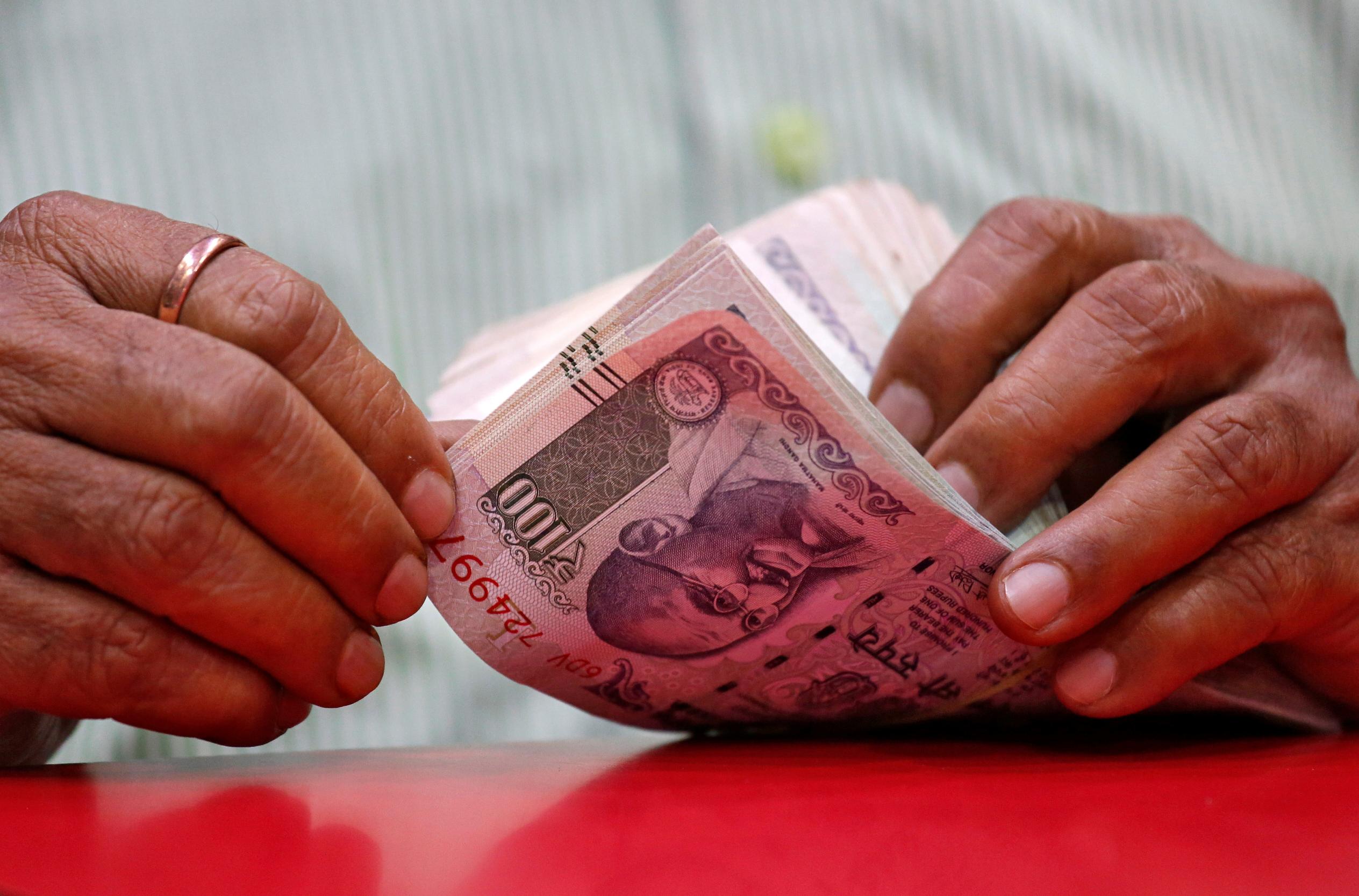
MUMBAI, Nov 8 (Reuters) - The Indian rupee was little changed near a record low on Friday, as likely intervention by the central bank countered the impact of outflows from local stocks. The rupee was at 84.37 as of 11:40 a.m. IST, just shy of its all-time low of 84.3775 hit in the previous session. State-run banks were spotted offering dollars, most likely on behalf of the Reserve Bank of India, near 84.37-84.3750 levels, traders said. While the dollar index has given up a large part of the gains spurred by Republican Donald Trump's U.S. election win, the rupee has not recouped losses because of persistent selling of local stocks. Overseas investors have pulled out over $1.5 billion from the Indian equity market in November so far, on top of the $11 billion outflow in the previous month. India's benchmark equity indexes, the BSE Sensex (.BSESN) , opens new tab and Nifty 50 (.NSEI) , opens new tab, were down 0.1% and 0.2%, respectively, on the day. The Nifty is down 8% from its record high hit late September. The dollar index dropped 0.7% on Thursday and was last quoted little changed at 104.4 in Asia hours while regional currencies were mixed. The U.S. Federal Reserve delivered a widely expected rate cut on Thursday and signalled a cautious and patient approach to subsequent policy easing. The offshore Chinese yuan was down 0.1% at 7.12 on Friday but has recovered after falling below 7.20 following Trump's victory. "Given that there has been a recovery in the offshore Yuan, we may see the RBI intervene a bit more aggressively," FX advisory firm IFA global said in a note. Meanwhile, dollar-rupee forward premiums declined, with the 1-year implied yield down 5 basis points at 2.17%, its lowest since mid-October, on broad-based receiving interest from exporters, foreign and state-run banks. Sign up here. https://www.reuters.com/markets/currencies/rupee-flat-cenbank-intervention-helps-offset-equity-outflows-pressure-2024-11-08/
2024-11-08 06:56
China unveils steps to tackle 'hidden' debt of local governments Treasury yields fall as Fed signals careful, patient easing path Wall St hits record again; world stocks up 3.3% this week NEW YORK/LONDON, Nov 8 (Reuters) - The U.S. S&P 500 zoomed past 6,000 points on Friday to a new record while Treasury yields retreated, as investors again cheered Donald Trump's decisive victory, although disappointment about China's latest fiscal support dampened the mood elsewhere. A day after the Federal Reserve delivered a quarter-point rate cut, as anticipated, the focus returned to the fallout of Tuesday's U.S. presidential election and headlines out of Beijing. The offshore yuan weakened, while U.S.-listed shares of Chinese firms and China exposed-sectors in Europe sank as investors took in news that China's stimulus did not directly inject money into the struggling economy. But investors on Wall Street shrugged off frustration about the lack of a Chinese fiscal bazooka and bought U.S. stocks. The S&P 500 index (.SPX) , opens new tab climbed to an intra-day high of 6,012.45 points before pulling back to finish up 0.4%. The Dow Jones Industrial Average (.DJI) , opens new tab climbed 0.6%, and the Nasdaq Composite (.IXIC) , opens new tab ended flat%. The S&P 500 and the Dow had their best week in a year, while the Nasdaq had its best week in two months. Shares of electric car maker Tesla (TSLA.O) , opens new tab, whose chief executive, Elon Musk, became one of Trump's biggest supporters in the last leg of his reelection campaign, shot up 8.2%, catapulting its market capitalization to $1 trillion for the first time since 2022. Nicholas Colas, a co-founder of DataTrek Research LLC, said there are several reasons for buying U.S. stocks: "The Fed is cutting rates, and the U.S. economy is still strong." In addition, the Republican party won not only the White House this week, but also control of the Senate, and may win control of the House of Representatives - a similar scenario, Colas said, to the November 2016 election outcome that preceded the S&P 500's 22% gain in 2017. Investors are betting that a Trump administration will bring lighter regulation and tax cuts that could boost the U.S. economy. Outside the United States the mood was more subdued. The pan-European STOXX 600 (.STOXX) , opens new tab lost 0.7%, while a MSCI index for world stocks (.MIWD00000PUS) , opens new tab was flat after hitting a record high on Friday. Still, the index for world stocks had its best week in three months. "What you are going to get because of the clean sweep is a mandate to improve the U.S. economy. So, taxes will come down, bureaucracy will ease and regulation will become lighter," said Guy Miller, chief markets strategist at Zurich Insurance Group. "Between now and year-end, there is a tailwind for U.S. stocks. The U.S. market has potential," he said. Germany's DAX stock index fell 0.8% a day after posting its best daily performance of 2024 so far (.GDAXI) , opens new tab, helped by expectations that Germany could scrap its debt brake. CHINA DISAPPOINTS China unveiled a 10 trillion yuan ($1.40 trillion) debt package to ease local government financing strains and stabilize flagging economic growth. Finance Minister Lan Fo'an said more stimulus was coming, with some analysts saying Beijing may not want to fire all its financial weapons before Trump takes over officially in January. Mainland blue chips (.CSI300) , opens new tab fell 1%, a day after rising 3%. Hong Kong's Hang Seng (.HSI) , opens new tab also slid in a sign of some caution ahead of the announcement. The offshore Chinese yuan fell 0.7% to 7.2011 per dollar . China-exposed European luxury (.STXLUXP) , opens new tab and mining stocks (.SXPP) , opens new tab each fell over 3%. FED CUTS U.S. Treasury yields fell after Fed Chair Jerome Powell on Thursday signaled continued, patient policy easing. The Fed's rate cut followed a quarter-point cut from the Bank of England and a large half-point cut by Sweden, also on Thursday. Ten-year Treasury yields fell 8.3 basis points to 4.343% , reversing sharp rises following the U.S. election result. Powell said Tuesday's election result would have no "near-term" impact on U.S. monetary policy. "The Fed pointed to a more uncertain economic outlook and inflation remaining elevated," said Mahmood Pradhan, head of global macroeconomics at the Amundi Investment Institute. "Together with a likely change in policy direction under the new administration, we expect a more uncertain and measured pace of easing next year." The dollar index , which measures the currency against six major peers, rose to 104.91, following a 0.7% drop on Thursday, its biggest since Aug. 23. On Wednesday, it soared 1.53%, the most in over two years, a sign of increased volatility as investors assess the new Trump administration's policies. The euro and sterling both fell against the dollar , , while the dollar slipped 0.3% to 152.46 yen . Bitcoin was up 0.8% after hitting a record high, following a nearly 10% surge this week. Trump has vowed to make the United States "the crypto capital of the planet." After a roller-coaster week, gold fell 0.9% to $2,683.87. It slumped more than 3% on Wednesday, but bounced 1.8% overnight. Last week it surged to an all-time high of $2,790.15. Brent crude oil futures pared losses during London trade and were last down 2.1% at $74.01, U.S. West Texas Intermediate crude fell 2.6% to $70.45. Sign up here. https://www.reuters.com/markets/global-markets-wrapup-1-2024-11-08/
2024-11-08 06:50
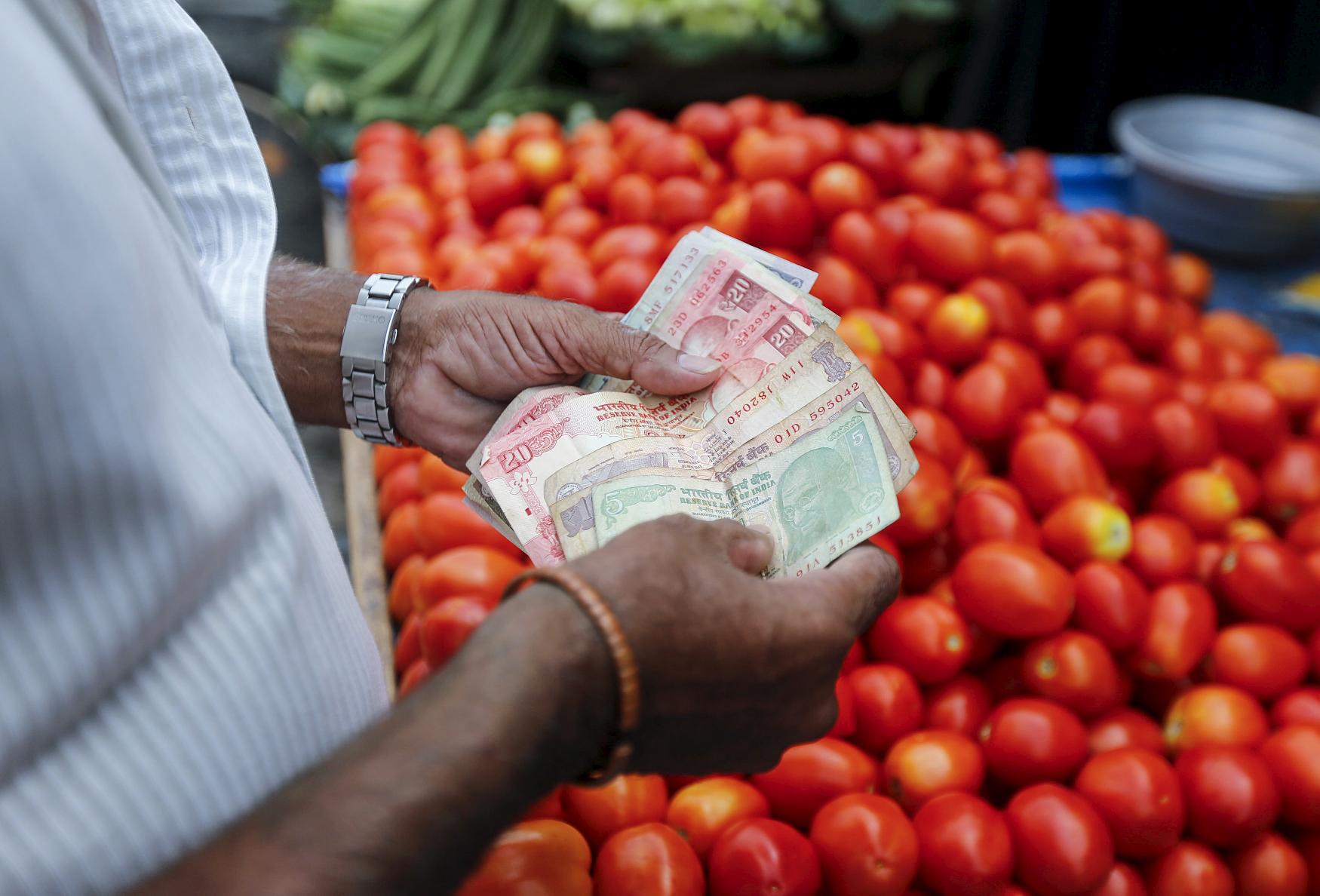
MUMBAI, Nov 7 (Reuters) - The Indian rupee fell to its weakest level on record on Thursday, hurt by outflows from local equities and on expectations that Donald Trump's victory in the U.S. presidential race may boost the dollar going forward. The rupee fell to an all-time low of 84.3775 during the session before ending at 84.3725, down 0.1% from its Wednesday's close at 84.28, its previous record low. While most Asian currencies rose on Thursday and the dollar index dipped 0.2% to 104.9, the rupee was unable to benefit due to strong dollar demand from foreign banks, likely on behalf of custodial clients, traders said. Foreign investors are "pulling out yet again," keeping the rupee under pressure, a foreign exchange salesperson at a large overseas bank said. Benchmark Indian equity indexes, the BSE Sensex (.BSESN) , opens new tab and Nifty 50 (.NSEI) , opens new tab, ended lower by over 1% each. Overseas investors have pulled out more than $1.5 billion from local stocks so far in November, adding to $11 billion of outflows in the previous month. State-run banks were "mildly present on offer (on USD/INR)," which helped limit the currency's decline, a trader at a private bank said. The Reserve Bank of India has routinely intervened via state-run banks to help the rupee avert sharp declines, contributing to the currency's muted implied volatility compared to its regional peers. While the rupee "is seeing an airpocket in terms of foreign equity inflows right now, we think RBI will likely remain strongly in the market to cap FX volatility," MUFG Bank said in a note. Focus now turns to the U.S. Federal Reserve's policy decision due post-midnight IST. The Fed is widely expected to cut rates by 25 basis points, while investors will pay attention to Chair Jerome Powell's commentary for cues on the future policy path. Sign up here. https://www.reuters.com/markets/currencies/rupee-hits-record-low-equity-outflows-strong-dollar-outlook-2024-11-07/
2024-11-08 06:39
US currency may consolidate on uncertainty over Trump policies Japanese yen suffers from widening interest rate differential Nov 8 (Reuters) - The dollar rose on Friday and was heading for a weekly gain as investors evaluated the likely impact on the American economy of Tuesday’s election of Republican Donald Trump as U.S. president. Analysts expect Trump's policy proposals -- including more trade tariffs, a clampdown on illegal immigration, lower taxes and business deregulation -- will boost growth and inflation. But in the near term there remains considerable uncertainty over what policies will actually be introduced. “We don't really know how much was campaign rhetoric, how much is a negotiating position, how much of it is speaking principle,” said Marc Chandler, chief market strategist at Bannockburn Global Forex in New York. “Part of the volatility we're seeing in the dollar and in interest rates is that the market is trying to figure it out.” Republicans also won control of the Senate and are leading the race for the House of Representatives, with some races still to be called. The dollar index jumped to a four-month high of 105.44 on Wednesday, but has dipped since, partly due to profit-taking. It was up 0.58% on the day at 105.01 on Friday and on pace for a 0.68% weekly increase. Data on Friday showed that U.S. consumer sentiment rose to a seven-month high in early November, in a survey taken before the election. The next major U.S. economic release will be Wednesday's consumer price data for October. "We need more clarity about U.S. policies," said Athanasios Vamvakidis, global head of forex strategy at Bank of America. "Until then, the greenback will be trading (on) data and expectations for the Fed easing path." On Thursday, the Federal Reserve cut rates by 25 basis points, which had been widely expected. Chair Jerome Powell said the U.S. central bank would not speculate on the impact of any policies by the incoming U.S. government. Traders are pricing in 65% odds that the Fed will cut again by 25 basis points in December, down from 83% a week ago, according to the CME Group’s FedWatch Tool. The euro dropped 0.85% to $1.0712 and was headed for a 1.12% decline for the week, which saw the collapse of Germany's coalition government on Wednesday. Against the Japanese currency, the greenback fell 0.13% to 152.73 yen . The yen is expected to suffer as the interest rate differential with the United States widens, which could prompt Japan's central bank to raise rates as soon as December to prevent the currency from sliding back toward three-decade lows. China's yuan weakened after Beijing unveiled a 10 trillion yuan ($1.4 trillion) debt package on Friday to ease local government financing strains and stabilize flagging economic growth. "Markets may have been hoping for a larger-than-expected stimulus," said Lynn Song, chief economist for Greater China at ING. The offshore yuan was last down 0.69% at 7.2 per dollar. The Australian dollar , often used as a liquid proxy for its Chinese counterpart, fell 1.53% to $0.6576. Bitcoin was last up 1.45% at $77,068, after earlier reaching a record $77,303.97. Trump is expected to enact a more favorable regulatory environment for the crypto industry. Sign up here. https://www.reuters.com/markets/currencies/dollar-winds-down-after-volatile-week-china-npc-focus-2024-11-08/
2024-11-08 06:17
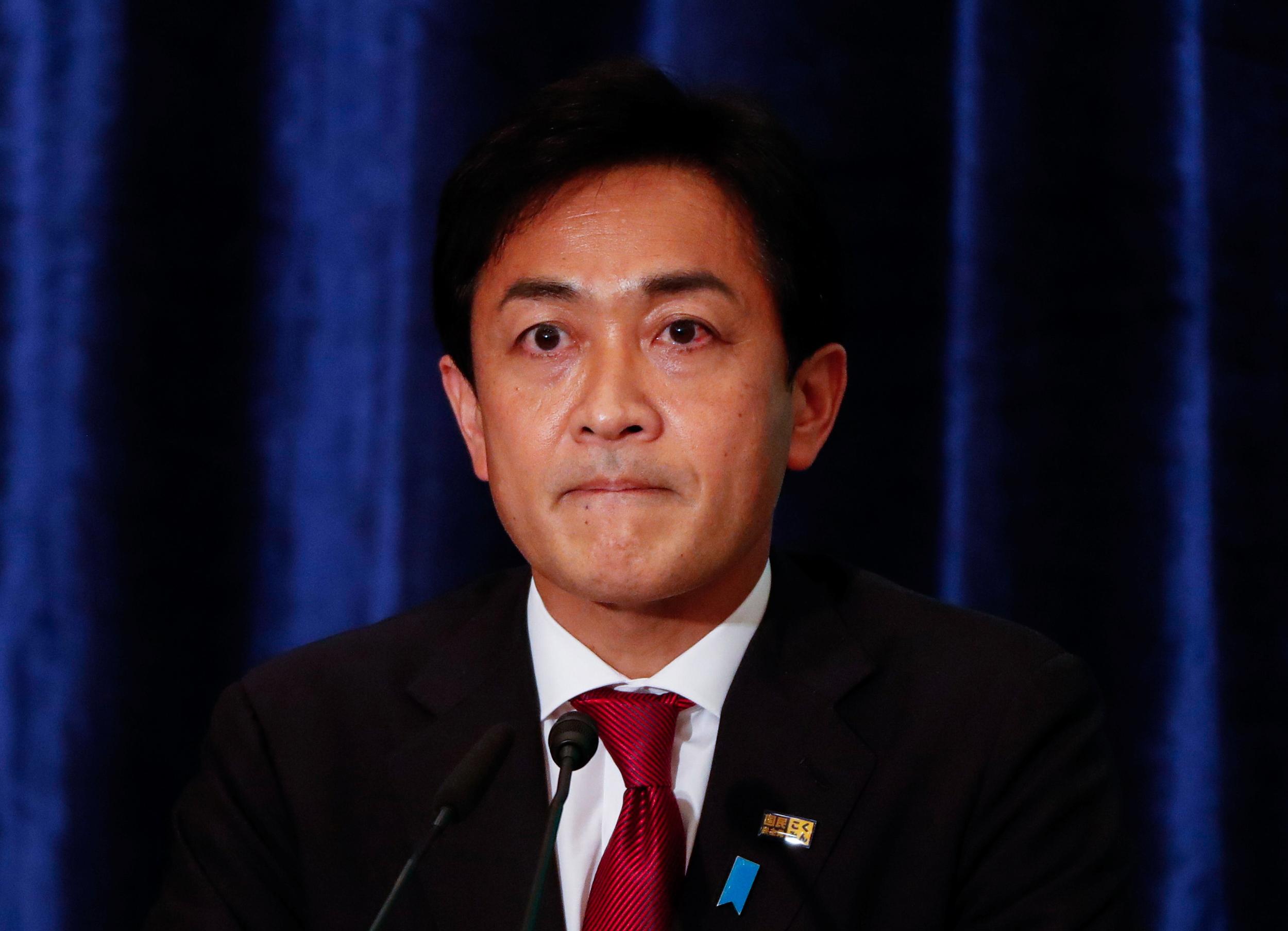
TOKYO, Nov 8 (Reuters) - U.S. President-elect Donald Trump's economic and policies could further weaken the yen's value against the U.S. dollar, the head of an opposition party that Japanese Prime Minister Shigeru Ishiba needs to stay in power said on Friday. "The potential increase in tariffs or tax cuts could lead to inflation (in the U.S.) and therefore higher interest rates," Yuichiro Tamaki, leader of the Democratic Party for the People (DPP) said at a press conference on Friday. Following Japan's general election on Oct. 27, Tamaki's party, which has 28 lower-house members, has gained influence over the ruling Liberal Democratic Party, which lost its majority in the chamber. Any increase in prices in Japan resulting from higher import costs could squeeze households in Japan and further undermine public support for Ishiba. Tamaki said that the Bank of Japan (BOJ) should refrain from raising interest rates until wage growth was consistently outpacing inflation. "Domestic policies should be conducted for domestic objectives," he said. The BOJ ended negative interest rates in March and raised short-term rates to 0.25% in July. Sign up here. https://www.reuters.com/markets/currencies/japans-political-kingmaker-says-trump-policies-may-weaken-yen-2024-11-08/
2024-11-08 06:06
Nov 8 (Reuters) - This year's U.N. climate conference in Baku, Azerbaijan, marks the world's 29th leadership gathering to confront global warming since the first "Conference of the Parties" in 1995. Here are some of the most significant moments in the history of climate talks: 1800s - For about 6,000 years before the industrial era, global levels of atmospheric carbon dioxide (CO2) remained around 280 parts per million ("ppm"). Several European scientists begin studying how different gases trap heat, and in the 1890s Svante Arrhenius of Sweden calculates the temperature effect from doubling atmospheric CO2 levels, demonstrating how burning fossil fuels will warm the planet. 1938 - British engineer Guy Callendar determines that global temperatures are rising in line with increasing CO2 levels, and hypothesises that the two are linked. 1958 - American scientist Charles David Keeling starts measuring CO2 levels over Hawaii's Mauna Loa Observatory, resulting in the "Keeling Curve" graph that shows CO2 concentrations rising. 1990 - At the U.N.'s Second World Climate Conference, scientists highlight the risks of global warming to nature and society. British Prime Minister Margaret Thatcher calls for binding emissions targets. 1992 - Countries at the Rio Earth Summit sign the U.N. Framework Convention on Climate Change (UNFCCC). The treaty establishes the idea of "common but differentiated responsibilities," meaning developed countries must do more to tackle climate-warming emissions because they emitted the most historically. 1995 - UNFCCC signatories hold the first "conference of parties," or COP, in Berlin, with the final document calling for legally binding emissions targets. 1997 - At COP3 in Kyoto, Japan, parties agree to varied emissions cuts for each of the developed countries. In the United States, Senate Republicans denounce the Kyoto Protocol as "dead on arrival". 2000 - After losing the U.S. presidential election, Al Gore begins giving talks worldwide on climate science and policy that eventually are made into the 2006 documentary An Inconvenient Truth. The film wins an Academy Award, while Gore and the U.N. climate science authority - the Intergovernmental Panel on Climate Change - receive the Nobel Peace Prize. 2001 - U.S. President George W. Bush calls the Kyoto Protocol "fatally flawed," signaling the country's effective exit. 2005 - The Kyoto Protocol goes into effect after Russia ratifies it, meeting a requirement for ratification by at least 55 countries accounting for at least 55% of emissions. 2009 - COP15 talks in Copenhagen nearly collapse after wrangling over a post-Kyoto framework, with countries voting to instead "take note" of a non-binding political statement. 2010 - COP16 in Cancun fails to set new binding emissions targets, but the Cancun Agreements establishes a Green Climate Fund to help developing countries cut emissions and adapt to the conditions of a warmer world. 2011 - COP17 talks in Durban, South Africa, falter after China, the United States and India refuse binding emissions cuts before 2015. Delegates instead extend the Kyoto Protocol through 2017. 2012 - As Russia, Japan and New Zealand resist new emissions targets that do not extend to developing nations, countries at COP18 in Doha extend the Kyoto Protocol through 2020. 2013 - Atmospheric CO2 levels cross 400 ppm for the first time in recorded history. 2015 - The global average temperature rises beyond 1 degree Celsius over the preindustrial average. The COP21 talks result in The Paris Agreement, the first pact to call for increasingly ambitious emissions pledges from both developed and developing countries. Delegates also pledge to try to keep warming to within 1.5 C (2.7 Fahrenheit). 2017 - U.S. President Donald Trump pledges to remove the United States from the Paris treaty, which happens in 2020. 2018 - Teen activist Greta Thunberg captures global attention while protesting outside Swedish parliament, and over time, rallies youths to join weekly climate protests worldwide. 2020 - The annual COP is postponed amid the COVID-19 pandemic. 2021 - Newly elected U.S. President Joe Biden rejoins the Paris Agreement. Later at COP26, the Glasgow Pact sets a goal of using less coal and resolves some rules for trading carbon credits to offset emissions. 2022 - The Intergovernmental Panel on Climate Change warns that the world is at risk of catastrophic and irreversible climate change. Later that year, COP27 in Sharm el-Sheikh, Egypt, agrees to form a Loss and Damage Fund for costly climate disasters, but does little to address the emissions fuelling such disasters. 2023 - At COP28 in the oil-producing United Arab Emirates, countries agree to transition away from fossil fuel use. Sign up here. https://www.reuters.com/business/environment/un-climate-negotiations-through-years-cop29-2024-11-08/