2024-11-07 06:15
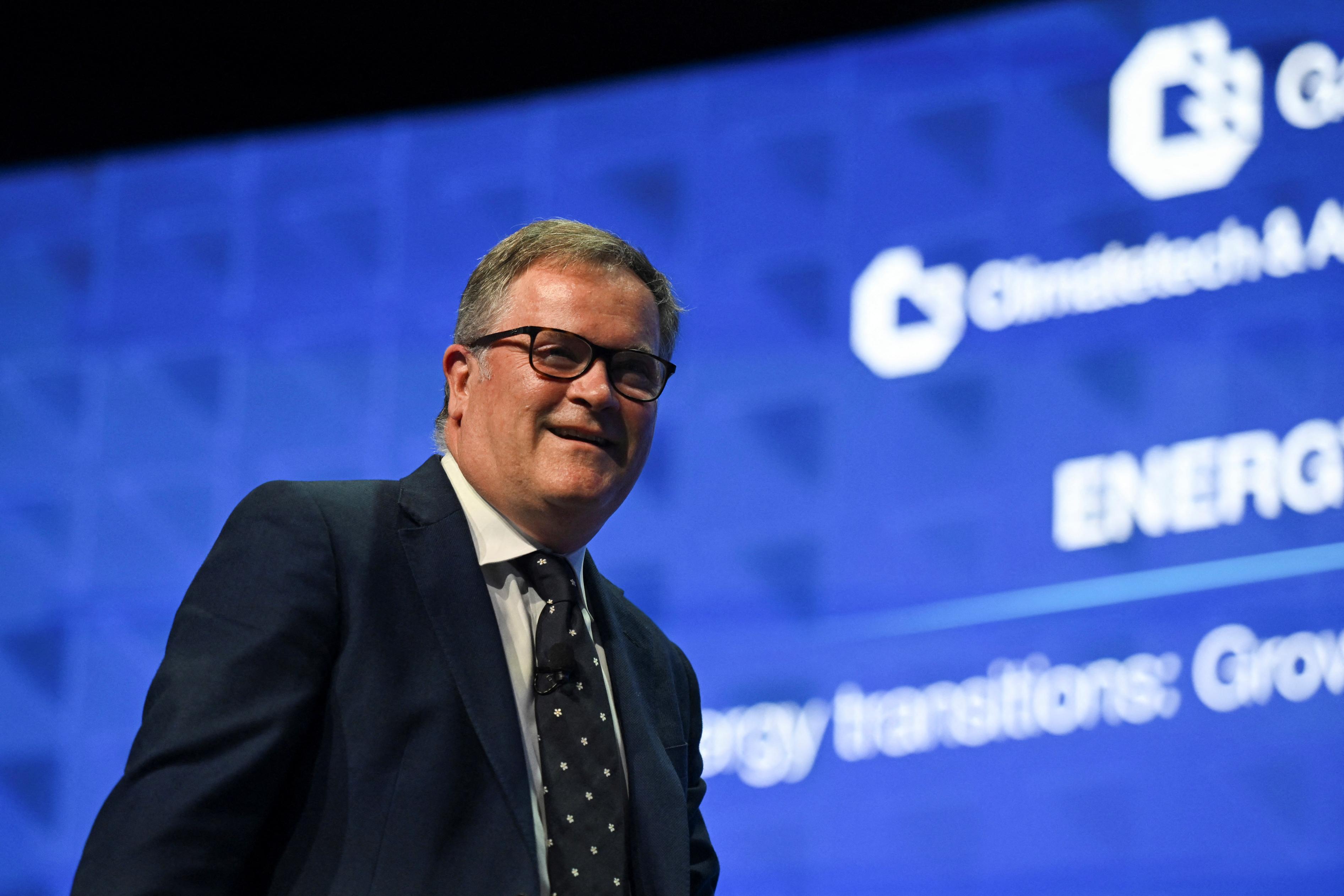
SINGAPORE, Nov 7 (Reuters) - Global oil prices are expected to stay in the $70 to $80 per barrel range in 2025, similar to 2024, while geopolitical risks create uncertainty around supply, Russell Hardy, CEO of Vitol, the world's largest independent oil trader, said on Thursday. World oil prices have been capped by concerns about an unwinding of OPEC+ supply cuts in 2025 and China's weak oil demand growth despite risks of supply disruption in the Middle East. "There's clearly a little bit of concern about the balances for 2025 and that's what's driving the market today," he said at the FT Commodities Asia Summit. However, there's still a lot of geopolitical tensions, unknowns around the Middle East, around Iranian exports and Venezuelan exports under the new U.S. Trump presidency, he said. "So I think it's a little premature to conclude that the market is going to be oversupplied in 2025," he said. China faces a squeeze on supplies of cheap Iranian crude, which make up about 13% of imports by the world's biggest importer of oil, if Donald Trump ramps up enforcement of sanctions on Tehran after his return as U.S. president in January. Janet Kong, CEO of Singapore-based Hengli Petrochemical International, said there is currently 4 million barrels per day (bpd) of spare oil capacity globally, reducing concerns about supply. Instead, she expects fuel demand growth in China and India, the world's No. 2 and 3 oil consumers, to drive global oil prices in 2025. Weak fuel demand and export constraints have led to a drop in Chinese refining utilization rates to below 80%, which is "very low" by industry standards, said Kong, who heads the trading arm of Chinese producer Hengli Petrochemical (600346.SS) , opens new tab. Chinese refining margins are unlikely to recover in the near term, she said. Vitol's Hardy said China's oil demand is expected to grow by 700,000 bpd in 2025. "It's not as strong as last two to three years, but it was never going to be as strong as we are recovering from the pandemic," he said, adding that China's growth in 2025 would be more normal than in the past two years. Sign up here. https://www.reuters.com/business/energy/vitol-ceo-sees-70-80bbl-oil-prices-2025-flags-supply-uncertainty-2024-11-07/
2024-11-07 06:14
Dollar's rise could hurt U.S. companies and emerging markets Interest rate trajectory crucial for dollar's future Tariffs may harm U.S. economy, reducing dollar strength NEW YORK, Nov 7 (Reuters) - Donald Trump’s imminent return to the White House is putting a spotlight on the U.S. dollar, which could have far-reaching implications for everything from domestic manufacturers to emerging markets if the currency's rally continues. The U.S. currency notched its biggest one-day gain against its peers in eight years on Wednesday, one day after Trump was re-elected president and Republicans won control of the Senate while making gains in the House of Representatives. The dollar is up 3.8% this year and stands at its highest level in four months. How much further the dollar climbs could hinge on whether investors believe Trump will enact the tax cuts and tariffs that are key elements of his economic platform. While those policies could boost growth, they risk ramping up inflation and could keep U.S. interest rates far above those of other countries. Higher rates raise the dollar’s allure to investors. At the same time, a strong dollar could hurt U.S. companies - one reason why the president-elect periodically railed against a rising dollar during his first term. "A Trump administration likely means more spending, a hotter economy and high bars for international trade - all things that spell strength for the dollar," said Helen Given, associate director of trading at Monex USA. RATES TRAJECTORY The path of interest rates is key to the dollar’s future prospects. The Federal Reserve kicked off its most recent monetary easing cycle with a 50-basis-point rate cut in September and is expected to announce a 25-basis-point reduction at the conclusion of this week's two-day monetary policy meeting on Thursday. Expectations of rate cuts helped weaken the dollar earlier this year. But prospects of heightened inflation could make policymakers wary of overheating the economy by cutting rates too deeply. Traders on Wednesday trimmed bets on how much the Fed would lower rates next year to about 42 basis points, from 62 basis points last month, based on LSEG's calculations. "I would describe this as a tectonic shift in currency markets," said Paresh Upadhyaya, director of fixed-income and currency strategy at Amundi US. Investors now “have to take into account trade tariffs and the implications it will have on the U.S. inflation outlook, on the global growth outlook and ... how the Fed will react to it." A so-called Red Sweep scenario in which Republicans control the White House and both houses of Congress could make it easier for Trump to enact tax cuts and give Republicans more leeway for their economic agenda. While Republicans were set to hold a majority of at least 52-48 in the U.S. Senate, final control of the lower chamber was yet unclear, with vote counting still underway. Brad Bechtel, global head of FX at Jefferies, believes the dollar could gain another 5% in a Red Sweep scenario and advance further in coming months as more of Trump's agenda is enacted. Trump will be inaugurated on Jan. 20. In 2016, the dollar rose about 6% against a basket of currencies in the first two months after Trump's election victory but gave up those gains in subsequent months. The dollar went on to rally about 13% between February 2018 and February 2020 when Trump implemented tariffs against several countries, including China and Mexico. RIPPLE EFFECTS A rising dollar could be a double-edged sword for the U.S. economy, helping tamp down inflation while hurting the competitiveness of American products abroad. It could also pressure the profits of multinational U.S. companies that need to convert their foreign profits into dollars. A study by JPMorgan found that every 2% increase in the trade-weighted dollar shaves 1% from S&P 500 earnings growth, according to strategists at JPMorgan. Should a rising dollar become a headwind for growth, Trump might exhort the Fed to cut interest rates or push U.S. trading partners to boost their own currencies. Trump could also employ the Exchange Stabilization Fund, which was created in the 1930s as a tool for stabilizing the exchange rate and now has about $215 billion. Trump did not use the fund during his first term, and analysts are skeptical of how effective such a measure would be in reining in the dollar without a global effort or support from the Fed. "Trump's preference for a weaker dollar would have to be accommodated by and in coordination with the Federal Reserve, which we view as unlikely," analysts at Wells Fargo wrote in a Wednesday report. Given the dollar's role as a linchpin of the global financial system, persistent strength in the U.S. currency could ripple out to other assets. A strong dollar could be particularly unwelcome for emerging market countries, especially nations that have borrowed heavily in the U.S currency since a rising dollar would make it more difficult for them to repay their debts. That could pressure central banks in those countries - as well as some developed countries such as Japan - to hike rates in an effort to defend their own currencies, said Bechtel, of Jefferies. "You're going to enter this new regime of currency war that used to flare up from time to time in the past," he said. Some investors believe tariffs could eventually end up hurting the U.S. economy, because they can increase costs for businesses and consumers, disrupt supply chains and reduce trade volumes. All that could reduce the prospects for dollar strength down the road. A study by Deutsche Bank said tariffs would subtract about a quarter of a point from U.S gross domestic product if implemented. "The reality is that a full flight protectionist agenda will ultimately rebound on the American economy and slow growth," said Karl Schamotta, chief market strategist at payments company Corpay. Sign up here. https://www.reuters.com/markets/currencies/trumps-win-emboldens-dollar-bulls-they-brace-tariffs-2024-11-07/
2024-11-07 06:10
BERLIN, Nov 7 (Reuters) - Heidelberg Materials (HEIG.DE) , opens new tab, the world's second-largest listed cement maker, on Thursday raised its 2024 outlook, as a strong performance in North America and efficiency measures across key markets helped offset volume headwinds. The German building materials company now expects the result from current operations for the 2024 financial year to be between 3.1 billion and 3.3 billion euros ($3.33-3.55 billion) and 3.3 billion euros, narrowing a previously forecast range of between 3.0 billion and 3.3 billion euros. "Our persistently strong performance in North America combined with a continued focus on cost management across key markets helped offset volume headwinds and contributed to further increasing our operational result and improving our profitability," said managing board chairman Dominik von Achten. An initiative of optimisation and efficiency measures dubbed the "Transformation Accelerator" is expected to lead to a yearly result contribution of 500 million euros by the end of 2026, the company said. A particular focus area will be the optimisation of the clinker and cement network in Western Europe, it added. The company reported a 3% increase in its result from continuing operations during the third quarter to 1.124 billion euros, adjusted for scope and currency effects. ($1 = 0.9308 euros) Sign up here. https://www.reuters.com/markets/commodities/heidelberg-targets-higher-full-year-result-america-boost-cost-management-2024-11-07/

2024-11-07 05:41
A look at the day ahead in European and global markets from Kevin Buckland The state of German politics should become clearer on Thursday after Friedrich Merz, leader of the opposition conservatives, gives a morning news conference to respond to Chancellor Olaf Scholz's request for support to pass the budget and boost military spending. It comes a day after Scholz sacked Finance Minister Christian Lindner of the Free Democrats (FDP) party after long-running budget disputes, causing the three-party ruling coalition to collapse and setting the stage for a snap election early next year. Political uncertainty in Europe's biggest economy couldn't come at a much worse time for the bloc, which woke up on Wednesday to the real possibility of a Donald Trump-led Republican sweep, which could imminently usher in a threatened 10% blanket tariff on European goods. Germany, whose main export market is the United States, would be particularly vulnerable, especially as Trump has floated much bigger levies on cars. Equity markets reacted swiftly, with the pan-European STOXX 600 (.STOXX) , opens new tab dropping 0.54% and Germany's DAX (.GDAXI) , opens new tab sliding by 1.13%. Politics will need to share the spotlight with monetary policy on Thursday, with the U.S. Federal Reserve, Bank of England, Sweden's Riksbank and Norway's central bank all announcing rates decisions. The Fed is still widely seen as cutting by a quarter point at this meeting, but investors will be keen to hear what Chair Jerome Powell says about the risks of higher inflation under Trump's proposed tariffs and immigration policies. The BoE is also set to cut by a quarter point, but again, markets are looking for clues on the extent to which policy makers expect the government's new budget to stoke price pressures. Most analysts expect the Riksbank to cut by a half point, while the Norges Bank is seen on hold. Plenty of European Central Bank officials are on speaking duty today as well, including outspoken policy hawk Isabel Schnabel, who advocated not rushing with further rate cuts in recent comments. ECB chief economist Philip Lane talks in Athens, and Dutch central bank governor Klaas Knot will be interviewed by students at the University of Amsterdam. ECB board member Frank Elderson participates in a panel discussion in Brussels. The health of the German economy will be on display with trade and industrial output data today, while euro zone retail sales figures are due along with UK Halifax house price data. Key developments that could influence markets on Thursday: -CDU leader Friedrich Merz news conference -Policy decisions from Fed, BOE, Riksbank, Norges Bank -German trade, industrial output data (all Sep) -Euro zone retail sales (Sep) -UK Halifax house prices (Oct) Sign up here. https://www.reuters.com/markets/europe/global-markets-view-europe-2024-11-07/
2024-11-07 04:38
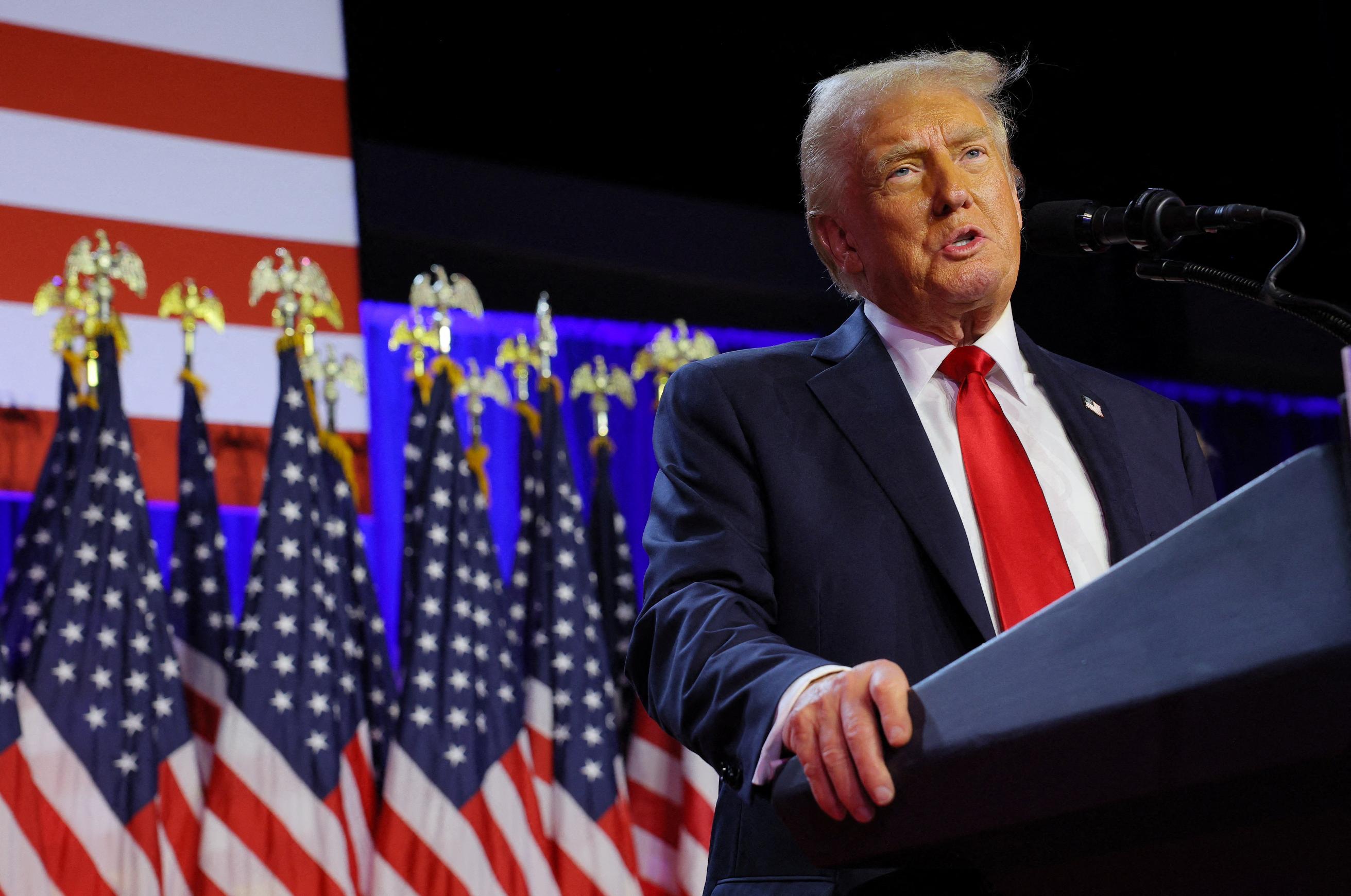
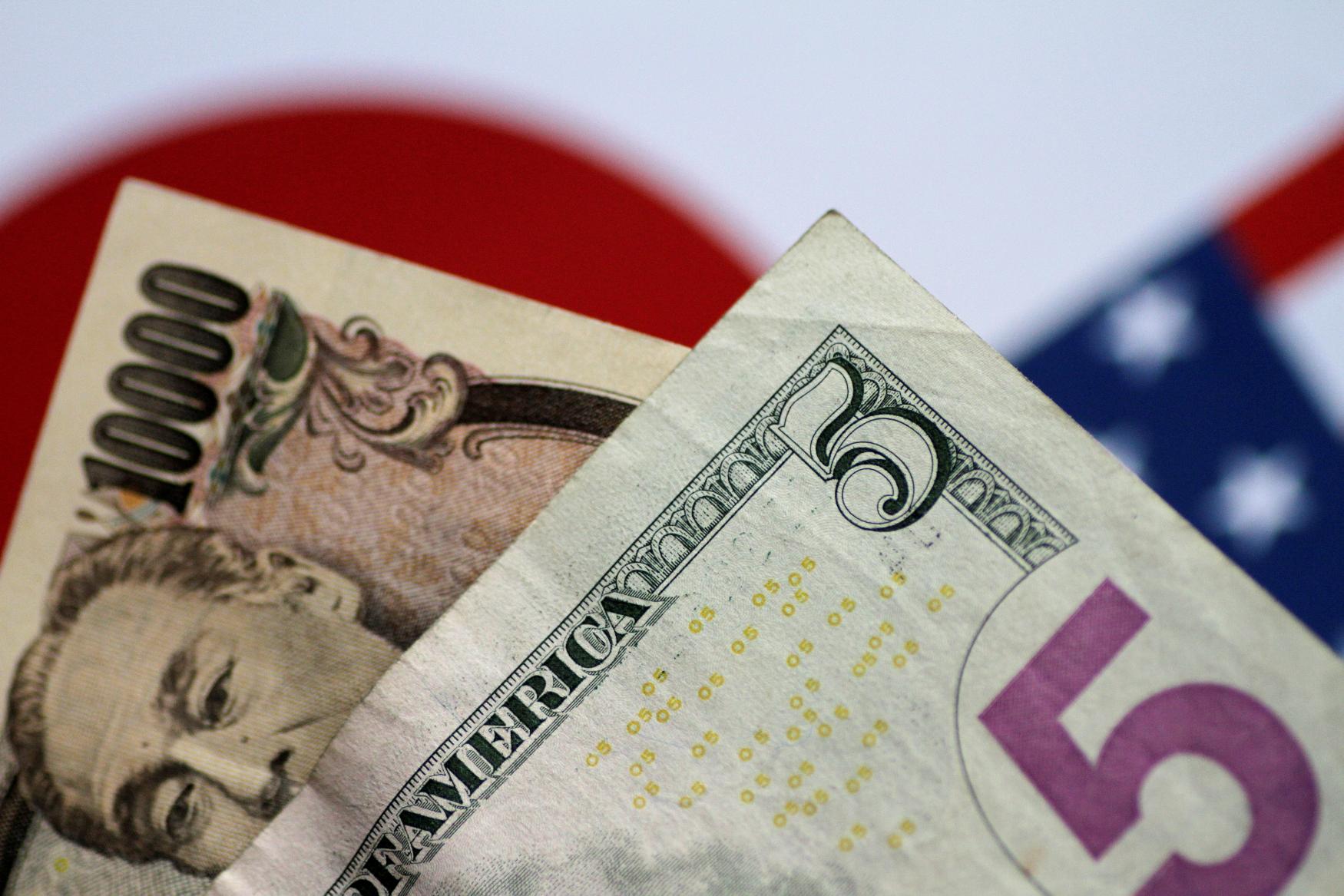
160 yen-to-the-dollar seen as Japan authorities' line in sand Japan issues fresh warning against excessive yen falls Chance of BOJ hike in December may rise if yen keeps falling TOKYO, Nov 7 (Reuters) - A dollar rally triggered by Republican Donald Trump's victory in the U.S. presidential election could heighten pressure on the Bank of Japan to raise interest rates as soon as December to prevent the yen from sliding back toward three-decade lows. Trump's victory in the U.S. presidential election unleashed sharp dollar gains, as expectations of tax cuts and tariffs on imports drove optimism about economic growth while fueling worries about inflation. The greenback's strength briefly pushed the yen to a three-month low of 154.71 on Thursday, well off a high of 140.62 hit in mid-September. While a weak yen gives exports a boost, it has become a headache for Japanese policymakers by pushing up fuel and food import costs and in turn hurting consumption. Rising inflation was widely seen as one of the factors behind the massive voter swing against the ruling coalition at last month's general election. Japan's top currency diplomat Atsushi Mimura escalated his warning against sharp yen falls on Thursday, saying authorities were ready to act against "excessive" currency moves. One nightmare scenario for policymakers would be a renewed plunge in the yen towards the three-decade trough near 162 to the dollar hit in July - a move that prodded the BOJ to raise interest rates to 0.25% on July 31. Back then, the tumbling yen led to calls from ruling party lawmakers for the BOJ to hike rates, or send clearer signs of its intention to push up borrowing costs. Prime Minister Shigeru Ishiba stunned markets on Oct. 2 by saying the economy was not ready for further rate hikes, though he later toned down his message to say he would not intervene in BOJ policy. "Politicians don't want a weak yen, so even those who have urged the BOJ to be cautious about raising rates could nod to hikes if yen falls accelerate," said Tsuyoshi Ueno, senior economist at NLI Research Institute. "In that sense, the weak yen could prod the BOJ into steady rate hikes." HAND-IN-HAND The BOJ exited a decade-long radical stimulus in March and raised short-term interest rates to 0.25% in July on the view Japan was making progress towards sustainably achieving its 2% inflation target. While many analysts expect the BOJ to hike rates again by March, they are divided on whether it would act in December - or wait until January or March to gauge more data. The BOJ kept interest rates steady last month but removed language warning of the need to focus on external risks, leaving open the chance of a near-term hike. Renewed yen falls may heighten the chance of the BOJ acting in December, given the BOJ's sensitivity to the currency's weakness that pushes up import costs, analysts say. Expectations of a near-term rate hike by the BOJ, coupled with rising U.S. Treasury yields, pushed the benchmark 10-year Japanese government bond (JGB) yield above 1% for the first time in more than three months on Thursday. "The BOJ hasn't said so clearly but its rate hike in July was likely driven in part by its concern over excessive yen falls," said Shinichiro Kobayashi, principal economist at Mitsubishi UFJ Research and Consulting. "If the yen heads toward 160 to the dollar again, the chance of a rate hike by year-end will increase," he said. Tomoyuki Ota, chief economist at Mizuho Research & Technologies, also sees 160-to-the-dollar as authorities' line in the sand that heightens the chance of a BOJ rate hike - and currency intervention by the government to prop up the yen. In the previous battle with yen falls, the government and the BOJ appeared to work hand-in-hand. Japanese authorities spent 5.53 trillion yen ($35.8 billion) intervening in the foreign exchange market in July to pull the yen off 38-year lows near 162 to the dollar. That month, the BOJ hiked rates and stressed its resolve to keep pushing up borrowing costs. BOJ Governor Kazuo Ueda's hawkish hints of near-term rate hikes at last month's policy meeting pushed the dollar down toward 150 yen. "There's no doubt the market's direction is towards a weaker yen. If yen falls accelerate, the chance of a December rate hike will increase," said Ota of Mizuho Research. "The government and the BOJ will likely act swiftly including through currency intervention." ($1 = 154.4400 yen) Sign up here. https://www.reuters.com/markets/asia/trump-victory-heightens-risks-boj-yen-renews-slide-2024-11-07/
2024-11-07 04:12
Fed cuts interest rates by 25 basis points S&P 500, Nasdaq end at record highs, Stoxx 600 up 0.6% Euro climbs amid German political turmoil BoE, Swedish central bank cut rates, Norway holds as expected NEW YORK/LONDON, Nov 7 (Reuters) - Shares on Wall Street scaled record highs on Thursday, lifting stock markets around the world, while U.S. Treasury yields retreated further after the Federal Reserve cut interest rates and as investors processed a second Donald Trump presidency. The Fed lowered rates by 25 basis points on Thursday, as expected, noting that the job market has generally eased while inflation is moving toward its 2% target - saying price pressures had "made progress," compared with prior language that it had "made further progress." “The Fed didn’t rock the boat," said Ryan Detrick, chief market strategist at Carson Group in Omaha, Nebraska. "The big question now is will they cut again in December? Our best guess is they do, as inflation continues to improve.” The S&P 500 (.SPX) , opens new tab rose 0.74%, the Dow Jones Industrial Average (.DJI) , opens new tab was flat, and the Nasdaq Composite (.IXIC) , opens new tab jumped 1.5%. The S&P 500 and the Nasdaq both ended at all-time highs for a second consecutive day. The MSCI index for world stocks (.MIWD00000PUS) , opens new tab climbed 0.9%, also to a record high. Europe's broad STOXX 600 index (.STOXX) , opens new tab rose 0.6% after Asian shares gained earlier in the day, with even onshore Chinese blue chips rising 3% (.CSI300) , opens new tab as investor optimism over potential stimulus outweighed concerns about worsening trade tensions. Stocks are "rewarding the presumed likelihood of corporate tax cuts and perceiving a general penchant toward deregulation across industries as positive for earnings," said Naomi Fink, chief global strategist at Nikko Asset Management. Treasury yields extended declines after the Fed's rate cut, though some investors warned that rates may not fall as steadily as some might have expected under a second Trump administration. "A Republican sweep seems very likely, and looser fiscal policy as well as trade tariffs might lift not only growth but also inflation," said Matthias Scheiber, global head of portfolio management at Allspring Global Investments Systematic Edge Team in London. The benchmark 10-year yield was last at 4.3355%, down 9 basis points on the day, after a 14 basis point rise on Wednesday, and the 30-year yield was last at 4.5393%, down over 6 bps after the previous day's 15 bp jump. The dollar fell 0.7% against a basket of its peers after logging its biggest one-day gain in more than two years on Wednesday. Traders said they were closing out profitable bets on the Trump presidency and ahead of the Fed's decision. The euro climbed 0.7% to $1.0803 after Wednesday's 1.8% fall, as investors also digested political turmoil in Germany where Chancellor Olaf Scholz sacked Finance Minister Christian Lindner, causing the ruling three-party coalition to collapse and setting the stage for a snap election. Deutsche Bank analysts said that while still early, the developments could be positive for the euro due to the potential confidence boost from a more stable German government and the direct economic effects of a potentially more proactive fiscal stance. Germany's 10-year government bond yield was last up 4.8 basis points at 2.441% . CENTRAL BANK DECISIONS In advance of the Fed, the Bank of England cut interest rates by a quarter point on Thursday for only the second time since 2020. The bank said future reductions were likely to be gradual, as it saw higher inflation after the new government's first budget last week. Sterling extended its gains slightly after the decision and was last up 0.8% at $1.2986, following a 1.24% slide on Wednesday. Central banks in Norway and Sweden also held meetings on Thursday, though they met market expectations and did little to disrupt currency markets. Norges Bank at the hawkish end of the developed market spectrum kept rates unchanged at a 16-year high, and Sweden's Riksbank cut by 50 bps. Bitcoin reversed earlier losses and vaulted to another record high of $76,780 overnight. Trump had vowed to make the United States "the crypto capital of the planet." Gold added 1.8%, following Wednesday's more than 3% tumble, to $2,707.21 an ounce. However, that was still not far from its recent record high of $2,790.15. Oil reversed losses from a sell-off triggered by the U.S. presidential election. Brent crude oil futures rose 0.6% to $75.4 per barrel. U.S. West Texas Intermediate (WTI) crude also added 0.5% to settle at $72.04. Sign up here. https://www.reuters.com/markets/global-markets-wrapup-1-2024-11-07/