2024-11-06 19:28
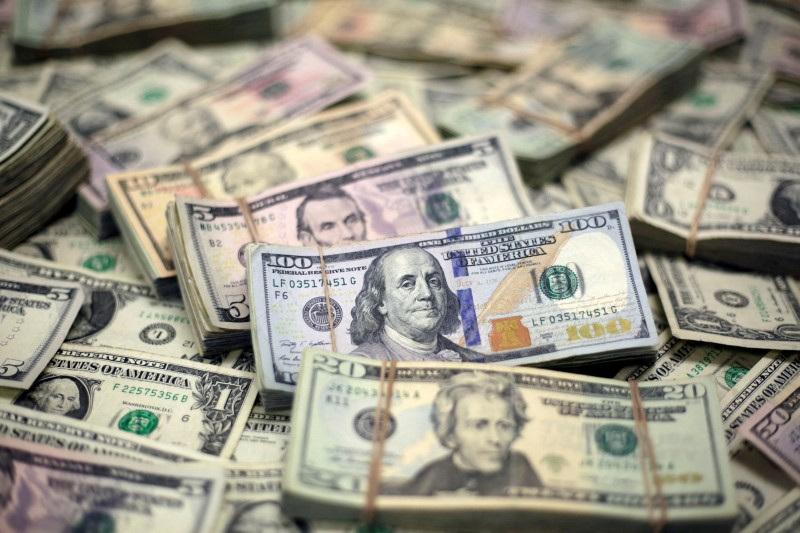
ORLANDO, Florida, Nov 6 (Reuters) - Politics is often a major driver of exchange rates in emerging economies where elections, leaders and government policies can play a big role in shaping trade and investment flows. That's not often the case for major currencies in markets with much deeper investment flows and liquidity – like the U.S. dollar. But the greenback's explosive rally following the U.S. presidential election shows that politics still matter for the dollar – a lot. Or more accurately, the dollar is still highly sensitive to political shocks. The dollar surged nearly 2% against a basket of major currencies early on Wednesday, following Republican Donald Trump's thumping win over Democrat Kamala Harris in Tuesday's election. This marked the dollar's biggest one-day rise in more than eight years, since June 24, 2016, to be precise. That was the day after another historic, political drama played out: the "Brexit" referendum in the UK, when Britons dumbfounded pollsters and voted to leave the European Union. Sterling's 8% plunge on that day - by far its biggest decline against the dollar since the era of free-floating exchange rates began over 50 years ago - lifted the dollar index by 2%. Trump's victory was far less shocking than the Brexit vote, and financial markets had been pricing it in for weeks. But the dollar's sharp reaction suggests that the margin of victory, and the likelihood that Republicans would take control of both houses of Congress, caught markets off guard. Steven Englander, head of G10 FX strategy at Standard Chartered, reckoned a potential for "clean sweep" combined with the polarized nature of politics today help explain the dollar's outsized move. "So much in politics is 'same old, same old', but when you get a real surprise the market reaction can be dramatic," he noted. MOMENTUM The dollar rarely fluctuates anywhere close to 2% in one day because vast flows are required to move such a heavily traded asset that much. The greenback is on one side of almost 90% of all foreign exchange trades, and the global FX market's average daily turnover is $7.5 trillion. The dollar has racked up daily gains of around 1.5% since 2016, but they were mostly clustered in the highly volatile days of March 2020 at the onset of the pandemic or in September 2022 when U.S. interest rates were close to reaching their 40-year peak. Declines of that magnitude have also been rare. They occurred either around the pandemic or when soft inflation data was released in November 2022. But the 2024 U.S. presidential election, like Brexit, is a reminder that political shocks can still have an instant impact on the world's more liquid currencies, including the most widely used and liquid of all. The bigger question may be: Do such extreme moves have long-term effects? And the answer is, they can. Sterling has never regained its pre-June 2016 heights. It is still down 10% against the dollar and down 25% on a trade-weighted basis, meaning Britain has effectively suffered a permanent loss of global purchasing power. Of course, the likelihood of the dollar embarking on a near-decade long global rally is slim. Far too many domestic and global variables would have to align for that to happen. But investors do appear to be pricing in expectations that the new administration's fiscal and monetary policy will push inflation, bond yields and the dollar higher. Mizuho's FX strategy team says the dollar has potentially another 4% of upside before it eclipses its gains in 2016 after Trump won the presidency then. Barclays analysts agree that the dollar has more room to strengthen "either a little or a lot ... depending on whether the Republicans manage a sweep". They believe the later scenario could push the euro down to $1.03 in the near term. It's impossible to predict exactly what will happen, but investors are being reminded now that even in such a liquid market, political shocks can still move the dollar. (The opinions expressed here are those of the author, a columnist for Reuters.) Sign up here. https://www.reuters.com/markets/currencies/politics-can-still-shock-dollar-mcgeever-2024-11-06/
2024-11-06 18:41
LONDON, Nov 6 (Reuters) - Hedge funds BlueBay and Phoenix were turning their attentions to crude oil, U.S. Treasuries and U.S. banks on Wednesday, after Donald Trump was elected president. Trump's victory gives him a clear mandate to implement his policy agenda, which includes plans to cut U.S. corporate taxes, said Russel Matthews, lead portfolio manager of BlueBay's macro hedge fund in London, part of the $468 billion asset manager RBC Global Asset Management. A so-called macro hedge fund uses financial instruments to make bets on the economic health of a country. As U.S. Treasury yields climbed to four-month highs in the wake of the election result, Matthews said he had seen "glimmers of bond vigilantism being back," in a reference to investors dumping or shorting government debt over worries about higher borrowing. A short bet expects asset values to decline. U.S. Treasury prices fell sharply on Wednesday as yields rose - 30-year yields hit a roughly six-month high of 4.68% . "Irresponsible fiscal policies and growing debt piles - there is a point at which the market just starts to revolt against that," said Matthews. BlueBay's hedge fund strategy as of Wednesday, was short 30-year U.S. Treasuries and long 10-year German Bunds , he said, adding the firm was long the dollar and short the euro and pound , . The dollar was up almost 2% against a basket of currencies, and on track for its biggest one-day jump in four years. A steeper bond yield curve might aid undervalued finance firms like Citigroup (C.N) , opens new tab, said Matein Khalid, chief investment officer of family office Phoenix Holdings in Dubai. Banks will likely benefit from easier financial regulations on capital, risk management, asset management and mergers and acquisitions which have been floated as possible Trump policies, Khalid added. Trump's support of the oil industry, including easing environmental regulations, could result in lower crude oil prices. "Trump has said he will 'drill, drill, drill,' which will increase U.S. supply," said Sam Berridge, a portfolio manager at the Strategic Natural Resources Fund, a part of the larger A$7 billion ($4.61 billion) Perennial Value Management, in Perth, Australia. "A balancing factor may be a more aggressive stance on Iran oil exports should the U.S. impose stiffer sanctions. This would be supportive for oil prices but it's difficult to say by how much as most of Iran's oil exports go to China," he said. Sign up here. https://www.reuters.com/markets/us/hedge-funds-turn-attentions-bank-bond-oil-trades-under-trump-2024-11-06/
2024-11-06 18:38
MADRID, Nov 6 (Reuters) - The European Investment Bank on Wednesday announced a 900-million-euro financial aid package to help Spain's recovery and reconstruction efforts after last week's deadly flash floods that hit the eastern region of Valencia particularly hard. The bank said in a statement it also stood ready to come up with additional measures if required by Spain's national or regional authorities after the worst flood-related disaster in the country's modern history. On Tuesday, Prime Minister Pedro Sanchez announced 10.6 billion euros ($11.6 billion) to help victims of the floods that killed at least 217 people in Valencia, Castile La Mancha and Andalusia, with dozens still missing. Heavy rains last week caused waterways to overflow, creating flash floods that surged through suburbs south of the city of Valencia, sweeping away cars and bridges and inundating properties and underground car parks. "We have to make sure we rebuild better, with methods adapted to the new reality that would resist and protect from the ever more frequent and intense climate shocks," EIB head and former Spanish economy minister Nadia Calvino said. Scientists say extreme weather events are becoming more frequent in Europe and elsewhere due to climate change. Meteorologists believe the warming of the Mediterranean, which increases water evaporation, plays a significant role in making torrential rains more severe. Sign up here. https://www.reuters.com/business/environment/european-investment-bank-give-900-mln-euros-flood-hit-spain-2024-11-06/

2024-11-06 18:32
Nov 6 (Reuters) - ExxonMobil (XOM.N) , opens new tab now expects a final investment decision for its Rovuma liquefied natural gas (LNG) project in Mozambique in 2026, the company said on Wednesday, pushing back the financial go-ahead by roughly a quarter. The company had said in May it expected the final investment decision for the project at the end of 2025. The company said it was making progress on the project, despite the ongoing force majeure and expects first LNG by 2030. "We will continue to work in close collaboration with the Government of Mozambique and expect the security situation to stabilize," a company spokesperson told Reuters. ExxonMobil and its partner Eni (ENI.MI) , opens new tab are developing the Rovuma LNG project in offshore Area 4 in northern Mozambique, and it is expected to produce 18 MTPA of LNG. Sign up here. https://www.reuters.com/business/energy/exxon-expects-final-investment-decision-mozambique-lng-project-2026-2024-11-06/
2024-11-06 18:21
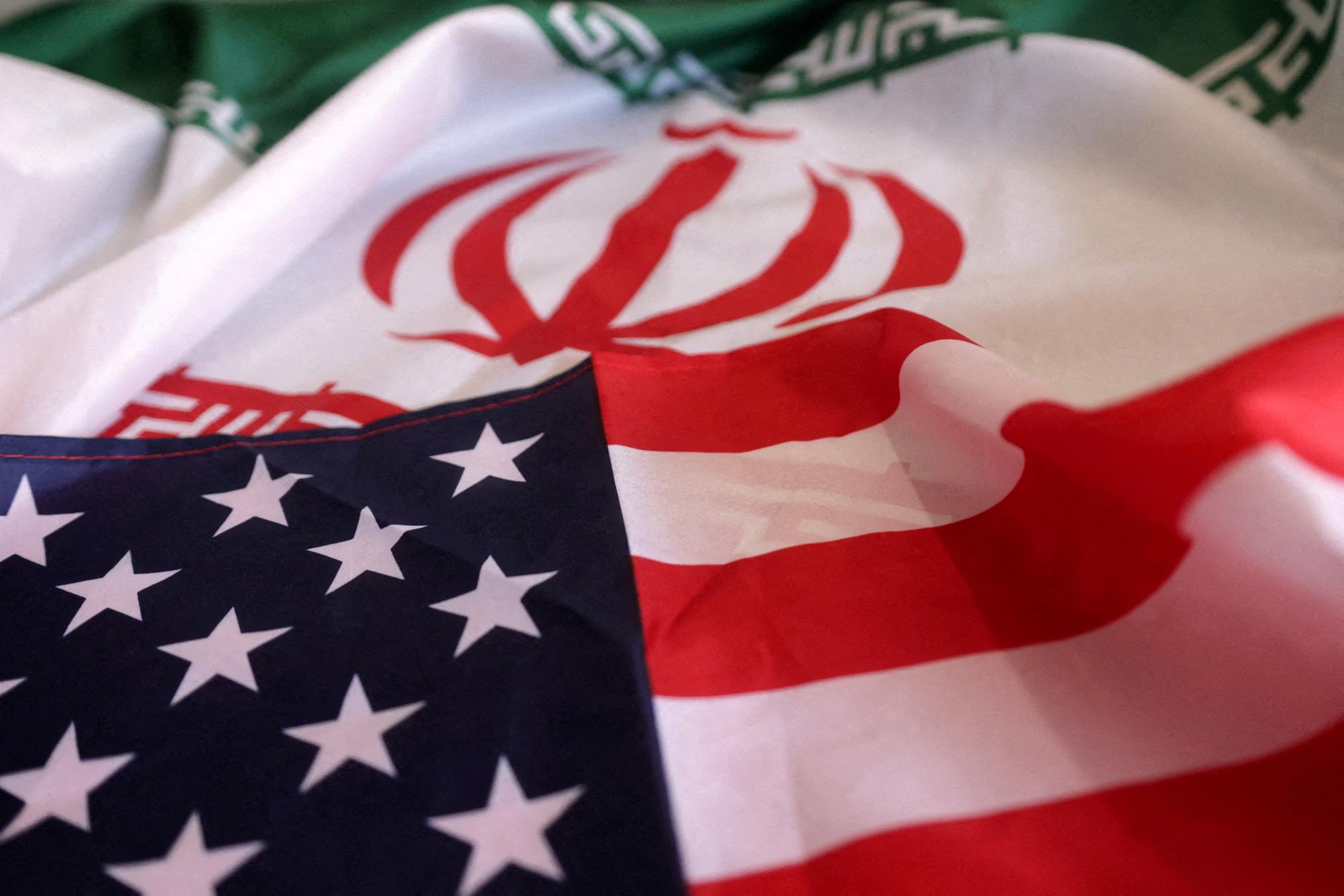
Trump's policies could affect global oil prices and domestic drilling China may retaliate against tougher US sanctions on Iran Trump may ease sanctions on Russia's energy industry WASHINGTON, Nov 6 (Reuters) - Former President Donald Trump's return to the White House could mean tougher enforcement of U.S. oil sanctions against Iran, potentially trimming global supplies, but his administration could struggle to get China, Iran's top crude customer, to cooperate, analysts said. Cracking down on OPEC-member Iran would support global oil prices, but the effect could also be offset by other Trump policies, from measures to expand domestic drilling, the imposition of tariffs on China that could depress economic activity, or an easing of relations with Russia that could unfetter its sanctioned crude shipments. “Trump cuts both ways for oil prices,” said Clay Seigle, an independent energy strategist in Houston, adding that tariffs and trade wars would pull down U.S. gross domestic product and oil demand with it. Iranian crude exports have shot to the highest level in years in 2024 as the country found ways to sidestep punitive sanctions targeting its revenue. Trump re-imposed the sanctions during his first presidency after he unilaterally withdrew the U.S. from a Western nuclear deal with Tehran in 2018. Trump, a Republican, has said during his campaign that President Joe Biden's policy of not rigorously enforcing oil-export sanctions has weakened Washington and emboldened Tehran, allowing it to sell oil, accumulate cash and expand its nuclear pursuits and influence through armed militias. Jesse Jones, head of North American upstream at Energy Aspects said a Trump administration return to a maximum-pressure campaign on Iran could lead to a 1-million-barrel-per-day decrease in Iranian crude exports. “That could be done relatively quickly without additional legislation, just by enforcing sanctions that are already on the books,” he said. ClearView Energy Partners, a research group, has estimated some 500,000 bpd to 900,000 bpd, could be taken out of the market. 'MILLION-DOLLAR QUESTION' But a tougher stance on Iran also means cracking down on China, which does not recognize U.S. sanctions and is the Islamic Republic's biggest oil customer. "The million-dollar question is how much significant financial pressure you’re willing to put on Chinese financial institutions," said Richard Nephew, a Columbia University professor and a former U.S. deputy special envoy for Iran. Nephew said China could retaliate by strengthening work in the BRICS club of emerging economies, consisting of Brazil, Russia, India, China, South Africa and others, including by reducing reliance on the dollar in deals in oil and other goods. Trump spoke at the New York Economic Club in September about the risks to dollar dominance that sanctions can bring. "I was a user of sanctions, but I put them on and take them off as quickly as possible, because ultimately it kills your dollar, and it kills everything the dollar represents," Trump said at the time. "So I use sanctions very powerfully against countries that deserve it, and then I take them off, because, look, you're losing Iran. You're losing Russia," he said. China and Iran have built a trading system that uses mostly Chinese yuan and a network of middlemen, avoiding the dollar and exposure to U.S. regulators, making sanctions enforcement tough. Seigle said cracking down on Iran could be bullish for oil prices. But the impact could be muted especially if Trump follows through on campaign promises to impose blanket tariffs on U.S. imports to protect domestic manufacturing, including 60% levies on anything from China. "A trade war that pulls down GDP would reduce oil demand and take prices lower," Seigle said. Ed Hirs, energy fellow at the University of Houston, said Trump was also likely to ease sanctions on Russia’s energy industry, imposed by Western countries as punishment over Russia’s invasion of Ukraine. Trump promised during his campaign to “settle” the war in Ukraine before taking office in January. "I would expect Trump would relieve all sanctions on Russian oil," Hirs said. Western sanctions on Russian oil are not intended to halt flows, but only to limit Russia’s revenue from exports to $60 a barrel for those sales using Western maritime services. The sanctions have shifted the market for Russian oil off Europe to China and India, adding costs for Russia. Sign up here. https://www.reuters.com/business/energy/trump-could-harden-iran-oil-stand-raise-china-ire-analysts-say-2024-11-06/
2024-11-06 17:42
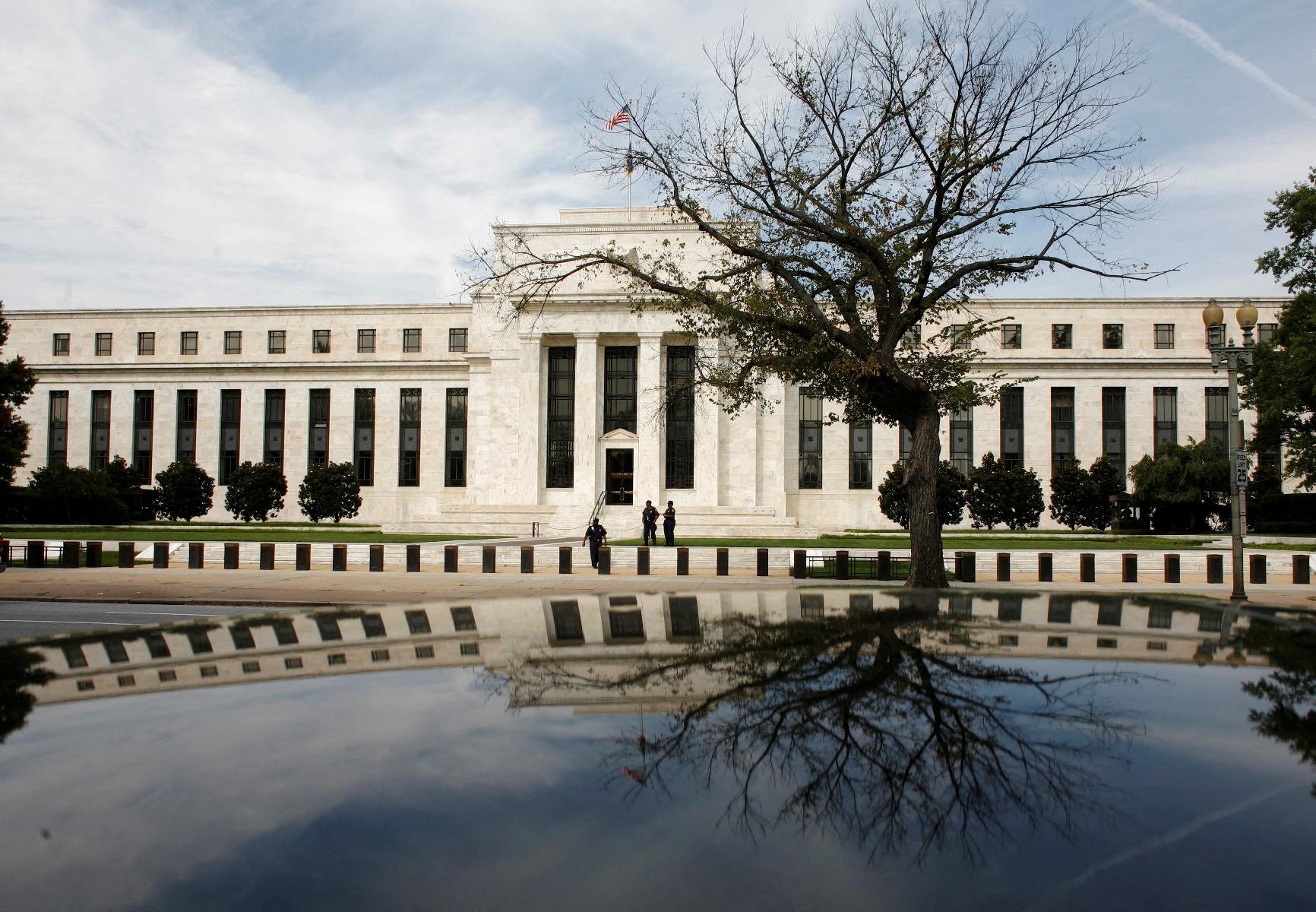
Traders bet Fed will stop cutting rates in mid-2025 Policy rate would be in 3.75%-4.00% range at that point Policymakers in September saw rate moving to 2.9% by 2026 Fed still expected to cut rates this week and in December Nov 6 (Reuters) - U.S. President-elect Donald Trump's impending return to the White House appears to put the Federal Reserve on a slower and shallower path for interest rate cuts, with a slew of new policies embraced by the Republican leader poised to juice the economy and stall, or reverse, the slowdown in inflation. U.S. central bankers are still widely expected to cut the Fed's benchmark interest rate by a quarter of a percentage point to the 4.50%-4.75% range when they wrap up their two-day policy meeting on Thursday. Futures contracts tied to the Fed's policy rate are also pricing in a December rate cut, though with slightly less confidence than previously, as the central bank recalibrates borrowing costs to inflation that's now much closer to its 2% target, and to a cooling labor market. But in a shift that could be consequential for businesses and households looking to refinance debt or borrow anew, traders are now betting the Fed will cut its policy rate only twice in 2025, lowering it to the 3.75%-4% range and likely taking until July to do so. If those bets bear out, the end of the Fed's current rate-cutting campaign would come more than a year sooner and its policy rate would be a full percentage point higher than most Fed policymakers had projected after their initial rate cut in September. Stronger-than-expected economic data since the September meeting had been progressively resetting market rate expectations for a shallower rate-cut path. That change in view gained steam as Trump clinched his victory over Democratic Vice President Kamala Harris just hours after the last polls closed early on Wednesday. Trump campaigned on promises to fix what he sees as an ailing economy, and plans to impose higher tariffs, reduce taxes, and launch an immigration crackdown to do that. Economists say those policies are likely to lead to faster economic growth and a tighter labor market that, along with the higher import costs, would put upward pressure on prices. Several Wall Street economists on Wednesday cited those risks as they penciled in fewer Fed rate cuts next year. The impact of Trump's policies could play out over years, some analysts cautioned, and it is unclear how fully he will follow through with his pledges. "The delay in the inflationary implications from tariffs and expansionary fiscal policy allows the Fed to continue to cut interest rates into 2026, as the central bank still needs to recalibrate monetary policy to be less restrictive," Oxford Economics' analysts wrote, sticking to their view that the Fed will bring its policy rate down close to 3% by mid-2026. That view could change, they said, as Trump's intentions become clearer over the next few months. Sign up here. https://www.reuters.com/markets/rates-bonds/federal-reserve-seen-shallower-rate-cut-path-after-trumps-election-2024-11-06/