2024-11-06 14:37
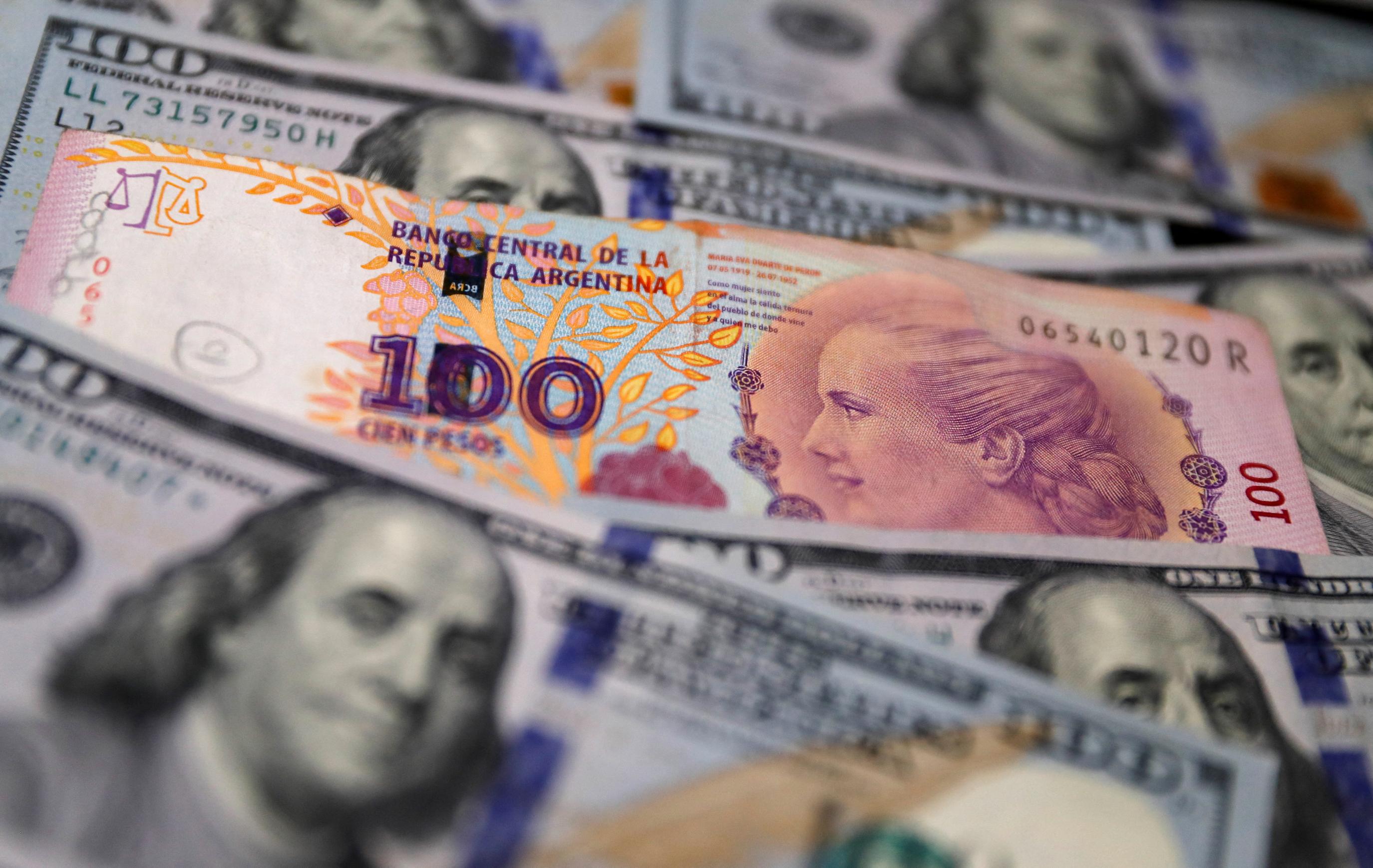
BUENOS AIRES, Nov 6 (Reuters) - Argentina's dollar bonds jumped in early trade on Wednesday and the country's risk index dropped sharply, with investors cheering the prospect of closer ties between libertarian President Javier Milei and newly-elected U.S. ally Donald Trump. Sovereign bonds advanced an average 2.5% in early trading, while the risk index, a measure of the premium investors demand to hold local bonds versus equivalent U.S. debt, dropped to just over 880 basis points, the lowest in five years. Argentina's markets have already been on a tear under the pro-market austerity of Milei, a right-wing economist and former TV pundit who shares some the same politics and the brash showman energy of Trump, who won a comeback election on Tuesday. On the streets of Buenos Aires, many saw Trump's win as a positive for the South American farm-driven economy. Milei, who campaigned with a chainsaw as a symbol of his planned spending cuts and often belts out rock songs, has been called "El Loco" - the crazy one. He's become a global right-wing icon and drawn close to Trump and allies like Elon Musk. "It seems to me that they are going to get along well," said Buenos Aires resident Micaela Saracero, 29, referring to Milei and Trump. "In economic terms it could have a great impact on Argentina if they get along between two crazy people." Damian Roux, a 23-year-old in Buenos Aires, agreed Trump's victory in the U.S. election was positive for Argentina. "I think the relationship with Milei is going to be good, because Milei has had a good ties with Trump and I hope that will favor Argentina, which is what I want most," he said. The close ties could help with Argentina's $44 billion loan program with the International Monetary Fund (IMF), with a new program expected to be discussed next year. The United States has the largest voting power in the Washington-based lender. However, analysts cautioned Trump's victory could lead to a deterioration in Argentina's exchange rate anchor, something Milei has strengthened after years of the currency sliding. "Argentines have not yet realized it, but a Trump victory (which would mean U.S. tariffs on China and other countries) will put huge depreciatory pressure on the peso," Goldman Sachs said in a report. For now, however, local economist Federico Rayes said the domestic markets were more focused on politics and gut instinct. "For now the Argentine bond craze has a very strong political component, and less of an economic foundation," he said. Sign up here. https://www.reuters.com/markets/rates-bonds/two-crazy-people-argentina-bonds-pop-investors-cheer-milei-trump-prospect-2024-11-06/
2024-11-06 13:51
US budget deficits projected to surge Treasury yields expected to rise without fiscal reforms Debt ceiling seen as key challenge for new administration Rating agencies concerned about political polarization NEW YORK, Nov 6 (Reuters) - Newly elected U.S. President Donald Trump will face fiscal challenges that could threaten the country's standing in the global debt markets, hurting investor appetite for the nation's debt securities, and pushing government borrowing costs higher. U.S. budget deficits and government debt levels were largely projected to surge under either candidate in the Nov. 5 election, according to several estimates, although Democrat Kamala Harris was expected to add less debt than Trump. The prospect of rising government debt levels as Trump's odds improved in recent weeks helped send U.S. government bond yields higher, as many believe his trade and tax policies will reignite inflation and worsen the U.S. fiscal picture. On Wednesday, as results showed Trump winning the election, yields jumped higher with some citing bond vigilantes, referring to investors dumping government debt over worries about rising deficits. The benchmark 10-year Treasury yield rose as high as 4.479%. "We see a Trump presidency as bearish for yields, given increased deficits and higher tariffs," said Spencer Hakimian, CEO of macro hedge fund Tolou Capital Management. A key hurdle for the new administration will likely be the reinstatement of the federal debt ceiling on Jan. 2, which was suspended in 2023 following protracted negotiations with Congress. Washington regularly sets a limit on federal borrowing, which must be approved by a majority of lawmakers. Debt limit disputes in the past have pushed the country to the brink of default and dented its credit rating - a scenario that could be on the cards again in the event of a divided government. Republicans won a U.S. Senate majority, but neither party appeared to have an edge in the fight for control of the House of Representatives where Republicans currently hold a narrow majority. Barring a quick resolution, the Treasury Department will likely need to use its cash reserves and so-called extraordinary measures - or an array of accounting maneuvers - to fund the government until the so-called X date, when it will no longer be able to pay all its bills. Some analysts estimate that could be in the second half of next year. Naomi Fink, global strategist at Nikko Asset Management, expects bond volatility around the debt ceiling negotiations even if a default is averted. "It is less probable that the U.S. actually defaults than that the market prices in the probability of an extreme event at some point, which could mean a volatility shock even in the absence of default," she said, speaking before the election. Possible ways to protect against Treasury volatility could be Treasury puts or credit default swaps, she added. One-year credit default swaps, which measure the cost of insuring exposure to a U.S. debt default, have recently risen to their highest in about one year on election and debt ceiling jitters, but fell sharply on Wednesday. An even earlier fiscal test could come in December, as temporary funding measures adopted to avoid a government shutdown will keep government agencies funded until Dec. 20. This could set the stage for a political battle even before the new Congress takes office, said Richard Francis, a senior director at Fitch Ratings, speaking before the election results. "That's another key issue we could conceivably look at," he said. "We could look at the debate (around government funding) going on through the year, and then that will get tied up with the debt ceiling itself, so a lot of messy political fights starting after the election in mid-December, and then at the end of the year," he said. POLARIZATION Credit rating agencies rank governments and companies based on their ability to repay their debt obligations. Metrics include economic conditions as well as governance standards. Fitch downgraded the U.S. sovereign credit profile by one notch last year following political brinkmanship around the U.S. borrowing limit. Another debt ceiling crisis could negatively impact the country's rating, said Francis. The other two major rating agencies, Moody's and S&P Global Ratings, have highlighted similar concerns. Moody's, which remains the last of the three major rating agencies to maintain a top rating for the U.S. government, said in September that U.S. fiscal health is expected to worsen. It lowered the outlook on its triple-A U.S. credit rating to "negative" from "stable" in November 2023. It typically "resolves" an outlook, meaning in case of a negative outlook it either brings it back to stable or goes ahead with a rating downgrade, within 18 to 24 months. S&P Global Ratings affirmed its stable outlook on the government rating in March this year, but said its AA+ rating could come under pressure if deficits rise further due to "political inability" to curb spending or improve tax revenues. "The rating's weakest component stands out as the fiscal story, as well as challenges on the ability to garner bipartisan support for more medium-term structural fiscal reduction measures," Lisa Schineller, managing director, sector lead, sovereign ratings at S&P said in a webinar last month. "Inability to tackle these issues ... could lead to some downside." DEBT BALLOON Even without accounting for the likely extension of all or most of the tax cuts Trump signed into law when he was president in 2017, which expire at the end of next year, government debt held by the public could nearly double over the next decade from $26 trillion at the end of last year, according to forecasts of the nonpartisan Congressional Budget Office. The extension of the 2017 tax cuts would add around $4.5 trillion to those projections, the CBO has estimated. "The threat of more supply ... is going to continue to put some pressure on the overall balance sheet of the U.S. government," said Jonathan Duensing, head of U.S. fixed income at Amundi US. "In response to that, investors are going to demand more of a premium down the road to lend long to the U.S.," he said. The U.S. Treasury 10-year term premium, a measure of the compensation investors demand to hold long-term government debt securities, moved back into positive territory for the first time since July in October, as election uncertainty weighed on long-term bonds. It has since risen to its highest in one year, according to a New York Fed estimate. PIMCO, a bond-focused U.S. asset manager said in an October report that, despite the near-term prospect of lower interest rates, it remained cautious on long-term bonds because of the risk of widening deficits and inflationary trade policies after the presidential election. Duensing at Amundi US, who spoke before the election result, said what worried him was not so much the risk of a government default, which he sees as unlikely, but the potential for inflation to rise due to deficit spending, eroding the value of investments in Treasury securities. "It's less about investors getting their money back, it's really about what is the value of those dollars going to be that you ultimately get repaid in." Sign up here. https://www.reuters.com/markets/us/us-fiscal-strain-looms-key-challenge-newly-elected-trump-2024-11-06/

2024-11-06 13:07
Nov 6 (Reuters) - Brazil's annual inflation is forecast to have reached a one-year high in October on steeper energy and meat prices caused by a severe drought, while a host of risks continue to muddy the outlook for 2025, a Reuters poll found. Facing a number of worrying trends, Banco Central do Brasil (BCB) is likely to deliver a 50 basis-point rate hike to 11.25% later on Wednesday, in contrast to its global peers in policy easing mode. The IPCA inflation index, to be released on Friday, is expected to have risen to 4.72% last month from a year earlier, the highest since 4.82% in October 2023, according to the median estimate of 18 economists polled Oct. 30-Nov. 4. It would also be the first time since January the 12-month measure breaches a wide official goal of 3% plus/minus 1.5 percentage points. The monthly variation is projected to come in at 0.53%, the fastest since 0.83% in February. "The highest single-item contribution could come from electricity prices, reflecting increased tariffs for households...(and) food prices may accelerate vs. September on rising protein prices," UBS analysts wrote in a report. Recent rains have improved conditions for agricultural production and energy output, alleviating pressures in those sectors this month. But the dry period is not over yet in the Southern Hemisphere - and there are other risks. Barclays analysts wrote in a report the central bank could keep raising its benchmark rate to 12.75% in the first half of 2025 "given persistent BRL weakness, lingering fiscal uncertainty and climate-related shocks to current inflation." Costs of imported goods and services in the country have increased this year following a 16% drop in the value of the Brazilian real , , related in part to investor worries over a complex budget picture. Seeking to address those concerns, the government is preparing measures to curb spending that would put health and education expenditures under a general cap that already applies to other outlays. Initial optimism over fiscal dynamics in President Luiz Inacio Lula da Silva's term dissipated this year as, despite improving tax revenues, public spending remains a challenge that is driving up long-term inflation expectations. Sign up here. https://www.reuters.com/world/americas/brazil-annual-inflation-forecast-1-year-high-oct-2024-11-06/

2024-11-06 12:59
HAMBURG/CAIRO, Nov 6 (Reuters) - Russia's curbs on wheat exports have inadvertently helped Ukraine secure lucrative sales to Egypt this week while also inflating prices for the world's top importer, traders said. Egypt's state grains buyer GASC bought 290,000 metric tons of wheat in an international tender on Monday. The purchase included 120,000 tons from Ukraine as well as 120,000 tons from Romania and 50,000 tons from Bulgaria. Russia, the world's top wheat exporter and Egypt's most important supplier, was kept out of the sale due to unofficial policies to prevent a price spike at home as the country seeks to combat inflation partly fuelled by military spending. The restrictions, mostly not officially announced, include a minimum export price, export taxes and limiting sales of Russian grain by foreign trading houses. "Had Russian exporters been allowed to offer realistic market prices, which would be much lower, I think they would have pretty much wiped up the Egyptian sale," one trader said. "The Russian moves are making Ukrainian supplies look more attractive, especially to importers in a difficult financial state like Egypt," the trader added. Russia's agriculture ministry did not immediately respond to a request for comment on whether government grain export policies had led to the loss of business to Ukraine at this week's Egyptian tender. A trader in Ukraine said the Russian restrictions had provided more opportunites although the country had already realized about 60% of its potential sales this year. "The cheapest supplier is leaving, so it's probably not who wins but who loses," the trader said, referring to how Russian policies could raise the cost of wheat for importers. Hesham Soliman, a trader in Egypt, said Russia was holding off waiting for prices to rise and profitability to increase. "This isn't just about Russian export restrictions. Russia knows it controls the market and is acting accordingly," he said, adding Egypt's state buyer had pushed back by purchasing Black Sea wheat from other sources. Noamany Nasr, a former adviser to Egypt's supply ministry, said Russia frequently introduced subtle barriers to curb its own exports, whether to raise prices or for internal reasons. "Ironically, this benefits Russia's competitors." Egypt's supply ministry said on Tuesday that after the purchase it now has strategic reserves for five months of consumption although traders expect it will need to secure additional supplies in coming months. "There's still supply in Romania where farmers have been holding onto a lot of their crop," another European trader said. "In Bulgaria, supply is gradually getting tighter. In Ukraine, there's not a huge amount left, though they haven't been shipping as vigorously as the Russians." Sign up here. https://www.reuters.com/markets/commodities/russias-grain-policies-help-ukraine-secure-sales-2024-11-06/

2024-11-06 12:58
ROME, Nov 6 (Reuters) - U.N. nuclear watchdog chief Rafael Grossi on Wednesday said he might visit the Iranian capital Tehran in the coming days, and he expected to work cooperatively with the newly elected U.S. President Donald Trump. "Maybe in a few days, we still have to confirm the moment but it will be done," Grossi told a news conference in Rome after a nuclear energy event, when asked about a trip to the Iranian capital. Asked about what might change in dealing with Iran after Trump's victory, he said a new administration means "adjustments, different approaches." "I have already worked with the Trump administration and we have worked cooperatively. I expect to continue in the same form." Sign up here. https://www.reuters.com/world/middle-east/iaea-chief-says-might-visit-iran-coming-days-2024-11-06/

2024-11-06 12:28
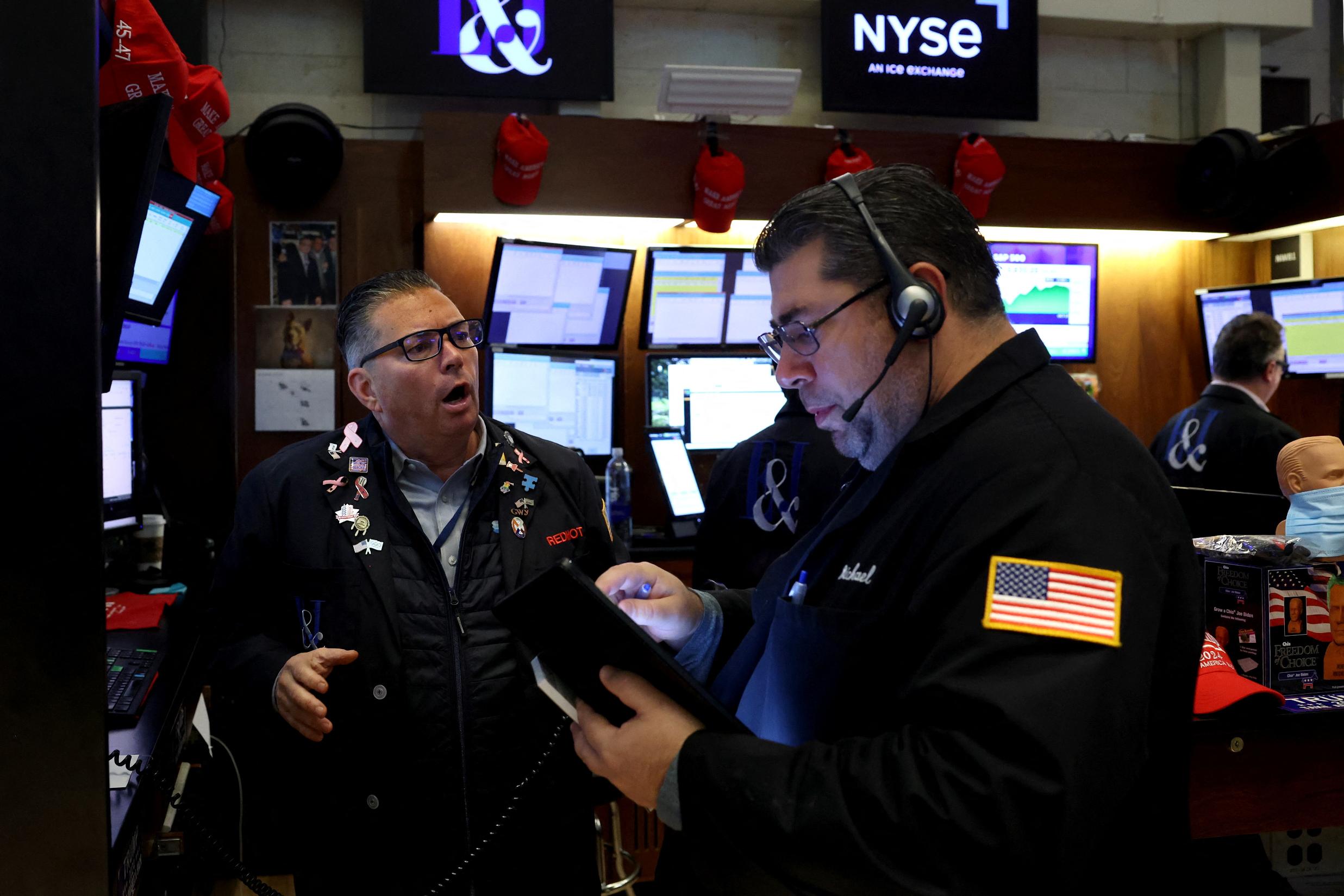
All three major indexes hit record highs Indexes up: Dow 3.57%, S&P 500 2.53%, Nasdaq 2.95% Trump-linked stocks, Tesla jump Market volatility gauge falls sharply Shares of small-cap companies soar NEW YORK, Nov 6 (Reuters) - U.S. stocks rallied sharply to close at record highs on Wednesday after Republican Donald Trump won the 2024 U.S. presidential election in a stunning comeback four years after being voted out of the White House. The Dow Industrials, S&P 500 and Nasdaq Composite each ended at record levels with investors expecting lower taxes, deregulation and a U.S. president who is not shy to weigh in on everything from the stock market to the dollar, although fresh tariffs could bring challenges in the form of a higher deficit and inflation. The Republican's win powered a rally in so-called "Trump trades," sending U.S. Treasury yields sharply higher, with the benchmark 10-year note yield hitting a four-month high of 4.479%. Bitcoin hit a record high of over $76,000 and the dollar was on track for its biggest one-day percentage gain since September 2022. Polls indicated a very tight race, with some concern the process could be drawn out before a victor was declared. "Investors were kind of portfolio jockeying to score up some of their risk exposure in anticipation of an outcome that was going into it, seemingly a toss-up," said Mark Luschini, chief investment strategist at Janney Montgomery Scott in Philadelphia. "And obviously, it turned very quickly and led to a very much risk-on day today in which anything that isn't tied to the ground from a cyclical or pro-growth standpoint is absolutely launching." The Dow Jones Industrial Average (.DJI) , opens new tab rose 1,508.05 points, or 3.57%, to 43,729.93, the S&P 500 (.SPX) , opens new tab gained 146.28 points, or 2.53%, to 5,929.04 and the Nasdaq Composite (.IXIC) , opens new tab gained 544.29 points, or 2.95%, to 18,983.47. Both the Dow and S&P 500 registered their biggest one-day percentage gains since November 2022. The Nasdaq notched its biggest daily percentage gain since February. Financials (.SPSY) , opens new tab jumped 6.16% as the best performing of the 11 major S&P 500 sectors. Banks, expected to benefit from loosening regulations under Trump, powered the gains, with the S&P 500 bank index (.SPXBK) , opens new tab up 10.68%, its biggest daily jump in two years. The small-cap Russell 2000 (.RUT) , opens new tab rallied 5.84%, its biggest surge since November 2022, to a three-year high, with the domestically concentrated stocks seen as likely to benefit from easier regulations, lower taxes and less exposure to import tariffs. However, rising Treasury yields could hurt smaller companies, which tend to rely heavily on borrowing and are more sensitive to higher interest rates. "This move up in interest rates ... if it doesn't stall out here somewhere around this 4.4%, 4.5% level or so, and we start to retest those levels we saw last October of 5%, that could not only put small caps, but the market itself on its heels," said Luschini. The CBOE Volatility Index (.VIX) , opens new tab, also known as Wall Street's "Fear Gauge," dropped 4.22 points to close at a six-week low of 16.27. Rate-sensitive real estate (.SPLRCR) , opens new tab shares, down 2.64%, and utilities (.SPLRCU) , opens new tab, off 0.98%, were among the day's few declining sectors as investors assessed the chances of Trump's policies boosting inflation and altering the Federal Reserve's path of interest rates, which has been a key component of Wall Street's recent rally. The central bank is widely expected to ease the benchmark interest rate by 25 basis points at its policy-setting meeting ending on Thursday. However, traders have begun to trim bets for a cut in December and the number of reductions expected next year, according to CME's FedWatch Tool , opens new tab. Stocks viewed as likely to perform well under a second Trump term also advanced, with Trump Media & Technology Group (DJT.O) , opens new tab closing up 5.94% after a volatile session while Tesla (TSLA.O) , opens new tab leaped 14.75% as CEO Elon Musk has supported Trump's reelection campaign. Strong gains were also made by shares of cryptocurrency companies, energy firms and prison operators, while renewable energy shares fell. Markets were also eyeing whether the Republican Party could maintain a majority in the House of Representatives after gaining control of the U.S. Senate, which would lead to less opposition to a Trump agenda. Advancing issues outnumbered decliners by a 1.51-to-1 ratio on the NYSE and by a 1.84-to-1 ratio on the Nasdaq. The S&P 500 posted 138 new 52-week highs and 12 new lows while the Nasdaq Composite recorded 456 new highs and 115 new lows. Volume on U.S. exchanges was 18.68 billion shares, compared with the 12.16 billion average for the full session over the last 20 trading days. Sign up here. https://www.reuters.com/markets/us/sp-500-futures-soar-record-high-after-trump-claims-victory-2024-11-06/