2024-11-06 11:45
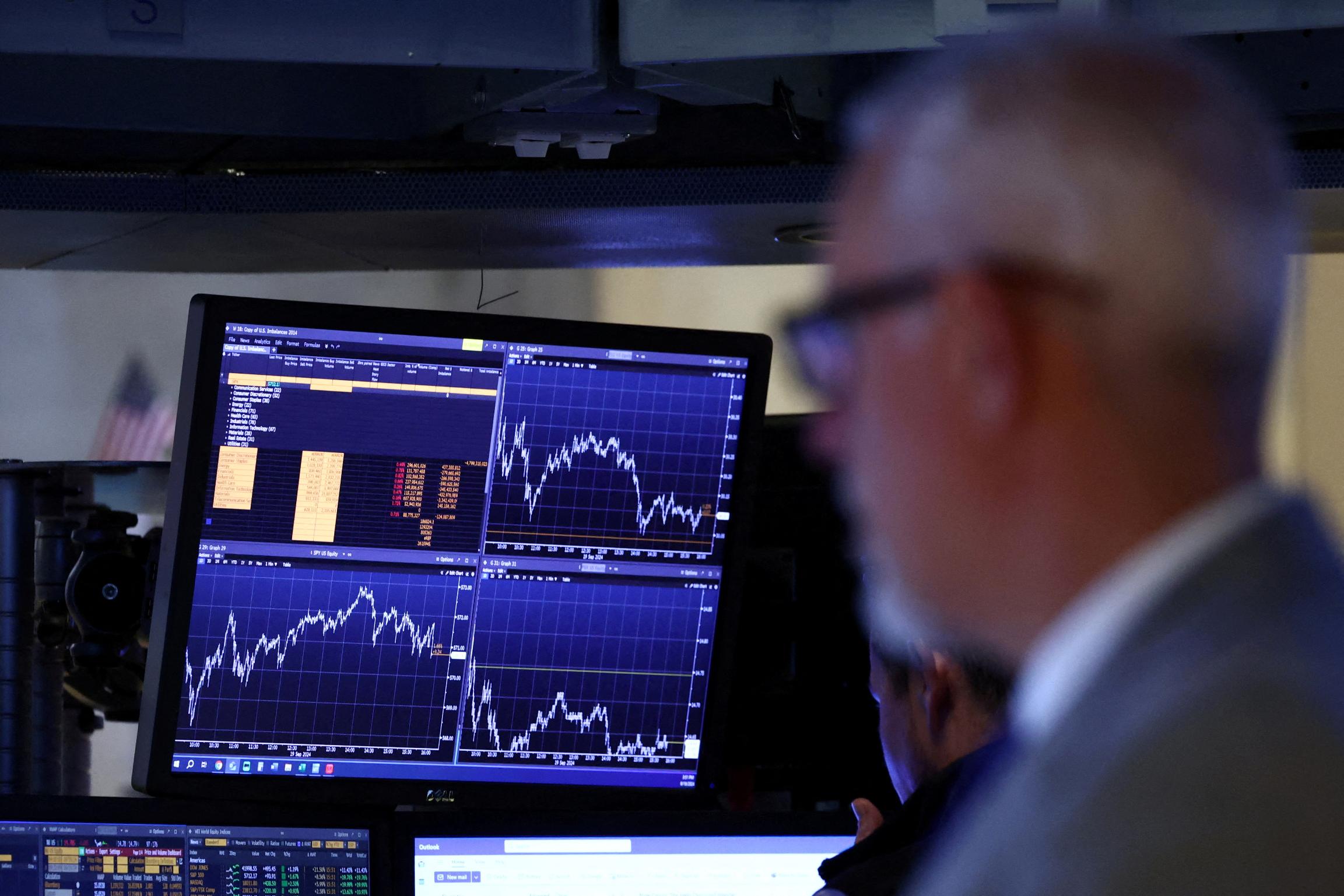
Investors anticipate lower taxes, deregulation and volatility Tariffs and tax cuts could impact GDP and inflation Trump's communications style may cause market uncertainty Nov 6 (Reuters) - With Donald Trump heading back to the White House, Wall Street is anticipating the potential for lower taxes, deregulation and a U.S. president who is quick to sound off on everything from the stock market to the dollar. Trump made tariffs and tax cuts key elements of his pitch to voters, many of whom said the economy was the biggest issue of the election. Another important plank of his platform is expected to be deregulation in areas ranging from the banking industry to cryptocurrencies. The promise of those policies appears to have already stirred prices for some assets, including the dollar, shares of regional banks and the price of bitcoin. For a Trump administration, "markets are basically thinking it's pro-growth, even if it comes with higher inflation and higher interest rates," said David Bianco, Americas chief investment officer at DWS Group. Edison Research projected on Wednesday that Trump had secured more than the 270 Electoral College votes needed to win the presidency. While political developments can move markets, investors say they typically tend to take a back seat to macroeconomic forces and the health of corporate profits as well as global events. For example, the S&P 500 rose nearly 70% during Trump's first term as technology shares soared, even as his tariff policies sparked bouts of volatility. Meanwhile, the energy sector notched deep losses after global economies were paralyzed by the COVID-19 pandemic, although his administration was friendly to fossil fuel development. HISTORY NOT A GUIDE? Trump’s election in 2016 sparked a so-called reflation trade, with investors piling into an array of assets such as copper futures and shares of construction companies on the belief that tax cuts and other stimulative policies would boost sluggish U.S. economic growth. But the economic landscape has changed, and some investors believe the moves of 2016 may not offer an accurate roadmap for how stocks, bonds and the dollar might trade in coming months. The U.S. economy grew by an annualized rate of 2.8% in the third quarter of 2024, compared to just below 2% in 2016. And while months of restrictive monetary policy have helped tamp inflation down from four-decade highs hit in 2022, some investors worry tariffs or tax cuts could send consumer prices higher again. By contrast, sluggish inflation and growth were concerns for the Fed eight years ago. Signs of rebounding inflation could also cause a rethink of the Federal Reserve's interest rate trajectory, with the central bank just beginning to ease monetary policy after hiking rates to bring inflation down from 40-year highs. And while the last weeks of the 2024 presidential race saw betting markets move in favor of Trump over his opponent, Kamala Harris, his 2016 victory "was a general surprise, the positive market reaction was a surprise too, and the investor positioning in the runup to elections was for a disinflationary backdrop," JPMorgan strategists wrote on Monday. TARIFFS AND TAX REFORM The potential implementation of tariffs - which Trump has vowed to increase by 10% on imports, and 60% on goods from China - could make a key difference in how investors approach asset markets in coming months. A study by Deutsche Bank said a Trump victory would add about half a percentage point to U.S. gross domestic product if tariffs are not implemented. Tariffs would subtract about a quarter of a point from GDP, the study found. "There are still going to be some question marks as to how aggressive Trump does go with tariffs, and that's going to be a story regardless of the composition of Congress, given that can be pushed through via executive action," said Garrett Melson, portfolio strategist at Natixis Investment Managers. Trump also wants tax reform, including reducing the corporate tax rate to 15%, for those companies that make their products in the U.S., after having cut the rate to 21% from 35% during his 2017-2021 presidency. Such tax cuts - which will need to pass Congress - could support company earnings and sentiment for stocks, although the extent of such a boost remains to be seen. Cutting the rate to 15% would boost S&P 500 earnings by about 4%, according to estimates by Goldman Sachs strategists. "In the shorter term, equity investors will look upon favorably a Trump victory because the potential for him" to extend current tax cuts, said Jake Seltz, portfolio manager with Allspring Global Investments. At the same time, broad tax cuts could spark concerns about adding to U.S. debt when investors are becoming increasingly focused on the federal deficit. Deficit worries have helped spark a recent selloff in U.S. government debt, taking the 10-year Treasury yield, which moves inversely to bond prices, to 4.471% on Wednesday, its highest level since July. Trump's tax and spending plans would increase the debt by $7.75 trillion over the next decade, according to an Oct. 28 estimate from the Committee for a Responsible Federal Budget, a budget-focused think-tank. An added wrinkle is Trump's penchant to speak on a wide swath of potentially market-moving topics, demonstrated during his first term when he frequently commented on everything from the strength of the dollar to trade to the policies of individual companies. Those remarks occasionally sparked asset price moves. "Markets are a little on edge about the idea that a Trump administration will come with a lot of communication that will be difficult to separate the noise from signal," said DWS Group's Bianco. Sign up here. https://www.reuters.com/markets/us/wall-street-girds-trump-20-tariffs-tax-cuts-volatility-2024-11-06/
2024-11-06 11:41
SOCHI, Nov 6 (Reuters) - Russian Deputy Prime Minister Alexander Novak said on Wednesday that Moscow was ready to keep supplying gas to Europe via Ukraine but this should be agreed by Kyiv and the European countries involved. The current transit deal expires at the end of the year. "Of course, in my opinion, the European countries that currently receive gas through this corridor are interested in continuing such cooperation," Novak, who is in charge of Russia's energy policy, told reporters on the sidelines of the Valdai Discussion Club in the Black Sea resort of Sochi. "We are ready to supply (gas), but not much depends on us, so probably this should be negotiated directly between the users and the country through which the transit is provided." Russian gas supplies to Europe via Ukraine are relatively small. Russia shipped about 15 billion cubic metres (bcm) of gas via Ukraine in 2023 - only 8% of peak Russian gas flows to Europe via various routes in 2018-2019. Ukraine has refused to renew the deal with Russia due to the ongoing military invasion. Sign up here. https://www.reuters.com/business/energy/russia-says-europe-ukraine-have-agree-gas-transit-deal-2024-11-06/

2024-11-06 11:39
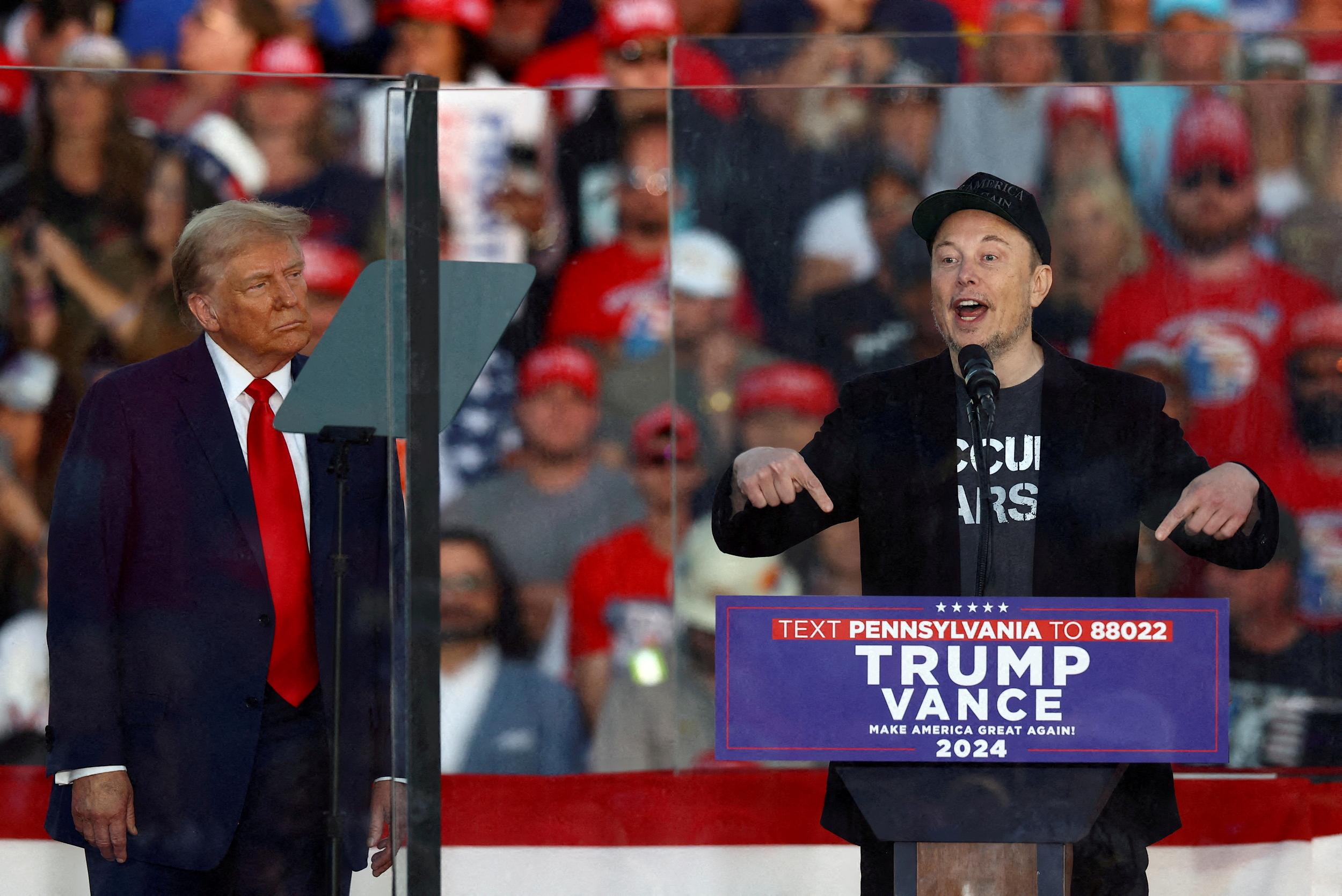
Nov 6 (Reuters) - Donald Trump's return to the White House after winning the Nov. 5 U.S. presidential election may reshape American business. Much depends on whom he appoints as deputies and cabinet members, including the role of Tesla CEO Elon Musk, and what tariffs he enacts. Following are some major issues and sectors to watch: WHAT ROLE WILL ELON MUSK PLAY? After some nudging from the world's wealthiest person, Trump has said he would tap Tesla CEO Elon Musk to lead a new government efficiency commission. Musk has said at least $2 trillion could be cut from the $6.75 trillion federal budget. How that works could be a key to the next Trump administration. Does efficiency mean fewer rules and regulators? Musk has been a vocal critic, for instance, of federal review of his SpaceX rocket business. That could mean less oversight of self-driving cars (a Tesla business) or rocket launches and much more. The two men are not completely in sync: Trump has said he won't let California require all vehicles in the state go electric in a decade, but Musk runs the world's most valuable EV company. "A rising tide raises all boats. So to the extent that Elon is able to hamper the vilification of EVs by a potential Trump administration, all the better," said James Chen, former head of policy for Rivian and Tesla. How Musk would address conflicts of interest between his interests in autos, space, health, construction and artificial intelligence is not clear. Trump has pledged to be a "crypto president", a plan that may start with replacing industry opponent Gary Gensler, the Securities and Exchange Commission chair who has sued most of the industry , opens new tab – including Coinbase , Binance and Kraken. Gensler's replacement is expected to review - and potentially tear up - accounting guidance and create industry exemptions from SEC rules. Musk, too is a crypto supporter, as is Silicon Valley Trump supporter Marc Andreessen and incoming Vice President J.D. Vance. Musk is also a big proponent of carbon-free energy, with Tesla being a major supplier of solar systems and batteries. Trump has promised to kill the offshore wind industry and rescind all unspent funds under the Inflation Reduction Act – Biden’s signature climate law. But Trump faces dissent in his ranks: Republican lawmakers, oil companies and others see massive red state gains from the law. Musk has played into that, building his second U.S. electric vehicle factory in Texas, for instance. TARIFFS Trump has proposed a 10% tariff on all U.S. imports and 60% on Chinese-made products, which if enacted would affect the whole economy by pushing consumer prices higher. The Tax Foundation, a non-partisan think tank, calculated Trump tariffs would hike taxes by $524 billion annually, shrink GDP by at least 0.8%, and cut employment by 684,000 full-time equivalent jobs potentially impacting retail workers, the largest private sector employer. He also suggested he might impose a 25% tariff on all imports from Mexico. Trump's tariff proposals could reduce American consumers' spending power between $46 billion and $78 billion each year, according to a National Retail Federation study. Apparel, toys, furniture, household appliances and footwear would be the most affected categories, the study said. Retailers would shift operations outside of China to countries including Bangladesh, India, and Vietnam. Big-box stores like Walmart and Target would face higher supply chain costs, while supermarkets like Kroger, Albertsons, and Publix, which minimally source from China, could benefit. Shipping and transportation experts say sweeping tariffs could initially bolster their business before depressing trade. Tariffs loom over tech as well. In recent weeks, Trump has also heavily criticized the U.S. CHIPS and Science Act that has sought to partially subsidize companies building factories in the United States. Instead, he said the country should impose tariffs on chips coming into the country, especially from Taiwan's TSMC. Tariffs also would sharply raise costs for the renewable energy industries in the U.S., which rely heavily on Chinese components. “Trump actions without Congressional backing could include import tariffs of 10-20% (ex China), 60%-200% on Chinese imports which could impact the cost of renewable projects, particularly solar and storage projects,” according to an October research note from Bernstein. And then there is the question of China's retaliation. It is the world's biggest soy importer and pork consumer, but it has diversified its food supply base since Trump's tariffs in his first administration. Moreover, China failed to fully comply with an agreement to buy more U.S. agricultural goods that it signed with Trump in January 2020. Trump has vowed in his second term to impose 60% duties on imports from China, raising concerns that Beijing will retaliate by reducing imports of U.S. farm products. OIL: DRILL BABY DRILL - BUT NOT IRAN The United States is already the world’s biggest oil and gas producer, but Trump wants to clear away remaining obstacles. He'll lift a freeze on new liquefied natural gas export permits, expand federal drilling auctions, speed up new pipeline permitting and try to reverse or weaken regulations aimed at cutting power plant and auto emissions. Trump's support for the oil and gas industry could also lead him to temper his opposition to the Inflation Reduction Act, since oil companies are receiving some funding from it for carbon-free endeavors like carbon capture and sequestration. The big oil policy wildcard is how Trump will treat rival exporters, including Russia, Saudi Arabia, and Iran. It is likely that Trump would relieve sanctions on Russian energy, but leave in place those on Iran, said Ed Hirs, an energy fellow at the University of Houston. Jesse Jones, an analyst with consulting firm Energy Aspects, expects even more. “We think that the impact of a Trump administration returning to a maximum pressure campaign on Iran could lead to a million barrel per day decrease in Iranian crude exports,” he said. LABOR UNIONS Organized labor made great strides under President Joe Biden, who joined a picket line with U.S. auto workers. The UAW wants to expand and in future strikes the federal government could be asked to intervene in a way that undercuts worker bargaining power, something Democrats have so far declined to do. Republicans have typically been unfriendly to unions, but Trump has played a different game, reaching out to blue-collar workers. Strong support among many union workers may pressure Trump to protect those voters, said Anthony Miyazaki, a marketing professor at Florida International University. Still, his record of appointing leaders to the National Labor Relations Board resulted in a roll back of workers' rights to form unions. If this cycle repeats, it could potentially reverse the gains unions have made since the pandemic, including successful organizing efforts at Starbucks and Amazon and other fledgling movements at Apple, REI and Trader Joe's. OTHER TOPICS INCLUDE: FINANCE Within banking, JPMorgan (JPM.N) , opens new tab, Goldman Sachs (GS.N) , opens new tab, Bank of America (BAC.N) , opens new tab and other lenders will likely enjoy a reprieve from stiff capital hikes, M&A hoop-jumping, and Biden's "junk fees , opens new tab" crackdown. Trump is expected to quickly install industry-friendly Republicans at the financial regulators. But those gains may be offset if Trump follows through on tax and trade policies that will widen the deficit and fuel inflation, in turn boosting lending rates , opens new tab. That could push existing loans into the red, say analysts. ANTITRUST AND TECH Trump may walk back the Department of Justice's bid to break up Alphabet's Google and prefer settling with companies over competition issues in mergers, rather than new trials, attorneys said. The nation's tough, top merger cop, Federal Trade Commission Chair Lina Khan, is almost certainly headed for the door. More broadly, Trump's backers in Silicon Valley, including investors Peter Thiel and Marc Andreessen and Tesla chief Elon Musk, want less regulation of new technology, from artificial intelligence to rockets. They have a champion in former venture capitalist Vance. MEDIA: WATCH WHAT YOU SAY Washington Post owner Jeff Bezos decided days before the vote that the paper would not endorse anyone for president, describing it as a principled move to regain credibility. Hundreds of thousands of subscribers left, many saying it was political cowardice. USA Today and the LA Times also declined to endorse a candidate. “The message is pretty clear right now,” said former FCC Chairman Tom Wheeler. "That is conceding to the tyrant in advance before you're asked to," said New York University School of Professional Studies adjunct associate professor Helio Fred Garcia, an author of two books about Trump. During the campaign, Trump called on the Federal Communications Commission to strip ABC and CBS of their broadcast licenses. FCC Chair Jessica Rosenworcel has denounced Trump's calls to revoke licenses for broadcast stations, citing free speech protections. But the independence of the FCC could be at risk if Trump follows through on a campaign pledge to bring regulatory agencies, such as the FCC, under presidential authority, Wheeler said. The president also could invoke his emergency powers under the Communications Act to exert control over broadcasters, citing “national security” concerns. Even so, a new Trump presidency will likely give cable TV news networks like CNN, Fox News and MSNBC and news outlets including the New York Times and Washington Post the same big jolt to viewers and audience that his first term generated. PHARMACEUTICALS Trump recently said he would let former presidential candidate and anti-vaccine advocate Robert F. Kennedy Jr. "go wild" , opens new tab on vaccine and healthcare policy. Kennedy has said that Trump promised him control over the FDA, CDC, HHS, and the USDA. Those jobs could potentially give him control over what vaccines are approved and whether Americans are recommended to receive them. Trump transition co-chair Howard Lutnick has said Kennedy is not going to be put in charge , opens new tab of the Department of Health and Human Services, but suggested he could advise on vaccines. Jeremy Levin, CEO of biotech company Ovid Therapeutics and former chairman of biotech lobby group BIO, said he would be alarmed if Kennedy was given oversight over vaccines, and that other executives had also expressed concern. "Vaccine denialism, which is a central plank of RFK's, is perhaps as dangerous as anything you can imagine," he said, adding that President Trump's previous appointments for the COVID vaccine effort and the FDA suggest to him that more moderate positions will win out. Some executives also were concerned that Kennedy's influence could harm the U.S.'s reputation and ability to review new drugs. Sign up here. https://www.reuters.com/world/us/how-trumps-second-administration-affects-business-musk-tariffs-more-2024-11-06/
2024-11-06 11:34
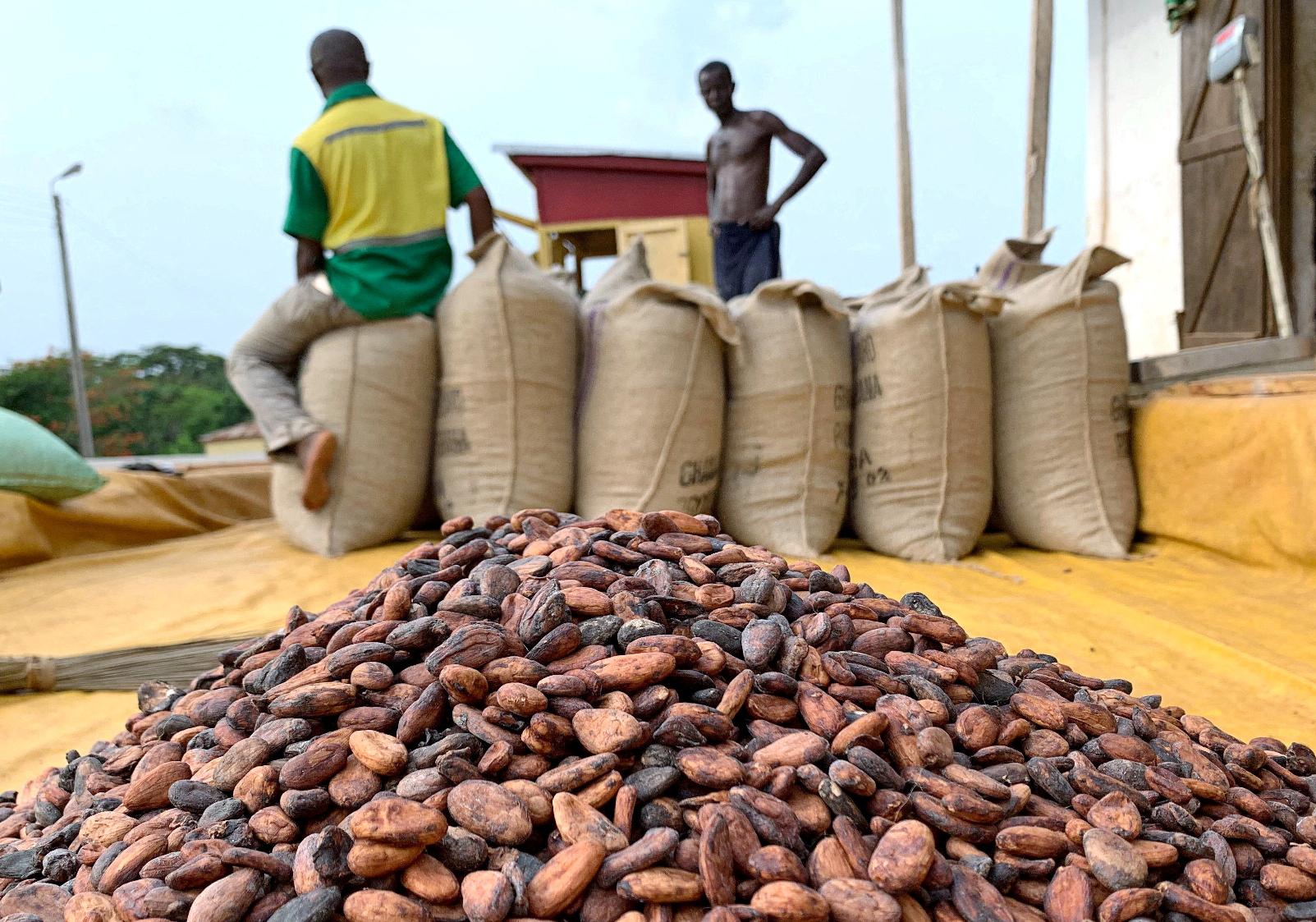
Ghana cocoa output expected to rebound Farmers see strong crop boost from good weather Illegal mining, smuggling, and disease risks remain ASAMANKESE, Nov 6 (Reuters) - Ghana's cocoa production is expected to rebound in the 2024/25 crop season, buoyed by favourable weather conditions, according to local farmers, officials from regulatory body Cocobod, and buyers. However, challenges such as illegal gold mining, smuggling, and disease continue to pose risks. In June, the world's second-largest cocoa producer saw its output fall below 55% of its average seasonal output, marking a more than two-decade low. Similar problems in neighbouring Ivory Coast, the world's leading cocoa producer, have resulted in a four-year global cocoa market supply deficit, pushing the prices of chocolate's key ingredient to record highs. Ghana now expects output to recover to 650,000 tons in the 2024/25 season, though an official of the International Cocoa Organization said they see it around 500,000 tons. Over 20 cocoa farmers, Cocobod officials, and local buyers told Reuters that farms are showing healthier pods than the previous season due to improved rainfall and sunshine, as well as the timely use of fertilizers and pesticides. Abdul-Majid Mumuni, head of Cocobod's cocoa health and extension division in Ghana’s southeastern region, said, "The crop is amazing; the trees are productive and you can count not less than 50 pods per tree." A secretary of a farmers group in Ghana's southeastern Asamankese district, Ocran Christopher, said they've harvested 500 bags since this season opened in Sept. from their over 72-hecatare farm compared with about 820 bags in the entire 2023/24 season. "If things remain like this, we can harvest 2,000-2,500 bags," he said. Cocobod officials said they've seen increased cocoa deliveries this season but are cautious as the season was young. Despite this positive outlook, farmers expressed concern about the potential outbreak of black pod disease and continuing bean smuggling. Ghana lost more than a third of its 2023/24 cocoa output to smuggling, according to Cocobod officials. In response, the regulator has increased the farmgate price by nearly 45% for the current season and replaced the long-standing cocoa loan syndication system with a new funding model, requiring global traders to pay upfront for part of the cocoa bean shipments. Although the new model aims to deter bean trafficking, it received mixed reviews from farmers and buyers. A district manager at a licensed cocoa buyer in Ghana said the new model's limited funds could potentially slow purchases and encourage smuggling. Sign up here. https://www.reuters.com/markets/commodities/ghana-expects-202425-cocoa-production-resurgence-2024-11-06/
2024-11-06 11:34
Longer-dated US bond yields surge Trump win seen widening deficits Tariff plans could also increase inflation US yield curve hits steepest since late September Focus shifts to Fed meeting NEW YORK, Nov 6 (Reuters) - U.S. Treasuries fell sharply on Wednesday, propelling yields to multi-month highs as Donald Trump's presidential election victory ignited bets on economic policy shifts that could boost deficits and inflation. The Republican former President swept back to power early on Wednesday, beating Democratic candidate Vice President Kamala Harris and capping a political comeback four years after he left the White House. The benchmark 10-year Treasury yield rose to 4.479%, its highest since July, as polls also showed Republicans winning control of the Senate and a close race for the House of Representatives. The 10-year yield, which moves inversely to the price, was last up 15.3 bps at 4.441%, on track for its biggest one-day rise since April. U.S. yields, however, pared gains after a better-than-expected 30-year Treasury bond auction. Trump campaigned on a platform of tax cuts, which economists say would juice the economy, widen budget deficits and increase government borrowing. He also touted tariffs, which analysts expect to stoke inflation and reduce the Federal Reserve's scope to cut interest rates. "The risk in the market with Trump is an undisciplined fiscal situation. At some point in 2025, the deficit will grab the narrative of the market," said James Camp, managing director of fixed income and strategic income at Eagle Asset Management in St. Petersburg, Florida. "If you believe that the gap between rhetoric and policy could be a mile-wide ... there is still an impulse from Trump on the spending side that would be bearish for bonds. The leaning in bonds is to be cautious given the results." The yield on the 30-year Treasury note last traded 16.5 bps higher at 4.612%, after earlier hitting 4.678%, the highest since late May. It is set for its biggest one-day rise since March 2020, underscoring concerns about future borrowing. SOLID US 30-YEAR BOND AUCTION Wednesday's sale of $25 billion worth of 30-year bonds lured buyers after being sharply sold off. The note was priced at 4.608%, lower than the rate forecast at the bid deadline, suggesting investors did not demand extra yield to take down the note. There were $66 billion in bids for a 2.64 bid-to-cover ratio, up from 2.50 previously and the 2.31 from the August new issue. Meanwhile, the MOVE index (.MOVE) , opens new tab, the benchmark gauge of rate volatility, hit a more than one-year high of 136.25 on Monday, suggesting Treasury yields across most maturities will move at least 8.5 basis points per day in either direction over the next month. It was last at 130.43. Harley Bassman, creator of the MOVE index and managing partner at Simplify Asset Management, predicted that based on his calculations, option prices anticipate an outsized move of 18 basis points in Treasury yields a day or two after the election. That was roughly the size of the move so far on Wednesday. Treasury yields surged once it became clear Trump had considerably improved on his 2020 election performance against President Joe Biden. On the short end of the curve, the two-year yield peaked at 4.312%, its highest since late July, and last traded roughly 7.5 bps higher at 4.278%. It was on pace for its biggest one-day gain in a month. The U.S. yield curve steepened sharply on Wednesday, with the gap between two-year and 10-year yields hitting 19.5 , the highest since late September. The curve was last at 16.10 bps, from 8.8 bps late Tuesday. The curve has been on a steepening trend for the last few months, a scenario that occurs when the Fed is cutting interest rates. The Fed, meanwhile, kicks off its two-day monetary policy meeting on Wednesday and is expected to deliver another 25-bps rate cut, though future decisions look less certain. Traders have reacted to the election results by trimming bets on Fed cuts next year, with rates seen staying above 4% until May 2025. The market has priced in about 42 bps of cuts this year and another 62 bps of reductions in 2025. Next year's estimate came down from about 90 bps a few weeks ago, based on LSEG's calculations. "I start to worry when yields cross the 4.50% mark," said Matt Orton, chief market strategist at Raymond James Investment Management. "If we don't reverse that upward trend, I would be more reticent to add too much more risk until we hear from the Fed or get a little bit more guidance with respect to where terminal rates might lie." Sign up here. https://www.reuters.com/markets/us/yields-soar-trump-win-stirs-bond-vigilantes-2024-11-06/
2024-11-06 11:27
HONG KONG, Nov 6 (Reuters) - A threat by Donald Trump, who has been elected as the next U.S. president, to impose 60% tariffs on U.S. imports of Chinese goods poses major growth risks for the world's second-largest economy. Not only are the tariff rates much higher than the 7.5%-25% levied on China during his first term, the economy is also in a much more vulnerable position. This is what is different: PROPERTY MARKET CRISIS In 2018, the property market was strong, driving about a quarter of China's economic activity. That meant local government finances, heavily reliant on auctioning land for residential projects, were not questioned so forcefully. This helped China absorb the tariff shock. But since 2021, real estate has been in a severe downturn and local government revenues have plunged. Housing oversupply means this sector may never return to the driving seat of Chinese economic growth. DEBT The property sector's downturn has saddled local governments with unsustainable debt. While Beijing is lining up fiscal help for them to curb their liabilities, the burden is huge, limiting China's ability to respond to any external growth shocks. The International Monetary Fund calculates total government sector debt at 147 trillion yuan ($20.7 trillion) at the end of 2023. Add household and corporate debt and that number surpasses 350 trillion yuan - roughly three times the size of the economy, according to the Bank for International Settlements. WEAK DOMESTIC DEMAND Low wages and pensions, high youth unemployment and a feeble social safety net leave China's household spending below 40% of GDP, about 20 percentage points behind the global average. Boosting that requires either more debt or an overhaul of how national income is distributed, so that it benefits households at the expense of government and businesses. That could be achieved by changing how companies and households are taxed and how government spends the money, raising retirement, health and unemployment benefits and removing an internal passport system responsible for huge rural-urban inequalities, among other reforms. So far, however, authorities have focused on upgrading the export-reliant manufacturing sector instead, with remarkable success in electric vehicles, solar energy and batteries. But this also prompted tariffs in the United States, Europe, Turkey and elsewhere. China may be able to boost external sales in areas where its economy is extremely competitive, but has little control on external demand. DEFLATIONARY PRESSURES The property crisis, the debt overhang and weak consumption have all fuelled deflationary pressures. China's policy of redirecting resources from the property market to the manufacturing sector, rather than consumers, has fuelled what Western governments describe as industrial overcapacity. This has led to factory gate deflation. Producer price inflation was 4.6% in July 2018 when Trump's first tariffs came into effect. In September 2024 this stood at minus 2.8%. Consumer price inflation has ground to a paltry 0.4% from 2.1% over that period. Deflation, which hurts consumption, businesses and growth, could get much worse if tariffs shrink external demand, exacerbating industrial overcapacity. LIMITED ROOM FOR CURRENCY DEPRECIATION The yuan ended 2019 roughly 10% weaker against the dollar than in early 2018, when Washington flagged the tariffs plan and 4% weaker in trade-weighted terms against all currencies. The U.S. curbs increased the effective tariff rate on all Chinese exports by 2.4 percentage points, according to Capital Economics analysts, which means that the yuan's depreciation more than offset the tariff impact. This time, the yuan might have to fall 18% against the dollar to fully offset 60% U.S. tariffs, implying a rate of 8.5 per dollar, the analysts calculated - levels unseen since the 1990s Asian financial crisis. Worried about capital outflows, authorities tried to prevent the yuan from weakening past 7.3 earlier this year. A full adjustment looks unlikely. OTHER FACTORS During the COVID-19 pandemic, Washington unleashed trillions of dollars in stimulus, including cash handouts to consumers, some of which was spent on goods made in China. Also, after Russia's invasion of Ukraine, Moscow got shut out of many Western markets, pushing it to source more goods from China. These were unexpected opportunities for Beijing, and are unlikely to be repeated. ($1 = 7.1047 Chinese yuan) Sign up here. https://www.reuters.com/world/china/why-chinas-economy-is-more-vulnerable-trump-tariffs-this-time-2024-11-06/