2025-12-23 00:08
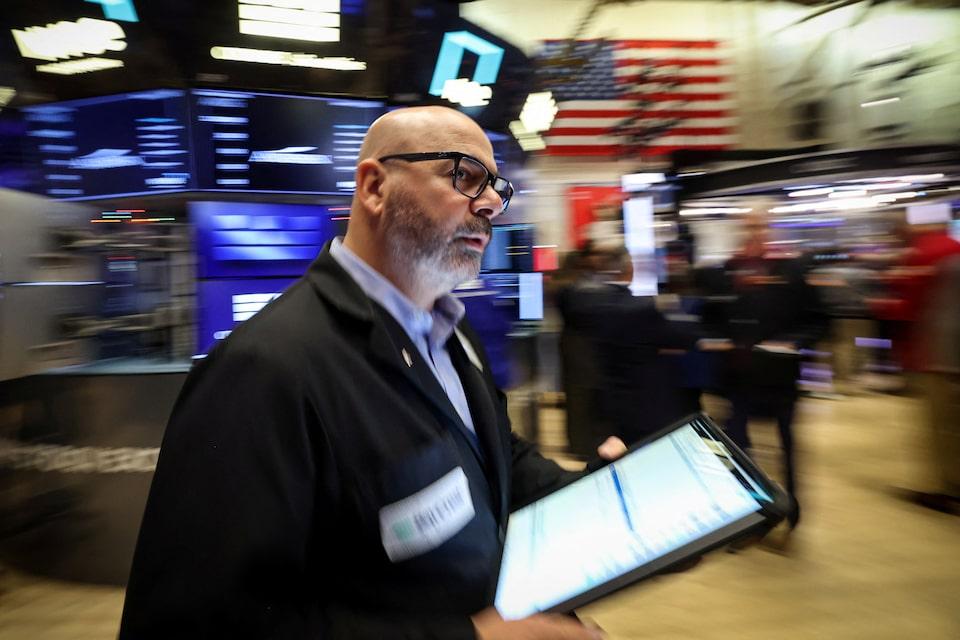
Clearwater Analytics up after $8.4 billion go-private deal Ellison offers $40.4 billion guarantee to back Paramount's Warner Bros bid VIX registers lowest close in a year Indexes up: Dow 0.47%, S&P 500 0.64%, Nasdaq 0.52% NEW YORK, Dec 22 (Reuters) - U.S. stocks closed higher to kick off the holiday-shortened trading week on Monday, buoyed partly by a continued rebound by technology stocks in a broad advance that saw gains among almost all of the 11 S&P 500 sectors. The bounce in tech names began late last week and was driven by Micron Technology's (MU.O) , opens new tab blowout forecasts and a cooler-than-expected inflation report, which has left the S&P 500 and Dow less than 1% from their record closing levels set on December 11. Sign up here. Nvidia (NVDA.O) , opens new tab shares rose and provided the biggest lift to the benchmark S&P 500. Reuters reported the company has told Chinese clients it aims to start shipping its second-most powerful AI chips to China before the Lunar New Year holiday in mid-February. Micron climbed 4% while most other chipmakers also advanced to put the PHLX semiconductor index (.SOX) , opens new tab up 1.1%. "I don't necessarily think it's going to go much higher; it's going to continue to churn," said Ken Polcari, partner and chief market strategist at Slatestone Wealth in Jupiter, Florida. "Today we're trading higher, but I wouldn't be surprised if we back off again and then we just rally again right into about where we are." The Dow Jones Industrial Average (.DJI) , opens new tab rose 227.79 points, or 0.47%, to 48,362.68, the S&P 500 (.SPX) , opens new tab gained 43.99 points, or 0.64%, to 6,878.49 and the Nasdaq Composite (.IXIC) , opens new tab gained 121.21 points, or 0.52%, to 23,428.83. December has historically been a strong period for stock markets. Since 1950, the Santa Claus rally has been reflected by the S&P 500 rising by an average of 1.3% over the last five trading days of the year and the first two trading days in January, according to the Stock Trader's Almanac. This year, that period starts on Wednesday and runs through January 5. Optimism about AI, signs of a resilient U.S. economy, and expectations for monetary policy easing have outweighed concerns about U.S. tariffs, helping to put the three main U.S. indexes on course for their third consecutive year of gains. The S&P 500 is up 17% on the year. Most of the 11 S&P sectors traded higher. Materials (.SPLRCM) , opens new tab, up 1.4% and energy (.SPNY) , opens new tab, up 1.1%, were among the best performers as commodity prices jumped. The tech sector (.SPLRCT) , opens new tab gained 0.4% while financials (.SPSY) , opens new tab gained 1.3% to close at a record. THIN TRADING AHEAD OF HOLIDAYS Wall Street's fear gauge, the CBOE volatility index (.VIX) , opens new tab, saw its lowest closing level since December 13, 2024, at 14.08. Trading volumes were light and were likely to thin out further as the holiday approaches. U.S. stock markets will close at 1 p.m. ET (1800 GMT) on Wednesday and shut on Thursday for Christmas. Volume on U.S. exchanges was 14.57 billion shares, compared with the 16.9 billion average for the full session over the last 20 trading days. However, economic data, including the preliminary reading of third-quarter GDP, December consumer confidence data, and weekly jobless claims, are scheduled for release this week, offering insights about the health of the U.S. economy as well as hints about the monetary policy path. "Tomorrow's GDP number is going to be the last real piece of economic data that anyone really cares about," said Polcari. Among other movers, Tesla (TSLA.O) , opens new tab gained 1.6% after CEO Elon Musk's 2018 pay package was restored by the Delaware Supreme Court. Warner Bros. Discovery (WBD.O) , opens new tab rose 3.5% after Oracle co-founder Larry Ellison agreed to provide a personal guarantee of $40.4 billion of the equity financing for Paramount Skydance's (PSKY.O) , opens new tab offer to acquire the company. Paramount climbed 4.3% Clearwater Analytics Holdings (CWAN.N) , opens new tab rallied 8.1% after a group of private equity firms led by Permira and Warburg Pincus clinched a deal to acquire the investment and accounting software maker for about $8.4 billion, including debt. Advancing issues outnumbered decliners by a 2.15-to-1 ratio on the NYSE and by a 1.61-to-1 ratio on the Nasdaq. The S&P 500 posted 42 new 52-week highs and five new lows while the Nasdaq Composite recorded 113 new highs and 128 new lows. https://www.reuters.com/business/us-stock-futures-rise-ahead-shortened-trading-week-2025-12-22/
2025-12-22 23:58
Amtrak's Acela program st $287 million in revenue and costs Senate report criticizes Biden administration's train purchase decision Amtrak aims for operational profitability by 2028 with new train plans WASHINGTON, Dec 22 (Reuters) - U.S. passenger railroad Amtrak's next-generation high-speed Acela train cars were delayed by more than four years due to planning, design and track issues, and a desire for higher speeds that have not materialized, a Senate report issued late on Monday said. Amtrak's $2.3 billion program to replace its high-speed trains along the northeast U.S. corridor lost $287 million in revenue and unplanned maintenance costs because of extended use of the older Acela fleet, said Senate Commerce Committee chair Ted Cruz, a Republican, in a report. Sign up here. The report said the Biden administration funded purchases of Amtrak cars "to run on tracks that are not yet built" and called that an "irresponsible and quixotic decision." The Trump administration has rescinded more than $4 billion for California's long-delayed high-speed rail project, prompting California to file suit. Amtrak declined immediate comment on the Senate report. The passenger railroad began rolling out the new trainsets in August but those trains are currently on a slower timetable than the prior generation, the Senate report noted. The report said Amtrak "should prioritize procuring service-proven trainsets and technologies that will allow manufacturers to compete on price, instead of requiring idiosyncratic technical specifications" and argues "shorter and more reliable timetables are the goal, not marginally higher speeds." Last month, Amtrak President Roger Harris told Reuters in an interview that the passenger railroad needs to retire the older Acela trains before it can begin raising speeds because the signaling system can't be optimized for the higher speed until then. He estimated the higher speeds would begin in late 2026. But Harris noted the speeds would only be marginally faster due to the curvature of some railroad bridges on the Boston to Washington corridor. In November, Amtrak set a yearly record for ridership and revenue, as it cut losses by 15% to $598 million and aims for operational profitability by 2028. Amtrak plans to replace regional trains starting next year and is now considering new trains for long-distance service. Congress approved $66 billion in funding for rail projects as part of a massive 2021 infrastructure bill, with $22 billion dedicated to Amtrak. https://www.reuters.com/business/aerospace-defense/us-adds-dji-other-foreign-drones-national-security-list-2025-12-22/

2025-12-22 23:50
PALM BEACH, Florida, Dec 22 (Reuters) - U.S. President Donald Trump said on Monday it would be smart for Venezuelan President Nicolas Maduro to leave power, and the United States could keep or sell the oil it had seized off the coast of Venezuela in recent weeks. Trump's pressure campaign on Maduro has included a ramped-up military presence in the region and more than two dozen military strikes on vessels allegedly trafficking drugs in the Pacific Ocean and Caribbean Sea near the South American nation. At least 100 people have been killed in the attacks. Sign up here. Asked if the goal was to force Maduro from power, Trump told reporters: "Well, I think it probably would... That's up to him what he wants to do. I think it'd be smart for him to do that. But again, we're gonna find out." "If he wants to do something, if he plays tough, it'll be the last time he's ever able to play tough," he said. During the press conference, Trump also took aim at Colombian President Gustavo Petro, who he has also feuded with throughout the year. "He's no friend to the United States. He's very bad. Very bad guy. He's gotta watch his ass because he makes cocaine and they send it into the U.S.," Trump said when asked about Petro's criticisms towards the Trump administration's handling of the tensions with Venezuela. In addition to the strikes, Trump has previously announced a "blockade" of all oil tankers under sanctions entering and leaving Venezuela. The U.S. Coast Guard started pursuing an oil tanker in international waters near Venezuela on Sunday, in what would be the second such operation this weekend and the third in less than two weeks if successful. "Maybe we will sell it, maybe we will keep it," Trump said when asked what would happen with the seized oil, adding it might also be used to replenish the United States' strategic reserves. (This story has been corrected to clarify that Trump was referring to the Colombian President Gustavo Petro in the misattributed quote in paragraph 6) https://www.reuters.com/business/energy/us-might-keep-or-might-sell-oil-seized-near-venezuela-trump-says-2025-12-22/

2025-12-22 23:45
OSLO, Dec 22 (Reuters) - Norwegian energy group Equinor (EQNR.OL) , opens new tab said on Monday it was complying with a stop work order issued by the U.S. for its Empire Wind 1 offshore wind project and engaging with authorities. The U.S. Department of the Interior said earlier on Monday it had suspended leases for five large-scale offshore wind projects over national security concerns. Sign up here. Empire Wind is complying with the notice ordering the suspension of ongoing activities and engaging with relevant authorities to better understand the matter, Equinor said in a statement. The project off the coast of New York has a capacity of 810 megawatts, enough to power 500,000 homes, and was more than 60% complete, the company added. The stop work order threatened the progress of ongoing activities and without a swift resolution there could be a "significant impact" to the project, Equinor said. Empire Wind, including the South Brooklyn Marine Terminal from where its construction is handled, had a gross book value of around $3.1 billion on September 30, 2025. The total amount drawn under the project finance term loan was around $2.8 billion as of November 30, 2025, according to the company. It marks the second stop work order for the project. Equinor in July booked a $763 million impairment related to Empire Wind 1 and the South Brooklyn Marine Terminal project. (This story has been refiled to add Reuters to the dateline) https://www.reuters.com/business/energy/equinor-says-it-is-evaluating-impact-us-pause-leases-five-offshore-wind-projects-2025-12-22/

2025-12-22 23:10
Dec 22 (Reuters) - A top California regulator said it was looking into incidents in which robotaxis from Alphabet (GOOGL.O) , opens new tab unit Waymo stalled in parts of San Francisco on Saturday due to a widespread power outage that snarled traffic and gridlocked parts of the city. Waymo paused service Saturday evening following a fire at a PG&E substation that knocked out power to roughly one-third of the city, affecting about 130,000 residents and forcing some businesses to close temporarily. Sign up here. Multiple videos posted on social media showed Waymo robotaxis stuck at intersections with hazard lights turned on as traffic lights stopped working due to the outage. The incident highlighted concerns around the unforeseen situations that can arise for autonomous vehicle operators as they race to deploy driverless taxis across the U.S. Waymo, which has a fleet of more than 2,500 vehicles operating in the Bay Area, Los Angeles, Metro Phoenix, Arizona, Austin, Texas and Atlanta, Georgia, said it resumed its ride-hailing service in the San Francisco Bay Area on Sunday, a day after temporarily suspending operations. "We are aware of outage and are looking into specifics," a spokesperson for the California Public Utilities Commission said in an email to Reuters, referring to Waymo vehicles stalling. The regulator did not provide details of exactly what it was examining. Waymo did not immediately respond to requests for comments on CPUC's statement. Commercializing robotaxis has been harder than expected due to the high cost of investment, tough regulations and investigations following collisions that forced many companies to shut down. But self-driving cabs have returned to the limelight after Tesla launched a service in Austin, Texas, earlier this year and Waymo picked up the pace of its expansion. The CPUC, along with California's Department of Motor Vehicles, regulates and issues permits for testing and commercial deployment of robotaxis. While the Waymo Driver - the company's fully autonomous driving system - is designed to treat non-functional signals as four-way stops, the sheer scale of the outage led to instances where vehicles remained stationary longer than usual, Waymo said in a statement on Monday. A spokesperson said the company was integrating lessons learned from the event and was committed to ensuring its technology better adapts to traffic conditions during similar disruptions. https://www.reuters.com/business/autos-transportation/waymo-resumes-san-francisco-service-after-power-outage-pause-2025-12-22/

2025-12-22 23:08
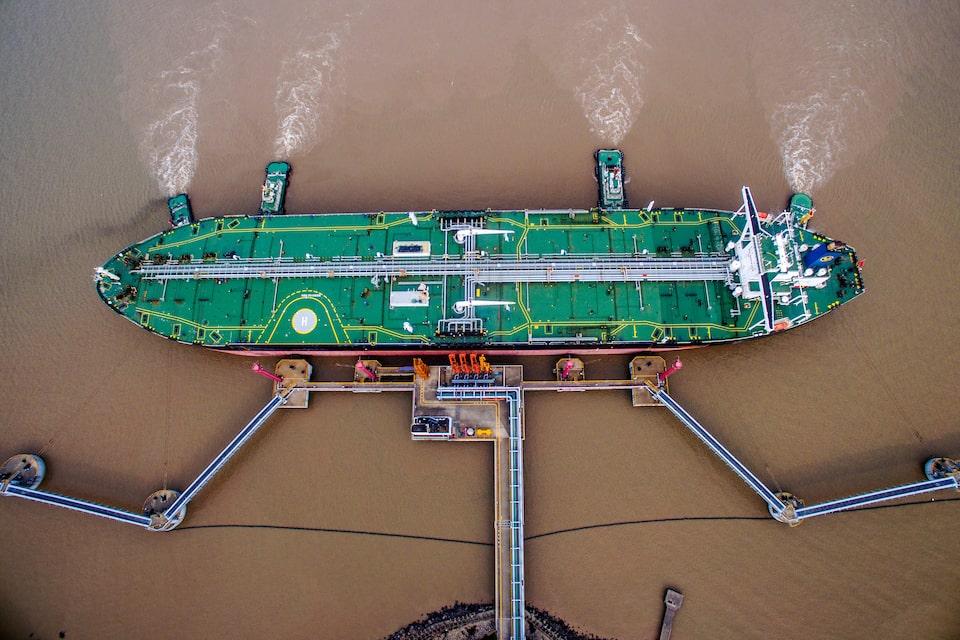
LAUNCESTON, Australia, Dec 23 (Reuters) - Conventional wisdom in the crude oil market is that producers such as OPEC+ largely determine the price by altering output levels to achieve a desired outcome. That shibboleth was challenged in 2025 by China, which used its status as the world's biggest oil importer to provide an effective price floor and ceiling by either increasing or decreasing the volume of crude it sent to storage tanks. Sign up here. Production cuts in 2022 by OPEC+, which groups the Organization of the Petroleum Exporting Countries and allies led by Russia, did shore up prices. Those gains faded once it began reversing the cuts in April this year. Now, facing a looming oil glut, OPEC+ has decided to sit tight and hold production levels steady in the first quarter of next year. That leaves China to mop up the excess. What China does in 2026 is now the biggest known unknown in crude markets. Other participants are likely to set their strategies in response to Beijing. China doesn't release public information on its strategic or commercial stockpiles, making it challenging not only to assess physical flows, but also to determine what policies are likely to be followed. What was clear in 2025 is that China was buying more crude than it needed for domestic consumption and exports of refined products. China does not disclose the volumes of crude flowing into or out of its strategic and commercial stockpiles, but an estimate can be made by subtracting refinery throughput from the total crude available from imports and domestic output. It is worth noting that not all of the surplus crude was likely to have been added to storage, with some being processed in plants not captured by the official data. For the first 11 months of 2025, the surplus crude amounted to about 980,000 barrels per day (bpd), given that imports and domestic output combined were 15.80 million bpd, while refinery processing amounted to 14.82 million bpd. The surplus has been built up since March and came after refiners made a rare draw on inventories in January and February, when processing rates exceeded available crude by about 30,000 bpd. There is a solid correlation between the volume of surplus crude and the price of oil, with China adding barrels when prices dip but cutting back when they rise. This was in evidence in September, when the surplus crude dropped to 570,000 bpd after hitting 1.10 million bpd in August. Cargoes arriving in September would largely have been arranged at the time of the Israel-Iran conflict in June, when crude prices were elevated. Global benchmark Brent futures spiked to a six-month high of $81.40 a barrel on June 23. With prices easing since June, China's refiners resumed buying excess crude, with a surplus of 1.88 million bpd seen in November, the biggest since April and up from 690,000 bpd in October. It could be argued that China's storage flows are the main reason that crude prices were locked in a fairly narrow range in the second half of 2025, with Brent anchored either side of $65 a barrel. The key question for 2026 is whether China will, and can, continue to buy excess crude when prices drop, effectively providing a floor. Estimates vary as to how much crude China already has stored, with a range from around 1 billion barrels to as much as 1.4 billion barrels. If the assumption is that a country should have 90 days of import cover, and China's base imports are around 11 million bpd, then 1 billion barrels would be sufficient.But at least 700 million barrels are likely commercial inventories, implying a strategic reserve closer to 500 million barrels. That in turn suggests that Beijing may wish to add about another 500 million barrels to the strategic stockpile, though the timeline is uncertain. China is building more storage, with state oil companies including Sinopec (600028.SS) , opens new tab and CNOOC (600938.SS) , opens new tab adding at least 169 million barrels across 11 sites in 2025 and 2026. Assuming a storage flow of somewhere around 500,000 to 600,000 bpd, this would add in the region of 200 million barrels over the course of a year. If Beijing does continue to add to strategic inventories at this rate, it would imply that much of the forecast surplus of supply in 2026 will simply go into Chinese tanks. If this does happen, then it is likely that crude prices will once again enjoy a Chinese-supported floor, but also a cap as China will simply trim imports if prices rise too high. Of course, there are a number of "ifs" in the above paragraphs, but the recent history suggests that China will continue to build inventories in 2026, and probably into 2027 as well. What is also clear is that China is quite prepared to use inventory flows as a pricing mechanism. Given China's seaborne crude imports of around 10 million bpd are about a quarter of the global seaborne total, it is possible that Beijing's policies are now the most important factor in oil markets. The views expressed here are those of Clyde Russell, a columnist for Reuters. Enjoying this column? Check out Reuters Open Interest (ROI), your essential new source for global financial commentary. ROI delivers thought-provoking, data-driven analysis of everything from swap rates to soybeans. Markets are moving faster than ever. ROI can help you keep up. Follow ROI on LinkedIn and X. https://www.reuters.com/markets/commodities/china-overtakes-opec-main-oil-price-maker-2025-12-22/