2024-11-05 06:36
Nov 5 (Reuters) - The U.S. dollar fell as U.S. voters headed to the polls on Tuesday, with the results of the elections likely to decide at least the near-term fate of the greenback. Polls show a tight race between Republican presidential candidate Donald Trump and Democratic candidate Kamala Harris and the most extreme currency moves will occur if the party of the new president also wins control of Congress. The dollar dipped even as betting markets including PredictIt , opens new tab and Polymarket , opens new tab showed rising odds of Trump winning the presidency. "It's possible we're seeing a bit of position-squaring ... my sense is that people are cautious," said Steve Englander, head of global G10 FX research and North America macro strategy at Standard Chartered Bank's New York branch. "Right now the mood seems to be going in favor of Trump," Englander said. "On the other hand for most of October and into the beginning of November the Trump trades were stronger dollar and higher yields." Trump’s policies on immigration and tariffs are expected to stoke inflation, while tax cuts and deregulation may boost growth, and send longer-dated Treasury yields and the dollar higher. A Democratic victory, conversely, could send the dollar lower as traders unwind more bets on Trump and on possible investor concern about the economic impact of higher taxes and more stringent business regulations. So-called Trump trades have caused weakness in the euro, Mexican peso and Chinese yuan, with those regions all potentially facing new tariffs under a Trump presidency. Volatility in these currency pairs has surged as the election approaches. The one-week implied volatility for euro/dollar options was the highest since March 2023. Implied volatility for China's offshore yuan is at a record high, while that for dollar/Mexican peso is at the highest since March 2020. The dollar index was last down 0.48% at 103.43 and reached 103.37, the lowest level since Oct. 16. The euro gained 0.48% to $1.0929 and got as high as $1.09368, the highest level since Oct. 11. The greenback dipped 0.44% to 151.46 Japanese yen and sank as low as 151.35, the lowest level since Oct. 23. The Chinese yuan gained 0.13% in offshore trading to 7.103 per dollar while the Mexican peso rose 0.15% to 20.092. Bitcoin gained 2.76% to $68,928. Trump has expressed views that are seen as more favorable for cryptocurrencies. Traders are also focused on the Federal Reserve’s two-day meeting due to conclude on Thursday, when the U.S. central bank is expected to cut rates by 25 basis points. Investors will focus on any clues over whether the Fed could skip a cut in December. A much stronger than expected jobs report for September led investors to pare back expectations on how many times the Fed is likely to cut rates. A much worse than anticipated report for October, however, has raised some doubts over this view. “I'm sure that they've been looking at those data points and that absolutely abysmal headline number, so maybe they see something in it that markets don't and we might get some clues for them on what we're looking at in December,” said Helen Given, FX trader at Monex USA in Washington. Recent hurricanes and labor strikes were partially responsible for October's weak report. Traders are now pricing 78% odds the Fed will also cut in December, according to the CME Group’s Fed Watch Tool. Data on Tuesday showed that the U.S. services sector accelerated to a more than two-year high in October as employment rebounded strongly, suggesting that a near stall in job growth last month was an aberration. The Bank of England is expected to cut rates by 25 basis points on Thursday, while the Riksbank is seen easing by 50 basis points and the Norges Bank is expected to stay on hold. Sterling strengthened 0.46% to $1.3017. Australia's central bank held interest rates steady on Tuesday, as expected, and cautioned that policy would need to stay restrictive for some time yet. The Australian dollar rose 0.74% to $0.6633. Sign up here. https://www.reuters.com/markets/currencies/dollar-back-foot-trump-trades-unwind-aussie-wary-before-rba-2024-11-05/

2024-11-05 06:28
LAUNCESTON, Australia, Nov 5 (Reuters) - Europe's imports of liquefied natural gas rose in October for the first month in 10 while those in Asia dropped for the first time since June, but not by enough to stop the combined total from increasing. The rise in Europe's imports and the decline in Asia's is a reversal of the recent trend, but the shift in October is not enough to alter the year-to-date picture of a soft Europe and a strong Asia. The October numbers are more likely a sign that European buyers took advantage of recent steady prices to top up natural gas inventories ahead of winter, while the slight dip in Asia was largely due to top buyer China's imports slipping slightly. Arrivals of the super-chilled fuel in Europe were 7.54 million metric tons in October, up from 6.37 million in September and the most since May, according to data compiled by commodity analysts Kpler. However, the October total was below the 9.47 million tons from the same month in 2023, continuing a pattern of Europe buying less LNG amid ample inventories of natural gas ahead of the northern winter. Asia's LNG imports were 24.36 million tons in October, down from 24.72 million in September and the lowest since July, according to Kpler data. However, Asia's arrivals in October were up 14.6% from the same month last year, continuing the top-importing region's pattern of buying more LNG this year. For the first 10 months of the year Asia's LNG imports were 239.77 million tons, up 10.3% from the same period in 2023. In contrast, Europe's LNG imports were 81.48 million tons for the first 10 months of 2024, a drop of 20% from the same period last year. Even if Europe's imports do show the usual seasonal uptick for winter, it is still likely that they will show a significant drop in 2024 from 2023. This can partly be explained by milder weather, but also by a structural shift toward renewables for electricity generation and the shuttering of industrial plants that used natural gas as fuel or feedstock. But the decline in Europe's LNG imports so far this year has been offset by the increase in Asia. Combining the two regions sees total imports of 321.23 million tons for the first 10 months of this year, up 0.6% from the same period in 2023. CHINA TRUCKS Much of the growth in Asia's demand has been led by China, the world's biggest LNG importer, which has seen arrivals jump by 13.4% in the first 10 months of the year to 64.55 million tons, versus the same period in 2023. China has been using more LNG as sales of trucks powered by the fuel surge, with the 108,862 vehicles sold in the first half of 2024 being more than double the volume for the same period last year, according to data provider CVWorld. The shift to LNG trucks in China is partly driven by subsidies and tighter emissions standards, but also because the fuel is about 20% cheaper than diesel at current prices. The increase in demand in China, and Asia more broadly, has served to keep spot LNG prices on a gently rising trend for much of 2024. After reaching a post-winter low of $8.30 per million British thermal units (mmBtu) in late February, Asia's spot LNG price has moved higher, peaking at $14.10 in mid-August and moving sideways since then, ending last week at $13.80. The largely steady prices reflect that LNG supply is adequate to meet Asia's rising demand, with top global exporter the United States meeting much of the increase. Asia's imports from the United States rose from a 2024 low of 1.51 million tons in February to a high of 3.43 million in July, and have remained high, coming in at 3.22 million in October and 3.25 million in September. Asia's LNG imports typically peak in December and January as demand ramps up for winter heating, and if the usual seasonal pattern is repeated it is likely that volumes will show some gains over the next few months. But the risk is that the increase is modest, given forecasts for a milder than usual start to winter, which will lead to lower consumption at the start of the heating season. The opinions expressed here are those of the author, a columnist for Reuters. Sign up here. https://www.reuters.com/markets/commodities/europes-october-lng-imports-show-rare-increase-asias-dip-russell-2024-11-05/

2024-11-05 06:23
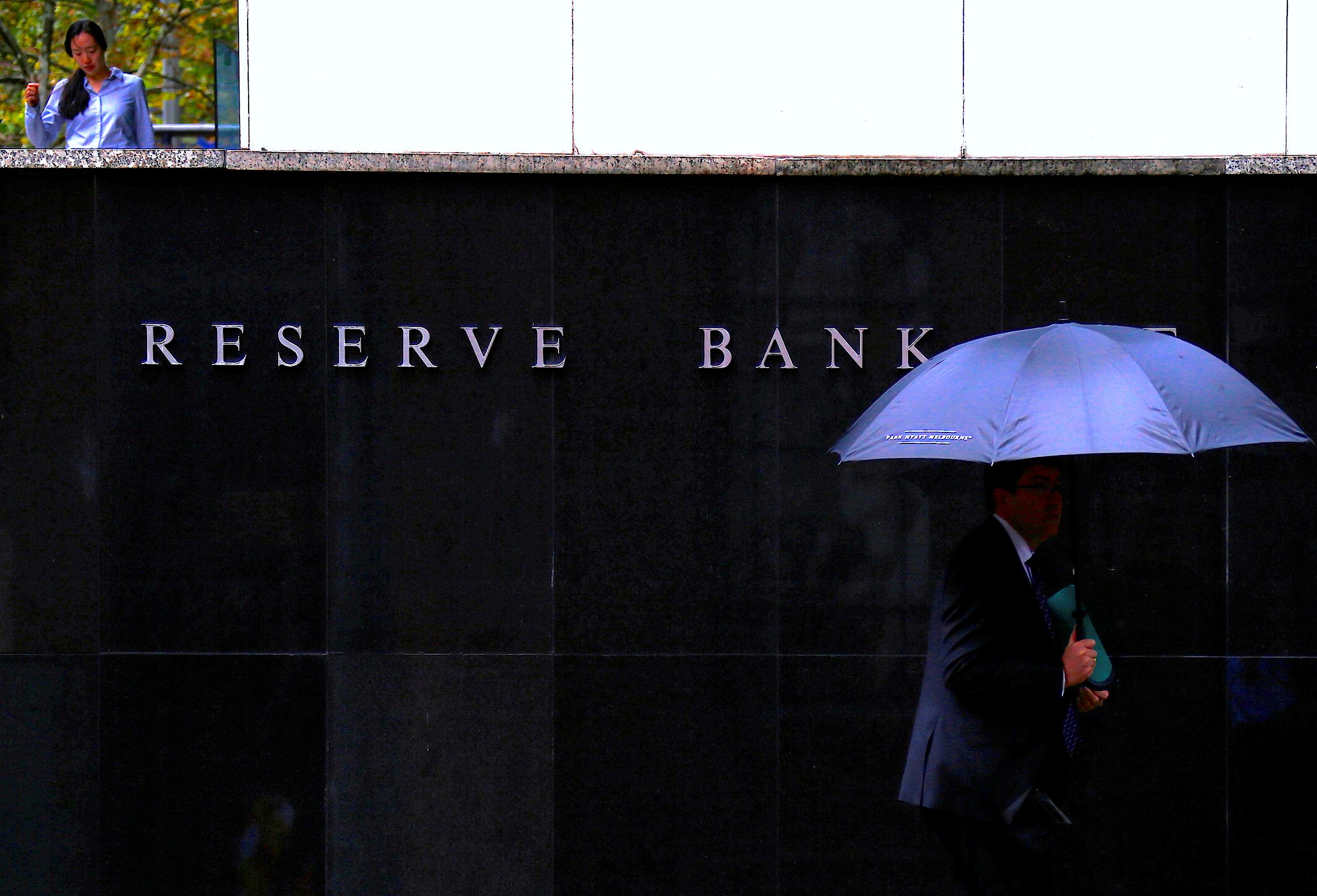
RBA keeps policy rate at 12-year high of 4.35% Underlying inflation remains too high, central bank says Reiterates it is not ruling anything in or out on policy SYDNEY, Nov 5 (Reuters) - Australia's central bank held interest rates steady on Tuesday, as expected, and cautioned policy would need to stay restrictive for some time yet, strongly suggesting borrowers could expect no Christmas cheer this year. There was subdued market reaction, with the Australian dollar hovering at $0.6595. Rate swaps point to a scant chance of a rate cut this year, with a first easing not fully priced in until May next year. Wrapping up its November policy meeting, the Reserve Bank of Australia (RBA) kept rates at a 12-year high of 4.35%. It again repeated that it was not ruling anything in or out on policy, in a crucial paragraph that is largely similar to the one in September. Once again, the central bank did not explicitly consider either a hike or cut in rates this time. Markets have heavily wagered on a steady outcome as the labour market stayed surprisingly strong and third quarter core inflation was still a little sticky. "While headline inflation has declined substantially and will remain lower for a time, underlying inflation is more indicative of inflation momentum, and it remains too high," said the board in a statement. "This reinforces the need to remain vigilant to upside risks to inflation and the Board is not ruling anything in or out." The RBA has held its policy steady for a year, judging the current cash rate of 4.35% - up from 0.1% during the pandemic - is restrictive enough to bring inflation to its target band of 2-3% while preserving employment gains. Its hawkish stance is in contrast to central banks in the U.S., euro zone, Britain, Canada and New Zealand who have cut rates as price pressures ease. Australia's headline inflation slowed to 2.8% in the third quarter, back in the target band for the first time since 2021, but that was mostly due to government rebates on electricity bills. Underlying inflation came in at 3.5%, still some distance above the mid-point of the target. The central bank's latest forecasts showed underlying inflation - a trimmed mean measure closely watched by the RBA - is expected to slow just a touch to 3.4% by year-end from 3.5% in the third quarter. It won't return to target until 2026. The RBA lowered its GDP forecast to 1.5% by the year-end, from 1.7%, in part reflecting soft household consumption. It also trimmed its estimate for next year to 2.3%, from 2.5%. When asked about the prospects of near-term rate cuts at a post-meeting press conference, Governor Michele Bullock said she wanted to steer clear of that. "What I would say is that I think at the moment we have got the right settings ... We will try to make sure that we're tuned in enough that if things start to turn down more than expected, we're ready to act. But we don't know." The economy barely grew in the last few quarters but the labour market somehow has stayed surprisingly strong with employment gains averaging 3.1% over the past year, twice the U.S. rate. The jobless rate stayed low at 4.1%. All that means is that a rate cut this year is looking unlikely, making the RBA one of the last few central banks to ease policy. In a separate statement on monetary policy, the RBA made a point of saying that financial conditions in Australia were still not as tight as in most other developed countries even after recent rate cuts there. Shane Oliver, chief economist at AMP, said the RBA's rates guidance is now neutral, adding that comments from Bullock were less hawkish. Notably, Bullock declined to reiterate that cuts were unlikely in the near term. "RBA would still probably prefer to wait for confirmation of the downtrend in underlying inflation in December quarter inflation data due at the end of January," said Oliver, who tipped for a rate cut in February. "We doubt that the RBA will have to wait all the way out to May to be confident enough on inflation to start cutting." Sign up here. https://www.reuters.com/markets/rates-bonds/australias-central-bank-holds-rates-stays-vigilant-inflation-2024-11-05/
2024-11-05 06:19
MANILA, Nov 5 (Reuters) - The Philippines ordered evacuations, stockpiled food and put soldiers on standby in preparation for Typhoon Yinxing, officials said on Tuesday, as the storm barrels towards northeastern towns where it could make landfall this week. The storm centre of the typhoon, packing winds of 120 kph (75 mph) was estimated to be 590 km (367 miles) from the eastern town of Baler in the province of Aurora, state weather agency Pag-asa said. The local government ministry had called for those in remote communities to evacuate in advance, as rescuers could prove unable to reach them during the onslaught of the storm, Defence Secretary Gilberto Teodoro said. "Various government agencies have combined efforts to issue early warnings, plan ahead and pre-position the goods and services needed," Teodoro told a briefing. Food is being stockpiled, soldiers are on standby to help in rescue efforts, and dams are releasing water ahead of time to prevent flooding, officials added. The storm could hit land between Thursday evening and Friday morning around the northern province of Cagayan, bringing torrential rain to towns in its path, said weather agency official Nathaniel Servando, though it could still swerve away. About 24 million people could be directly affected by the typhoon, said civil defence administrator Ariel Nepomuceno. The storm is the third in less than a month to menace the Philippines, after Storm Trami and Super Typhoon Kong-rey pound the main island of Luzon in recent weeks, killing 151, with 21 missing, civil defence figures show. "We have learned a lot. That's why our processes have been adjusted," Teodoro added. Around 20 tropical storms strike the Philippines each year on average, bringing heavy rains, strong winds, and deadly landslides. Sign up here. https://www.reuters.com/business/environment/philippines-calls-evacuations-puts-troops-standby-typhoon-yinxing-2024-11-05/

2024-11-05 06:10
US presidential election too close to call US dollar slides to 3-week low versus other currencies Gulf of Mexico hurricane likely to reduce US oil output Markets await US oil inventory data from API and EIA NEW YORK, Nov 5 (Reuters) - Oil prices edged up about 1% on Tuesday with a storm expected to cut U.S. output in the Gulf of Mexico and as the U.S. dollar weakened on Election Day with polls showing America's presidential race exceptionally close. Brent crude oil futures rose 45 cents, or 0.6%, to settle at $75.53 a barrel. U.S. West Texas Intermediate (WTI) crude rose 52 cents, or 0.7%, to settle at $71.99. "Crude oil is bid (up) on bullish supply/demand dynamics, geopolitics, and election fever, with a little weather thrown in for good measure," Bob Yawger, director of energy futures at Mizuho, said in a report. The U.S. presidential contest between Republican former President Donald Trump and Democratic Vice President Kamala Harris hurtled toward an uncertain finish as Americans headed to the polls. "The (election) result might not be known for days, if not weeks, and it will most plausibly be challenged and contested," said Tamas Varga, an analyst at PVM, a brokerage and consulting firm that is part of TP ICAP. The U.S. dollar (.DXY) , opens new tab slid to a three-week low versus a basket of other currencies as traders squared positions ahead of election results. A weaker greenback makes oil less expensive in other countries. The U.S. services sector accelerated to a more than two-year high in October as employment rebounded strongly, suggesting last month's near stall in job growth was an aberration. The U.S. trade deficit surged to nearly a 2-1/2-year high in September. Elsewhere in the U.S., energy firms in the Gulf of Mexico started evacuating workers from offshore platforms ahead of Tropical Storm Rafael, on track to strengthen into a hurricane this week. Analysts say the storm could reduce oil production by about 4 million barrels. On Sunday, the Organization of the Petroleum Exporting Countries and their allies in OPEC+ said they would push back a production hike by a month from December as weak demand and rising non-OPEC supply depress markets. Top oil exporter Saudi Arabia lowered the price for the flagship Arab light crude it sells to Asia in December. BUSY WEEK AHEAD Still, risk-taking remains limited with a busy week - including the U.S. election, the U.S. Federal Reserve's policy meeting and a meeting of China's National People's Congress keeping many traders on the sidelines, said Yeap Jun Rong, market strategist at IG International, a financial firm. "Eyes are also on China's NPC meeting for any clarity on fiscal stimulus to uplift the country's demand outlook, but we are unlikely to see any strong commitment before the U.S. presidential results, and that will continue to keep oil prices in a near-term waiting game," Yeap said. The chairman and co-founder of Gunvor, one of the world's largest oil traders, said there is little growth in oil demand and the industry is probably over-investing somewhat. In the U.S., oil storage data is due from the American Petroleum Institute trade group later on Tuesday and the U.S. Energy Information Administration on Wednesday. Analysts projected U.S. energy firms added about 1.1 million barrels of crude into storage during the week ended Nov. 1. , That compares with an increase of 13.9 million barrels in the same week last year and an average increase of 4.2 million barrels over the past five years (2019-2023). Sign up here. https://www.reuters.com/markets/commodities/oil-edges-down-ahead-us-election-china-npc-meeting-2024-11-05/
2024-11-05 06:07
LITTLETON, Colorado, Nov 5 (Reuters) - Europe's natural gas-fired electricity generation and associated emissions fell to multi-year lows over the first three quarters of 2024, but are set to rebound sharply towards year-end as solar output drops just as demand for heating climbs. From January through September, Europe's total electricity production from coal and natural gas was 1,236 terawatt hours (TWh), according to energy think tank Ember. That total was 7.5% down from the same months in 2023, and triggered a 7% drop in power emissions to 928 million metric tons of carbon dioxide (CO2), the lowest in at least a decade. However, Europe's peak heating period lies towards year-end when solar output is at its lowest, and means power producers must replace the lost emissions-free solar output and lift overall generation with more gas-fired supplies. Some parts of Europe will also crank coal-fired generation to help meet system demand needs, which will result in an even steeper climber in power sector emissions. But natural gas is Europe's largest single power fuel, and will be the primary source of generation - and emissions - growth heading into the coldest period of the year. SOLAR SLUMP Europe's solar electricity generation falls by at least 50% over the winter from the peak summer months, Ember data shows. In 2024, that means that the average solar generation levels of June through August of around 44 TWh a month may drop to less than 20 TWh a month in November, December and January. Solar's share of the overall generation mix is also usually at least cut in half during the height of winter, from around 11% to less than 5%. For power suppliers, that drop in solar generation is exacerbated by a rise in overall power demand during the peak winter period. In 2023, overall electricity consumption during the final quarter of the year was 14% more than during June, July and August, and so placed extra strain on power suppliers to boost output just as solar production dropped to its annual lows. In 2024, a similar-sized rise in overall electricity demand will mean power firms must deploy alternate power sources to plug the supply gap, with natural gas the most widely-used replacement for lost supplies and to raise overall output. COLD COMFORT Just how much electricity demand will rise by will depend on a number of factors, including the levels of economic activity heading into 2025 and how cold temperatures get during winter. Gauges on Europe's economic health remain broadly weak, but recent gross domestic product (GDP) data pointed to a modest expansion during the latest quarter. The threat of hefty new tariffs from a potential new Trump presidency in the United States, as well as enduring trade tensions with China, continue to stifle consumer sentiment and will likely curb economic growth heading into 2025. Over the nearer term, the weather may play a larger role in driving shifts in energy use. From 2020 through 2023, the average temperatures in Germany were 63% lower during the final quarter of the year compared to the third quarter, according to LSEG. Actual temperature readings have historically averaged 5.6 degrees Celsius (42 degrees Fahrenheit) over the final three months of the year compared to 17 Celsius (63 Fahrenheit) during the previous quarter. That drop in temperatures typically triggers a steep rise in heating demand in houses, factories and offices, which drives electricity and power use sharply higher. To feed that higher demand, natural gas consumption for power generation in Germany is expected to climb by around 25% from current levels to around 3,500 Gigawatt hours per day in December, according to LSEG. If that degree of gas-use increase is seen throughout Europe, that would equate to roughly 100 TWh of gas-fired power during the last month of the year, and the highest gas generation tally since January. That generation level would yield roughly 55 million tons of CO2 in gas-fired emissions, which again would be the highest since the start of the year. Those increases in both gas use and power pollution would mark a reversal in the generation and emissions trends seen so far in 2024. But with output from solar panels throughout the region set to fall off sharply, power suppliers will have little choice but to crank up the gas over the final months of the year. Sign up here. https://www.reuters.com/business/energy/europe-crank-up-gas-fired-output-emissions-winter-sets-maguire-2024-11-05/