2024-11-04 11:29
MADRID, Nov 4 (Reuters) - Spanish rescue teams have not found any casualties so far in Valencia's Bonaire shopping mall underground car park, the interior ministry said on Monday. The parking was flooded during the country's worst flash floods in modern history last week that left at least 217 people dead. The ministry said work was continuing in the parking lot, which has 5,700 parking spaces, to find out if there may be fatalities. Rescue teams are now focusing their efforts on underground car parks, garages and basements that were flooded within hours. Sign up here. https://www.reuters.com/world/europe/rescuers-find-no-casualties-so-far-valencias-underground-shopping-mall-car-park-2024-11-04/

2024-11-04 11:17
A look at the day ahead in U.S. and global markets from Mike Dolan With even the Federal Reserve meeting in the shade of Tuesday's election, markets have little to go other than last-minute opinion polls that tilt the tight White House race either way, and Iowa did just that over the weekend. With Tokyo markets closed on Monday and trading thinner as a result, the dollar (.DXY) , opens new tab recoiled sharply from Friday's close after a Des Moines Register/Mediacom Iowa Poll on Saturday put Democrat Kamala Harris three points clear of Republican Donald Trump in a state that Trump easily won in 2016 and 2020. The dollar index is on course for its biggest one-day drop in more than two months. Ten-year U.S. Treasury yields fell back six basis points from Friday's close too, with related 'Trump trades' seeing Bitcoin fall back too while China's yuan and Mexico's peso firmed. Although most elections are riven with some rogue polls and bum steers, and the lead was within margins of error, it showed a sharp reversal of a September poll showing a 4 point lead for Trump. What's more, Iowa is seen by pollsters as having a decent track record of getting the eventual result correct historically - even though it only packs six electoral college votes. With bookmakers also lengthening odds of Republican clean sweep of Congress, the Iowa poll suggests at least that early bets on the outcome - where financial markets had been leaning toward a Trump victory in recent weeks - may prove premature. The election stakes for the U.S. economy, world trade and geopolitics don't need re-stating at this point and markets around the globe will have at least a nervy 48 hours ahead. And with the outcome so tight in so many key swing states, there's considerable doubt about when exactly the election result will eventually be called. All of which potentially puts Thursday's Fed decision in the context of an election result that may not yet be known - especially the outcome in Congress that will largely dictate the fiscal policy backdrop for the Fed. And gridlock at this point seems to be seen as the most likely outcome. Futures markets seem unperturbed by the politicking and stick firmly to expectations of a quarter-point rate cut on Thursday, and another 100bps of easing in the 12 months after. But, not unlike the Iowa poll, the Fed was thrown something of a curve ball by the October employment report on Friday. Hampered by storms and strikes, U.S. payrolls rose far less than forecast - adding just 12,000 jobs last month in the smallest gain since 2020, more than 100,000 less than expected and with prior months revised down. Hurricane Helene devastated the U.S. Southeast in late September and Hurricane Milton lashed Florida a week later. As indication of some of the distortions involved, the response rate for the establishment survey in October, from which payrolls are calculated, dropped to 47.4%. That was the lowest reading since January 1991 and was considerably below the 69.2% average for October in the past five years. After an initial swoon in Treasury yields, borrowing rates quickly backed up as traders mulled a potential bounceback this month and resumed their focus on the election. Only the weekend Iowa poll has reined them in again first thing today. While the Atlanta Fed's closely-watched "GDPNow" model has estimated economic growth ebbing to 2.3% from 3.4% over the past week, the 10-year Treasury 'term premium' capturing investor risk compensation longer term remains at its highest in a year as are key gauges of Treasury volatility. (.MOVE) , opens new tab An additional irritant to sovereign bond yields has been the backup in the oil price over the past week, with U.S. crude regaining $70 per barrel for the first time in 10 days. Oil prices rose more than 2% on Monday on a decision by OPEC+ producers to delay by a month plans to increase output. On Sunday, OPEC+, which includes the Organization of the Petroleum Exporting Countries plus Russia and other allies, said it would extend its output cut of 2.2 million barrels per day, with an increase already delayed from October because of falling prices and weak demand. The grouping had been due to increase output by 180,000 bpd from December. Elsewhere, the focus was on China, where a key leadership meeting happens around the U.S. election and the outcome may hinge on the U.S. election result. The Standing Committee of the National People's Congress meets from Monday to Friday and is expected to approve additional stimulus to boost the slowing economy - and early indications of the size of the stimulus may be increased if Trump wins and huge tariff raising plans against Chinese imports then loom. Chinese mainland (.CSI300) , opens new tab and Hong Kong (.HSI) , opens new tab stocks were higher on Monday ahead of the meeting. European stocks (.STOXXE) , opens new tab were also higher first thing, with British (.FTSE) , opens new tab benchmarks also up. UK markets recovered ground after last week's big 'tax, borrow and invest' budget from the new Labour government. The Bank of England meets on Thursday alongside the Fed and is also expected to cut UK interest rates by a quarter point - in what would be its second cut of the cycle. Key developments that should provide more direction to U.S. markets later on Monday: * US September factory goods orders, October employment trends * US corporate earnings: Fox, Marriott, Loews, AIG, Wynn Resorts, Constellation Energy, Franklin Resources, Eversource, NXP, Palantir, Diamondback, Vertex, Celanese, Zoetis, Realty Income, Revvity, Public Service Enterprise, Hologic etc * US Treasury auctions $58 billion of 3-year notes, as well as 2- and 6-month bills * Euro group finance ministers meet in Brussels Sign up here. https://www.reuters.com/markets/us/global-markets-view-usa-2024-11-04/
2024-11-04 11:12
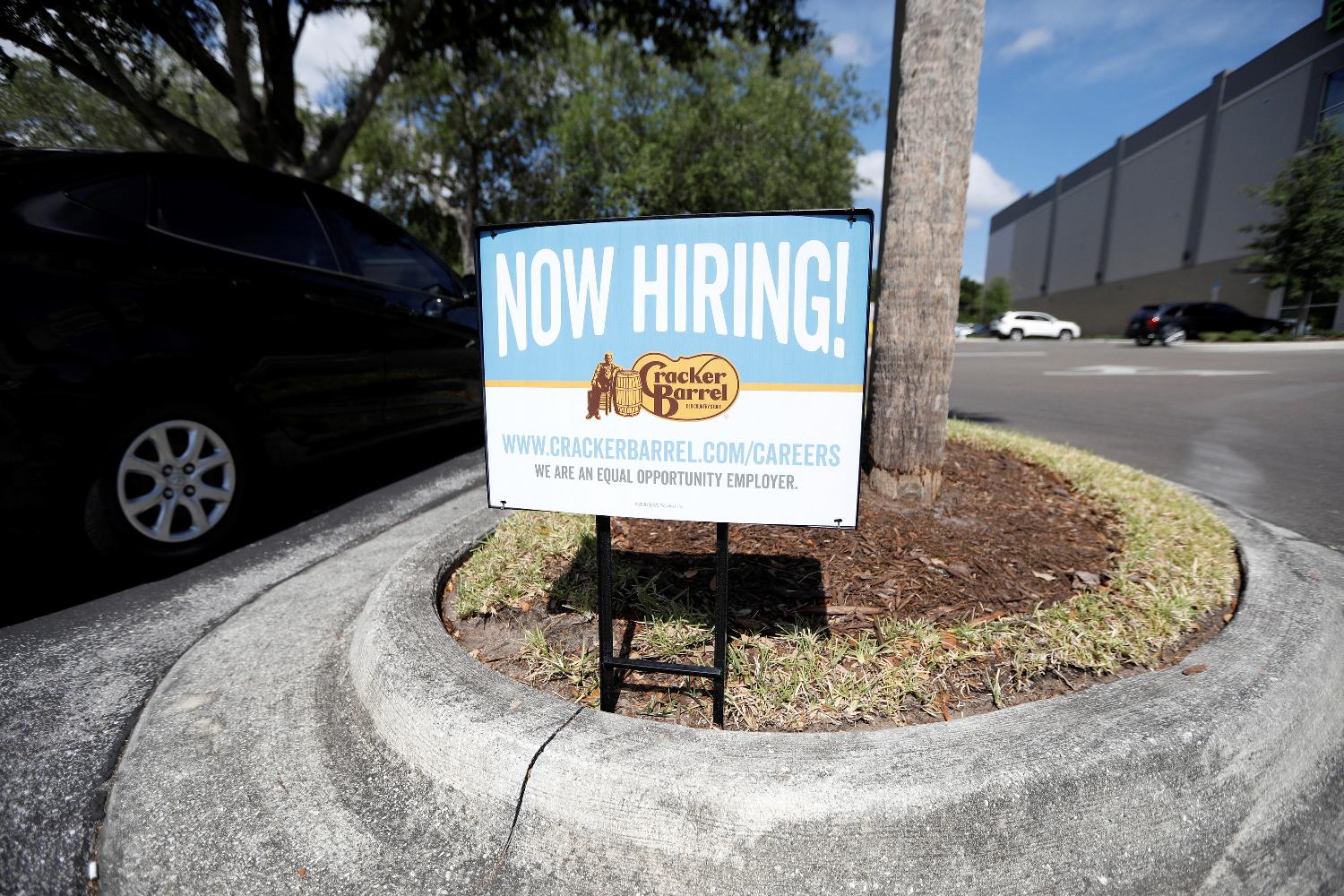
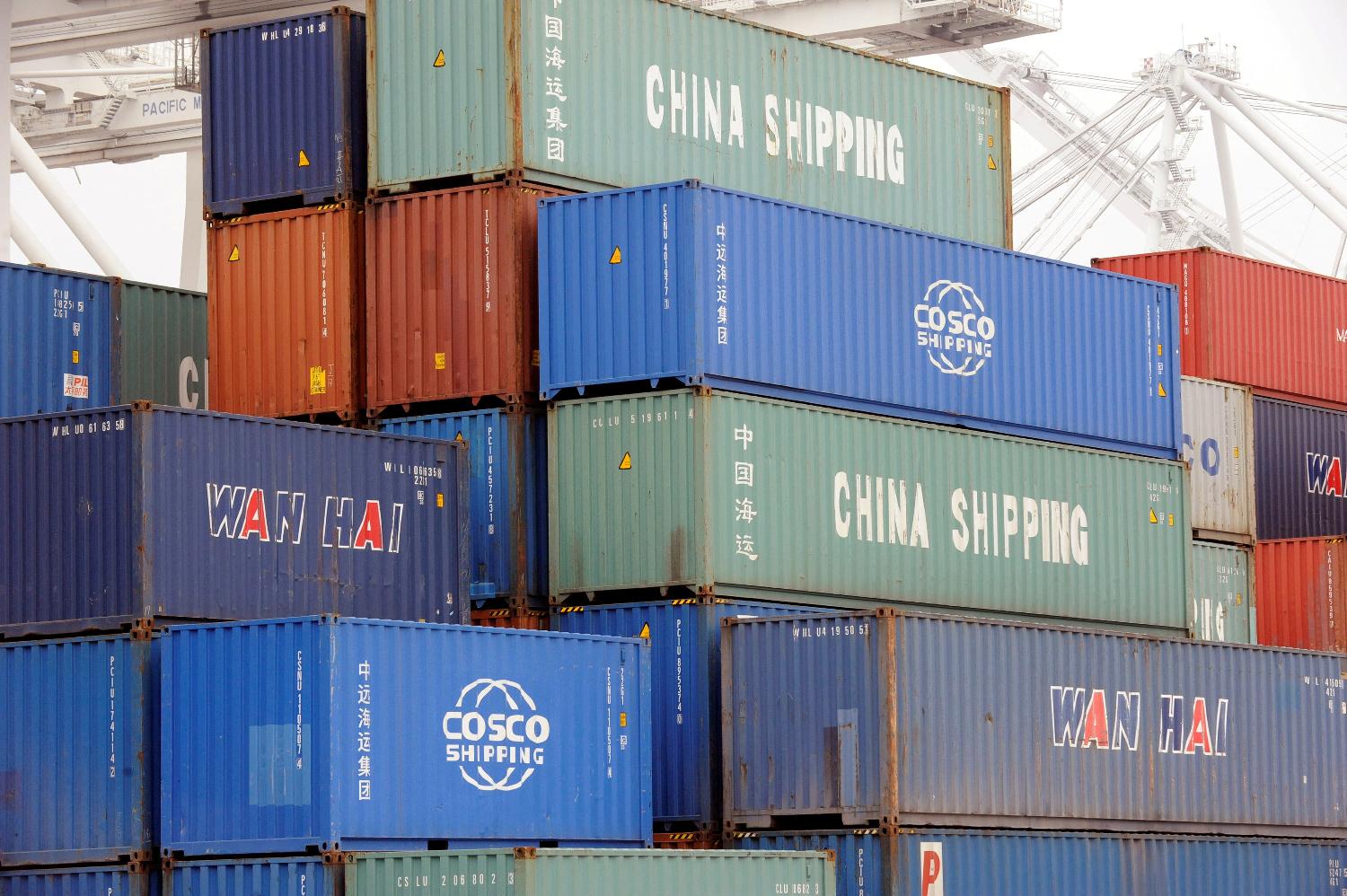
New Trump China, global tariffs seen drawing retaliatory duties Farm groups fear export market losses to Brazil, Argentina Trump says his program would rebuild US manufacturing base Plan will 'destroy' post-1945 trade order, economist says WASHINGTON, Nov 4 (Reuters) - Iowa farmer Bob Hemesath is worried that U.S. agriculture will pay dearly if Donald Trump wins Tuesday's presidential election and makes good on a vow to swiftly impose a 60% tariff on Chinese goods and at least a 10% levy on all other imports. It could be a much worse rerun of the Republican former president's 2018-2019 trade war with China that hit U.S. farm goods with retaliatory tariffs and shifted Beijing's purchases to Brazil and Argentina, said Hemesath, who grows corn and soybeans and raises hogs on 2,800 acres of land in northeastern Iowa. "When we start putting tariffs on others, usually the retaliatory tariffs end up on American agricultural products," said Hemesath, who chairs the Farmers for Free Trade advocacy group. "What I worry about is that when you do those kinds of things, you lose that market share, and you just don't get that market share back," he said. Hemesath declined to say who he was voting for in the election. Economists say that Trump's tariff plans, likely his most consequential economic policy, would push U.S. import duty rates back up to 1930s-era levels, stoke inflation, collapse U.S.-China trade, draw retaliation and drastically reorder supply chains. Hemesath's concerns were echoed in a recent study , opens new tab by the National Corn Growers Association and American Soybean Association, which forecast that a new China trade war could prompt deeper U.S. crop export losses, push down already depressed domestic prices and cement a shift of China's imports to Brazil and Argentina. Trump, who is in a neck-and-neck race for the White House against Democratic Vice President Kamala Harris, has called tariffs "the most beautiful word in the world" and argued that his plans would rebuild the U.S. manufacturing base, grow U.S. jobs and incomes and earn trillions of dollars in federal revenues over 10 years. Economists universally agree tariffs are paid by the companies that import the products subject to the duties, and they either pass on the costs to consumers or accept lower profits. The duties, if fully imposed, would raise effective average U.S. tariff levels to 17.7%, the highest since 1934, according to the conservative-leaning Tax Foundation , opens new tab. The plans have drawn comparisons to the Smoot-Hawley Tariff Act of 1930, which sharply raised U.S. tariffs, triggering retaliation and a global collapse of trade that helped worsen the Great Depression. In the aftermath of World War Two, countries scrapped this "beggar-thy-neighbor" approach in favor of a rules-based trading system with much lower non-discriminatory tariffs and what is now the World Trade Organization at its core. "The approach Trump is taking, I think would totally destroy that system," said Maurice Obstfeld, an economics professor emeritus at the University of California, Berkeley who served as the International Monetary Fund's chief economist from 2015 to 2018. Other countries would respond with tariff hikes of their own and "you basically open the door to a sort of free-for-all in trade policy, which I think, among other things, is very confusing for businesses," Obstfeld said. Overall U.S.-China trade would plunge 70% from levels already reduced by Trump's 2018-2019 China tariffs that were maintained and recently increased by Democratic President Joe Biden, said Bernard Yaros, lead U.S. economist at Oxford Economics. Yaros said the post-tariff landscape would not shrink the overall U.S. trade deficit, but trigger a "great reordering of trade flows" with other countries that could be costly in the short run. COST INCREASES Harris, who replaced Biden as the Democratic presidential candidate after he ended his campaign in July, has slammed Trump's tariff plans as "a national sales tax" that will cost U.S. families up to $4,000 a year. Yale University's Budget Lab estimates , opens new tab that the total reduction in annual household income under 10% global and 60% China tariffs would be $2,576 including the impact of retaliation, but could reach up to $7,600 if Trump makes good on comments in which he said he could impose a 20% global tariff and 200% levy on some goods from Mexico, including autos. The Yale lab, staffed by some former Biden administration economic and tax advisers, calculates that Trump's tariffs would initially raise the level of consumer prices by 1.2% to 5.1%, or about seven to 31 months of normal inflation at the Federal Reserve's 2% annual target. A Trump campaign spokesperson responded by citing a study from the Coalition for a Prosperous America, a tariff advocacy group, which shows that a 10% universal tariff would not cause "meaningful price increases" and would, when combined with offsetting tax cuts, generate $728 billion worth of economic growth and 2.8 million jobs. Inflation did not significantly increase after the 2018-2019 Trump tariffs of 7.5% to 25% were imposed on $370 billion worth of Chinese goods. But his proposed 60% tariff would hit Chinese consumer goods, ranging from toys to T-shirts, with dramatically higher duties and the 10% universal tariff would apply to more than $3.8 trillion in annual U.S. imports. Harris has endorsed the Biden administration's more targeted approach to tariffs to protect strategic U.S. industries, but said in September that she would renegotiate the Trump-negotiated United States-Mexico-Canada Agreement on trade in 2026 to protect U.S. automotive jobs. TRADE TOOLS READY Trump may be able to act within months to impose tariffs, relying on the same "Section 232" national security law used to impose global steel and aluminum tariffs and the "Section 301" unfair trade practices statute used for the tariffs aimed at China. Neither track would require approval by the U.S. Congress, and Trump could also invoke the International Emergency Economic Powers Act. Former U.S. Trade Representative Robert Lighthizer, who engineered Trump's China tariffs, is advising the Republican candidate's campaign and is frequently mentioned in Republican circles as a potential cabinet member in a second Trump administration. Nazak Nikakhtar, a trade and national security lawyer at Wiley Rein who was an assistant secretary at the Commerce Department during the Trump administration, said Section 232 could be applied to justify broader tariffs, while higher China tariffs could easily be introduced under a Section 301 probe targeting China's subsidy and industry domination practices. "A new investigation is not a heavy lift and can rely on well-documented evidence of unjustified Chinese export practices," Nikakhtar said. "So you can complete one pretty quickly. It doesn't have to take a year." Sign up here. https://www.reuters.com/markets/trumps-tariffs-would-reorder-trade-flows-raise-costs-draw-retaliation-2024-11-04/
2024-11-04 10:54
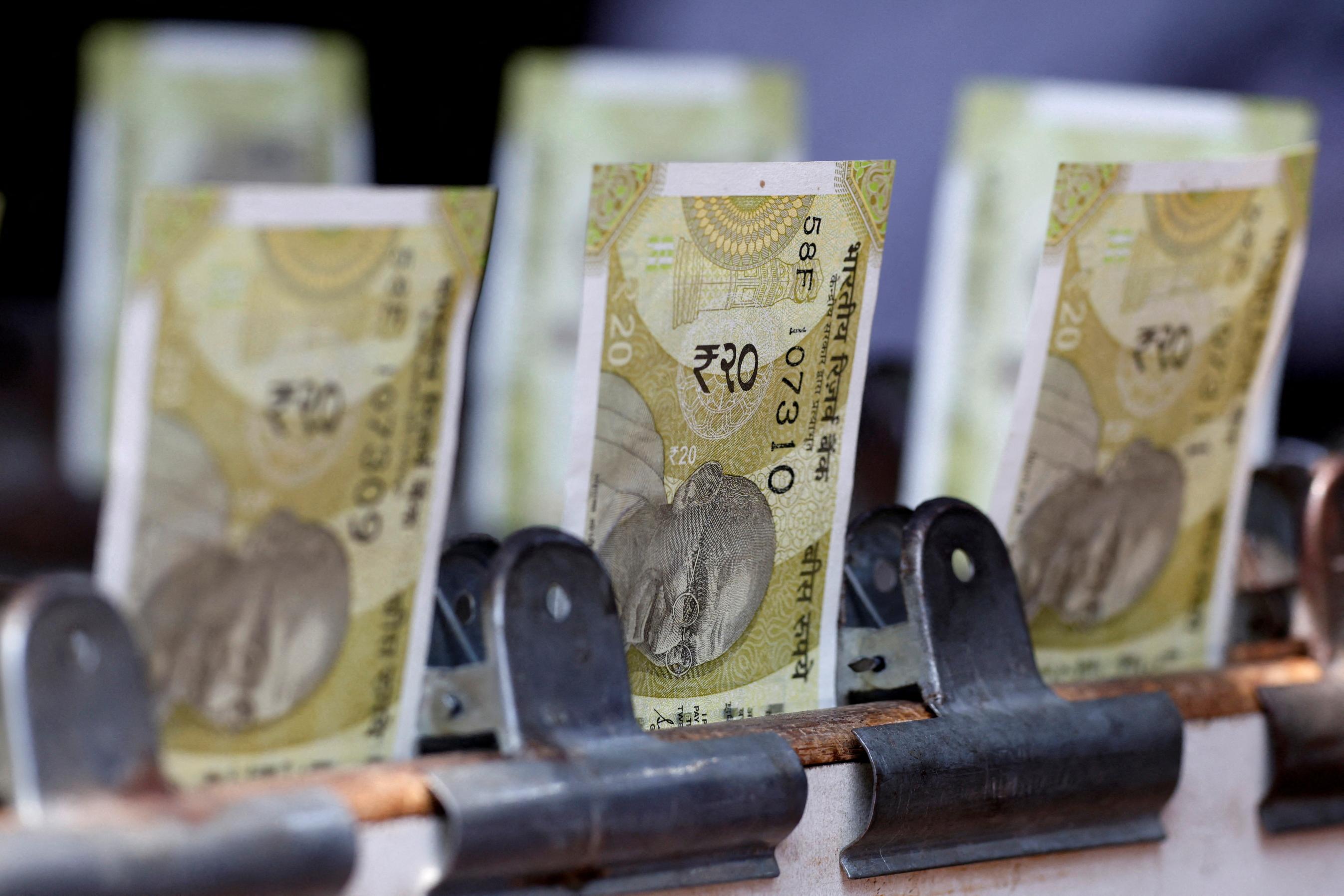
MUMBAI, Nov 4 (Reuters) - The Indian rupee touched its weakest level on record on Monday, as persistent outflows from local stocks blunted the impact of a weaker dollar that helped lift the currency's regional peers ahead of the U.S. presidential election. The rupee closed at 84.1150 against the U.S. dollar after touching its all-time low of 84.1225 earlier in the session. Benchmark Indian equity indexes, the BSE Sensex (.BSESN) , opens new tab and Nifty 50 (.NSEI) , opens new tab, fell more than 1% each on the day, their worst single-day performance in a month. The benchmarks are down about 8% from their respective record highs hit in late September, hurt by the exodus of foreign investors amid a tepid earnings season. Routine interventions by the Reserve Bank of India, such as on Monday, have helped the rupee avoid sharp declines despite pressure from chunky outflows from local stocks and elevated US bond yields. The Reserve Bank of India is well-equipped to deal with a rise in market volatility and pressure on the rupee if Republican candidate Donald Trump wins next week's U.S. presidential election, two sources familiar with the bank's thinking told Reuters last week. The dollar index was down about 0.2% on Monday at 103.7 while most Asian currencies rose, with the offshore Chinese yuan rising to a near three-week high of 7.08. The greenback was likely weighed down by unwinding of long positions in the lead-up to the U.S. presidential election results. "A Republican clean sweep can send the dollar higher, but probably by less than how much a Harris win could hit USD. The dollar might not rally at all if Trump wins but Democrats secure the (U.S. House of Representatives)," ING Bank said in a note. Investors are also bracing for some uncertainty as the winner of the U.S. presidential race might not be known for days after voting ends. Sign up here. https://www.reuters.com/markets/currencies/rupee-touches-all-time-low-equity-outflows-us-elections-focus-2024-11-04/
2024-11-04 10:45
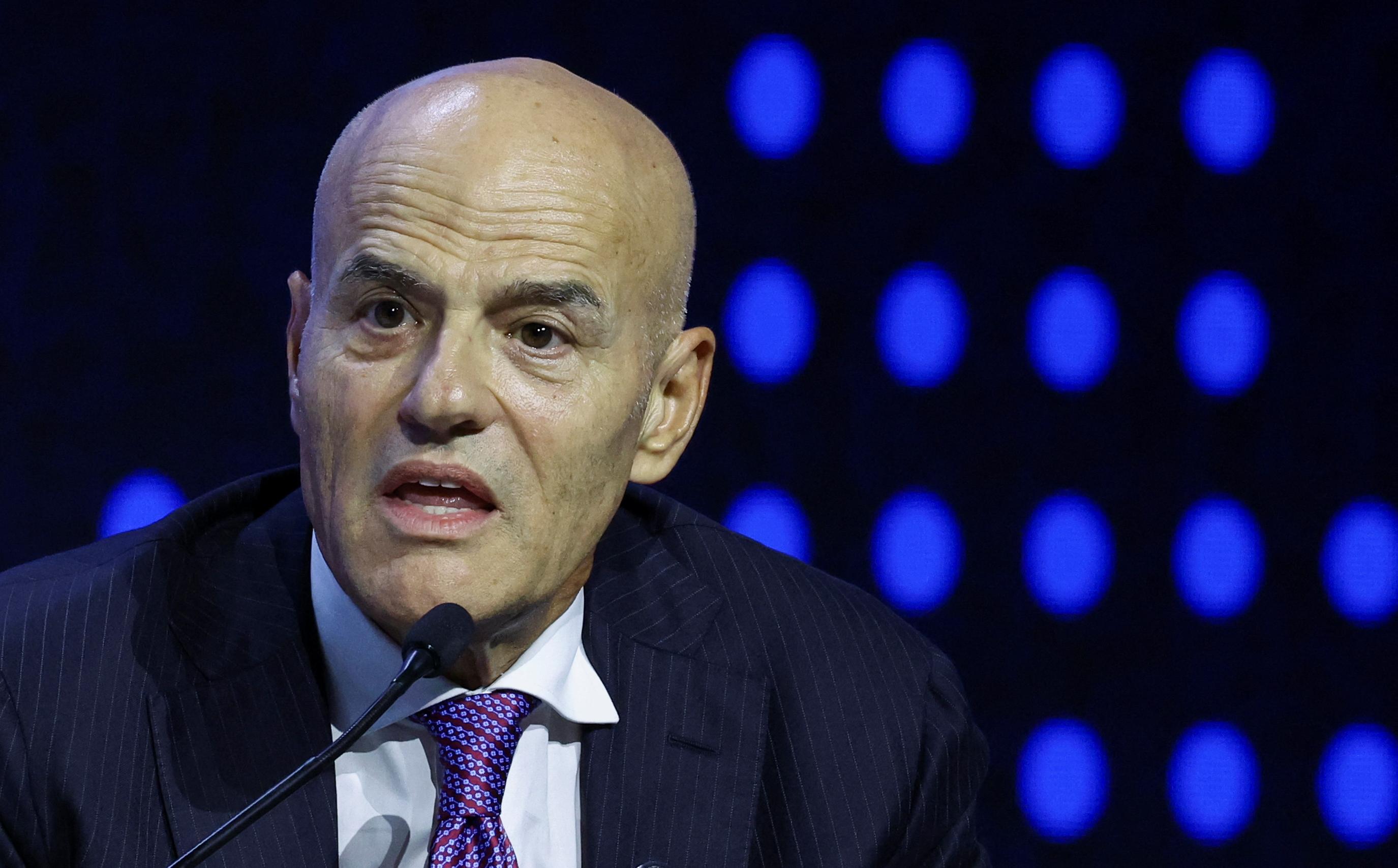
ABU DHABI, Nov 4 (Reuters) - Volatility in oil markets is expected to extend into next year, the CEO of Italian energy company Eni said on Monday. Speaking at an industry event in Abu Dhabi, Claudio Descalzi said the volatility could hamper investments in new oil and gas production. Eight members of OPEC+, which groups the Organization of the Petroleum Exporting Countries plus Russia and other allies, agreed on Sunday to delay a planned December oil output increase by one month due to weak demand in China and rising supplies. Oil prices were up by over 2.8% by 1216 GMT on Monday. "As soon as (OPEC) say we're going to release some production, the price went down immediately. Now they say we postpone until the end of the year, and that has made a big impact on the market... the volatile situation is not good," Descalzi said. "Everybody says we need energy, but with this kind of volatile situation, and this volatility is not really helping investment" in new oil and gas production, he said. BP CEO Murray Auchincloss as well as Shell CEO Wael Sawan told the panel that tensions in the Middle East topped the risks facing energy markets. Escalating tensions between Israel and Iran since last October have stoked concerns over supply disruptions in the Gulf, which produces and exports around 20% of the world's oil and gas, pushing oil prices higher. Turning to the upcoming U.S. presidential elections, Auchincloss said that the biggest challenge the United States faces is regulatory reform to allow permits for new investments in energy, particularly renewables and low-carbon projects. Auchincloss also said that the world would require a lot of new investment in oil and gas in order to maintain supplies, regardless of a possible settling of demand in the coming years. Sign up here. https://www.reuters.com/business/energy/opec-actions-increasing-volatility-hampering-new-investment-oil-gas-eni-ceo-says-2024-11-04/
2024-11-04 10:17
BERLIN, Nov 4 (Reuters) - Investor morale in the euro zone rose for a second consecutive month in November, though by slightly less than expected, as somewhat greater satisfaction with the current situation boosted the overall mood, a survey showed on Monday. The Sentix index for the euro zone rose to -12.8 in November from -13.8 in October, falling slightly short of the forecast from analysts polled by Reuters of a rise to -12.5 this month. The survey of 1,066 investors from Oct. 31 to Nov. 2 showed expectations stagnating at -3.8 points this month. "A turnaround looks different," the Sentix report said. The current situation score for the currency union improved slightly to -21.5 in November from -23.3 last month. Investor morale in Germany, Europe's largest economy, also rose slightly this month for the second consecutive month, increasing to -29.8 from -31.5 in October, showed the survey. "Even if the crisis cannot shock investors in Germany because they are already in a minor key, no positive turnaround scenario can be derived from this data," the report said. Sign up here. https://www.reuters.com/markets/europe/euro-zone-investor-morale-slightly-up-turnaround-looks-different-2024-11-04/