2024-11-04 10:08
Milei on track for zero fiscal deficit, has slashed spending Central bank adds $19 billion to foreign currency reserves Inflation slows from 25% to 3.5% monthly, interest rates drop BUENOS AIRES, Nov 4 (Reuters) - Argentina's libertarian president, Javier Milei, a political outsider who won election last year brandishing a chainsaw as a blunt symbol of his plans to cut spending, is defying long odds to right the embattled economy and keeping a lid on voter anger. After years of economic crises, debt defaults, soaring inflation and currency crashes, Milei's success is giving an adrenaline shot to long-moribund local bonds and sparking a wild rally in the markets some 11 months into his administration. The wild-haired economist, a poster child for the global far right and neoliberalism, has scored key economic wins in recent months, helping pull the country's debt out of distressed territory for the first time in half a decade. His government, packed with more moderate conservatives, has tamped down triple-digit inflation, rebuilt central bank reserves, strengthened a beleaguered peso currency, overturned a deep fiscal deficit, and lured dollars back to the banks. And while a tough cost-cutting austerity drive has pushed up poverty and hurt economic growth, Milei's theatrical and straight-talking style - while not for everyone - has kept many voters on his side and propped up his ratings in opinion polls. Despite the painful austerity, his government has made sure to ring-fence and even boost spending on specific welfare programs that have so far helped head off fiery protests in the streets, even with poverty levels that have risen over 50%. The economy remains a potential tinder box, but Milei's success to date has convinced markets. The S&P Merval stock index is at record highs, while bonds have soared this year from around 20 cents on the dollar to some now nearing 70 cents. So what has Milei done and how has he convinced Argentina to swallow a painful dose of austerity? ZERO FISCAL DEFICIT Milei's government has managed to do something few thought was possible without sparking riots in the South American country: cutting public spending by billions of dollars and posting regular fiscal surpluses after years of deficits. RESERVE BUILD-UP The central bank is on a drive to build up depleted foreign currency reserves, which were deep in the red when the government took over in December. The central bank has added a net $19 billion this year, with FX purchases gaining speed in recent weeks after a mid-year lull. INFLATION COOLING Argentina's annual inflation, at over 200%, remains the highest in the world. But monthly price rises have slowed sharply from 25% in December to around 3.5% now, helping bring interest rates down, with the latest cut to 35% on Friday. DOLLARS RUSH BACK IN With greater bullishness by investors in the country and a program to give amnesty to savers, the government has lured almost $20 billion of dollar deposits back to local banks. CURRENCY GAP NARROWS A tough focus on stopping money-printing, cutting spending with the painful austerity drive and rebuilding reserves has lowered demand for dollars - and increased demand for pesos - boosting the local currency in popular parallel markets That has led the gap between the official and parallel exchange rates to narrow significantly. A wide gap in recent years, which ballooned to almost 200%, badly distorted the grains-producing country's economy and complicated trade. POPULARITY CONTEST Argentines are sharply divided about Milei, who is proudly anti-feminist and a climate-change skeptic. However, opinion polls show he has generally kept his support, despite cuts to spending and people having to tighten their belts. This popular backing is key to his reform plans with his party having only a small number of seats in Congress. Sign up here. https://www.reuters.com/world/americas/can-milei-defuse-argentinas-economic-time-bomb-2024-11-04/

2024-11-04 07:56
DHAKA/BANGALORE, Nov 4 (Reuters) - Bangladesh is accelerating payment of more than $800 million it owes Adani Power (ADAN.NS) , opens new tab ahead of a Nov. 7 deadline set by the Indian company, which has cut electricity exports to Bangladesh by more than half, two senior government officials said. Adani Power, which exports power to Dhaka from its 1,600 megawatt (MW) Godda plant in eastern India's Jharkhand state, set the deadline for receipt of dues as it faces challenges in importing coal necessary for power generation, three sources familiar with the matter said. The company, owned by billionaire Gautam Adani, reduced the power supply to Bangladesh this month to 700-800 MW from around 1,400 MW, a senior official at the Bangladesh Power Development Board told Reuters. The officials spoke on condition of anonymity because they were not authorised to speak with the media. Adani Power did not respond to Reuters queries on the payment deadline. Bangladesh has been struggling to pay its bills due to costly fuel and goods imports since Russia invaded Ukraine in 2022. The political turmoil that led to the ouster of former Prime Minister Sheikh Hasina in August has also compounded its troubles. "Last month, we cleared $96 million, and this month, a letter of credit has been opened for an additional $170 million," Muhammad Fouzul Kabir Khan, the power and energy adviser in the interim Bangladesh government, told Reuters. Last month, sources familiar with the matter told Reuters that Bangladesh was scrutinising its contract with Adani Power, as it was charging Bangladesh a rate nearly 27% higher than those of India's other private producers. Adani Power Chief Financial Officer Dilip Kumar Jha, in a quarterly earnings conference call last week, said there were no issues related to the power supply to Bangladesh. "We hope that there will be no further deterioration in terms of the outstanding," he said. Sign up here. https://www.reuters.com/business/energy/bangladesh-fast-tracks-payment-adani-power-after-supply-cut-2024-11-04/
2024-11-04 07:49
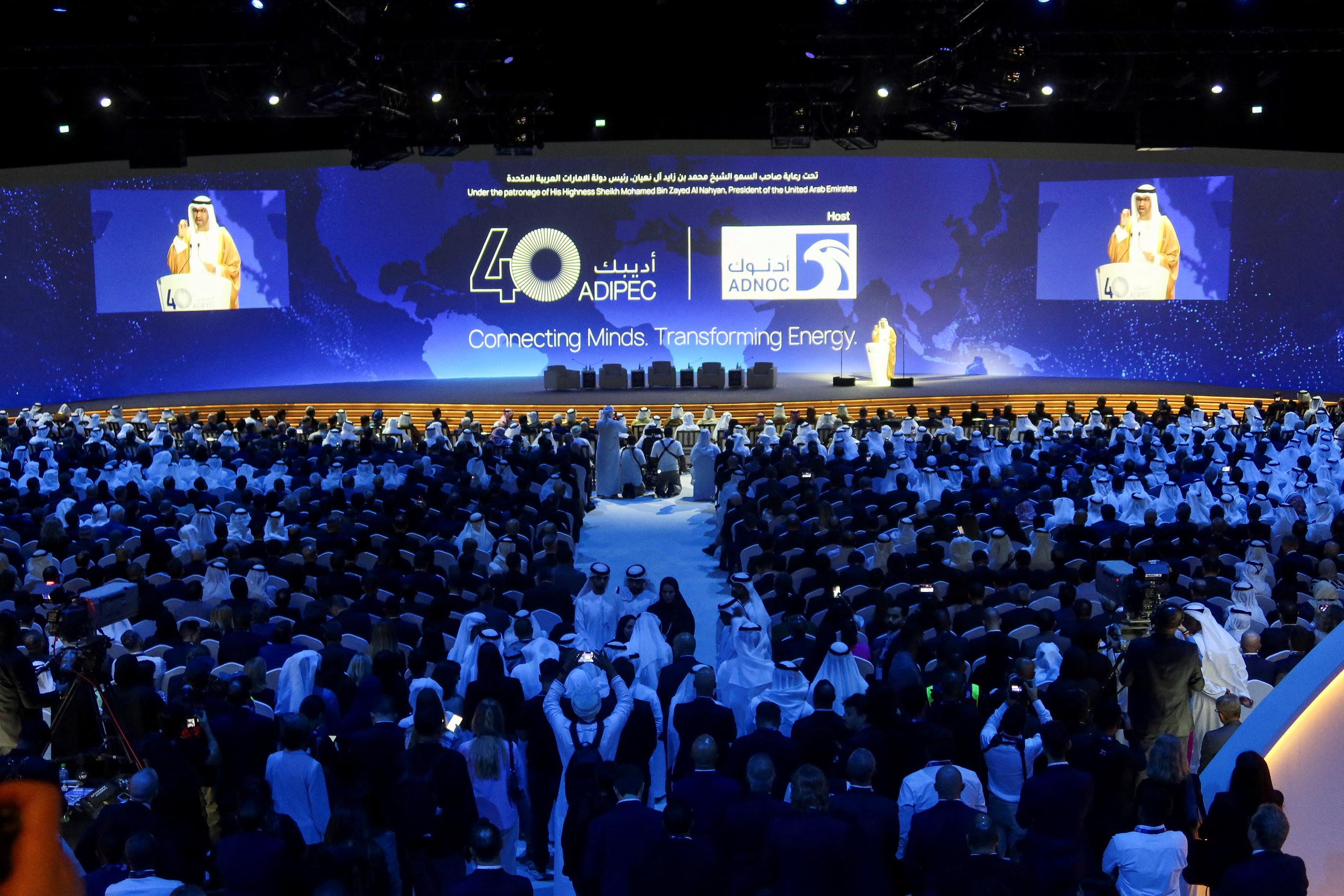
ABU DHABI, Nov 4 (Reuters) - UAE energy giant ADNOC will apply highly autonomous agentic artificial intelligence in the energy industry for the first time, in partnership with G42, Microsoft and AIQ, its CEO Sultan Al Jaber said on Monday at an industry event in Abu Dhabi. The UAE, a wealthy oil producer and longtime security partner of the U.S., is hoping for greater access to American technology to build its own advanced tech industry. The push is led by the government-backed G42, which in April received a $1.5 billion investment from Microsoft (MSFT.O) , opens new tab, which aims to diversify the UAE's economy away from oil. "The exponential growth of AI is creating a power surge that no one anticipated 18 months ago, when ChatGPT took off," said Jaber, who is also the Minister of Industry and Advanced Technology and COP28 President. Agentic AI is considered the next frontier in artificial intelligence, allowing the system to operate autonomously and perform tasks on behalf of users. "It will not only analyse petabytes of data, it will proactively and autonomously identify operational improvements," Jaber said. "It will speed up seismic surveys from months to days. It will increase the accuracy of production forecasts by up to 90%." The UAE is pouring billions of dollars into artificial intelligence, which has included the development of Arabic and Hindi language chatbot applications similar to OpenAI's ChatGPT. Emirati officials believe the Gulf state's bet on artificial intelligence will strengthen its international clout by making it a key economic actor long after demand for oil has dried up. Sign up here. https://www.reuters.com/business/energy/uaes-adnoc-deploy-autonomous-ai-energy-sector-first-time-2024-11-04/
2024-11-04 07:42
Nov 4 (Reuters) - UK-based Anglo American (AAL.L) , opens new tab said on Monday that it will sell its minority stake in a joint venture that owns a 70% interest in the Jellinbah East and Lake Vermont steelmaking coal mines in Australia, for A$1.6 billion (about $1.1 billion). The company, which owns 33.3% of Jellinbah Group - the operator of the Queensland-based mines - will sell the stake to Zashvin Pty Ltd, an Australian electric power generation facility operator that already owns a one-third interest in the mines. Japanese conglomerate Marubeni (8002.T) , opens new tab owns the remaining stake. "Our process to sell the rest of our steelmaking coal business - being the portfolio of steelmaking coal mines that we operate in Australia - is now at an advanced stage and we are on track to agree terms in the coming months," Anglo American's CEO Duncan Wanblad said in a statement. The firm is in the midst of restructuring its business after fending off a $49 billion takeover from bigger rival BHP Group (BHP.AX) , opens new tab in May. ($1 = 1.5156 Australian dollars) Sign up here. https://www.reuters.com/markets/deals/anglo-american-sell-stake-australian-steelmaking-coal-mines-11-bln-2024-11-04/
2024-11-04 07:39
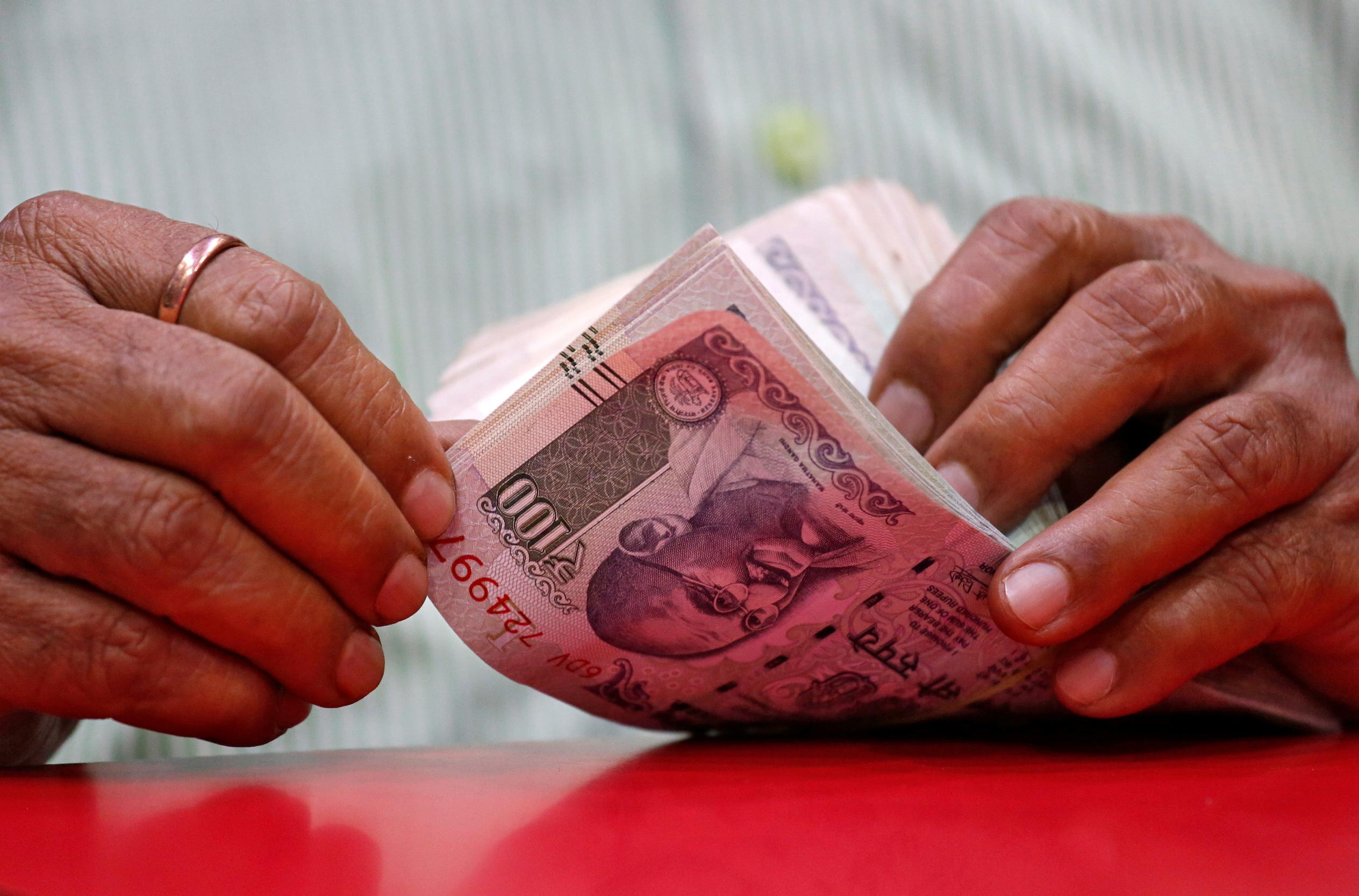
MUMBAI, Nov 4 (Reuters) - The options market is indicating that the Indian rupee traders were not too concerned about the potential flare-up in volatility post the U.S. elections, a distinct contrast to other Asian currencies. The 1-month implied volatility on the dollar/rupee pair was at 2.3% on Monday, a day before the U.S. elections, nearly on par with the year-to-date daily average. Implied volatility reflects the market's view on the potential for future price fluctuations. In contrast to the rupee, the implied volatility on the offshore Chinese yuan was at 8.7%, more than double the year-to-date daily average. The implied volatility on other Asian currencies ranged between 7.8% and 12.9%. The prospect of Republican candidate Donald Trump winning the U.S. election has prompted investors to price in higher near-term volatility for Asian currencies. A Trump win would mean a renewed threat of material tariffs for China, hurting its currency, which in turn would have consequences for other Asians. The Korean won, the Malaysian ringgit, the Indonesian rupiah and the Taiwanese dollar are the most sensitive to moves in the yuan, per a Goldman Sachs report. The rupee is the least sensitive. "If Trump were to win, the rupee is more insulated to tariffs because India is more domestically oriented and it is less leveraged to U.S. and Chinese growth," Michael Wan, senior currency analyst at Global Markets Research Singapore, said. Additionally, the Indian central bank keeping the currency in a narrow range over the last several days has dampened the rupee's implied volatility. The Reserve Bank of India's regular intervention has pushed the currency's realized volatility nearly at par with the Hong Kong dollar's, a pegged currency. The RBI keeping a lid on volatility is motivated by the need to dilute the potential impact of the U.S. elections, a person familiar with the central bank's thinking said. The RBI is well-equipped to deal with a potential sudden outflow of foreign funds and manage the rupee's fall if Trump wins, two other people familiar with the bank's thinking said. The rupee was quoting at a lifetime low of 84.11 to the dollar. The RBI, as it has done in recent days, intervened to limit the rupee's losses. If it were not for the RBI's active approach, the dollar/rupee pair would be "much higher", Wan said. Sign up here. https://www.reuters.com/markets/currencies/indian-rupee-traders-less-worried-about-us-elections-than-rest-asia-2024-11-04/
2024-11-04 07:35
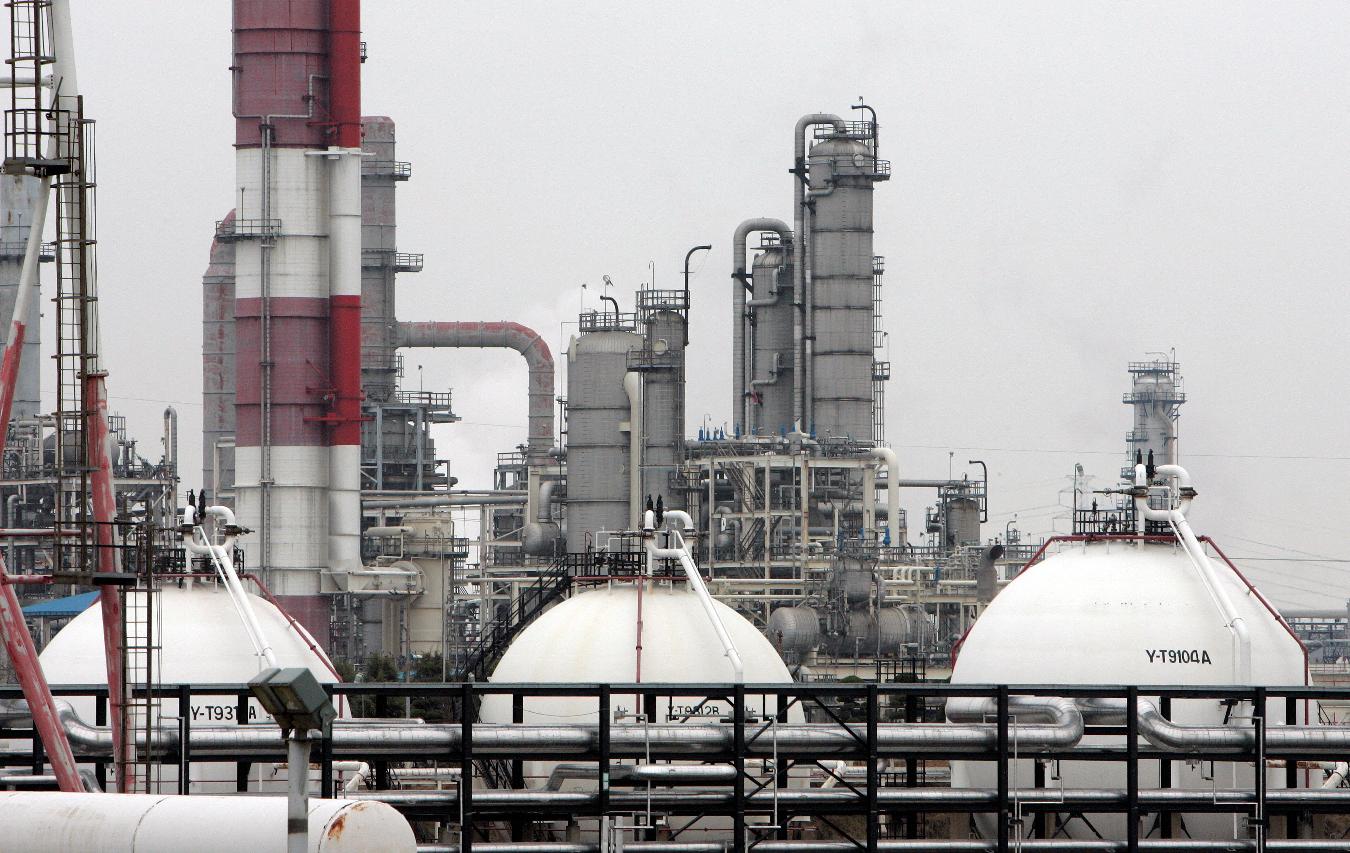
South Korean refiners report steepest quarterly losses in years Q4 margins to improve on winter demand, reduced run rates Asia June-Aug refining margins weakest in two years - LSEG data SEOUL, Nov 4 (Reuters) - South Korean refiners reported on Monday sharp losses in the third quarter from oil refining, but expect their margins to recover in the fourth quarter with peak winter demand and refinery run cuts in Asia. SK Innovation (096770.KS) , opens new tab, parent of South Korea's largest refiner SK Energy, said the July-September quarter operating loss for its refining business was 616.6 billion won ($450.2 million), its largest loss since the fourth quarter of 2022. Declining oil prices amid concerns over slowing demand in China and a potential recession in the U.S. caused "significant" inventory-related losses, while refining margins were poor in the third quarter, the company said. "We were in an unfavourable macro backdrop, which drove down the crude oil price and the overall product market was squeezed," Son Sung-chul, head of corporate strategic planning at SK Energy, told analysts on an earnings call. "We continued to maintain a minimal run rate for our crude distillation units (CDUs), so that we can effectively defend against negative topping margins," Son said. The company maintained its average CDU run rate at 81% in third quarter from the second quarter, but it is down 1 percentage point from 2023. S-Oil (010950.KS) , opens new tab, the country's third-largest refiner whose main shareholder is Saudi Aramco (2222.SE) , opens new tab, reported a September-quarter operating loss of 415 billion won on Monday, versus a 859 billion won profit a year earlier. Its refining business reported its largest quarterly loss since the first quarter of 2020, according to company documents. Last week, unlisted refiner Hyundai Oilbank swung to a 263 billion won operating loss for the third quarter, versus a 262 billion won profit a year earlier. Asia's refining margins between June and August slumped to the lowest since the third quarter of 2022, LSEG data showed, forcing refiners to cut output. While margins have recovered in recent weeks on lower crude prices, oversupply of refined products and competition from new refineries in China and the Middle East weighed on the outlook for Asian refiners, analysts said. For the October-December quarter, SK Innovation said it expects lower oil prices to support refining margins while seasonal heating demand sets in. The company added that economic prospects from growth in the U.S. and from China's stimulus could improve and support oil demand. In the fourth quarter, SK may keep crude throughput at a similar level as the third-quarter if margins remain weak, but it plans to increase output if the market recovers, Son said, adding that it is also importing fuel oil to improve margins. S-Oil also said cuts in supply from refineries around the region would support better margins in the fourth quarter. ($1 = 1,369.7100 won) Sign up here. https://www.reuters.com/business/energy/south-korean-refiners-losses-deepen-q3-margins-set-improve-q4-2024-11-04/