2024-11-03 23:38
Ellison will remain as managing director for up to 18 months Shares drops as much as 10.1% on succession uncertainty Chairman James McClements to leave in next year Nov 4 (Reuters) - Mineral Resources (MIN.AX) , opens new tab said on Monday its billionaire founder Chris Ellison would exit the Perth-based mining services firm within 18 months after an internal probe found he used company resources for his personal benefit and evaded taxes. The board's investigation found Ellison, who led MinRes through its initial public offering in 2006 and remains its biggest shareholder, engaged in widespread misconduct including failing to properly disclose revenue from his overseas entities to the Australian Taxation Office. The scandal has wiped about 20% from its share price since Oct. 21 and underscores the investment risk of having a company operating under the shadow of a single dominant corporate figure. "I acknowledge that I made mistakes, some of which were driven by my wish to keep private certain events that cause me great personal embarrassment," Ellison said in a statement. He could not be reached immediately for further comment. MinRes shares fell as much as 10.1% on Monday as analysts criticised the lack of obvious successor to Ellison and the drawn-out timeline of his replacement. Shares were last trading 9% lower at 0454 GMT. "While we appreciate there's financial penalties, strengthening corporate governance and a timeline for chair and MD transition, the slow pace of change will likely weigh on the stock, in our view," Citi analysts said in a note as they downgraded the stock to "sell" from "neutral" and slashed their price target. Ellison, who will remain as managing director until a successor is found, has been fined A$8.8 million ($5.81 million) by the firm. He will also forfeit his salary and other incentives of up to A$9.6 million. Chairman James McClements, who has been in the role since May 2015, will also leave in the next year as part of the firm's broader plans to restore its battered reputation. Pension fund HESTA, a shareholder in MinRes, said "governance failures that allow inappropriate behaviour by management can pose a material financial risk to the long-term value of our members' investments." HESTA said it had been engaging with MinRes and welcomed the board taking steps to address governance issues, including the CEO transition and imposing material financial consequences as "this will help restore investor confidence and trust." The internal probe found the company had made payments of A$3.8 million to an offshore entity owned by Ellison for various mining equipment, with the mining boss not having declared the transactions and income after the firm's IPO. The board also revealed the company had been paying rent for properties which belonged to the billionaire, along with rent-related benefits to the founder's daughter. He also directed company employees to work on his boat and properties and manage his personal finances. "There can be no doubt that the actions, decisions and behaviours of Mr Ellison have been profoundly disappointing and require sanction and penalty," McClements said. ($1 = 1.5158 Australian dollars) Sign up here. https://www.reuters.com/markets/commodities/mineral-resources-founder-ellison-step-down-after-tax-evasion-probe-penalties-2024-11-03/

2024-11-03 23:34
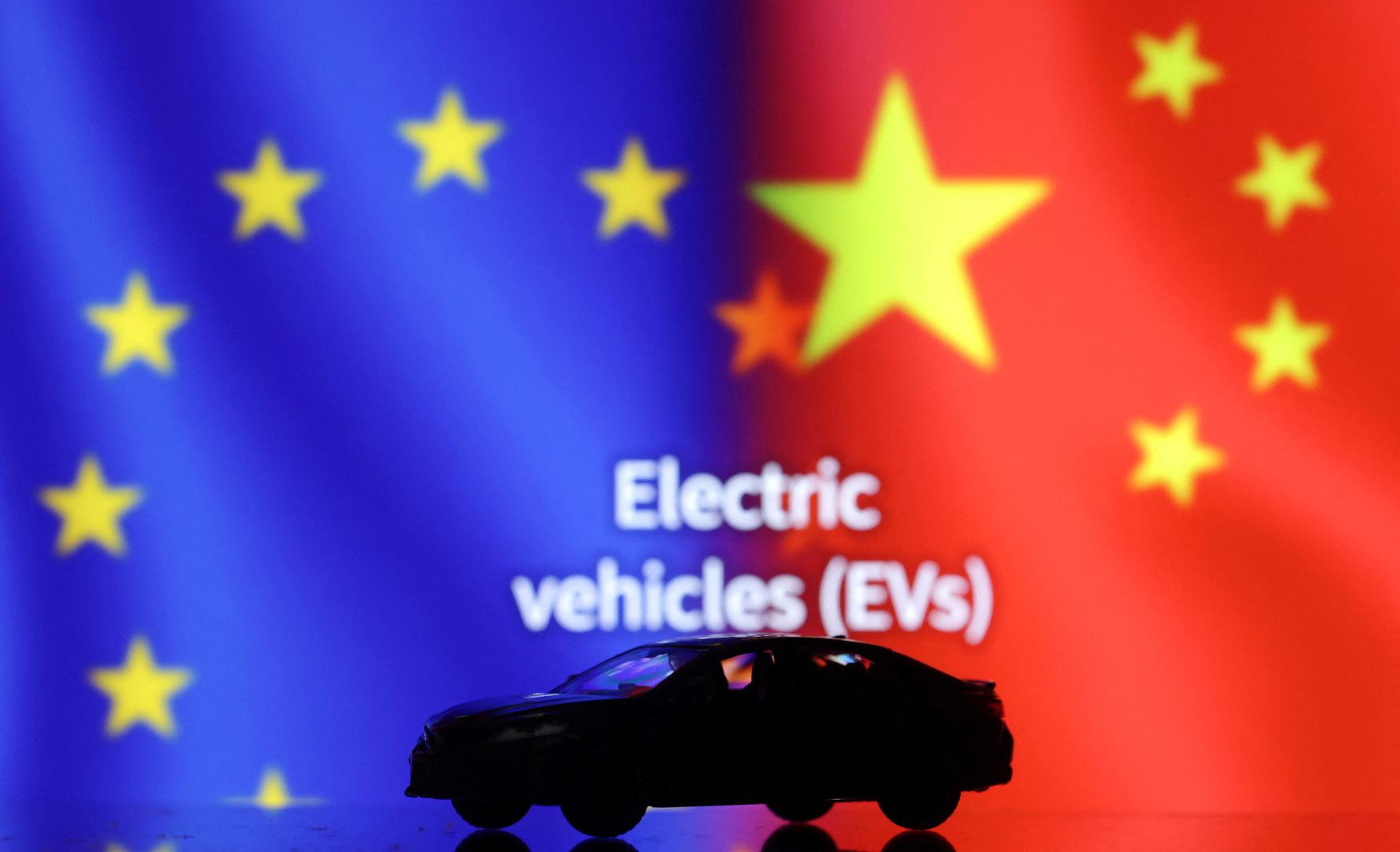
Wang urges 'an active role' by Paris to convince EU China's probes into EU brandy, pork, dairy products follow rules - Wang EU refuses escalation but will not yield to pressure - Primas Wang open to consider brandy producers' propositions - Primas BEIJING, Nov 4 (Reuters) - China has urged France to push the European Commission towards a solution acceptable to both the European and Chinese electric vehicle industries, while France said the bloc would not yield on key matters as it pushes to overturn a tariff on brandy. The EU launched an anti-subsidy investigation into imports of Chinese-made battery EVs last year and in October voted for tariffs on those vehicles. China in recent months has launched its own investigations into European pork and dairy, and imposed temporary anti-dumping measures on imports of brandy from the EU in October. Chinese Commerce Minister Wang Wentao, in a meeting with French junior trade minister Sophie Primas in Shanghai on Sunday, urged Paris to take on "an active role" to nudge the EU on Chinese EVs. He reiterated the bloc's investigation was a major concern that has "seriously hindered" China-EU auto industry cooperation. Primas told Wang that EU refuses to escalate the situation and continues to trade with China "but will not yield to pressure on the essential points". "We will continue to defend fairer competition that benefits everyone," a statement from her press office showed, adding that Wang was open in their discussions to consider the propositions of French brandy producers. Primas is on a three-day visit to challenge China over its import duties on brandy, which Paris calls political and unjustified, Reuters reported last week. Wang told Primas Beijing's trade remedy investigations on EU brandy, pork and dairy products were in accordance with the domestic industry's applications and complied with the World Trade Organization rules, "unlike the EU" which was "rash" in launching its EV probe. "China will continue to conduct investigations in strict accordance with the law, safeguard the legitimate rights of enterprises of EU member states, including France, and make rulings based on facts and evidence," the ministry statement cited Wang as saying. But he said China is willing to work with the European Commission towards a "proper solution" as well, without elaborating. China opened an anti-subsidy probe into imported EU dairy products in August and an investigation focusing on pork intended for human consumption in June. Sign up here. https://www.reuters.com/business/autos-transportation/china-urges-france-get-eu-arrive-palatable-ev-solution-2024-11-03/
2024-11-03 23:30
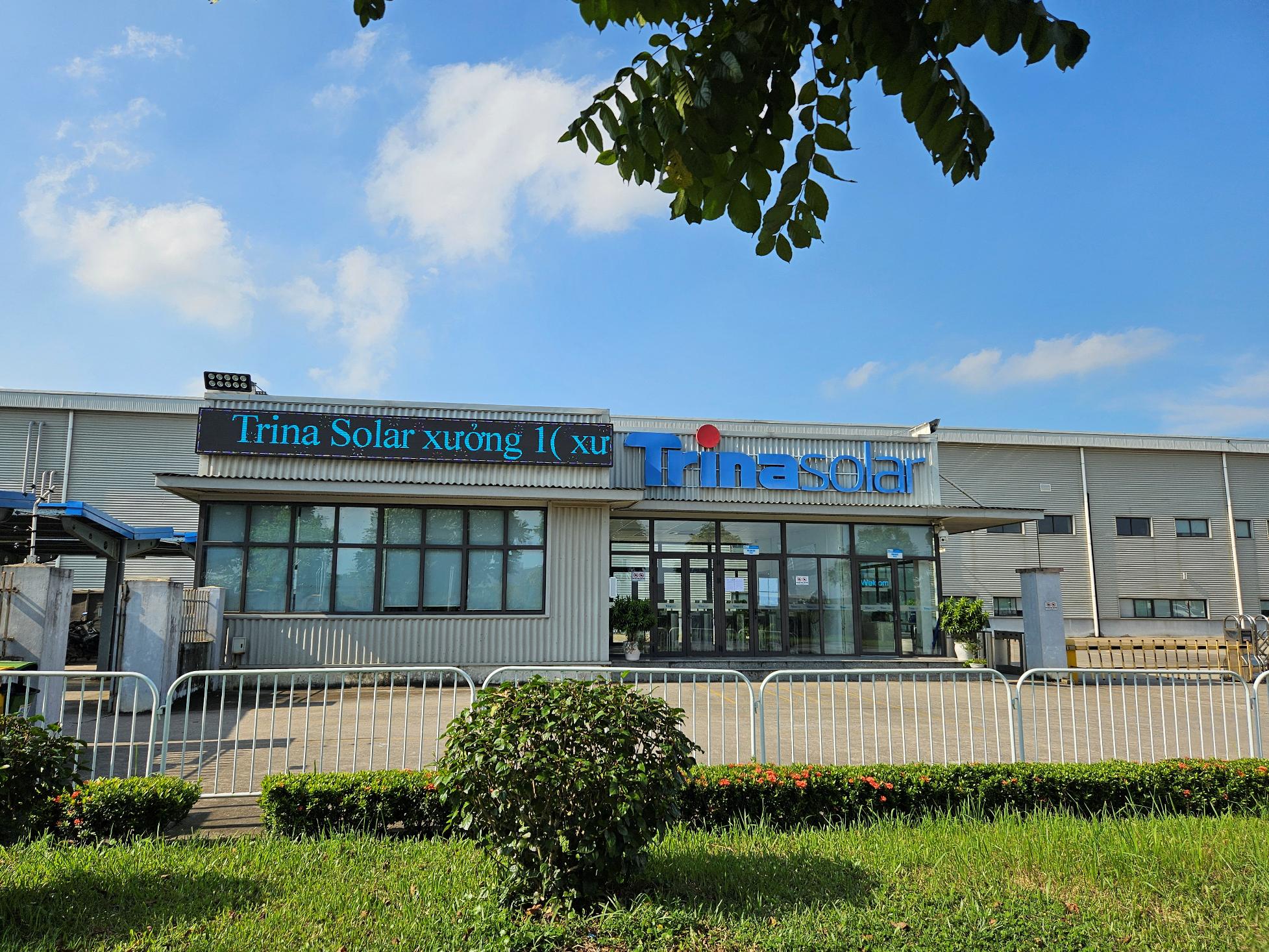
Chinese solar firms build new plants in Indonesia and Laos U.S. has expanded tariffs on other Southeast Asian nations In Vietnam, Chinese solar companies cut output, lay off workers Nov 4 (Reuters) - Some of the biggest Chinese-owned solar factories in Vietnam are cutting production and laying off workers, spurred on by the expansion of U.S. trade tariffs targeting it and three other Southeast Asian countries. Meanwhile, in nearby Indonesia and Laos, a slew of new Chinese-owned solar plants are popping up, out of the reach of Washington's trade protections. Their planned capacity is enough to supply about half the panels installed in the U.S. last year, Reuters reporting shows. Chinese solar firms have repeatedly shrunk output in existing hubs while building new factories in other countries, allowing them to sidestep tariffs and dominate the U.S. and global markets despite successive waves of U.S. tariffs over more than a decade designed to rein them in. While Chinese firms have been moving their solar manufacturing for years, the scope of the shift to Indonesia and Laos in this latest phase has not previously been reported. More than a dozen people in five countries, including employees at Chinese plants, officials at non-Chinese solar companies and lawyers were interviewed for this article. "It's a huge cat and mouse game," said William A. Reinsch, a former trade official in the Clinton administration and senior adviser at the Center for Strategic and International Studies. "It's not that hard to move. You set up and you play the game again. The design of the rules is such that the U.S. is usually one step behind." China accounts for about 80% of the world's solar shipments, while its export hubs elsewhere in Asia make up much of the rest, according to SPV Market Research. That's a sharp contrast to two decades ago when the U.S. was a global leader in the industry. America's imports of solar supplies, meanwhile, have tripled since Washington began imposing its tariffs in 2012, hitting a record $15 billion last year, according to federal data. While almost none came directly from China in 2023, some 80% came from Vietnam, Thailand, Malaysia and Cambodia – home to factories owned by Chinese firms. Washington slapped tariffs on solar exports from those four Southeast Asia nations last year and expanded them in October following complaints from manufacturers in the United States. Over the last 18 months, at least four Chinese or China-linked projects have begun operations in Indonesia and Laos, and another two have been announced. Together, the projects total 22.9 gigawatts (GW) in solar cell or panel capacity. Much of that production will be sold in the United States, the world's second-biggest solar market after China and one of the most lucrative. U.S. prices have on average been 40% higher than those in China over the past four years, according to data from PVinsights. U.S. solar producers have repeatedly stated in trade complaints lodged with the U.S. government that they can't compete with cheap Chinese products that they say are unfairly supported by subsidies from the Chinese government and the Asian countries they export from. Chinese solar firms have countered that their mastery of the technology makes them more competitive on price. Tariffs are a key theme in the U.S. election, with Republican former President Donald Trump proposing levies on all U.S. imports to stimulate U.S. manufacturing, including a 60% rate on any goods from China. His rival, Democrat Vice President Kamala Harris has said Trump's plan would raise costs for U.S. consumers. Lawmakers on both sides of the aisle, however, have shown support for tougher tariffs on China's solar shipments to nurture a domestic supply chain. "Going forward, the American public should demand much stricter enforcement of tariffs, especially around (China's) use of third countries to break U.S. trade law," Republican Congressman John Moolenaar, Chairman of the House Select Committee on China, told Reuters. The U.S. Department of Commerce, the White House and China's commerce ministry did not respond to Reuters requests for comment. PAIN IN VIETNAM The most immediate visible impact of the latest U.S. tariffs, which have brought total duties to more than 300% for some producers, has been in Vietnam's solar sector. In August, Reuters visited industrial parks in northern Vietnam owned by Chinese-owned companies including Longi and Trina Solar, and spoke with workers. In Bac Giang province, hundreds of workers at a large factory complex owned by Longi Green Energy Technology's (601012.SS) , opens new tab Vinasolar unit lost their jobs this year, two employees with knowledge of the matter said. The company was using just one of nine production lines in the industrial park, one of them said. In Thai Nguyen, another province, Trina Solar (688599.SS) , opens new tab has idled one of its two factories making solar cells and panels, two employees there said. The employees at both companies declined to be identified due to the sensitivity of the issue. Longi did not respond to Reuters requests for comment. It said in June it had suspended output at a Vietnamese solar cell plant but did not provide details. Trina declined to comment. It said in June that some facilities in Vietnam and Thailand would be shut down for maintenance without elaborating. While U.S. solar import data shows shipments from Vietnam up almost 74% through August, industry analysts have attributed the jump to the frontloading of exports to get ahead of this year's U.S. tariffs. Vietnam's government did not respond to requests for comment. NEW EXPORT BASES, US PLANTS Chinese solar companies are flocking to Indonesia motivated by the tariffs on Vietnam, according to Indonesian industry ministry official Beny Adi Purwanto who cited Thornova Solar as an example. Thornova says on its website its Indonesian plant has annual capacity to build 2.5 GW of solar modules and 2.5 GW of solar cells for the North American market. A new 1 GW Trina module and cell plant will be fully operational by end 2024 and will expand capacity, according to Beny. He noted China Lesso Group's solar module plant which has 2.4 GW in production capacity. China-linked New East Solar also announced a 3.5 GW panel and cell plant in Indonesia last year. The Chinese companies did not respond to Reuters requests for comment. The shift to Indonesian production has been sharp and swift, according to one manager at a U.S. solar firm who was told by their Chinese supplier in Indonesia that they're inundated with big orders from major Chinese firms looking to export to the United States. "The scale is totally different," said the manager who declined to be identified. Solar exports from Indonesia to the U.S. nearly doubled to $246 million through August of 2024, according to federal data. Solar companies seeking greener pastures in Laos include Imperial Star Solar. The firm, which has Chinese roots but most of its production in Cambodia, opened a Laos wafer plant in March slated to eventually have 4 GW in capacity. The move, it said in a statement at the time, helped it sidestep U.S. tariffs. SolarSpace also opened a 5 GW solar cell plant in Laos in September 2023. The primary purpose of transferring production capacity to Laos was not related to U.S. tariffs, the company said in a statement to Reuters but did not elaborate. Solar exports from Laos to the U.S. were non-existent in the first eight months of last year but were worth some $48 million through August of 2024. Others are going further afield. JinkoSolar (JKS.N) , opens new tab said in July it had signed an almost $1 billion deal with partners in Saudi Arabia to build a new 10 GW solar cell and module plant in the kingdom. Construction of U.S. solar-manufacturing plants by Chinese companies is also surging as they too seek to take advantage of U.S. incentives. Chinese companies will have at least 20 GW worth of annual solar panel production capacity on U.S. soil within the next year, enough to serve about half the U.S. market, according to a Reuters analysis. Sign up here. https://www.reuters.com/business/energy/chinese-solar-firms-ever-nimble-go-further-afield-where-us-tariffs-dont-reach-2024-11-03/
2024-11-03 22:55
Dollar down as dealers ponder US election uncertainty Euro at more than two-week high Yen firms nearly 1% at 151.62 per dollar Fed and BoE priced to cut by 25 bps, Riksbank by 50 bps China fiscal stimulus possible this week Nov 4 (Reuters) - The dollar dipped on Monday as investors braced for wide-ranging implications for the global economy this week from the outcome of U.S. elections and a likely interest rate cut from the Federal Reserve. The euro jumped 0.7% to $1.0906 . The dollar fell nearly 1% on the yen to 151.645 . The dollar index eased to 103.65, its lowest in two weeks against a basket of currencies. U.S. Treasury yields dropped 8 basis points (bps), retracing some of Friday's surge. Democratic candidate Kamala Harris and Republican Donald Trump remain almost tied in opinion polls and the winner might not be known for days after voting ends. Investors in recent weeks increasingly positioned for a Trump win, and expected his policies on immigration, tax cuts and tariffs to put upward pressure on inflation, bond yields and the dollar. Harris is seen as the continuity candidate. Strategists said the dollar weakness on Monday was linked to a poll that showed Harris with a surprise three-point lead in Iowa. A separate New York Times/Siena College poll showed Harris was marginally ahead in Nevada, North Carolina and Wisconsin and Trump just ahead in Arizona, among the handful of battleground states where the election is most competitive. "The polls suggesting that Harris may have her nose in front in couple of swing states is causing a bit of profit-taking in the Trump trade," said Kenneth Broux, head of corporate research FX and rates at Societe Generale. "Markets are very stretched - long dollars, short Treasuries - into the vote tomorrow so it's only natural we are adjusting some of that positioning." Betting site PredictIT showed Harris at 53 cents and Trump on 52 cents - what investors are willing to wager for a chance to win $1 - a turnaround from 45 cents and 59 cents respectively, just a week ago. "It's certainly one of the most uncertain U.S. elections compared to recent ones," said Roberto Mialich currency strategist at UniCredit, referring to positioning in the options market that showed investors were buying protection against wild swings following Tuesday's vote. "The risk that we may not have a black and white result as early as Wednesday is adding to the uncertainty." The one-week implied volatility options for euro/dollar was at the highest since March 2023. Reflecting investor anxiety over trade relations, implied volatility for China's offshore yuan , seen on the frontline of markets' reaction to the U.S. election, was at a record high, while that for dollar/Mexican peso was at the highest since April 2020, surpassing the previous election cycle. PRICED FOR 25BP This week also includes the Fed's policy meeting when the U.S. central bank is widely expected to cut rates by a standard 25 basis points on Thursday, rather than repeat the outsized half-point easing of its last decision. Traders see a 98% chance of a quarter point cut to 4.50%-4.75%, and a near 80% probability of a similar sized move in December, according to CME's FedWatch tool. "We are pencilling in four more consecutive cuts in the first half of 2025 to a terminal rate of 3.25%-3.5%, but see more uncertainty about both the speed next year and the final destination," said Goldman Sachs economist Jan Hatzius. "Both our baseline and probability-weighted forecasts are now a bit more dovish than market pricing." The Bank of England also meets Thursday and is expected to cut by 25 basis points, while the Riksbank is seen easing by 50 basis points and the Norges Bank is expected to stay on hold. The Reserve Bank of Australia holds its meeting on Tuesday and again is expected to hold rates steady. The BoE's decision has been complicated by a sharp selloff in gilts following the Labour government's budget last week, which also dragged the pound lower. Early Monday, UK bonds stabilised and sterling regained some of its losses to stand at $1.29820 . More stimulus is also expected from China's National People's Congress, which is meeting from Monday through Friday. Sign up here. https://www.reuters.com/markets/currencies/dollar-dips-us-election-outcome-remains-uncertain-fed-rate-cut-looms-2024-11-03/
2024-11-03 21:48
Nov 4 (Reuters) - A look at the day ahead in Asian markets. Global markets will be overwhelmingly dominated by the U.S. presidential election and interest rate decision later this week, so Monday's activity may be driven by position adjustments as investors take in the latest polls, newsflow, earnings and economic indicators. If Friday's moves are any guide, Monday promises to be something of a rollercoaster with no clear, unifying signal. Bond yields shot up , opens new tab to fresh multi-month highs on election and fiscal jitters, reversing an earlier fall on the back of surprisingly weak U.S. employment data, and the dollar duly strengthened. But Wall Street shrugged off any political or deficit fears. Latching onto strong earnings and a renewed conviction that the Fed will cut rates on Thursday - and probably again next month - stocks rallied strongly. Can this 'risk on' sentiment prevail with the U.S. election so close, and with bond yields on the rise not just in the US but around the world? The 'MOVE' index of implied volatility in U.S. Treasuries is the highest in over a year, and British gilt yields are the highest in a year too. The 'bond vigilantes' suffered a bit of whiplash after the U.S. payrolls data on Friday, but soon took charge again. So traders in Asia on Monday will have to weigh up whether they go with upbeat U.S. earnings and rate cut optimism, or hunker down in the face of rising yields, a stronger dollar and heightened nervousness on the eve of the U.S. election. Last week was challenging for Asian markets. The MSCI Asia/Pacific ex-Japan index fell for a fourth week in a row last week, and October's slide of 4.9% marked the worst month since August last year. After taking in $32.2 billion inflows in September, Asia ex-Japan equity funds recorded "heavy redemptions" in the last three weeks, according to flows tracker EPFR. The latest week saw investors pull over $4 billion from Asia ex-Japan equity funds, extending their longest outflow streak since the fourth quarter of last year. Much of that is down to outflows from China funds as some of the hyper excitement sparked by Beijing's raft of measures to support the domestic economy and markets cools off. But attention will once again center on Beijing this week. China's top legislative body the National People's Congress meets on Nov. 4-8, with markets widely expecting the approval of more fiscal stimulus measures. This week also sees the release of Chinese economic indicators including trade and lending. Other highlights include interest rate decisions from Australia and Malaysia, GDP figures for Indonesia and the Philippines, and earnings from Toyota and Nissan. Japanese markets are closed for Culture Day on Monday so yen liquidity will be thinner than usual, and yen trading could be choppy, especially given the upward pressure on long-dated yields overseas. Here are key developments that could provide more direction to markets on Monday: - India manufacturing PMI (October) - U.S. presidential election polls - U.S. bond market weakness Sign up here. https://www.reuters.com/markets/global-markets-view-asia-pix-graphic-2024-11-03/
2024-11-03 20:51
Plan includes cap-and-trade system to incentivize pollution-cutting projects Alberta claims plan will drive up prices, cost jobs,and cut GDP Greenpeace says hard cap is vital to force investment in pollution reduction OTTAWA, Nov 3 (Reuters) - Canada will on Monday unveil the details of its long-awaited plan to cap emissions of greenhouse gases from the oil and gas sector, an idea that the energy industry and some provinces strongly oppose. A government announcement issued on Sunday said the draft plan would be released at 1 p.m. (1800 GMT) on Monday. Ottawa said last December the plan would be unveiled by the end of 2024. The Liberal government wants the energy industry - Canada's highest-polluting sector - to cut emissions to 137 million metric tons, 37% below 2022 levels, by 2030. The proposals will bring in a cap-and-trade system that recognizes better-performing companies and gives higher-polluting firms an incentive to invest in pollution-cutting projects, said Hermine Landry, a spokeswoman for Environment Minister Steven Guilbeault. "The Canadian oil and gas sector is one of the only sectors where pollution levels continue to rise, with more than double the greenhouse gas pollution than all other industries combined," she said in a statement. Canada, the world's fourth-largest oil producer, is aiming to cut emissions 40% to 45% below 2005 levels by 2030. The energy sector accounts for more than a quarter of all emissions. "The regulations would cap pollution, not production," Landry said in a statement. The oil-producing province of Alberta says the proposals are in effect a production cap that will drive up prices, and cost up to 150,000 jobs and cut GDP by up to C$1 trillion ($720 billion). The Canadian Association of Petroleum Producers says the proposals mean Canada would be the only oil and natural gas-producing country on earth that caps emissions. Neither the Alberta government nor the association was immediately available for comment. Whether the cap will come into effect, and in what form, is unclear. The next election has to be held by late October 2025 and polls show the Liberals will lose to the Conservatives, who have close ties to the energy industry and are promising to scrap a separate federal carbon tax imposed on consumers. Conservative spokespeople were not immediately available to comment on the party's position regarding the emissions cap. Keith Stewart of the environmental group Greenpeace said oil companies had not been spending enough on cutting pollution. "The only way that changes if they face a hard cap that forces them to invest in cleaning up, so it is vital the federal government gets this done and done right," he said via email. The cap will prompt companies to cut production rather than invest in costly carbon capture and storage technology, consultancy Deloitte said in June. Sign up here. https://www.reuters.com/sustainability/climate-energy/canada-unveil-proposed-emissions-cap-oil-gas-sector-monday-2024-11-03/