2025-12-22 20:00
SAO PAULO, Dec 22 (Reuters) - ComBio, Brazil’s largest supplier of renewable thermal energy for industrial clients, expects to triple its revenue to about 2.4 billion reais ($430 million) within five years amid growing demand from corn ethanol producers, commercial director Ricardo Blandy told Reuters on Monday. Some 25 corn ethanol plants operate in Brazil, where another 18 are under construction and 19 are in earlier planning phases, Blandy said, adding that biomass supply is tightening as biofuel output surges. Sign up here. In states like Mato Grosso, Brazil’s top corn ethanol producer, biomass availability to feed steam boilers for producing the biofuel is a major challenge, surpassing corn supply and biofuel prices in importance, Blandy said. “There are areas with a frightening biomass deficit,” he said. Rapid growth of the corn ethanol industry and limited biomass supply for generating energy were among factors that led Mato Grosso state prosecutors to investigate whether some producers are illegally using deforested wood to feed their plants, a Reuters report found in October. While ComBio already has 10 clients across several industries, it does not have any corn ethanol producers as clients yet, Blandy said, though he expects that to change soon. “We’ve spoken with the 30 main producers or project developers in the ethanol space, and we are a few weeks from announcing our first contracts,” he said, without giving details. ComBio wants to plant eucalyptus across about 10,000 hectares (24,711 acres) in Mato Grosso in the coming years to meet future biomass demand from corn ethanol producers, he added. ComBio also offers renewable energy generation investments and handles the operation of the biomass-fired thermoelectric units, which can account for up to 30% of the investment in corn ethanol plants, which typically cost 1 billion to 1.5 billion reais to build. He added that while industrial energy-generation projects may require 150 million to 300 million reais, the biological asset side can require up to another 300 million reais, depending on project size. “We’re talking about 600 million reais in ComBio investment to ensure both industrial capex and forestry capex,” he said. https://www.reuters.com/business/energy/brazils-combio-expects-revenue-hit-430-mln-corn-ethanol-clients-increase-output-2025-12-22/

2025-12-22 19:39
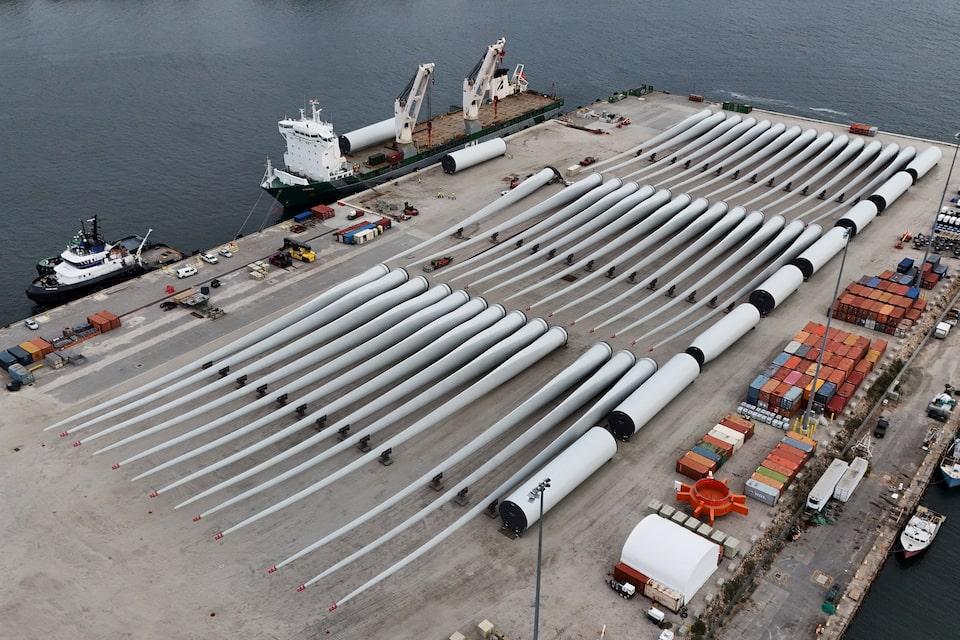
Suspension affects Orsted, Avangrid, Dominion Energy, Equinor projects Pentagon raises concerns over radar interference from turbine blades, towers Trump campaigned for White House on promise to end offshore wind industry Dec 22 (Reuters) - The Trump administration suspended leases on Monday for five large offshore wind projects that are under construction off the U.S. East Coast over what it called national security concerns, sending shares of offshore wind companies plunging. The suspension was the latest blow for offshore wind developers that have faced repeated disruptions to their multi-billion-dollar projects under U.S. President Donald Trump, who has said he finds wind turbines ugly, costly and inefficient. State officials, Democratic lawmakers, offshore wind companies, and industry trade groups slammed the move as unjustified. Sign up here. The U.S. Department of the Interior said the decision was the result of complaints by the Pentagon that the movement of huge turbine blades for offshore wind projects, as well as the highly reflective towers that hold them up, cause radar interference that can make it hard to identify and locate security threats. The pause will give relevant federal agencies "time to work with leaseholders and state partners to assess the possibility of mitigating the national security risks posed by these projects," the department said in a statement. "The prime duty of the United States government is to protect the American people," Secretary of the Interior Doug Burgum said in the statement. STATES CONSIDER THEIR OPTIONS The pause will affect Danish energy firm Orsted's (ORSTED.CO) , opens new tab Revolution Wind and Sunrise Wind projects, Avangrid and Copenhagen Infrastructure Partners' Vineyard Wind 1 project, Dominion Energy's (D.N) , opens new tab Coastal Virginia Offshore Wind, and Equinor's (EQNR.OL) , opens new tab Empire Wind 1 project, according to the statement. Shares in Orsted traded down more than 12%, with Dominion and Equinor also trading lower. Dominion said the suspension will threaten grid reliability for its Virginia customers, including military bases and data centers powering artificial intelligence. "These electrons will power the datacenters that will win the AI race, support our war fighters, and build the nuclear warships needed to maintain our maritime supremacy," the company said. Orsted said its projects were in advanced stages and had been preparing to power around 1 million homes across three states from next year. "Orsted is evaluating all options to resolve the matter expeditiously, together with its partners," the company said. Equinor said it was also evaluating the suspension. Copenhagen Infrastructure Partners was not immediately available for comment. New York Governor Kathy Hochul and Connecticut Attorney General William Tong said in separate statements on Monday that states affected by the freeze were reviewing their options. "The Trump administration will look for any excuse to continue its assault on clean energy — and the thousands of good-paying jobs these projects bring — but there is no credible justification for this stoppage," Hochul said. The National Ocean Industries Association, a trade group representing offshore wind developers, urged the administration to end the pause quickly, pointing out that the Pentagon had been involved in approving the projects under past administrations. "The regulatory process involves a rigorous framework for assessing the national security implications of proposed projects, and every project under construction has already undergone review by the Department of Defense with no objections," NOIA President Erik Milito said. The top Democrats leading the Senate's environment and energy committees said they would not back a bipartisan permitting reform effort in 2026 unless the administration backs off the offshore wind halt. "The illegal attacks on fully permitted renewable energy projects must be reversed if there is to be any chance that permitting talks resume," said Rhode Island Senator Sheldon Whitehouse and New Mexico Senator Martin Heinrich in a joint statement. TRUMP'S ANTI-WIND INDUSTRY STANCE In August, the administration had ordered Orsted to halt already advanced construction on the Revolution Wind project off Rhode Island, though a federal judge later lifted the ban. Earlier in the year, the administration lifted a stop-work order on Equinor's Empire Wind in a compromise with New York state that paved the way for a natural gas pipeline Trump supports. Trump campaigned for the White House on a promise to end the offshore wind industry - saying "windmills" are too expensive and hurt whales and birds - while promoting oil and gas. The uncertainty has taken a financial toll on developers. Orsted raised $9.4 billion earlier this year to help fund U.S. projects after potential partners were deterred by Trump's hostility to wind power. Interior Secretary Burgum has previously said the administration is concerned that offshore wind installations can make the United States more vulnerable to attacks by swarms of drones. https://www.reuters.com/business/energy/us-pausing-five-offshore-wind-projects-over-national-security-concerns-burgum-2025-12-22/
2025-12-22 19:17
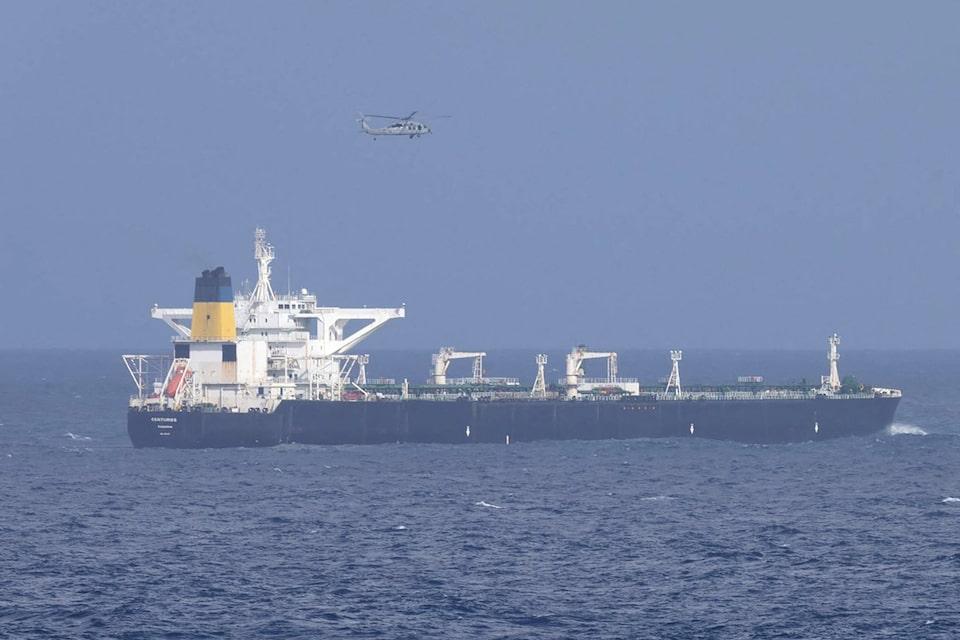
BEIJING, Dec 22 (Reuters) - China's foreign ministry on Monday said the United States' seizure of another country's ships was a serious violation of international law, after the U.S. intercepted a China-bound oil tanker off the Venezuelan coast. Venezuela has the right to develop relations with other countries, China's foreign ministry spokesperson Lin Jian said at a daily press briefing, adding that China opposes all "unilateral and illegal" sanctions. Sign up here. On Saturday, the U.S. Coast Guard intercepted a second oil tanker in international waters off the Venezuelan coast, days after President Donald Trump announced a "blockade" of all sanctioned oil tankers entering and leaving Venezuela. The tanker, Centuries, loaded in Venezuela under the false name "Crag" and was carrying some 1.8 million barrels of Venezuelan Merey crude oil bound for China, documents showed. The crude was bought by Satau Tijana Oil Trading, one of many intermediaries involved in Venezuelan state oil company PDVSA's sales to Chinese independent refiners, the documents showed. A White House spokesperson said the "falsely flagged vessel" carried sanctioned oil and was part of Venezuela's shadow fleet. The Venezuelan government called the tanker interception a "serious act of international piracy." China is the biggest buyer of Venezuelan crude, which accounts for roughly 4% of its imports. https://www.reuters.com/world/china/china-says-us-seizure-ships-serious-violation-international-law-2025-12-22/
2025-12-22 19:14
ROME, Dec 22 (Reuters) - Italy's cabinet on Monday authorised a state-backed company to buy from Stellantis (STLAM.MI) , opens new tab a site that includes facilities for the temporary storage of used nuclear fuel, a statement said. Prime Minister Giorgia Meloni's government allowed nuclear decommissioning company Sogin to "carry out the acquisition of the entire shareholding of Deposito Avogadro," which according to the environment ministry website manages a former nuclear reactor in the northern Piedmont region. Sign up here. No financial details of the transaction were disclosed. Nuclear-fired power plants were prohibited in Italy following referendums in 1987 and 2011 but the government is now drafting rules to lift the ban through the use of new nuclear-power technologies. Meloni's government has signalled its intention to bring nuclear power back into Italy's energy mix by 2027, as part of efforts to decarbonise highly polluting industries such as steel, glass and tilemaking. https://www.reuters.com/business/energy/italy-buy-former-nuclear-site-stellantis-statement-says-2025-12-22/
2025-12-22 19:12
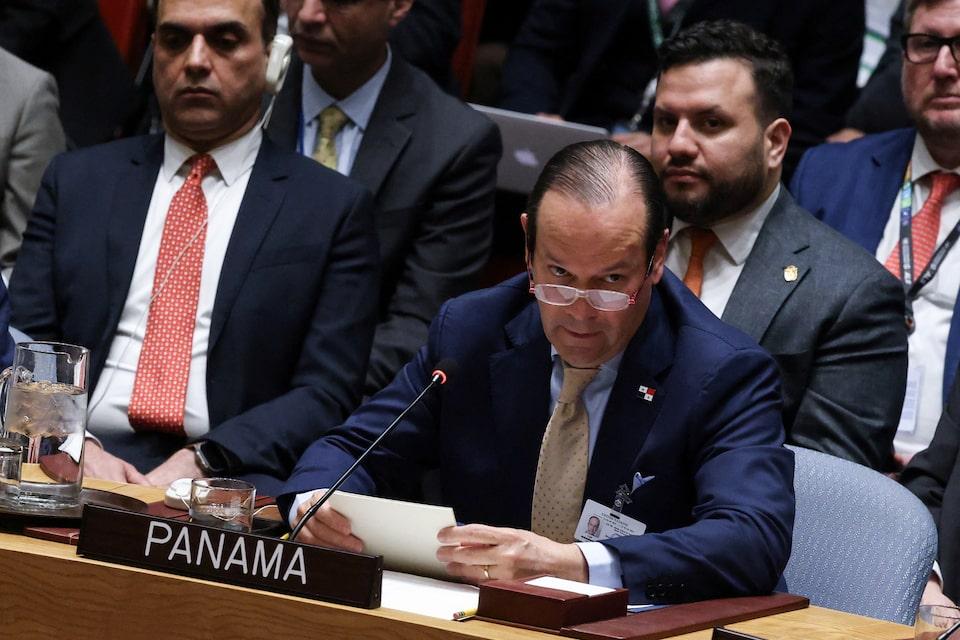
PANAMA CITY, Dec 22 (Reuters) - Panama's foreign minister said on Monday that a tanker recently intercepted by the U.S. that was under Panama's flag did not respect the country's maritime rules and had disconnected its transponder while navigating out of Venezuelan waters carrying a crude cargo. Foreign minister Javier Martinez-Acha added in a TV interview that Panama would take measures accordingly. He did not elaborate further. Sign up here. A country providing its flag to a vessel officially added to its registry can cancel the ship's registration if an investigation determines that it did not follow maritime rules. The supertanker Centuries, targeted by the U.S. Guard Coast Guard on Saturday after leaving Venezuela's, was flying Panama's flag. https://www.reuters.com/world/americas/panama-says-venezuela-related-tanker-intercepted-by-us-did-not-follow-maritime-2025-12-22/
2025-12-22 18:22
Dec 22 (Reuters) - Coinbase (COIN.O) , opens new tab said on Monday it will buy prediction markets startup The Clearing Company, its tenth acquisition this year, as the crypto exchange looks to expand beyond its core digital assets business. Prediction markets let users buy and sell contracts tied to the outcomes of real-world events, ranging from elections and economic data to sports and policy decisions, effectively turning investors' forecasts into tradable markets. Sign up here. Supporters say the prices can reflect collective expectations more accurately than polls or forecasts, while critics argue the products blur the line between financial markets and betting, drawing growing scrutiny from regulators. Prediction markets surged into the mainstream during the 2024 U.S. presidential race and have since drawn rapid interest and investments from all corners of the financial ecosystem. Meanwhile, trading platforms are broadening their product suites to encompass multiple asset classes under one roof as competition intensifies. This shift, analysts say, could help Coinbase reduce its reliance on crypto trading as new players crowd the market. "Prediction markets offer the company a high-engagement, high-frequency product that broadens the reasons for opening its app beyond crypto," analysts at brokerage Benchmark wrote in a note last week. Earlier this month, Coinbase launched its prediction markets platform and said it will start letting users trade stocks, positioning it as a direct competitor to brokerages such as Robinhood (HOOD.O) , opens new tab and Interactive Brokers (IBKR.O) , opens new tab. "We see many of Coinbase's new initiatives encouraging and incentivizing customer engagement, which has been episodically more limited," analysts at brokerage J.P. Morgan wrote in a note after the products were unveiled. The deal for The Clearing Company is expected to close in January. Coinbase did not disclose the terms of the transaction. Among its notable deals this year, Coinbase agreed to buy derivatives exchange Deribit for $2.9 billion in May, and struck a roughly $375 million deal for investment platform Echo in October. Its shares were last up 2.6% in afternoon trading. https://www.reuters.com/legal/government/coinbase-doubles-down-prediction-markets-with-deal-clearing-company-2025-12-22/