2024-11-01 17:10
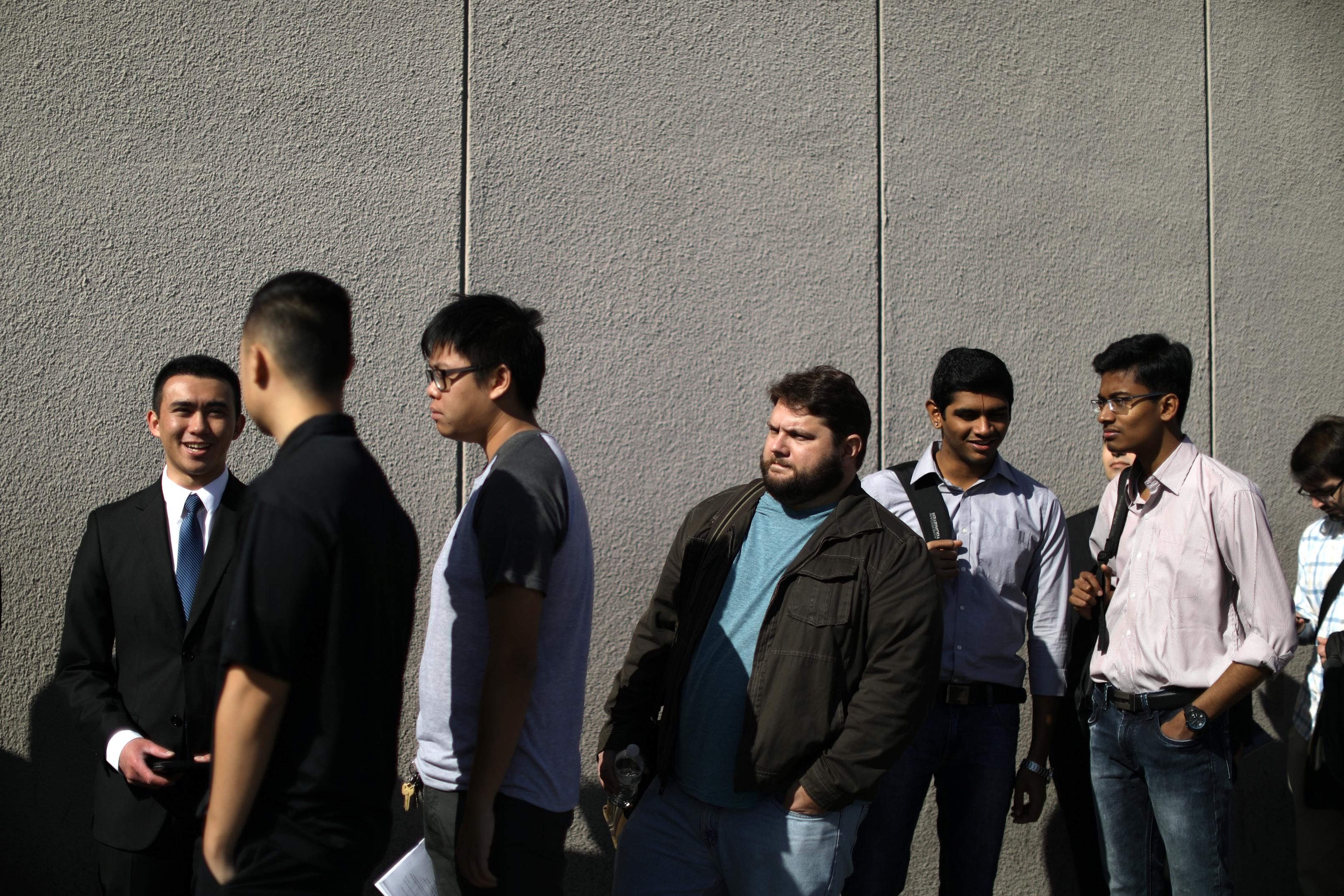
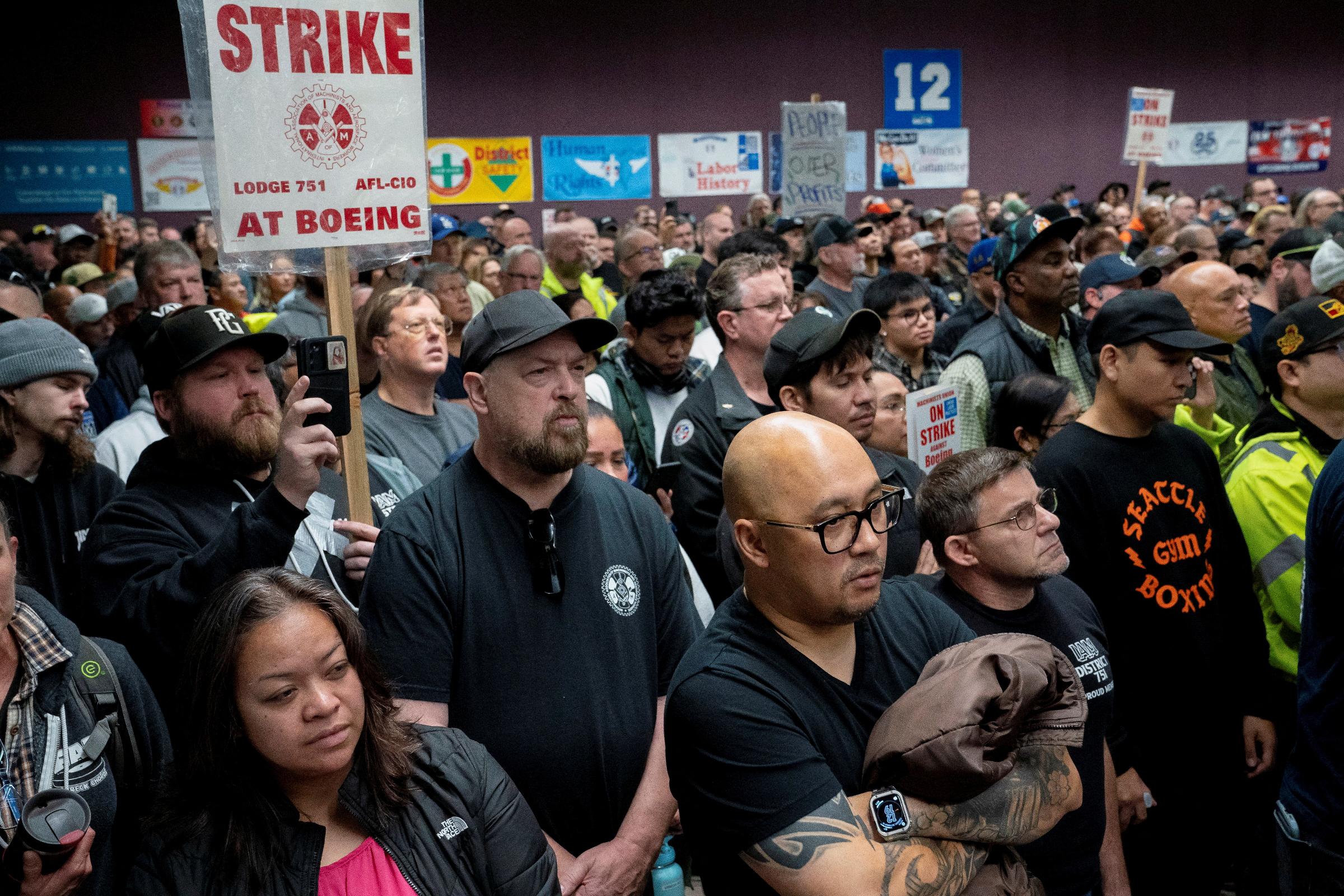
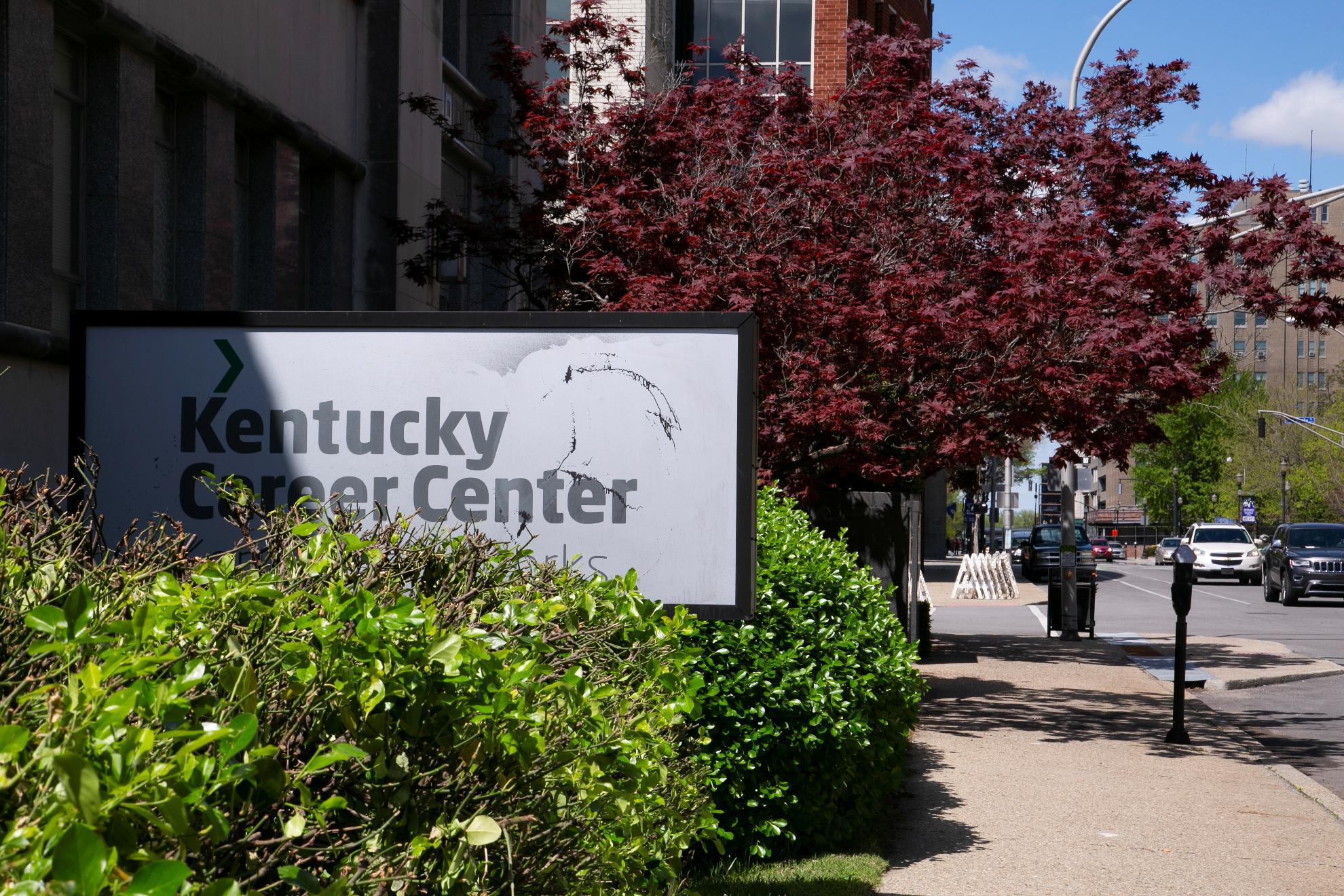
Nonfarm payrolls increase by 12,000 in October Aerospace strikes cut manufacturing jobs by 46,000 Jobless rate unchanged at 4.1%, labor force shrinks Payrolls survey response rate lowest in over 30 years WASHINGTON, Nov 1 (Reuters) - U.S. job growth almost stalled in October as strikes in the aerospace industry depressed manufacturing employment while hurricanes shortened the collection period for payrolls, making it hard to get a clear picture of the labor market ahead of next week's presidential election. The Labor Department's closely watched employment report on Friday was the last major economic data before Americans head to the polls to choose Democratic Vice President Kamala Harris or Republican former President Donald Trump as the country's next president. Polls show the race is a toss-up. Nonetheless, the labor market is cooling, with employment gains for August and September revised down by 112,000 jobs. While the unemployment rate held steady at 4.1% in October, that was because more people left the labor force. Economists expected Federal Reserve officials would brush aside the report and deliver another interest rate cut when they meet next week. "This is not the clarifying report on the economy that Americans and markets needed before next week's election to answer whether voters are better off than they were four years ago," said Christopher Rupkey, chief economist at FWDBONDS. "The one thing we can rule out is that the dramatic slowdown in nonfarm payroll jobs does not indicate the economy is at a tipping point and in danger of falling over the cliff and into recession." Nonfarm payrolls increased by 12,000 jobs last month, the smallest gain since December 2020, the Labor Department's Bureau of Labor Statistics said. The economy added 112,000 fewer jobs in August and September than previously reported. Economists polled by Reuters had forecast payrolls would rise 113,000. Hurricane Helene devastated the U.S. Southeast in late September and Hurricane Milton lashed Florida a week later. The response rate for the establishment survey in October, from which payrolls are calculated, dropped to 47.4%. That was the lowest reading since January 1991 and was considerably below the 69.2% average for October in the past five years. The household survey from which the unemployment rate is derived found that 512,000 people reported they could not work in October, a record high for the month. About 1.4 million people who normally hold full-time positions said they could only work part-time because of the weather. That was also an all-time high for October and compared to only 129,000 last year. The Bureau of Labor Statistics acknowledged that payroll employment estimates in some industries were likely affected by the hurricanes, but said it was "not possible to quantify the net effect on the over-the-month change in national employment, hours, or earnings estimates because the establishment survey is not designed to isolate effects from extreme weather events." It said the collection period for the responses, which can range from 10 to 16 days, only lasted 10 days in October and was completed several days before the end of the month. There was a concentration of job losses in industries, which tend to employ hourly workers, a group that tends to be most affected by business closures due to weather disruptions. The strikes by machinists at Boeing (BA.N) , opens new tab and Textron, an aircraft company, subtracted 44,000 jobs from transportation equipment manufacturing payrolls. Workers who do not receive a paycheck during the survey period are counted as unemployed in the establishments survey. Some economists estimated the storms, strikes and shorter collection period had subtracted roughly 115,000 jobs from payrolls. "The hurricanes clearly had a far greater impact on employment last month than most economists had anticipated," said Stephen Stanley, chief U.S. economist at Santander U.S. Capital Markets. "Much of that should reverse in November." First-time applications for unemployment benefits dropped to a five-month low in late October after surging in the aftermath of the hurricanes. MANUFACTURING PAYROLLS SINK Nearly all the jobs added last month were in the healthcare and government sectors. Healthcare employment increased by 52,000 jobs, spread across ambulatory and nursing care facilities. Government payrolls increased by 40,000, boosted by state and local government hiring. Manufacturing employment declined by 46,000 positions, also reflecting a loss of 6,000 jobs in the automobile industry, a drop that was probably linked to layoffs at Chrysler-parent Stellantis (STLAM.MI) , opens new tab. Separately, Boeing has raised its wage offer to its striking workers, who will vote next week on the new package. Professional and business services payrolls dropped by 47,000 jobs, with temporary help services employment declining by 49,000 positions. Leisure and hospitality payrolls fell by 4,000, while retail employment dropped by 6,400 positions. The share of industries reporting an increase in payrolls fell to 55.6% from 59.8% in September. Average hourly earnings rose 0.4% last month after gaining 0.3% in September. They were likely lifted by hourly paid workers dropping out of the payrolls calculation. Wages increased 4.0% in the 12 months through October after advancing 3.9% in September. Strong wage growth is underpinning consumer spending and the overall economy. Stocks on Wall Street traded higher. The dollar gained versus a basket of currencies. U.S. Treasury yields rose. 'JUSTIFICATION TO CUT RATES' Financial markets have fully priced in a 25-basis-point rate cut by the Fed next Thursday. A rise in the unemployment rate to 4.3% in July from 3.8% in March was one of the catalysts for the U.S. central bank's unusually large half-percentage-point rate cut in September, the first reduction in borrowing costs since 2020. The Fed's policy rate is now set in the 4.75%-5.00% range, having been hiked by 525 basis points in 2022 and 2023. The household survey, whose response rates the Bureau of Labor Statistics said were within normal ranges, showed 220,000 people left the labor force in October, offsetting a drop of 368,000 in employment. Permanent layoffs rose by the most since November 2021, but fewer people experienced longer bouts of unemployment or worked part-time for economic reasons. A broader measure of unemployment, which includes people who want to work but have given up searching and those working part-time because they cannot find full-time employment, was unchanged at 7.7%. The employment-to-population ratio, viewed as a measure of an economy's ability to create employment, dropped to 60.0% from 60.2% in September. "The labor market continues to gradually cool, providing the Fed with justification to cut rates again at next week's meeting and in December," said Sam Williamson, senior economist at First American. Sign up here. https://www.reuters.com/markets/us/us-job-growth-slows-sharply-october-unemployment-rate-unchanged-41-2024-11-01/
2024-11-01 17:07
Nov 1 (Reuters) - Investors have plowed money into funds tracking bitcoin, betting on a return of Republican Donald Trump to the White House even as they expect wild price swings in the world's largest cryptocurrency during the election week, data showed. Exchange-traded funds (ETF) tracking the spot price of bitcoin notched net inflows of $917.2 million on Wednesday, the biggest one-day increase since March, according to the Block, a data and news provider. BlackRock's iShares Bitcoin Trust ETF (IBIT.O) , opens new tab, the largest spot bitcoin fund by assets under management, pulled in $872 million in net flows, the largest one-day haul since its launch in January. Bitcoin soared around 12% in October in anticipation of a second presidential term for Trump, who has styled himself as a pro-crypto candidate. "The rising odds of a Republican sweep (has) fueled optimism for potential crypto-friendly legislation in Congress post-election," analysts at Ryze Labs said. Polls show Trump in a neck-and-neck race with Democrat Kamala Harris, though betting sites such as Polymarket are pricing in much greater odds of a Trump victory. Given the uncertainty, futures markets show investors are bracing for a volatile election week. Forward-implied volatility data from crypto derivatives exchange Deribit points to potential daily price swings of about 3.7% in bitcoin in either direction through Nov. 8. Open interest on crypto derivatives exchanges - an indicator of market activity - hit an all-time high of $43.61 billion on Tuesday, as per data provider Coinglass. The derivative activity, however, indicates traders expect volatility to subside and bitcoin to continue rising after the election week, said Luuk Strijers, CEO of Deribit. Sign up here. https://www.reuters.com/technology/crypto-etfs-see-big-inflows-ahead-us-election-traders-brace-volatility-2024-11-01/

2024-11-01 16:17
WASHINGTON, Nov 1 (Reuters) - A data-heavy week has kept the U.S. Federal Reserve's core view intact of an economy where price pressures continue to ease and the job market continues to bend but not break amid ongoing economic growth. Employment data for October was among the weakest of recent reports, with prior months revised lower and only 12,000 jobs added. The numbers were likely distorted by strikes, bad weather, and a notably low response rate to Bureau of Labor Statistics surveys. But on its own the October report pulled the three-month average of job gains to a pandemic-era low that is near the pace Federal Reserve officials feel is needed to keep up with population growth. Other details of the report seemed to confirm weaker hiring conditions, including a drop in the number of people finding a job who were either unemployed or not in the labor force in the prior month. Still, the unemployment rate held steady at 4.1%, and average hourly earnings grew at a 4% annual rate, both signs of what Fed officials hope is a job market that has gotten back to a normal sort of equilibrium that can be sustained. "In spite of the weak headline number, today’s report shouldn’t raise alarm bells for job seekers, workers, or policymakers yet...For now, a soft landing is still on the table," wrote Cory Stahle, an economist with the Indeed Hiring Lab, in an analysis of the October employment numbers. The Fed meets on Nov. 6-7, a session delayed a day for Tuesday's presidential election. U.S. central bankers are expected to reduce the benchmark policy rate by a quarter of a percentage point to a range of from 4.5% to 4.75%. Other data since the Fed's September meeting has largely been in line with what policymakers said they were expecting. Inflation data issued on Thursday showed the Personal Consumption Expenditures price index rose at a 2.1% annual rate in September, near the 2% target set by the Fed for that index. A related measure excluding volatile food and energy prices and considered a better gauge of underlying inflation has been stuck for three months at a higher 2.7% level. But even with quarter-point rate reductions expected in November and at the Fed's December meeting, monetary policy will still be considered tight at a time when many Fed officials feel their inflation battle is close to complete and economic risks shifting towards the job market. Growth, meanwhile, remains strong and consumers continue to spend. September retail sales were stronger than expected. An initial report on third-quarter gross domestic product estimated the economy expanded at a 2.8% annualized rate, above the level Fed officials consider the long-term sustainable trend. Sign up here. https://www.reuters.com/markets/us/recent-data-has-kept-fed-rate-view-soft-landing-intact-2024-11-01/
2024-11-01 15:31
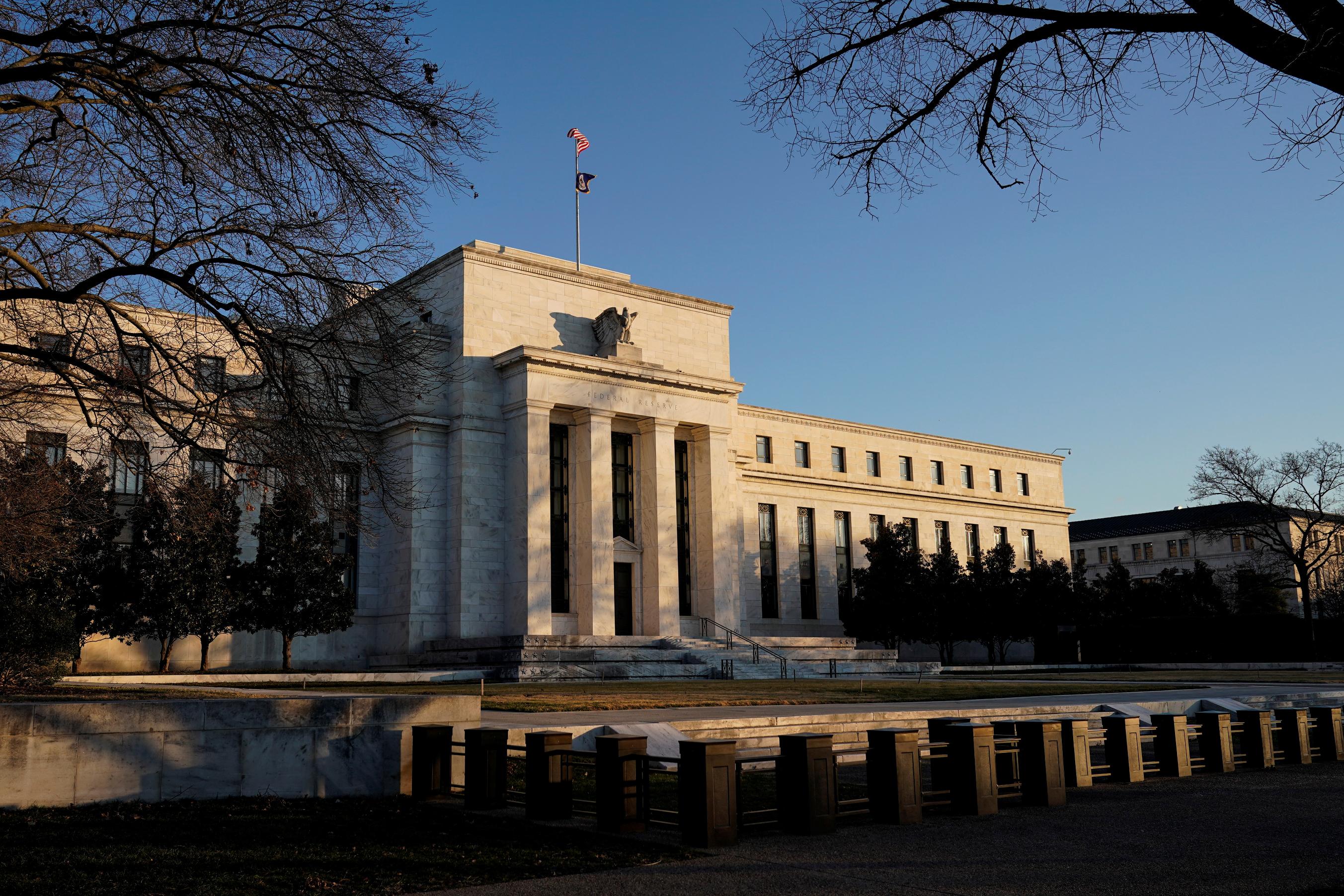
October jobs report shows signs of labor market cooling Rate futures signal high chance of small Fed cut on Nov. 7 Fed policy rate seen in 4.25%-4.50% range at end of 2024 Nov 1 (Reuters) - Federal Reserve policymakers look all but certain to reduce short-term borrowing costs by a modest quarter of a percentage point at their policy meeting next week, their confidence that the labor market is cooling but not crashing likely intact despite new data showing U.S. employers added fewer workers in October than in any month since December 2020. The increase of 12,000 nonfarm payroll jobs last month was far short of the 113,000 economists had anticipated. But analysts pinned the bulk of the weak showing on the tens of thousands of workers kept temporarily off the job by a Boeing strike and the impact of two large hurricanes in the U.S. Southeast, as well as a poor response rate that clouds the true state of U.S. employment. Some 512,000 people reported they were unable to work due to bad weather, the most for the month of October since the Bureau of Labor Statistics began tracking that figure in 1976. The unemployment rate remained at 4.1%, low by historical standards. But the report had weak spots. It showed that it may be getting harder to find a job once a person is out of work, with the average length of unemployment rising to 22.9 weeks, from 20.6 weeks in September. The labor force also shrank by 220,000 people, and the three-month average monthly job gain after downward revisions to prior months' reports is now about 104,000, well below what most economists estimate is needed to keep up with immigration-fueled population growth. "Bad weather and large labor strikes muddy the water and make labor market weakness appear worse than it truly is," Scott Anderson, chief U.S. economist at BMO Capital Markets, wrote in a note. "Still, the Fed's job is to see through the noise, and they will probably take some signal from the continuing labor market softening as a sign that they can continue the process of monetary normalization without much fear of igniting another bout of inflation." Data earlier this week showed inflation by the Fed's targeted measure running at 2.1% in September, just a notch above its 2% goal, though sticky underlying price pressures are expected to keep U.S. central bankers wary of declaring victory too early. Notably, interest rate futures prices on Friday reflected no chance the Fed would deliver another half-percentage-point rate cut, as it did in September when it began easing policy to head off deterioration in labor markets. Traders of futures that settle to the Fed's policy rate instead moved to price in about a 99% chance that the central bank on Nov. 7 would cut its policy rate by a quarter of a percentage point to the 4.50%-4.75% range, compared with 92% before the release of the jobs data. They see about an 83% chance that the policy rate will be in the 4.25%-4.50% range by the end of this year, compared with 69% earlier. Fed policymakers will begin their next two-day policy meeting a day after the U.S. presidential election on Tuesday, and though the result is not expected to directly factor into their decision two days later, many analysts see election uncertainty as an added temporary weight on the labor market in October that could be reversed in coming months. Financial markets currently see the Fed lowering its policy rate to the 3.50%-3.75% range by September of next year. Sign up here. https://www.reuters.com/markets/us/fed-seen-course-rate-cuts-after-weak-jobs-data-2024-11-01/
2024-11-01 14:56
LONDON, Nov 1 (Reuters) - Ukraine's international bonds rallied sharply in October as markets placed bigger bets on the chance of a second Donald Trump presidency following U.S. elections next week, with some believing it may result in a quicker end to conflict. The country's dollar-denominated bonds, which launched in early September after the country's debt restructuring, added as much as 6 cents last month, according to Tradeweb data. The bond maturing in 2036 enjoyed the biggest price rise in October to peak at 49.47 cents on the dollar, though gains were broad based before most maturities retraced in the past week. "Ukraine's been pretty correlated with Trump's politics," said Edwin Gutierrez, portfolio manager with abrdn, adding that some perceive a Trump win as making an end to the conflict more likely. "And in the past week, as you've seen the Trump trades, people have been taking profits on that...you've seen consolidation in Ukraine." The Nov. 5 U.S. election is polling so closely between Trump and Vice President Kamala Harris that most observers view it as a tossup between the two. Markets are gearing up for a wild ride as a result. But as betting market odds shifted in Trump's favour in recent weeks, some traders placed bets on a stronger dollar and rising U.S. treasuries. Erik Meyersson, chief emerging markets strategist with SEB Bank in Stockholm, said the bets on Ukraine's bonds were linked to the belief in some quarters that Trump could, as promised, quickly end the conflict. "If there was a peace deal, even if it would be on terms that would be detrimental to Ukraine's economic future, it might still be perceived as a relief to markets," he said. A cessation of hostilities, he added, could allow the government to "start repairing fiscal balances and budgets." Still, Meyersson warned of significant risks around the trade, including that forcing a peace deal could be more complicated than the Trump team suggests -- and that any cut to U.S. financial support to Ukraine would be bad for bondholders. "That could have the opposite effect on Ukraine bonds," he said. Sign up here. https://www.reuters.com/markets/rates-bonds/ukraine-bonds-staged-october-rally-trump-prospects-weighed-2024-11-01/

2024-11-01 13:21
Nov 1 (Reuters) - U.S. job growth slowed sharply in October amid disruptions from hurricanes and strikes by aerospace factory workers, but the unemployment rate held steady at 4.1%, offering assurance that the labor market remained on solid footing ahead of Tuesday's election. Nonfarm payrolls increased by 12,000 jobs last month after surging by a downwardly revised 223,000 in September, the Labor Department said on Friday. Economists polled by Reuters had forecast payrolls rising 113,000. MARKET REACTION: STOCKS: S&P 500 E-minis added to gains and were up 0.43% BONDS: The yield on benchmark U.S. 10-year notes fell to 4.2605%, the two-year note yield fell to 4.1124% FOREX: The dollar index turned 0.019% lower COMMENTS: MATT BUSH, US ECONOMIST, GUGGENHEIM INVESTMENTS, NEW YORK "(The Fed) were pretty locked in, no matter what this report was going to say, because of just the uncertainty around hurricane impacts. The concern was, they may try to reduce expectations for cuts beyond the November meeting, maybe walk back expectations for December or walk back the number of cuts they were kind of signaling for 2025. This report was weak enough where they'll just keep all options open and firmly leave the door open to another cut in December and the meetings beyond that." BEN VASKE, SENIOR INVESTMENT STRATEGIST, ORION PORTFOLIO SOLUTIONS, OMAHA, NEBRASKA "October job growth was sharply lower relative to September and consensus expectations. However, lower growth was expected to a degree given election uncertainty, recent labor strikes, and hurricanes impacting the southeast US – the labor market has already begun recovery from the two latter effects. Despite lower growth, the unemployment rate remained steady, and early reactions seem to not be impacting expectations that the Fed will proceed with another 25-basis point rate cut in November." CHARLIE RIPLEY, SENIOR INVESTMENT STRATEGIST, ALLIANZ INVESTMENT MANAGEMENT, MINNEAPOLIS "From an investment standpoint, this doesn't really change much in terms of what's expected from a Fed standpoint or thoughts around the slowing economy. We have to look past this month's data and see what comes out in the following months when there's much less noise." "There's definitely some mixed signals - the weaker payroll number versus an unemployment rate that was largely the same, and then a small uptick on the monthly wage side. When you round it all together it's a pretty mixed report." PETER CARDILLO, CHIEF MARKET ECONOMIST, SPARTAN CAPITAL SECURITIES, NEW YORK “Obviously, this is a big miss and if you take away the fact that some of it could be attributed to hurricanes in Florida and the Boeing strike, even with even factoring in those numbers, it's still a big miss and it points to the possibility the labor market is weakening to the point where the Fed may have to consider being more aggressive.” “What is worrying, is hourly wages rose again by 0.4% and the participation rate is dropping.” “This is likely to rekindle the possibility that the Fed will cut rates twice before the end of the year. As of yesterday, I was expecting the Fed will probably skip a cut at its next meeting, but I think we can count on a 25 bp cut in November and another in December.“ HELEN GIVEN, ASSOCIATE DIRECTOR OF TRADING, MONEX USA, WASHINGTON DC "The headline figure has been expected for quite some time to be low, though perhaps not this low, but it looks like right now that traders are treating the entire data dump this morning with a grain of salt." "The point of concern, though, could lie with the two-month net payroll revision, which is quite negative and calls into question September's blowout headline number. The unemployment rate didn't change, though, and average hourly earnings stayed steady." "FX markets are taking this pretty much in stride since so many of the external factors influencing the numbers were discussed ahead of time." LINDSAY ROSNER, HEAD OF MULTI SECTOR FIXED INCOME INVESTING, GOLDMAN SACHS ASSET MANAGEMENT (via email) “Strikes and storms weighed on this month’s jobs data with jobs growth surprising to the downside and the unemployment rate staying put. While the Fed will likely attribute some of the weakness in today’s data to one-off factors, the softness in today’s data argues for the Fed to continue its easing cycle at next week’s meeting. Stormy numbers but sky clearing for November 25 bp cut.” WASIF LATIF, PRESIDENT AND CHIEF INVESTMENT OFFICER, SARMAYA PARTNERS, PRINCETON, NEW JERSEY “It's definitely a surprising number on the downside, but I think given all the noise that was expected in this number between the hurricane and the revisions and other stuff. We do need to take it with a grain of salt, just. Obviously, the market is still in the sort of bad-news-is-good-news scenario because a weak number like this increases the odds of Fed cuts. So the recent push backs that the market was getting on trying to push out the rate cuts that obviously is taking a little bit of a backseat. The initial knee-jerk reaction is the bad news is good news and this is good for risk assets as well as bonds. In the long run, it might not be as impactful of a number because of the noise.” BRYON ANDERSON, HEAD OF FIXED INCOME, LAFFER TENGLER INVESTMENTS, SCOTTSDALE, ARIZONA "As we thought this jobs report was going to have a lot of noise around any signal. With two hurricanes and a Boeing strike the likelihood of this report being clean was going to be hard. The unemployment rate not increasing again is a good sign for the economy and breaks the Sahm rule everyone was panicking about a couple months ago. Hourly earnings increases are still increasing at a healthy pace so we still have confidence in the economy. The nonfarm payrolls may not be great on its face, but this recent drop should be a temporary miss as rebuilding and activity picks up with after the Hurricanes and likelihood of the Boeing strike ending." BRIAN JACOBSEN, CHIEF ECONOMIST, ANNEX WEALTH MANAGEMENT, MENOMONEE FALLS, WISCONSIN "The employment situation is opaque. The hurricane effects are hard to quantify, so most people will see these numbers and just ignore them. There were some significant revisions to previous months’ data, which should not be glossed over. The response rates are low and the error bands are large on these reports. The Fed will likely ignore this release and hopefully just stay the course they laid out in their last summary of economic projections, which would mean a 25 basis point cut in November and another in December." ROBERT PAVLIK, SENIOR PORTFOLIO MANAGER, DAKOTA WEALTH, FAIRFIELD, CONNECTICUT “I don't this it's a compromise on the economy and we were expecting a weaker number, but not this weak. It's again a combination of a slowing economy and the hurricanes and strikes. So, I'm not overly worried about what it's going to mean for the equity market overall…We're on track for another 25-basis points rate cut.” BRYCE DOTY, SENIOR PORTFOLIO MANAGER, SIT INVESTMENT ADVISORS, MINNEAPOLIS "This report dampens the enthusiasm from last month’s report. However, we are still expecting only a 25 bps cut by the Fed next week as the economy is still unlikely to go into a recession. The yield curve should steepen on this news, led by shorter maturity treasury yields coming back down." Sign up here. https://www.reuters.com/markets/us/weak-us-oct-payrolls-growth-skewed-by-storms-strikes-2024-11-01/