2024-11-01 04:10
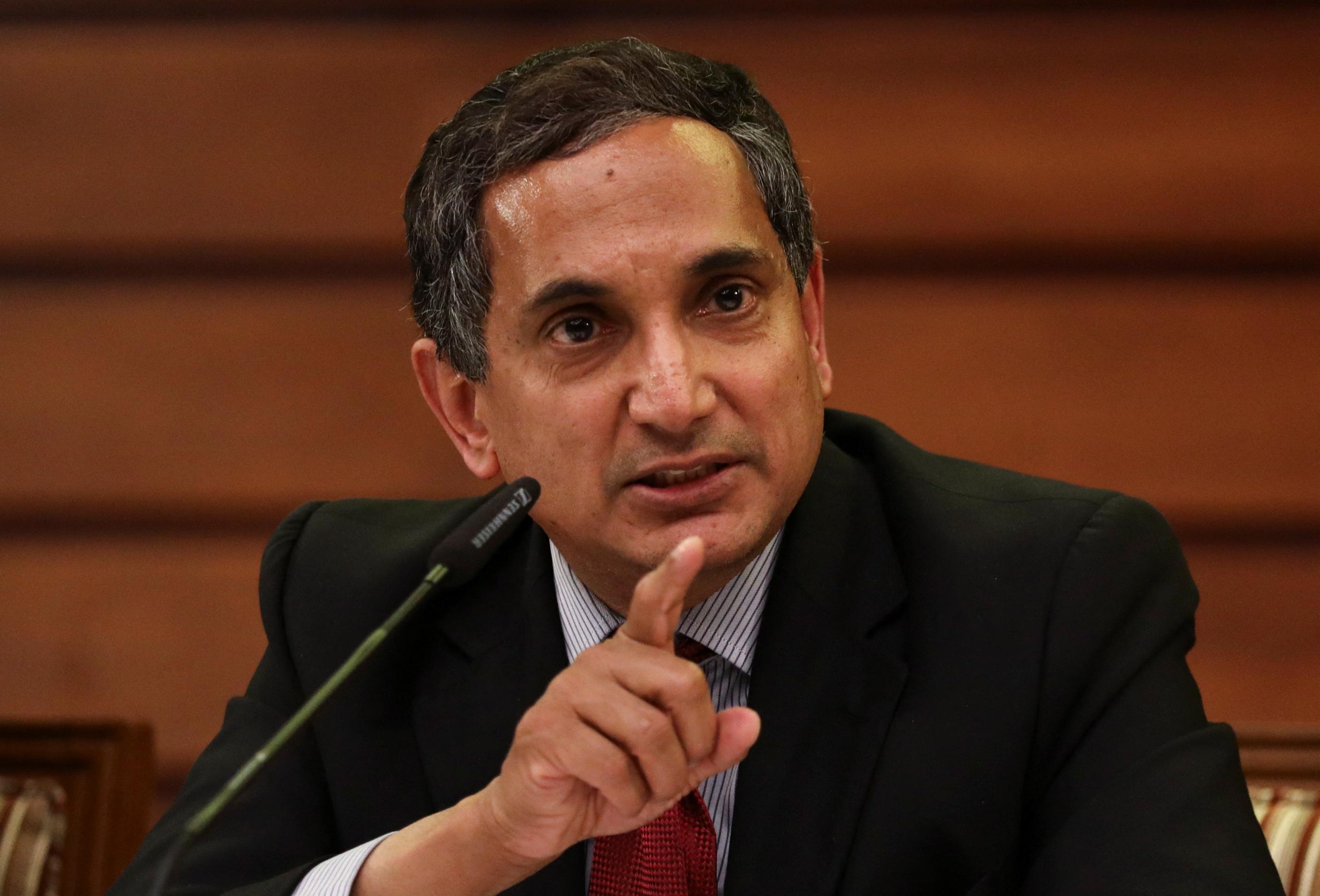
Rising rates in Japan warrants fiscal consolidation, IMF says BOJ should raise rates gradually in data-dependent way Japan committed to flexible exchange-rate regime, IMF says China facing rising risks of deflation, must fix property woes TOKYO, Nov 1 (Reuters) - Japan must fund any additional spending plans within its budget rather than issue more debt, the International Monetary Fund said on Friday, urging the government to get its fiscal house in order as the central bank starts to raise interest rates. "Given the fact that monetary policy normalisation is happening, it puts the onus on the fiscal side to actually embark on consolidation, which is, in my opinion, long overdue," Krishna Srinivasan, director of the IMF's Asia and Pacific Department, told Reuters in an interview. Japanese Prime Minister Shigeru Ishiba has pledged to compile another large-scale spending package to cushion the blow to households from rising costs. He has not commented yet on how the spending will be funded. "Any kind of support you're providing should be a lot more targeted, and any kind of new initiative should be financed within the budget," Srinivasan said. "You should not be increasing more debt to provide for any new initiative." On monetary policy, Srinivasan said the Bank of Japan should raise interest rates in a "gradual" and "data-dependent" way as there were both upside and downside risks to inflation. The BOJ maintained ultra-low interest rates on Thursday but said risks around the U.S. economy were somewhat subsiding, signalling that conditions are falling into place to raise interest rates again. BOJ Governor Kazuo Ueda has said the central bank will keep raising interest rates, currently at 0.25%, if Japan makes progress towards sustainably achieving its 2% inflation target. "I think the BOJ is doing the right thing. It's doing everything possible to make sure that inflation and inflation expectations are anchored at 2% over the policy horizon," Srinivasan said. A prolonged period of ultra-low rates in Japan has been partly behind the yen's recent downturn. The currency weakness in turn is hurting retailers and households by pushing up the cost of importing fuel and raw material. Japanese authorities have said the yen's recent moves were "one-sided" and sharp, issuing a warning to investors against pushing down the currency too much. Srinivasan said currency markets could experience some volatility when there was "so much uncertainty" about the economic outlook of Japan and the United States, and factors that could magnify the moves such as an unwinding of yen carry traders. "But broadly speaking, I think they're fully committed to the flexible exchange rate regime," he said of Japanese authorities' stance on yen moves. Japan's public debt, at twice the size of its economy, is the largest among major nations due to huge spending packages delivered in the past and the rising social welfare costs for a rapidly ageing population. On China, Srinivasan said the priority for authorities must be to fix the country's property sector woes that were leading to "very weak" consumption and investment. "The property sector problems have not been addressed in a comprehensive way, and that has led to consumer confidence plummeting," he said. The resulting slack in the economy was pushing down prices and heightening the risk of deflation in China, he added. Falling export prices in China would also hurt countries in Asia with similar export structures such as South Korea and Vietnam, as they would also need to allow their currencies to weaken in order to compete with cheap Chinese goods, he said. "China needs to move away from an investment and export-led model, to a consumption-led model, which means they have to beef up their social safety nets," Srinivasan said. Sign up here. https://www.reuters.com/markets/asia/japan-must-avoid-issuing-debt-fund-fresh-spending-imf-says-2024-11-01/
2024-11-01 04:02
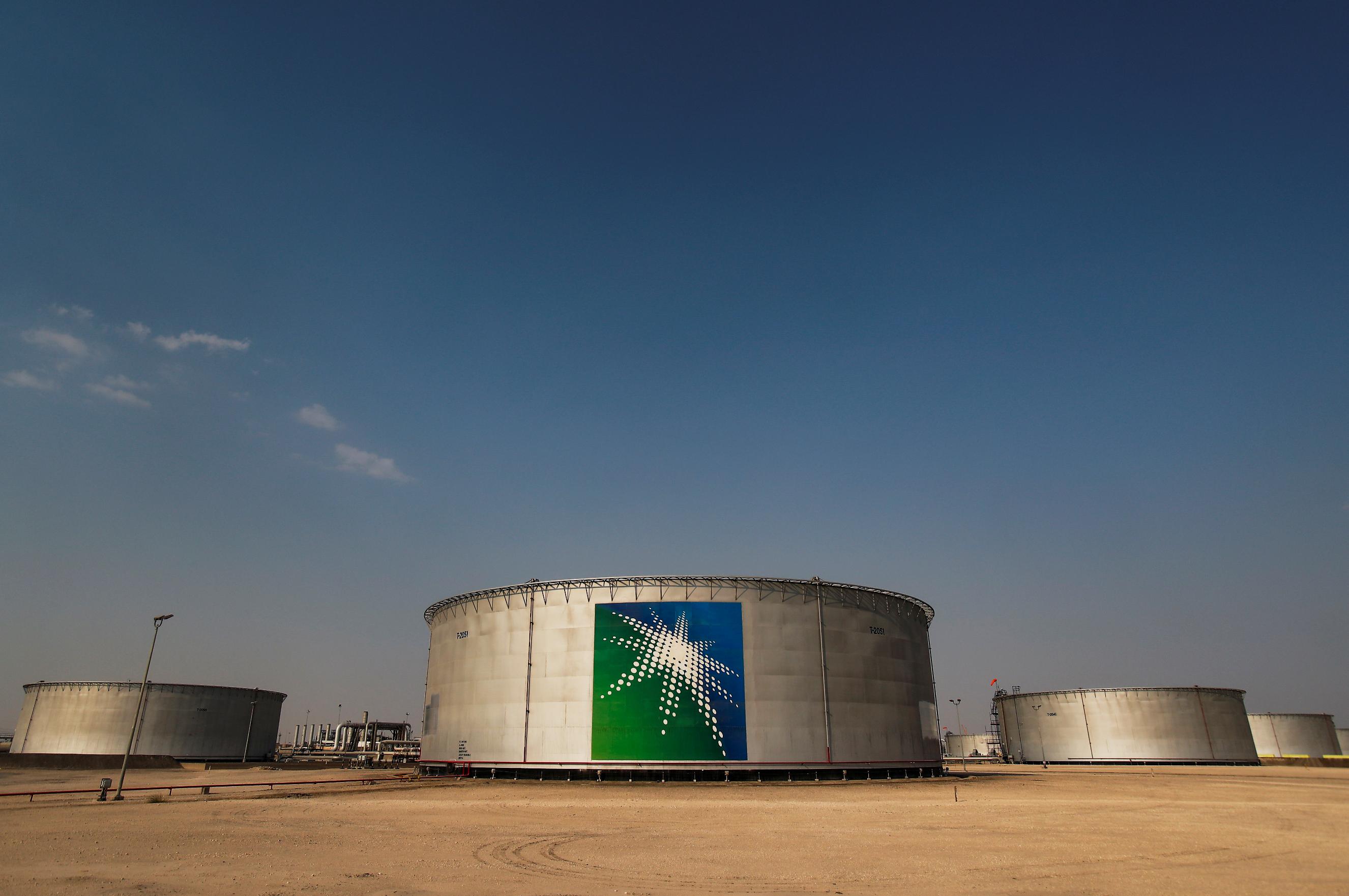
Dec Arab Light OSP may fall by 30-50 cents a barrel Strong fuel oil margins to support prices for heavier grades OPEC+ could delay plans to increase output in Dec - sources SINGAPORE, Nov 1 (Reuters) - Top oil exporter Saudi Arabia may cut prices for most of the crude grades it sells to Asia in December, tracking weakness in Middle East benchmark Dubai, trade sources said. Price cuts for Saudi oil would signal weak demand and provide more evidence for the Organization of the Petroleum Exporting Countries, led by Saudi Arabia, and its allies including Russia, a group known as OPEC+, to potentially delay plans to increase production from December. The official selling price (OSP) for flagship Arab Light crude may fall by 30 to 50 cents a barrel in December from the previous month, a Reuters survey of six refining sources showed, in line with a similar drop in Dubai price spreads last month. Spot premiums for Middle East crude fell last month as the Asia market was well supplied while demand from key buyers such as China remained lacklustre despite a rebound in refining margins. Still, some of the respondents expect smaller price cuts for heavier grades of Saudi crude such as Arab Medium and Arab Heavy in December on support from strong margins for high-sulphur fuel oil. Complex refining margins in Singapore, the bellwether for the region, rebounded to above $4 a barrel in the second half of October, up from September's average of $2.12, the lowest this year. REF/MARGIN1 OPEC+ could delay December's planned increase to oil production by a month or more, four sources close to the matter told Reuters on Wednesday, citing concern about soft oil demand and rising supply. A decision to delay the increase could come as early as next week, two of the sources said. Saudi crude OSPs are usually released around the fifth of each month, and set the trend for Iranian, Kuwaiti and Iraqi prices, affecting about 9 million barrels per day (bpd) of crude bound for Asia. State oil giant Saudi Aramco sets its crude prices based on recommendations from customers and after calculating the change in the value of its oil over the past month, based on yields and product prices. Saudi Aramco officials as a matter of policy do not comment on the kingdom's monthly OSPs. Below are expected Saudi prices for December (in $/bbl against the Oman/Dubai average): Source: Reuters, trade Sign up here. https://www.reuters.com/markets/commodities/saudi-arabia-may-cut-december-oil-prices-asia-sources-say-2024-11-01/
2024-11-01 03:27
IMF expects Asia's economy to grow 4.6% in 2024, 4.4% in 2025 Risks to Asia's economic outlook tilted to downside, IMF says Deflationary pressure from China could provoke trade tensions IMF urges China to fix property woes, boost consumption Sudden shift in Fed, BOJ expectations could jolt markets TOKYO, Nov 1 (Reuters) - Risks to Asia's economy have increased from escalating trade tensions, China's property sector woes and the potential for further market turbulence, the International Monetary Fund (IMF) said on Friday. Persistent downward price pressures from China can "provoke trade tensions" by hurting sectors in neighbouring countries with similar export structures, the IMF said, urging Beijing to take steps to achieve a more demand-driven recovery for its economy. "A longer and larger-than-expected slowdown in China would be harmful for both the region and the global economy," the IMF said in its regional economic outlook report for Asia. "China's policy response is critical in this context," it said, calling on the need for steps to facilitate property sector adjustment and strengthen private consumption. In its latest forecast, the IMF expects Asia's economy to expand 4.6% in 2024 and 4.4% in 2025 with looser monetary policy across the globe seen boosting private demand next year. The projections for 2024 and 2025 were both revised up by 0.1 percentage point from the IMF's forecasts made in April, but lower than the 5.0% expansion in 2023. Risks were "tilted to the downside" as past monetary tightening steps and geopolitical tensions could hurt global demand, increase trade costs and jolt markets, the IMF said. "An acute risk is the escalation in tit-for-tat retaliatory tariffs between major trading partners," which would aggravate trade fragmentation and hurt growth in the region, it said. While low growth, high debt and escalating wars topped the official agenda at last week's International Monetary Fund and World Bank annual meetings, finance leaders spent much of their energy worrying about the potential impacts of a return of Donald Trump to power in the Nov. 5 U.S. presidential election. Trump has vowed to impose a 10% tariff on imports from all countries, and 60% duties on imports from China, which would hit supply chains throughout the world, analysts say. "It's clear tariffs, non tariff-barriers and domestic content provisions are not the right solutions, since they distort trade investment flows and undermine the multilateral trading system," Krishna Srinivasan, director of the IMF's Asia and Pacific Department, told a news conference on Friday. "At the end of the day, these kind of measures will lead to higher prices being paid by consumers and investors," he said. The IMF said recent market turbulence could also foreshadow future bouts of volatility as markets price in additional, large interest rate cuts by the U.S. Federal Reserve, and gradual rate hikes by the Bank of Japan. "Sudden changes in expectations of these policy paths could cause exchange rates to adjust sharply, with spillovers into other financial market segments," the report said. "Although volatility by itself would not necessarily be harmful, it could undermine consumer confidence and investment," it said. The IMF expects China's economy to expand 4.8% in 2024, up 0.2 point from its forecast in April but slower than last year's 5.2% increase. The country's growth is expected to slow further to 4.5% in 2025, the IMF said. China is targeting growth of roughly 5.0% for 2024. Sign up here. https://www.reuters.com/markets/asia/imf-warns-risks-asias-economy-trade-tensions-soft-china-growth-bite-2024-11-01/
2024-11-01 00:23
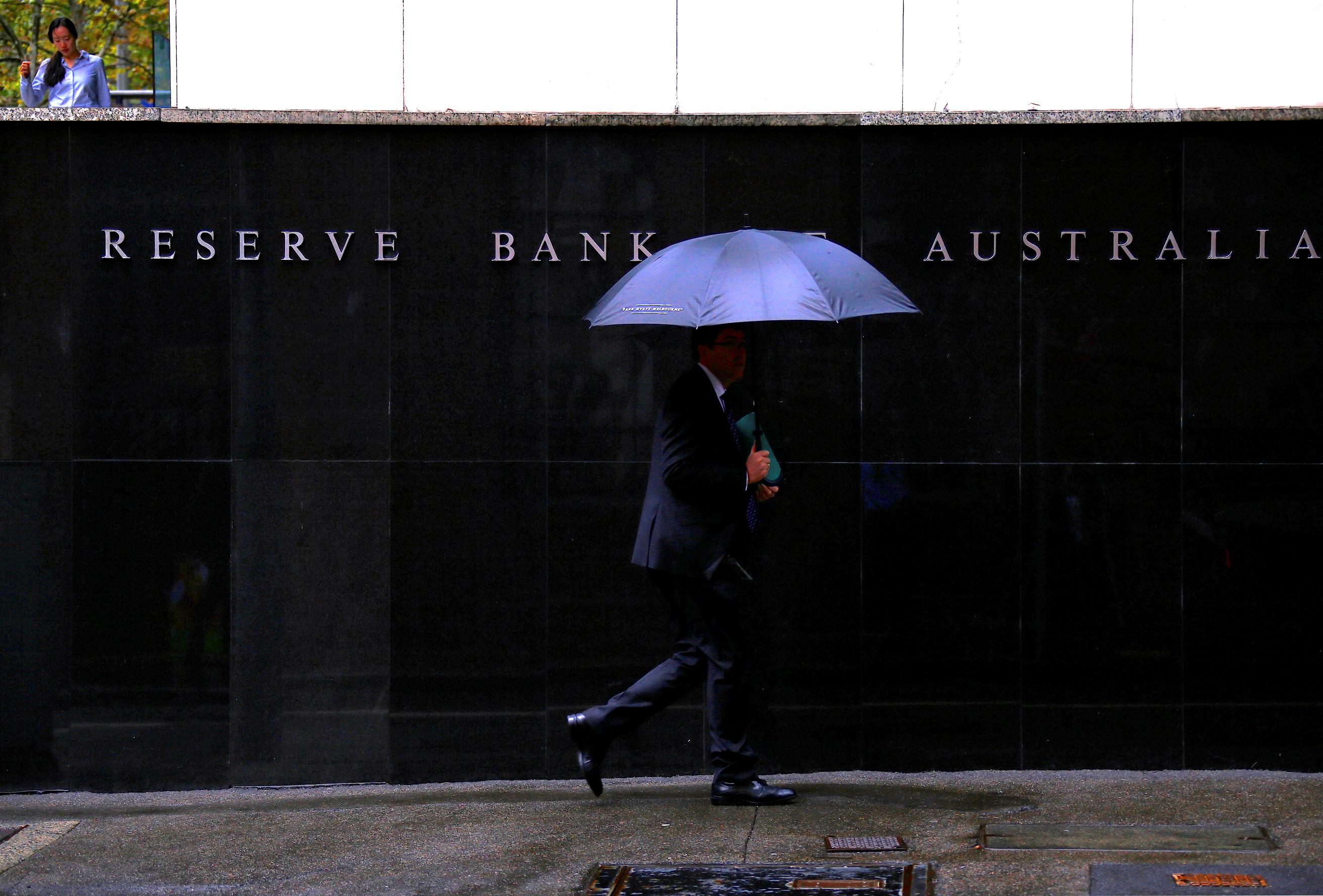
BENGALURU, Nov 1 (Reuters) - Australia's central bank will hold its key interest rate at 4.35% on Tuesday and for the rest of the year, according to a Reuters poll of economists, as strong economic activity and sticky core inflation still warrant a cautious approach. Consumer price inflation fell to 2.8% last quarter, within the Reserve Bank of Australia's 2-3% target for the first time in three years, but core inflation, stripped of volatile components, remained elevated. During its post-COVID tightening cycle, the RBA raised rates by 425 basis points from 0.10% to 4.35%, less than many of its peers despite the risk of prolonged higher inflation. That was partly to promote job creation, part of the central bank's mandate. The jobless rate has held relatively steady between 4.0% and 4.2% since April. With the employment market still strong and a relatively lower peak in interest rates, the RBA is likely to be slower to ease policy than other central banks in developed nations, in line with its peers in Asia. All 30 economists in the Oct. 30-31 poll expected the RBA to hold its official cash rate (AUCBIR=ECI) , opens new tab at 4.35% at the end of its two-day policy meeting on Nov. 5. All but one also expected the central bank to leave rates unchanged at the December meeting. "We are not expecting the RBA to change the official cash rate. Aside from that, what we could see at the margin is a slight softening in their language from hawkish to a bit more balanced," said Craig Vardy, head of fixed income at BlackRock Australasia. "We think the data was pretty much in line with the RBA's thoughts about the path of core inflation. That is, it's still too high for them to think about cutting the cash rate in 2024...early 2025 is probably a bit more realistic." All the major local banks - ANZ, CBA, NAB, and Westpac - forecast no rate change this year. However, all four expected the RBA to cut rates at its first meeting of 2025 in February. Nearly 70% of respondents who had a view into next year, 20 of 29, expected a 25 basis point cut in February to 4.10%. Of the remaining nine, eight predicted no change while one saw a bigger cut to 3.75%. Markets are not pricing in a first cut until April. Median forecasts in the survey showed the RBA cutting rates by 75 basis points next year, to end 2025 at 3.60%, compared with a total of 225 bps of cuts expected from the U.S. Federal Reserve. "(Core) inflation is not going to get into the target band until the middle of the third quarter...So without a recession, (the RBA) are probably not going to be in a hurry to cut rates sharply," said My Bui, economist at AMP, forecasting three rate cuts next year. "Cutting rates is basically bringing it back to a more normal level, which in our view is slightly above 3%." With the Fed easing much more swiftly than the RBA, the Australian dollar will regain all of its year-to-date loss of 3.5% by end-January and then trade around $0.68, according to a separate Reuters poll of foreign exchange strategists. (Other stories from the November Reuters global economic poll) Sign up here. https://www.reuters.com/markets/rates-bonds/rba-hold-cash-rate-this-year-first-cut-seen-february-2024-11-01/
2024-11-01 00:16
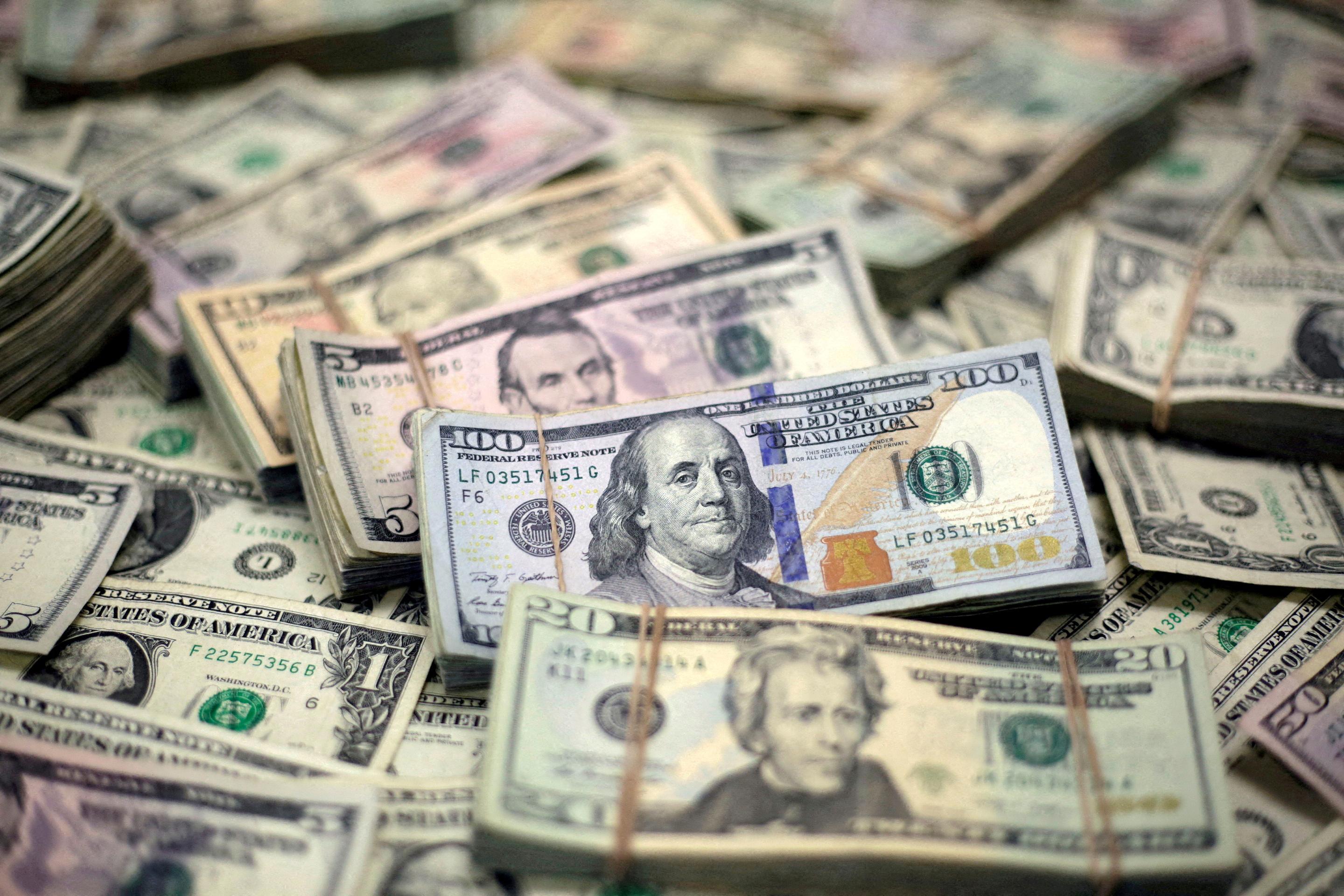
BENGALURU, Nov 1 (Reuters) - The U.S. dollar will hold on to its recent strength over coming months on robust domestic economic data and continued scaling back of bets for Federal Reserve interest rate cuts, a Reuters poll found. Some analysts have attributed the dollar's 4% October (.DXY) , opens new tab rally to speculation about the likely result of the Nov. 5 U.S. presidential election. Others say the move is primarily due to resilient economic activity in the United States, particularly strong consumer spending and labor data. The latest opinion polls show a near-deadlock between Democratic Vice President Kamala Harris and Republican candidate Donald Trump in the final stretch of a tightly-fought presidential contest. Meanwhile, persistent U.S. economic outperformance has pushed financial markets to price in a higher year-end Fed funds rate than thought even a month ago. A separate Reuters survey of economists predicts two more quarter-point reductions this year. Based on interest rate differentials, the dollar's recent momentum seems unlikely to fade quickly anytime soon. Fed peers, such as the European Central Bank, appear more likely to be aggressive in the near-term with rate reductions. "In the U.S., we started getting better economic data, so we started pricing in a more hawkish Fed relative to what we had been and in Europe we started getting weaker data and so we started pricing in a more dovish ECB," said Dan Tobon, head of G10 FX strategy at Citi. "We're basically just looking for the dollar to rally into the election, reverse that slightly and then chop around sideways like it's been doing now." The euro will trade around its current $1.09 level by the end of November before edging up about 1% in three months to $1.10, according to median forecasts from over 70 forex strategists polled by Reuters from Oct. 28-31. Yet, an overwhelming 90% majority of respondents, 28 of 31, to an additional question predicted better dollar performance in the immediate aftermath of a Trump victory. The currency is forecast to gain an additional 1.5% under that scenario and lose 1% if Harris wins, according to median responses. "We're seeing risks to the dollar as asymmetric to the upside in case of a Trump victory and a bit more status quo, slightly maybe to the downside, in a Harris victory," said Alex Cohen, FX strategist at Bank of America. "That's mainly due to trade and tariff policy in a Trump administration that could ... have a disproportionate impact on the dollar, pushing it higher both from expected inflation as well as from a trade perspective." While both Trump and Harris have proposed policies that could reignite price pressures, Trump's policies would be more inflationary of the two, according to 39 of 42 economists in a separate Reuters survey. Yet, the euro was forecast to rise to $1.11 by the end of April and then to $1.12 in a year, poll medians showed. "Our medium-term view of the dollar is it should ultimately trade negative in a soft landing environment. But given how strong U.S. data has been recently, there are definite additional upside risks to that forecast," BofA's Cohen added. Sign up here. https://www.reuters.com/markets/currencies/us-economic-outperformance-keep-dollar-strong-2024-11-01/
2024-11-01 00:09
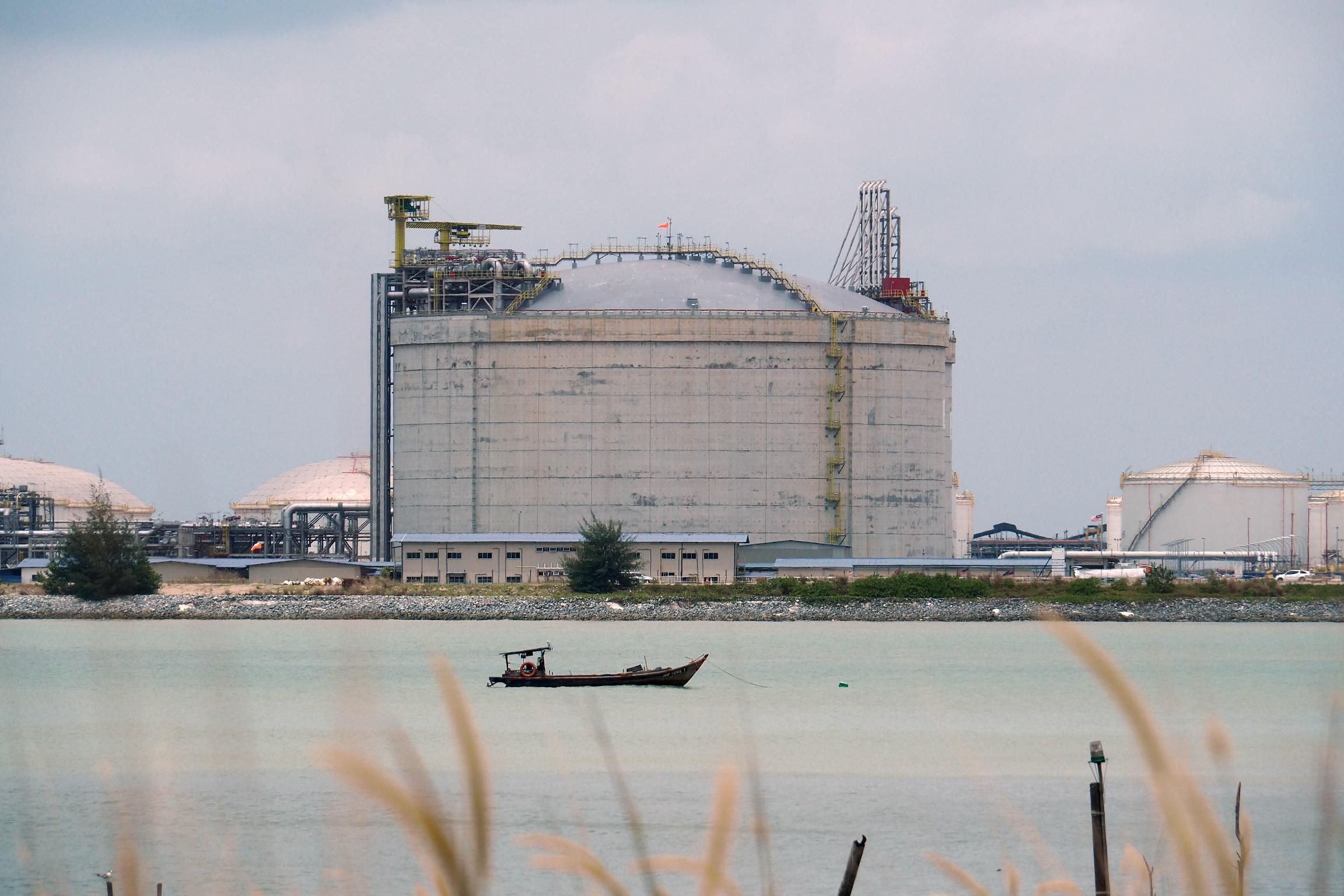
Spent less than $100 mln of the $1 bln pledged to invest by 2030 Projects slowed by lack of government mandates, higher costs Aims to capture bigger share of biofuels market SINGAPORE, Nov 1 (Reuters) - Global tank storage operator Vopak (VOPA.AS) , opens new tab has committed just a fraction of the $1 billion it allocated for energy transition projects by 2030 but expects investments to accelerate towards the end of the decade, CEO Dick Richelle said. The company has spent a little less than $100 million on the projects in the two years since it made the spending pledge, Richelle told Reuters in an interview. "Although developments have slowed down, we still see that it kind of moved away from a big hype and dream to much more realism in building these new supply chains going forward," he said. Some of the factors that have slowed projects include a lack of government mandates and incentives, higher production costs for alternative fuels and rising construction capital expenditure, he added. For example, Norway's Equinor (EQNR.OL) , opens new tab scrapped plans to export hydrogen to Germany because it is too expensive and there is insufficient demand and Repsol (REP.MC) , opens new tab put on hold hydrogen projects in Spain due to an unfavourable regulatory environment. "You need all of those parties at the same time to hold hands and basically jump to make sure that you can establish a whole supply chain," Richelle said. "I think that has been slow simply because of the fact that it's either not clear what incentive you're going to get at production, or it's not clear what the mandate is and where you want to sell your product, or the incentive over there in order to import the product." Looking ahead, Vopak is focusing on infrastructure projects in four areas of energy transition: biofuels and feedstocks such as sustainable aviation fuel and renewable diesel; hydrogen and hydrogen carriers such as ammonia; carbon dioxide (CO2) value and supply chains; and battery storage. Vopak plans to capture a bigger share of the biofuels market by converting existing storage tanks for bio-bunker fuel blending in Rotterdam and Singapore, and in the use of biofuels as raw material for fuel and petrochemical production in India, Brazil and Los Angeles, Richelle said. For ammonia, Vopak is targeting big production centres such as the Middle East and the U.S., and end-markets like Antwerp, Rotterdam, Singapore and South Korea where it operates terminals, he added. The company said in July it had opened an office in Japan to explore opportunities there. Vopak also has a strong presence in China, a competitive producer of green methanol, where it can facilitate the production and distribution of the alternative fuel, Richelle said. In carbon storage, the company is working on a project in Rotterdam and has an initial agreement with Australia's Northern Territory to develop a CO2 import terminal. Vopak is also making early steps in battery storage investments, having announced a project in Texas earlier this year, Richelle said. "We see that there's potentially an important role for Vopak to play as the world moves from the storage of molecules to electrons," he said. Sign up here. https://www.reuters.com/sustainability/vopak-expects-clean-energy-investments-accelerate-towards-2030-ceo-says-2024-11-01/