2024-10-31 10:33
A look at the day ahead in U.S. and global markets from Mike Dolan Cloudy outlooks from U.S. megacaps Microsoft and Meta combined with edgy government bond markets around the world to unsettle investors on Thursday, with the latest U.S. opinion polls showing next week's presidential election is no foregone conclusion. The week's deluge of events and data releases continued apace overnight - shaded earnings beats from the latest two of the 'Magnificent Seven' firms, a Bank of Japan policy rate hold and a crumb of comfort for Chinese manufacturing. Europe, meantime, continued to digest above-forecast GDP and inflation updates from Wednesday, with Britain's tax and debt raising budget keeping UK government bonds on edge. UK 10-year gilt yields hit their highest in a year on Thursday, while euro zone equivalents touched their highest since July as markets scaled back hopes for a 50 basis point cut in European Central Bank interest rates in December. U.S. Treasuries outperformed by comparison, juggling a slight headline miss on third-quarter GDP that was offset by robust consumer spending details and big jumps in private sector payrolls and home sales. Those data teed up tomorrow's employment report. Before then, Thursday also sees the release of the Federal Reserve's favored inflation gauge from personal consumption expenditures data (PCE). But U.S. stock futures have been dragged into the red by renewed anxiety over whether the massive spend on artificial intelligence by tech giants will deliver profitable results going forward, with Microsoft (MSFT.O) , opens new tab and Meta (META.O) , opens new tab both down 4% ahead of today's bell on their overnight results. A 10% earnings-related drop in Advanced Micro Devices (AMD.O) , opens new tab on Wednesday and 32% plunge in the shares of Super Micro Computer (SMCI.O) , opens new tab, after Ernst & Young resigned as the company's accountant, both jarred the AI theme more broadly. With Apple (AAPL.O) , opens new tab and Amazon (AMZN.O) , opens new tab reporting after the bell later today, S&P500 and Nasdaq futures were both down about 1% before the open. But as Halloween hits, next week's election sucks most of the oxygen out macro market speculation at this stage. While financial markets have been leaning to a win for Republican Donald Trump in recent weeks, and even a possible clean sweep for the party in Congress, opinion polls continue to show the contest is too close to call and caution against premature bets. With national polls neck and neck still, a new CNN poll on Wednesday showed Democrat Kamala Harris has a marginal edge over Trump in swing states Michigan and Wisconsin - with the two tied in Pennsylvania less than a week before the votes. The poll showed Harris leading Trump by 48% to 43% among likely voters in Michigan and by 51% to 45% in Wisconsin. With Treasuries nervy of what Trump's tax cutting plans would do to an already bloated government deficit, the poll news appeared to contain recent yield rises - which have also seen the 'term premium' on holding long-term debt over short-dated paper hit its highest in almost a year at 23.5 bps. Other so-called "Trump trades" also recoiled somewhat - shares in Trump Media & Technology (DJT.O) , opens new tab, Bitcoin and even gold slipped back while Mexico's peso nudged up from Thursday's two-year trough. The dollar (.DXY) , opens new tab was on the back foot after the previous day's euro gains on the region's GDP release. The yen strengthened, meantime, as the Bank of Japan left policy unchanged amid the domestic political hiatus and the Nikkei (.N225) , opens new tab ended lower. The BOJ maintained ultra-low interest rates but said risks surrounding the U.S. economy were somewhat subsiding, signalling that conditions are falling into place to raise interest rates again. Chinese stocks (.CSI300) , opens new tab ended slightly higher on Thursday, led by property shares, as the country's manufacturing activities returned to growth in October and traders awaited a key leadership meeting for details on more potential stimulus. Hong Kong (.HIS) , opens new tab shares closed down. Euro zone (.STOXXE) , opens new tab and British (.FTSE) , opens new tab shares were lower. Key developments that should provide more direction to U.S. markets later on Thursday: * US September PCE inflation gauge, weekly jobless claims, Q3 wages and benefits, October Chicago business surveys * US corporate earnings: Apple, Amazon, Intel, Uber, Comcast, Amcor, Eastman Chemical, Conocophillips, Merck, Bristol-Myers Squibb, Regeneron, Cigna, Estee Lauder, Mastercard, Intercontinental Exchange, Southern, Ingersoll Rand, Borgwarner, International Paper, Coterra, Juniper Networks, Entergy, Xcel Energy, Kellanova, Huntington Ingalls, Wills Towers Watson, WW Grainger, Eaton, Altria, Linde, IDEXX, CMS Energy etc * Bank of England Deputy Governor Sarah Breeden speaks; Dutch central bank governor Klaas Knot and Bank of Spain governor Jose Luis Escriva both speak Sign up here. https://www.reuters.com/markets/us/global-markets-view-usa-2024-10-31/
2024-10-31 10:24
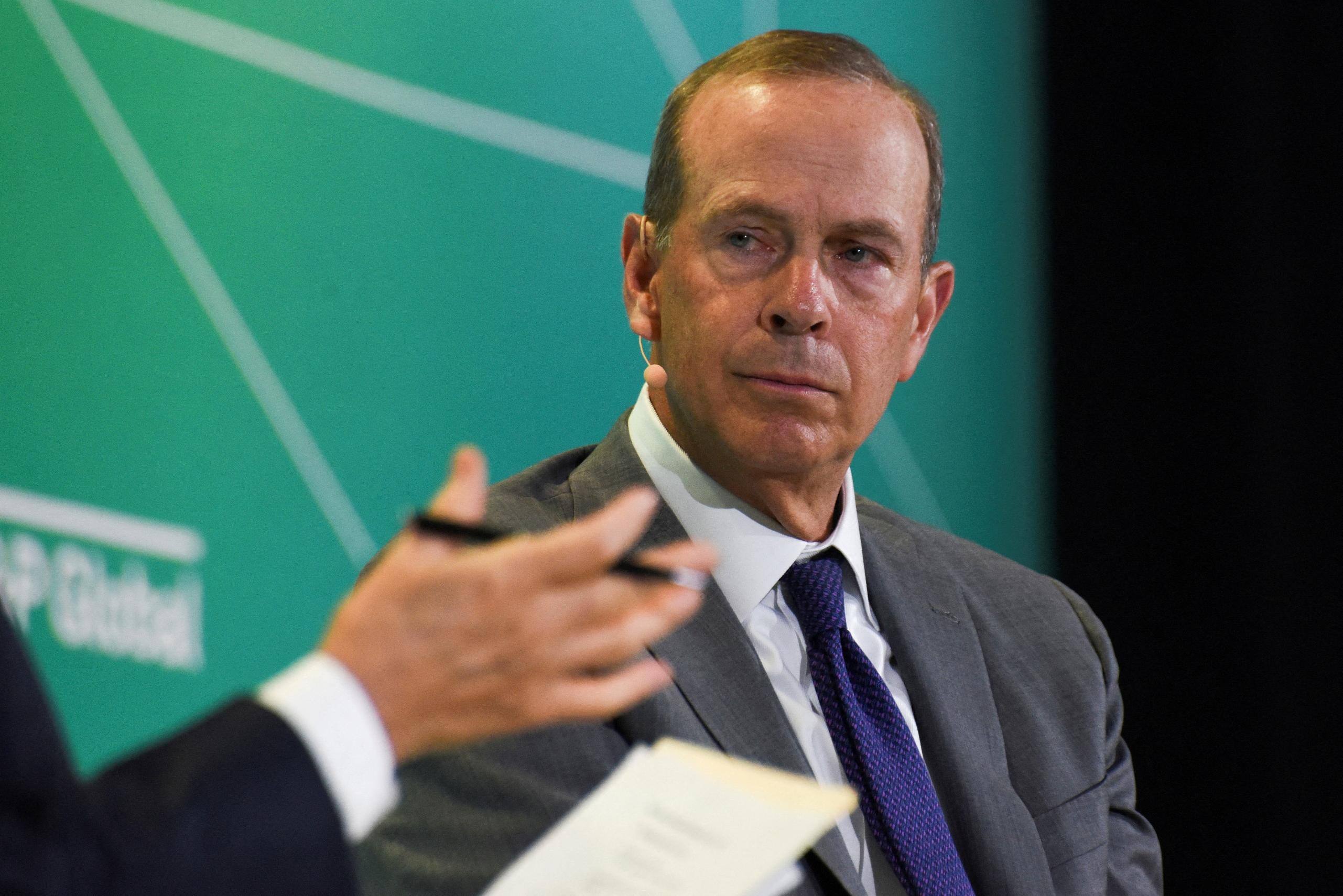
Chevron earnings fail to cover dividends, buybacks Delayed Hess deal a drag on the company's share price Guyana volumes crucial for long-term oil output gains HOUSTON, Oct 31 (Reuters) - Five years ago, Chevron CEO Michael Wirth won Wall Street acclaim as the No. 2 U.S. oil company briefly achieved a market value larger than Exxon Mobil's after he refused to get into a bidding war with Occidental Petroleum over a rival. He was ahead of the game when the pandemic hit oil and gas demand, forcing rivals to make deep cutbacks that Wirth had already tackled at Chevron. Its shares had outperformed rivals for five years until 2022. Fast forward to 2024 and Wirth's legacy is in danger. Chevron’s falling earnings no longer cover its dividends and buybacks. Project overruns in Kazakhstan and Australia have cost the company billions. The CEO is also locked in a must-win arbitration battle with Exxon Mobil (XOM.N) , opens new tab that has held up his $53 billion purchase of Hess (HES.N) , opens new tab, a deal that would give Chevron a stake in a lucrative Guyana oilfield that Exxon operates. Exxon's challenge has delayed the deal by almost two years, and threatens to kill it entirely by asserting a right of first refusal over a sale of the Guyana properties. Chevron shares are up 18% since Wirth took over as CEO in 2018, compared to Exxon's 31% gain over the same period. Wirth's job is not at risk, say Chevron executives and industry sources. The board granted him a retirement-age waiver more than a year ago as he began a sweeping overhaul of top managers. But "If you have $1 to invest in an oil company now, how would you justify investing it in Chevron?," said Mark Kelly, an analyst with the financial firm MKP Advisors in London. "The Hess deal delay has left Chevron with no clear (business) growth story to tell." Jake Spiering, Chevron's head of investor relations, said the company's share performance this year has been hurt by the arbitration case that has encouraged arbitrage traders to short Chevron. "The Chevron story is coming. This growth, and earnings, and cash inflection is coming," Spiering said. Chevron is poised to deliver the highest production growth rate in the industry over the next 12 months by expanding existing projects, he said. The board is pressing for a faster turnaround of earnings, according to people familiar with the board's thinking who requested anonymity as board discussions are private. Profits have declined for the past five quarters on a year-over-year basis as oil prices retreated from 2022 highs. NEW TEAM Wirth has ushered in a new team with the resignations or retirements of his former finance chief, head of oil products and gas, human resources chief and midstream and trading bosses in a bid to shake things up. "There is a lot of pressure on Mike because of Hess," said one of the people close to the company's board. "It's a make or break for Mike," the person said. Wirth has shown a knack for multi-billion-dollar acquisitions, picking up Noble Energy and PDC Energy in deals near the market bottom or that closed quickly. "We aspire to be high performance, and you should expect the board to expect that," Spiering said earlier this month in response to questions about the company's performance. Wirth was not available to comment and Chevron declined to make board members available for comment. BIGGEST SHADOW The biggest shadow over the company remains its dispute with Hess partners' Exxon and CNOOC Ltd over their Guyana offshore holdings, which contain the world's largest oil discovery in almost two decades. The deal originally was to close in the first half of this year, but a decision in the arbitration case may not be issued until the third quarter of next year. The delay is crucial to Chevron because the deal closing would give the company a 30% stake in Guyana's surging oil output, which last year delivered Hess a $1.88 billion net profit. The stake would provide Chevron with long-lived oil production from a country with fewer geopolitical risks than its Venezuela or Kazakhstan operations, the latter of which accounts for nearly 20% of Chevron's easily tapped oil reserves. The Kazakh Tengizchevroil oil project, in which Exxon holds a 25% stake, is nearly three years behind an initial mid-2022 startup and has exceeded its original $37 billion budget by over $10 billion. "If the (operational) issues continue or if the deal were to eventually fall apart, we could see further underperformance," said Biraj Borkhataria, an analyst at RBC Capital. VENEZUELA LICENSE? Guyana, located on South America's Atlantic coast, could help improve the quality of the company's portfolio in Latin America, where it keeps a limited presence in Brazil, Argentina and smaller countries. The region excluding Venezuela has provided less than 2% of its global output for the past decade. U.S. lawmakers and Venezuelan opposition leaders and activists have called for tighter restrictions on the company's dealings in Venezuela. Tax and royalties paid to the repressive Nicolas Maduro administration have propped up the government, they say. The July presidential election claimed by Maduro has been condemned as fraudulent by the U.S. and regional Organization of American States. If Chevron's license to operate in Venezuela were terminated or amended, which analysts say could happen if former President Donald Trump returns to office and restores his campaign against Maduro, the company could lose its right to export about 220,000 barrels per day of oil. Chevron continues to make the case to U.S. authorities that it has been a force for good in Venezuela and has received continued six-month authorizations to remain there. The No. 2 U.S. oil company is expected to post third quarter earnings on Friday of $4.26 billion, according to estimates compiled by financial firm LSEG, down 35% from the $6.53 billion a year ago on weaker oil prices and refining margins. “Mike Wirth is in a pickle,” said Frederic Boucher, risk arbitrage analyst at Susquehanna Financial Group, a market maker for Chevron and Hess stocks. "If you spend two years working on a deal, assuring investors you are right, only to be proven wrong, should you still be trusted with investors’ money?" Sign up here. https://www.reuters.com/business/energy/chevron-ceo-under-pressure-halt-share-slide-hess-deal-stalls-2024-10-31/
2024-10-31 10:07
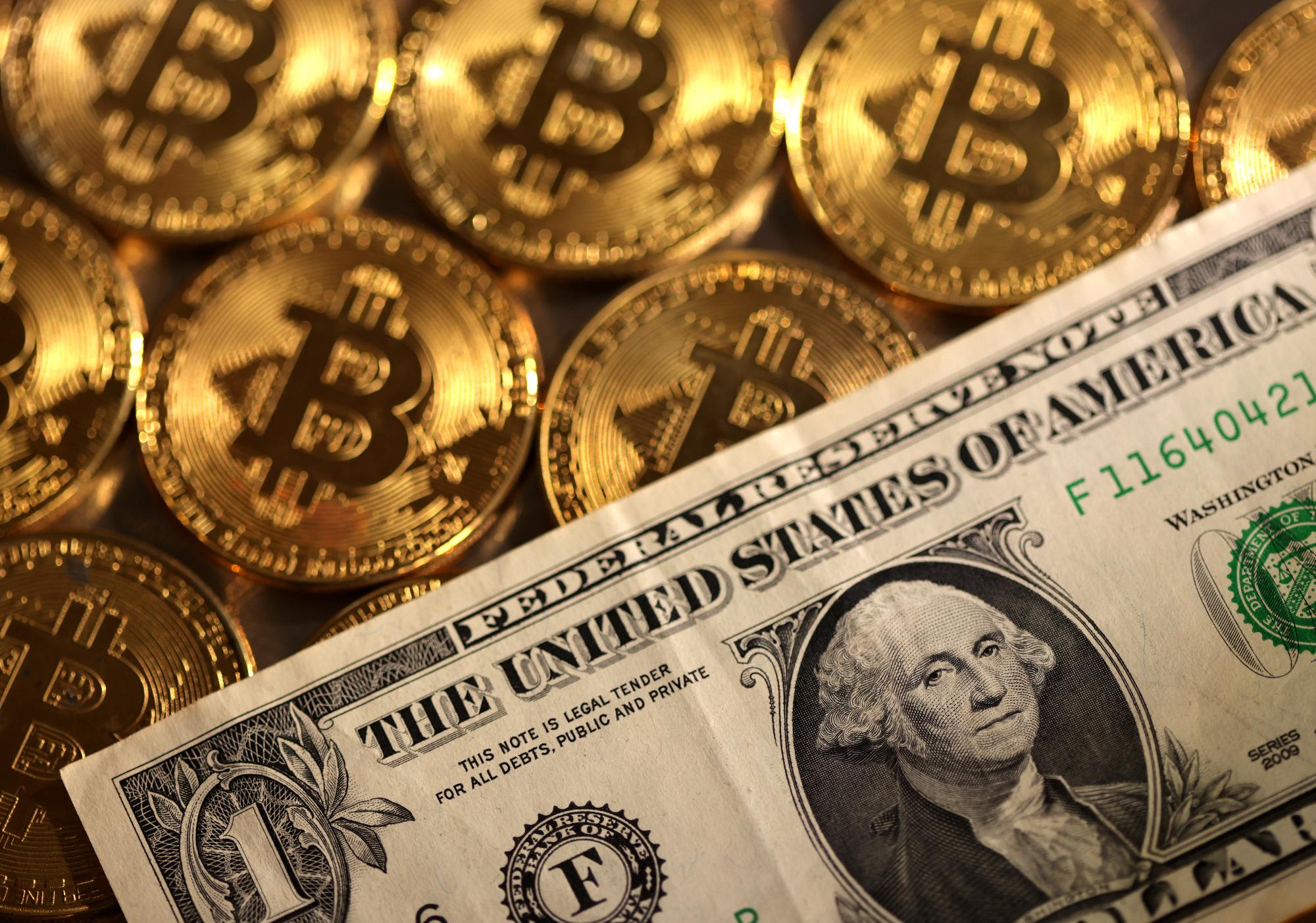
Bitwise and Canary Capital have filed for new products Trump promises to be a 'crypto president' Mark Cuban touts Harris pledge to protect crypto users Industry has spent $119 million on congressional races Oct 31 (Reuters) - The cryptocurrency industry has spent years clashing with Democratic President Joe Biden's administration over regulatory issues, but executives expect an easier ride from Washington, regardless of who wins the White House next week. Crypto asset managers including Bitwise and Canary Capital are planning new products ahead of what many executives expect to be a more crypto-friendly administration, while others including Ripple are planning a fresh push for crypto legislation in the new Congress, said executives and lawyers. "Regardless who wins, there will be a new approach to how we move forward with crypto," said Rebecca Rettig, chief legal and policy officer at crypto company Polygon Labs. Republican candidate Donald Trump has pledged to be a "crypto president," and executives also expect Vice President Kamala Harris, the Democratic candidate, to take a softer stance than Biden. Harris has not yet detailed her crypto plans, but executives have been encouraged by her promise to promote digital asset innovation and protect crypto investors. Harris surrogate and billionaire entrepreneur Mark Cuban, a crypto enthusiast, has also criticized a crypto crackdown under Securities and Exchange Commission Chair Gary Gensler, a Biden appointee. "Absolutely it will be friendlier under a Harris admin," Cuban wrote in an email to Reuters, adding her promise to protect crypto users was "important." Gensler has insisted that the crypto industry is a risk to investors, pointing to the collapse of FTX and multiple other bankruptcies and scams that triggered calls for tighter regulation. Since bitcoin debuted in 2009, the crypto market has been extremely volatile. Gensler's SEC has brought dozens of enforcement actions against Coinbase, Kraken and others, accusing them of flouting U.S. securities laws meant to inform investors about potential risks. The crypto players have denied the SEC's allegations. They say cryptocurrencies, which have a global market value of around $2.5 trillion, should be regulated like commodities. Gensler, whose term ends in 2026, has not said his crypto views have changed. While Trump has said he will fire Gensler, Harris has not suggested she would seek to replace him. An SEC spokesperson declined to comment. Trump's plan to promote bitcoin has won him several big crypto donors, including Gemini founders Cameron and Tyler Winklevoss. At least one industry boss, Ripple chairman Chris Larsen, cut Harris' super PAC a big check and new Democratic-aligned crypto groups have raised funds for her. Ripple, Coinbase and others have spent more than $119 million backing pro-crypto congressional candidates, according to data from Public Citizen. Among those firms' goals is advancing legislation that would propel stablecoins, crypto tokens pegged to the U.S. dollar, into the mainstream. "For the crypto industry, this election isn't about choosing one party over another - this is about supporting candidates who recognize that the U.S. needs to support innovation," Lauren Belive, Ripple's head of U.S. policy, said in a statement. Coinbase, which announced an additional $25 million donation to a pro-crypto PAC on Wednesday, did not respond to a request for comment. Influential progressive lawmakers have also pressured Gensler to be tough on crypto, but some Democrats flagged concerns to the Democratic National Committee in July that some voters were alienated by that approach, Reuters previously reported. CRYPTO THAW? Crypto executives believe the SEC under Harris will review or even rescind guidance requiring public companies to account for crypto assets held on behalf of others as liabilities due to their riskiness. That "SAB 121" guidance is a top crypto industry bugbear. Because strict capital rules require banks to hold cash against liabilities, it has kept many lenders on the crypto sidelines. Cryptocurrencies would become more popular if consumers could store them with trusted lenders, executives say. Congress voted on a bipartisan basis in May to overturn SAB 121 but Biden vetoed the resolution. "With recent bipartisan support... I'd expect that regardless of who becomes the next president, SAB 121 is overturned," said David Mercer, CEO of LMAX Group, which operates a crypto exchange. “That should be an accelerant for the whole crypto market." In August, State Street (STT.N) , opens new tab announced plans to offer crypto custody, expecting the SEC to eventually revise that guidance, Reuters reported. Some executives already see a thaw. Last month, the SEC's chief accountant said SAB 121 did not apply to some companies, provided they met certain conditions. Shortly after, the agency granted a "no objection" allowing BNY (BK.N) , opens new tab to custody cryptocurrencies held by exchange-traded products without having to account for them as liabilities. Speaking to Bloomberg, Gensler said other banks could replicate the model. "There's clearly a recognition by both presidential candidates that digital assets can play a positive economic role," said Sui Chung, CEO of Kraken subsidiary CF Benchmarks, who pointed to the BNY approval as a sign the political climate was shifting. After losing a court challenge, the SEC this year approved bitcoin and ether ETFs. Bitwise and Canary Capital this month filed SEC applications to launch similar products that would track Ripple's XRP crypto token. "We do think that, whoever wins on Tuesday, crypto markets will be looking at a more favorable regulatory environment in a new administration in the new year," a spokesperson for Bitwise said. Given the SEC has until mid-2025 to decide on those applications, they are likely a bet on a friendlier SEC, executives said. "These filings are effectively a down payment on that change in political environment," said Chung. "Canary continues to see encouraging signs of a more progressive regulatory environment," a spokesperson said in a statement, adding that was spurring investor demand for access to cryptocurrencies beyond bitcoin and ether. Sign up here. https://www.reuters.com/world/us/us-crypto-industry-expects-friendlier-washington-whoever-wins-white-house-2024-10-31/
2024-10-31 08:05
MUMBAI, Oct 31 (Reuters) - The Indian rupee ended near an all-time low against the dollar on Thursday amid outflows from equities and anxiety over the outcome of the U.S. election, but the central bank's intervention kept the local currency in a narrow range through October. The rupee closed at 84.0750 against the U.S. dollar, nearly unchanged from its close of 84.0775 on Wednesday. Indian currency market will remain closed on Friday for a public holiday. The currency briefly hit a record low of 84.0950 in Friday's session. In October, the rupee fell 0.3% and moved in a range of 83.79 to 84.0950. The Reserve Bank of India's relentless intervention has limited the rupee's fall and helped it outperform against major Asian peers ahead of the U.S. presidential election on Nov. 5. The RBI sold dollars on almost all days in the last two weeks to ensure a measured depreciation of the rupee. A win for Republican candidate Donald Trump could spark a rally in the dollar index , lift U.S. Treasury yields and undermine Asian currencies. The RBI is well-equipped to deal with a potential sudden outflow of foreign funds and any steep fall in the rupee if Trump wins the U.S. presidential election, Reuters reported. The central bank's defence of the rupee could, however, leave importers and exporters complacent to rising risks in the global markets, analysts said. The RBI's actions "could lead to complacency and major debacle in the event of any global turmoil or a black swan event," said Jayram Krishnamurthy, co-founder of Almus Risk Consulting. The rupee was also pressured by relentless foreign outflows from Indian equities this month amid relatively expensive valuations and China's stimulus plans. Foreign investors have taken out nearly $11 billion on a net basis from Indian equities in October, a sharp U-turn from the $7 billion inflows in September. Sign up here. https://www.reuters.com/markets/currencies/rupee-drops-all-time-low-equity-outflows-us-election-worries-2024-10-31/

2024-10-31 07:50
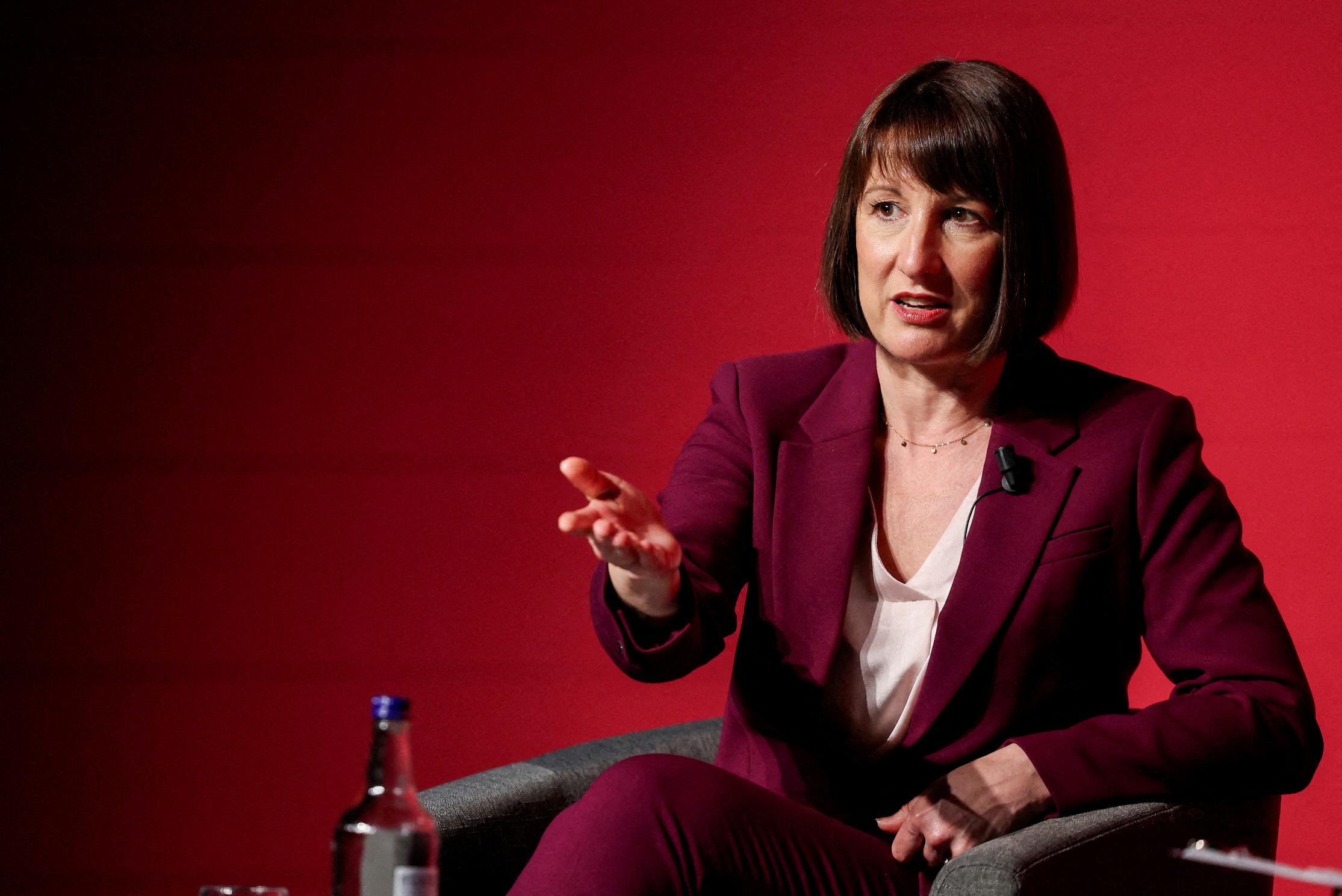
Slow growth forecasts "not summit of my ambition" - Reeves Further measures to speed up the economy planned Tax hikes on businesses will have consequences - Reeves Reeves says she won't be raising taxes in spring budget LONDON, Oct 31 (Reuters) - Britain's finance minister Rachel Reeves faced criticism on Thursday after her first budget came in big on spending, tax increases and borrowing but small on economic growth, which was one of the big election promises of the Labour Party. The unveiling of the new government's economic programme by Reeves on Wednesday was accompanied by only tepid projections for growth and a grim outlook for living standards. Employers have warned they will struggle to cope with the increase in social security contributions that form the lion's share of the extra 40 billion pounds that Reeves plans to raise in tax, the biggest increase in a budget since 1993. "The increased business costs alongside the raft of changes planned to employment regulation, are bound to act as a headwind to growth," Ben Willmott, public policy head at the Chartered Institute of Personnel and Development, said. The National Institute for Economics and Social Research, a think tank, said proposed exemptions for smaller firms would do little to ease the impact. "We expect significant negative impacts on employment and wage growth, especially in low-paid sectors such as hospitality," it said. Reeves said the weak economic growth forecasts by the Office of Budget Responsibility "are not the summit of my ambition" and "there are more plans that we're bringing forward to lift that growth rate." The OBR, whose projections underpin government budgets, said the economy was set to expand by 2.0% in 2025, up only slightly from a forecast of 1.9% made in March, at the time of the previous Conservative government's last budget, and it trimmed its growth forecasts further out. Reeves acknowledged there would be a hit from her increase in the rate of social security contributions. "It will mean that businesses will have to absorb some of this through profits, and it is likely to mean that wage increases might be slightly less than they otherwise would have been," she said. Referring to the scale of the budget, Reeves said she did not expect to have to do "anything like that ever again". 'STAGNATION NATION' She also changed the government's fiscal rules to allow her to increase borrowing for long-term investment which she hopes will speed up the economy. The International Monetary Fund gave its blessing to the plan for addressing urgent pressures on public services as well as supporting longer-term growth. However, the OBR thinks it will be the 2030s before the higher public investment delivers its main boost to the economy, meaning Reeves and Prime Minister Keir Starmer could struggle to impress voters before the next election expected in 2029. The Resolution Foundation, a think tank, said the new budget plan marked a decisive shift away from planned cuts planned by the previous Conservative government. "But the budget has not yet delivered a decisive shift away from Britain's record as a 'stagnation nation'," it said. Growth in living standards over the next five years was likely to be only a bit stronger than during the last parliament which was the worst on record, James Smith, research director at the Resolution Foundation, said. Reeves also faced questions about her ability to meet her new rules for the public finances, even after she relaxed the way government debt is measured to allow for more investment. The non-partisan Institute for Fiscal Studies accused her of resorting to some of the "same silly manoeuvres" as the previous government to get the books to balance in future years. The OBR estimates that Reeves has only 10 billion pounds ($13 billion) of headroom against a goal to balance day-to-day spending against tax revenue in five years' time. A second goal to reduce public sector net financial liabilities as a share of gross domestic product only had 16 billion pounds of headroom. "There is almost no wiggle room against the two new fiscal targets," IFS Director Paul Johnson said. OBR chair Richard Hughes said Britain's annual debt interest bill was set to be stuck above 100 billion pounds a year across the watchdog's five-year forecast period for the first time, and could go higher, posing a risk to the debt reduction plan. Sign up here. https://www.reuters.com/world/uk/uks-reeves-says-she-has-more-plans-boost-slow-growth-2024-10-31/
2024-10-31 07:48
Shell extends $3.5 bln share buybacks Strong LNG sales offset drop in refining Debt drops to lowest since 2015 LONDON, Oct 31 (Reuters) - Shell (SHEL.L) , opens new tab reported on Thursday third-quarter profits of $6 billion that exceeded forecasts by 12% as higher liquefied natural gas (LNG) sales offset a sharp drop in oil refining and trading results. The results, together with a drop in debt and strong cash flow, could lift investor confidence in CEO Wael Sawan's efforts to boost the company's performance by the end of 2025 as he focuses on the most profitable businesses, primarily in oil, gas and biofuels. Shell shares were up 1.1% in early London trading. Global refining margins have dropped sharply in recent months in the face of weaker economic activity and the start-up of several new refineries in Asia and Africa, while oil prices fell 17% in the quarter. Shell, which operates five refineries, saw a near 70% annual drop in profits for its refining and chemicals division. But that was offset by a 13% rise in profits from its LNG division, the British company's largest business. "The consistency in performance is impressive," Barclays analysts said in a note. French rival TotalEnergies (TTEF.PA) , opens new tab reported on Thursday third quarter profits at a three-year low of $4.1 billion, hit by collapsing refining margins and upstream outages, missing market forecasts. And BP (BP.L) , opens new tab on Tuesday reported a 30% drop in profits to $2.3 billion, the lowest in almost four years. RESILIENCE Shell's adjusted earnings of $6.03 billion, its definition of net profit, far exceeded analysts' expectations of a $5.36 billion profit but were down 3% from a year earlier. The company said it would buy back a further $3.5 billion of its shares over the next three months, at a similar rate to the previous quarter. Its dividend was unchanged at 34 cents per share. "We've delivered another strong set of results, showing resilience through the cycle and continuing to make significant progress in strengthening our balance sheet," Chief Financial Officer Sinead Gorman told reporters. Shell, the world's top LNG trader, reported sales of the super-chilled fuel of 17 million metric tons versus 16 million a year earlier. Earnings for the oil and gas production division rose 9% from a year earlier, with production increasing 3% as new fields came on stream. In another positive sign, Shell's net debt dropped to its lowest since 2015 at $35 billion, while its debt-to-market capitalization ratio declined to 15.7% from 17.3% a year earlier. Cashflow from operations rose to $14.7 billion in the quarter from $13.5 billion in the previous three months due to a $2.7 billion capital build. Shell said it expected capital spending to be below its guided range of $22-$24 billion for 2024. The company aims to cut costs by $2-3 billion between 2023 and the end of 2025. In recent months it scaled back renewables and hydrogen operations, retreated from European and Chinese power markets and sold refineries. It also cut its oil and gas exploration workforce by 20%, sources told Reuters in August. Sign up here. https://www.reuters.com/business/energy/shell-q3-profits-6-bln-beat-forecast-gas-offsets-weak-refining-2024-10-31/