2024-10-31 06:47
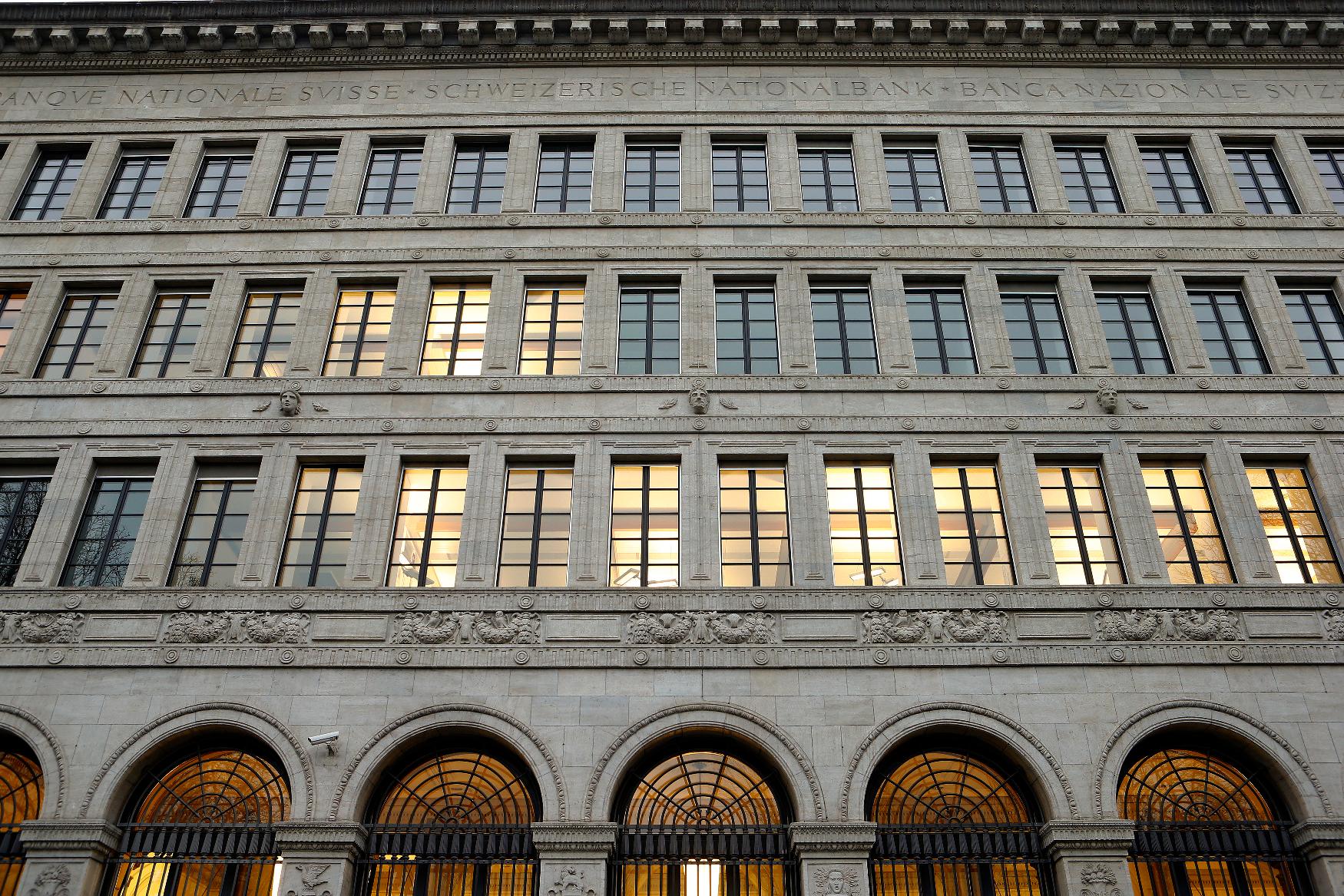
ZURICH, Oct 31 (Reuters) - The Swiss National Bank (SNBN.S) , opens new tab posted a profit of 5.67 billion Swiss francs ($6.55 billion) during the third quarter, it said on Thursday, helped by a big rise in the value of gold. The SNB made a profit of 4.41 billion francs from its gold holdings, as concerns about the global political situation raised the value of its 1,040 tonnes. Bullion, considered a hedge against political and economic uncertainty, has climbed more than 31% this year, shattering multiple record peaks as the U.S. Federal Reserve's interest rate cut last month combined with safe-haven demand set up a perfect storm for the precious metal. Uncertainties about the upcoming U.S. presidential election and rising debt in the United States have driven gold demand this year. The SNB also made a big profit from the more than 700 billion francs it holds in foreign currency holdings. During the third quarter the SNB posted a profit of 3.08 billion francs from its foreign currency holdings, helped by buoyant stock markets that increased the value of its shares in companies like Apple (AAPL.O) , opens new tab and AI chip maker Nvidia (NVDA.O) , opens new tab. The third-quarter profit contrasted with a 12 billion Swiss franc loss a year earlier. As a result, the SNB's nine-month profit rose to 62.5 billion francs, up from 1.69 billion francs in the first nine months of 2023. ($1 = 0.8652 Swiss francs) Sign up here. https://www.reuters.com/business/finance/swiss-national-bank-posts-profit-655-bln-third-quarter-2024-10-31/
2024-10-31 06:45
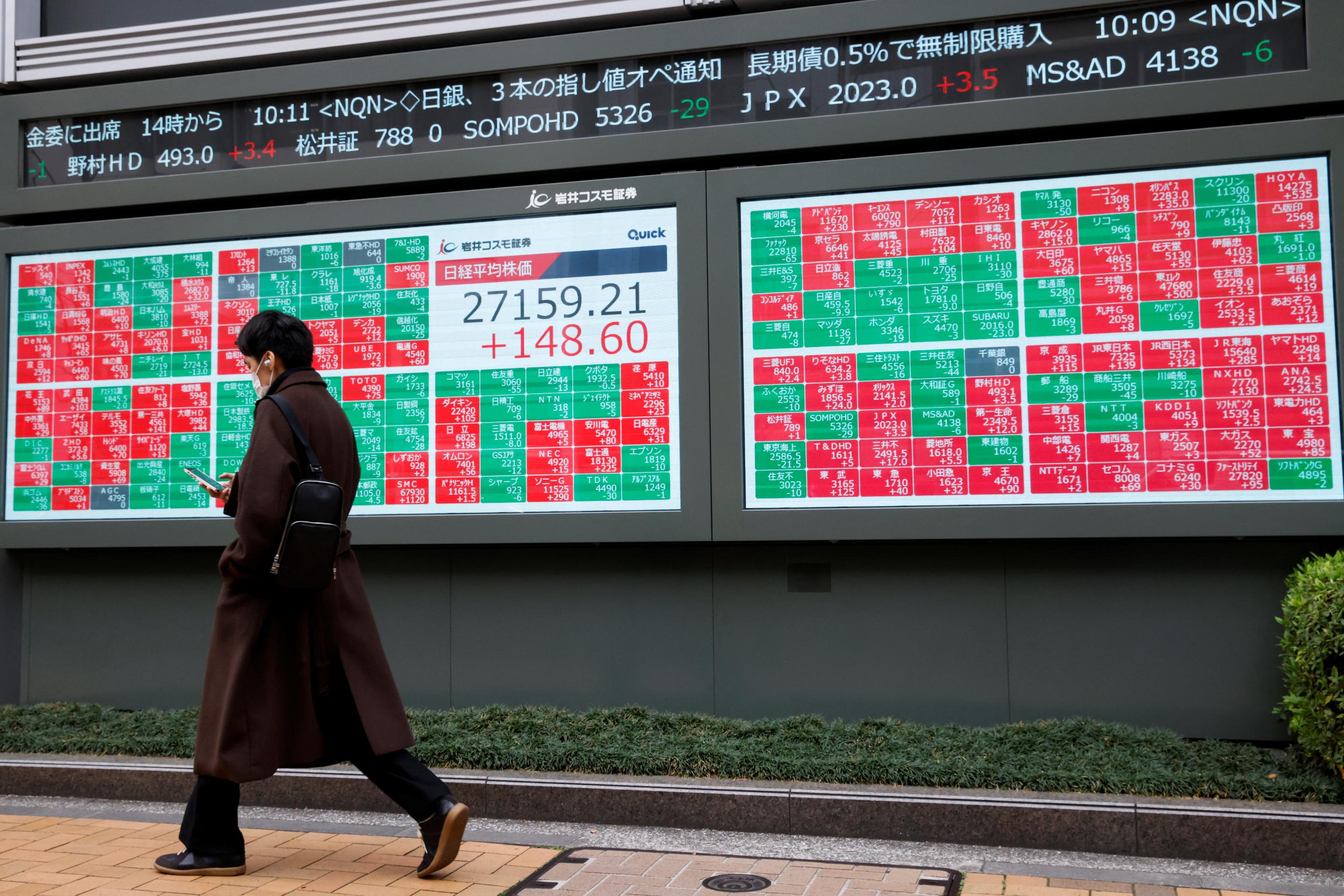
US stocks end down sharply Meta Platforms, Microsoft fall after earnings Amazon shares rise on earnings after the bell NEW YORK, Oct 31 (Reuters) - World stock indexes dropped on Thursday, with the Nasdaq ending more than 2% lower after Meta Platforms and Microsoft warned of rising costs for artificial intelligence, while the dollar weakened slightly after U.S. data did little to suggest a change to Federal Reserve policy. The earnings reports added to concerns among investors that the pay-off for heavy spending on AI may take longer than many had hoped. Shares of Facebook owner Meta (META.O) , opens new tab were down 4.1% while Microsoft (MSFT.O) , opens new tab was 6% lower, with both weighing on the Nasdaq and S&P 500. "Much of the adjustment in the market is the forward expectations," said Howard Chan, chief executive officer of Kurv Investment Management in San Francisco. But "there are a lot of reasons to think that good earnings will continue," he said. "We still hold the thesis that infrastructure around AI will still do well." After the closing bell, shares of Amazon.com (AMZN.O) , opens new tab were up 4.5% after it posted third-quarter profit and sales that beat Wall Street estimates, while Apple (AAPL.O) , opens new tab shares eased 2% following its outlook. Amazon ended the regular session down 3.3% while Apple ended down 1.8%. Early on Thursday, data showed U.S. consumer spending increased slightly more than expected in September, putting the economy on a higher growth trajectory heading into the final three months of the year. Another U.S. report showed the employment cost index (ECI), the broadest measure of labor costs, rose 0.8% in the third quarter. That was the smallest gain since the second quarter of 2021 and followed an unrevised 0.9% increase in the second quarter. The dollar also came under pressure against the yen after the Bank of Japan took a less dovish tone than expected, while the euro was stronger after data showed the bloc's inflation accelerated more than expected in October, bolstering the case for caution in European Central Bank interest rate cuts. The dollar index , which measures the greenback against a basket of currencies, fell 0.2% to 103.88, with the euro last 0.04% higher against the dollar at $1.0859. Against the Japanese yen , the dollar was down 0.8% at 152.18 yen. Traders see a 25 basis point cut at the Fed's Nov. 6-7 meeting as near certain, but only a 70% chance of a 25 basis point reduction at both its November and December meetings, according to the CME Group's FedWatch Tool. Friday's U.S. jobs report for October will be closely watched, as well as the U.S. presidential election on Tuesday. Opinion polls still are putting Republican Donald Trump and Democratic Vice President Kamala Harris neck and neck. The Dow Jones Industrial Average (.DJI) , opens new tab fell 378.08 points, or 0.90%, to 41,763.46, the S&P 500 (.SPX) , opens new tab fell 108.22 points, or 1.86%, to 5,705.45 and the Nasdaq Composite (.IXIC) , opens new tab fell 512.78 points, or 2.76%, to 18,095.15. For the month, the S&P 500 fell 0.99%, the Nasdaq declined 0.52%, and the Dow fell 1.34%. Both the Dow and S&P snapped a five-month streak of gains. MSCI's gauge of stocks across the globe (.MIWD00000PUS) , opens new tab fell 12.64 points, or 1.50%, to 832.30. The index was down 2.3% for the month of October, also breaking a five-month streak of increases. The STOXX 600 (.STOXX) , opens new tab index ended 1.2% lower. U.S. Treasury yields rose after the U.S. economic data. Benchmark 10-year yields were last up 1.8 basis points at 4.282%. They reached a nearly four-month high of 4.339% on Tuesday. In cryptocurrencies, bitcoin , the world's largest cryptocurrency by market cap, was 3.2% lower at $70,458, about 4% shy of its record high from March. Gold retreated after hitting a record high, while safe-haven demand helped the precious metal log its fourth straight monthly gain. Spot gold was down 1.6% at $2,740.45 per ounce, after hitting a record high of $2,790.15 earlier in the session. Prices have firmed around 4% for the month. Oil prices extended gains after settlement, rising on a report that Iran is preparing to attack Israel from Iraqi territory in the coming days. WTI crude oil futures jumped $1.81 to $70.42 at 3:00 p.m. EDT, after settlement and Brent futures for January delivery jumped by $1.82 to $73.98. U.S. crude rose 1.33% to $69.52 a barrel and Brent rose to $73.23 per barrel, up 0.94% on the day. Sign up here. https://www.reuters.com/markets/global-markets-wrapup-1-2024-10-31/
2024-10-31 06:33
September US PCE inflation ticks up, as expected Fed seen cutting policy rate by 25 bps in Nov and Dec Yen firms after less dovish BOJ Euro higher after the bloc's strong Oct inflation data NEW YORK, Oct 31 (Reuters) - The dollar fell against the yen on Thursday, after the Bank of Japan's less dovish remarks and U.S. data suggested upward price pressures continue to ease, keeping the Federal Reserve on track to cut interest rates by 25 basis points next week. Data on Thursday showed U.S. consumer spending increased slightly more than expected in September, putting the economy on a higher growth trajectory heading into the final three months of the year. Inflation by the Fed's targeted measure, the year-over-year increase in the personal consumption expenditures index, was 2.1% in September, down from an upwardly revised 2.3% in August, a Commerce Department report showed. The Fed aims for 2% inflation. "The baseline is still that they cut by 25 basis points next week," said Thierry Wizman, global FX and rates strategist at Macquarie in New York. But with U.S. inflation expectations on the rise, Wizman said, the Fed may pay attention to that and may consider not cutting rates. "Even with the market having adjusted somewhat, it would still come as a surprise," he said. The Fed is likely to go ahead with cutting short-term U.S. borrowing costs by a quarter percentage point next week, traders bet on Thursday, with futures contracts putting the chances of a 25 basis point cut next week at 94.7%. The dollar also came under pressure against the yen after the Bank of Japan took a less dovish tone than expected, while the euro was stronger after data showed that the euro zone's inflation accelerated more than expected in October, bolstering the case for caution in European Central Bank interest rate cuts. The dollar was down 0.8% against the yen at 152.18 yen, and the euro was last 0.04% higher against the dollar at $1.0859. "Some of the move is likely a function of yen demand after a marginally more hawkish BoJ during the Asia session, as well as some upside in the euro after hotter-than-expected CPI figures dented the chances of a 50 basis points December ECB cut," said Michael Brown, senior research strategist at Pepperstone. Traders were also likely taking the opportunity to book profits after the dollar's strong run in recent weeks, Brown said. The dollar index , which measures the U.S. currency's strength against a basket of major peers, rose as much as 4.5% from its September lows. Attention now turns to Friday's closely watched nonfarm payrolls report and the U.S. presidential election on Tuesday. Economists polled by Reuters estimate 113,000 jobs were added in October, although the number could be lower due to recent hurricanes. "A slightly hotter or slightly cooler (jobs) number to me probably doesn't change the dial too much given the upbeat trend in recent economic data," said IG Market Analyst Tony Sycamore. "It makes sense to me to be ... taking some risk off and moving to the sidelines" ahead of a week that will "set the tone for the end of the year," he said. Some investors have been putting on trades betting Republican candidate Donald Trump will win, helping to lift the dollar and U.S. Treasury yields, although he remains neck and neck with Democratic Vice President Kamala Harris in several polls. Trump's pledges to implement tax cuts, loosen financial regulations and raise tariffs are seen as inflationary and could slow the Federal Reserve in its policy easing path. On Thursday, the BOJ maintained ultra-low interest rates but said risks around the U.S. economy were somewhat subsiding, signaling that conditions are falling into place to raise interest rates again. Governor Kazuo Ueda's remarks were seen as less dovish than those made before the meeting that the BOJ could "afford to spend time" scrutinising the fallout from risks such as U.S. economic uncertainties. Elsewhere, sterling fell 0.8% to $1.2857, a day after British finance minister Rachel Reeves launched the biggest tax increases since 1993 in her first budget. In cryptocurrencies, bitcoin, the world's largest cryptocurrency by market cap, was 3.2% lower at $70,458, about 4% shy of its record high from March. Sign up here. https://www.reuters.com/markets/currencies/yen-struggles-before-boj-decision-dollar-stalls-ahead-jobs-data-2024-10-31/
2024-10-31 06:09
LITTLETON, Colorado, Oct 31 (Reuters) - Wind farms have generated a record share of U.S. electricity production so far in 2024, and are the second largest source of clean power behind nuclear plants in the U.S. generation system. Shortages of parts, jumps in labour costs and drawn-out development timelines have slowed the pace of wind farm construction in the last couple of years. But recent drops in development costs plus lucrative tax credits set to become available in 2025 have rekindled wind project growth in 2024. That should further elevate wind power's status in the U.S. generation mix, and establish wind farms as a key pillar of the U.S. energy system over the coming years. Below are some of the key trends and data points that can help track the ongoing development of this critical power source. GROWING FOOTPRINT Current installed wind generation capacity in the U.S. is roughly 152 gigawatts (GW), according to the U.S. Energy Information Administration (EIA). That capacity is up 46% from 2019, and is 135% more than 10 years ago. For the past decade, U.S. annual wind capacity growth has averaged 9%, which is slightly more than Europe over the same period, but slower than the global average of 13% a year, according to Ember. The U.S. growth pace is also far slower than the 19% a year expansion posted by China, the world's top wind producer. Still, the U.S. ranks second in terms of overall wind capacity behind China's roughly 441 GW, and ahead of Germany (69 GW), India (45 GW) and Spain (31 GW) on the top 5 list. CHANGING POWER MIX The steady climbs in U.S. wind generation capacity has resulted in a major swing in the country's generation mix. Wind power accounted for an average of 15% of capacity additions to the U.S. power system from 2000 to 2010, and 27% of capacity additions since 2010, according to EIA data. Combined solar and wind capacity accounted for around 60% of U.S. power capacity additions since 2010, underscoring the drive towards clean energy in the U.S. over that time. As of 2023, wind power accounted for 12% of U.S. electricity generation capacity, compared with 11% for solar, 8% for nuclear, 7% for hydro, 16% for coal and 43% for natural gas, Ember data shows. STATE & SYSTEM SPAN Texas is by far the largest wind power generating state, accounting for 28% of total installed capacity in 2023, according to EIA. Texas' nearly 42 GW of wind capacity compares with 13 GW in Iowa, 12.6 GW in Oklahoma, 9 GW in Kansas and 8 GW in Illinois, which are the top 5 states by wind capacity. In terms of wind power's share of the power generated in each state, Iowa has the largest wind share of nearly 60%. South Dakota (55%), Kansas (46%), Oklahoma (42%) and New Mexico (38%) round out the top five. Texas generates 22% of its state power from wind. At the system level, the Southwest Power Pool - which covers 14 states stretching from Oklahoma to North Dakota - generates around 37% of its power from wind farms. The Electric Reliability Council of Texas (ERCOT) system has the next largest wind share of 24%, followed by the Midcontinent Independent System Operator (MISO) system, with 14%. TALLER, WIDER & CHEAPER The size and scale of wind generation systems have grown alongside capacity. The average nameplate capacity of U.S. wind turbines in 2015 was 2 megawatts (MW), according to data from the American Clean Power Association (ACPA) and the Lawrence Berkeley National Laboratory (LBNL). That average capacity jumped to 3.4 MW by 2023, fuelled by increases in the average size and height of the rotors and hubs which power each turbine. The average diameter of a turbine rotor - which holds the blades and rotates to generate power - has increased 31% from an average of 102.4 meters (336 feet) in 2015 to 134 meters (440 feet) by 2023. The average height of a turbine hub - the main turbine drivetrain - has also increased, from around 83 meters (272 feet) in 2015 to 103 meters (337 feet) in 2023. Wind turbine systems have become cheaper. The average global price of a turbine sold by Vestas (VWS.CO) , opens new tab - one of Europe's largest turbine manufacturers - has dropped from around $1,700 per kilowatt hour (kWh) during 2010 through 2014 to around $1,050 per kWh since 2018, according to LBNL. That's resulted in a more than 35% drop in the capacity-weighted average cost of a wind project, from around $2,600 per kWh from 2010 through 2014, to around $1,650 since 2018. Lower turbine and generation costs have in turn helped lower the so-called levelized cost of wind power production, which allows comparisons of generation costs by power source once projects are completed. In 2023, a typical power purchase agreement available to energy project developers had wind power costs at around $26 per megawatt hour (MWh), according to LBNL. That compared with $37 per MWh for a utility-scale photovoltaic solar farm, and around $28 for a combined cycle natural gas plant, and means that wind currently ranks as one of the most economical forms of power in the country. And with more wind project construction underway, and strong competition among turbine makers serving to keep wind system prices under pressure, additional cuts to generation costs are likely. Sign up here. https://www.reuters.com/business/energy/key-us-wind-power-trends-metrics-track-maguire-2024-10-31/

2024-10-31 06:00
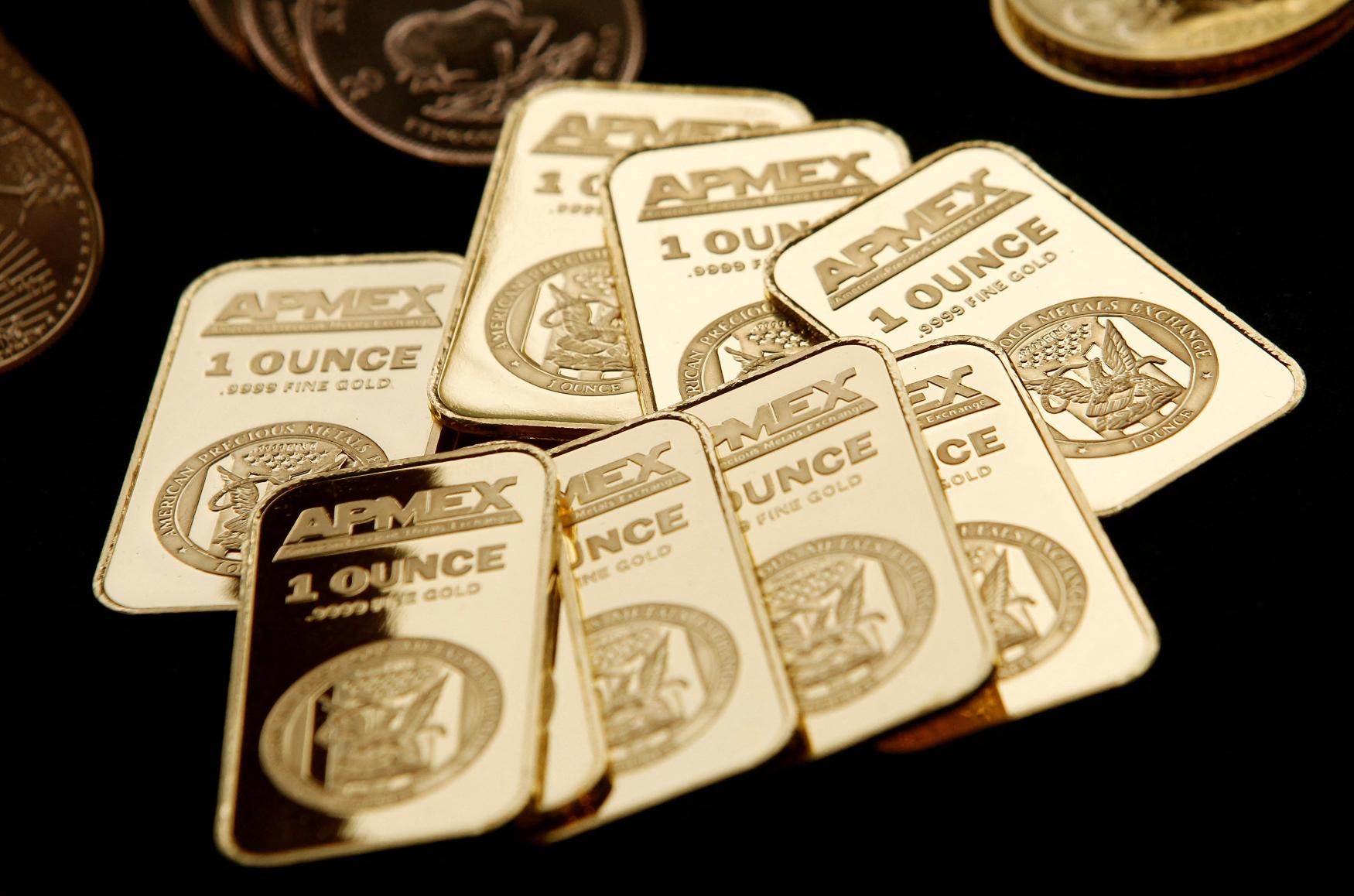
US PCE price index rose 0.2% in September Gold hits record high of $2,790.15/oz Silver up nearly 5% for the month Palladium posts biggest monthly gain since January 2022 Oct 31 (Reuters) - Gold retreated on Thursday as prices consolidated after hitting a record high, while safe-haven demand ahead of the U.S. presidential election helped the precious metal log its fourth straight monthly gain. Spot gold was down 1.6% at $2,740.45 per ounce by 1:40 p.m. ET (1740 GMT), after hitting a record high of $2,790.15 earlier in the session. Prices have firmed around 4% for the month. U.S. gold futures settled 1.8% lower at $2,749.3. "You're going to see a bit more consolidation. We have a lot of major impactful news next week. The U.S. election on Tuesday, Fed meeting on Wednesday. So it's really not surprising to see some traders take profits," said David Meger, director of metals trading at High Ridge Futures. Opinion polls show that Republican former U.S. President Donald Trump and Democratic Vice President Kamala Harris are neck and neck in the highly anticipated race to the White House. Underlying forces spurring demand for gold include geopolitical tensions and uncertainties about the outcome of the election, with the market remaining in a "buy-on-dips" mode, said StoneX analyst Rhona O'Connell. "Gold and the (U.S.) dollar are acting together as safe havens, which is not unusual in times of strife." Gold is considered a safe investment during economic and geopolitical turmoil due to its ability to store value. Data showed the U.S. personal consumption expenditures (PCE) price index increased 0.2% in September after an unrevised 0.1% gain in August. Economists had forecast PCE inflation climbing 0.2%. Investors now await the payrolls report on Friday, and see a 95% chance of a quarter-basis point U.S. interest rate cut next week, which would further benefit non-yielding gold. Spot silver fell 3.4% to $32.65 per ounce. It gained around 5% for the month. Platinum shed 1.5% to $993.05. Palladium was down 3.4% at $1,108.64, logging its best month since January 2022. Sign up here. https://www.reuters.com/markets/commodities/safe-haven-gold-track-best-month-seven-2024-10-31/
2024-10-31 05:57
Oil gains more than $2 post-settlement after reports Iran preparing to attack Israel Brent for December delivery had settled 0.84% higher OPEC+ could delay December oil production increases on soft demand, rising supply HOUSTON, Oct 31 (Reuters) - Oil prices extended gains after settlement on Thursday, rising by more than $2 per barrel on a report that Iran is preparing to attack Israel from Iraqi territory in the coming days. WTI crude oil futures jumped $2.15 or 3.13% to $70.76 after settlement at 3:22 p.m. EDT, and Brent futures for January delivery jumped by $2.10 or 2.91% to $74.26. Brent crude futures settled up 61 cents, or 0.84%, to $73.16 a barrel. Brent futures for December delivery expired on Thursday. The more actively traded January contract settled at $72.81. WTI futures settled up 65 cents, or 0.95%, at $69.26. Israeli intelligence suggests Iran is preparing to attack Israel from Iraqi territory in the coming days, possibly before the U.S. presidential election on Nov. 5, Axios reported on Thursday, citing two unidentified Israeli sources. The attack is expected to be carried out from Iraq using a large number of drones and ballistic missiles, the Axios report added. The report said that carrying out the attack through pro-Iran militias in Iraq could be an attempt by Tehran to avoid another Israeli attack against strategic targets in Iran. “This is putting back on the table the possibility that Israel may give an attack on Iran another go,” said Phil Flynn, senior analyst at Price Futures Group, warning that Iranian infrastructure may not be off-limits in an attack. Iran is an OPEC member with production of around 3.2 million barrels per day or 3% of global output. The week began with a large selloff with Brent and WTI futures falling more than 6% on Monday after Israel showed some restraint in its retaliatory attacks on Iran over the weekend. The possibility that OPEC+ would delay a planned oil output increase also supported prices on Thursday. A decision could come as early as next week, Reuters reported. OPEC+ is scheduled to meet on Dec. 1 to decide its next policy steps. In China, the world's biggest oil importer, manufacturing activity expanded in October for the first time in six months, suggesting stimulus measures are having an effect. "Several international events have converged at the turn of the month that could see oil markets in for a bumpy ride in early November," said Rystad Energy's Sahdev, citing the U.S. election, a continually weak Chinese demand outlook, OPEC+ uncertainty and the war in the Middle East. Sign up here. https://www.reuters.com/business/energy/oil-prices-rise-optimism-over-solid-us-fuel-demand-2024-10-31/