2025-12-22 08:22
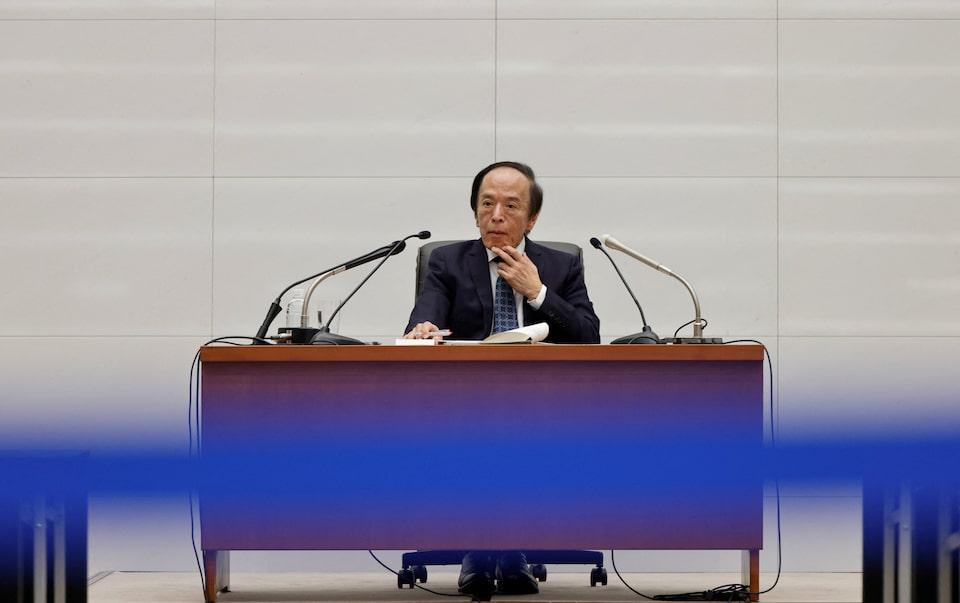
First hike to 1.0% could come around June or July, Sakurai says Further hikes could become challenging as rates approach neutral BOJ likely sees neutral rate sitting somewhere around 1.75% Weak yen reflects market concern over Japan's fiscal policy TOKYO, Dec 22 (Reuters) - The Bank of Japan will likely raise interest rates three more times to 1.5% during Governor Kazuo Ueda's remaining term through early 2028, former central bank board member Makoto Sakurai told Reuters on Monday. The first hike to 1.0% could come around June or July next year depending on the strength of the U.S. economy, as well as domestic wage and price developments, Sakurai said. Sign up here. Further rate increases could become more challenging as they would bring borrowing costs closer to levels deemed neutral to the economy, and draw criticism from reflationist advisors of dovish premier Sanae Takaichi, he said in an interview. "The BOJ won't say so publicly but probably sees 1.75% as the estimated neutral rate level. A hike to 1.5% would be comfortably below that level, and still leave the BOJ enough room to cut rates if needed," said Sakurai, who retains close contact with incumbent policymakers. The BOJ may raise rates twice during the next fiscal year beginning in April 2026 if solid U.S. growth underpins Japan's economy, and domestic inflation remains above the central bank's 2% target, he said. If uncertainty over the U.S. economic outlook heightens and domestic inflation moderates significantly, the BOJ could opt to hike rates just once in fiscal 2026 and delay further hikes until 2027, Sakurai said. "The BOJ probably wants to resume rate hikes at a pace of about once every six months. But it seems a bit worried about the risk of facing pushback from the administration," he said. "That may have been behind Ueda's ambiguous communication." The BOJ raised interest rates to 0.75% from 0.5% on Friday, taking borrowing costs to a level unseen in 30 years in another landmark step towards ending decades of huge monetary support. The hike to 0.75% pushes the BOJ's policy rate closer to the bottom of its estimated 1.0%-2.5% range of Japan's neutral rate, or the rate that neither cools nor stimulates the economy. While Ueda said there was some distance before the policy rate reached the bottom of the estimated range, he gave no clarity on how many hikes would actually take rates to neutral. GOVERNMENT SPENDING PACKAGE COULD BACKFIRE Markets sold off the yen on the view the BOJ was in no rush to raise rates further, drawing warnings of yen-buying intervention from the government fretting about the inflationary effect of a weak currency. The BOJ likely made progress getting consent to proceed with policy normalisation from Takaichi and Finance Minister Satsuki Katayama, including Friday's rate hike to 0.75%, Sakurai said. "As long as the premier and finance minister give consent, the BOJ should face no problem hiking rates," he said. "But as rates get closer to neutral, things could get complicated." Japan has seen inflation exceed the BOJ's 2% target for nearly four years, as companies pass on rising raw material costs and keep hiking pay to deal with labour shortages. The BOJ's "tankan" survey showed companies project inflation to hit 2.4% one, three and five years from now - a sign inflation is becoming embedded in Japan's economy, Sakurai said. He said Takaichi's big spending package, aimed at cushioning the blow to households from rising living costs, could backfire by accelerating inflation. The administration's expansionary fiscal policy also risks eroding market trust in Japan's finances, thereby triggering a spike in bond yields and unwelcome yen falls. "The yen weakened even after the BOJ's rate hike in December, which shows the currency's weakness is driven more by market concern over Japan's fiscal policy," Sakurai said. Under Ueda, the BOJ exited a massive, decade-long stimulus last year and raised rates three times including to 0.75% last week, on the view Japan was making progress in durably hitting its 2% inflation target. His five-year term ends in April 2028. https://www.reuters.com/world/asia-pacific/boj-raise-interest-rates-15-under-ueda-ex-cbank-policymaker-says-2025-12-22/
2025-12-22 07:50
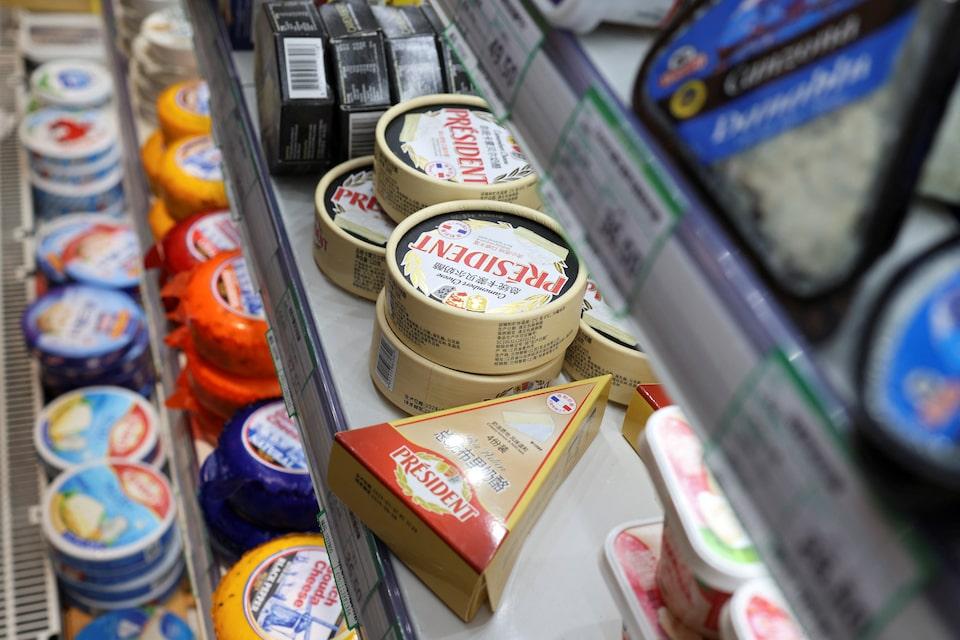
BEIJING, Dec 22 (Reuters) - China will impose provisional duties of 21.9% to 42.7% on certain dairy products imported from the European Union starting on December 23, following an anti-subsidy probe that began more than a year ago. Preliminary evidence shows imported dairy products originating from the EU are subsidised, causing substantial damage to China's domestic industry, the Chinese commerce ministry said in a statement on Monday. Sign up here. Trade tensions with the EU erupted in 2023 when the European Commission - which oversees the bloc's trade policy - launched an anti-subsidy investigation into Chinese-made electric vehicles. Beijing later kicked off probes into imports of EU brandy, pork and dairy products, in moves seen as retaliation for Europe's EV decision. The EU firm that was hit by the lowest rate of 21.9% was Italy's Sterilgarda Alimenti SpA, while FrieslandCampina Belgium N.V. and FrieslandCampina Nederland B.V. will pay the highest rate of 42.7%, according to the Chinese commerce ministry. All other EU firms that did not participate in China's anti-subsidy investigation would also have to pay the highest rate. A dozen French companies will pay 29.7%, while around 50 others from countries including Italy, France and Germany will be hit by 28.6%, the commerce ministry statement showed. The European Union was China's second-biggest source of dairy products, behind only New Zealand, Chinese customs data shows. In particular, China was the second-largest destination for skimmed milk powder and the fourth for both butter and whole milk powder, according to 2023 EU data. China has exercised prudence and restraint in using trade remedy measures, an official at the trade remedy department of the commerce ministry said in a separate statement. Beijing has not initiated any new trade remedy investigations against the EU this year and has only issued final rulings on three anti-dumping cases involving brandy, copolymerised polyformaldehyde, and pork, it said. "China’s position against the abuse of trade remedy measures remains unchanged, and we are willing to work with the EU through dialogue and consultation to properly handle trade frictions and jointly safeguard the overall China-EU economic and trade cooperation," the official said. https://www.reuters.com/world/china/china-impose-provisional-duties-up-427-eu-dairy-products-2025-12-22/
2025-12-22 07:11
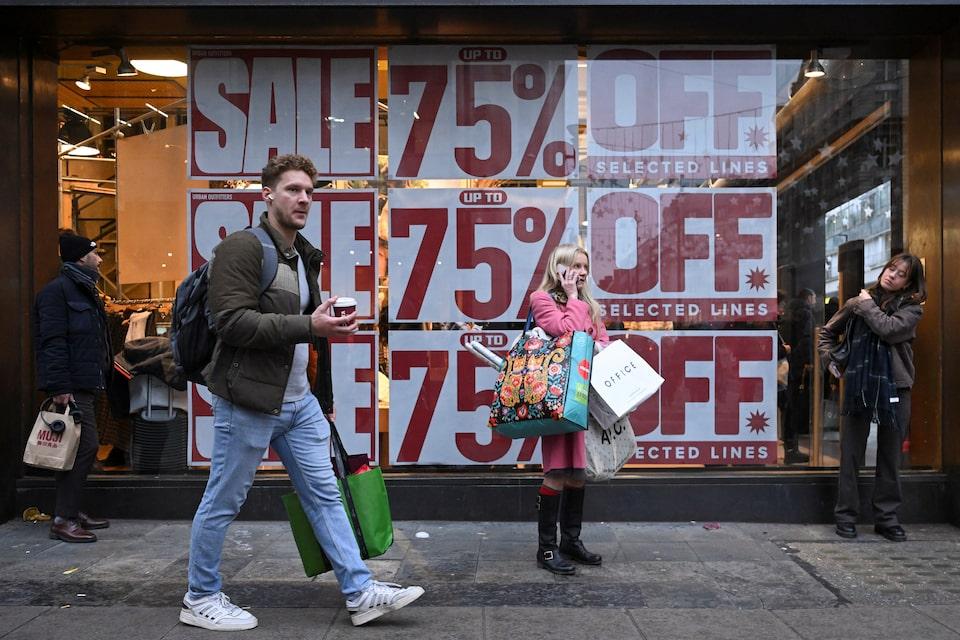
GDP growth confirmed at +0.1% in Q3 UK economy has slowed sharply from earlier in 2025 Saving ratio drops to lowest in over a year Taxes hit disposable income LONDON, Dec 22 (Reuters) - British households saved less in the July-to-September period of this year as they felt the hit from higher taxes but still increased their spending, according to official data which confirmed a slowdown in the broader economy. Gross domestic product grew by only 0.1%, the Office for National Statistics said, in line with its initial estimate and forecasts by economists polled by Reuters. Sign up here. Growth in the April-to-June period was revised down to 0.2% from a previous estimate of 0.3%. The ONS said the saving ratio dropped by 0.7 percentage points to 9.5%, its lowest in over a year, as real household disposable incomes took a hit from tax increases which outweighed income growth and from inflation. But household consumption grew by 0.3% from the second quarter when it showed no growth. It was the fastest quarter-on-quarter increase in a year. Finance minister Rachel Reeves increased taxes in her first budget in 2024, including on some forms of wealth income, although most of the burden fell on employers rather than individuals. Britain grew by the most among Group of Seven large advanced economies in the first half of 2025, alongside Japan, but it has slowed sharply since then, in part due to months of uncertainty about possible tax increases in Reeves' second budget which she announced on November 26. Last week the Bank of England said it expected zero GDP growth in the October-to-December period but it thought that the underlying pace of economic growth was around 0.2% per quarter. "The breakdown in growth in Q3 was a bit less reliant on government spending than in the first estimate," Alex Kerr, UK economist at Capital Economics, said. However, the overall data confirmed the slowdown in the economy after its strong start to 2025 and Capital expected only 1.0% growth next year, down from 1.4% this year, Kerr said. Monday's data showed that Britain's GDP in the third quarter was 1.3% higher than a year ago - unchanged from the ONS's initial estimate - while on a per capita basis, output was 0.9% higher than the year before. Britain's current account deficit in the three months to the end of September totalled 12.1 billion pounds, compared with a Reuters poll forecast of 21.1 billion pounds and equivalent to 1.6% of GDP, less than 2.8% in the second quarter. The ONS said revisions to its data meant income flowing into Britain from foreign direct investment held abroad had been higher than previously thought while earnings in Britain by foreign investors were revised down. https://www.reuters.com/world/uk/uk-economy-grew-by-01-third-quarter-ons-says-2025-12-22/
2025-12-22 07:04
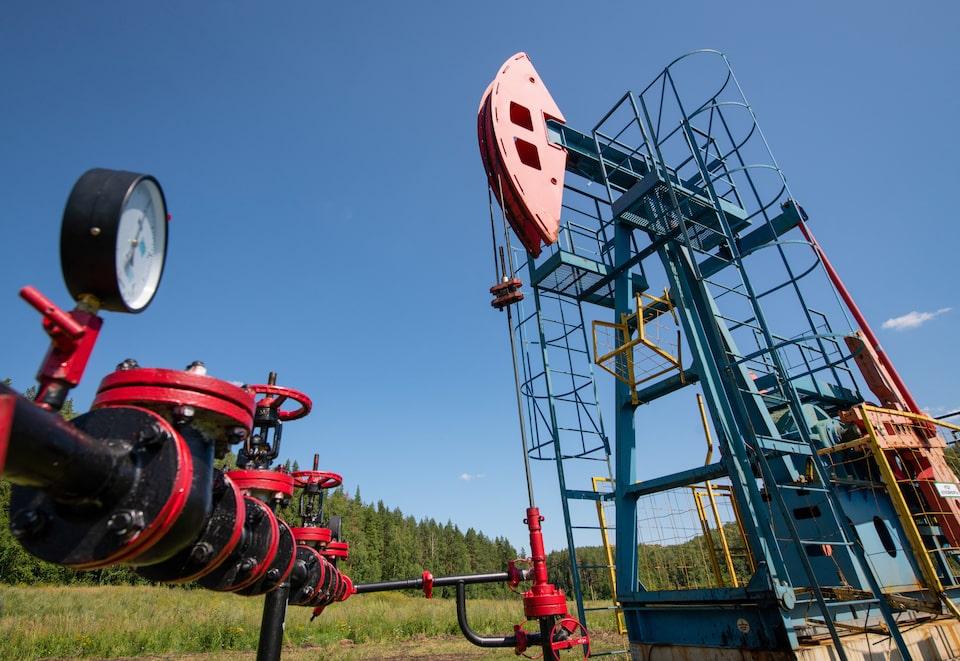
LONDON, Dec 22 (Reuters) - Global oil markets faced multiple black swan events in 2025 – including the Israel-Iran war and Ukrainian strikes on Russian refiners – yet they were barely fazed. This calm may be the new normal in an era of energy abundance, even as the world becomes a more dangerous place. By any measure, 2025 was a chaotic geopolitical year, dominated by President Donald Trump’s return to the White House in January and his blitz of policy, trade and diplomatic initiatives. Sign up here. A most pivotal moment for energy markets came on June 12 when Israel bombed military, government and nuclear sites across Iran. The U.S. joined on June 22 with "Operation Midnight Hammer," , opens new tab targeting Iran's fortified nuclear facilities. A U.S. strike on Iran had long been among the top "doomsday scenarios" for oil traders. If attacked, the Islamic Republic was expected to retaliate by attempting to block the Strait of Hormuz, a narrow sea lane in the Gulf through which nearly a fifth of the world's oil and gas supplies are shipped. The mere threat of such a cataclysmic event would cause oil prices to blow out into triple-digit territory, or so the theory went. While the start of the 12-day Israel-Iran war did see the crude oil volatility index spike to its highest point since early 2022, when Russian tanks first rolled into Ukraine, the oil price responded with remarkable composure this time around. Global benchmark Brent crude futures rose from $69 a barrel on June 12 to a peak of $78.85 a week later, before rapidly dropping to their pre-war levels by June 24, when Israel and Iran agreed on a U.S.-brokered ceasefire. Even then, prices remained below their 2025 high. JADED OIL MARKETS Oil futures in 2025 have oscillated within a relatively narrow range between $60 and $81, based on their daily closing value, with the high coming in January before the Organization of the Petroleum Exporting Countries began production increases. Importantly, that range is narrower than in the previous year. For comparison, prices spiked from around $70 in December 2021, when Russia – the world's third-largest oil producer – started amassing military forces on the border with Ukraine, to nearly $130 by March 8, two weeks after the start of the invasion. And prices stayed above pre-invasion levels for nearly a year. The 2022 rally was mostly driven by expectations that Western sanctions on Moscow would significantly constrain its oil exports, but those fears never materialized. That may partly explain why prices were less twitchy this year. When Ukraine began attacking Russian oil refineries and export terminals in April, prices barely reacted, even while refining margins surged on fears of diesel shortages. Similarly, Trump’s sweeping sanctions on Russia’s top two oil companies Rosneft (ROSN.MM) , opens new tab and Lukoil (LKOH.MM) , opens new tab , which together account for 5% of global crude production, elicited only a limited and short-lived price rally in October. THE AGE OF PLENTY The main reason energy markets have been so calm is pretty straightforward: there is a ton of oil and gas sloshing around the world. The U.S. led the ramp-up in supplies over the past decade, becoming the world's largest producer and exporter of oil and liquefied natural gas (LNG), with its crude production climbing to a record 13.84 million barrels per day (bpd) in September, thanks to growth in the Permian shale basin and the Gulf of Mexico. OPEC and allied producers including Russia and Kazakhstan, known collectively as OPEC+, also increased output throughout 2025 after reversing years of production cuts aimed at supporting prices. Non-OPEC countries in the Americas - Argentina, Canada, Brazil and Guyana - have boosted output as well. The International Energy Agency expects this robust production growth to create a massive oversupply of nearly 4 million bpd in 2026, which could extend into the following year. That’s because prices remain sufficiently strong for U.S. shale and other producers to maintain or even grow output, given advancements in drilling technology. Furthermore, OPEC+ has indicated that it expects to accelerate investment to expand output capacity for years. CALM BEFORE THE STORM? But complacency could be its own risk. Howard Marks, the founder of Oaktree Capital Management, the world's largest distressed debt investor, famously said that “risk is highest when it’s perceived to be lowest.” Indeed, OPEC could reverse its production hikes in the face of rising global supplies, while speculation of a new confrontation between Israel and Iran , opens new tab could add further tension. But for energy markets to be truly spooked, there will need to be a genuine change in physical volumes. In an age of ample supplies, geopolitical fears are no longer enough. Want to receive my column in your inbox every Monday and Thursday, along with additional energy insights and links to trending stories? Sign up for my Power Up newsletter here. Enjoying this column? Check out Reuters Open Interest (ROI), , opens new tabyour essential new source for global financial commentary. ROI delivers thought-provoking, data-driven analysis. Markets are moving faster than ever. ROI , opens new tab can help you keep up. Follow ROI on LinkedIn , opens new tab and X. , opens new tab https://www.reuters.com/markets/commodities/oils-geopolitical-premium-vanished-2025-may-not-return-2025-12-22/
2025-12-22 07:00
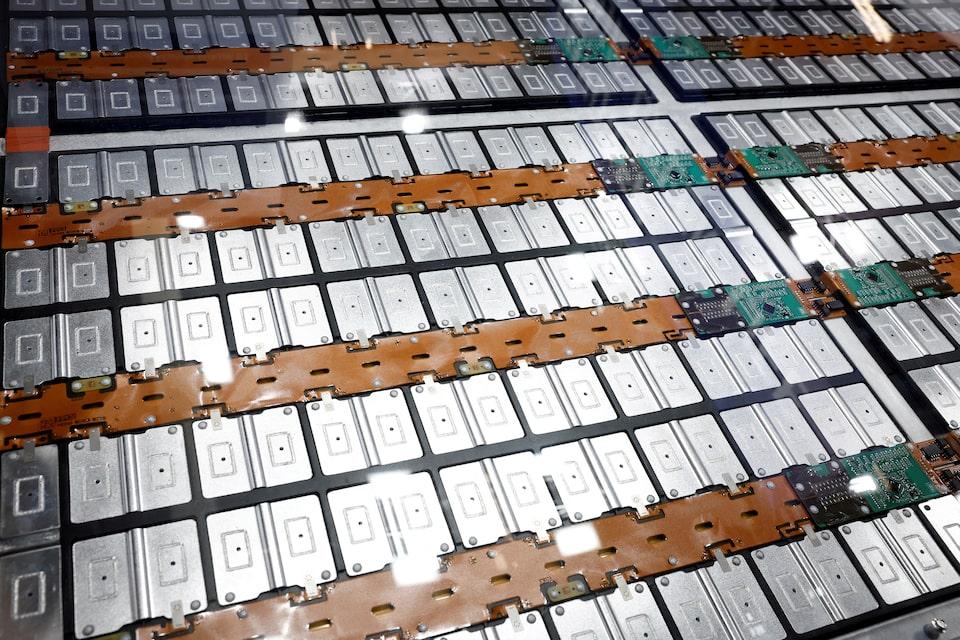
LONDON, Dec 19 (Reuters) - It's been a third tough year for battery metals such as lithium, nickel and cobalt as all three markets struggle to absorb the wave of supply that followed the 2022 price boom. Yet the electric vehicle (EV) revolution rolls on. Demand for batteries and the metals that make them work is still growing at a super-charged pace. Sign up here. It should only be a matter of time before demand momentum absorbs the current supply glut. At least that was the hope. Chinese companies, however, are embarked on a simultaneous technological revolution as they strive to develop ever more powerful batteries at ever lower cost. Battery chemistry is evolving fast and it's already clear that not every battery metal is going to be a winner in the intense competition between materials. CHINA POWERS ON The road to electrification may be currently bumpy. U.S. President Donald Trump has rolled back the Biden administration's EV subsidy schemes, and the European Union has deferred its phase-out of combustion-engine vehicles beyond 2035. But the underlying momentum is undiminished. Global EV sales increased by 21% year-on-year to 18.5 million vehicles in the first 11 months of 2025, according to consultancy Rho Motion. China remains the driver of the global technology shift. The world's largest EV market has grown by another 19% this year, accounting for 62% of global sales. It should therefore be no great surprise that it is Chinese companies that are at the forefront of the revolution in battery chemistry. The Chinese EV market is now dominated by batteries using lithium-iron-phosphate (LFP) chemistry. They are safer and cheaper than those using a combination of nickel, cobalt and manganese (NCM) and the performance gap is steadily narrowing. LFP accounted for 48% of global EV batteries last year. Macquarie Bank expects that share to rise to 65% by 2029, a sharp upwards revision from its previous 49% forecast. NICKEL AND COBALT IN THE SLOW LANE This is clearly not good news for either Indonesia or the Democratic Republic of the Congo, the world's largest producers of nickel and cobalt respectively. Indonesia has failed to temper its production growth to reflect the new battery reality, generating a tsunami of surplus metal. Ever more of the country's nickel has been heading for a London Metal Exchange (LME) warehouse rather than a battery precursor plant. LME warehouse stocks - registered and off-warrant - have mushroomed to 338,900 tons. The LME nickel price has this month broken below long-term support at $15,000 per ton for only the second time since 2021, piling more pressure on Indonesian policy-makers to restrain the country's nickel boom. The cobalt market is in a similar state of chronic oversupply and prices were equally bombed out before Congo suspended exports in February and introduced a quota system in October. Slow implementation of the new rules has brought shipments of cobalt intermediates to Chinese refineries to a complete halt. Congo's supply discipline risks becoming a supply shock. That could prove costly for a metal that is already struggling to hold its share even within nickel‑based battery chemistries. Automakers are understandably wary of cobalt's history of price volatility and the ethical problems associated with Congo's artisanal mining sector. This year's events will only reinforce those concerns and risk accelerating attempts to engineer cobalt out of the battery equation. LITHIUM DOMINANT ... FOR NOW Lithium remains the dominant metal in batteries and China's pivot to LFP chemistry reinforces its centrality. Consultancy Adamas Intelligence estimates 60,900 tons of lithium were deployed onto roads globally in September, a 25% year‑on‑year increase that matches the growth rate of total battery deployment. Cobalt and nickel lagged with deployment growth of 15% and 10% respectively. But lithium itself is facing a new battery challenge. Chinese battery giant CATL (300750.SZ) , opens new tab has been pioneering the development of sodium-ion batteries. The latest iteration, Naxtra , opens new tab, will almost match the efficiency of LFP batteries that are displacing NCM chemistries and does so at a lower cost. CATL's billionaire founder Robin Zeng sees sodium-ion batteries potentially replacing up to half the market for LFP batteries. Fortunately for lithium producers, the metal is the material of choice for power-grid storage batteries, a rapidly growing source of demand. Global installations of battery energy storage systems jumped by 38% year-on-year in the first 10 months of 2025, according to analysts at Benchmark Mineral Intelligence. Reflecting this shift from road to grid, Ford Motor (F.N) , opens new tab has just announced a $19.5 billion charge on EV investments, while simultaneously committing $2 billion to batteries for energy storage systems. HARD WIRED The EV battery materials landscape has changed markedly since 2022, when lithium, nickel and cobalt prices were all surging on the assumption that this trio would be core to electric mobility. That is no longer a certainty. Battery chemistry is still evolving at breakneck speed on the back of unprecedented research and development. It is almost impossible to predict what will be powering electric vehicles in 10 years' time. One thing is for sure though: Copper will still be essential to wiring both vehicle and charging infrastructure. It is also highly likely that aluminium will remain the material of choice for body frames, thanks to its light weight. While the fortunes of battery metals are dependent on the continuously evolving cathode mix, the ultimate metallic winners in the EV revolution might be those that enable, rather than directly power the vehicle. Andy Home is a Reuters columnist. The opinions expressed are his own. Enjoying this column? Check out Reuters Open Interest (ROI) for thought-provoking, data-driven commentary on markets and finance. Follow ROI on LinkedIn , opens new tab and X , opens new tab. https://www.reuters.com/business/autos-transportation/ev-revolution-rolls-battery-metals-lose-their-charge-2025-12-19/
2025-12-22 06:18
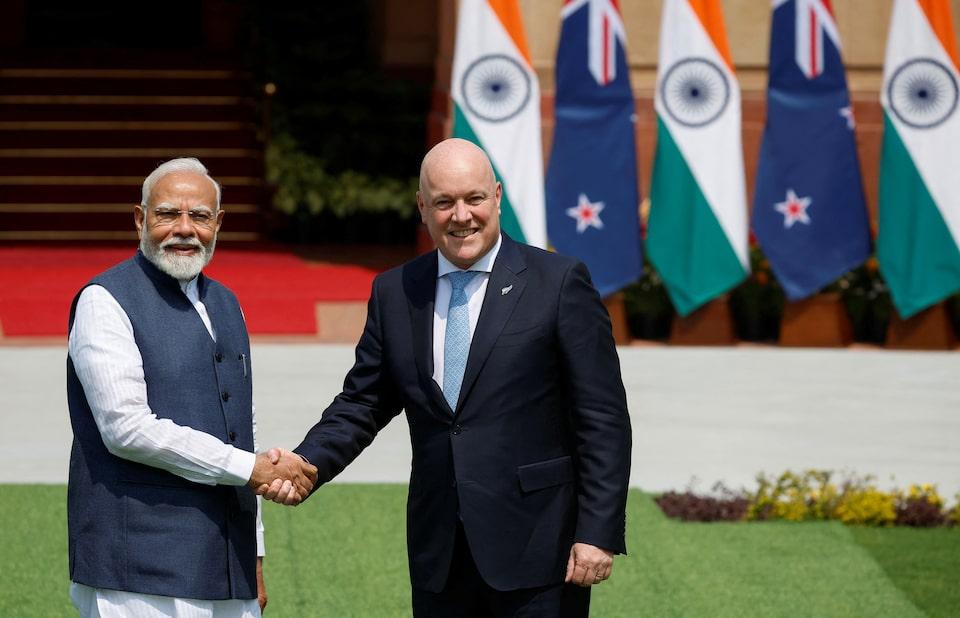
India, NZ aim to double bilateral trade in 5 years Deal expected to be signed in first half of next year Deal to eliminate or reduce tariffs on 95% on NZ products Deal to eliminate tariffs on all Indian products to NZ Dairy products from NZ excluded from the deal Dec 22 (Reuters) - New Zealand and India said on Monday they had concluded talks on a free trade deal that would help to double bilateral trade over the next five years. The agreement will eliminate or reduce tariffs on 95% of New Zealand's exports to India with more than half of the products to be duty free on day one of the pact, while all Indian goods would have duty free-access to New Zealand. New Zealand also agreed to invest $20 billion in the Asian country in the next 15 years. Sign up here. "The gains are wide-ranging and significant," said New Zealand Prime Minister Christopher Luxon in a statement. "India is the world's most populous country and is the fastest-growing big economy, and that creates opportunities for jobs for Kiwis, exports and growth," he added. The deal makes good on a 2022 election promise from New Zealand's governing National Party that if elected it would finalise a New Zealand-India free trade agreement in its first term. Two-way trade between the two countries totalled about $1.81 billion in 2024, dominated by pharmaceuticals from India and forestry and agricultural products from New Zealand. The size of the trade between the nations is dwarfed by India's total goods trade which exceeded $1 trillion in the 2024-25 financial year (April-March). "Concluded in just nine months, this historic milestone reflects a strong political will and shared ambition to deepen economic ties between our two countries," Indian Prime Minister Narendra Modi said in a social media post. The Indian government said the free trade deal excluded market access to dairy, coffee, milk, cream, cheese, yoghurt, whey, caseins, onions, sugar, spices, edible oils and rubber, to protect its farmers and domestic industry. India has been accelerating talks with partner countries to diversify its exports after Washington imposed a 50% tariff on Indian goods entering U.S. markets. The trade deal with New Zealand is the third this year, following an economic partnership agreement with Oman announced on Thursday and one with United Kingdom in May. NEW ZEALAND PARLIAMENT APPROVAL The countries expect to sign the agreement in the first half of 2026, the New Zealand government said. But New Zealand's parliamentary approval was not immediately assured. New Zealand First, with which the Nationals have a coalition and which holds eight of the 123 seats in parliament, would vote against the deal, said NZ First leader Winston Peters. The coalition has 67 seats, but the Nationals only have 48 and rely on support from coalition partners, including NZ First. The deal "gives too much away, especially on immigration, and does not get enough in return for New Zealanders, including on dairy", Peters said in a statement. ($1 = 1.7337 New Zealand dollars) https://www.reuters.com/world/india/new-zealand-concludes-free-trade-agreement-with-india-2025-12-22/