2025-12-22 06:00
Tariff costs still trickling through supply chains, experts say Nine-month lag for raw bean prices to filter through to stores Lag leaves Trump with fewer levers to pull ahead of midterms LONDON, Dec 19 (Reuters) - U.S. coffee lovers hoping President Donald Trump's tariff rollbacks last month will soon lower the cost of their daily caffeine hit had better think again. The widespread import tariffs imposed by Trump mostly over the summer, which included top coffee producers such as Brazil, boosted the price of raw coffee beans. But the added costs are mostly still filtering through supply chains and have yet to reach consumers, according to brokers, traders and industry experts. Sign up here. High U.S. retail coffee prices have, in other words, been driven mostly by last year's coffee bean supply shortages, which spurred a doubling in raw bean prices in the 12 months to March. "Most of the (retail) price increases we've seen so far are not in response to tariffs. (They're) associated with the record high (raw bean) market that we've been in since last year," said independent coffee analyst Christopher Feran. Feran and other industry experts estimate it takes at least nine months for raw bean prices to filter through to coffee drinkers, partly due to roasting times and price negotiations, meaning it could be well into next year before prices retreat. Coffee drinkers in the U.S., the world's biggest coffee consumer, will have to swallow higher prices for longer. And the White House will have a tricky job trying to cool food inflation before the U.S. 2026 November midterms. Trump, under pressure from Democratic wins in New Jersey, New York and Virginia linked to voter frustration over rising food prices, last month rolled back "reciprocal" tariffs of between 10-41% on over 200 food items that cannot easily be grown in America, such as coffee. He also exempted non-native food items from an additional 40% tariff on imports from Brazil, which supplies the U.S. with around a third of its beans. 'COFFEE PRICES RISE MORE QUICKLY THAN THEY FALL' Raw bean prices account for at least 40% of the cost of producing a bag of roast and ground coffee. They rose sharply last year as the market was unable to bounce back from three seasons of production deficit linked to adverse weather. Most industry experts expect a coffee production surplus in the current and upcoming 2025/26 and 2026/27 October to September seasons which should, alongside the tariff removal, soften raw bean prices and eventually feed through to U.S. consumers. But this will take time, analysts say, because U.S. roasters typically hold about two to three months' worth of bean stocks on average and need another two to three months to roast and package their products. They also tend to negotiate prices with retailers only on a quarterly basis. In other words, very little of the 18.8% rise in U.S. retail coffee prices in the year to November is due to tariffs. And the near 35% rise in raw bean prices between August and November when most of Trump's tariffs were in place, is still to hit coffee on supermarket shelves. Also, since Trump's tariff reversal, raw bean prices have fallen just 6%. “Coffee prices rise more quickly than they fall," said Steven Walter Thomas, the CEO of mid-sized, U.S.-based importer Lucatelli Coffee, pointing to the muted price reaction since the tariff removal. SLOWER RATE OF PRICE INCREASES Trump's tariff rollback is, however, slowing down the rate of price increases near term. In late November, days after the tariffs on Brazilian coffee imports were removed, J.M. Smucker (SJM.N) , opens new tab, the parent company of Folgers coffee, said it would no longer consider winter price rises to cover its tariff costs. It said it was maintaining a $0.50 "unfavourable impact" on this fiscal year’s earnings per share as a result. "We’re very pleased that tariffs are gone, but it’s not enough to bring this market down," said the head of a mid-sized U.S. roaster. He said that, if anything, while his firm is done raising prices, he expects large roasters which negotiate less frequently with retailers to still raise prices next year. "(Raw bean) prices are elevated, the consumer doesn't realise this, they think only about the tariff." https://www.reuters.com/world/americas/us-coffee-drinkers-face-higher-prices-even-after-trumps-tariff-reset-2025-12-19/

2025-12-22 05:25
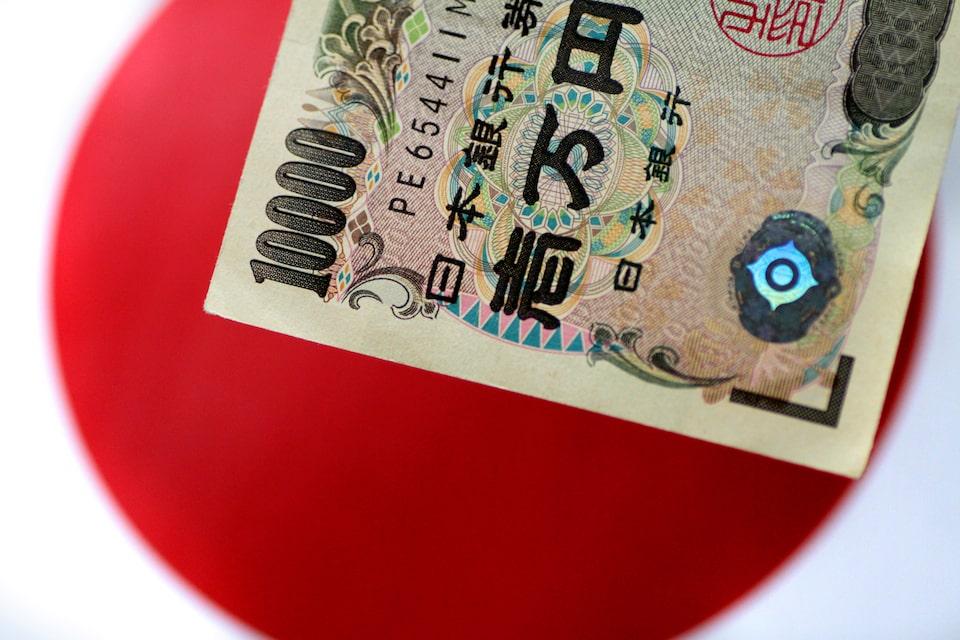
Japan officials say ready to 'take appropriate actions' on yen Yen advances vs dollar, boosted by short-covering Yen sank to record low vs Swiss franc, euro Dollar on track for biggest yearly fall since 2017 NEW YORK/LONDON, Dec 22 (Reuters) - The yen strengthened against the U.S. dollar on Monday on a technical recovery after Japanese officials warned against "one-sided and sharp" currency moves, signaling readiness to take appropriate action in what analysts viewed as a clear hint of intervention. The Japanese currency also gained support from a broadly weaker dollar, which has been under pressure since the Federal Reserve's 25 basis-point rate cut at its December 10 policy meeting, analysts said. U.S. rate futures have also priced in two rate cuts next year. Sign up here. The yen has fallen in recent sessions against the dollar despite the Bank of Japan raising interest rates to 0.75% from 0.5% last Friday, taking borrowing costs to a level unseen in 30 years. It is poised to end December lower, for a fourth consecutive month. "Overall, the Japanese yen has sunk for reasons beyond the interest-rate hike from the BOJ which was heavily priced in. One thing is that the rate down the line may not be moved unless there is evidence of improved fundamentals," said Juan Perez, director of trading at Monex USA in Washington. "There is little to give much confidence about the yen...and now we need to watch for the possibility...of an FX intervention. But when that has happened the last few times it accomplished little while being very expensive," he added. Atsushi Mimura, Japan's top currency diplomat, told reporters on Monday that recent FX moves were one-sided and sharp, adding that the government will take appropriate action against excessive moves. Chief Cabinet Secretary Minoru Kihara also warned about the yen's continued weakness and said it was important that "the currencies should move in a stable manner, reflecting fundamentals." Marc Chandler, chief market strategist at Bannockburn Global Forex in New York, said the verbal intervention "makes sense after the rate hike," noting that potential Japan action to boost the yen was unlikely until the BOJ raised rates. "Now that the BOJ raised rates, they can say that they've tightened monetary policy and that the yen is deviating from fundamentals. And so you've got a bit of short-covering on the yen as a result," he added. In afternoon trading, the dollar fell 0.5% against the yen to 156.94 yen, falling as low as 156.71. It was on track for its largest one-day decline since late November. DOLLAR ON PACE FOR BIGGEST DECLINE SINCE 2017 The dollar index slid 0.4% to 98.3 , led by losses against the euro and yen. The index was on course to post its biggest yearly fall in eight years. The euro rose 0.4% against the dollar to $1.1753, advancing after four straight days of weakness last week. The European Central Bank left euro zone rates unchanged and effectively closed the door on rate cuts any time soon. The decision had been widely expected, however, and ECB President Christine Lagarde has said numerous times the central bank is "in a good place" on monetary policy. Sterling was also higher on Monday against the dollar at $1.3458, up 0.6%, having ended the previous week fairly flat after the Bank of England cut rates. The BoE, however, suggested that there may not be many more rate cuts in the pipeline, given that inflation remains well above the central bank's target. The pound has risen 1.1% so far this month, bringing the gain for the year to around 7%. The euro earlier hit a record high versus the yen of 184.92 , while the Swiss franc also rose to an all-time peak of 198.4 yen. However, both pulled back a little bit, with the euro last down 0.1% on the day at 184.49 yen, while the Swiss currency last changed hands at 198.32 yen, still up 0.6%. JAPAN POLICY CLUES One of the drivers of yen weakness in recent weeks has been Prime Minister Sanae Takaichi's spending plan to boost growth and the impact that might have on Japan's already strained finances. BOJ Governor Kazuo Ueda is due to speak at Japan's Keidanren business lobby on December 25, which may offer markets another opportunity to parse any policy clues. Total spending in Japan's draft budget for fiscal 2026 will probably exceed 120 trillion yen ($775 billion) to hit a new record, two government sources familiar with the matter said last week. https://www.reuters.com/world/asia-pacific/yen-wallows-near-record-low-euro-boj-keeps-cautious-tone-after-rate-hike-2025-12-22/
2025-12-22 05:21
Gold hits all-time high of $4,420.01/0z Silver hits record high of $69.44/oz Platinum at over 17-year high Palladium hits near three-year high Dec 22 (Reuters) - Gold crossed the $4,400-per-ounce level for the first time on Monday, propelled by expectations of U.S. rate cuts and continued safe-haven buying, while silver followed suit, soaring to a new record high. Spot gold climbed 1.7% to $4,410.54 per ounce as of 1139 GMT, after hitting a record high of $4,420.01 earlier in the session. U.S. gold futures for February delivery rose 1.3% to $4,443.90 per ounce. Sign up here. Bullion has surged nearly 68% this year, marking its biggest annual rise since 1979, fuelled by strong central bank buying, safe-haven flows, and lower interest rates. Spot silver climbed 2.9% to $69.05 after hitting a new record high of $69.44 earlier in the session. Silver has risen 139% year-to-date, driven by an ongoing supply deficit, growing industrial needs and strong investment demand. "Lower rates are supporting the demand for real assets like gold and silver. But we also have copper at a record high, indicating a desire by investors to hold exposure to broad commodities, likely due to expectations that inflation could stay higher for longer," said UBS analyst Giovanni Staunovo. Federal Reserve Governor Stephen Miran reiterated Friday that the U.S. central bank should cut interest rates because inflation has cooled and monetary policy needs to offset risks to the job market. While gold is seen as a hedge against inflation and a safe asset during uncertain times, the non-yielding asset also tends to benefit in lower interest rate environments. "This is self-fulfilling momentum, but if there is one key fundamental element I would point to, it would be President Trump's reported use of the word 'war' last week with respect to Venezuela, after running on an election ticket revolving in part around the word 'peace'," StoneX analyst Rhona O'Connell said. Meanwhile, the U.S. dollar (.DXY) , opens new tab inched lower, and is on pace for its steepest annual decline since 2017, making gold more affordable for overseas buyers. "Our outlook for gold remains that the yellow metal should reach even higher levels next year, with a target at $4,500/oz," Staunovo added. Elsewhere, platinum jumped 5% to $2,072.01, hitting its highest in more than 17 years, while palladium climbed 3.7% to $1,776.69, hitting a near three-year high. https://www.reuters.com/world/india/gold-hits-record-high-fed-rate-cut-bets-silver-scales-fresh-peak-2025-12-22/
2025-12-22 05:10
Holcim plans to appeal decision Case marks first time a court has admitted climate litigation against a large firm in Switzerland, backers say Low-lying Indonesian island hit by floods amid rising sea levels ZURICH, Dec 22 (Reuters) - A court in Switzerland said on Monday it would admit a legal complaint against Swiss cement maker Holcim (HOLN.S) , opens new tab which alleges the company is doing too little to cut carbon emissions and hence contributing to global warming. Four residents of the low-lying Indonesian island of Pari, which has been repeatedly flooded as warmer temperatures push up sea levels, submitted a legal complaint in January 2023 to the cantonal court in Zug, Switzerland. Sign up here. The court said it had admitted the case but noted this could still be reversed if in subsequent appeal proceedings it concluded that procedural requirements are not met. Holcim said it intends to appeal the decision and that the question of "who is allowed to emit how much CO2" should be a matter for lawmakers, not a civil court. Non-profit Swiss Church Aid (HEKS/EPER), which is backing the Pari complaint, said in a statement the case marks the first time a court has admitted climate litigation brought against a large corporation in Switzerland. "We are very pleased. This decision gives us the strength to continue our fight," Ibu Asmania, one of the four Pari residents pursuing the case, said in the Swiss Church Aid statement. "This is good news for us and our families." NGOs backing the complainants said they had chosen Holcim because it was one of the main carbon dioxide emitters worldwide and a so-called "carbon major" in Switzerland. Holcim said it is fully committed to reaching net zero by 2050 and is following a rigorous, science-based approach to achieve that goal. The company also says it has reduced direct CO2 emissions from its operations by more than 50% since 2015. The plaintiffs are seeking compensation from Holcim for climate damage they have suffered, financial participation in flood protection measures and a rapid cut in CO2 emissions. Cement production accounts for about 7% of global CO2 emissions, the Global Cement and Concrete Association says. https://www.reuters.com/sustainability/cop/swiss-court-admits-indonesia-islanders-climate-case-against-holcim-2025-12-22/

2025-12-22 05:06
SEOUL, Dec 22 (Reuters) - South Korea's petrochemical firms are on track to cut up to 3.7 million metric tons of output under a voluntary plan to overhaul the oversupplied sector and improve flagging profit margins, the industry minister said on Monday. Minister Kim Jung-kwan said 16 companies, including major naphtha crackers, had submitted blueprints by Friday ahead of a year-end deadline as requested by authorities, which would be the basis of a quick path to restructure the industry. Sign up here. President Lee Jae Myung, who took office after a snap election in June, pledged during his campaign to pursue tax support for mergers and acquisitions in the petrochemical industry, and to exempt companies from antitrust regulations to allow more coordination of production and operations. A final plan that is to be approved by the government would entitle the companies to tax and regulatory incentives and research and development support, the industry ministry has said. The cuts expected to be between 2.7 million and 3.7 million metric tons per year would be equivalent to about 25% of the country's overall capacity, including a new project that had been set to begin next year, according to Reuters calculations. Kim was speaking at a meeting with company officials on Monday. South Korea's leading petrochemical companies include LG Chem (051910.KS) , opens new tab, which is the top producer of ethylene and propylene, as well as GS Caltex, Lotte Chemical (011170.KS) , opens new tab, Hanwha TotalEnergies, S-Oil (010950.KS) , opens new tab, and HD Hyundai Chemical (267250.KS) , opens new tab. There have also been discussions on how to restructure the operations of Yeochun NCC Co (YNCC), the country's third-largest ethylene producer, which is a joint venture between DL Chemical and Hanwha Solutions (009830.KS) , opens new tab. https://www.reuters.com/business/energy/south-korea-petrochemical-firms-track-cut-up-37-mln-tons-output-minister-says-2025-12-22/

2025-12-22 04:51
MUMBAI, Dec 22 (Reuters) - The Indian rupee fell on Monday, snapping a three-session winning streak as dollar demand from local firms and the non-deliverable forwards market eroded an intervention-led rally, though the currency held on the stronger side of 90 per dollar. The rupee ended at 89.65 per dollar, down 0.4% from its closing level in the previous session. The currency had gained over the last three sessions to touch a near one-month peak of 89.25 on Friday. Sign up here. The rupee hovered between 89.45 and 89.72 throughout the day's trading, which was characterised by a pickup in importer hedging demand and pressure on the currency emanating from the NDF market, traders said. Dollar-rupee forward premiums extended gains, with the one-month premium surging to 47 paisa and the one-year implied yield jumping about 20 basis points to 3.05%, both at multi-year highs. Excess dollar liquidity, position unwinding and hedging demand in the non-deliverable forward market have driven the move, traders said. Concerns over excess dollar liquidity have reflected in last-day December/first-day January swap points rising over 14 paisa on Monday. "Likely speculative positioning in NDF is also opening up arbitrage with the onshore forwards, leading to upward pressure on premiums," a trader at a private bank said. Elsewhere, Asian currencies were largely on the defensive on Monday even as the dollar index retreated slightly to 98.5. Looking ahead to next year, analysts at MUFG reckon that while the dollar is no longer as overvalued, it can still weaken further. The dollar index is on course to end the year lower by 9%. "Ultimately the dollar is likely to be driven primarily by the conditions of the US economy and the direction of monetary policy and we see the FOMC cutting rates on three occasions next year," the analysts said in a note. https://www.reuters.com/world/india/rupee-set-slip-after-rbis-double-strike-fuelled-biggest-rally-six-months-2025-12-22/