2024-10-28 10:37
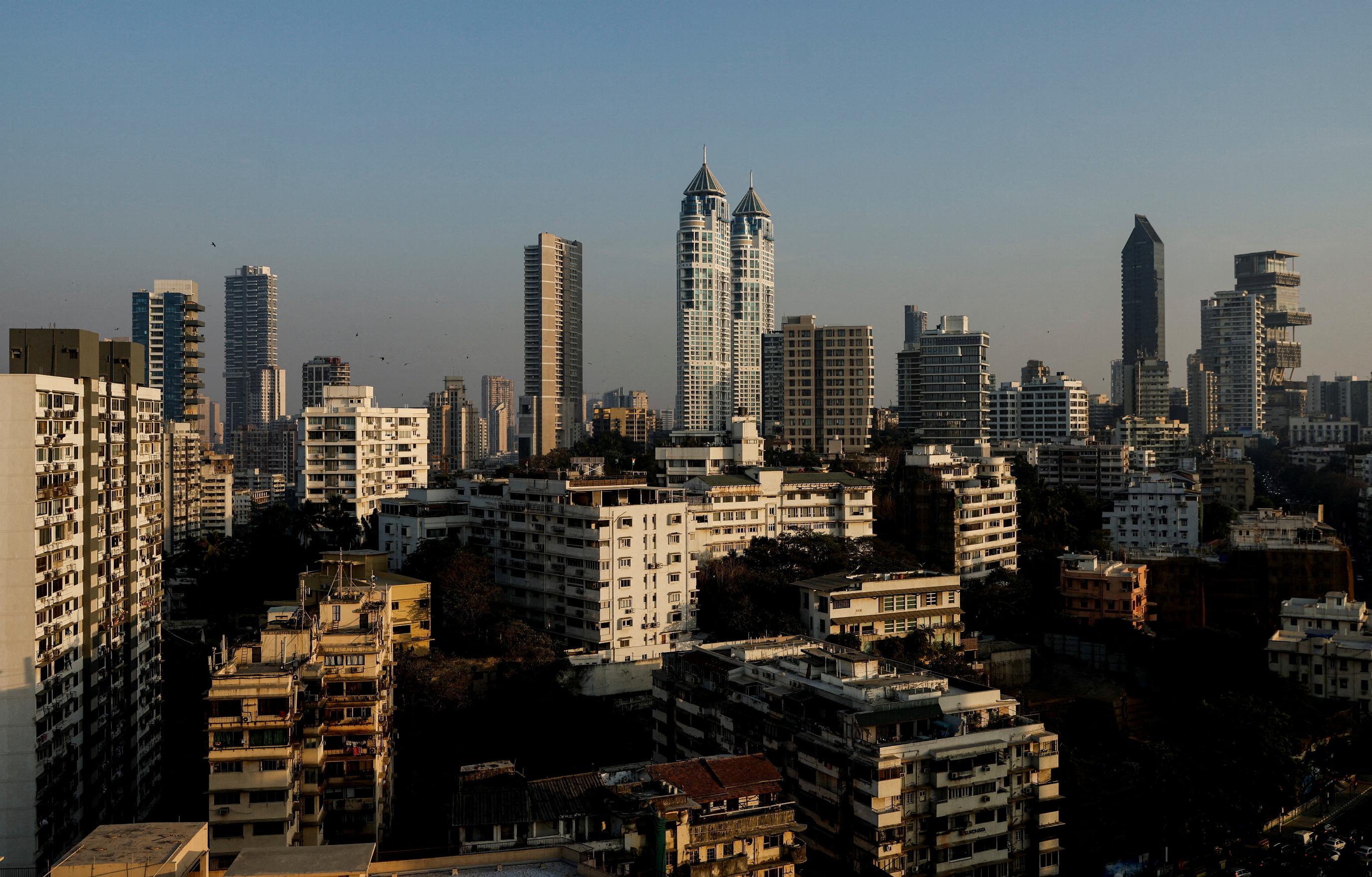
Oct 28 (Reuters) - Geopolitical conflicts and uncertainty about the trade policies of major economies are among the biggest risks for India's economy, the government's monthly economic report , opens new tab said on Monday, maintaining the current growth forecast. "Risks to growth arise from escalating geopolitical conflicts, deepening geoeconomic fragmentation and elevated valuations in financial markets in some advanced economies," the report said. Spillover from such risk factors could affect household sentiment in India, altering spending on durable goods in the world's fifth-largest economy, it added. India's government has projected economic growth of between 6.5% and 7% for the current fiscal year, down from 8.2% in the previous year, citing heightened geopolitical risks. Despite such factors, the report said the outlook for the Indian economy was good due to a positive agricultural outlook and expected stronger demand during the festive season. Rural demand is improving but urban demand "appears to moderate due to softening consumer sentiments, limited footfall due to above-normal rainfall, and seasonal periods during which people tend to refrain from new purchases", it said. Underlying demand conditions should be watched, it said. The report also said retail inflation has been under control, barring the possibility of a sharp spike in vegetable prices. "Near-term food inflation path will largely depend on the price trends in tomato, onion and potato in the coming months, necessitating a strong focus on controlling these prices in the short term," it said. Retail inflation in September was at 5.49%, the highest in nine months, due to higher food prices. Sign up here. https://www.reuters.com/world/india/india-govt-report-maintains-economic-growth-forecast-flags-global-risks-2024-10-28/
2024-10-28 10:32
Oct 28 (Reuters) - The pound was on track for its biggest monthly fall since September 2023 against the dollar while being roughly unchanged versus the euro with markets focused on major central banks' monetary easing paths. Bank of England officials showed last week a more cautious approach to policy easing, with Governor Bailey arguing inflation is being pushed down by annual base effects. Interest rate-setter Catherine Mann, meanwhile, said the cooling of price growth still had "a long way to go" before hitting the central bank's 2% target. Some analysts say that the pound has also benefited from its positive correlation to risky assets. Oil prices tumbled by more than $4 a barrel on Monday as fears of an escalation of the Middle East conflict subsided after Israel's retaliatory strike on Iran over the weekend did not disrupt energy supplies. Sterling was last up 0.1% against the U.S. dollar at $1.2970 and on track for a monthly fall of around 3%, the biggest since September 2023. The dollar was set to end the month with its most significant rise since April 2022 as strong economic data and bets on Donald Trump winning the presidency in the Nov. 5 election drove bond yields higher. The pound slipped 0.05% to 83.33 pence per euro and was set to end the month down by 0.1%. Traders are also focused on the new Labour government's first budget on Oct. 30. Yields on British government bonds climbed on Thursday after a newspaper said finance minister Rachel Reeves was set to give herself a lot more room for borrowing in this week's budget, which could slow the Bank of England's rate cuts. Analysts noted that under the pre-existing fiscal rules, the government would have limited additional headroom to introduce capital investment measures. "The policies announced in the budget will come on top of large increases in minimum wages," said Andrew Wishart, senior UK economist at Berenberg. "As we expect domestic demand to strengthen in 2025, those costs are likely to be passed on to customers in the form of higher prices, adding to inflation," he added. Such developments could lead the BoE to further slow down the pace of its rate cuts. Sign up here. https://www.reuters.com/markets/currencies/sterling-track-biggest-monthly-fall-since-september-2023-vs-dollar-2024-10-28/
2024-10-28 10:31
MUMBAI, Oct 28 (Reuters) - The Indian rupee ended flat on Monday, after briefly dipping to a lifetime low, pressured by the U.S. 10-year yield climbing to its highest since late July. The rupee dropped to a record low of 84.0850 to the dollar in afternoon trade, slipping past the previous low of 84.0825 it had hit last week. The currency settled at 84.0775 compared to its close of 84.0800 on Friday. The dollar index inched past 104.50 and most Asian currencies fell. The U.S. dollar and bond yields have been pushing higher on the back of rising odds of Donald Trump winning the presidential election and as data indicates the U.S. economy remains healthy. On Monday, the Reserve Bank of India (RBI) likely sold dollars via public sector banks to support the rupee, like it has done multiple times over recent days, traders said. "In the run-up to and immediate aftermath of U.S. elections, RBI's aim will be to curb volatility in rupee," A Prasanna, head of research at ICICI Securities Primary Dealership said in an interview to Trading India. The RBI would prefer the rupee to mimic the broader trend among emerging market currencies but with low volumes, said Prasanna, who expects a depreciation bias to persist due to "flaky" capital flows. Foreign investors have withdrawn $10 billion from India equity and debt markets in October, in the heaviest month of selling this year. RBI's constant intervention has stamped out volatility in the rupee, which last week traded in the narrowest range in at least 10 years, according to LSEG data. "The price action in spot (market) is solely dependent on the level the RBI is comfortable with," a trader with a private bank said. "Even if the rupee hits a fresh low, the expectation is that the currency will be brought back in this very narrow range." Sign up here. https://www.reuters.com/markets/currencies/rupee-inches-all-time-low-amid-rising-us-yields-2024-10-28/
2024-10-28 10:17
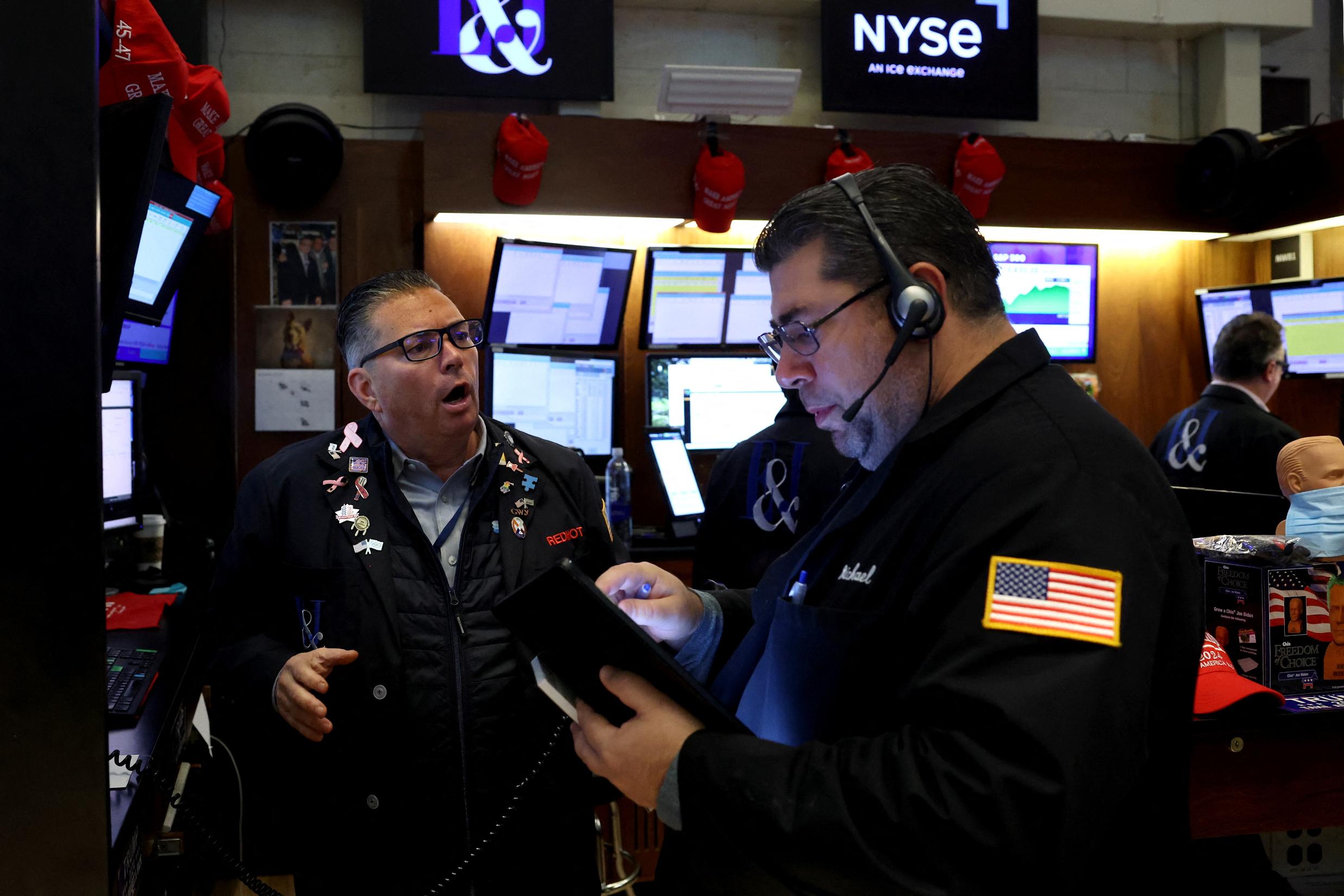
A look at the day ahead in U.S. and global markets from Mike Dolan A monster Halloween week of critical market events kicked off with a sharp slide in both crude oil prices and Japan's yen as tensions eased somewhat in the Middle East while Japan's election injected a rare bout of political uncertainty there. The yen JPY= took a hit first thing on Monday, slicing through 153 per dollar to its weakest since July, as investors figured the loss of a parliamentary majority for Japan's ruling coalition in weekend elections would hamper moves to lift interest rates further. A period of wrangling to secure a coalition is likely after Japan's Liberal Democratic Party and its junior partner Komeito won 215 lower house seats to fall short of the 233 majority. With the Bank of Japan meeting on Wednesday, the political consensus behind further tightening - as well as the country's fiscal and foreign policy settings - will remain in limbo for several weeks. LDP Prime Minister Shigeru Ishiba on Monday vowed to stay on, saying trying economic and geopolitical times call for continuity. The weakening yen, however, lifted Japan's Nikkei stock index (.N225) , opens new tab almost 2% and nudged the dollar up more broadly - with the dollar index (.DXY) , opens new tab on course to end its best month in more than two years. In another relief for inflation worriers, crude oil prices also fell sharply on Monday, dropping more than 4% after Israel's retaliatory strike on Iran over the weekend bypassed Tehran's oil and nuclear facilities and did not disrupt energy supplies - cooling tensions in the Middle East. Many of the comments from both sides following the strike appeared to step back somewhat from further escalation with new moves for a truce in Gaza back on the table. U.S. crude prices skidded below $68 per barrel for the first time in almost a month - and continued to track year-on-year losses of almost 20%. Still, with some $139 billion of two and five-year Treasury coupons up for auction later on Monday and next week's U.S. election looming, Treasury yields , climbed first thing to their highest in almost three months. After a flat Friday and with Monday's economic diary thin, U.S. stock futures were higher ahead of the bell - but traders were bracing for a week packed with market-moving events. Five of the so-called Magnificent seven of U.S. megacap stocks report earnings during the week - starting with Alphabet's (GOOGL.O) , opens new tab quarterlies on Tuesday, Microsoft (MSFT.O) , opens new tab and Meta (META.O) , opens new tab on Wednesday and Amazon (AMZN.O) , opens new tab and Apple (AAPL.O) , opens new tab on Thursday. Tesla's (TSLA.O) , opens new tab 22% surge on its earnings last week has whetted appetites for what may be coming down the pike. Alongside the BOJ decision, the health of the U.S. labor market once again comes into view - with a stream of updates on employment culminating in the release of the national payrolls report on Friday. Thursday also brings the release of the Federal Reserve's favored PCE inflation gauge for September - which is expected to see the annual "core" PCE rate tick down a tenth to 2.6%. It is a big week for Britain too, with the ruling Labour Party's first annual budget to be announced on Wednesday. Sterlng was steady ahead of the long-awaited event, but 10-year UK government bond yields briefly touched their highest in almost four months amid expectations of hefty borrowing increases. Stocks in Europe and Asia were higher generally on Monday. Mainland China and Hong Kong stocks ended marginally up as investors grew cautious ahead of key events next week, including a legislative meeting in Beijing and the U.S. presidential election. Key developments that should provide more direction to U.S. markets later on Monday: * Dallas Federal Reserve October manufacturing survey * US corporate earnings: Ford, ON Semiconductor, Regency Centers, Waste Management, SBA Communications, F5, Welltower, Cadence Design, Brown & Brown, Centerpoint Energy etc * European Central Bank Vice President Luis de Guindos speaks in Madrid, Bank of Canada Governor Tiff Macklem speaks in Toronto * US Treasury sells $69 billion of 2-year notes and $70 billion of 5-year notes; also sells $153 billion of 3- and 6-month bills Sign up here. https://www.reuters.com/markets/us/global-markets-view-usa-2024-10-28/
2024-10-28 07:49
JOHANNESBURG, Oct 28 (Reuters) - South Africa's rand edged lower on Monday, as investors await Wednesday's mid-term budget review - the first under the coalition government formed in June. At 1501 GMT, the rand traded at 17.7075 against the U.S. dollar , down 0.2% from its previous close. Finance Minister Enoch Godongwana's budget policy statement to parliament will include an update on the health of public finances midway through the fiscal year. A Reuters poll of economists published last week predicted that Godongwana will announce a lower 2024/25 budget deficit estimate than was given in February's main budget, but fiscal challenges are expected to slow consolidation efforts next year. "Although this is not a policy-setting event, any indication of credible fiscal reforms would support market confidence and the rand," Andre Cilliers, currency strategist at TreasuryONE, said in a note. Other domestic data releases this week include September credit extension and money supply data (ZACRED=ECI) , opens new tab, (ZAM3=ECI) , opens new tab on Tuesday, September producer inflation (ZAPPIY=ECI) , opens new tab and trade balance data (ZATBAL=ECI) , opens new tab on Thursday, and October vehicle sales figures (ZAVEHY=ECI) , opens new tab on Friday. On the stock market, the Top-40 (.JTOPI) , opens new tab index closed 0.6% higher. South Africa's benchmark 2030 government bond was marginally weaker, with the yield up 0.5 basis points to 9.29%. Sign up here. https://www.reuters.com/markets/currencies/south-african-rand-flat-mid-term-budget-weeks-highlight-2024-10-28/

2024-10-28 07:08
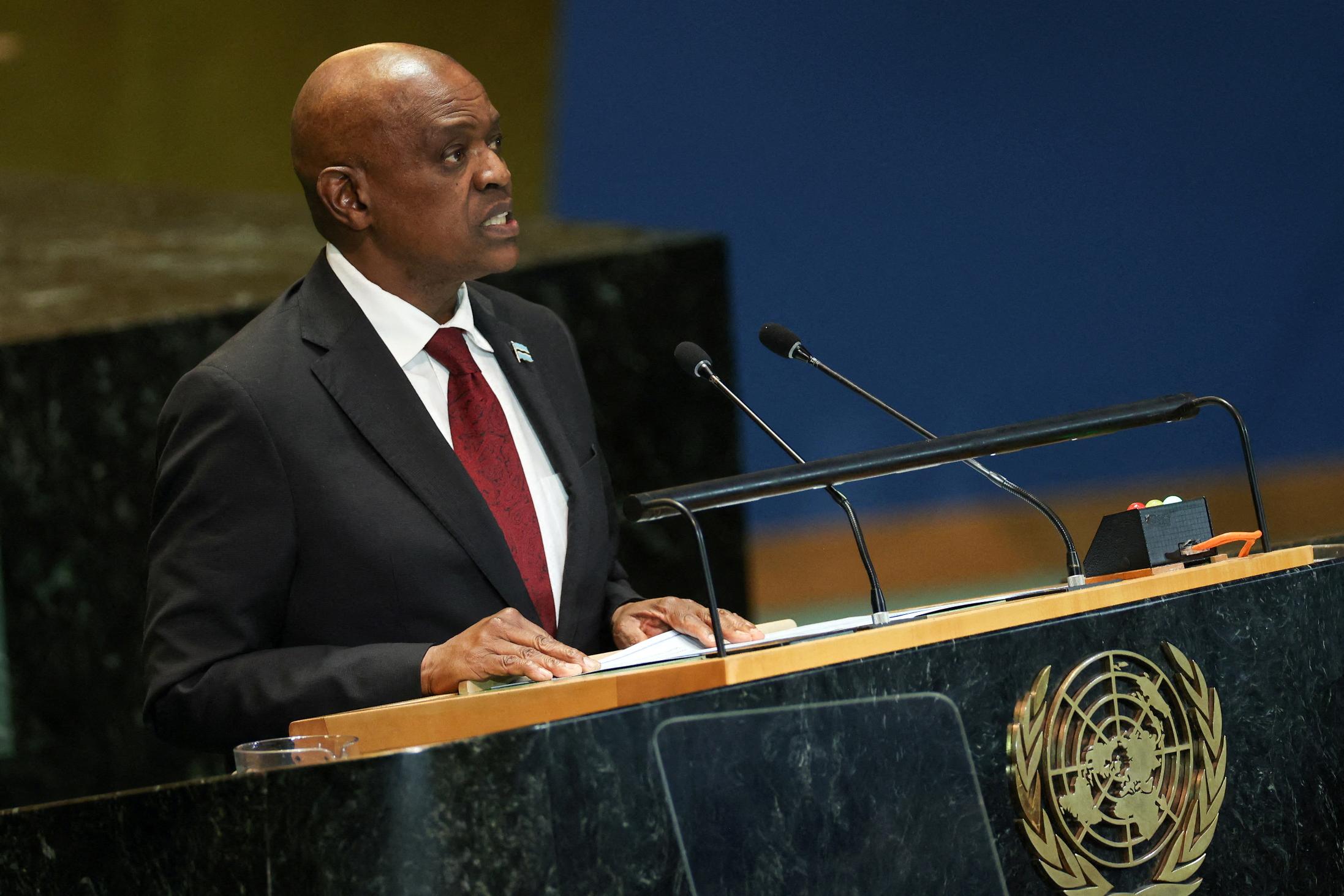
Botswana holds general election on Oct. 30 Ruling party has governed since 1966 Economy is suffering from decline in diamond demand GABORONE, Oct 28 (Reuters) - Botswana will hold a general election on Wednesday with President Mokgweetsi Masisi competing against three challengers for a second term in the diamond-rich southern African state. The poll could be competitive, analysts said, although a divided opposition gives the advantage to Masisi's Botswana Democratic Party (BDP), which has ruled the country of 2.3 million people since its independence from Britain in 1966. Botswana has enjoyed stability and relative prosperity thanks to its diamond wealth and small population, which gets free healthcare and education. It is the world's top producer by value of the gem. But a downturn in the diamond market has put a squeeze on revenues in the last few years, and the country has struggled to diversify its economy. Opponents say the BDP has been in power too long and accuse it of economic mismanagement and corruption, which it denies. "Our diamonds have not been selling since April so yes, our revenues are down but the economic fundamentals still remain intact," said Masisi at a presidential debate last week. "We are going to continue with the projects and policies we have come up with that are aimed at putting more money and wealth into the hands of the citizens of this country," he said. One success of his first term was negotiating a new contract with diamond giant De Beers which will give Botswana a greater share of its rough diamonds. He also lifted a ban on elephant hunting which he says benefits rural communities, and instated an import ban on some produce items to help farmers. His main challenger is Duma Boko of the opposition coalition Umbrella for Democratic Change (UDC). The other candidates are Dumelang Saleshando of the Botswana Congress Party and Mephato Reatile of the Botswana Patriotic Front, backed by former President Ian Khama who quit the BDP after a feud with Masisi over scrapping the hunting ban and other issues. Opponents have attacked Masisi's economic record, citing rising unemployment, which stands at around 28%. "It is not acceptable that a country such as ours which is the fifth richest per capita in Africa still has so many people living in poverty," said Boko at the debate. Botswana actually has the fourth highest gross domestic product (GDP) per capita of countries in sub-Saharan Africa, according to World Bank figures. Boko has pledged to more than double the minimum wage and increase social grants, saying he would get the money by reducing wasteful spending. The BDP has faced declining popularity but maintains a large majority in parliament, having won 38 of the 57 contested seats in 2019. The UDC won 15 seats. Voters in Botswana elect parliamentarians, who then elect the president. Analysts said the opposition is crippled by a lack of funding. "The playing field is not even," said Ringisai Chikohomero, from the South Africa-based Institute for Security Studies. After the last election the opposition claimed fraud and challenged the results at the High Court, which dismissed the case. Sign up here. https://www.reuters.com/world/africa/diamond-rich-botswana-votes-with-president-masisi-seeking-second-term-2024-10-28/