2024-10-27 23:24
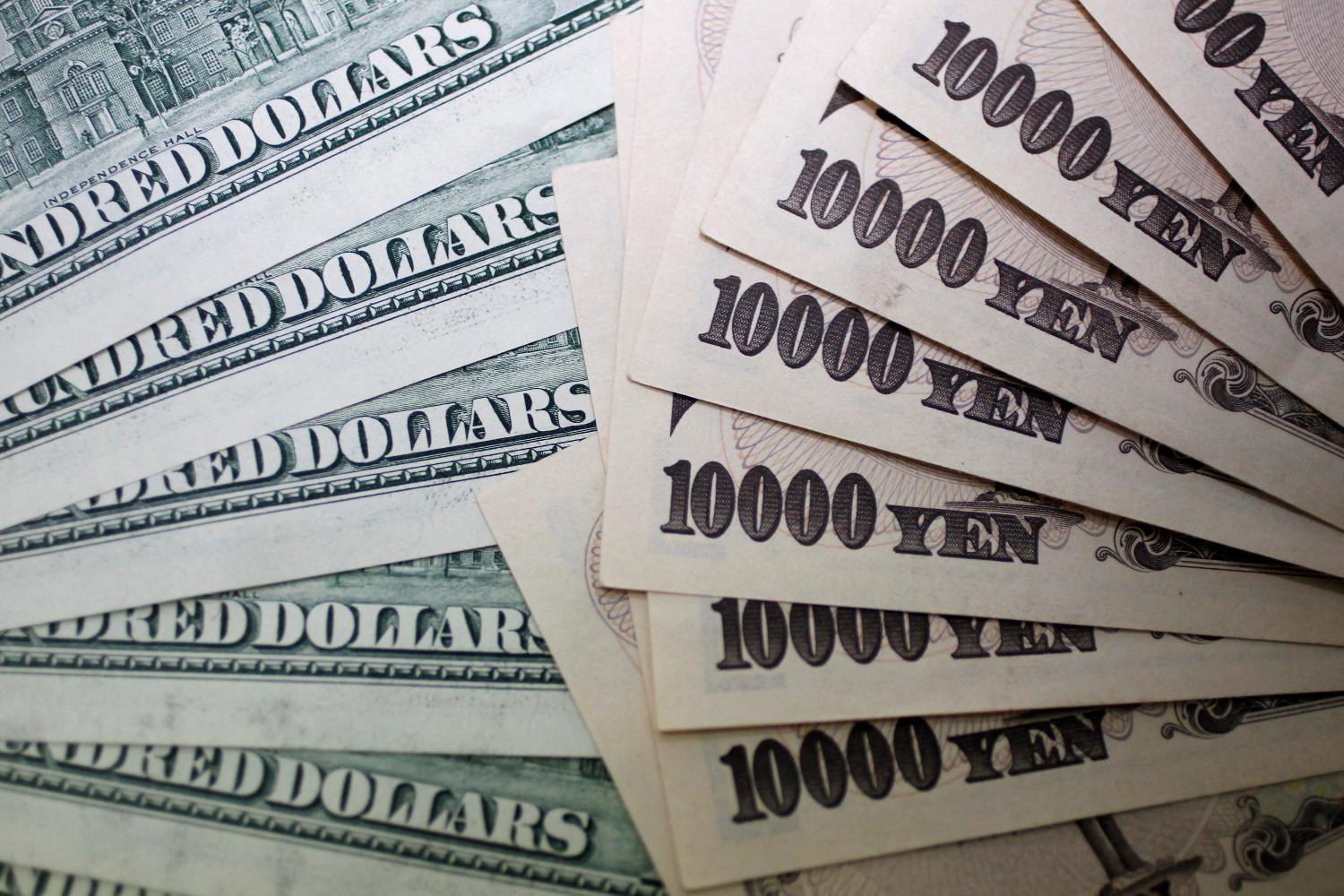
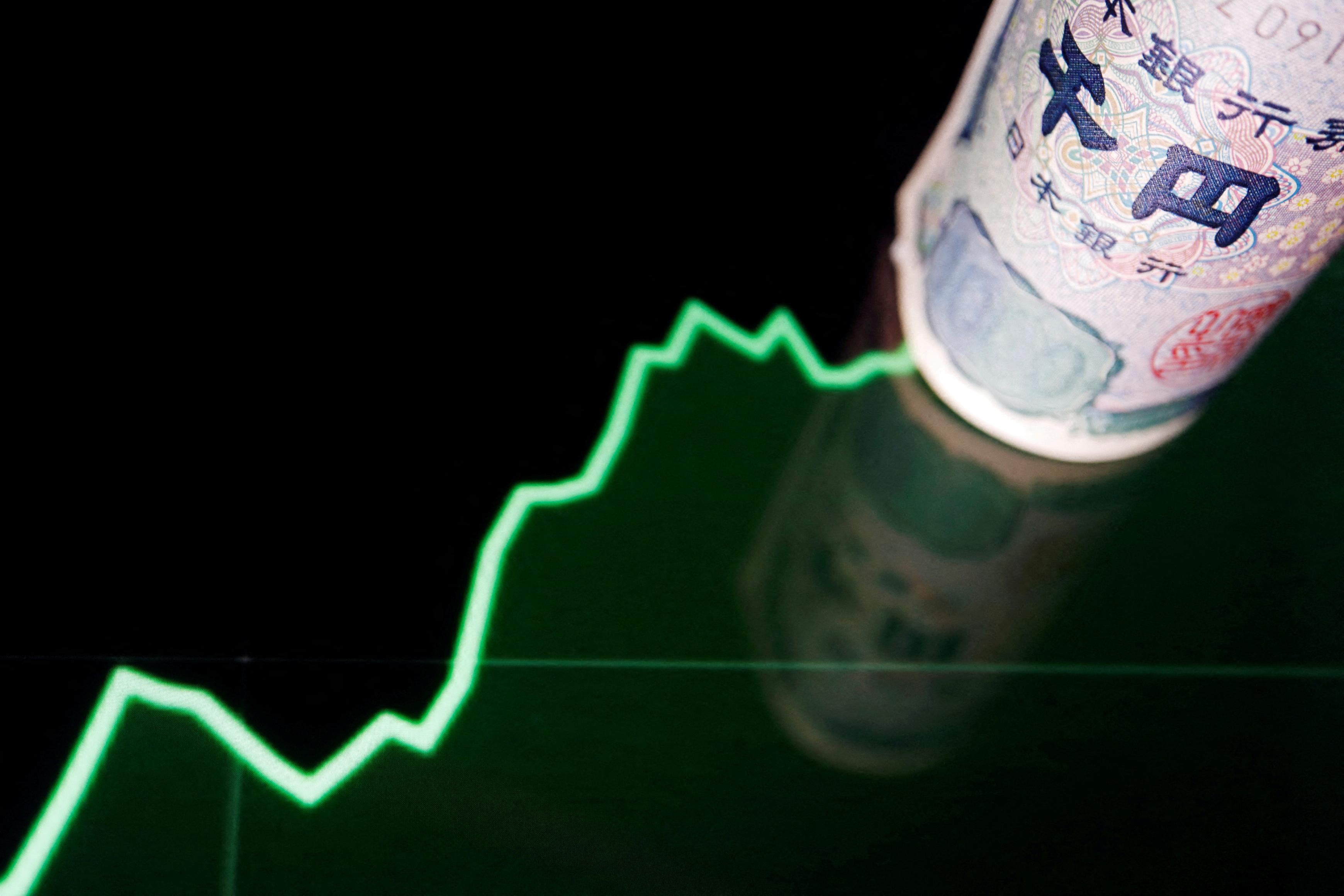
Dollar/yen hits 153.88 Dollar index eyes largest monthly rise since 2022 Analysts predict further yen weakness, potential BoJ caution NEW YORK, Oct 28 (Reuters) - The yen hit three-month lows against the dollar on Monday, remaining under pressure as an election loss by Japan's ruling coalition raises political and monetary policy uncertainty, while the U.S. dollar headed for its biggest monthly gain since April 2022. The dollar rose by as much as 1% to a high of 153.88, the yen's weakest level since late July. The yen was last down about 0.7% on the dollar at 153.34, bringing the decline in October to 6.4%, the largest of any G10 currency. "The yen has been the most volatile major currency this year, and a surprise election result has added to this uncertainty around monetary policy and fiscal policy going forward," said Adam Button, chief currency analyst, ForexLive, Toronto. "Once again, the reaction is to sell a bit of the yen. It is fresh in the mind of investors how the LDP leadership election caused the volatility to quickly unwound. So, it's a difficult one to take a side on." A period of wrangling to secure a coalition is likely after Japan's Liberal Democratic Party and its junior partner Komeito won 215 lower house seats to fall short of the 233 majority. Traders said the vote would likely result in a government without the political capital to preside over rising rates and could usher in another era of revolving-door leadership. Shigeru Ishiba was Japan's fourth prime minister in a little over four years, and further instability was widely expected to breed caution at the central bank, which meets to set rates this week. Analysts at BNY said the next immediate target for dollar/yen would be 155 with 160 a likely line in the sand that would draw intervention from the finance ministry. DOLLAR GAINS Elsewhere, the dollar headed for its largest monthly rise in two and a half years against a basket of major currencies, driven by signs of strength in the U.S. economy. Bets on Donald Trump winning the presidency have also lifted U.S. yields in anticipation of policies that could delay interest rate cuts. The U.S. dollar index has climbed 3.6% to 104.46 during October, its sharpest monthly rise since April 2022. It eased down 0.07% to 104.31. Most analysts argued that markets are increasingly pricing in a Republican sweep, with Trump winning the presidency and his party controlling both chambers of Congress. The euro, meanwhile , rose 0.15% to $1.0813, but was still down nearly 3% on the month. Analysts said the single currency could drop further if the U.S. enacts a global baseline tariff, in addition to higher duties on China, and other countries retaliate. Much of the move would come from higher U.S. policy rates in response to the inflationary impact of tariffs. Traders are also upping their bets that the European Central Bank could cut rates more aggressively, which is also weighing on the euro. Investors are now focusing on the U.S. October employment report this week, which is likely to be affected by a strike at Boeing and two hurricanes that hit the U.S. Southeast. The week ahead also includes inflation readings for Europe and Australia, gross domestic product data in the U.S. and purchasing managers' indexes for China. "The market will be looking quite closely for more signs into what's happening in December. (It's) going to be listening to what the reaction is to the stronger non-farm payrolls numbers. It comes down to the Fed's reaction function," said Peter Vassallo, FX portfolio manager at BNP Paribas Asset Management in Boston. He cautioned that with one week to go before the U.S. election, a calm day like Monday may not be the norm, as "some uncorrelated and wild moves is also possible" if economic data surprises this week and the lack of liquidity exaggerates market moves. Sign up here. https://www.reuters.com/markets/currencies/yen-slips-japans-election-result-clouds-boj-rate-hike-prospects-2024-10-27/
2024-10-27 21:49
Oct 28 (Reuters) - A look at the day ahead in Asian markets. A hugely pivotal week for world markets begins with investors in Asia already bracing for volatile trading in Japanese assets on Monday after Prime Minister Shigeru Ishiba lost his parliamentary majority in the country's general election. Ishiba's Liberal Democratic Party has ruled Japan for almost all of its post-war history, so the initial market reaction to a political earthquake of this magnitude could trigger a selloff in the yen and Japanese stocks, and higher Japanese Government Bond prices. More broadly, the shockwaves could undermine the political stability and continuity many analysts say the Bank of Japan needs to conduct monetary policy. The BOJ sets interest rates on Wednesday. The BOJ's decision is one of several key events this week that could go a long way to shaping market and investment trends for the rest of the year. Five of the 'Magnificent Seven' megacap U.S. tech giants release company earnings this week, and U.S. nonfarm payrolls for October will be released on Friday. Staying in Asia, purchasing managers index data this week will give the earliest insight into how economic activity across the continent held up in October, most notably in China. Is it too early for Beijing's recent stimulus to have had any effect? Probably. And the market impact is understandably beginning to fade too. Chinese stocks inched up 0.8% last week, consolidating after a few rollercoaster weeks. Meanwhile, figures on Sunday showed industrial profits in China plunged 27.1% in September from a year earlier, the steepest fall this year. Asian stocks more broadly softened last week, with the MSCI Asia ex-Japan index down nearly 2%, the third weekly decline in a row. Japan's benchmark Nikkei 225 index fell 2.7% for its second consecutive weekly loss as investors reduced risk exposure ahead of Sunday's general election. Contrast that with the Nasdaq, which got a huge boost from Tesla's remarkable rally after its third-quarter earnings. The tech-heavy index rose for a seventh week in a row, and over the past year it has risen in all but 15 of the last 52 weeks. The S&P 500 dipped slightly, although it is still hugging the previous week's all-time high, while the Dow Jones shed more than 2%. The emerging markets team at Barclays summed up the general mood pretty well: "The dollar is likely to remain on the front foot, and U.S. rates are likely to remain elevated, creating a somewhat painful backdrop for EM assets," they wrote on Friday. But with so much event risk looming, not least the U.S. Presidential election on Nov. 5, there may be a limit to how high Treasury yields can go this week. Here are key developments that could provide more direction to markets on Monday: - Fallout from Japanese election - Hong Kong trade (October) - Thailand trade (October) Sign up here. https://www.reuters.com/markets/asia/global-markets-view-asia-graphic-2024-10-27/
2024-10-27 13:48
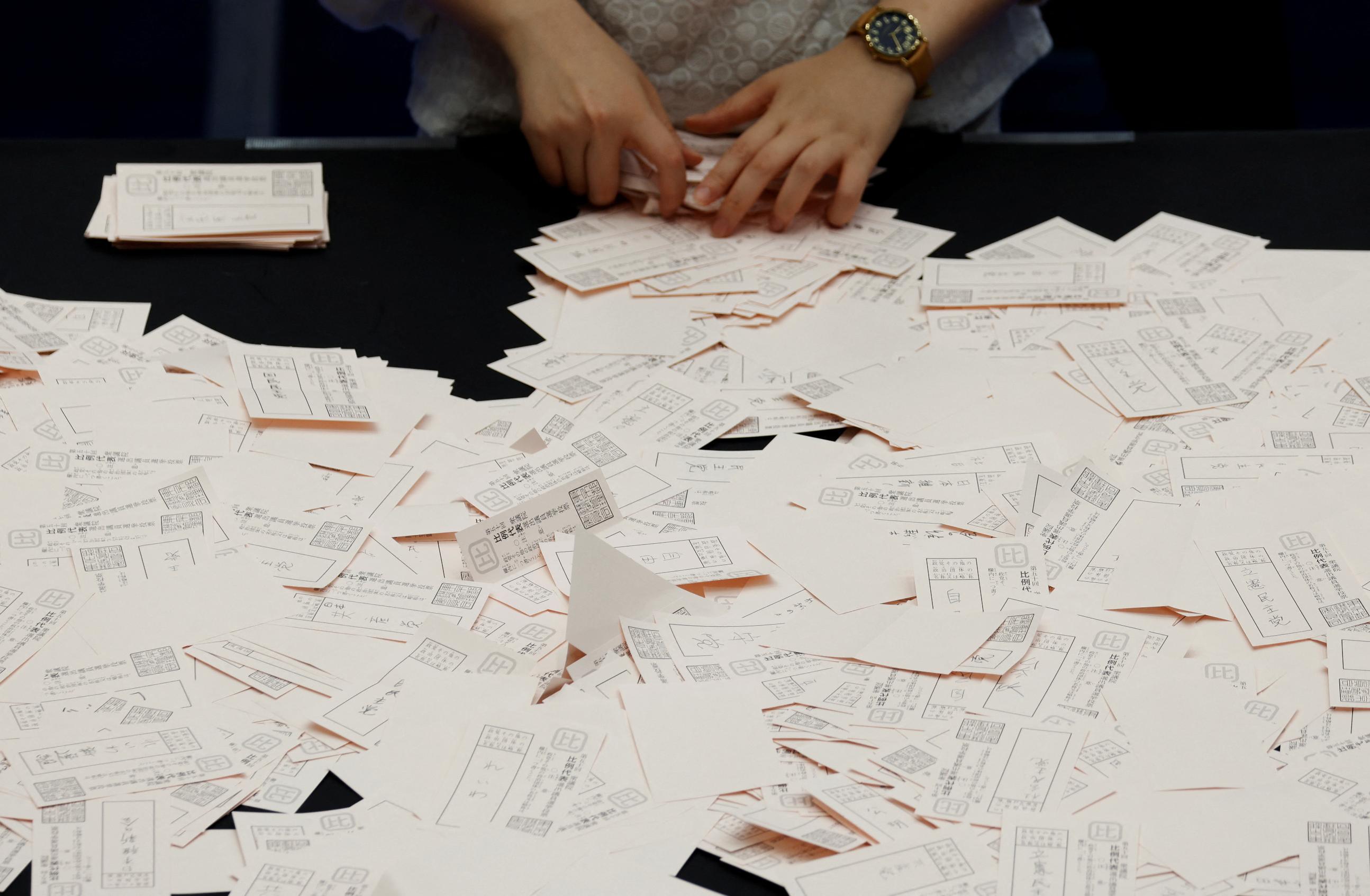
TOKYO, Oct 28 (Reuters) - Japanese stocks rose on Monday as the yen careened to a three-month low after Prime Minister Shigeru Ishiba's coalition lost its parliamentary majority in a drubbing in Sunday's election, raising uncertainty over the path for policy and the economy. Ishiba's Liberal Democratic Party (LDP), which has ruled Japan for almost all of its post-war history, and junior coalition partner Komeito took 215 seats in the lower house of parliament, short of the 233 needed for a majority. The LDP previously held 247 seats and Komeito held 32. The outcome may force parties into fractious power-sharing deals to rule, potentially ushering in political instability. The Nikkei share average (.N225) , opens new tab ended the day up 1.82% to 38,605.53 after rising by as much as 2.2%. It opened 0.4% lower. The yen accelerated declines throughout the morning session, slumping as far as 153.885 per dollar for the first time since July 31. It was changing hands about 0.8% lower at 153.505 per dollar as of 0600 GMT. "The result of the election itself is a negative for the stock market, without a doubt, because of the rise in political uncertainty," said Masahiro Ichikawa, chief market strategist at Sumitomo Mitsui DS Asset Management. "However, the rally is partly on the fact that this big risk event is now behind us, so there's a sense of relief. That and the weaker yen." A weaker currency benefits Japan's heavyweight exporters, as it inflates the value of overseas sales. It also makes Japanese stocks cheaper for foreign investors. The transport equipment sector (.ITEQP.T) , opens new tab was the best performer among the Tokyo Stock Exchange's 33 industry groups, jumping 3.5%. Toyota (7203.T) , opens new tab rallied more than 4% and Nissan (7201.T) , opens new tab climbed 3.5%. Chip-sector stocks also outperformed, tracking gains among U.S. peers from Friday. Chip-testing equipment maker Advantest (6857.T) , opens new tab soared 4.6%. "I don't expect the rally will continue," said Norihiro Yamaguchi, senior Japan economist at Oxford Economics. "The equity market is likely to stay lacklustre till the political uncertainty clears up," he said. "I would expect bond yields to stay high as concern over looser fiscal management will intensify." Benchmark 10-year Japanese government bond futures fell 0.19 yen to 143.87 yen, reversing an early rise. The yield curve steepened, with the two-year JGB yield rising 0.5 basis points (bps) to 0.45%, while the 30-year yield gained 5 bps to 2.22%. The 10-year yield added 2.5 bps to 0.97%. The election result drew market attention to the policy stance of opposition parties that could become potential partners, many of which favour low interest rates. Coalition losses could reduce the chance the next government will implement "more challenging agenda items such as hiking the corporate tax rate", analysts at Morgan Stanley said in a note. Analysts at BNY said the dollar could potentially rise to 155 yen again, as the BOJ downplays the immediate need for a rate increase. The central bank next decides policy on Thursday, with no change expected. Japan's general election comes nine days before votes are counted in the closely contested U.S. presidential race, with investors weighing the possibility of a bullish dollar and higher yields in the event of another Donald Trump presidency and Republican sweep of the Senate and House of Representatives. Sign up here. https://www.reuters.com/markets/asia/japans-nikkei-yen-set-lurch-political-uncertainty-2024-10-27/
2024-10-27 12:59
NEW YORK, Oct 25 (Reuters) - The rally in U.S. stocks is wobbling as it confronts a stretch of potentially market-shaking events, starting next week with corporate results from tech titans and the closely watched employment report, while the U.S. election is also nearing. The benchmark S&P 500 (.SPX) , opens new tab is up about 22% on the year, but has edged back from record-high levels in recent days. Still, equities remain at elevated valuations, which could make stocks vulnerable should any of the near-term market events fall short of expectations. The S&P 500's price-to-earnings ratio, based on earnings estimates for the next 12 months, is at 21.8, near its highest level in over three years, according to LSEG Datastream. "People will be on pins and needles for most of next week," said Peter Tuz, president of Chase Investment Counsel Corp. "The market is expensive ... Any time you have an elevated market the potential for a bigger downdraft exists if something disappointing happens." Five of the "Magnificent Seven" group of megacap companies that have played a major role in driving the market over the past couple of years are set to report quarterly results next week: Google parent Alphabet (GOOGL.O) , opens new tab, Microsoft (MSFT.O) , opens new tab, Facebook owner Meta Platforms (META.O) , opens new tab, Apple (AAPL.O) , opens new tab and Amazon (AMZN.O) , opens new tab. Because of their massive market values, those companies jointly account for 23% of the weight of the S&P 500, meaning market reaction to their results could sway broader indexes in coming days. The Magnificent Seven stocks trade an average forward P/E ratio of 35 times, as the companies overall have posted much stronger profit growth than the rest of the S&P 500. But that gap is expected to close in coming quarters. "I see a handful of companies that deservedly have very high multiples but if that reason for being deserved falters then there's a lot of room below for those stocks to fall," said Bryant VanCronkhite, senior portfolio manager at Allspring Global Investments. Investors will be looking across these megacap companies to see if their increased spending on artificial intelligence capabilities is starting to show benefits. AI "hyperscalers" -- Microsoft, Amazon, Alphabet and Meta -- are set to increase capital expenditures by 40% this year, while such capex spending for the rest of S&P 500 companies are on pace to fall 1% in 2024, according to BofA Global Research. Tesla (TSLA.O) , opens new tab, the first of the Magnificent Seven to report results, saw its shares surge on Thursday after CEO Elon Musk said he expects vehicle sales to grow 20% to 30% next year. Next week is the busiest week of the third-quarter reporting season overall, with well over 150 S&P 500 companies set to post results. The U.S. jobs report on Nov. 1 comes as investors are weighing whether a stronger-than-expected economy could lead to fewer interest rate cuts by the Federal Reserve than initially anticipated. Economists expect the employment report to show that the economy created 140,000 jobs in October, according to Reuters data. The report could be "messy" in the wake of two significant storms, but the wages data will be important to watch, said Nanette Abuhoff Jacobson, global investment strategist at Hartford Funds. "If we saw an uptick in wages, that would be concerning," Jacobson said. "The bond market is already getting a whiff of possibly stronger growth than expected, possibly inflation rearing its ugly head again, and the possibility of the Fed not being able to ease as much as what's priced in." Benchmark Treasury yields climbed to three-month highs this week, reflecting expectations of a potentially less dovish Fed as well as possibly increased spending under the next president. Bets on Donald Trump prevailing have risen on prediction markets in recent weeks, with the Republican seen as backing policies including tariffs that could lead to higher inflation. The run of market-sensitive events continues the following week, with Election Day on Nov. 5 and the Fed's next monetary policy decision on Nov. 7, which could put investors increasingly on edge in the coming days. The Cboe Volatility Index (.VIX) , opens new tab, an options-based indicator of demand for protection from market swings, was last around 19, after edging below 15 late last month. "Investors should expect market volatility in the lead-up to the U.S. presidential election," analysts at UBS Global Wealth Management said in a note on Thursday. As Nov. 5 "inches closer, market sentiment is likely to stay vulnerable." text_section_type="notes">Wall St Week Ahead runs every Friday. For the daily stock market report, please click Sign up here. https://www.reuters.com/markets/us/wall-st-week-ahead-stocks-rally-faces-gauntlet-tech-earnings-jobs-data-election-2024-10-25/
2024-10-27 08:33
SEOUL, Oct 27 (Reuters) - South Korea is experiencing minimal economic impact following Israel's retaliatory strike on Iran, but may consider a further reduction in fuel oil tax if global market volatility increases, President Yoon Suk Yeol's office said on Sunday. The comments, made during a meeting to assess the security and economic situation, follow the government's recent decision to extend subsidies on oil products for an additional two months until end-December, although with lower tax cut rates. "The impact of geopolitical risks in the Middle East on our economy is expected to be limited," Yoon's office said in a statement. "We are expecting no major impact on the domestic crude oil supply and prices, but if there is high volatility from the global market, we will respond through various stabilisation measures such as an additional reduction in fuel taxes." The President's office also committed to maintaining a 24-hour monitoring system to prepare for a potential crisis in the Middle East, promising to react immediately as necessary. Separately, the finance ministry also reported minimal impact on crude supplies, trade, supply chains and maritime shipping in a statement following an intra-agency meeting. They will continue monitoring the situation. Sign up here. https://www.reuters.com/business/energy/south-korea-says-it-may-consider-additional-oil-tax-cut-2024-10-27/
2024-10-27 06:07
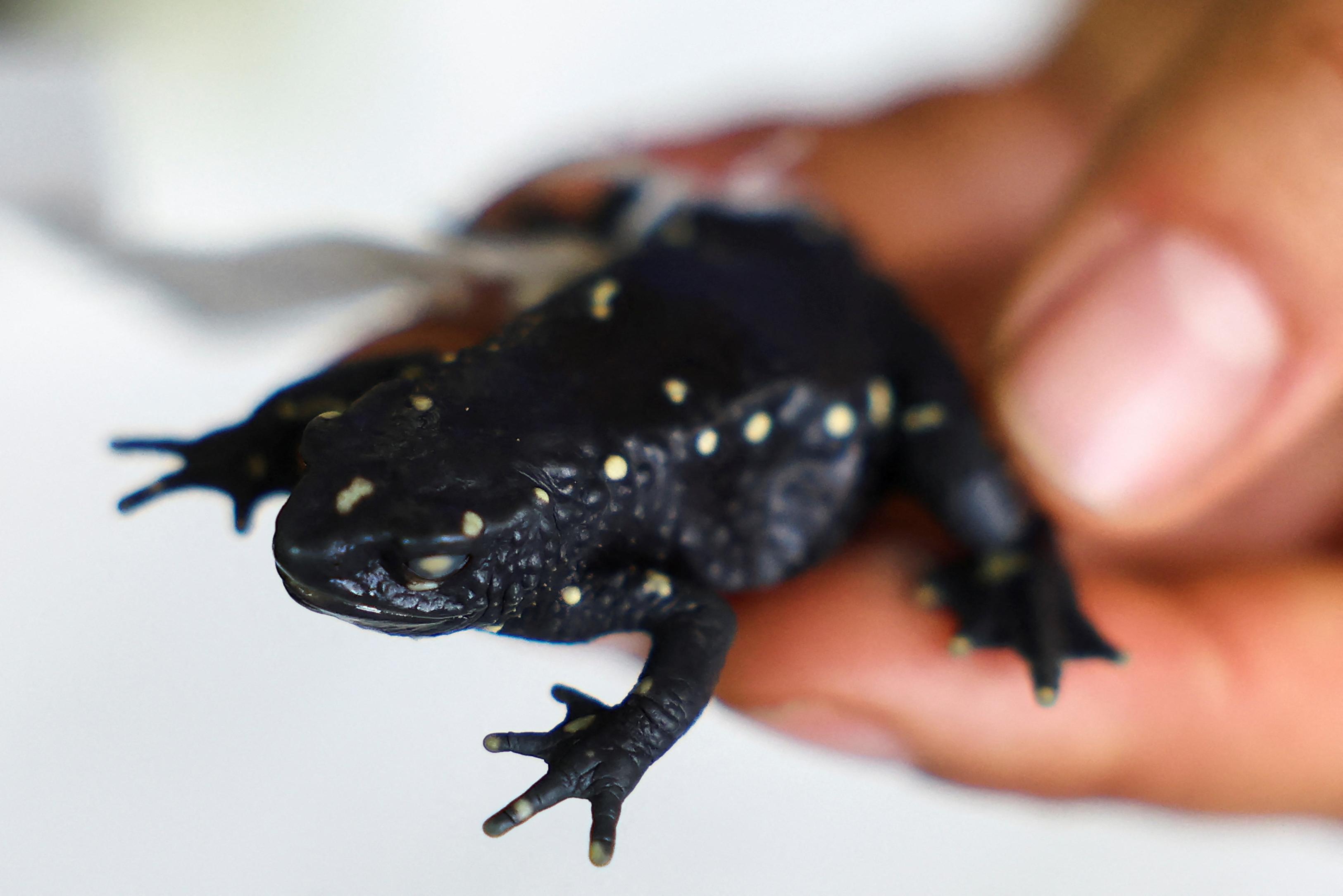
New plant species discoveries tripled after peace deal Findings include beetles, frogs, orchids, rare amphibian Revived armed groups cause deforestation and endanger researchers Oct 27 (Reuters) - For more than five decades as violent conflict raged through Colombia's highlands and rainforests, wildlife thrived. From brilliantly colored orchids to tiger-striped frogs, scientists have uncovered a wealth of new animal and plant species in the years since a 2016 peace deal saw most rebels with the Revolutionary Armed Forces of Colombia (FARC) lay down their weapons. The accord made it safe to enter many parts of the country, often pristinely preserved amid the conflict. Peace, it turned out, offered a boon for nature research. Scientists have found roughly triple the number of new plant species in Colombia each year since the peace accord as they did before the deal, according to a new analysis by Colombian botanist Oscar Alejandro Perez-Escobar shared exclusively with Reuters. But the FARC deal did not end Colombia's conflict. Though the accord opened many areas of Colombia up for science, other armed groups - including former FARC fighters who rejected the peace deal - and crime gangs filled the vacuum in some areas and brought renewed dangers for both researchers and wildlife. Although deforestation fell to a 23-year low last year, it is on the rise again in 2024 as severe drought fed wildfires, and illegal logging, mining and roadbuilding destroyed the jungle. And for environmentalists, Colombia is now the world's most dangerous place – with 79 killed last year, the most ever in one country in a single year, according to nonprofit Global Witness. The analysis of some 14,000 Colombian plant species recorded at Royal Botanic Gardens Kew showed that researchers have published an average of 178 new finds in the years since the peace deal. That compares with 53 on average in the years before the accord. The analysis, which has not been peer-reviewed, also accounted for the imbalance between the few years of data since 2016 as compared to centuries of prior species discovery. While the analysis shows a jump in publications after the peace deal, it does not prove the accord was the cause, Perez-Escobar said. He recalled his first expedition after the peace deal, traveling with a team of researchers from 16 countries through a mountainous ecosystem as Colombian soldiers guarded their moves in 2018. "I was excited, but also nervous," said Perez-Escobar, who works for Kew Gardens in Britain. "Excited of the prospects of finding new species ... but also nervous because of the danger it represented going there." That expedition was part of a wave of biodiversity research in Colombia's former rebel strongholds, which scientists had steered clear of for fear of kidnapping or death at the hands of the FARC. On the trek high above the treeline into the mountainous Paramo ecosystem, he spotted small yellow-and-brown flowers - a new species of orchid. A paramo is a very moist, cold and often foggy alpine grassland high up in the Andes. Since then, Perez-Escobar working in partnership with local organizations , opens new tab has helped to identify two new flowering plants in a cloud forest and last year the first known polymorphic orchid in its genus of 1,200 species, meaning it blooms two different types of flowers on the same plant. CROCODILES, DRONES & DEFORESTATION As a biology student in the 1990s, botanist Mauricio Diazgranados would collect plants in the mountains an hour's drive from Bogota. "I could see the helicopters shooting at the guerrillas and the guerrillas fighting back," said Diazgranados who now works as science director of the New York Botanical Garden. At one point, he worked as a volunteer park ranger in the Sumapaz area where the FARC once kept its headquarters. He said he was once detained by rebels on suspicion of spying but managed to escape during the night and flee. Diazgranados later helped to organize dozens of science expeditions into previously dangerous areas under Colombia BIO, a government program launched to better understand the country's wilds after the peace deal. He still has cardboard boxes filled with dried plant samples that he thinks are new species but has yet to describe in publication. While the conflict may have helped to shelter Colombia's wildlife for decades, it is the country's location and geography that helped it to flourish into what it is today. Located near the warm band of the Equator where North and South America meet, the country includes beaches, tropical rainforests and three distinct chains of the Andes that soar from deep valleys to more than 5,000 meters (17,000 feet). The diversity of these environments has encouraged more species to evolve over time. Colombia topped a list this year of countries thought to have the most undiscovered plant species, according to a study , opens new tab led by Kew Gardens scientists that was published in August. It is not only the peace deal that is driving more discoveries, Diazgranados said. More trained scientists are researching Colombia than ever, he said, including some turning away from nearby Venezuela amid the economic and political crisis there. Scientists at Colombia's state-run Alexander von Humboldt Biological Resources Research Institute have found dozens of new species including beetles, frogs, a spider and a caecilian - a rare group of legless amphibians that live underground. It can take several years for a species find to be confirmed as new. "They were inaccessible areas, but also areas with enormous information and natural wealth," said Jhon Cesar Neita, who curates Humboldt's entomology and invertebrate collection, about former FARC-held areas that opened up to research. "All of us scientists wanted to go." Scientists with the Wildlife Conservation Society (WCS) have also recorded another 10 amphibian finds, including a green-brown striped rain frog to be named for Colombia's peace deal: Pristimantis pactumpacis. After the peace deal, WCS researchers were able to use drones to count eastern Colombia's critically endangered Orinoco crocodiles in an area previously too dangerous, said WCS Colombia's scientific director, German Forero. But after more than 100 people were reported killed in violence related to armed groups in the area this year, Forero said, WCS staff currently cannot travel back to where the Orinoco crocodile lives. LOSING GAINS Colombia has put the security issue in focus at this year's U.N. Biodiversity Conference, COP16, choosing the theme "Peace with Nature" for the event being held in the southwestern Colombian city of Cali. More than 10,000 soldiers, police and U.N. guards are mobilized to protect the summit, while delegates from nearly 200 countries discuss how best to preserve nature worldwide. There is currently intense fighting between the armed groups in some of the most biodiverse parts of the country, according to sources within the Colombian military. In the Pacific province of Choco, home to verdant rainforest and famously wet weather, the ELN rebels are fighting the Clan del Golfo crime gang, while competing FARC dissident groups face off in several Amazon provinces. Along with continuing violence by armed groups, Colombia is now also at risk of rapid environmental decline, scientists warned. Deforestation has jumped 40% in the first three months of this year, according to government data. Environment Minister Susana Muhamad in April blamed a group of former FARC fighters called the Estado Mayor Central for the forest clearing in the Amazon rainforest, saying it blocks outsiders from entering areas it controls while pressuring locals to cooperate. "It's miserable, the psychological pressure that the armed groups are exerting on the communities," Muhamad said in an April statement , opens new tab. "In this case, they are putting nature in the middle of the conflict." The faction of the recently splintered EMC led by Alexander Diaz Mendoza, better known by his nom de guerre Calarca Cordoba, said in a statement the group has no involvement in deforestation and works with communities to boost sustainable practices. The group said it blocks entry in order to prevent government efforts to "financialize" the forest through products like green bonds. (This story has been corrected to specify that German Forero is the scientific director in paragraph 26) Sign up here. https://www.reuters.com/world/americas/colombias-peace-opened-wildlife-discovery-new-violence-frustrates-progress-2024-10-27/