2024-10-25 21:21
SAO PAULO, Oct 25 (Reuters) - The board of Brazilian miner Vale (VALE3.SA) , opens new tab has approved Marcelo Bacci as the company's new chief financial officer, according to a securities filing released on Friday, which added that the executive will start his new role on December 2. Bacci, who served as finance chief for pulp maker Suzano (SUZB3.SA) , opens new tab, will replace Murilo Muller, who is temporarily serving in the job. Following Bacci's resignation, Suzano's new chief financial officer will be Marcos Moreno Chagas, the company announced in a separate filing also on Friday. Sign up here. https://www.reuters.com/markets/commodities/brazils-vale-taps-marcelo-bacci-new-cfo-2024-10-25/

2024-10-25 20:52
Blackstone in talks to buy interstate pipeline stakes EQT said in July would sell stakes as part of debt reduction Stakes include piece of Mountain Valley Pipeline Oct 25 (Reuters) - Private equity firm Blackstone (BX.N) , opens new tab is in advanced talks to acquire minority stakes in the interstate natural gas pipelines owned by EQT Corp (EQT.N) , opens new tab for about $3.5 billion, people familiar with the matter said on Friday. If the talks are successful, the deal would help the natural gas producer slash the debt pile it accumulated from its acquisition of pipeline operator Equitrans Midstream earlier this year. Blackstone is planning to make the investment through its credit and insurance arm, the sources said, requesting anonymity as the discussions are confidential. A deal could be signed in the coming weeks if the talks don't fall apart, the sources added. EQT will continue to operate the pipelines as part of the deal with Blackstone, the sources said. The transaction would help Blackstone generate steady income that it could deploy into its various investment strategies, while also giving it exposure to energy infrastructure assets, including the controversial Mountain Valley Pipeline, a 300-mile natural gas line running from West Virginia to Virginia. Mountain Valley entered service in June after a years-long legal battle over its construction. Part of EQT's stake in the entity that owns the pipeline is one of the most significant assets within the portfolio that is being sold. EQT and Blackstone declined to comment. Pittsburgh-based EQT holds stakes in 940 miles of interstate pipelines with a capacity of 4.4 billion cubic feet per day of natural gas, according to a March presentation from the company. In July, EQT said the pipeline portfolio generated nearly $700 million of adjusted earnings before interest, tax, depreciation and amortization. The transaction with Equitrans helped EQT transition from being an exploration and production company to a full-fledged vertically integrated natural gas provider. However, the deal saddled EQT with a debt pile of nearly $14 billion. In July, the company said it planned to cut its debt load by $5 billion through cash it generated from operations and asset sales. EQT, which has already agreed to divest assets worth $1.1 billion to Equinor (EQNR.OL) , opens new tab, said at the time that it planned to sell minority stakes in the pipelines. Blackstone is no stranger to energy infrastructure. Its current portfolio includes pipeline operator Tallgrass Energy and a stake in the company that controls the Elba Island liquefied natural gas (LNG) facility. The New York-based buyout giant, which currently has more than $1 trillion in assets under management, announced in September 2023 it would merge its credit and insurance arms into a single unit as part of an effort to bolster returns and the value of its managed assets. Money managers in recent years have been seeking ways to harness low-cost insurance premiums, which they can invest in other higher-return strategies, while ensuring payouts to insurance policyholders. Sign up here. https://www.reuters.com/markets/deals/blackstone-talks-buy-us-pipeline-stakes-eqt-35-billion-sources-say-2024-10-25/
2024-10-25 20:38
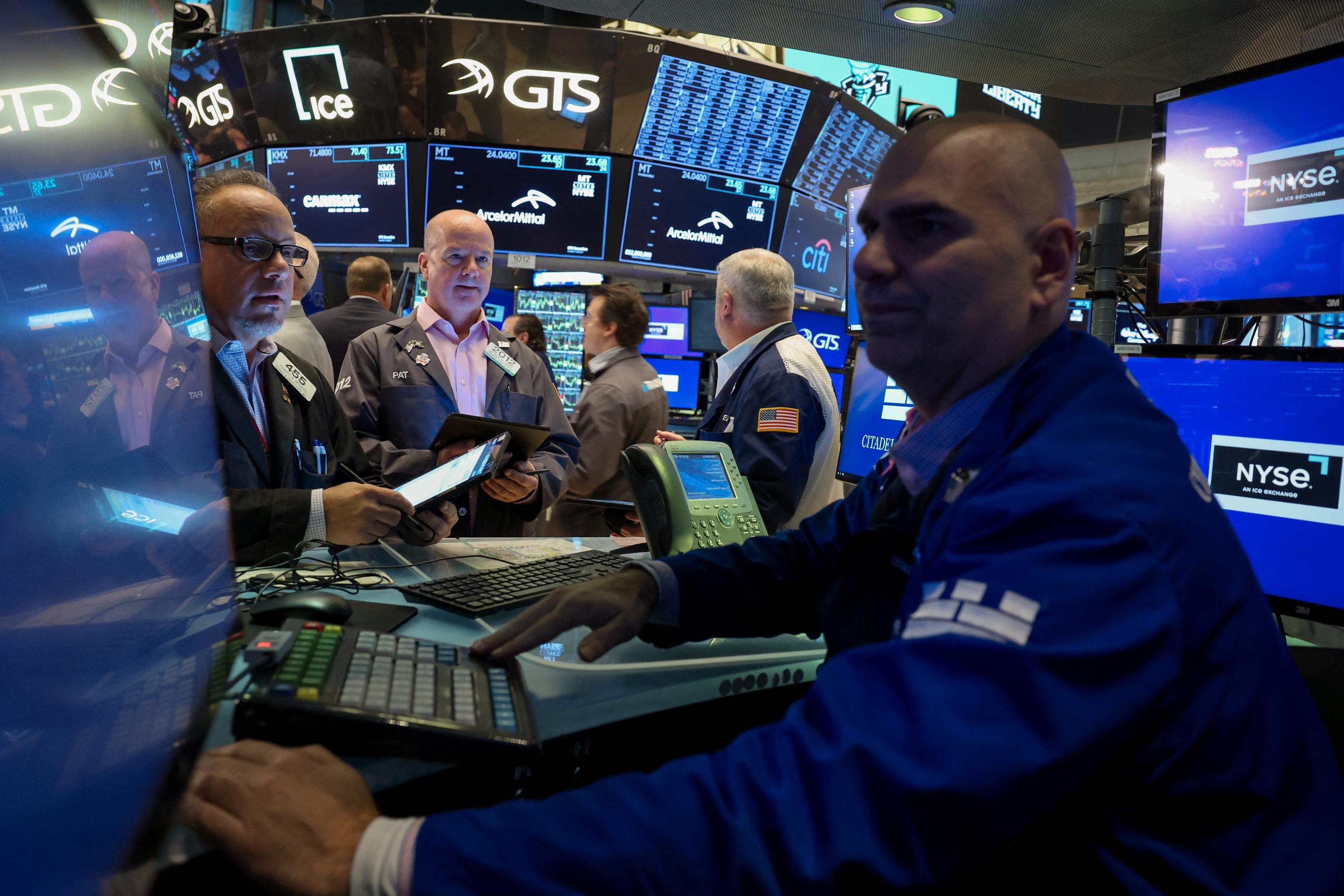
Nvidia market cap briefly overtakes Apple's Capri plummets after US judge blocks Tapestry merger Nasdaq up 0.56%, Dow down 0.61%, S&P flat Oct 25 (Reuters) - The Nasdaq ended higher on Friday, driven by megacap shares, as investors awaited quarterly results from some of Wall Street's biggest companies next week. Tesla (TSLA.O) , opens new tab shares rose 3.36% a day after surging 22% on the electric vehicle maker's sales forecast. Amazon (AMZN.O) , opens new tab, Apple (AAPL.O) , opens new tab and Microsoft (MSFT.O) , opens new tab also rose. "Tesla numbers helped rekindle some optimism of investors that the Magnificent Seven rally is not over," said Brian Jacobsen, chief economist at Annex Wealth Management. He was referring to the group of interest rate-sensitive technology stocks which have surged on enthusiasm for artificial intelligence. Chip heavyweight Nvidia (NVDA.O) , opens new tab gained, briefly overtaking Apple (AAPL.O) , opens new tab as the world's most valuable company based on its shares. The benchmark 10-year Treasury note yield edged higher as investors awaited U.S. employment data next week for clues on the likely path of Federal Reserve interest rate cuts. Earlier this week, the yield reached a three-month high of 4.26%, weighing on the stock market. The Dow Jones Industrial Average (.DJI) , opens new tab fell 259.96 points, or 0.61%, to 42,114.40, the S&P 500 (.SPX) , opens new tab lost 1.74 points, or 0.03%, to 5,808.12 and the Nasdaq Composite (.IXIC) , opens new tab gained 103.12 points, or 0.56%, to 18,518.61. The Dow slumped as banking shares fell, with Goldman Sachs (GS.N) , opens new tab down 2.27%, and as fast-food chain McDonald's (MCD.N) , opens new tab lost 2.97% while coping with an E. coli outbreak linked to its hamburgers. "Banks have rallied as (U.S. presidential candidate Donald) Trump's odds (of winning) increased, so it seems investors are taking some profits," said Michael Rosen, chief investment officer at Angeles Investments. Regional lender New York Community Bancorp (NYCB.N) , opens new tab dropped 8.26% after reporting its fourth straight quarterly loss, primarily due to its commercial real estate loans. Continued uncertainty around the U.S. election has made investors cautious. Equities have been unsettled this week by a rapid rise in yields as bets on rate cuts by the Fed unraveled on expectations of a stronger economic outlook. Only the Nasdaq closed the week with gains. The tech-heavy index rose 0.16%, while the S&P fell 0.96% and the Dow sank 2.68%. "The Fed perhaps got a little too dovish ahead of the data. ... The growth and inflation numbers don't necessarily justify easing behavior," said Arnim Holzer, global macro strategist at Easterly EAB Risk Solutions. Investors are still pricing in another 25-basis-point rate cut at the Fed's November meeting and about two rate cuts by the end of the year, LSEG data showed. The week starting Oct. 28, the final stretch before the Nov. 5 U.S. presidential election, is crucial for Wall Street. This is when results from megacap tech firms including Alphabet (GOOGL.O) , opens new tab, Apple (AAPL.O) , opens new tab and Microsoft (MSFT.O) , opens new tab are due, along with the October U.S. nonfarm payrolls report. "Next week looms large with five of the Magnificent Seven stocks reporting and a host of tier one economic releases spanning third quarter," said Paul Eitelman, chief investment strategist for North America at Russell Investments. Capri Holdings (CPRI.N) , opens new tab slumped 48.89% after a U.S. judge blocked a pending merger between the fashion holding company and handbag maker Tapestry (TPR.N) , opens new tab. Shares of Tapestry rose 13.54%. Most of the 11 S&P sectors closed down, with utilities leading the pack. Declining issues outnumbered advancers by a 1.56-to-1 ratio on the NYSE. There were 180 new highs and 43 new lows on the NYSE. The S&P 500 posted 30 new 52-week highs and two new lows while the Nasdaq Composite recorded 78 new highs and 87 new lows. Volume on U.S. exchanges was 11.54 billion shares, compared with the 11.28 billion average for the full session over the last 20 trading days. Sign up here. https://www.reuters.com/markets/us/futures-gain-treasury-yields-fall-tesla-slips-2024-10-25/
2024-10-25 20:06
PANAMA CITY, Oct 25 (Reuters) - The Panama Canal's profit increased about 9.5% in the fiscal year ended in September to $3.45 billion despite a severe drought that reduced the number of vessels that passed through the waterway, its authority said on Friday. The third driest year in the canal's history reduced water available to operate, forcing its authority to cut the number of ships authorized to pass per day between late 2023 and early 2024, while limiting their maximum draft allowed. The restrictions, which caused long delays for some vessels to pass and forced others to seek alternative routes, were removed later this year after rainfall replenished the country's water reservoirs. The waterway handled 423 million tons of cargo through its locks and saw passage of 27.3 ships per day on average, down from about 36 the previous year. But a 5% reduction in operational costs helped ease the financial effect of the drought. Revenue increased by $18 million to $4.99 billion, the authority's vice president of finances, Victor Vial, told journalists, citing preliminary figures. The canal, which is frequently not filling the 36 passage slots per day it is now offering, is adding incentives for some vessels to return, including bulk carriers and liquefied natural gas tankers, while advancing $8.5 billion in projects for the next seven years including new infrastructure. "Transits are slowly recovering," Vial said. A new long-term reservation system allows shippers to participate in auctions to secure slots up to a year before passage. Other measures include conservation strategies that reduced water usage for each passage by 12% in the fiscal year. Panama is betting on a $1.6 billion project to dam the Rio Indio river as a long-term solution to deal with extreme weather events. Creating the new reservoir is expected to require to relocation of hundreds of families living near the canal's area. Sign up here. https://www.reuters.com/markets/commodities/panama-canals-net-income-rose-345-bln-fiscal-year-despite-drought-2024-10-25/

2024-10-25 19:57
Oct 25 (Reuters) - Tether's top executive said on Friday the company has seen no sign it is under investigation, after the Wall Street Journal reported U.S. authorities are probing potential violations by the cryptocurrency firm of sanctions or anti-money laundering rules. Federal investigators, led by the U.S. Attorney's Office in Manhattan, are scrutinizing whether the cryptocurrency has been used by third parties to fund illegal activities such as the drug trade, terrorism and hacking - or to launder the proceeds generated by them, the WSJ said, citing unnamed sources. Tether is the world's largest stablecoin, a type of cryptocurrency designed to hold a fixed value over time. "There is no indication that Tether is under investigation," Tether CEO Paolo Ardoino said on X. A spokesperson for the U.S. attorney's office declined to comment. The Treasury Department has been weighing sanctions on Tether because of widespread use by sanctioned individuals and groups, the WSJ report said. The crypto firm has been under investigation for years in connection with potential bank fraud by backers, the report said. The Treasury Department's Financial Crimes Enforcement Network did not respond immediately to requests for comment. "The article ... carelessly glosses over Tether’s well-documented and extensive dealings with law enforcement to crack down on bad actors seeking to misuse tether and other cryptocurrencies," Tether said in a statement about the WSJ report. Sign up here. https://www.reuters.com/technology/tether-ceo-denies-probe-us-federal-investigators-2024-10-25/

2024-10-25 19:52
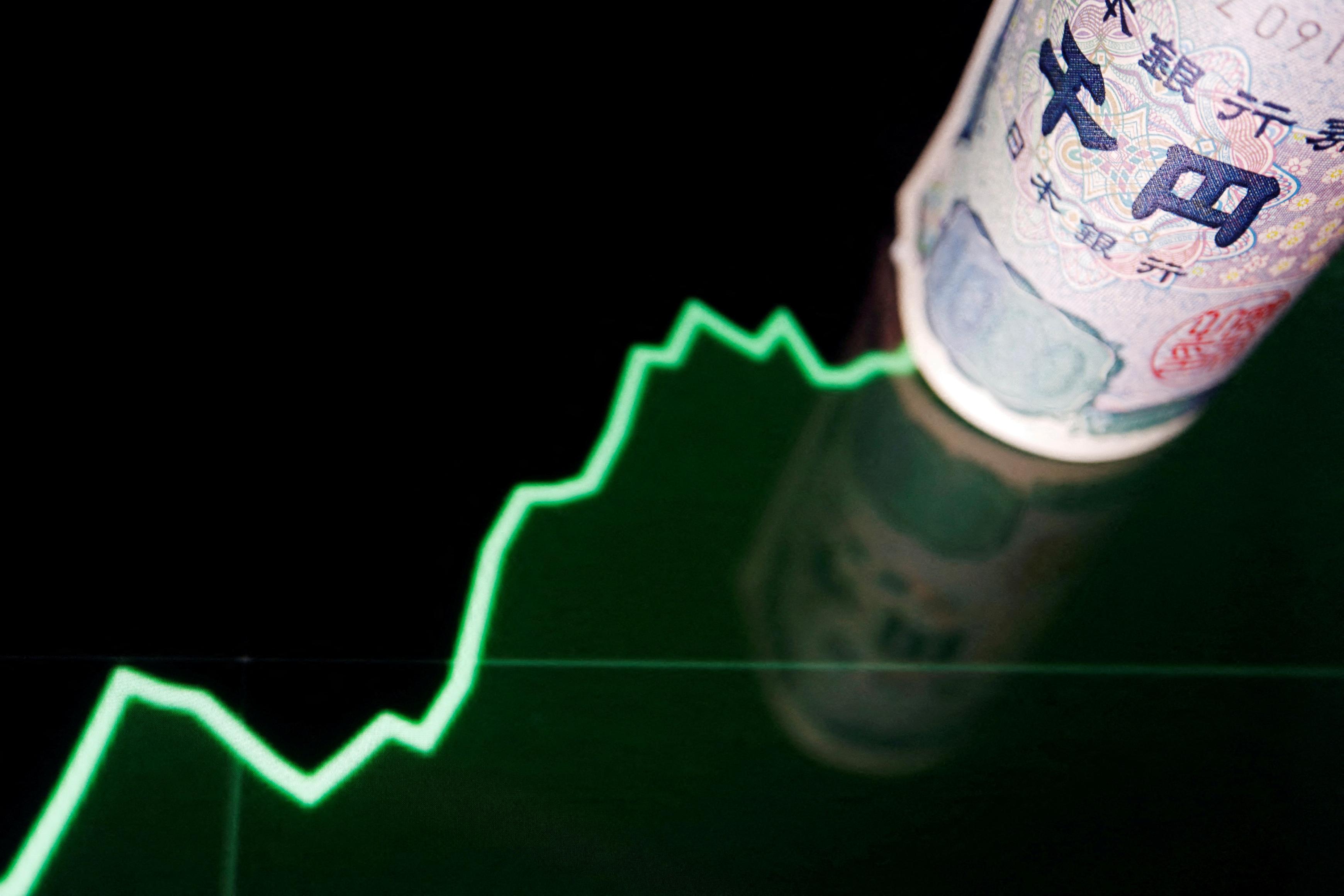
IMF urges BOJ to raise interest rates cautiously, gradually Consumption improving, good chance of solid wage hikes next year Japan should avoid extra budgets unless big shock hits economy WASHINGTON, Oct 25 (Reuters) - A weak yen is beneficial for Japan's economy as the boost to exports exceeds the increase in the cost of imports, a senior International Monetary Fund (IMF) official said on Friday. Nada Choueiri, the IMF's Japan mission chief, also urged Japan to raise interest rates at a gradual pace and compile supplementary budgets only when a big shock hits the economy. "We would advise the Bank of Japan to remain cautious, as they have been so far, and to be gradual" in the pace of rate hikes, since there was high uncertainty over the inflation outlook, she said in an interview. The yen has resumed its declines recently against the dollar on expectations that the U.S.-Japan interest rate divergence will remain wide, posing a headache for authorities who fret of the hit to households from rising import costs from a weak yen. But Choueiri said the benefit from rising exports from a weak yen exceeded the rising costs in imports for Japan, which is "a very outward-oriented" economy. "So, the yen depreciation on net benefits growth in Japan," she said. The yen's falls triggered warnings from Japanese Finance Minister Katsunobu Kato, who said on Wednesday the yen's recent "one-sided, rapid" moves warranted "heightened vigilance." "It's important to recognize that the Japanese authorities are committed to a flexible exchange rate regime," she said, when asked whether rapid yen moves would justify Tokyo intervening in the currency market. TREADING CAUTIOUSLY After exiting from a decade-long, radical stimulus in March, the Bank of Japan raised short-term interest rates to 0.25% in July and signaled its resolve keep hiking if the economy makes progress toward durably hitting its 2% inflation target. The IMF expects Japan's inflation to sustainably hit 2% with price growth increasingly driven by domestic demand, Choueiri said, meeting the prerequisite for more rate hikes. But the Bank of Japan must tread cautiously in raising rates given various risks, such as the potential hit to exports from trade fragmentation, the chance of consumption and wage growth weakening, and the fallout from yen moves on inflation. "The first priority is to remain data-dependent and analyze all the data that comes, and to be very, very gradual in the process of raising the policy rate," she said. The Bank of Japan is widely expected at a two-day policy meeting next week to keep its short-term policy rate steady at 0.25%. Most economists polled by Reuters expect it to hike rates again by March next year. In its World Economic Outlook issued this month, the IMF projected Japan's economic growth to accelerate to 1.1% in 2025 from 0.3% this year as rising real wages boost consumption. Japan was seeing early signs of strengthening consumption, and had "real chances" of achieving strong wage hikes next year, Choueiri said. With the weak yen pushing up the cost of fuel and food, however, politicians are keen to cushion the blow to households from rising living costs. Japan's new prime minister, Shigeru Ishiba, has pledged to compile a supplementary budget to fund another large-scale spending package after the general election on Sunday. Such a step would come on top of numerous spending packages deployed since the COVID-19 pandemic, which included blanket subsidies to curb gasoline and utility costs - moves that have added to Japan's already huge public debt. "The practice of supplementary budgets is better left for times when there are big shocks in the economy that cannot be accommodated by automatic stabilizers," Choueiri said. Any spending increase must go to areas that promote growth, such as infrastructure, and targeted to those who need support rather than blanket subsidies like those to curb fuel costs, she said. Sign up here. https://www.reuters.com/world/japan/imf-sees-weak-yen-beneficial-japans-economy-urges-gradual-rate-hikes-2024-10-25/