2026-02-09 05:02
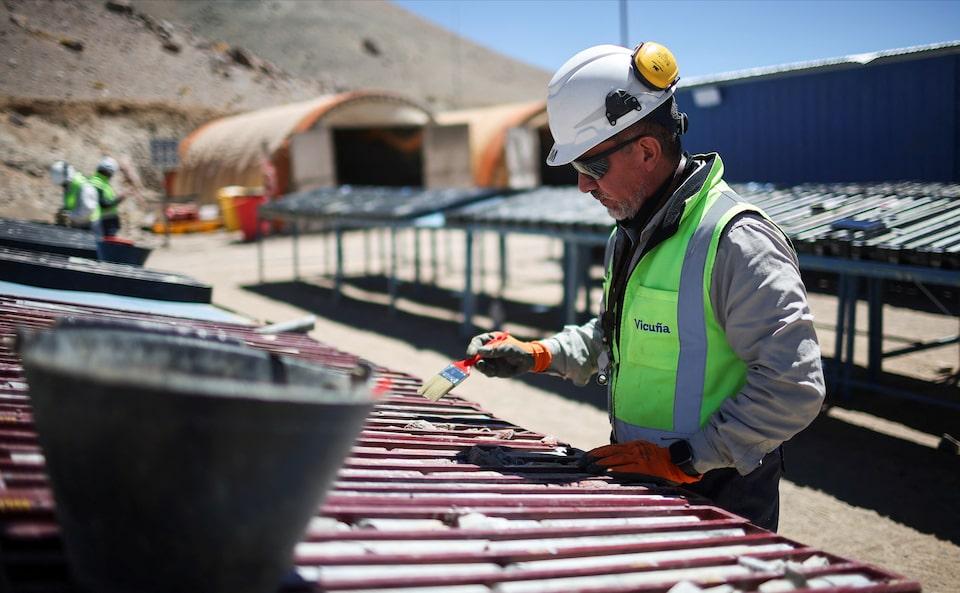
Australia's BHP, Canada's Lundin Mining combine on projects Combined investment could be double that of 2025 Argentina has not produced copper since 2018 BATIDERO, Argentina, Feb 9 (Reuters) - High in the Andes Mountains, more than 4,200 meters above sea level on the Argentina–Chile border, mining company Vicuña Corp. aims to double its investment this year in one of the world’s biggest copper bets, a company executive said. Vicuña Corp., formed by Australia’s BHP (BHP.AX) , opens new tab and Canada’s Lundin Mining (LUN.TO) , opens new tab, could invest about $800 million this year in the Filo del Sol and Josemaría mines, according to communications director Caterina Dzugala. The two projects could turn out to be among the most consequential copper developments globally. Sign up here. "In 2025, almost $400 million was invested... and we aspire to double that figure this year," Dzugala said during a visit to the Batidero camp, the project’s operational base in San Juan province. The projects form the Vicuña District, one of the world’s largest undeveloped copper, gold and silver deposits, according to the company. Vicuña estimates total investment at $5 billion, though local officials and industry sources put the figure as high as $15 billion. The company declined to confirm a final total ahead of an integrated technical report due later in the first quarter. Argentina has not produced copper since the Alumbrera mine closed in 2018. It is seeking to re‑enter the global market as governments and automakers warn of looming shortages of the metal critical to electrification. On a February afternoon, midsummer sun settles over the Vicuña projects, where thin air and sudden weather shifts are part of daily operations. At that altitude, oxygen levels drop sharply. Visitors are required to undergo medical screenings before traveling to the site. Geologists sort freshly extracted samples as crews advance along rough mountain roads toward the self‑contained Batidero camp, built to house more than 1,000 workers on a stark landscape of foxes and roaming vicuñas. The project is expected to begin production in 2030, with both mines processing concentrate at a central plant in Josemaría, which has an estimated lifespan of 25 years. A STRATEGIC BET Argentina’s flagship copper development is advancing as President Javier Milei seeks to attract foreign capital through sweeping incentives for the mining sector. Vicuña has applied to join the government’s Large Investment Incentive Regime (RIGI), which offers tax and legal benefits to major export projects. Together, the deposits contain 13 million metric tons of measured copper and 25 million inferred, along with substantial gold and silver resources, according to the company. Still, building roads and power lines in the high Andes remains a challenge, with debate over whether the burden should fall on the state or private companies. For Juan Arrieta, Vicuña’s geology manager, the district’s value lies in what remains to be proven. “The Filo del Sol area is four times larger than that of Josemaría,” Arrieta said, adding that the district “has been described as the greatest discovery of the last 30 years worldwide in terms of resources." https://www.reuters.com/business/bhps-vicua-could-double-investment-argentina-copper-project-800-mln-2026-2026-02-09/
2026-02-09 04:55
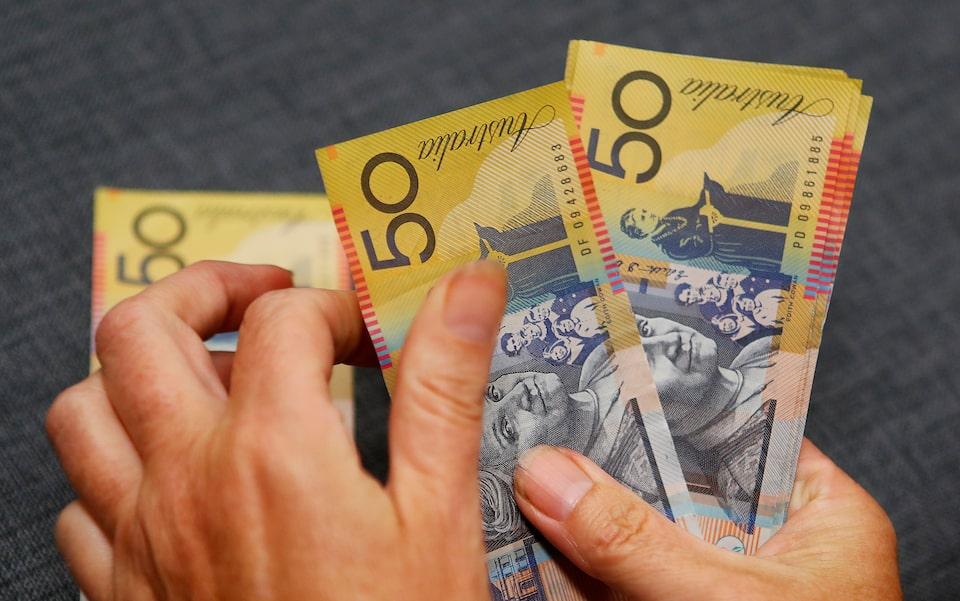
SYDNEY, Feb 9 (Reuters) - A major Australian pension fund has been increasing the hedging of its international equities portfolio, saying the Australian dollar has been undervalued as the country's central bank starts to tighten rates while most major economies keep rates on hold or prepare to cut. Jeff Brunton, the head of portfolio management at HESTA, which has A$100 billion ($70.15 billion) in funds under management, said the fund has been boosting its holdings of the Australian dollar. Sign up here. "We're long-term investors and we are quite valuation driven and our long-run valuation models for the Australian dollar have been suggesting for quite a while now that it has been undervalued," Brunton told Reuters in a phone interview. "If we're holding international equities and the Australian dollar is rising, the value in Australian dollars and those international equities would be falling. But the hedge protects the portfolio in that environment. And we've had more Australian dollars and less foreign currency compared to our long-term settings." Most Australian pension fund investors in U.S. equities would have very little currency hedging because the dollar was expected to rise on negative shocks. HESTA is the second major fund to increase its international equity hedging recently, with Australia's second-largest fund Australian Retirement Trust saying it has lifted its hedging strategy lately. Increasing Australian dollar buying to hedge international equities portfolios by pension funds could put upward pressure on the currency, according to analysts. The Australian dollar rose 4.3% last month to hit its highest in three years, and it is up almost another 1% in February. The Reserve Bank of Australia last week raised the official cash rate by 25 basis points to 3.85%, making it one of the few global central banks to be increasing rates at a time when most others are either cutting rates or keeping them on hold. HESTA holds A$23.45 billion worth of international shares, according to the fund’s figures. "We've been underweight foreign currency versus our long-term plan. And we think we've probably been underweight relative to how our peers would be managing foreign currency," Brunton said. Investors have been watching and waiting for the Australian dollar to rise for years. The trade surplus is widening as commodity prices have climbed. Benchmark 10-year government bond yields are the highest in the G10 and at the three-year tenor, the yield advantage over the U.S. is its widest in nearly a decade. Late last month, speculative positions flipped from a small net short to a net long bet on the Aussie . ($1 = 1.4255 Australian dollars) https://www.reuters.com/world/asia-pacific/major-australian-pension-fund-says-aussie-dollar-undervalued-boosts-currency-2026-02-09/
2026-02-09 04:36
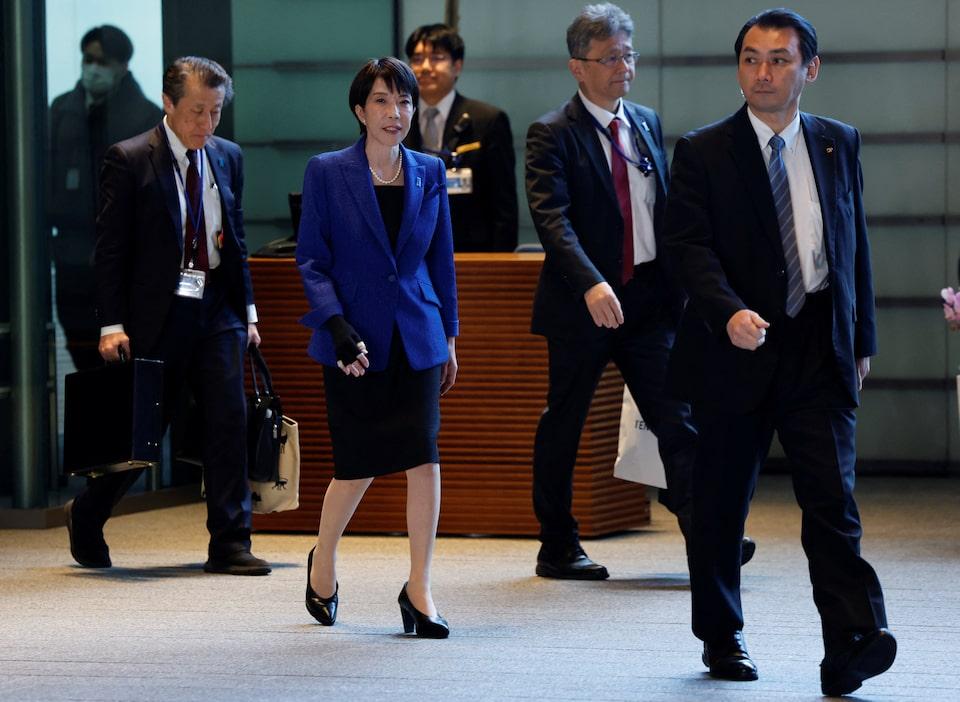
Takaichi's ruling party delivers supermajority in Sunday vote Takaichi repeats pledge to suspend food tax Says govt will not issue fresh debt, discuss funding with others Focus on debate over funding, risk of market revolt TOKYO, Feb 9 (Reuters) - Japanese Prime Minister Sanae Takaichi renewed a pledge on Monday to cut a sales tax on food, after a historic election win brightened chances for stimulus measures that have rattled financial markets. Takaichi's ruling Liberal Democratic Party (LDP) romped to victory in Sunday's poll, helped by a pledge to ease household living costs by suspending for two years the tax of 8% on food, a move she has called a "long‑cherished dream". Sign up here. "Responsible, proactive fiscal policy is at the core of the ... policy transition," Takaichi told a news conference, promising "the earliest date possible" for the tax suspension, while ruling out fresh debt issuance to achieve it. "We must pull Japan out of excessively tight fiscal policy and a lack of investment." In an apparent vote of confidence in Takaichi's fiscal policy, stocks swept to all-time peaks, while super-long bonds reversed early weakness. The yen rose after a verbal warning by Japan's top currency diplomat held currency bears in check. Earlier, investors wary of uncertainty about how Japan, labouring under the developed world's highest debt burden, would fund the proposal, had triggered a selloff in government bonds, pushing the yen towards historic lows against other currencies. Some analysts had suggested that Takaichi's strong mandate might give her leeway to retreat from the plan, with heavy defeats at the ballot box handed to opposition parties calling for even bolder tax cuts. CROSS-PARTY DEBATES TO DECIDE TIMETABLE, ALTERNATIVES Takaichi said cross-party debates on social welfare and taxation would help thrash out a timetable and ways to fund the suspension, as the government considered alternatives such as non-tax revenues and cuts to existing subsidies. The government would overhaul its approach to planning the budget, she added, so as to smooth long-term funding for corporate investment in growth areas. In television interviews the previous day as results rolled in, she had said she would move speedily to realise the pledge. Analysts say Takaichi's stronger grip on power will sideline resistance from fiscal hawks within her own party. "While there are some within the LDP holding reservations over the idea, the election outcome has heightened the chance of a consumption tax cut," said Ryutaro Kono, chief Japan economist at BNP Paribas. "The premier has repeatedly said past fiscal policy has been too tight. It's clear she strongly favours overhauling fiscal policy from the current one driven by the finance ministry and fiscal experts within the LDP." CHALLENGE IS TO HOW TO OFFSET TAX SUSPENSION Takaichi's challenge is to find revenue to offset the tax suspension, which would cost about 5 trillion yen ($32 billion) a year, or roughly Japan's entire annual budget for education. Her past hints at tapping non‑tax revenues have drawn attention to Japan's foreign exchange reserves of $1.4 trillion, held largely as ammunition for yen intervention. But dipping into them too deeply could fuel fears that Japan might sell part of its U.S. Treasury holdings, a prospect in turn likely to unsettle markets and raise concern in Washington. Prolonged uncertainty over funding risks another bond market sell‑off, analysts warn, with investors already sensitive to Japan's deteriorating fiscal outlook. A sharp rise in government bond yields would increase the cost of servicing public debt that is roughly twice the size of Japan's economy. Worries over fiscal sustainability could also trigger further yen weakness, inflating import prices and broader inflation, which would dilute benefits to households from tax cuts. Takaichi may have won the public's mandate but not yet that of the markets, said Shinichi Ichikawa, a senior fellow at Pictet Asset Management Japan. "If concern over worsening finances causes unintended yen falls, that could push up food prices via higher import costs. This may hurt her popularity." ($1=156.7500 yen) https://www.reuters.com/world/asia-pacific/japan-election-landslide-clears-path-takaichi-deliver-tax-cuts-2026-02-09/
2026-02-09 04:09
US uses offtake deals to redirect African minerals from China KoBold cautious in Congo, contrasts with Chinese approach China's control of Congo assets faces test ACCRA, Feb 9 (Reuters) - The U.S. is using offtake deals and state-backed funding to compete in the short term with China in securing supplies of African copper, cobalt and other critical minerals, diplomats, executives and analysts said ahead of this week's Indaba. Washington's focus is on Zambia, Guinea and Democratic Republic of Congo. The latter accounts for more than 70% of global cobalt supplies and produced some 3.3 million metric tons of copper in 2024. Sign up here. Instead of placing U.S. operators in high-risk countries, however, the U.S. is leaning towards offtake and other trading structures such as one it has with Mercuria and arrangements it has with Congolese state miner Gécamines, to edge output into U.S.-aligned value chains dominated by Chinese refiners. Offtake is where a country or company secures rights to a share of a mine's output in exchange for financing or other support. "We're already seeing U.S. engagement reshape mineral flows out of Africa," said Thomas Scurfield, a senior analyst with nonprofit NRGI, ahead of the event in South Africa. "The U.S. is putting money behind its rhetoric, but it remains to be seen whether it can compete with China's scale and speed," Scurfield added. Both Washington and Beijing are expected to seek new commitments at the Indaba mining event in Cape Town this week, with the U.S. sounding out officials on its minerals bloc. Central to the change, Gécamines is preparing to ship around 100,000 tons of its Tenke Fungurume copper allocation to U.S. buyers this year after winning broader marketing rights in a 2023 renegotiation , opens new tab with China's CMOC (603993.SS) , opens new tab. 'FINANCIAL FIREPOWER RATHER THAN INDUSTRIAL PRESENCE' The U.S. strategy stretches beyond copper. Xiao Wenhao, analyst at Shanghai Metals Market, said China's cobalt supply chain also faces risks as Congo's export restrictions collide with expanding U.S.–DRC cooperation. Elsewhere, London-based Pensana (PRE.L) , opens new tab ditched plans to build a rare earth refinery in Britain to process feedstock from its mine in Angola, shifting the project to the United States, citing stronger U.S. incentives and price guarantees. "This is the U.S. deploying financial firepower rather than industrial presence," said Vincent Rouget, analyst at Control Risks. "With offtake and trading channels, Washington can redirect Congolese copper to American buyers without taking on the political or operational risks of running mines in the DRC." Chinese firms still control many of Congo's biggest copper and cobalt assets, including Tenke Fungurume and Kamoa-Kakula, and have routed most output to China for refining for more than a decade. Beyond copper and cobalt, Congo is emerging as a supplier of zinc, germanium and gallium. New offtake arrangements position Gécamines as a leading zinc exporter and principal buyer of germanium and gallium concentrates, with the company recently recording its first export of locally processed germanium. CHINA VERSUS THE WEST The contrast in capital deployment remains sharp. KoBold Metals has staked more than 3,000 square kilometers in the lithium and copper belt, but will not advance projects which are entangled in disputes, stressing governance standards, its Congolese head Benjamin Katabuka told Reuters. Chinese operators, by contrast, have proceeded on contested ground, reinforcing their speed‑to‑market advantage. At Manono, one of the world's largest undeveloped lithium deposits, KoBold says it will not move until ownership issues are resolved, even as Zijin advances infrastructure on the northern block. If it secures the southern block cleanly, KoBold says production could start within three years. In Guinea, China‑backed Winning Consortium Simandou pushed ahead with rail and port , opens new tab construction at the giant Simandou despite ownership disputes, effectively forcing Rio Tinto (RIO.AX) , opens new tab to fall in line. https://www.reuters.com/world/asia-pacific/us-challenges-chinese-control-race-african-minerals-2026-02-09/

2026-02-09 04:09
MUMBAI, Feb 9 (Reuters) - The Indian foreign exchange trading system of financial technology and data provider LSEG (LSEG.L) , opens new tab has resumed functioning, four traders said on Monday, following technical glitches in early trade. The matter was resolved around 11:30 a.m. after traders had flagged issues with execution of trades on the interbank order matching system more than two hours earlier, curbing ability to transact on the spot dollar/rupee trading platform. Sign up here. LSEG did not immediately respond to a Reuters email seeking comment. The traders sought anonymity as they are not authorised to speak to the media. LSEG is among a few entities besides banks authorised by the Reserve Bank of India to operate an electronic trading platform for transactions in the spot foreign exchange market. While the technical issues hampered early trading activity for some banks, others were able to execute trades in thinner trading volumes. The rupee was quoted at 90.4025 per dollar, up 0.3% on the day. "Bid-offer spreads (on USD/INR) were relatively wider in early trading," said a trader at a Mumbai-based bank, referring to the impact of the technical issues. Previous such outages have caused intermittent volatility in the currency but traders said the room for sharp swings was muted this time, as it was not close to key psychological levels. https://www.reuters.com/world/india/lseg-fx-trading-system-facing-technical-issues-india-traders-say-2026-02-09/
2026-02-09 03:53
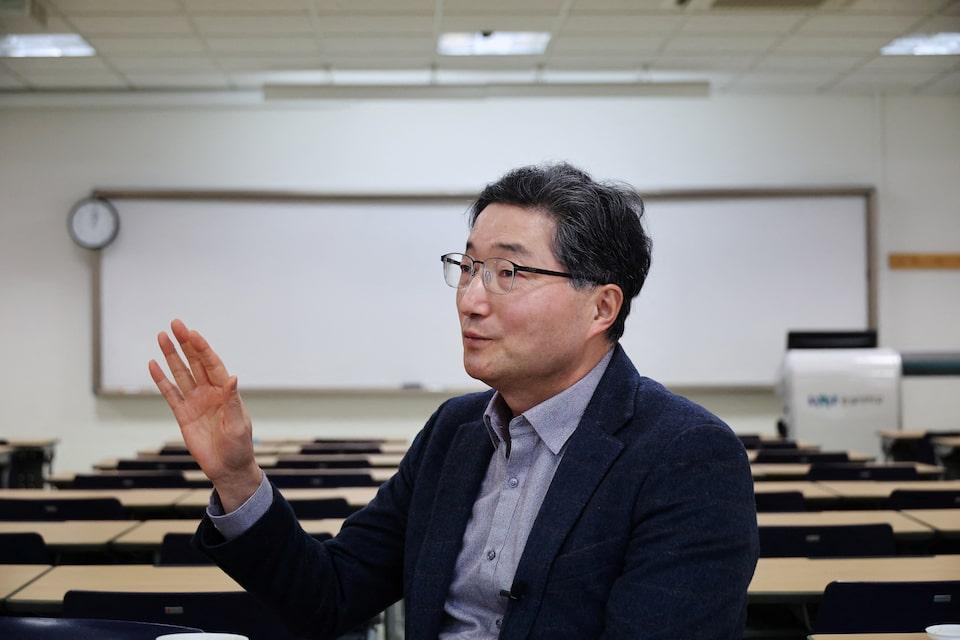
Lee Seung-heon opposes immediate monetary tightening Lee supports higher property taxes to curb housing market inflation South Korea's central bank maintains neutral stance after recent rate cuts SEOUL, Feb 9 (Reuters) - Lee Seung-heon, one of the leading candidates to become the next Bank of Korea governor, backs raising taxes on property ownership to stop surging home prices from stoking inflation but a policy pivot to more monetary tightening would be premature. Lee, who previously held the No.2 spot in the central bank as senior deputy governor, is regarded as a potential successor to replace BOK Governor Rhee Chang-yong, whose four-year term ends on April 20. Sign up here. In an interview on February 6, Lee said he does not see a need for immediate policy tightening but said the government should introduce stronger curbs on the housing market as a rally in property prices could reignite inflationary pressure and prevent middle-class families from buying their own homes. "When it comes to property market policies, I don't think it's possible to stabilise the market unless the cost of owning homes actually increases by raising property ownership taxes, for instance," he said. But overall monetary policy should stay steady as "it's a bit too early" to signal possible interest rate increases. "Growth is still a bit weak. We need to gain momentum here so I'd say the market is moving too quickly. While the direction may be right, I think it's too hasty," Lee said, referring to recent gains in three-year treasury yields which hit a 19-month high last week. South Korea's central bank recently adopted a neutral stance after four rate cuts since October 2024, as a weakening won along with upswings in Seoul's apartment prices forced policymakers to shift towards financial stability. The BOK left the benchmark interest rate at 2.50% for a fifth meeting on January 15. The yield on three-year government bonds, a key indicator of market expectations for the benchmark rate, has been steadily climbing from the middle of last year as traders scaled back expectations for additional monetary easing. Strong semiconductor exports have been shielding Asia's fourth-largest economy from the impact of higher U.S. tariffs, as demand for AI-driven memory chips boosts corporate earnings and domestic investment. TOP CONTENDER During his tenure at the BOK, Lee worked on currency policies and also represented the bank with counterparts like the U.S. Federal Reserve and the International Monetary Fund. But one of the first issues he could be facing would be the rising cost of homeownership in the country. Lee's comments backing raising property taxes echo those of President Lee Jae Myung, who has been urging people owning multiple homes to sell before the government raises real estate taxes. Although South Korea imposes exceptionally high stamp duties and capital gains taxes on property sales of more than 60%, its ownership levies remain comparatively low. On the Korean won, which is currently trading at 1,465.30 per dollar, Lee said the currency is where it should be. "Somewhere between 1,400 and 1,470 is what I call a natural range for now," he said, adding that anything weaker than 1,450 would be due to anxiety stemming from external uncertainties. "The level can temporarily breach 1,500 per dollar but I don't think such a level would be sustainable." https://www.reuters.com/world/asia-pacific/contender-bank-korea-governor-backs-higher-property-taxes-contain-inflation-2026-02-09/