2025-12-21 23:22
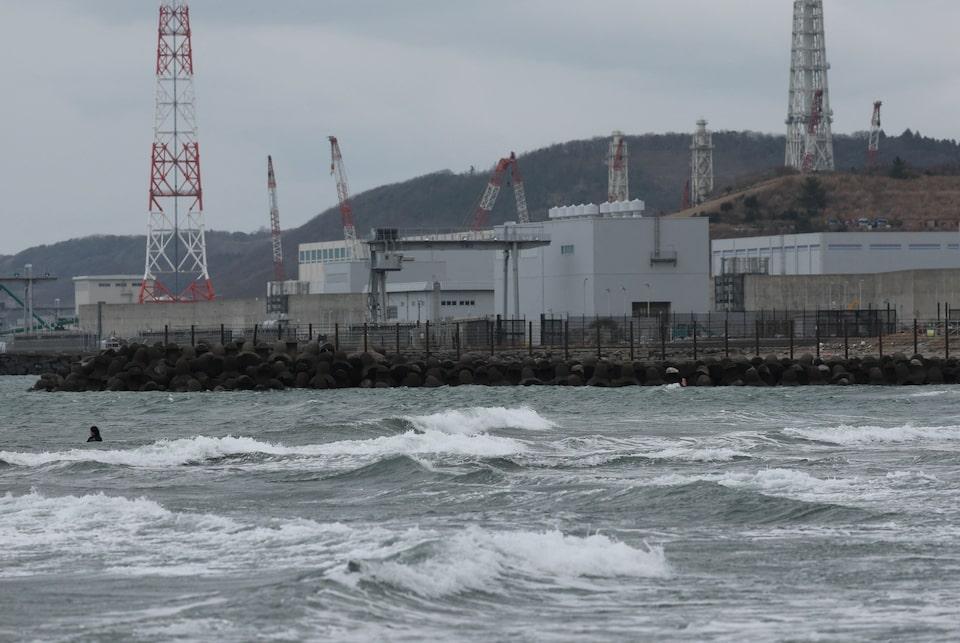
Niigata assembly votes to restart Kashiwazaki-Kariwa nuclear power plant Watershed moment in Japan's pivot back to nuclear energy Japan idled all reactors after 2011 Fukushima disaster Many residents are wary of restart Around 300 people protested against the plan on Monday in Niigata NIIGATA, Japan, Dec 22 (Reuters) - Japan took the final step to allow the world's largest nuclear power plant to resume operations with a regional vote on Monday, a watershed moment in the country's return to nuclear energy nearly 15 years after the Fukushima disaster. Kashiwazaki-Kariwa, located about 220 km (136 miles) northwest of Tokyo, was among 54 reactors shut after the 2011 earthquake and tsunami crippled the Fukushima Daiichi plant in the worst nuclear disaster since Chernobyl. Sign up here. Since then, Japan has restarted 14 of the 33 that remain operable, as it tries to wean itself off imported fossil fuels. Kashiwazaki-Kariwa will be the first operated by Tokyo Electric Power Co (TEPCO) (9501.T) , opens new tab, which ran the doomed Fukushima plant. On Monday, Niigata prefecture's assembly passed a vote of confidence on Niigata Governor Hideyo Hanazumi, who backed the restart last month, effectively allowing for the plant to begin operations again. "This is a milestone, but this is not the end," Hanazumi told reporters after the vote. "There is no end in terms of ensuring the safety of Niigata residents." While lawmakers voted in support of Hanazumi, the assembly session, the last for the year, exposed the community's divisions over the restart, despite new jobs and potentially lower electricity bills. "This is nothing other than a political settlement that does not take into account the will of the Niigata residents," an assembly member opposed to the restart told fellow lawmakers as the vote was about to begin. Outside, around 300 protesters stood in the cold holding banners reading 'No Nukes', 'We oppose the restart of Kashiwazaki-Kariwa' and 'Support Fukushima'. "I am truly angry from the bottom of my heart," Kenichiro Ishiyama, a 77-year-old protester from Niigata city, told Reuters after the vote. "If something was to happen at the plant, we would be the ones to suffer the consequences." TEPCO is considering reactivating the first of seven reactors at the plant on January 20, public broadcaster NHK reported. Kashiwazaki-Kariwa's total capacity is 8.2 GW, enough to power a few million homes. The pending restart would bring one 1.36 GW unit online next year and start another one with the same capacity around 2030. "We remain firmly committed to never repeating such an accident and ensuring Niigata residents never experience anything similar," said TEPCO spokesperson Masakatsu Takata. Takata declined to comment on timing. TEPCO shares closed up 2% in afternoon trade in Tokyo, higher than the wider Nikkei index (.N225) , opens new tab, which was up 1.8%. RELUCTANT RESIDENTS WARY OF RESTART TEPCO earlier this year pledged to inject 100 billion yen ($641 million) into the prefecture over the next 10 years as it sought to win the support of Niigata residents. But a survey published by the prefecture in October found 60% of residents did not think conditions for the restart had been met. Nearly 70% were worried about TEPCO operating the plant. Ayako Oga, 52, settled in Niigata after fleeing the area around the Fukushima plant in 2011 with 160,000 other evacuees. Her old home was inside the 20 km irradiated exclusion zone. The farmer and anti-nuclear activist has joined the Niigata protests. "We know firsthand the risk of a nuclear accident and cannot dismiss it," said Oga, adding that she still struggles with post-traumatic stress-like symptoms from what happened at Fukushima. Even Niigata Governor Hanazumi hopes that Japan will eventually be able to reduce its reliance on nuclear power. "I want to see an era where we don't have to rely on energy sources that cause anxiety," he said last month. STRENGTHENING ENERGY SECURITY The Monday vote was seen as the final hurdle before TEPCO restarts the first reactor, which alone could boost electricity supply to the Tokyo area by 2%, Japan's trade ministry has estimated. Prime Minister Sanae Takaichi, who took office two months ago, has backed nuclear restarts to strengthen energy security and to counter the cost of imported fossil fuels, which account for 60% to 70% of Japan's electricity generation. Japan spent 10.7 trillion yen ($68 billion) last year on imported liquefied natural gas and coal, a tenth of its total import costs. Despite its shrinking population, Japan expects energy demand to rise over the coming decade due to a boom in power-hungry AI data centres. To meet those needs, and its decarbonisation commitments, it has set a target of doubling the share of nuclear power in its electricity mix to 20% by 2040. Joshua Ngu, vice chairman for Asia Pacific at consultancy Wood Mackenzie, said public acceptance of the restart of Kashiwazaki-Kariwa would represent "a critical milestone" towards reaching those goals. In July, Kansai Electric Power (9503.T) , opens new tab, Japan's top nuclear power operator, said it would begin conducting surveys for a reactor in western Japan, the first new unit since the Fukushima disaster. But for Oga, who was in the crowd outside the assembly on Monday chanting 'Never forget Fukushima’s lessons!', the nuclear revival is a terrifying reminder of the potential risks. "At the time (2011), I never thought that TEPCO would operate a nuclear power plant again," she said. "As a victim of the Fukushima nuclear accident, I wish that no one, whether in Japan or anywhere in the world, ever again suffers the damage of a nuclear accident." ($1 = 155.9200 yen) https://www.reuters.com/sustainability/boards-policy-regulation/japan-prepares-restart-worlds-biggest-nuclear-plant-15-years-after-fukushima-2025-12-21/
2025-12-21 23:09
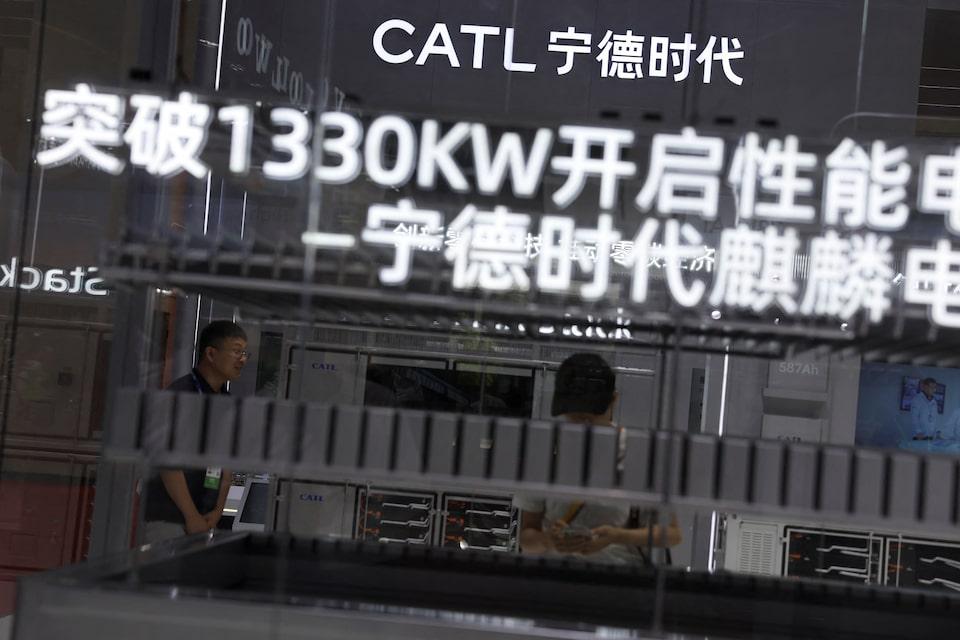
China lithium-ion battery cells for energy storage tipped to jump 75% this year China dominates production as global, domestic demand climb Surge driven by data centres, China renewables and reforms BEIJING, Dec 22 (Reuters) - A revamp of China's electricity market is boosting the economics of storing power just as international demand surges, sparking a boom for the Chinese energy storage manufacturers that already dominate globally. Chinese firms are on track for a 75% jump this year in global shipments of lithium-ion battery cells for energy storage, according to one estimate. Sign up here. They have exported more than $65 billion worth of storage and electric-vehicle batteries this year, cementing their dominance in a sector vital to backing up wind and solar and keeping power coursing through artificial-intelligence data centres. The surge in sales is driven by data centres and renewables domestically, as well as by Chinese reforms and subsidies that are boosting general demand for energy storage. International demand is rising in tandem with the surging growth in data centres, a need to back up Europe's ageing grid and China's burgeoning renewable energy business in the Middle East, analysts say. GOING GLOBAL "These leading energy storage cell makers, they have full orders. Many of them are basically working double shifts now to try and meet demand," said analyst Cosimo Ries at policy research firm Trivium China. The boom "is one of the biggest surprises of the year, I think, in China's energy space." UBS last month raised its 2026 forecast for global battery-energy storage installations by 25%. The International Energy Agency forecasts global investment in battery storage facilities will rise 16% this year to $66 billion. Much of that is set to be captured by Chinese firms because while Tesla (TSLA.O) , opens new tab is number one in energy storage systems, China dominates production of the tiny cells inside them. All of the six top global cell suppliers - Contemporary Amperex Technology Ltd (CATL) (300750.SZ) , opens new tab, HiTHIUM, EVE Energy (300014.SZ) , opens new tab, BYD (002594.SZ) , opens new tab, CALB (3931.HK) , opens new tab and REPT BATTERO (0666.HK) , opens new tab - are Chinese, according to a January-to-September ranking by consultancy Infolink. Of the top 10, only Japan's AESC is not from China. EVE's energy storage sales volumes rose 35.51% in the first three quarters from the same period last year. REPT BATTERO's third-quarter shipments of all batteries set a record high. Top EV players CATL and BYD did not break out energy storage shipments through the third quarter. Storage has historically made up less of their revenue than automotive batteries and EVs, although the proportion is growing. "Pairing solar with storage has effectively become the only solution for meeting U.S. AI data-centre power needs," UBS analyst Yishu Yan told a media briefing. "U.S. AI data centre power demand is very robust, but power is the biggest bottleneck, and U.S. baseload power - gas, nuclear, thermal - they won't grow much in the next five years." However, Yan said, Chinese manufacturers face risks from U.S. restrictions , opens new tab on projects receiving investment tax credits that involve designated "foreign entities of concern", which include China. POWER MARKET SHAKE-UP China's battery exports, including for EVs and energy storage, hit a record $66.761 billion in the first 10 months of the year, according to data from energy think tank Ember. Batteries have been China's most lucrative clean-technology export since 2022, surpassing solar photovoltaics. That is likely to grow again next year, as consultancy Infolink anticipates global energy storage cell shipments could rise to 800 gigawatt-hours, a 33% to 43% increase from this year's forecasts. China's exports of energy storage and other non-automotive batteries rose 51.4% in the first 11 months from the same period last year, faster than the 40.6% growth in EV battery exports, according to the China Electric Vehicle Industry Technology Innovation Strategic Alliance. China already has the world's largest battery energy storage fleet - some 40% of the global total - driven in part by local government mandates for developers to add storage to wind and solar projects. China's battery storage this year overtook its capacity of conventional pumped hydro, a geographically more limited technology that uses water stored behind dams to generate electricity when needed. However, much of that battery storage capacity has sat idle because it was not profitable to operate. That model is changing with reforms in June that required newly built projects to sell their power through market-based auctions, instead of at a fixed rate. As a result, it has become more profitable to run a storage plant that profits by recharging when prices are low and discharging when prices are high. Energy storage plants ran longer in the third quarter, after the reforms passed, hitting an average 3.08 hours per day, up 0.78 hours from a year earlier and up 0.23 hours from the previous three months, according to the China Electricity Council. This is happening against the backdrop of a new $35 billion government plan to nearly double battery storage by 2027 as well as new provincial-level subsidies. Since late 2024, 10 Chinese provinces have rolled out capacity tariffs - special payments for providers to keep capacity on standby - in addition to other subsidies, according to Jefferies. It is "the most decisive policy shift for energy storage in over a decade", Jefferies analyst Johnson Wan wrote in a note. https://www.reuters.com/sustainability/climate-energy/chinas-power-reforms-global-data-centre-buildout-usher-battery-boom-2025-12-21/
2025-12-21 23:00
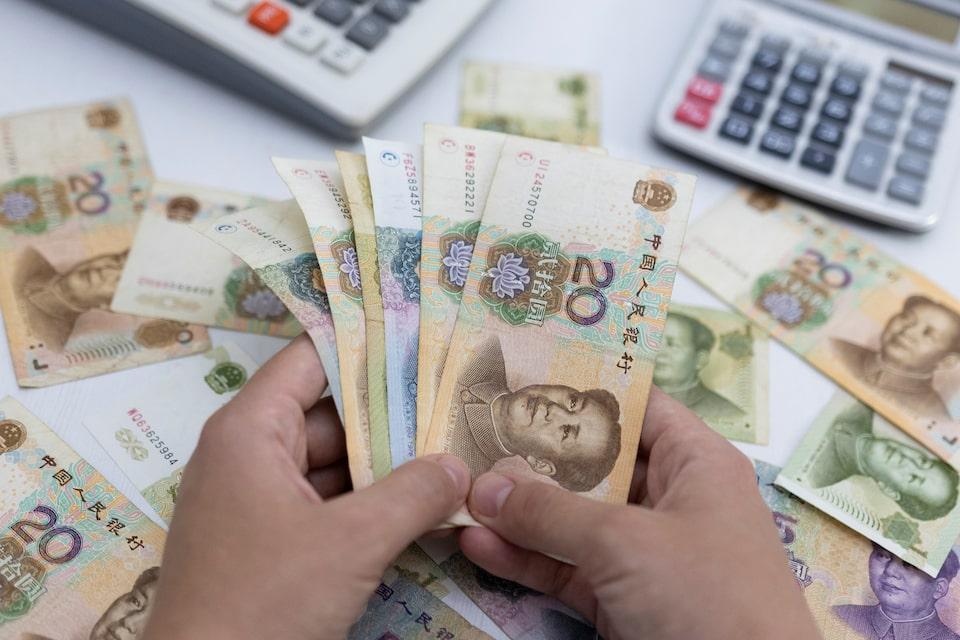
Dim Sum bond sales hit record; overseas yuan loans soar Bankers see robust demand from issuers and investors China seeks to build dollar alternative - strategist HONG KONG, Dec 19 (Reuters) - Investors are snapping up yuan credits and surging yuan lending is poised to overtake overseas dollar loans at Chinese banks as attractive pricing helps drive a sustained push by Beijing to put the yuan on the global stage. China's overseas bank lending has tripled in four years to 2.52 trillion yuan and sales of onshore and offshore yuan debt are at or near records for the second year running. Sign up here. Bankers say the boom is encouraged by cost, because yuan rates are low. But the market is also starting to generate its own momentum and a deepening pool of demand to own and spend yuan - a sign China's drive to globalise the currency is making headway even without progress to liberalise capital accounts. "I think this phase is now really more driven by fundamental interest in renminbi funding," said Samuel Fischer, Deutsche Bank's head of China onshore debt capital markets. "There's more and more international investors who don't look at this just as an arbitrage, but who really have renminbi allocation and there are some very big anchor orders from outside China," he said. "The dollar is at a critical juncture, and diversification is really happening." China has sought for years to promote the yuan as a currency for international trade and financing, and its share of global foreign exchange turnover has steadily climbed from a low base - reaching about 8.5% in April, according to the Bank for International Settlements. The dollar comprises 89% of turnover. This year non-Chinese issuers raised 169.7 billion yuan ($24.10 billion) in onshore markets over the 11 months to end November, while a record 801.9 billion yuan was raised by all issuers in offshore markets, where demand was strong. It's a drop in the ocean of the record $9.57 trillion raised globally this year, according to Dealogic data, of which about $4.5 trillion was in dollars and $2.2 trillion in euros. But in the last three years the value of foreigners' onshore and offshore issuance of yuan debt has more than doubled, China central bank data shows. In the loan market, central bank data shows lending in foreign currencies - mostly dollars - fell to $375 billion at the end of November, from a peak of $587 billion in 2022, while the value of yuan lending hit $357 billion. PRICE POINT IS BIG DRIVER For issuers, the major driver is price. Yuan funding costs have run below those of the dollar since 2022, as U.S. rates have climbed to curtail inflation and Chinese rates have fallen to try and stave off deflation. The yield gap between the benchmark 10-year Chinese government bonds and U.S. Treasuries hit a high of nearly 315 basis points early this year and even Japanese 10-year rates are nearly 20 bps higher than China's. Three-year panda bonds were issued between 1.7% and 2.7% this year, far below the 3.5% yield on U.S. Treasuries for the same tenor, according to S&P Global. "The yuan's relative stability against the volatile U.S. dollar and euro further enhances this appeal, reducing exchange rate risks for foreign issuers by minimising the need for costly currency hedging," the rating agency said. But beyond the favourable financing conditions, "macro-political tensions and tariffs" are accelerating trade regionalisation and boosting demand for yuan liabilities, said Terence Lau, capital markets partner at Linklaters. "One of the beneficiaries will be China and programmes like the One Belt One Road," Lau said, referring to China's infrastructure strategy, where cash can often be recycled to Chinese construction firms and paid in yuan. Issuers such as Indonesia and the Development Bank of Kazakhstan raised so-called dim sum bonds in the offshore yuan market this year, with Indonesia raising 6 billion yuan in October and Kazakhstan 2 billion in September . Kenya converted dollar-denominated railway-construction loans to yuan in October, while Ethiopia is in talks to do the same. And China Development Bank and the Development Bank of Southern Africa signed a deal this year, the first yuan-denominated financing cooperation. "Kazakhstan has been actually doing more and more with China. So I think that drives the need for more renminbi because they actually have a real use for it, not just a financial funding," said Lau. DEFENSIVE MOVE AGAINST DOLLAR DOMINANCE For investors, yuan credits offer a yield pickup over sovereign debt and somewhere to park capital since Asia's debt markets have shrunk after China's property downturn shut off borrowing from developers. "Interest has been steadily rising from non-Asian, global fixed income investors as well, and should continue to do so," said Florian Neto, head of investments for Asia at Amundi. "Recent CNH bond deals have displayed strong order books, which will help encourage issuers both within China and abroad to consider CNH as a potential funding channel going forward." The currency's carefully-managed stability is also an appeal, said William Xin, Asia fixed income portfolio manager at M&G Investments in Singapore, citing prospects of 4-5% unhedged returns. To be sure, international yuan debts are worth about 0.2% of China's domestic debt market and are tiny compared to dollar and euro debts. A rising yuan, which is up about 3.6% on the dollar so far this year, can also be a negative for borrowers. However China has been diligent in keeping a lid on yuan gains, with state banks buying dollars to steady and smooth the currency's moves. "If that cautious stance were to change, it could slow or stop the growth in overseas lending. More likely, though, overseas renminbi lending will continue to increase to new highs," said Wei He, economist at Gavekal Dragonomics. And, analysts say, China is not necessarily seeking to dethrone the dollar, but rather to assemble the building blocks for a capital market outside the dollar system. "China is engineering a process for shifting currency systems, not through grand pronouncements or by clashing with the dollar, but through thousands of procurement and payment decisions," said Chi Lo, a global market strategist at BNP Paribas Asset Management in Hong Kong. "This policy's objective is not to topple the dollar but simply to ensure that the dollar-dominated system cannot be used against China; it is a defensive move." ($1 = 7.0405 Chinese yuan renminbi) https://www.reuters.com/business/finance/debt-boom-signals-yuans-arrival-funding-currency-2025-12-19/
2025-12-21 20:01
US Coast Guard pursuing sanctioned tanker near Venezuela It would be the third interception of a tanker in less than two weeks Oil prices edge higher in early trading Dec 21 (Reuters) - The U.S. Coast Guard is pursuing an oil tanker in international waters near Venezuela, officials told Reuters on Sunday, in what would be the second such operation this weekend and the third in less than two weeks if successful. "The United States Coast Guard is in active pursuit of a sanctioned 'dark fleet' vessel that is part of Venezuela's illegal sanctions evasion," a U.S. official said. "It is flying a false flag and under a judicial seizure order." Sign up here. Another official said the tanker was under sanctions, but added that it had not been boarded so far and that interceptions can take different forms - including by sailing or flying close to vessels of concern. The officials, who spoke on the condition of anonymity, did not give a specific location for the operation or name the vessel being pursued. British maritime risk management group Vanguard, along with a U.S. maritime security source, identified the vessel as Bella 1, a very large crude oil carrier that was added last year to the sanctions list of the U.S. Treasury Department, which said the vessel has links to Iran. Bella 1 was empty when it was approaching Venezuela on Sunday, according to TankerTrackers.com. The vessel had in 2021 provided transportation for Venezuela's oil to China, according to internal documents from state-run oil company PDVSA. It had also previously carried Iranian crude, according to the vessel monitoring service. TRUMP'S PRESSURE CAMPAIGN The White House did not immediately respond to a request for comment on Sunday. U.S. President Donald Trump last week announced a "blockade" of all oil tankers under sanctions entering and leaving Venezuela. Trump's pressure campaign on Venezuelan President Nicolas Maduro has included a ramped-up military presence in the region and more than two dozen military strikes on vessels in the Pacific Ocean and Caribbean Sea near the South American nation. At least 100 people have been killed in the attacks. The Skipper, a very large crude carrier and the first Venezuela-related vessel seized by the U.S. on December 10, reached the Galveston Offshore Lightering Area near Houston on Sunday. Very large crude carriers cannot transit the Houston ship channel, as the waterway is not deep enough, and typically transfer the oil on board to smaller tankers at GOLA. The first two oil tankers seized were operating on the black market and providing oil to countries under sanctions, Kevin Hassett, director of the White House's National Economic Council, said in a television interview on Sunday. "And so I don't think that people need to be worried here in the U.S. that the prices are going to go up because of these seizures of these ships," Hassett said on CBS' "Face the Nation" program. "There's just a couple of them, and they were black market ships." Oil prices rose on Monday in early Asian trading hours. Brent crude futures rose 42 cents, or 0.7%, to $60.89 a barrel as of 0020 GMT. U.S. West Texas Intermediate crude was up 37 cents, or 0.7%, at $56.89 per barrel. Traders could view seizures of vessels as "an escalation with more Venezuelan barrels at risk" because the tanker intercepted on Saturday was not under U.S. sanctions, UBS analyst Giovanni Staunovo said on Sunday before Asian markets opened. Venezuelan President Nicolas Maduro said on Wednesday that the country's oil trade will continue. But the new U.S. focus on oil tankers will raise geopolitical risks and probably hurt Venezuela's oil revenue, analysts said. The effects could be felt quickly as Venezuela's export volumes fall significantly and oil storage tanks fill up faster, forcing the OPEC producer to cut output, said Francisco Monaldi, director of the Latin America Energy Program at Rice University's Baker Institute. https://www.reuters.com/world/americas/us-intercepts-another-vessel-near-venezuela-officials-say-2025-12-21/
2025-12-21 12:52
Dec 21 (Reuters) - Iraq’s state oil marketer SOMO said on Sunday international producers in Kurdistan were still obliged to send it their crude under a September export agreement, after Norway's DNO (DNO.OL) , opens new tab said it would not take part in the agreement. SOMO said its statement was in response to a Reuters report in September which quoted DNO as saying it would sell directly to the Kurdish region and had no immediate plans to ship through the Iraq-Turkey pipeline. Sign up here. The September deal between Iraq's oil ministry, Kurdistan's ministry of natural resources and producing companies stipulated that SOMO will export crude from Kurdish oil fields through the Turkey pipeline. At the time, DNO - the largest international oil producer active in Kurdistan - welcomed the deal but did not sign it, saying it wanted more clarity on how outstanding debts would be paid. It said it would continue to sell directly to the semi-autonomous region of Kurdistan. SOMO said on Sunday the Kurdistan ministry of natural resources had reaffirmed its commitment to the deal "under which all international companies engaged in extraction and production in the region's fields are required to deliver the quantities of crude oil they produce in the region to SOMO, except for the quantities allocated for local consumption in the region." https://www.reuters.com/business/energy/iraq-says-international-firms-kurdistan-obliged-transfer-crude-under-deal-2025-12-21/

2025-12-21 09:48
STOCKHOLM, Dec 21 (Reuters) - Sweden's customs service said on Sunday that authorities had boarded a Russian freighter that anchored in Swedish waters on Friday after developing engine problems, and was conducting an inspection of the cargo. The owners of the vessel, the Adler, are on the European Union's sanctions list, Martin Hoglund, spokesman at the customs authority said. Sign up here. "Shortly after 0100 last night we boarded the ship with support from the Swedish Coast Guard and the police service in order to make a customs inspection," Hoglund said. "The inspection is still ongoing." Hoglund declined to say what the customs service had found on board the ship. According to ship-tracking service Marine Traffic, the Adler is a 126-metre-long, roll-on, roll-off container carrier. It is anchored off Hoganas in southwest Sweden. In addition to the Adler being on an EU sanctions list, the vessel and its owners M Leasing LLC are also both subject to U.S. sanctions, suspected of involvement in weapons transport, according to OpenSanctions, a database of sanctioned companies and individuals, persons of interest and government watchlists. Hoglund said the ship had left the Russian port of St Petersburg on December 15, but he said customs did not have any information about its destination. https://www.reuters.com/world/swedish-customs-says-it-has-boarded-russian-ship-swedish-waters-conduct-2025-12-21/