2024-10-24 23:38
SYDNEY, Oct 25 (Reuters) - Australia and Britain plan to work together to ramp up the deployment of renewable energy technologies, such as green hydrogen and offshore wind, to support decarbonisation, the two countries' leaders said on Friday. The transition to net zero would open up economic opportunities creating new jobs and bolster the industrial base of both countries, Australian Prime Minister Anthony Albanese and UK Prime Minister Keir Starmer said in a joint statement. Their statement did not mention how much funding they would commit to clean energy. "This partnership will ... build on our long-standing cooperation on international climate action and shared commitment to reach net zero emissions by 2050," Albanese said after meeting Starmer on the sidelines of the Commonwealth Heads of Government Meeting (CHOGM) in Apia, Samoa. Both leaders announced grant recipients for their renewable hydrogen innovation partnership, which will support six projects focused on industrial decarbonisation. The prime ministers also said the AUKUS defence pact between Australia, the United States and Britain would boost security in the Indo-Pacific. The AUKUS defence pact signed in 2021 will see Australia buy up to five nuclear-powered submarines from Washington in the early 2030s before jointly building and operating a new class, SSN-AUKUS, with Britain, roughly a decade later. Albanese and Starmer reaffirmed their commitment to negotiate a bilateral treaty to develop the SSN-AUKUS submarine. "Together, we're delivering better futures for our two countries, whether that's through protecting our national security with projects like AUKUS or delivering on our net zero commitments," Starmer said. The Commonwealth meeting began this week with King Charles, the head of the grouping of 56 countries most with roots in Britain's empire, attending. Climate change threats are a central topic of the talks, as more than half of the Commonwealth's members are small nations, many of them low-lying islands at risk from rising sea levels caused by climate change. Sign up here. https://www.reuters.com/sustainability/australia-uk-team-up-back-clean-energy-technologies-2024-10-24/

2024-10-24 23:00
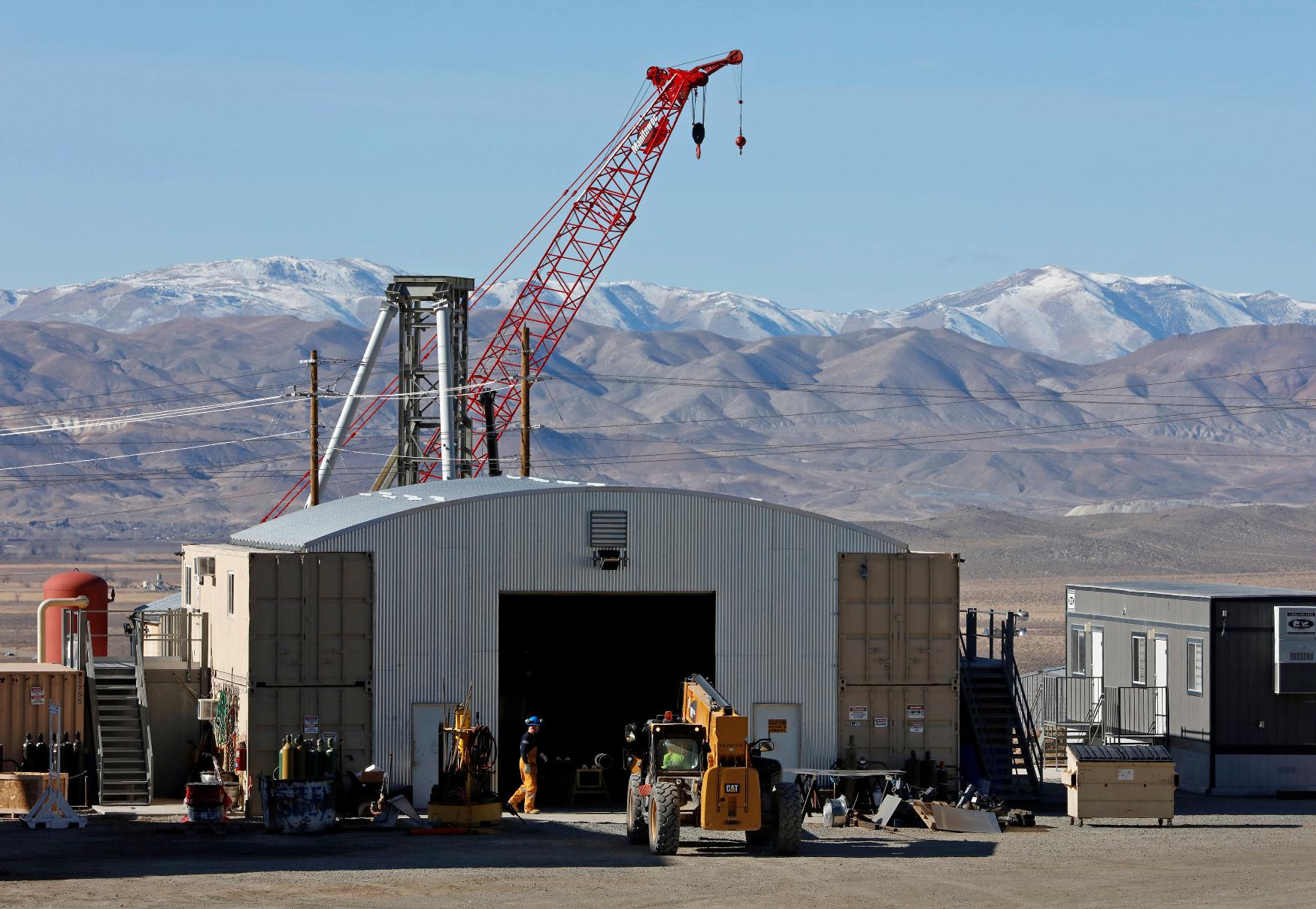
LONDON, Oct 25 (Reuters) - The May squeeze on the CME copper contract has passed but the impact on global flows of the red metal is still playing out. U.S. imports of copper have surged after traders capitalised on a rare arbitrage window that opened between the CME and the London Metal Exchange (LME) contracts at the height of the squeeze on CME short position holders. The result has been a redistribution of global exchange inventory with CME stocks rebuilding from depleted levels and both LME and Shanghai Futures Exchange (ShFE) inventory falling. It remains to be seen how long this global readjustment lasts but resilient demand and domestic production constraints have the potential to suck more metal into the United States. CHILEAN EXPORTS REDIRECTED The United States imported an average of 57,700 metric tons per month of refined copper in the first half of 2024. Inbound shipments then jumped to 106,400 tons and 117,500 tons in July and August respectively, according to LSEG Group trade data. The main source of the extra metal was Chile. U.S. imports from the South American country accelerated from an average 39,600 tons per month in January-June to 78,200 tons in July and 89,800 tons in August. Indeed, the United States became the major destination for Chilean copper in the May-August period as shipments to China dropped to an average 30,300 tons. SHORTS COVERED? A significant portion of Chile's shipments to the United States has been delivered against short positions on the CME. The CME's limited range of good-delivery brands was one of the reasons the May squeeze became so acute. Chilean metal accounts for 18 of a total 57 deliverable copper brands on the U.S. exchange, exceeding the 13 domestically-produced brands. A total 76,440 tons of copper have entered CME warehouses in New Orleans since the start of August, helping lift registered inventory to 74,824 tons from a July low of 8,117 tons. The liquidity boost has calmed CME time-spreads after the extreme backwardations seen in the second quarter. It's noticeable that while CME stocks have been rising, those registered with both the LME and the ShFE have fallen. However, global exchange inventory is broadly unchanged at an elevated 521,600 tons, up 308,000 tons on the start of the year. MORE TO COME? CME copper stocks are by no means one-way traffic, with the daily inflows being offset by a steady stream of metal moving in the opposite direction. This speaks to resilient demand in the United States even before the Federal Reserve's bumper rate cut trickles down to the manufacturing sector. Moreover, domestic production is going to take a significant knock due to geotechnical problems at one of country's largest mines. Production at the Bingham Canyon mine dropped 44% year-on-year in the third quarter due to movement in the walls of what is the world's deepest open-pit copper mine. Rio Tinto, which owns the mine, warned , opens new tab that mined production would be impacted to the tune of 50,000 tons this year as feed to the concentrator is supplemented with lower-grade ore. Mined output will also be affected both next year and in 2026, albeit to an as-yet unknown extent, it said. It may not just be CME copper shorts that need more U.S. imports in the months ahead. The opinions expressed here are those of the author, a columnist for Reuters. Sign up here. https://www.reuters.com/markets/commodities/us-copper-imports-accelerate-wake-cme-squeeze-andy-home-2024-10-24/
2024-10-24 22:56
Oct 24 (Reuters) - Cincinnati Financial's (CINF.O) , opens new tab profit fell 14% in the third quarter due to an increase in catastrophe losses, the insurance firm said on Thursday. The combined ratio in the third quarter for the Consolidated Property Casualty Insurance segment was 97.4%, an increase from 94.4% in the same period last year driven by a peak in catastrophes. The losses refer to a significant financial hit that insurers incur due to large-scale natural or man-made disasters. The United States grappled with multiple major hurricanes in 2024, including Hurricane Debby Helene and Milton, which struck Florida, and Francine — which made landfall in Louisiana in September. The company's earned premiums totaled $2.30 billion, 13% higher than last year. However, the insurer's investment income climbed 15% to $258 million due to a market rally on soft landing expectations after a rate cut by the Federal Reserve helped the company's investment income to climb. Its adjusted operating profit came at $1.42 per share for the three months ended Sept. 30, compared to $1.66 per share a year ago. Sign up here. https://www.reuters.com/business/finance/cincinnati-financial-profit-drops-due-catastrophe-losses-2024-10-24/

2024-10-24 21:55
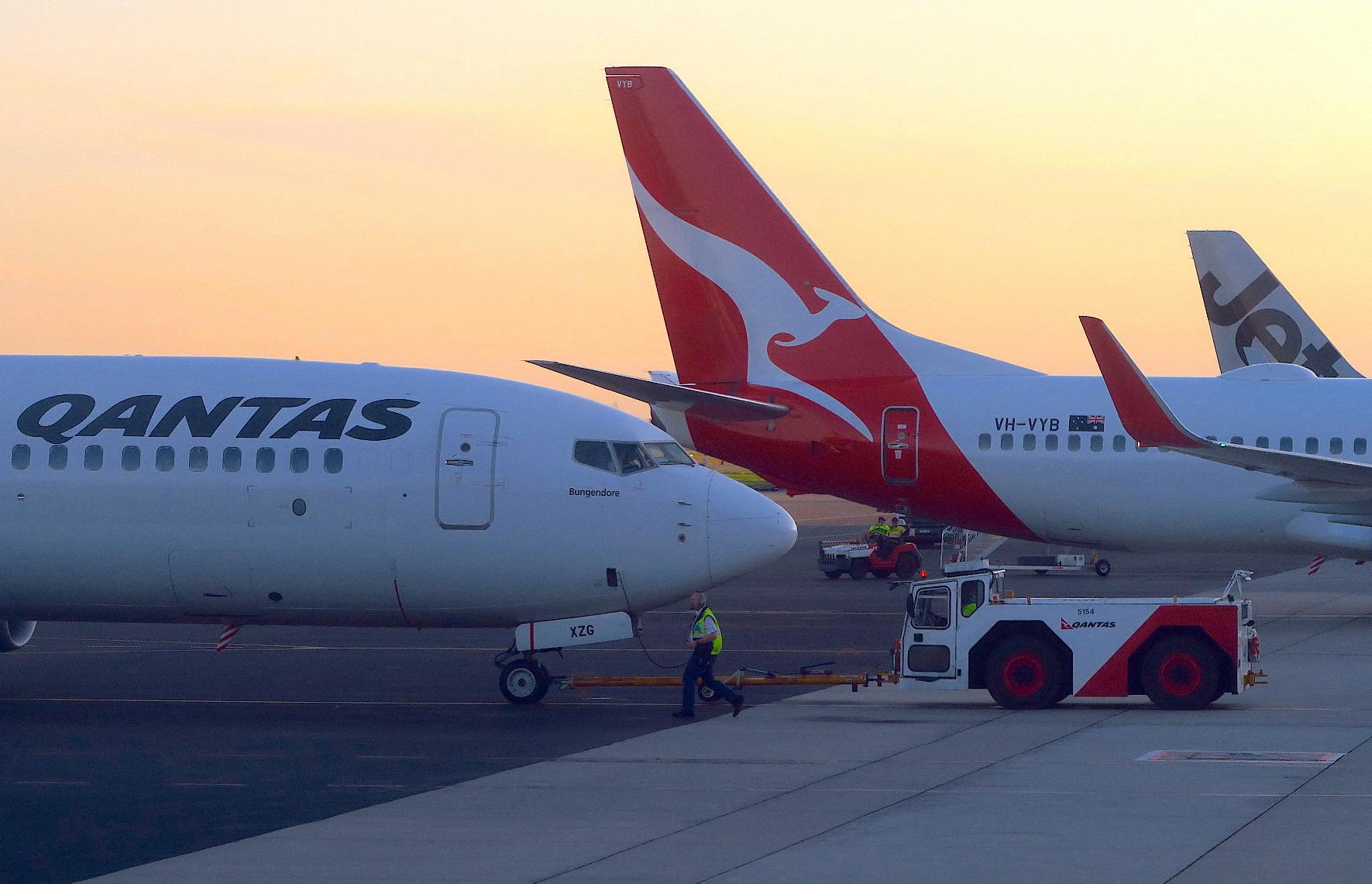
Shares hit record high Airline expecting A$2.55 bln fuel cost for H1, down from A$2.7 bln Domestic capacity expected to rise 1% in H1 Oct 25 (Reuters) - Australian flag carrier Qantas Airways (QAN.AX) , opens new tab on Friday lifted revenue expectations from its domestic operations for the first half of the financial year, while forecasting lower fuel costs after a drop in global prices. The airline is now expecting revenue per available seat kilometre for its local business to increase by 3% to 5% for the first half ended Dec. 31 compared to a year ago, up from the 2% to 4% range it provided in August. Domestic capacity is expected to rise by 1% in the first half, it said, down from its August forecast of a 2% rise. "The Group continues to perform in line with expectations, with both Qantas and Jetstar seeing stable demand," Qantas CEO Vanessa Hudson said in a speech at the airline's annual meeting. "Jetstar saw stronger than anticipated demand, while Qantas Domestic load factors and demand for corporate travel continues to improve year on year," she said. The firm's shares gained as much as 1.6% to A$8.04 to hit a record high for the second time in the week. Under Hudson the flag carrier is working to rebuild a reputation that was battered over the last 18 months amid legal, regulatory and customer issues. The airline's new chairman, John Mullen, said Qantas also remained on track to reinstate fully franked dividends from the second half of the current financial year. "With the progress we have already made on restoring our reputation, supported by a strong balance sheet, the outlook for Qantas and Jetstar is really positive," Mullen said in his address to shareholders. The airline is now expecting first-half jet fuel costs of about A$2.55 billion ($1.69 billion), lower than the A$2.7 billion it had estimated earlier. Qantas' current fuel cost estimate is on the basis of current jet fuel price of A$140 a barrel, lower than A$150 when it was previously estimated. The firm said its A$400 million share buyback was currently 45% complete at an average price of A$7.23. The airline anticipates its finalisation by the end of the year. Trading at Qantas' loyalty programme was in line with expectations, the company said, following the launch of a new flight rewards scheme. The loyalty division continues to expect at least 10% growth in underlying earnings before interest and taxes in the current financial year, Qantas said. ($1 = 1.5060 Australian dollars) Sign up here. https://www.reuters.com/business/aerospace-defense/qantas-expects-lower-fuel-costs-amid-falling-global-prices-2024-10-24/
2024-10-24 21:50
Oct 25 (Reuters) - Australian miner Whitehaven Coal (WHC.AX) , opens new tab said on Friday that it was optimistic about further gains in metallurgical coal prices due to supply constraints, and reported better-than-expected first-quarter output, sending its shares nearly 8% higher. The country's biggest independent coal miner, which bought two metallurgical mines from BHP (BHP.AX) , opens new tab last year, said that a shortfall in global coal production with long-term output constraints and higher sea-borne demand from India is anticipated to drive prices up. Shares of the company rose 7.8% to A$6.92, as of 2332 GMT, in their best trading session since mid-August, while the benchmark ASX 200 index (.AXJO) , opens new tab was up 0.2%. Whitehaven's total managed run-of-mine (ROM) production for the three months ended Sept. 30 was 9.7 million metric tons, beating a Visible Alpha consensus of 9.1 million tons. This compares with 5.3 million tons a year ago. The biggest contributing segment, Queensland coal mines — a part of BHP Mitsubishi Alliance (BMA) metallurgical coal joint venture — was purchased last year by Whitehaven for $4.1 billion in a bid that the company said would increase its exposure to markets in India and Southeast Asia. In its second quarter of output, the Queensland mines reported ROM production of 5.3 million tons, compared to 4.8 million tons in the June quarter. "In Queensland, we are seeing productivity gains and cost improvements," said CEO Paul Flynn. On the other hand, the coal miner's New South Wales operations posted a 18% decline in ROM output, with both production and sales expected to be weighted more heavily towards second half of the year. Coal prices realised rose marginally in the quarter with Whitehaven earning A$238 ($157.89) per ton of coal sold, compared to a average realised price of A$224 per ton booked a year earlier. ($1 = 1.5074 Australian dollars) Sign up here. https://www.reuters.com/markets/commodities/australias-whitehaven-coals-first-quarter-output-rises-82-2024-10-24/
2024-10-24 21:48
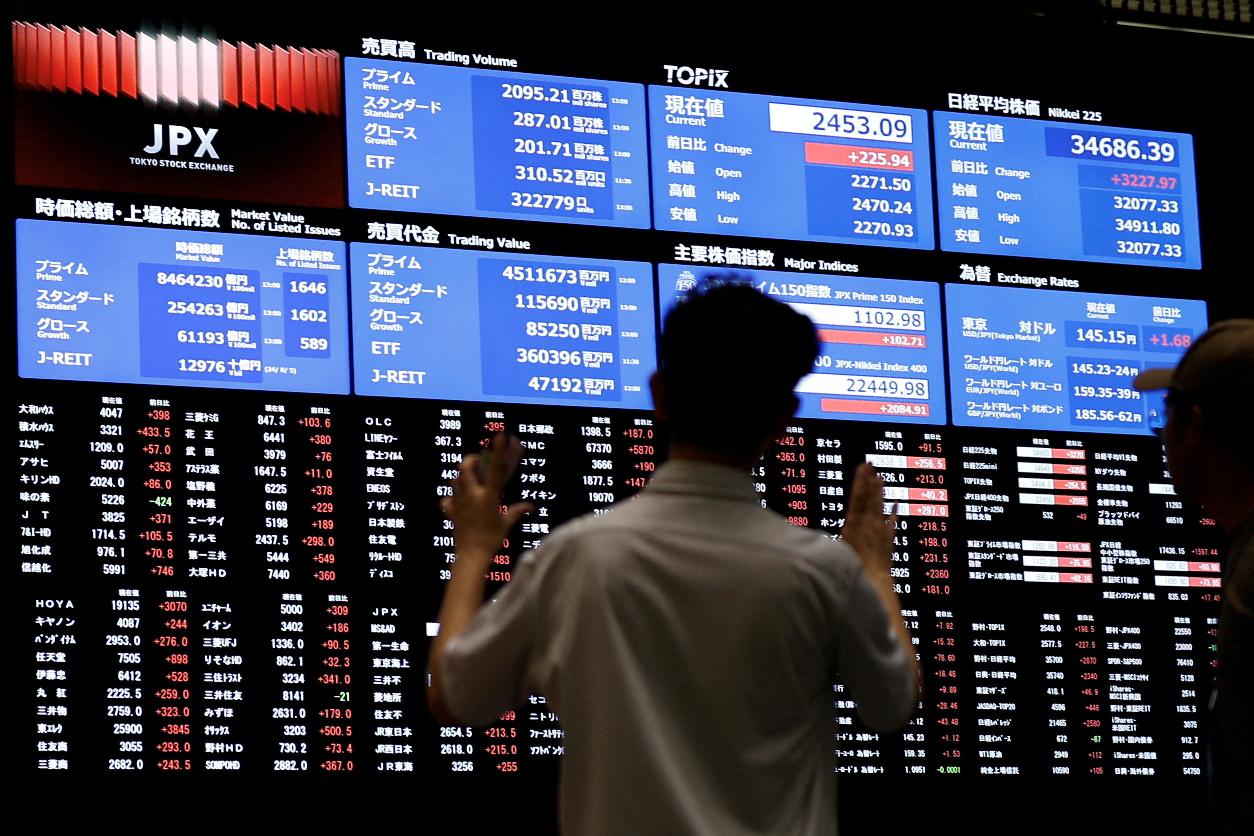
Oct 25 (Reuters) - A look at the day ahead in Asian markets. A day of general calm across world markets on Thursday that saw the dollar and U.S. bond yields soften and stocks consolidate bodes well for markets in Asia on Friday as attention focuses on political and economic events in Japan. Voters go to the polls in Sunday's general election, and several recent polls suggest the ruling coalition could lose its parliamentary majority. From a market perspective, this could deprive the Bank of Japan the political stability needed to steer a smooth liftoff from near-zero interest rates. Tokyo consumer inflation, a leading indicator of nationwide price trends and the main highlight of Asia's economic calendar on Friday, could also give the BOJ food for thought ahead of its policy meeting next week. Inflation in Tokyo likely undershot the central bank's price target for the first time in five months, according to a Reuters poll, coming in at an annual rate of 1.7%. That would follow a 2.0% rise in September and mark the first time the data misses the BOJ's 2% target since May. A senior International Monetary Fund official on Thursday said any further rate hikes in Japan should be conducted at a "gradual pace," noting that BOJ moves could impact financial markets of other countries where Japanese investors hold large positions. Krishna Srinivasan, the director of the IMF's Asia and Pacific Department, also said that most Asian central banks have room to cut rates, as the start of the U.S. easing cycle reduces fears of an unwelcome weakening of their currencies. What's more, risks to Asia's economic outlook are tilted to the downside, he added. The Japanese yen recovered some ground on Thursday, clocking its biggest rise in a month and pushing the dollar down to 151.50 yen from Wednesday's three-month high above 153.00. The yen's recent weakness, however, has lured overseas investors into Japanese markets. Figures on Thursday showed that foreigners bought Japanese stocks for a fourth straight week through Oct. 19, although caution ahead of Sunday's election and upcoming corporate earnings releases tempered the inflows. Despite the modest reversal on Thursday, the spike in the dollar and U.S. bond yields recently to three-month highs has helped put Asian stocks on course for a third consecutive weekly loss. Nor have the yen's recent weakness and foreign investor inflow prevented Japanese stocks from losing ground, and the Nikkei goes into Friday's session down more than 2% so far this week. Elsewhere, industrial production figures from Singapore are expected to show a sharp slowdown in September from unusually strong activity in August. Economists expect year-on-year growth of 3.5%, down from 21%, which was fastest since 2021 and one of the strongest of the past 15 years. Here are key developments that could provide more direction to markets on Friday: - Tokyo CPI inflation (October) - Japan services PPI inflation (September) - Singapore industrial production (September) Sign up here. https://www.reuters.com/markets/asia/global-markets-view-asia-graphic-2024-10-24/