2024-10-24 17:45
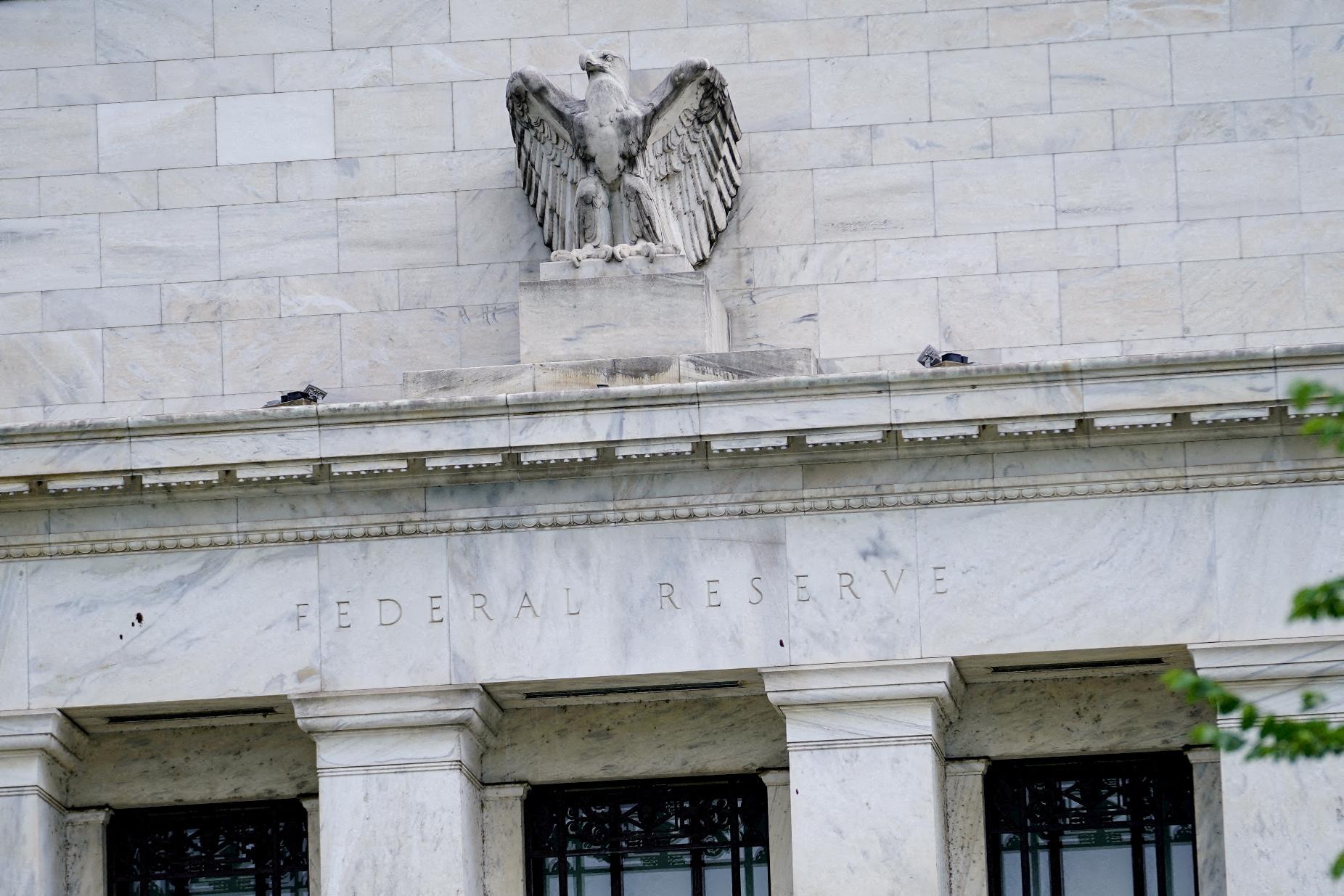
KAZAN, Russia, Oct 24 (Reuters) - Cross-border payments for trade between BRICS countries are experiencing problems, but there are no plans to create a special system because the existing infrastructure is sufficient, Russian President Vladimir Putin said on Thursday. Delays in payments for trade with Russia's major partners such as China or Turkey where banks are under pressure from Western regulators to scrutinise transactions with Russia have become a major headache for Russian companies and banks. Before the summit, Russia outlined an alternative payment system in national BRICS currencies that would include a new messaging system and a network of national commercial banks linked to each other through the BRICS central banks. "The question is very important today. One of the key issues is the problem of settlements," Putin told the news conference after the summit. The Russian-hosted summit of the BRICS nations -- Brazil, Russia, India, China and South Africa -- ended on Thursday. Putin said the existing financial messaging system, created by the Russian central bank as well as similar systems run by other BRICS central banks could be used to facilitate mutual payments in national currencies. "But we are not inventing any separate joint system for now. What we already have is on the whole sufficient," Putin said. Sign up here. https://www.reuters.com/markets/putin-says-existing-brics-infrastructure-is-enough-cross-border-payments-2024-10-24/
2024-10-24 17:06
Weekly jobless claims drop 15,000 to 227,000 Continuing claims rise 28,000 to 1.897 million New home sales increase 4.1% in September Median new house price unchanged at $426,300 from year ago WASHINGTON, Oct 24 (Reuters) - New applications for U.S. unemployment aid unexpectedly fell last week, but the number of people collecting benefits in mid-October was the highest in nearly three years, indicating it was becoming harder for those losing jobs to land new positions. The second straight weekly drop in filings for state unemployment benefits reported by the Labor Department on Thursday likely reflected an ebb in claims from Hurricane Helene, which earlier this month had boosted applications to the highest level in nearly 1-1/2 years. The rise in claims related to Hurricane Milton has been more muted than initially feared. Given the distortions from the hurricanes as well as an ongoing strike by roughly 33,000 workers at Boeing (BA.N) , opens new tab, economists expected Federal Reserve officials to shrug off any sharp slowdown in nonfarm payrolls growth or rise in the unemployment rate when they meet next month. The employment report for October will be published days before Americans head to the polls on Nov. 5 to elect a new president. "The labor market is softening but not imploding," said Carl Weinberg, chief economist at High Frequency Economics. "Fed policy is aimed at supporting the economy and the job market before a recession shapes up. Gradual easing to achieve that goal may achieve it." Initial claims for state unemployment benefits dropped 15,000 to a seasonally adjusted 227,000 for the week ended Oct. 19, the Labor Department said. Economists polled by Reuters had forecast 242,000 claims for the latest week. Unadjusted claims declined by 22,634 to 202,635 last week. A jump of 4,275 in filings in Florida was more than offset by significant decreases in Georgia, North Carolina, New York and Texas, as well as Tennessee, Ohio and Michigan. Though the hurricanes and the strike have obscured the labor market view, there does not appear to be a major material shift. The Fed's "Beige Book" report on Wednesday described employment as having "increased slightly" in early October, "with more than half of the districts reporting slight or modest growth and the remaining districts reporting little or no change." It also noted that "many districts reported low worker turnover, and layoffs reportedly remained limited," adding that "demand for workers eased somewhat, with hiring focused primarily on replacement rather than growth." That was reinforced by a survey from S&P Global on Thursday showing a measure of employment in the manufacturing and services sectors holding steady in October. S&P Global said a decline in service jobs was "often linked to the non-replacement of leavers rather than layoffs." Historically low layoffs are propping up the labor market and the overall economy even as hiring has tapered off. Economists estimate that the hurricanes could cut as many as 40,000 jobs from October's nonfarm payrolls count. Estimates for payroll gains are currently in the 100,000 to 125,000 range. The economy added 254,000 jobs in September. October's strike report on Friday could shed more light on payrolls for this month. Striking workers are counted as unemployed if they are not paid during the period that includes the 12th of the month, and they are not eligible for jobless benefits. Boeing's unionized West Coast workers have been on strike for six weeks, with ripple effects on nonstriking employees and the planemaker's suppliers. They voted on Wednesday to reject a proposed new contract. Stocks on Wall Street were mostly lower. The dollar fell against a basket of currencies. U.S. Treasury prices rose. CONTINUING CLAIMS RISE The number of people receiving benefits after an initial week of aid, a proxy for hiring, rose 28,000 to a seasonally adjusted 1.897 million during the week ending Oct. 12, the highest level since mid-November in 2021, the claims report showed. The jump in the so-called continuing claims reflected the fallout from the strike, Hurricane Helene as well as permanent job losses related to layoffs by Chrysler parent Stellantis. Continuing claims covered the period during which the government surveyed households for October's unemployment rate. Continuing claims increased between the September and October survey weeks, raising the risk of an uptick in the jobless rate from 4.1% in September. "Around three quarters of the increase in continuing jobless claims was in states not impacted by hurricanes," said Veronica Clark, an economist at Citigroup. "If the increase in continuing claims had been due to weather effects, this would not boost the unemployment rate." The rise in the unemployment rate from 3.4% in April 2023 to 4.3% in July this year was the trigger for the U.S. central bank's unusually large 50-basis-point rate cut last month. The first reduction in borrowing costs since 2020 lowered the Fed's policy rate to the 4.75%-5.00% range. The Fed hiked rates by 525 basis points in 2022 and 2023 to curb inflation. It is expected to cut rates by 25 basis points next month. Lower interest rates buoyed new single-family home sales in September, which jumped to the highest level in almost 1-1/2 years, a third report from the Commerce Department's Census Bureau showed. Supply, however, increased to levels last seen in early 2008. That could make builders more cautious about breaking ground on new housing projects, especially with mortgage rates having backed up over the last three weeks. "Mortgage rates easing in September aided the increase but more recent trends may limit sales figures in coming months," said Colin Johanson, an economist at Barclays. Sign up here. https://www.reuters.com/markets/us/us-weekly-jobless-claims-unexpectedly-fall-2024-10-24/
2024-10-24 16:31
WASHINGTON, Oct 24 (Reuters) - U.S. mortgage rates increased for a fourth straight week this week, suggesting the housing market could remain on the back foot for some time even as the Federal Reserve cuts interest rates. The average rate on the popular 30-year fixed-rate mortgage rose to 6.54% from 6.44% last week, mortgage finance agency Freddie Mac said on Thursday. It averaged 7.79% during the same period a year ago. Mortgage rates initially fell in September, dropping to more than a 1-1/2-year low by the end of the month as the Fed began lowering rates. They have risen as solid economic data, like retail sales and annual revisions to national accounts, forced traders to abandon hopes for another 50-basis-point rate cut from the U.S. central bank next month. "The continued strength in the economy drove mortgage rates higher once again this week," said Sam Khater, Freddie Mac's chief economist. "Over the last few years, there has been a tension between downbeat economic narrative and incoming economic data stronger than that narrative." Sign up here. https://www.reuters.com/markets/us/us-30-year-fixed-rate-mortgage-rises-654-2024-10-24/
2024-10-24 16:19
Oct 24 (Reuters) - The European Central Bank cut interest rates for a third time this year last week and investors expect further reductions ahead as euro zone inflation stabilises at the ECB's 2% target and the economy stagnates. While ECB policymakers generally agree on the direction of travel for rates, they differ as to the pace of reductions, the destination and how to communicate all that to investors. Here's a summary of their comments at the International Monetary Fund and World Bank's annual meetings in Washington. ECB PRESIDENT CHRISTINE LAGARDE (OCT 23) "We need to be cautious because data will come up and will indicate to us what is the state of the economy, what is the state of inflation, of underlying inflation. And there will be a judgmental aspect to our decisions, but we will indeed have to be cautious in doing so." ECB CHIEF ECONOMIST PHILIP LANE (OCT 23) "Some of the recent data raised some questions about (the recovery). But we still find this narrative of a good recovery in the economy as still very close to the baseline." BUNDESBANK'S PRESIDENT JOACHIM NAGEL (OCT 24) "We shouldn't be too hasty, we should be cautious (and) look at what data is coming in." (Bloomberg TV) FRANCE'S CENTRAL BANK GOVERNOR FRANCOIS VILLEROY DE GALHAU (OCT 22) "We are not behind the curve today but agility should prevent us from running such a risk." "The risk of reducing too late our restrictive stance could indeed become more significant relative to the one of acting too quickly." BANK OF ITALY'S GOVERNOR FABIO PANETTA (OCT 23) "We should continue (cutting rates), the direction of travel is in my view clear." "First, we're still far away from the neutral rate. Second I wouldn't take for granted, given the pace of the disinflation and the weakness of the real economy, that we have to stop at the neutral rate and we cannot exclude that we will go below neutral." "We should return to a normal type of communication, that means concentrating on our reaction function ... and provide guidance in line with our medium term orientation." SLOVENIA'S CENTRAL BANK GOVERNOR BOSTJAN VASLE (OCT 24) "We should keep going to neutral in measured steps." "There is no urgency in discussing undershooting the target or going below the neutral rate. These are not current issues." "By lowering interest rates further, we’ll be at the upper limit of the neutral rate estimates. Once we get there, it may be appropriate to align our language on the need to keep rates restrictive." PORTUGAL'S CENTRAL BANK GOVERNOR MARIO CENTENO (OCT 23) "We need to look at the incoming data, the trend in the data that we have been observing, and certainly (a cut by) 50 basis points can be on the table because we continue to be data dependent and the data we are getting points in that direction." (CNBC) DUTCH CENTRAL BANK GOVERNOR KLAAS KNOT (OCT 23) "I think we are pretty confident about the return of inflation to our 2% target somewhere in the course of next year." "I would also say that I see the risks surrounding that baseline as reasonably contained." "So, if that scenario indeed plays out and if the December projections continue to also confirm that scenario then it will allow us to gradually take our foot off the brake and continue to cut rates until we will, let’s say, have reached neutral territory, where we neither simulate nor slow down the economy anymore." (CNBC) Sign up here. https://www.reuters.com/markets/europe/ecb-policymakers-comments-imf-world-bank-annual-meetings-2024-10-24/

2024-10-24 15:38
JOHANNESBURG, Oct 24 (Reuters) - South Africa's rand gained against a weaker dollar on Thursday while local platinum group metals (PGMs) producers' shares soared over concerns about supply sanctions on top palladium producer Russia. At 1520 GMT, the rand traded at 17.6825 against the dollar , about 0.6% stronger than its previous close. "The rand is trading higher today, boosted by a weaker dollar that is lifting emerging market currencies," Zain Vawda, market analyst at MarketPulse by OANDA, said. The dollar index was last down about 0.2% against a basket of major currencies, pausing a recent rally fuelled by bets on a slower pace of interest rate cuts by the Federal Reserve and a potential second presidency for Donald Trump. With no major domestic economic data releases due in South Africa on Friday, the risk-sensitive rand is set to take cues from the direction of the dollar. Johannesburg-listed PGMs miners surged on Thursday as global palladium prices rose after the U.S. asked its G-7 peers to consider sanctions on top-producer Russia. The shares of Anglo American Platinum (AMSJ.J) , opens new tab and Northam Platinum (NPHJ.J) , opens new tab closed more than 13% higher. The blue-chip Top-40 (.JTOPI) , opens new tab index closed about 0.45% higher. South Africa's benchmark 2030 government bond was stronger, with the yield down 15 basis points at 9.355%. Sign up here. https://www.reuters.com/markets/currencies/south-african-rand-firms-platinum-group-metals-stocks-soar-2024-10-24/

2024-10-24 14:37
ORLANDO, Florida, Oct 24 (Reuters) - Last month Federal Reserve Chair Jerome Powell and his colleagues were lauded for starting their policy easing cycle with a half percentage-point rate cut that many said would help secure the U.S. economy's much-vaunted 'soft landing'. But that cut was followed by a hot September jobs report, featuring the third-largest jump in payrolls ever after the initial cut in a Fed hiking cycle. Since then, Treasury bond yields, inflation expectations and the so-called 'term premium' have all spiked. The Fed is now coming under increasing fire for potentially committing the ultimate central banking sin: a policy error. But history suggests this charge is far too premature. OVERREACTION? Since the jumbo rate cut on Sept. 18, there has been a sharp rise in long-dated bond yields, inflation expectations and the term premium - the compensation investors demand for buying longer-dated U.S. government bonds rather than rolling over shorter term ones. This likely reflects investors' worries about fiscal profligacy as much as overly dovish monetary policy, given that former President Donald Trump has appeared to regain ground in the presidential election race while touting a host of potentially budget-busting plans. Still, the market moves all began around the date of the Fed's rate cut. And they're significant. Analysts at Bespoke Investment Group note that of the 35 times the Fed has cut rates since 1994, this is the third-largest rise in the 10-year yield, behind only those seen in November 2001 and June 2008. Meanwhile, the breakeven inflation rate on 10-year inflation-protected Treasury bonds, or 'TIPS', has leaped 25 bps to 2.35%, moving farther away from the Fed's 2% inflation target. Are these outliers? Certainly. Evidence of a policy error? Not so fast. DOOMSTERS When attempting to determine if any particular decision is a 'policy error', it's important to acknowledge that there is significant disagreement about what the term actually means. That's partly because the Fed has perpetual critics – "doomsters", according to TS Lombard's Dario Perkins - who think monetary policy itself is essentially one big, permanent mistake. Was the Fed's decision not to quickly raise rates from zero after the pandemic a mistake, even though inflation was largely being driven by gummed-up global supply chains? Many people say it was, citing the near double-digit inflation that followed as evidence. On the other hand, can the Fed be blamed for not foreseeing Russia's invasion of Ukraine and the subsequent surge in global commodity and energy prices? And let's not forget, that supply-driven inflation has, by and large, proven to be transitory. Questions around such decisions or non-decisions typically center on timing and degree rather than direction. If a central bank is a little too early or late in moving, or if it delivers 50 bps of easing in one meeting as opposed to 25 bps over two, the overall economic impact is likely to be minimal and short-lived. So are these really errors? BACKTRACKING Still, there is one definition of a 'policy error' that most central bank watchers would agree on: a decision that is reversed quickly. And there are a few recent examples from Europe that meet this criteria. The European Central Bank's rate hike in July 2008, right as the global financial crisis was reaching its zenith, and those in April and July 2011, in the midst of the euro zone debt crisis, stand out. They defied consensus thinking at the time, as most observers were convinced the euro zone economy needed looser monetary policy. The July 2008 and 2011 moves were reversed within a few months. Even more surprising, Sweden's Riksbank raised its policy rate in September 2008, just days before Lehman Brothers collapsed. The rate was down to virtually zero within 10 months. Importantly, these policy reversals coincided with real world downturns. While it's impossible to know how much damage the erroneous decisions themselves caused, it's fair to say they didn't help. PATIENCE So what does this history lesson teach us about the Fed's current situation? That we have to wait. With the benefit of hindsight, the Fed may determine that it should have opted to cut rates by 25 bps in September rather than 50, and it may even pause next month as a result. But its direction of travel is not in doubt. Ultimately, it will be impossible to properly assess the Fed's actions until after the presidential election on Nov. 5, when the central bank will have a better sense of which tax, spending, labor market and immigration policies are likely to be in place over the next four years. So maybe the Fed will have to keep monetary policy slightly tighter than it had planned to counter lax fiscal policy or vice versa. But reversing course all together, rendering September's rate cut a true policy error? That would be a shock. (The opinions expressed here are those of the author, a columnist for Reuters.) Sign up here. https://www.reuters.com/markets/us/fed-policy-error-chatter-is-way-too-premature-mcgeever-2024-10-24/