2024-10-24 06:09
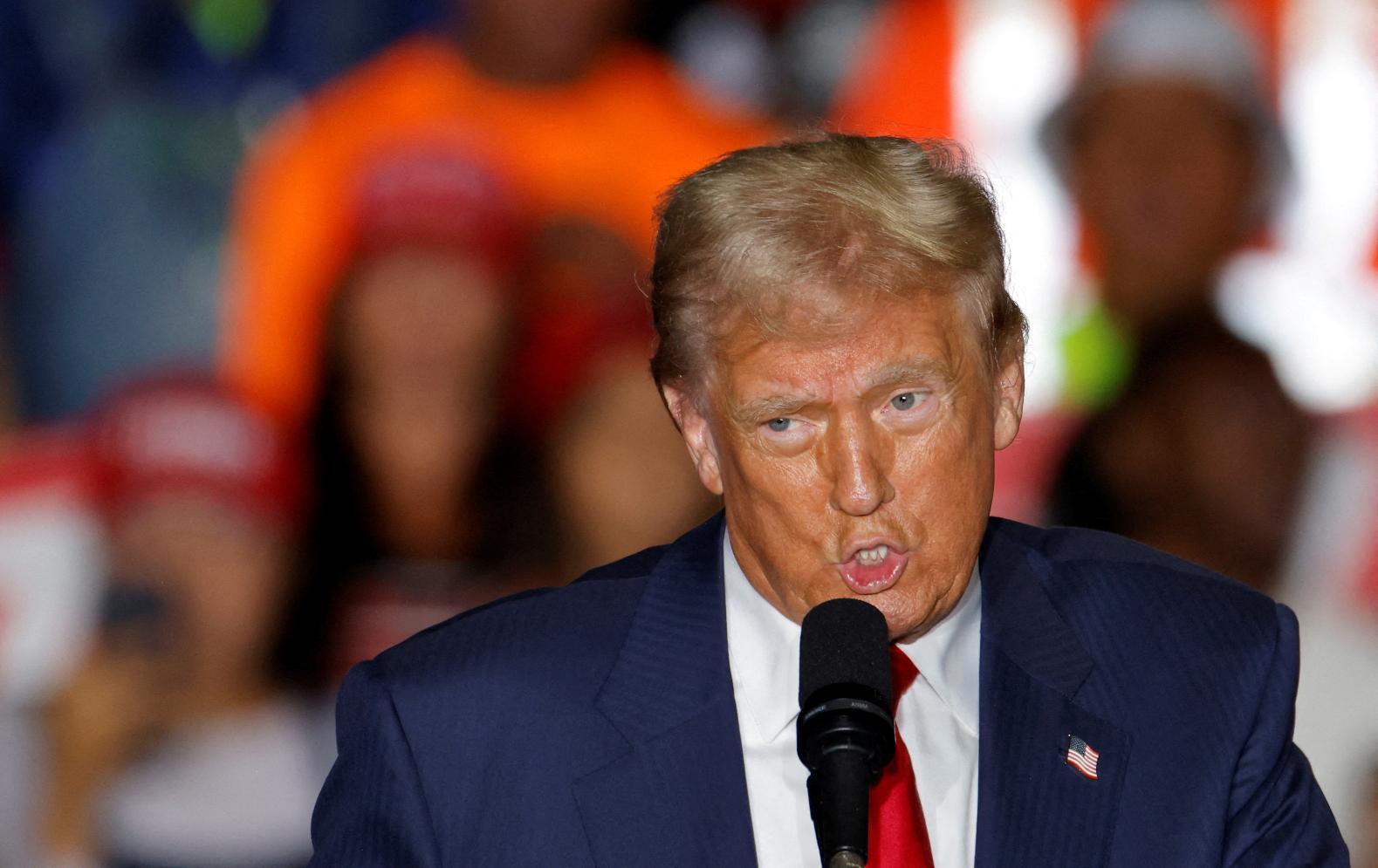
Germany's GDP could slump 1.5% with 20% tariffs, IW says U.S. GDP decline stronger initially, then improves-IW German exports to U.S. could fall by 14.9% with tariffs, Ifo study shows German industrial strength potentially a source of weakness WASHINGTON, Oct 24 (Reuters) - Germany would be the big loser if a Trump presidency sparked a tit-for-tat trade war between the United States and Europe, with Germany's previously much-envied industrial strength potentially becoming an acute vulnerability. Republican former president Donald Trump has floated plans for blanket tariffs of 10% to 20% on virtually all imports as well as tariffs of 60% or more on goods from China, in measures he says would boost U.S. manufacturing. A report by German economic institute IW - provided exclusively to Reuters - found that in a scenario where a Trump administration imposed tariffs of 20% on the EU, and the bloc retaliated in kind, euro zone GDP would slump 1.3% in 2027 and 2028 and fall as much as 1.5% in Germany. The negative effects on EU GDP increase from 2025 to 2028, while the effects on U.S. GDP are stronger in the first two years, with a GDP decline of 1.3% with tariffs of 10% and 1.5% with tariffs of 20% in 2025, the study found. The effects on U.S. GDP decrease over time due to U.S. imports declining more than exports in the scenario, delivering an increasingly positive effect on the U.S. trade balance. Germany, Europe’s biggest economy, will this year be the only G7 country failing to grow for two consecutive years, according to the latest forecast by the International Monetary Fund. A trade conflict with the U.S., its main trading partner, would deliver a big hit to output. "If you take the view that I do, that the stimulus in China is going to be a disappointment, then Germany isn't going to be bailed out by a restoration of growth in China,” Jacob Funk Kirkegaard, senior fellow at Bruegel and the Peterson Institute for International Economics, told Reuters. “And if the U.S. turns even more protectionist, the short term sources of growth for Germany are very few,” Kirkegaard said. The U.S. overtook China as Germany’s biggest trading partner this year, after eight straight years of China being at number one. "Half of Germany's growth always comes from exports and if you look at what's going on in the world, you have to say that this pillar is under attack," German Economy Minister Robert Habeck said earlier in October when presenting the government's economic forecasts. NEW INDUSTRY BLOW German exports contracted by 0.3% in 2023 due to weak global demand and geopolitical tensions. The government expects a 0.1% contraction this year. A study by the Hans Boeckler Foundation macroeconomic institute shows that 20% tariffs could shave one percentage point off output in Germany in the first two years of implementation. German exports to China could decline by almost 9.6% overall if there was a trade war between the U.S. and China, according to an Ifo Institute study. The Ifo study shows that German exports to the U.S. could fall by 14.9%, in a scenario where the U.S. imposed tariffs of 60% on goods from China and 20% on goods from other countries. German car exports would be particularly hard hit, down 32%, as would pharmaceutical exports, down 35%, Ifo said. This would be a fresh blow for German industry - another pillar of Germany’s economic model - which has been in a downturn for years with no recovery in sight. “Proposed tariffs on international goods could hit the manufacturing sector hard, deepening the struggles of an already fragile industrial base,” said Neil Devaney, partner and co-Head of Weil’s London Restructuring practice. Even with tariffs of just 10%, the German economy would suffer partly due to the uncertainty they create, said Juergen Matthes, head of international economic policy at IW. “One of the main problems with the economy right now is the weakness in investment and also the reluctance to consume, because people have that feeling of uncertainty,” Matthes told Reuters. Sign up here. https://www.reuters.com/markets/europe/trump-presidency-could-deal-heavy-blow-germanys-flagging-economy-2024-10-24/
2024-10-24 06:03
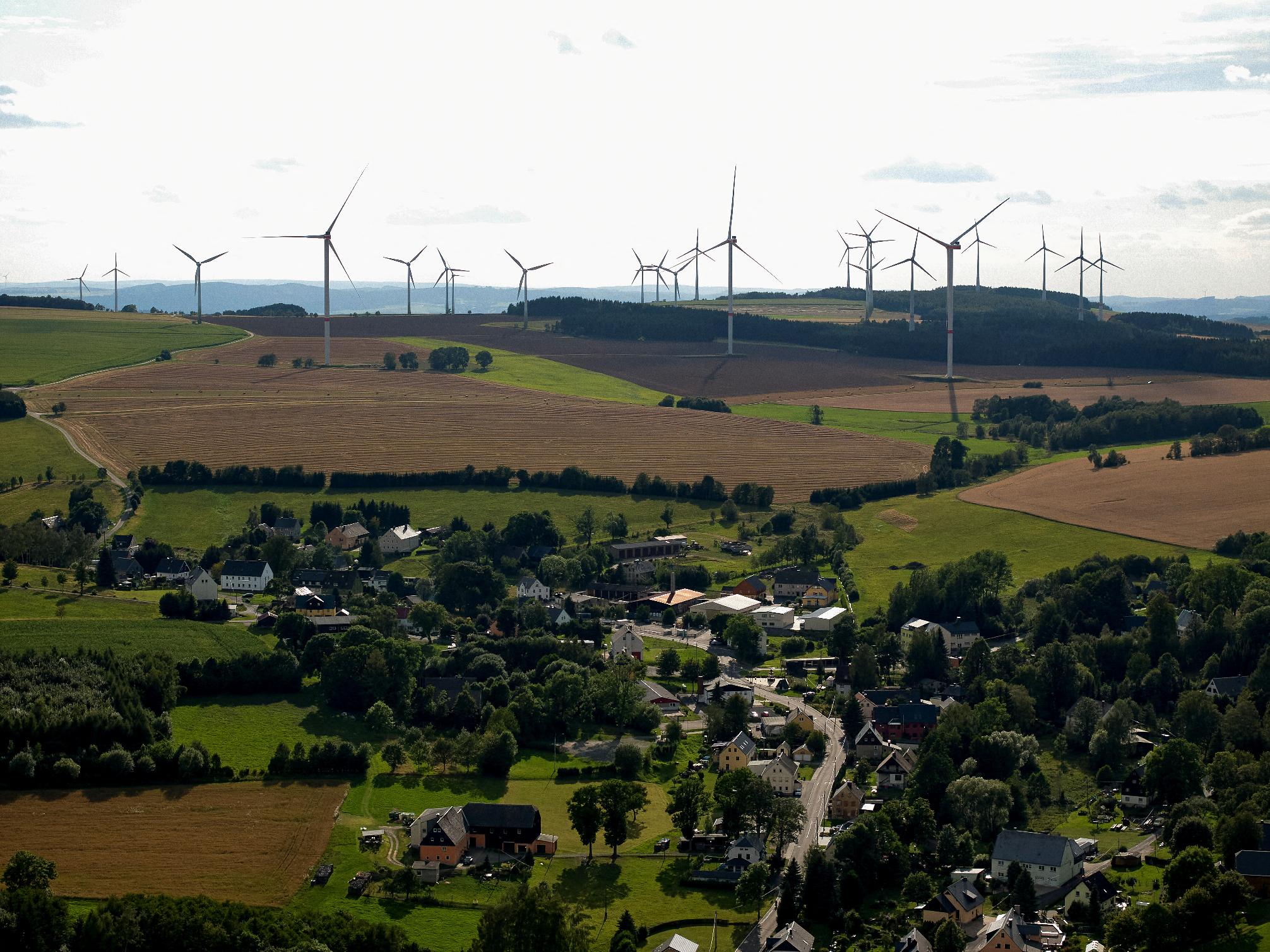
LITTLETON, Colorado, Oct 24 (Reuters) - Global wind-powered electricity generation could set a new record in 2024, as winter sets in throughout the northern hemisphere and wind speeds pick up across a majority of the world's wind farms. This, in turn, could help wind power grab a record-high share of the worldwide electricity generation market. Global wind electricity generation in the first nine months of 2024 has only climbed around 7% versus the same period in 2023, according to energy think tank Ember. But historical trends suggest this figure could spike in the final months of the year, pushing annual generation to a new record. A late-year pick-up in wind output is likely because the annual peak in wind generation tends to occur during the northern hemisphere winter, as over 90% of operating wind farms are located in Asia, Europe and North America. If wind production rises in line with these expectations, it would likely account for more than 10% of monthly global electricity output in November and December. This would be the first time it has ever eclipsed this level. REGIONAL SPAN Wind power's generation potential in the final months of 2024 will depend largely on wind speeds in China, the United States and Germany, which collectively are home to 64% of current global wind generation capacity, according to Global Energy Monitor (GEM). China alone has a 43% share of global capacity (around 400,000 megawatts (MW)), making it by far the most important wind generation market. Over the first nine months of 2024, China's wind-powered electricity generation was 712 terawatt hours (TWh), according to Ember. That total was 11% higher than the same period in 2023, meaning China's full-year output is on track to rise by over 10% once generation during the final months of the year is complete. The United States is the second-largest wind market, with around 145,000 MW of capacity. From January through September, wind-powered electricity output was 333 TWh, up 6.2% from the same months last year. Germany, Europe's largest wind producer, has around 47,000 MW of current wind capacity, which has generated around 94 TWh of electricity so far in 2024. That’s an increase of 7% versus the first nine months of 2023. WINDS OF CHANGE? There are several reasons to believe wind power will gain further ground in the electricity generation market in the coming years. Global wind generation capacity has been one of the fastest-growing forms of electricity production so far this century. It expanded around 20% per year from 2001 through 2021, according to Ember. True, global capacity growth has dropped to around half that rate since 2022 due to a mix of factors, including shortages of key components and steep inflation for parts and labour. The slowdown has been particularly acute in North America and Europe, where utility-scale wind capacity expanded by only 5% and 7%, respectively, last year, according to Ember. This negative trend has persisted through the first half of 2024. From January through August of this year, wind capacity in the United States expanded by just 2.4% year-on-year, according to data portal Cleanview. And wind capacity expansions in Germany were also down slightly during the first half of 2024 compared to the first six months of 2023, according to WindEurope. But experts believe this trend may soon reverse. Installations in Germany are projected to rebound later this year, thanks in part to the repair of the A27 motorway that is a key conduit for wind turbine parts. It was partially shut in the first half of the year after a water tunnel collapse. And in the United States, the pace of wind installations is set to accelerate as project developers there rush to finish jobs ahead of a potential change in presidential administrations next year following the Nov. 5 elections. The capacity expansion story is also quite robust in Asia. Wind capacity there grew by over 19% last year. This was the fastest annual growth in the continent since 2020. China has been the main driver of this trend, and this looks set to continue, as the country has already installed 39,000 MW of new wind capacity so far this year, according to the Centre for Research and Clean Air (CREA), which is up 17% from 2023. While optimism surrounding wind power's potential dimmed in recent years, the expected jump in output in the coming months and projected capacity expansions in 2025 may mean that, in this corner of the energy market, the winds are changing. Sign up here. https://www.reuters.com/business/energy/global-wind-power-set-grab-record-share-electricity-market-maguire-2024-10-24/
2024-10-24 05:56
Q3 core profit $6.89 bln vs forecast $7.08 bln Sees lower capex for renewables after earlier Orsted deal Share price rises 2.8% OSLO, Oct 24 (Reuters) - Equinor (EQNR.OL) , opens new tab said on Thursday it may invest less in renewable energy towards 2030 following its acquisition this month of a stake in wind power group Orsted (ORSTED.CO) , opens new tab, while reporting weaker-than-expected third-quarter profits. Equinor on Oct. 7 announced a $2.5 billion purchase of a 9.8% stake in Orsted, surprising some investors, and said it planned to raise this to 10% pending regulatory permission. The transaction would count towards Equinor's renewable energy portfolio target, adding 1.7 gigawatt (GW) of net generation capacity out of the company's goal of installing 12-16 GW by 2030, the Norwegian company has said. "We see that making a transaction like this we get access to offshore wind projects at a much more reasonable price than building it ourselves," Equinor CFO Torgrim Reitan told analysts on a conference call on Thursday. "This will take us in a profitable way towards the target, meaning that we can spend less organic capex moving towards that target," he said without elaborating. Investors have grown increasingly weary of plans by oil companies to rapidly expand within renewables, and some majors such as BP (BP.L) , opens new tab and Shell (SHEL.L) , opens new tab have retreated from some of their earlier plans. Equinor has previously said it plans to allocate at least half of its capital expenditure to renewables and low-carbon solutions in 2030. Equinor's share price rose 2.8% by 1129 GMT, outperforming a 1.1% rise in European energy stocks. Organic capital expenditure in 2024 was, meanwhile, seen at between $12 billion and $13 billion, down from a previous forecast of $13 billion, an Equinor statement showed. The adjustment reflected lower investments in its Polish and Brazilian onshore renewable portfolio as well as currency effects from a weaker Norwegian crown, CEO Anders Opedal said. The company kept its oil and gas output outlook for 2024 unchanged, but cut its expected 2024 renewable energy output growth to 50% from 70% previously due to a delay at the Dogger Bank A wind project off the British coast. The Norwegian oil and gas producer's adjusted earnings before tax for the July-September period fell to $6.89 billion from $7.93 billion a year earlier, lagging the $7.08 billion seen in a poll , opens new tab of 25 analysts compiled by Equinor. Equinor in the third quarter pumped 1.98 million barrels of oil equivalent per day (boed), in line with expectations in the analyst poll, down from 2.01 million boed a year ago. Sign up here. https://www.reuters.com/business/energy/equinor-q3-profit-lags-forecast-2024-10-24/

2024-10-24 05:47
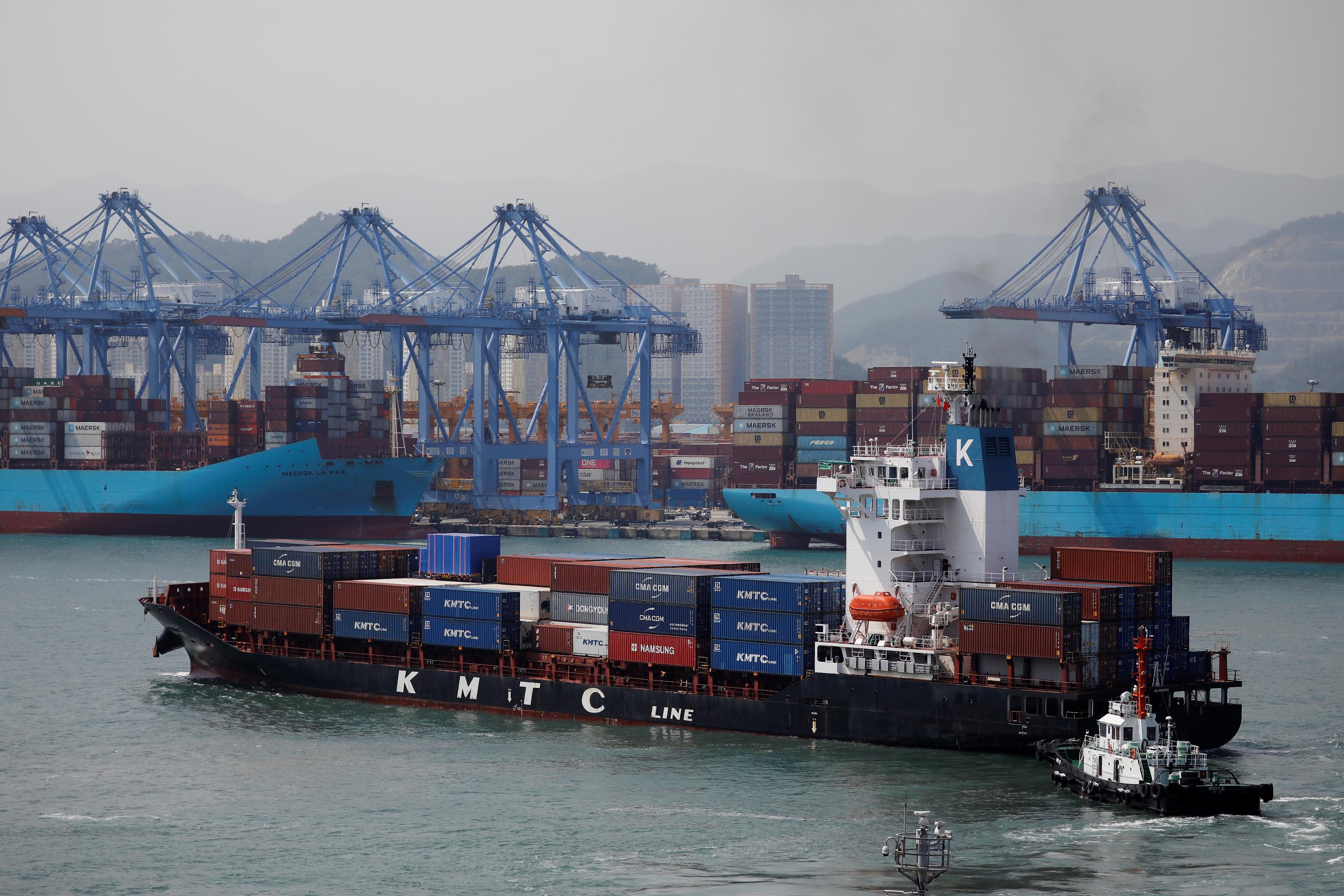
S.Korea Q3 GDP +0.1% q/q (vs 0.5% forecast) Exports fall for first time in nearly 2 years Central bank flags downgrade in GDP forecast SEOUL, Oct 24 (Reuters) - South Korea's economy barely grew in the third quarter as consumer spending showed signs of recovery but exports declined, raising the chances for more stimulus to support growth. That prompted the central bank to warn of a potential downgrade to its 2024 growth forecast, while the finance minister called for response measures to confront the slowdown. Gross domestic product in the July-September quarter expanded a seasonally adjusted 0.1% from a quarter earlier, the Bank of Korea's (BOK) advance estimates showed on Thursday, lower than market expectations. The weak growth is a setback for Asia's fourth-largest economy and could exert pressure on the won , which has weakened nearly 5% against the dollar this month, as the central bank's full-year estimate had already been lowered. "Weaker-than-expected economic growth data could raise the odds for the front-loading of rate cutting cycle, such as a back-to-back cut in November," said Kim Jin-wook, an economist at Citi. "However, we believe, BOK could maintain a 'wait-and-see' mode for a while considering a recent surge of USD/KRW levels." The third-quarter growth rate was far weaker than an increase of 0.5% tipped in a Reuters poll of economists and expected by the central bank in its quarterly forecasts provided in August. Private consumption rose 0.5%, after falling 0.2% a quarter earlier. Construction investment dropped 2.8%, while corporate investment jumped 6.9%. Exports fell 0.4%, down for the first time since the final quarter of 2022, while imports rose 1.5%, bringing a net negative contribution. "It is clear that the momentum of exports, which had been supporting the economy, has weakened, while it is too early to say domestic demand is recovering," said Park Sang-hyun, an economist at iM Securities. Finance Minister Choi Sang-mok said economic data was weaker than expected and called for close monitoring of internal and external factors, suggesting the government should prepare response measures. In July, the government vowed to support small businesses and the construction sector struggling with high interest rates. The Bank of Korea, which lowered its full-year estimate from 2.5% to 2.4% in August, said that it will likely be weaker than even that, as it has become "difficult to achieve". The bank next revises its quarterly economic forecasts in November. "But, when it comes to monetary policy, it does not necessarily mean an immediate rate cut, because it was the external sector, not the domestic one, that dragged down the headline figure," Park said. He expects the central bank to lower rates gradually with the next cut in the first quarter of 2025. The central bank this month lowered interest rates for the first time since mid-2020 and flagged room for more easing, though it said the timing of any further cuts would be carefully examined amid concerns about rising risks to financial stability. South Korea's treasury bond yields fell on Thursday, with the policy-sensitive three-year yield down 5.8 basis points to 2.878%, its biggest daily fall since early September. On an annual basis, the trade-reliant economy grew 1.5%, weaker than the previous quarter's 2.3% and economists' expectations of 2.0%. It was the slowest pace since the third quarter of 2023. Sign up here. https://www.reuters.com/markets/asia/south-korea-q3-gdp-01-qq-weaker-than-expected-2024-10-23/
2024-10-24 05:34
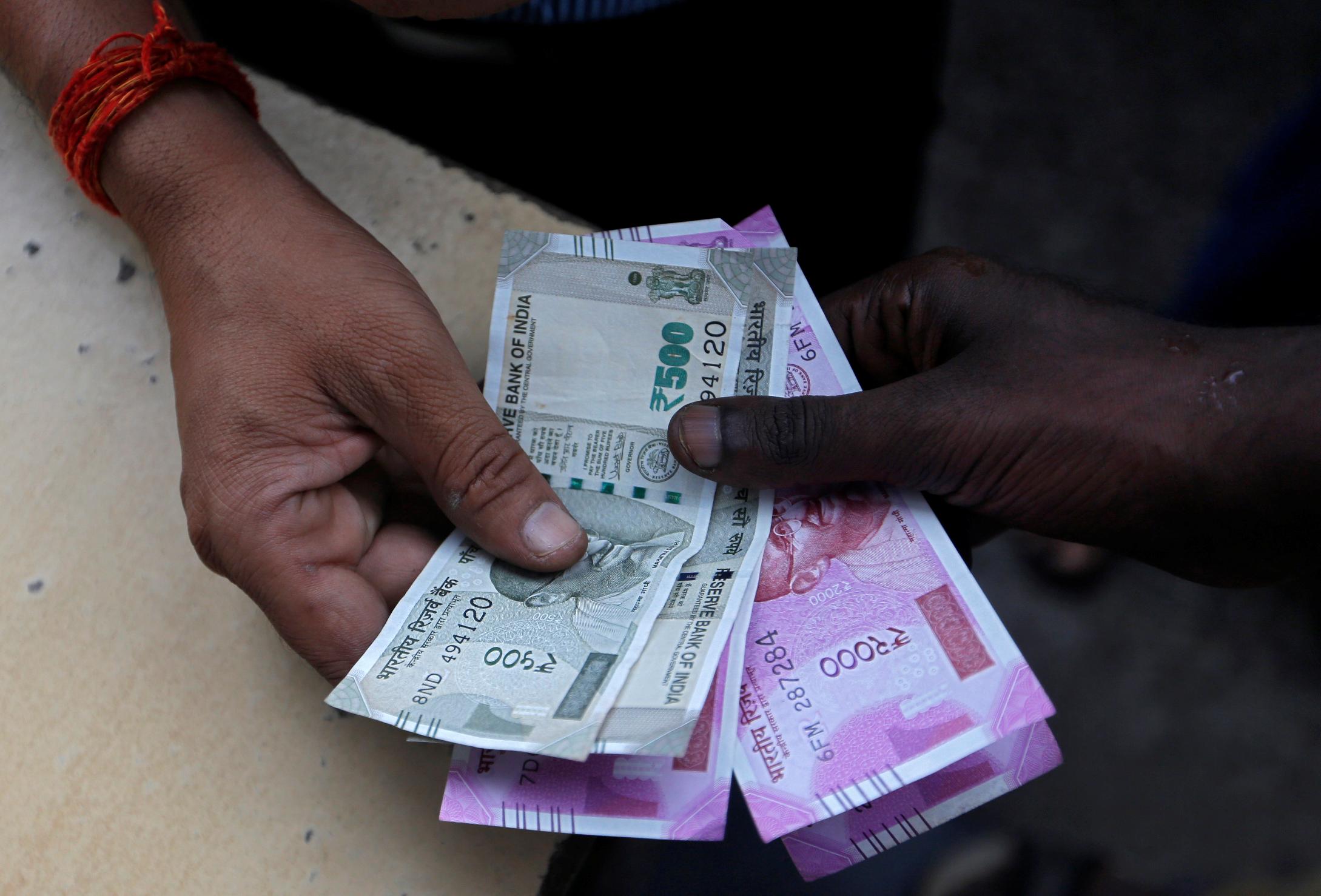
MUMBAI, Oct 24 (Reuters) - The Indian rupee was largely flat on Thursday with volatility expectations signalling that the currency is expected to remain rangebound, even as its regional peers brace for swings heading into the U.S. presidential election. The rupee was at 84.0625 against the U.S. dollar as of 11:00 a.m. IST, compared with its close at 84.08 in the previous session. Gains in most of its Asian peers offered only marginal relief to the rupee. Regional currencies were up between 0.1% to 0.3%. The local currency has been pinned near record low levels for much of the week amid a rise in U.S. bond yields on the back of heightened odds of a Donald Trump victory in the upcoming U.S. election and sustained outflows from local equities. Routine interventions by the Reserve Bank of India have helped the rupee avert sharp declines despite the multiple pressures, traders said. The central bank's interventions have also contributed to keeping the rupee's near-term implied volatility subdued even as those of its peers have risen in the lead-up to the election. The offshore Chinese yuan's 1-month implied volatility has risen to 7.5% from 6.7% at the end of last month, while that of the rupee's has been largely stable near 2%. "U.S. tariff risk is growing, given rising odds of Trump winning," MUFG Bank said in a note. "Trump's tariff(s) would have a huge negative impact on the outlook for Asian economies and pose downside risk to our forecasts for Asian currencies." The rupee's subdued volatility has also contributed to its outperformance versus regional peers this month. Asian currencies are down between 0.6% to 4.5% in October so far while the rupee has weakened by 0.3%. Sign up here. https://www.reuters.com/markets/currencies/rupee-little-changed-bucks-regional-volatility-trends-ahead-us-election-2024-10-24/
2024-10-24 05:05
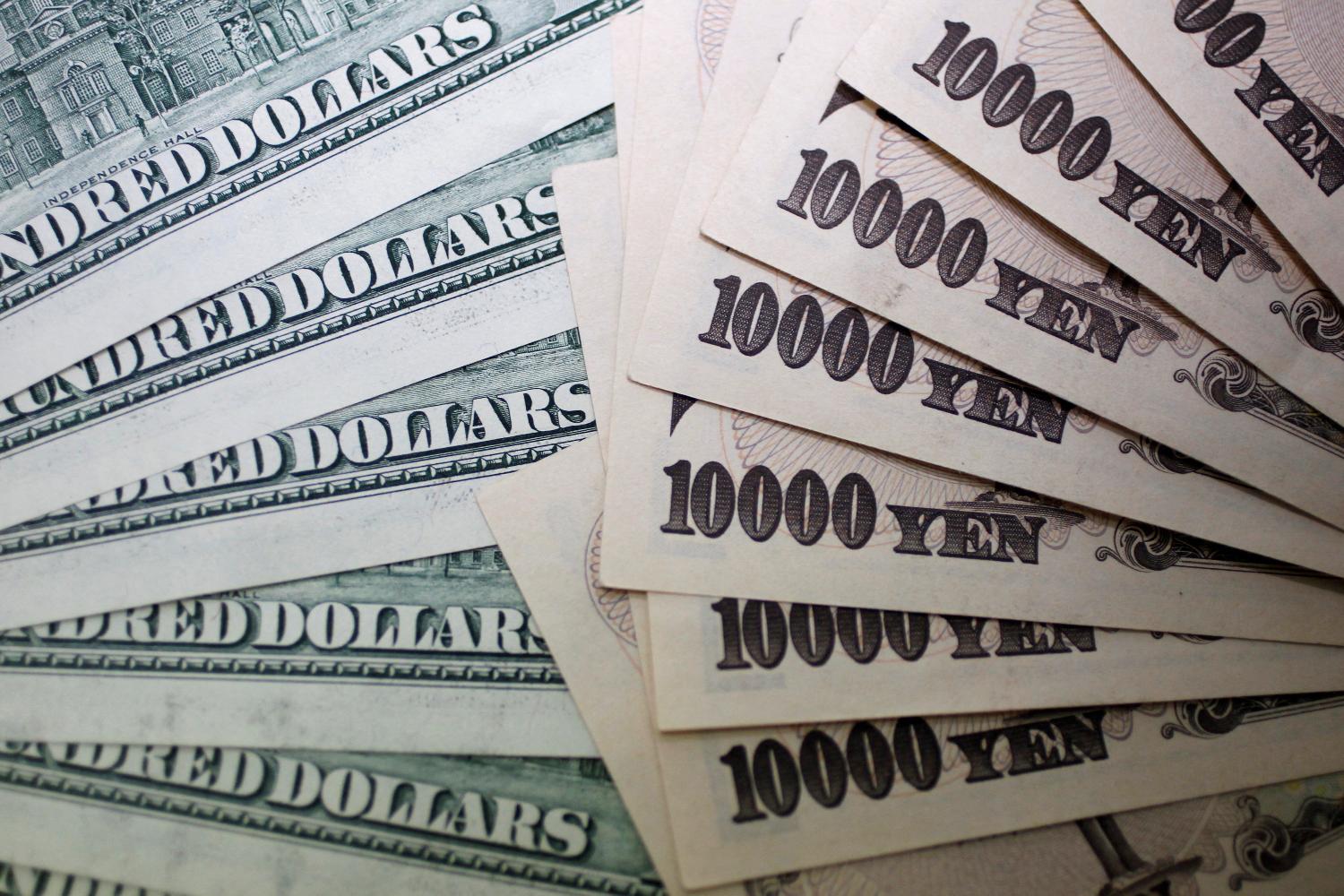
Euro and yen strengthen as dollar pauses after rally Fed and ECB rate cut expectations diverge U.S. jobless claims fall, supporting slower Fed rate cuts ECB policymakers suggest gradual rate cuts amid inflation concerns BOJ Governor Ueda links yen fall to U.S. economic optimism NEW YORK, Oct 24 (Reuters) - The euro and Japanese yen strengthened on Thursday as the U.S. dollar paused after rallying to a nearly three-month high, with the greenback only briefly moving off earlier lows as data supported views for slower rate cuts by the Federal Reserve. Weekly initial jobless claims fell to 227,000, below the 242,000 estimate of economists polled by Reuters, while continuing claims rose to a nearly three-year high. The Fed is likely to discount the climb earlier in claims this month due to distortions from Hurricane Helene. A separate report from S&P Global said its flash U.S. Composite PMI Output Index, which tracks the manufacturing and services sectors, rose to 54.3 this month from a final reading of 54.0 in September. A reading above 50 signals expansion. The greenback has climbed in 16 of the past 18 sessions, on pace for its fourth straight week of gains, as a run of positive economic data has quieted expectations about the size and speed of the Fed's rate cuts, which has also lifted U.S. Treasury yields. "We're looking at some profit-taking here," said Joseph Trevisani, senior analyst at FXStreet in New York. "But underneath that, of course, has been the shift in rates and the shift in perception about what the Fed is going to do. And that hasn't changed so for the moment, we're kind of holding." The yield on benchmark U.S. 10-year notes fell 4.6 basis points to 4.196% after hitting 4.26% in the prior session, its highest in three months. The dollar index , which measures the greenback against a basket of currencies, fell 0.37% to 104.05, its first decline after three straight sessions of gains, with the euro up 0.39% at $1.0823 after hitting a nearly four-month low of $1.076 on Wednesday. A survey showed euro zone business activity stalled again last month, but the contraction in Germany, Europe's largest economy, was less steep than the previous month. Recent comments from Fed officials have indicated the central bank will take a gradual approach to cutting rates. Inflation pressures have been easing but still have yet to return to where they need to be, said Federal Reserve Bank of Cleveland President Beth Hammack on Thursday. Markets are pricing in a 95.1% chance for a cut of 25 basis points at the Fed's November meeting, with a 4.9% chance of the U.S. central bank holding rates steady, according to CME's FedWatch Tool , opens new tab. The market was completely pricing in a cut of at least 25 bps a month ago, with a 58.2% chance of a 50 bps cut. In contrast, expectations for faster and potentially bigger rate cuts from the European Central Bank (ECB) have increased to weigh on the euro, after a host of policymakers warned about the risk of undershooting the central bank's 2% inflation target. ECB policymaker Robert Holzmann said the central bank could cut rates by 25 basis points at its December meeting if circumstances including inflation allow it. Latvian central bank Governor Martins Kazaks said inflation could fall quicker than expected but the ECB should stick to its practice of cutting rates step by step given the exceptional uncertainty. The dollar has also benefited from a rise in market expectations for a victory next month by Republican candidate and former U.S. President Donald Trump, which would likely bring about inflationary policies such as tariffs. Sterling strengthened 0.39% to $1.2971. British finance minister Rachel Reeves said she would change the measure of public debt that the government targets in next week's budget to allow more borrowing for investment. Against the Japanese yen , the dollar weakened 0.6% to 151.83. BOJ Governor Kazuo Ueda said the recent fall in the yen was partially driven by optimism over the U.S. economic outlook, and the central bank needs to scrutinize further whether that optimism is sustained. Ahead of Sunday's election, polls showed Japan's coalition government Prime Minister Shigeru Ishiba's Liberal Democratic Party may struggle to retain its parliamentary majority, which could complicate monetary policy plans by the BOJ. Sign up here. https://www.reuters.com/markets/currencies/dollar-stands-tall-bets-slower-fed-cuts-potential-trump-win-2024-10-24/